
The Journey to Gyeong-ju (경주기행, Kim Mi-jo, 2025)

You know what they say, if you’re going to seek revenge, you’d best dig two graves. In a way, that’s what the bereaved mother at the centre of Kim Mi-jo’s familial vengeance comedy The Journey to Gyeong-ju (경주기행, Gyeongju gihaeng) ends up doing, but really what she wants is to repair her fracturing family which has been torn apart in the wake of her youngest daughter’s brutal abduction and murder. The killer was caught, but as the judge saw something in him that suggested he might be a candidate for rehabilitation, he handed him a comparatively light sentence that Ok-sil (Lee Jung-eun) in particular feels provides no sense of justice for her daughter.

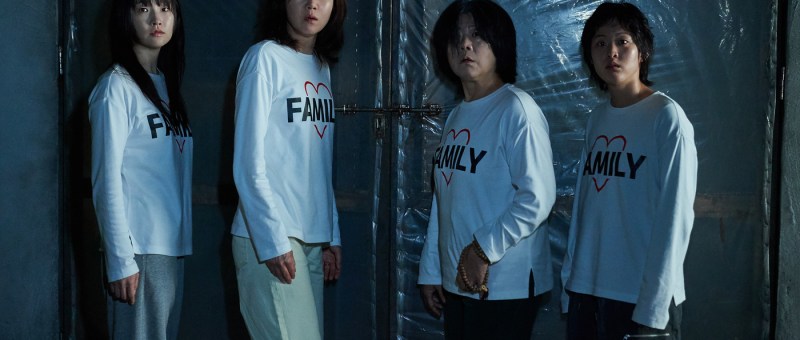
For that reason alone, she decided to accept a cash settlement rather than press charges knowing that the killer, Sang-hyun (Byun Yo-han), would be released relatively quickly so she could kill him herself with the help of a shady underground fixer she met at a support group. To pull this off, she enlists her three surviving daughters, most of whom have their doubts about this plan, not only the morality of it but whether a group of four ordinary women who’ve never done anything like this before can really hold a brutal killer captive and torture him to death. They are, though, largely unable to directly defy their mother and are therefore looking for other ways to stop her from going through with this by pretending to play along. Ok-sil, however, feels like this is the only way that she will be able to move forward with her life.

The irony is that they frame this as a family trip to honour Gyeong-ju’s birthday, all of them piling into the now beaten up camper van father Mu-il (Kim Hak-sun) bought when Gyeong-ju was born hoping they’d take a lot more family holidays. The age gap between the sisters, however, meant that they only took one all together and that was, like this trip, impromptu and rolled in with a business obligation, or maybe the other way around. When oldest daughter Jang-ju’s (Gong Hyo-jin) husband and young daughter turn up announced, in a way, it’s like the family is restored with Seok-man (Kim Young-sung) taking Mu-il’s place while Yun-ji takes that of the absent Gyeong-ju. Waking up in the middle of the night at the remote villa they’ve rented, Ok-sil does a quick head count, realises someone’s missing, then looks over at Yun-ji and acknowledges there are the right number of people after all. They took this trip for the purposes of murder, but also ended up having a nice family holiday while creating “alibis” at various local tourist spots and posting pictures on social media.

What did they didn’t really know was that Sang-hyun had figured out they probably took the settlement money with the intention of killing him, and so is actually intent on killing them first. There is something bestial about him in the way that he can’t be subdued and immediately begins a crime spree after managing to escape. It’s difficult to see why the judge felt he might have a chance at reform given the nature of his crime and the probability that Gyeong-ju was not his first victim. The fact that Sang-hyun is actively trying to kill her lends a kind of moral justification to Ok-sil’s plan that might not otherwise be there, even as he pleads and wheedles, suddenly playing the mild-mannered fool who made a mistake, is very sorry, and is not going to do anything like this ever again.

Still, Ok-sil’s determination is born from a desire for vengeance rather than by the fact that Sang-hyun will go on creating more victims as long as he walks the earth. Confronted by her daughters, she has to face the ways in which her grief has caused her to shut out those who are still living while meditating on the dead. Killing Sang-hyuk won’t help her put her family back together in the way she thought it would, while strangely going on holiday together seems to have done the trick. Despite the absurd humour of the film’s early stretches as these very ordinary people try to get their heads around the practicalities of killing while largely trying to ignore the psychological pressure and affects of taking another person’s life, there is a genuine poignancy to its scenes final scenes in which Ok-sil realises she will finally have to let her daughter go.


The Journey to Gyeong-ju screened as part of this year’s London Korean Film Festival.

Trailer (English subtitles)

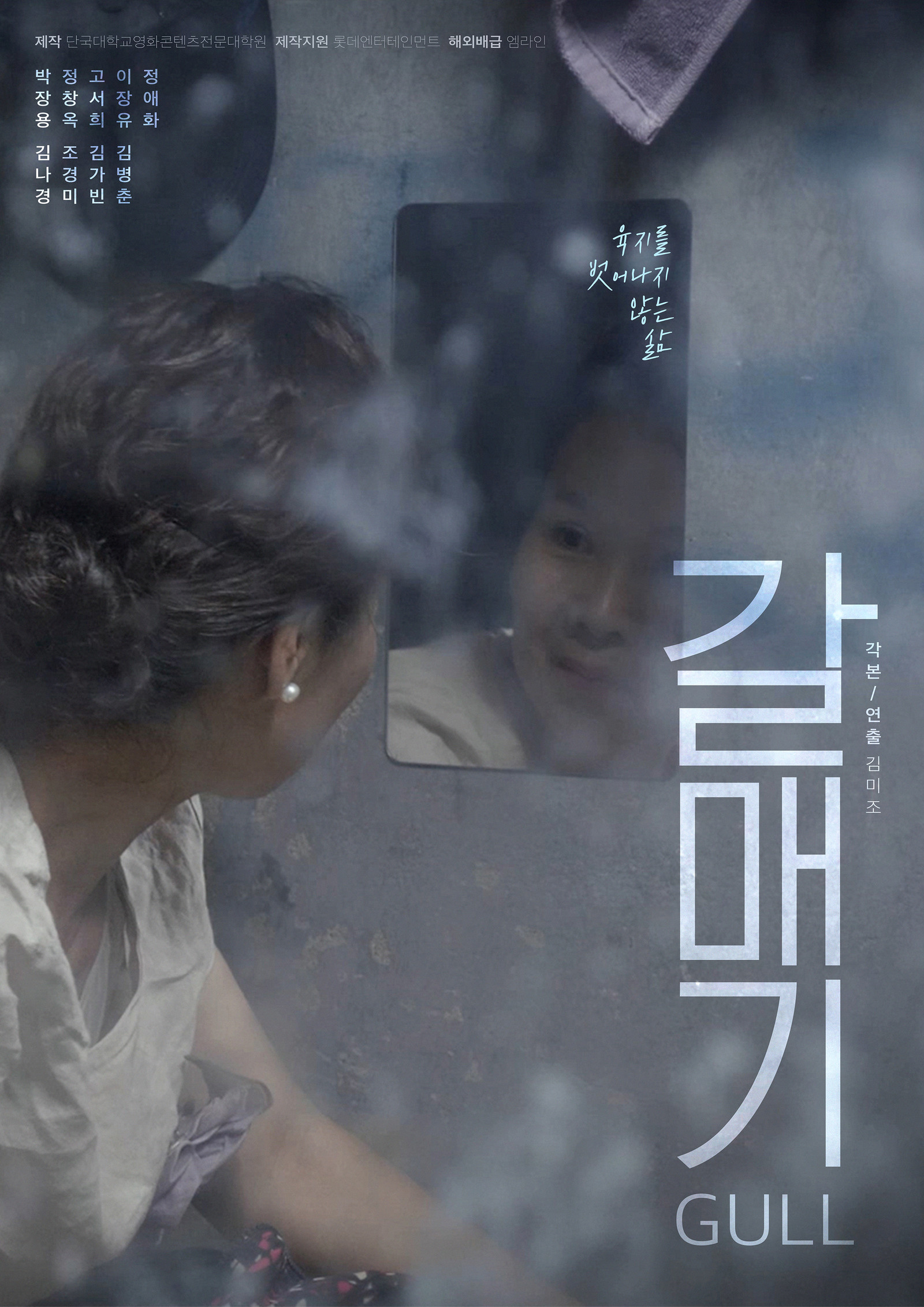
Gull (갈매기, Kim Mi-jo, 2020)

“Equality before the law must be enjoyed not only by the rich but by everyone. We must not let them get away with trampling on our human rights and right to life”, the leader of a protest against the forced relocation of his fish market intones over a loudspeaker in Kim Mi-jo’s incendiary Gull (갈매기, Galmaegi), but his words have a very different connotation to a middle-aged woman quietly seething in her protest gear as she watches from an upper window. She knows when he says “everyone”, it’s not quite what he means and that to that extent he does not truly believe what he’s saying because to be a woman in this society is to know that your human rights and right to life have been trampled on daily since the day you were born and if you try to resist someone will tell you you’re making a scene. 

30 years running a stall selling raw fish, O-bok (Jeong Aehwa) is excited about the marriage of her oldest daughter, In-ae (Go Seo-hui), though also a little anxious seeing as she’s marrying up, her fiancé’s family are educated people with good government jobs. In-ae jokes that her mother has an inferiority complex, but it is in a sense true in a half-realised acceptance of her marginalised position as a working class woman along with the frustrated dreams of her youth. Chatting on the phone with her mother who has dementia, O-bok reveals she’s proud that despite having missed out on an education herself as was the thinking for girls in those days, she managed to send each of her three daughters to college. She wonders why her mother didn’t do the same, and mourns all the things she could have done with her life if only she hadn’t been bound by societal expectations. 

Staying behind one evening to have a drink with her colleagues, she is assaulted by Gi-taek (Kim Byeong-choon), the man with the loudspeaker and the de facto leader of the protest and solidarity movement trying to ensure they cannot be pressured into accepting less than they’re owed in compensation when the market is closed. Stumbling home the following morning clearly in pain and having difficulty walking, O-bok is alerted to blood on the back of her skirt by a fellow female pedestrian, stopping into a bath house to rinse out her underwear. Aside from visiting a doctor for “bleeding”, she tells no one and does not return to the market for several days. Gi-taek, meanwhile, has the audacity to turn up at her door with premium seafood to ask after her health. 

Eventually O-bok explains what’s happened to In-ae, laying bare a generation gap as the younger woman tries to persuade her mother that she should it report it to the police. O-bok, however, is reluctant to make herself the subject of gossip, mindful of the effect it may have on her daughter’s marriage, and tries the old-fashioned way first in asking Gi-taek for an apology through an intermediary, complicating the situation in obviously being unwilling to say what it’s for. When he refuses, she takes her daughter up on the offer and files a complaint though perhaps knowing it’s unlikely to go anywhere seeing as she no longer has access to any material evidence.  

What she could not have expected is the extent to which her simple desire to see justice done would make her a social pariah. Of course, the situation is complicated by the economic precariousness of the fish market workers who cannot afford to lose out on the compensation money and are depending on Gi-taek to help them get it. The men find the whole thing embarrassing, making muted comments about O-bok’s drinking as if she brought this on herself, something her daughter later echoes in a moment of anger only to be disappointed in herself for saying it. Not knowing who made the accusation, her husband chuckles that rape is all a big joke because you “can’t rape a girl who doesn’t want to”, while the women are largely no better reminding her that this is the sort of thing you keep to yourself and try to forget as if they don’t know how that feels. 

“I’m so sick of people mouthing off about rights and all” a genial female shopkeeper confesses to O-bok, admitting that she has no idea why the man on the roof across the way with the sign is protesting, “He says things are unfair or something. I don’t even care.” “He’s just torturing himself” she adds, O-bok perhaps wondering too if that’s all she’s really doing, if her quest for justice is really worth it when no one seems to care. She wonders if they’d care more if she weren’t a 61-year-old market fishmonger but an educated woman with a good government job. Maybe we’re not all so equal under the law after all, but she can’t let them get away with trampling on her dignity. Shot with naturalistic detachment shifting to a rattled handheld, Gull is a crushing condemnation of a misogynistic, classist society but one that finds strength in its heroine’s resilience and newfound determination make herself seen if only by those ought to feel ashamed. 


Gull streams in the UK until 11th November as part of this year’s London Korean Film Festival.

Original trailer (English subtitles)