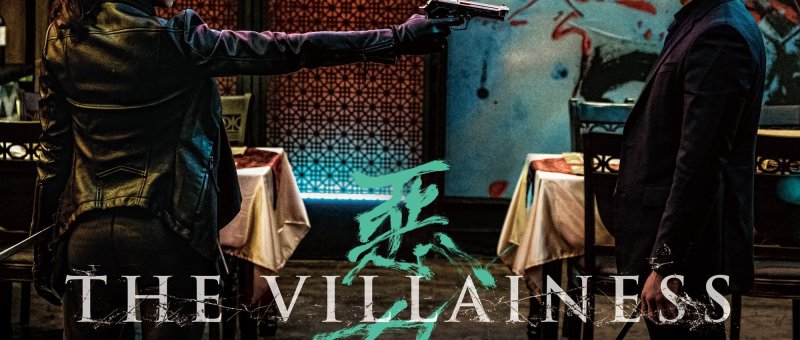
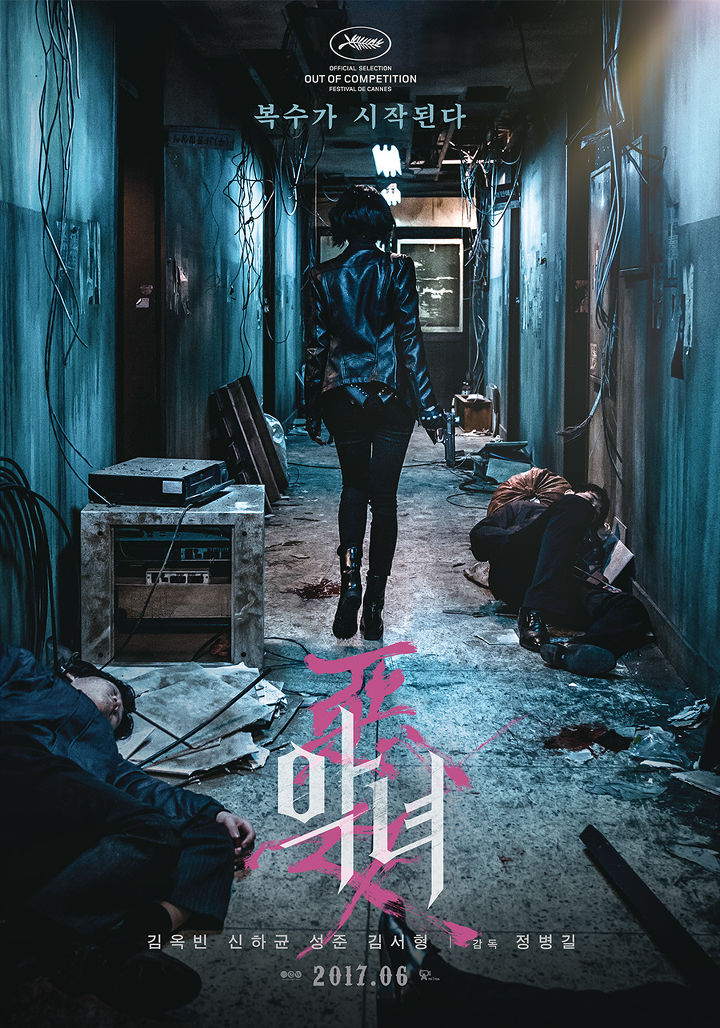
 Vengeance is a doubled edged sword, it cannot help but wound the wielder. The heroine of Jung Byung-gil’s ironically titled The Villainess (악녀, Aknyeo) has more to be revenged of than even she knows. Yes, the narrative beats are familiar and Jung has clearly drawn inspiration from Luc Besson’s seminal hit woman movie La Femme Nikita as well as the long history of female revenge films from Lady Snowblood to Kill Bill, but he does it with style and style is always hard to argue with. A new kind of action cinema, The Villainess makes a performer of its camera, darting frantically like an animal on the run and then drifting listlessly between dreamlike visions of half remembered traumas. Jung remains firmly in B-movie territory but owns it, unafraid to embrace the genre’s more extreme qualities and all the better for it.
When we first meet Sook-hee (Kim Ok-vin), we are Sook-hee. Jung opens with a lengthy (seeming) one take POV shot of an assassin fearlessly taking down untold numbers of bad guys in a tightly controlled corridor battle before we are suddenly ejected from her head when it connects with a mirror. Sook-hee has come here for revenge, though we don’t know that yet. Leaping from an upper window and landing heroically in an alleyway below, Sook-hee is taken into custody by a shady government organisation intent on turning her into a sleeper assassin. She is uniquely qualified for the task but has lost all hope and longs only for death. The revelation that she is pregnant gives her a reason to keep on living, as does the promise of her new mentor, Kwon-sook (Kim Seo-Hyung), who assures her ten years of service will buy a lifetime of comfort and freedom both for herself and the young life inside her.
Of course, it is not that simple. Jung gradually reveals Sook-hee’s backstory through brief flashbacks and lengthier evidence gathering sequences but her story is one of constant abandonment, adoption, betrayal, and vengeance. As if she could ever have forgotten them, the seminal images of Sook-hee’s life are frequently thrown back at her – an innocent girl witnessing the bloody death of her father, the eyes of the dying gazing back at something they once loved, games of death and of salvation. Sook-hee has been used and misused by men all her life, traded for jewels, and tricked into a murder of the self as sheds her skins to transform from frightened child to heartless killer, loyal wife, and loving mother. Swapping one master for another she is lied to and manipulated, denied her own identity in service of someone else’s ideals.
Ironically enough the prize which is dangled in front of Sook-hee’s eyes is nothing more than the prospect of a “normal life”, free from crime, killing, and fractured identities. As elliptical as the film itself, Sook-hee’s adult life is an ongoing quest to regain what was taken from her in childhood. A “normal life” is what’s offered to her by each of her respective masters but none of them has the capability, and only one the will, to give it to her. There can be no normal life for Sook-hee, reduced as she is from a name to an epithet. A villainess – no longer a woman, merely a faceless archetype, a grudge bearing revenger with dead eyes and an icy heart.
When Sook-hee performs in her strangely meta, Hedda Gabler inspired play, she remarks that she and the (presumably) long lost lover to whom she is speaking can no longer exist in the same space, in order for one to live the other must die. This line has an obvious correlation in the narrative but Sook-hee isn’t just speaking of her unseen enemy but of her own dualities. Only one Sook-hee can survive, but so many Sook-hees have died already starting with the lost little girl offered salvation in the barrel of the gun. Beginnings become endings, and endings become beginnings, but whether The Villainess is the story of a woman assuming her true identity or being subsumed by it, Sook-hee remains where she’s always been – alone and encircled by men with guns whose infinite authority she is perpetually unable to evade.
The Villainess was screened at FrightFest 2017 and will also be screened as the final Teaser for the upcoming London Korean Film Festival at Regent Street Cinema on 11th September ahead of a limited cinema outing and October DVD/blu-ray release from Arrow Video.
International trailer (dialogue free, English captions)

 Windows on Worlds