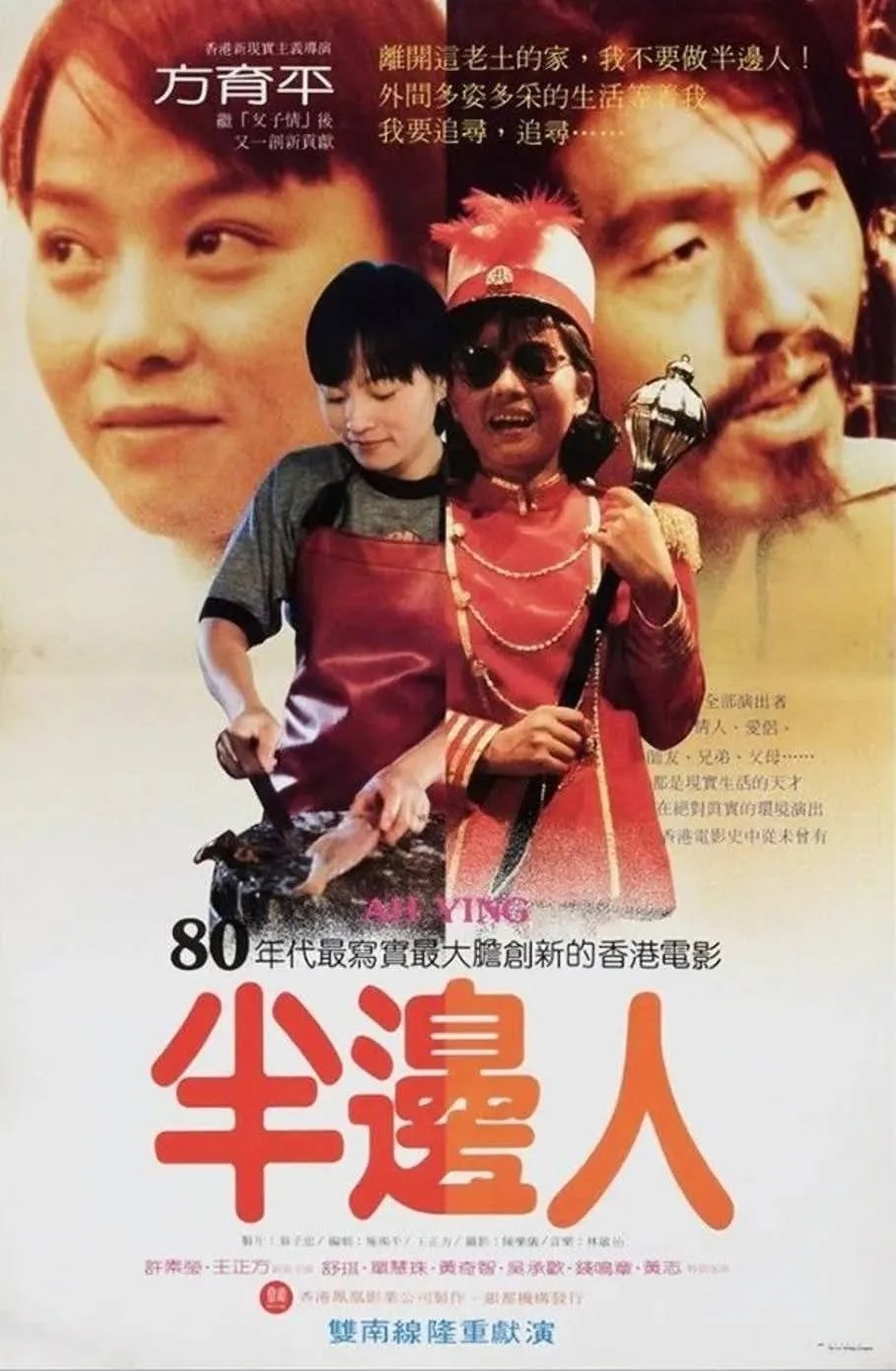
Ah Ying (半邊人, Allen Fong, 1983)

“I want to make a film that reflects our time. If not, no one will ever know we existed,” frustrated filmmaker Cheung explains but finds himself hamstrung by the fact that he is not quite of this place by virtue of the fact that he is a Mandarin-speaking Mainlander who’s been living in the United States for several years. The old university friend who’s offered him this opportunity says as much, suggesting that in the end he doesn’t really understand Hong Kong while simultaneously failing to get a grip on his protagonist, a Hong Kong student in California.

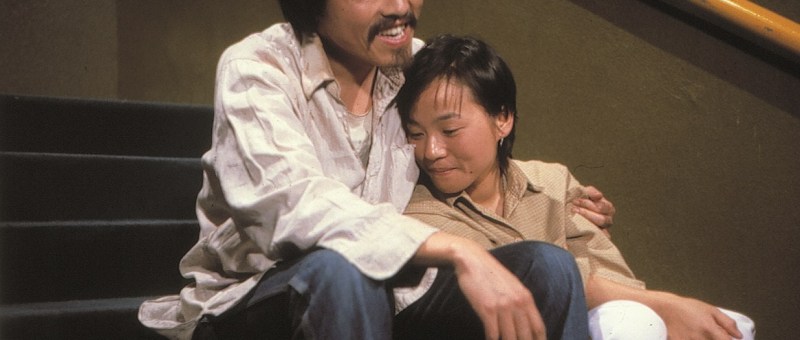
It may be this sense of dislocation that Allen Fong’s Ah Ying is hinting at. Fong himself studied at UN Berkley before returning to Hong Kong and based the character of Cheung on a friend of his who died suddenly in the middle of working on a project. But the film is really about its title character, a young woman who longs to transcend the world she was born into and find a more independent destiny while held back by her needy mother and drunken father who run a fishmongers at the market where Ah Ying is expected to help out. We her clumsily gutting fish, ripping off half the meat while stripping the skin and inelegantly tearing out its viscera, only to leave abruptly in response to a slightly rude customer and the fact she can’t get through to her increasingly distant boyfriend, Hung, on the telephone.

Later we see Ying try to scrub the fish smell off her hands after running off to her part-time job at the Hong Kong Film Centre in which she does menial work in return for free acting classes taught by Cheung. She tells him that she doesn’t really know why she’s there, but she wants to try it out and maybe it will lead to a career. Cheung is a little insensitive in mentioning a girl he knew who wanted to be an actress in California, but she spends 11th months of the year working in a cocktail bar. Nevertheless, acting quite literally gives Ying the opportunity to be someone else and helps her to imagine a different future outside of her family’s lack of aspiration for her. 

Ying’s family are comparatively lucky in that they have two adjacent apartments, but Ying and her four siblings all live in one with her parents too, while her taxi-driver brother and his wife live next-door though Ying likes to hang out there and listen to records. Western music is another means of escape as she demonstrates by singing an a cappella version of Time in Bottle as part of Cheung’s acting class, though he hasn’t heard of any of the musicians she mentions like Brian Eno or David Bowie further marking him as out of touch with “our times”. They do, however, bond over Simon & Garfunkel’s version of Scarborough Fair with Cheung noting that it sounds just like Chinese opera. 

In order to further research his screenplay, Cheung talks Ying into arranging an interview with her by then ex-boyfriend Hung who breaks up with her for being too nice to him which he finds clingy and unpleasant even when she tells him she’s fine with him continuing to sleep with other girls. Though she continues to look back on her relationship with Hung, Ying has already signalled her desire to move on by getting rid of her perm as if marking a new transition into adulthood. Her mother is not, however, particularly happy about it as Ying is currently the only one of her several children prepared to help out at the fish stand. Ying’s mother clings to her like life raft as a means of sustaining herself in what is in many ways a dissatisfying of existence filled with constant toil to provide for her ungrateful family who look down on her occupation while her husband sleeps in a chair all day after drinking too much and barely helps at all.

Ying’s mother tells Cheung that she’ll be lost without her when she marries, but otherwise suggests she’d prefer her not to because she’d be left to cope with everything on her own. Cheung asks Ying why she doesn’t move out and she replies that it’s it the rent, her father only pays her pocket money for helping on the stand and she doesn’t earn anything at the film centre, though it’s unlikely a young woman on her own would be able to afford to rent in Hong Kong anyway. Cheung becomes a kind of lifeline to her, a mentor figure guiding her towards another kind of life but equally lost himself and a stranger in the contemporary city. Though she may develop feelings for him, his interest in her remains paternal and like the characters they play on stage any union between them will have to wait until the next life. Nevertheless, through her connection with him, she may have begun to discover her true self and become at last a whole person even if seemingly tethered to the fish stand. In the busy streets and cramped apartments, Fong may have succeeded in recording his times after all but also an unexpected sense of optimism and possibility in discovering new paths even if they ultimately lead to a parting.
Mad Fate (命案, Soi Cheang, 2023)

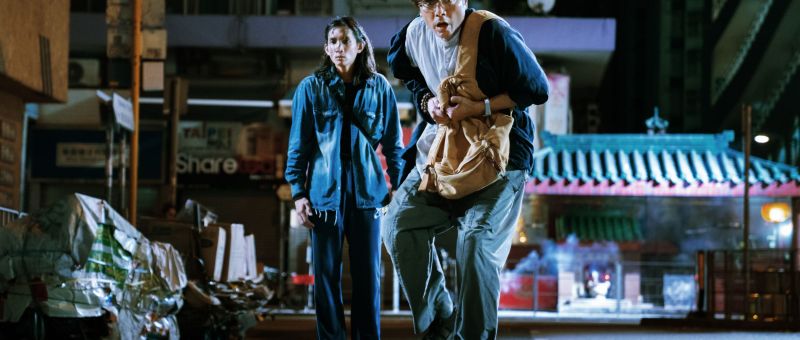
“No one can stray from the path paved by fate.” a policewoman gasps while interrogating The Master (Gordon Lam Ka-Tung), a man whose mind was already strained even before he walked in on the murder of a woman he’d been trying to save only to end up losing to destiny. A noticeably lighter affair than his previous film Limbo, Mad Fate (命案) sees Soi Cheang (AKA Cheang Pou-soi) step into the Milky Way orbit directing a screenplay by Yau Nai-hoi produced by Johnnie To and very much bound up with the kinds of cosmic coincidences the studio is known for.

It’s Fate or maybe God that The Master is resisting, though what the difference between the two might be is never quite clear save for the implication that it’s God who is master of Fate which is otherwise without will. The Master insists that “Fate can be changed,” but he resolutely fails to do so. In the opening sequence, he’s in the middle of burying a woman, May, alive as part of a ritual to stave off a forthcoming “calamity” only he’s unable to complete it in part because of the woman’s understandable anxiety that it’s The Master who’s going to end up killing her, and in part because it starts raining which puts out the paper clothing that should have been burnt to change her fate. May runs off and climbs in a taxi home where she is accosted by a serial killer who has been targeting sex workers. The Master follows her but arrives just too late while the police later chase the killer but are unable to catch him. 

The Master sees his attempts frustrated but also does not consider that the rain itself was a manifestation of Fate or sign that in the end nothing can be changed. In an effort to atone for his inability to save May, The Master ends up taking under his wing a strange young man who also stumbled on the murder by coincidence while working as a delivery driver but is fascinated rather than repulsed by the bloody scene. Obsessed with knives and killing, Siu-tung (Lokman Yeung) is already known to the policeman investigating (Berg Ng Ting-Yip) because he arrested him for killing a cat in his teens. According to The Master’s reading of his fate, Siu-tung will eventually kill someone and end up in prison for 20 years. He doesn’t much like the sound of that so he ends up going along with The Master’s zany plans to make him a nicer person and save two lives in the process. 

Ironically most of The Master’s suggestions still involve Siu-tung being imprisoned in some way. To get him out of his “unlucky” flat, he rents him another place that very much feels like a prison cell and later does actually lock him up inside a shed fearing that he’s about to kill. As he explains, it can help to preemptively accept your fate so moving in somewhere that is “like” a prison can stop you going there for real, but it doesn’t do much to alleviate Siu-tung’s desire to kill and most particularly to kill the policeman who has been following him most of his life because he’s “sure” that he’s going to commit a serious crime. Repeatedly describing him as “vermin”, the policeman has no confidence that Siu-tung could “change” and thinks he’s already past redemption while The Master quite reasonably asks if it’s fair to persecute him in this way just because he happened to be born different.

The Master’s question provokes another about free will and responsibility and if anything is really anyone’s fault if it’s all down to Fate in which case the role of the policeman becomes almost moot. He is also resisting his own fate in his intense fear of mental illness which he worries he will inherit from his parents each of whom suffered from some kind of mental distress. This fear has caused him retreat from life and it seems may have contributed another’s suicide while his divination has an otherwise manic quality as he finds himself constantly trying to outwit Fate. The two men soon find themselves in a battle with the skies, remarking that God is striking back every time they make a move to try and change their destiny. 

Eventually The Master rationalises that a plant must wither before it fruits, allowing himself to slip into “madness” as means of rejecting his fate. His strategies become wilder and finally seem as if they might lead him to kill which would certainly be one way of altering Siu-tung’s destiny if ironically, while conversely something does indeed seem to change for Siu-tung who is understandably concerned by The Master’s increasingly erratic behaviour but has escaped his desire to kill. Then again, could this all not be Fate too, how would you know if you’d overcome it? As The Master comes to accept, the path maybe set but the way you walk it is up to you. Only by accepting his Fate can he free himself from it. There may be a more subversive reading to found in Cheang’s depiction of Hong Kong as a rain-soaked prison in which lives are largely defined by forces outside of their control, but he does at least suggest that his heroes have more power than they think even if it relies on a contradiction in the active choice to embrace one’s fate. 


Mad Fate screens July 22 as part of this year’s New York Asian Film Festival.

Original trailer (Traditional Chinese / English subtitles)

Images: © MakerVille Company Limited and Noble Castle Asia Limited

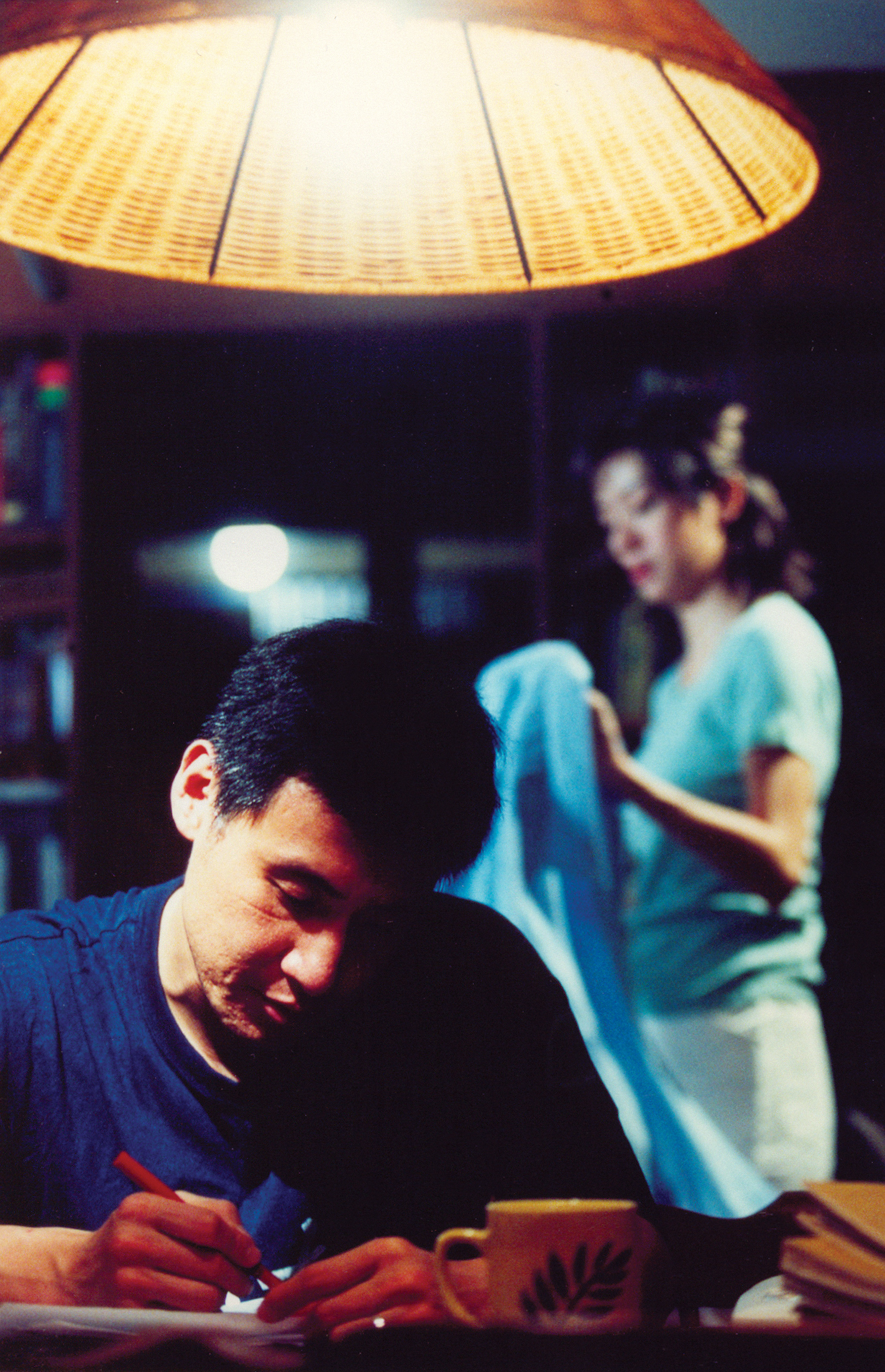
July Rhapsody (男人四十, Ann Hui, 2002)

“Not every ending fulfils your expectations” a weary mother advises her son sharing long buried family secrets which will at least set them free if not perhaps happily. Scripted by Ivy Ho, Ann Hui’s July Rhapsody (男人四十) is as the Chinese title “a man at 40” implies a film about mid-life crises and quiet desperation as a middle-aged school teacher begins to resent the loss of his youth while transgressively drawn to a free-spirited student. 

Lam (Jacky Cheung Hok-Yau) describes himself as “stiff”, a “boring” man who teaches Chinese literature to disinterested students while privately consumed by a sense of inferiority observing with envy the yachts that litter the horizon on a trip to the beach with his son. At a reunion dinner he gets up with irritation when one of his former classmates now a wealthy financier tries to pay the bill for everyone insisting on paying his own way while perhaps exposing the sense of belittlement he feels around his more successful friends. His wife Ching (Anita Mui Yim-Fong) questions his decision pointing out that even if he could afford to pay his bit perhaps his friend Yue (Eric Kot Man-Fai) couldn’t and would feel equally insulted should Lam simply agree to pay his share too. To add insult to injury, one of his friends also wants to hire him to tutor his young son in classical Chinese poetry which leaves him feeling somewhat humiliated but on the other hand not wanting to turn the money down. 

These feelings of dissatisfaction with the way his life has turned out only intensify as he reaches the age of 40 and begins to feel his options narrowing wondering if this is really all there is. He and Ching recall a melancholy poem they learnt at school in which a scholar on a boat laments “the limitations of life” only for the poem to be ironically cut short when the couple’s younger son, Stone, comes to fetch his mum because the soup is boiling dry. Even without knowledge of the final revelations told in a two part story divided between a mother and a father to a son, we can gather that Lam married extremely young and became a father soon after. He studied at night school and became a teacher as a steady job to provide for his family and perhaps to a degree resents them for limiting his choices. His classmates, aside from Yue, all went on to find more lucrative careers while he lives in a small two bed flat snapping at his wife that he’s unlikely to find the money to buy a bigger one. 

When he irritably tells her a tube of glue they bought is “all dried up” it sounds like an insult and a way of describing their moribund relationship. Beginning to bond with free-spirited high school girl Wu (Karena Lam Ka-Yan), Lam initiates intimacy with Ching but then turns away leaving her lonely and disappointed. She meanwhile explains to him that a figure from their past whom he seems to resent has become ill and is all alone. She would like to care for him but only with Lam’s consent which he gives but grudgingly. Talking to her son, Ching admits that she isn’t sure if she’s helping this man out of pity or because she simply wants to see him suffer given the effect he has had on her life. Similarly Lam later confesses to Wu that he may have befriended Yue because he was a poor student and unpopular. At his side, Lam was always going to look good bearing out his sense of insecurity in wanting to be seen as the best, idolising his Chinese literature teacher and desperate for his praise only to find himself ironically echoing his transgressions in allowing himself to be seduced by a student. 

Ironically enough, Lam tells his son that he became a teacher because he sat behind Ching in class and wanted to stand out front so that he could see her face. Wu represents for him that same innocent teenage romance, but also a sense of the path not taken in her free-spiritedness and confidence. Lam followed the conventional path, did everything right, and now he’s unhappy. Wu rejects education and goes straight into business, supported by a wealthy father, planning to go travelling in India to look for new stock for her shop. His sons too perhaps echo his conflicting desires, Ang the older studious and responsible, and the younger Stone (changing his name to the cooler “Rocky”) uninterested in his studies. The melancholy poem which frequently recurs hints at a parting while husband and wife each attempt to resolve something but are left only with uncertainty and perhaps tragically in opposing positions in considering the further course of their lives. 

This very literary drama is related in a series of stories, Lam’s told to his son first in person and then in a letter, followed by Ching’s and the constant stream of classical Chinese poetry that floods the screen guiding the couple towards the expanse of the Yangtze River. As Ching had said, not every ending fulfils your expectations because in the end life is not so neatly packaged. There may be no real accommodation with middle-aged disappointment but there may be new ways forward to be found in resolving the traumatic past.


July Rhapsody screens at Garden Cinema, London on 10th July as part of Focus Hong Kong’s Making Waves – Navigators of Hong Kong Cinema.

Original trailer (Traditional Chinese / English subtitles)