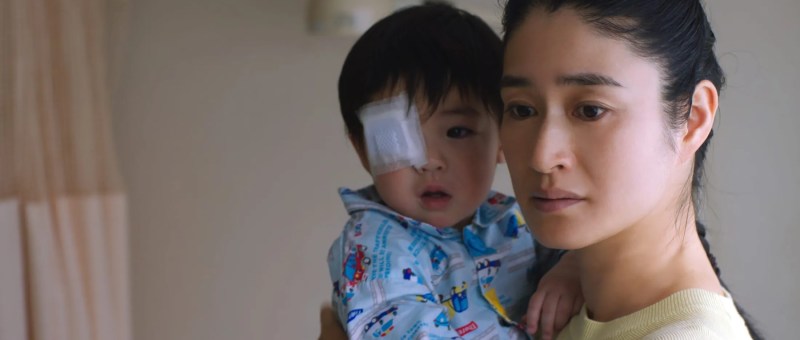

A young man begins to ponder the meaning of his life while losing both his sight and hearing in Junpei Matsumoto’s heartwarming biopic, A Mother’s Touch (桜色の風が咲く,Sakurairo no Kaze ga Saku). The English title aptly hints at the maternal devotion that kept Satoshi (Taketo Tanaka) part of the world even as he feared becoming isolated from it, though the Japanese “when the pink wind blooms” leans towards the poetic in echoing the ways in which he is able to open himself to a different kind of sensory experience.
Satoshi Fujisawa would later go on to become the first deaf blind university professor in Japan though the films opens with a toddler Satoshi discovering that he has a rare condition that causes the pressure in his eyeball to increase endangering his vision. Though he undergoes various treatments, he eventually loses the sight in one eye and then the other several years later. While in high school he then discovers that he is also beginning to lose his hearing which, along with braille, had been his primary way of experiencing the world around him.
Matsumoto’s film does not really go into the various ways in which Satoshi is inconvenienced by a largely ableist society aside from his having to leave home and go to Tokyo to attend a school for the blind. Satoshi does, however, experience bullying as a child particularly from an obnoxious gang of boys who egg him on to remove his glass eye in front of them while otherwise isolated by the constant need to rest his eyes with only rakugo to listen to on the radio. Introduced to braille, he is immediately fascinated remarking that the person who came up with it must have been a genius and explaining that he has not given up on his sight but it doesn’t hurt to learn.
It’s braille that eventually becomes his lifeline as his mother figures out a way to communicate with him by pressing his fingers as she were typing on a braille keyboard while he replies vocally. Her adhoc solution has apparently gone on to provide an important means communication for other deaf blind people across the world and reminds Satoshi that though he may feel as if he as been marooned in deep space he is not alone and is able to interact with the world around him. While still trying to save his hearing, he had decided to try an alternative treatment method which emphasised heavy exercise and bland food designed to boost the immune system though he discovered that it only robbed him of an additional sensory input and a resultant longing to eat something sweet. Though he is unable to see or hear, he can still taste and smell the world around him welcoming the spring in unexpected ways while embracing his potential and independence.
That said, his major philosophy is that life is full of voids designed for other people to fill in the ways that we can all help each other. The film doesn’t shy away from exploring the strain placed on Satoshi’s family as they try to cope with his medical needs which leave his mother feeling guilty that she is often away from her other two children caring for him at the hospital, and his father lonely and overburdened while trying to balance the demands of his working life with that of taking over the domestic space. In any case, they resolve to get through it as a family doing what they can to support Satoshi without robbing him of the opportunity to lead as independent a life as possible. Satoshi comes to believe that his disabilities may be the price for his purpose, that there must be something he is uniquely supposed to do with his life along with places only he could discover. The film eventually finds him in a space of possibility, recalling happy times with his family as a child but also looking forward towards a new potential for pushing the boundaries and moving beyond the limitations others might have placed on him.
A Mother’s Touch screened as part of this year’s Camera Japan.
International trailer (English subtitles)
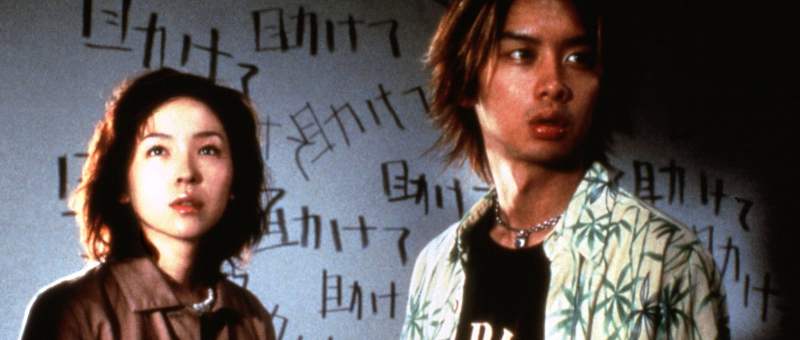
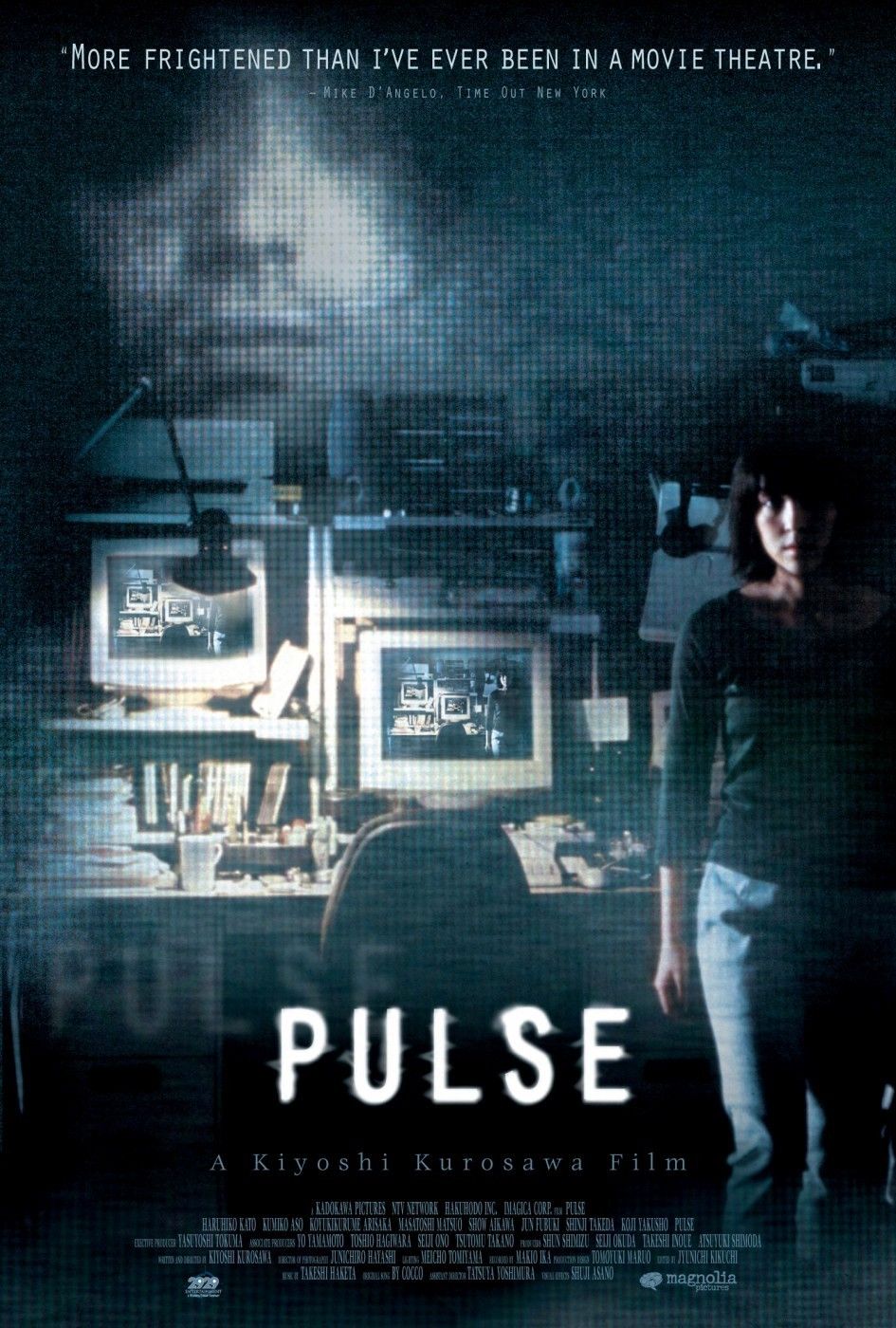 Times change and then they don’t. 2001 was a strange year, once a byword for the future it soon became the past but rather than ushering us into a new era of space exploration and a utopia born of technological advance, it brought us only new anxieties forged by ongoing political instabilities, changes in the world order, and a discomfort in those same advances we were assured would make us free. Japanese cinema, by this time, had become synonymous with horror defined by dripping wet, longhaired ghosts wreaking vengeance against an uncaring world. The genre was almost played out by the time Kiyoshi Kurosawa’s Pulse (回路, Kairo) rolled around, but rather than submitting himself to the inevitability of its demise, Kurosawa took the moribund form and pushed it as far as it could possibility go. Much like the film’s protagonists, Kurosawa determines to go as far as he can in the knowledge that standing still or turning back is consenting to your own obsolescence.
 Windows on Worlds