Hey! Our Dear Don-chan (おーい!どんちゃん, Shuichi Okita, 2022)

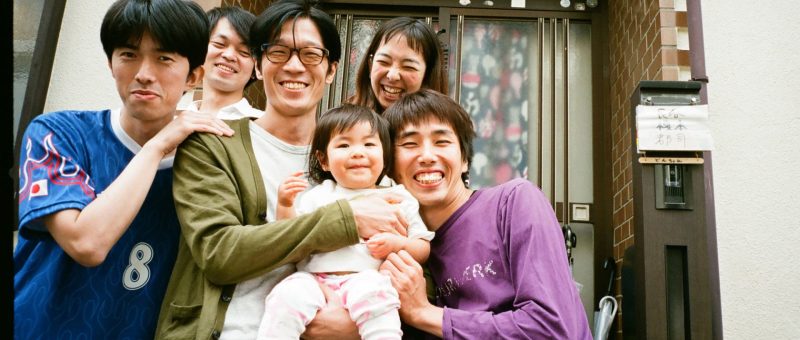
A trio of actors undergo a coming-of-age tale of their own when a baby is suddenly abandoned on their doorstep in Shuichi Okita’s charming slice of life dramedy, Our Dear Don-chan (おーい!どんちゃん, Oi! Don-chan). A take on Three Men and a Baby, the film stars the director’s own daughter and follows her over a period of three years as the actors attempt to adjust to fatherhood and the new kind of family that has arisen between them. 

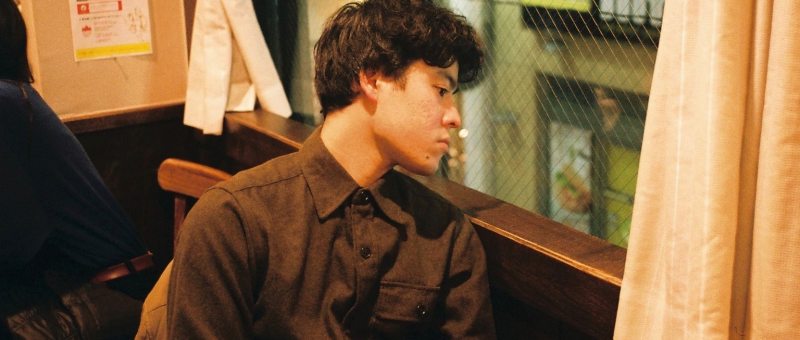
As the film opens, Michio (Tappei Sakaguchi), Ken (Hirota Otsuka), and Gunji (Ryuta Endo) are struggling actors working in slightly different media but having about the same amount of luck and continually dejected about their lack of career success. Ironically while playing the game of life, Ken has a baby girl in the game but is surprised to hear one crying for real on the street below. On reading a note in her pushchair, Ken realises that the baby has been left by a previous girlfriend, Kaori, with the instruction that he raise it. 

Of course, the situation gives rise to a degree of panic, Ken wondering not only if he is the father but if he can be while supported by the other two guys, along with former houseman Sakamoto and his girlfriend Akari, taking care of more practical matter likes getting nappies and baby food. Then again, some of the practical details are already overcome by virtue of their occupations which allow them to be home during the day taking shifts to watch the baby they christen “Don-chan” on account of not knowing her real name. 

As they struggle with the demands of fatherhood, the three men each commit themselves to Don-chan’s well being, mindful of the memories she’ll make in the future and wanting to make her present as happy as possible. At one point they decide to take a camping trip in order to show her that they can be “manly dads”, but otherwise entertain her at home or take her on trips to the aquarium acting as a trio even if Ken is technically the primary dad forming a new kind of family that makes it easier to care for a small child than it might otherwise have been. If Ken had been on his own, he may not have been able to raise her. Michio and Gunji both complain at the precarious state of childcare facilities, lamenting that you can’t get a place unless you work full-time but you can’t work full-time if you can’t get childcare for when you’re at work. 

Meanwhile, they continue to struggle in their professional lives. A humiliating audition for a TV commercial causes Ken to rethink his career plans, stopping off to buy new toys for Don-chan on the way home lamenting that he “danced like an idiot for no reason.” Michio continues to go full method over researching all his roles for seconds of screen time in TV and movies, while Gunji’s stage career is disrupted when the manager of his troupe decides to admit himself to a psychiatric facility for long term care. Through their interactions with Don-chan, however, they all begin to grow up gaining further life experience which enhances their performance ability and gives them a greater goal to work towards aside from mere career success. 

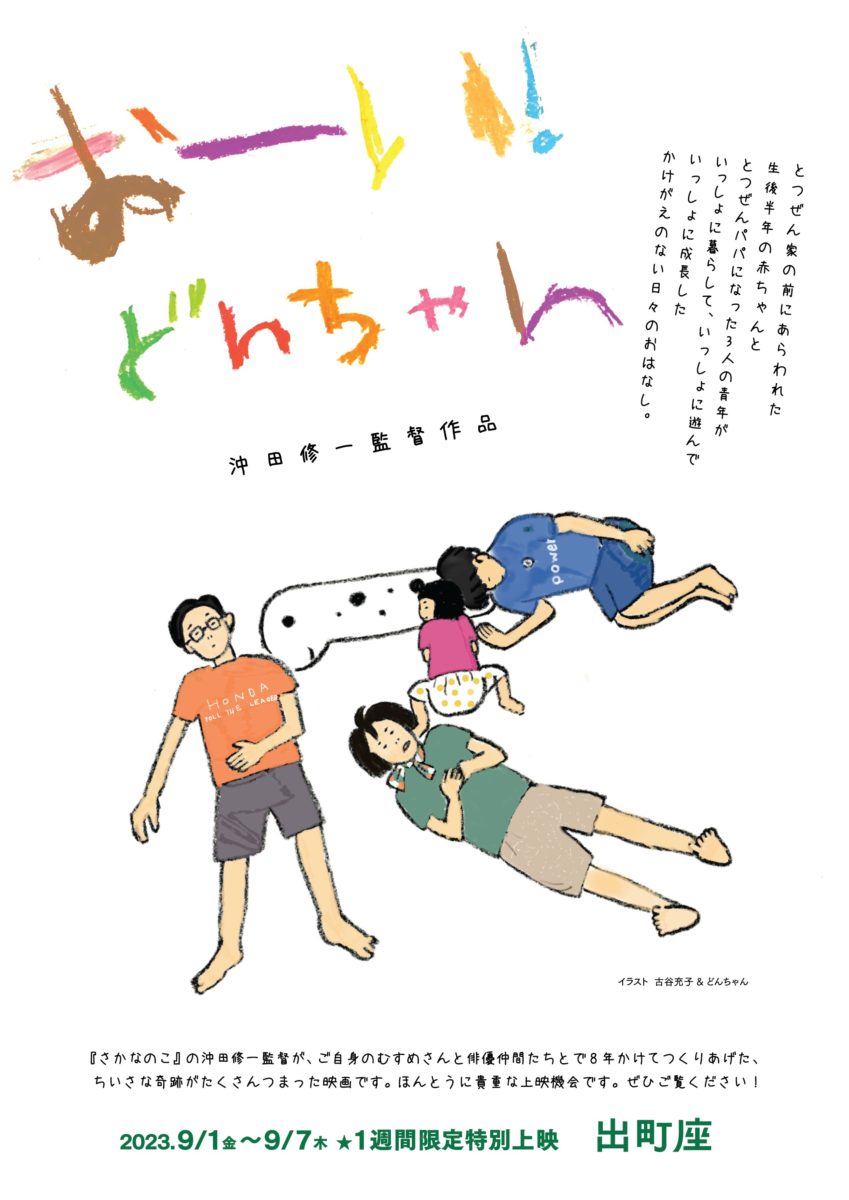
A heartwarming familial drama, the film doesn’t gloss over how difficult it can be to raise a child in contemporary Japan especially as a single-parent but rather embraces a larger idea of the word family which centres platonic friendship and community while simultaneously understanding of Kaori’s position in the knowledge that none of this is easy and she may not have had access to the kind of support that made it possible for Ken to care for Don-chan with so much love and attention. In any case, little Don-chan is certainly lucky to have so many people around her all invested in her happiness and future whose lives she has also enriched just by her existence. A truly happy film, Okita adds small doses of absurdity to the already surreal events along with a nostalgic sense of childhood comfort right down to the childish font of the film’s titles complete with corrections and crossings out that are, much like life, evidence of joyful trial and error. 


Trailer (English subtitles)
Remembering Every Night (すべての夜を思いだす, Yui Kiyohara, 2022)

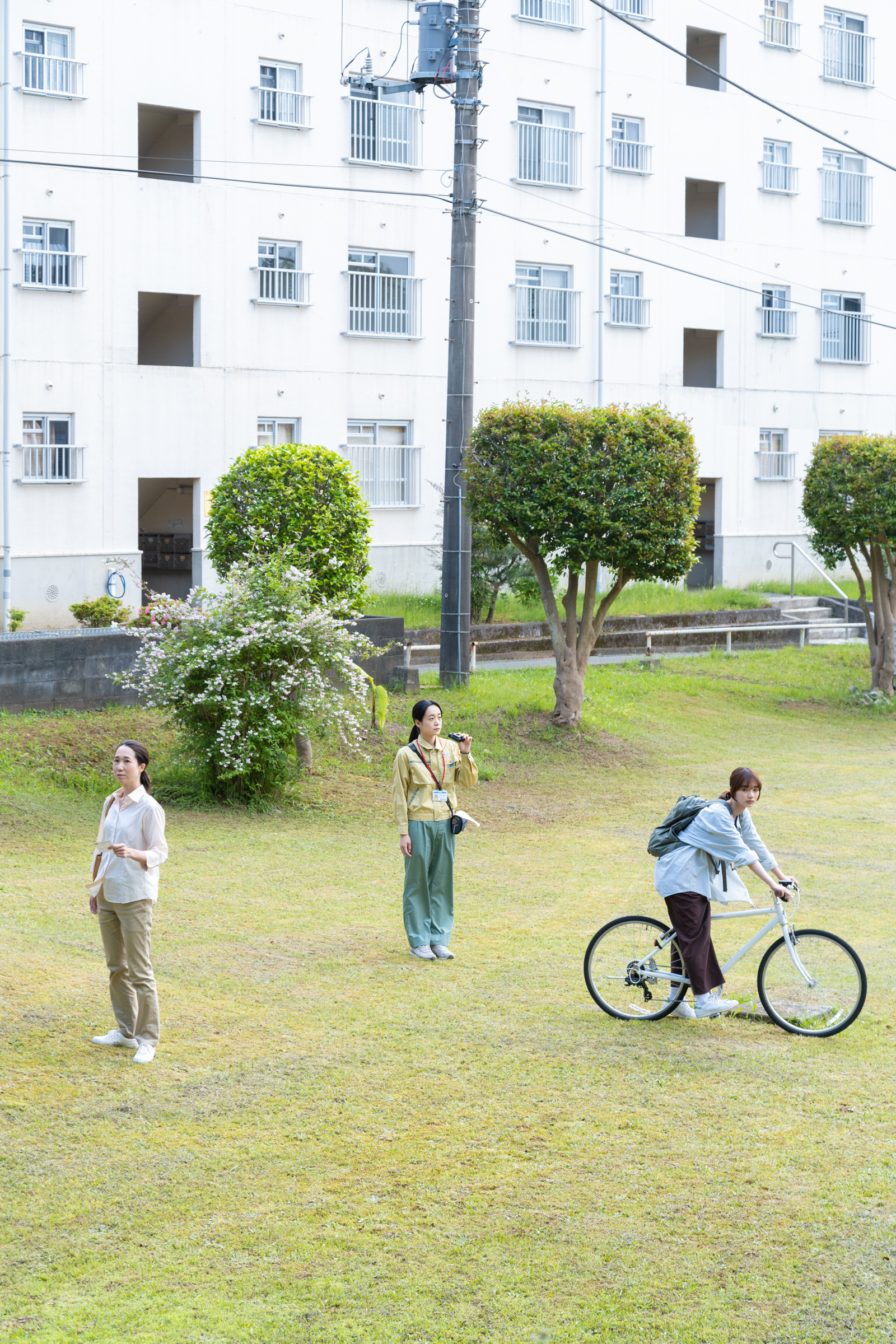
“It all looks the same here, it’s easy to get lost” a young man remarks on giving directions to a middle-aged woman who explains that she’s lived in this town for a long time but never been to this area before. Yui Kiyohara’s wistful drama Remembering Every Night (すべての夜を思いだす, Subete no Yoru wo Omoidasu) takes place in Tama New Town, which is as its name suggests a planned development on the outskirts of Tokyo and home to a large number of danchi housing estates which once symbolised a bright post-war future but now seem increasingly old-fashioned and in their own way lonely. 

Loneliness is an underlying theme in the lives of three women whose paths intersect over the course of a day one of whom, gas inspector Sonae, runs into an old lady who talks her ear off about how it’s not like it was when she and the other residents of the danchi were all young together and minded each other’s children to juggle work and domesticity. Now there are only old people, like herself, left. The man next-door, Mr Takada, has gone missing and is later found returning to a different home perhaps one he lived in many years ago in search of a wife who it seems may no longer be living.

They are all in a way looking for something. Chizu, whose name is ironically a homonym for “map”, is looking for several things and not least among them a job after being laid off from a kimono shop which is apparently short staffed without her. As she explains, today is her birthday and she feels like doing something “different” which is perhaps why she travels to another part of town clutching a change of address card for an old friend she’s otherwise lost touch with. She does indeed do several “different” things such as climbing a tree to retrieve a shuttlecock for a pair of mystified children who eventually walk off in embarrassment, and copying the dance moves of a young woman practicing in the park.

The young woman, Natsu, whose name means “summer”, like the children describes Chizu as “creepy” but like her is searching for something from the past in trying to come to terms with her grief over a friend who died the summer before. She visits his mother and tries to return the receipt for photos she had developed that Dai had taken before he died only for her to refuse to take them, explaining that she has plenty of photos that he took but ironically few of him. Natsu later tries to pick the photos up only for the sullen man at the store to suggest she’s waited too long and he might not have them anymore later looking through them himself in the back room where he converts analogue videos to digital. 

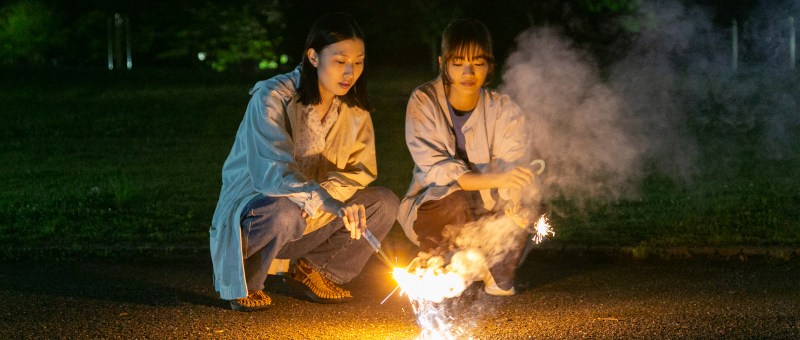
There is something poignant in the old home videos from 80s and 90s each featuring birthdays of small children doubtless now old enough to have children of their own appearing like ghosts from another era to remind us that time is always passing. After visiting an exhibition of Joumon pottery with her friend, Natsu wonders whether anyone will remember Dai in thousands of years’ time engaging in an act of remembrance lighting fireworks in the park as if reclaiming the memory from the photos she couldn’t bear to collect. The other women each end up alone, pondering past regrets in the darkness of a summer night on the edges of a city trapped in a labyrinth of memory in an almost imaginary landscape. 

The deliberate sameness of the Tama New City environment lends it an uncanny quality of otherworldliness, as if it had no real borders and the life here went on forever. It seems to us that Mr Takada has got the wrong house, but perhaps it’s us who’ve got the wrong world. Sonae soon discovers that the gas metre’s still running even though there’s no contract for that address while its seeming emptiness is undermined by the pot of fresh flowers growing happily on its doorstep. Perhaps the resident is, like these women, simply living their life largely invisible to us and just another presence that may one day cross ours whether we notice or not. Told with breezy serenity, Kiyohara’s playful summer drama circles the unreality of the everyday but finds in it a kind of comfort if perhaps tempered by melancholy. 


Remembering Every Night screened as part of this year’s Nippon Connection

International trailer (English subtitles)

The Hardness of Avocado (アボカドの固さ, Masaya Jo, 2019)

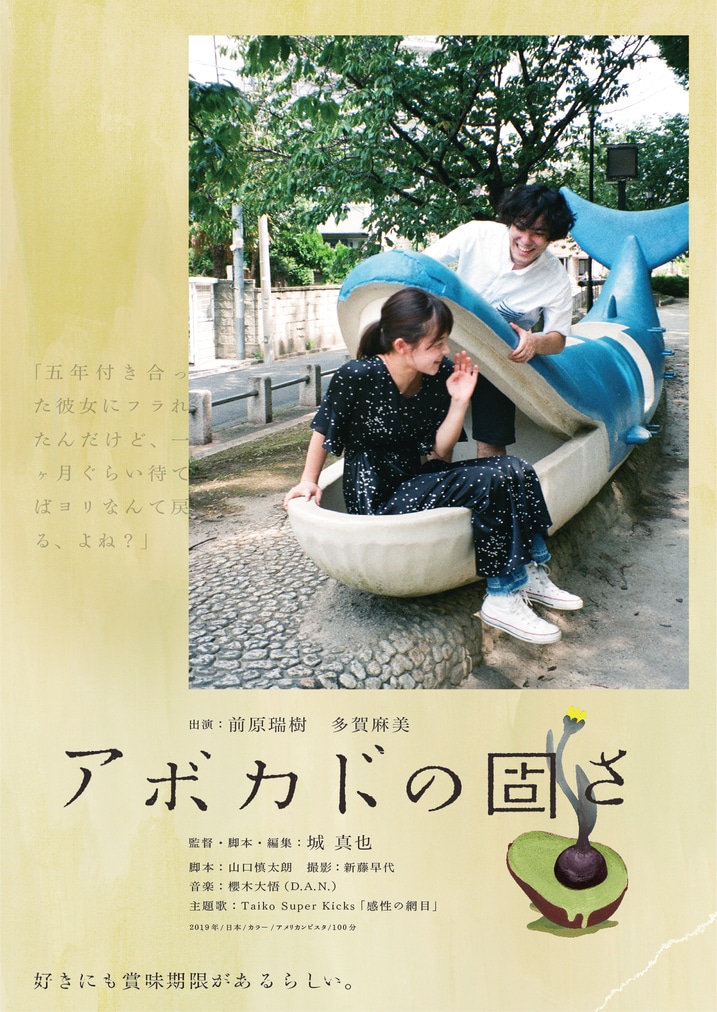
“Reality might be bitter, but at least your coffee is sweet” according to the “gloomy” voiceover performed by aspiring actor Mizuki Maehara in Masaya Jo’s The Hardness of Avocado (アボカドの固さ, Avocado no Katasa). In many ways a tale of quarter-life inertia and youthful denial, Jo’s indie drama finds its struggling hero looking for the sweet spot, trying to grab the avocado at the opportune moment between rock hard and squishy mess but floundering in world which seems both continually confusing and perhaps inherently unfair. 

At 24, Mizuki (Mizuki Maehara) is a jobbing actor living with his sister (Zuru Onodera) in a small apartment. He’s been in a committed relationship with Shimi (Asami Taga) for the last five years and is already thinking about moving in together, asking her to help him pick out a sofa-bed after their date to the movies where she fell asleep and he ended up meeting a fan who recognised him from a previous film. Shimi, however, seems irritated, eventually answering Mizuki’s well meaning question about what she’d most like to do right now with the answer “break up”. In a pattern which will be repeated, Mizuki reacts somewhat petulantly, walking off with a “fine then” only to end up regretting it later. Unable to accept that Shimi is really ready to move on, he decides to give her (and himself) one month before, he assumes, they’ll get back together having each grown as people during their time apart. 

This baseless optimism and mild sense of self-centred entitlement are perhaps the very things that Mizuki is supposed to be outgrowing even as he struggles to get over Shimi. Having dated for five years, Mizuki took his relationship for granted, assuming it was settled and destined to go on forever. Shimi’s declaration comes as a complete surprise, shocking in its abruptness though we can see that she seems irritated by him and that it may be more than a temporary bad mood. She tells him that she needs “freedom” and time to herself, but it seems equally likely that, from her point of view, the relationship has simply run its course. Looking through his mementos, Mizuki finds a 20th birthday card from Shimi that promised she’d always be around to encourage him, but relationships entered in adolescence rarely survive the demands of adulthood and she, it seems, is after something more while all Mizuki seems to want is more of the same. 

Moping about the city, he engages in borderline misogynistic banter with his friends, occasionally irritating even them in his resentment towards a nerdy guy who has finally got a girlfriend. He finds himself applying for a job in a convenience store to make ends meet between auditions seated next to a pair of students who roll their eyes, mocking him for his lack of success as a man in his mid-20s still part-timing just like them. Meanwhile, he develops an unwise fondness for a woman he meets on a shoot, chatting her up at the afterparty but saying the quiet part out loud as he confesses his plan to have a fling while fully believing he’ll be getting back together with Shimi when the month is up. Despite the fact she has also told him she has a boyfriend, he suddenly declares his love to her, once again petulantly put out by her irritation as she points out how inappropriate he’s been seeing as all he’s done is talk about Shimi.

Shimi’s mother (Kumi Hyodo) can’t understand why she’d break up with someone as “nice” as Mizuki, and Mizuki is indeed “nice” if obviously imperfect, an earnest sort of man working hard to achieve his dreams, but she apparently wanted something less superficial, a more ”passionate and loving relationship” now that she’s outgrown adolescent romance. Mizuki is once again surprised when she brushes off his romantic overture, petulantly walking home while beginning to accept that something has indeed changed. Finally fastening the screws on his new chair (in lieu of the bed) he begins to regain some solo stability, a little more self-sufficient at least even if he still has some some growth to achieve on his own. A whimsical tale of millennial malaise and self-centred male entitlement, The Hardness of Avocado is a gentle advocation for learning to let go when something’s past its best while accepting that sometimes all you can do is set yourself right and start again. 


The Hardness of Avocado screened as part of Camera Japan 2020.

Original trailer (no subtitles)

Hospitalité (歓待, Koji Fukada, 2010)

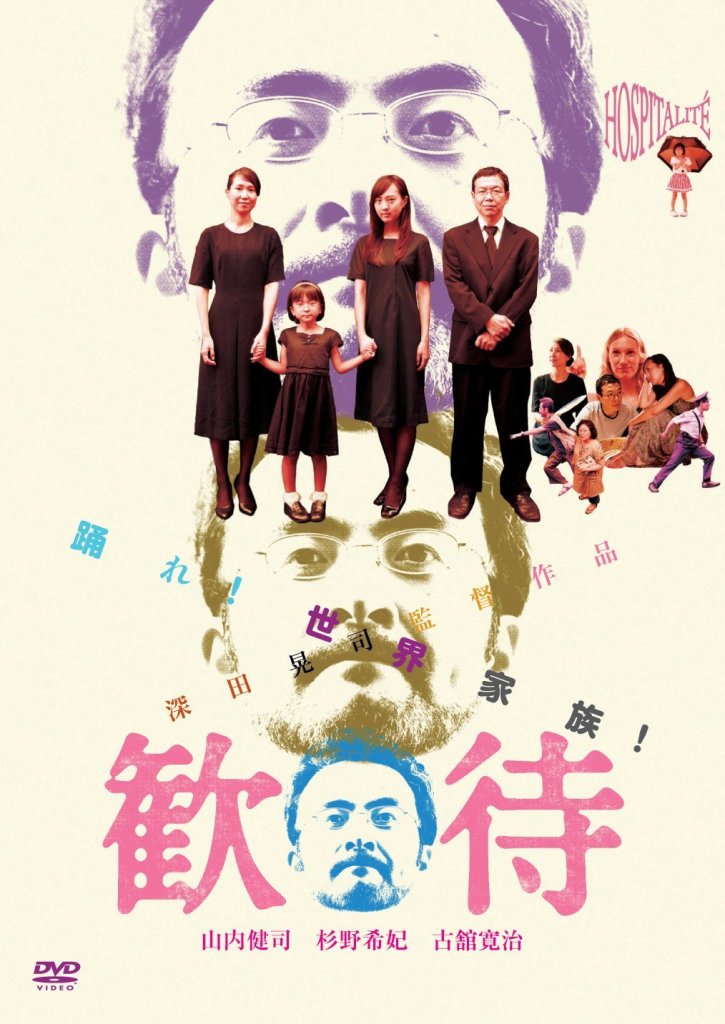
hospitaliteFrom the Ozu-esque, classic calligraphy of its elegant title sequence, you might expecting a rather different kind of family drama than the one you find in Koji Fukada’s Hospitalité (歓待, Kantai). Though his compositions lean more towards the conventional, Fukada aims somewhere between a more restrained The Family Game and a much less explosive Theorem as he uses the family as a microcosmic analogy for his country’s attitudes towards “outside intrusion”. An absurdist tale of dysfunctional families and hypocritical social standards, Hospitalité takes a long hard look at whom exactly you regard as “guest” and how much you’re really prepared to take care of them.

The Kobayashis run a small printers shop in a rundown suburban backwater. Son Mikio has inherited the business and lives above it with his second wife, Natsuki, and his daughter from a previous marriage, Eriko. Older sister Seiko has recently moved back in following a divorce though she also has a vague idea of wanting to study abroad. Things start to go haywire when little Eriko’s pet parakeet absconds from the family home. Heartbroken, she designs a special flyer to try and find it which brings them to the attention of “old friend” Kagawa who claims to have seen the bird somewhere near the station.

Kagawa hangs round a little longer than necessary chatting to the couple when their assistant suddenly keels over. This allows a convenient opening for Kagawa to volunteer his services at the print shop – luckily he knows how to handle the machines. He quickly moves into their spare upstairs room before also moving in his “foreign wife”, Annabelle, and a bunch of other non-Japanese people by which time he’s well and truly wrested control of the mini printshop empire away from the mild mannered Mikio and caused a degree of local panic in the process.

The Kobayashis are “hospitable” people. To begin with they don’t mind having this “old friend” hanging around and helping him out by letting him stay and work in the shop. When he suddenly introduces his wife without warning they may feel he’s taking advantage but anyway they go along with it. Annabelle, from “Brazil”, or was it “Bosnia”, gives the impression of someone who is always pretending their language skills aren’t as good as they really are so people let their guard down around her. She teaches “salsa”, apparently, and starts to get on Natsuki’s nerves by usurping her position as resident English speaker.

The town itself is not quite as charitable as the Kobayashis as evidenced by the older lady who keeps dropping by with petitions for the neighbourhood watch to which she’d also like to recruit the ladies of the house. She’s worried about the increasing number of “foreigners” in the area which she now feels is becoming “dangerous” as a consequence. That’s not to mention the proposed “beautification” plan for the park (which really means getting rid of all those people who sleep there in cardboard boxes). That said, though neither of the women is particularly interested in joining the neighbourhood watch or against the idea of non-Japanese people coming to live in their town, they go along with the woman and her plans not to rock the boat. They run a business here after all so they have an interest in keeping the town stable and in maintaining good social relations with their neighbours, so it makes sense to just put up with whatever bigoted nonsense they’re spouting, right?

For all their “lascivious dancing”, topless sunbathing, and “promiscuous immorality”…the foreigners are quite clearly not as much of a problem as the underlying hypocrisy which runs through the Kobayashis’ world. When Kagawa asks about Mikio’s previous wife, he says “she got sick” leading him to think Mikio is a widower which isn’t quite true but is a less embarrassing for explanation for Mikio to offer than what really happened. There’s an obvious tension between Mikio and Natsuki as well as with the recently returned older sister. As soon as Kagawa begins to work his magic, driving a pneumatic drill right into all of those tiny cracks and fractures which exist between a husband and a wife, everything begins to fall apart though in an equally quiet and subtle fashion. However, people have need of their fantasies and even after Kagawa has exposed the holes in their marriage, Mikio and Natsuki seem content to simply paper over their differences and go back to pretending everything’s fine just like before.

A surrealist’s meditation on xenophobia, social mores, and what happens when a caged bird decides to be free, Hospitalité is a suitably nuanced, not to mention frequently amusing, look at contemporary small town mentality. Everyone is so invested in maintaining a particular quality of personal truth, be it in a hospitable place which thinks the answer to people cluttering up the park with their cardboard boxes is to “beautify” the area by throwing them out, or a neighbourhood watch group that’s all egos with a local place for local people mentality, that maintaining the lies is much more important than solving the underlying problem. Koji Fukada’s farcical approach to the absurdity of everyday life is a good natured and humorous one, but the problems at its core are all too real.


Hospitalité was released on DVD in the US by Filmmovement and still appears to be in print though the distributor’s website is constant 403.

English subtitled trailer: