The Moon Thieves (盜月者, Steve Yuen Kim-Wai, 2024)

If something’s constructed entirely from orphaned parts of others like it, can you really say it’s a “fake”? Watchmaker Vincent (Edan Lui Cheuk-on) might say no, making his living through passing off “period correct” replicas of fancy watches as the “real” thing while trying to stay one step ahead of the authorities and the gangsters who seem to be his prime customers. Then again, The Moon Thieves (盜月者), Steve Yuen Kim-Wai’s return to the big screen in four years since Legally Declared Dead and a vehicle for phenomenally popular boyband Mirror, never really stops to ask just why vintage luxury watches are so desirable that the super wealthy are prepared to expend vast sums on a niche vanity status symbol but perhaps there really is no answer for that one. 

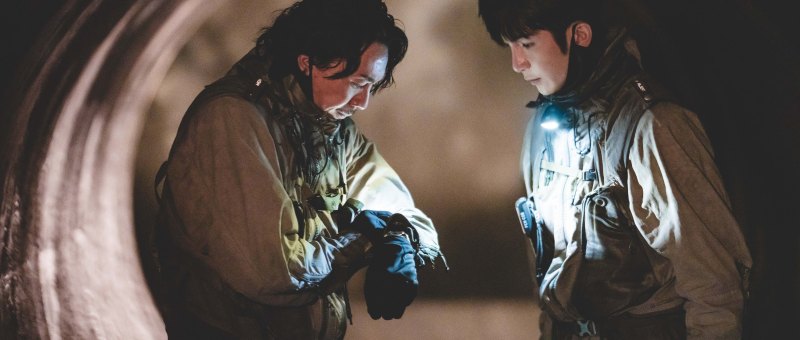
In any case, Vincent’s obsession is with the watch worn by Buzz Aldrin as he stepped onto the moon which seems to have become lost to time with NASA apparently refusing to confirm or deny its existence. His decision to make a period correct watch for a petty gangster in order to retrieve some info on the Moon Watch lands him in hot water when he’s blackmailed by local kingpin Uncle (Keung To), who is actually a youngish guy who’s taken over the name and criminal empire of his late father. Unless he wants the gangster to find out the watch is “fake”, Vincent will have to join his heist team and travel to Japan where he’ll sneakily replace three watches worn by Picasso with his homemade replicas. 

It has to be said that the film’s fatal flaw is the miscasting of Keung To as the mercurial gangster, Uncle. Though his boyish bravado might play into the idea that Uncle is out of his depth, too insecure to even use his own name rather than adopt his father’s, To’s total lack of menace or authority leaves him a rather hollow villain who alternates between super sharp intelligence and dull predictability laced with misplaced smugness. Meanwhile, Vincent is able to stay a few steps ahead of him if only in his canny knowledge of the vintage watch trade and easy power to manipulate the markets though even he probably didn’t plan on incurring the wrath of space-obsessed local yakuza who are very annoyed to have had their luxury watches stolen out from under them. 

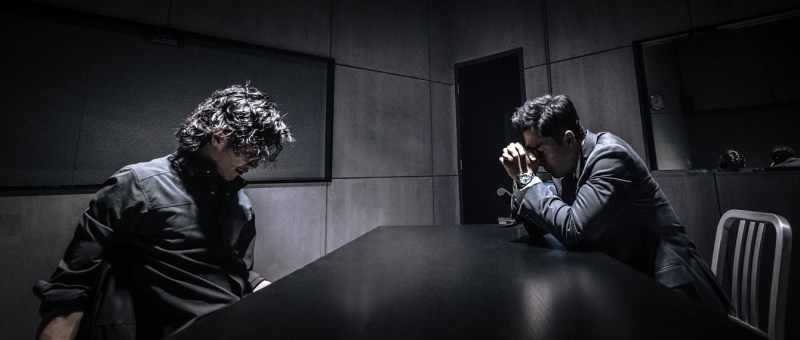
This leaves the gang doubly vulnerable while veteran members Chief (Louis Cheung) and Mario (Michael Ning) begin to suspect that Uncle is getting rid of all his father’s previous associates and doesn’t really plan to let them live. Tensions within the group are only further strained by an unexpected hitch in the plan which brings them to the attention of the yakuza despite their incredibly careful preparations. Yuen keeps the tension high through the heist slipping into slick Ocean’s Eleven-style visuals which lend a sense of cool to the gang’s endeavours which are after all a kind of rebellion against Uncle as much as they are a capitulation to his stronghold on the local community. 

Twists and double-crosses abound as the gang try to stay ahead of him with not everything quite as it seems. Like the watches, they take everything apart to put it back together again in a way that better suits them, freeing themselves from Uncle’s thumb which might in itself stand in for another distant and corrupt authority. Ironically, the yakuza remarked that no one remembers who came second yet everyone is desperate to get their hands on the famed Moon Watch worn by the second man to walk on the moon as a kind of holy grail among horologists that they would maim or kill for though of course even if they had it they could never show it to anyone fearing they’d caught out by the authorities including NASA who apparently have a lot of say over this particular relic of the moon landing. The heist isn’t quite as daring as actually stealing the moon, though it is definitely a sticky situation for all involved which eventually requires them to hide their quarry in plain sight while doing their best to outsmart Uncle and avoid turning on each other. Smart and slick, the broadly comic overtones lend an endearing quality to Vincent’s quest for survival while targeted by a ruthlessly corrupt and infinitely implacable authority.                                                                                                                                                                  


The Moon Thieves opens in UK cinemas 23rd February courtesy of Central City Media.

UK trailer (English subtitles)
Raging Fire (怒火, Benny Chan, 2021)

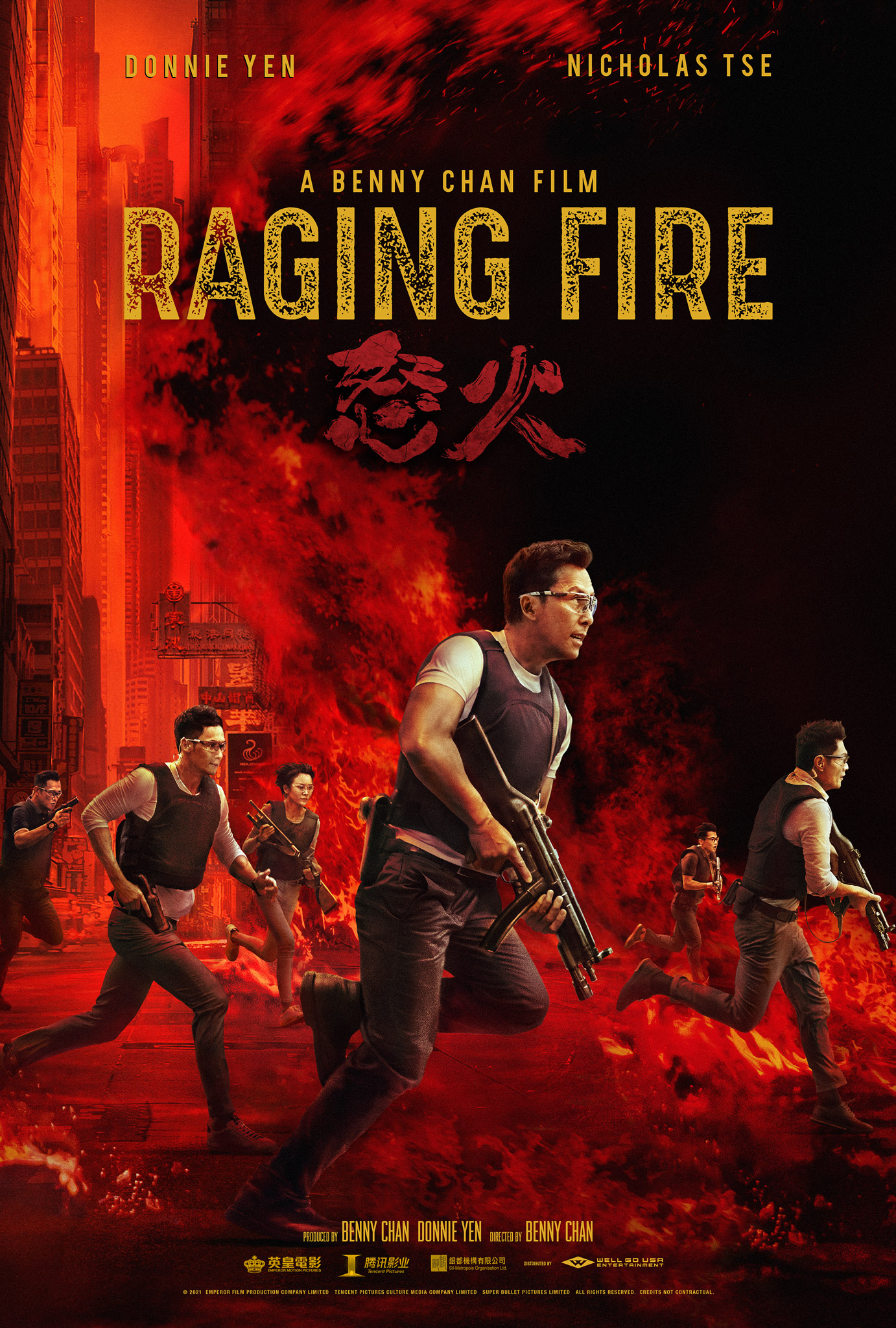
“If you had chased Coke that day, would our destinies have been reversed?” a cop turned villain asks of his righteous colleague, but his friend has no answer for him. The final film from director Benny Chan who sadly passed away last year after being diagnosed with cancer while filming, Raging Fire (怒火) pits a disgruntled police officer wronged by the system against an incorruptible detective but suggests that the real villain is an increasingly corrupt society in which the rich and powerful have a direct line to justice. 

As the film opens, noble officer Cheung (Donnie Yen) is racing towards some kind of altercation in a shipyard but later wakes up next to his much younger and very pregnant wife (Qin Lan). After a years long operation, his team is about to take out a petty criminal involved with a previous investigation which resulted in fellow officers getting sent to prison for excessive use of force. After refusing to to help a wealthy businessman make his son’s drunken car accident go away, Cheung is taken off the case while the raid turns out to have been a trap leaving eight of his friends dead and many more injured. Through his investigations, Cheung begins to realise that his former colleague Ngo (Nicholas Tse), recently released from prison, may be responsible for the deaths of his friends in pursuing a vigilante revenge against the police force he feels betrayed him. 

“This society doesn’t reward good men” Ngo later insists, though his total and relatively sudden transformation from earnest cop to bloodthirsty psychopathic killer seems something of a stretch. Cheung aside, the Hong Kong police force is depicted as infinitely corrupt and working at the behest of the rich and powerful to further agendas not always in the interests of justice. The case which caused so much trouble related to the kidnapping of a prominent financier and the secretary he was canoodling with at the time, the financier’s wife having obeyed the kidnappers’ instructions not to call the police by ringing a government contact instead which is why the operation is covert. Ngo and his team were told to do whatever it took to extract information from a suspect who later wound up dead but were hung out to dry by the superior officer who ordered it. Not unreasonably they see themselves as victims of a corrupt system but care little who might get in the way of their vicious bid for revenge. 

For his part, Chueng is also a thorn in the side of his colleagues because of his refusal to play along with the base level corruption all around him. Dragged to the meeting with the businessman by nervous colleague Beau (Patrick Tam), Cheung sips tea rather than the wine everyone else is drinking and eventually storms out making a point of paying for his exorbitantly priced beverage while refusing to be complicit with systemic corruption. So upright is he that he asks a passing driver if he has insurance before borrowing his car to chase down Ngo and when he himself is accused of breaking protocol the entire squad shows up to petition the disciplinary panel on his behalf. Ngo asks him if the situation would have been reversed had it been Cheung who had questioned the suspect that night, but of course it wouldn’t because Cheung would never have beaten a suspect to death in the first place. 

Chan places this debate front and centre by setting the final showdown in a church currently undergoing renovation, Ngo seemingly judged for his moral transgressions while Cheung meditates on the man he used to be in a bromance montage that laments the tragedy of Ngo’s fall from grace. The battle of wits between the two men, Ngo of course uniquely positioned to game the system he rails against, ends only in futility while the system which created him remains unchanged. Chan shoots with characteristic visual flare sending his compromised cops through a golden hellscape of the contemporary city veering between beautifully choreographed, high octane action sequences including a lengthy car chase through a highly populated area, and procedural thrills tinged with ambivalent social commentary in which justice itself has become commodified while police officers exceed their authority and bow to the rich and powerful. A throwback to classic Hong Kong action, Chan’s final film is a fitting finale for the career of a director taken far too soon. 


Raging Fire screened as part of this year’s New York Asian Film Festival and will be released in US cinemas on Aug, 13 courtesy of Well Go USA.

International trailer (English subtitles)