Reclaim (一家之主, CJ Wang, 2022)

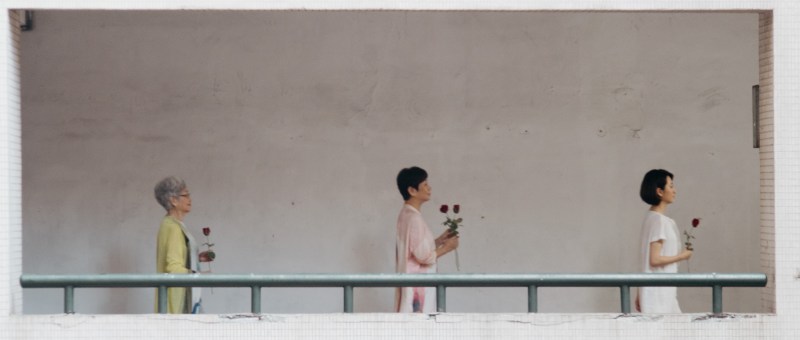
An ordinary middle-aged woman begins to wonder what it’s all been for when dealing with her insensitive, authoritarian husband, distant children, and the sacrifices she continually made to make others happy in CJ Wang’s touching family drama, Reclaim (一家之主, yījiāzhīzhǔ). The Chinese title, master of the house, is in its way ironic in the various ways in which Lan-xin (Nina Paw Hee-ching) is expected to shoulder all of the domestic responsibility with none of the control, though she is indeed attempting to reclaim something of herself as a woman and an individual as distinct from being someone’s, wife, mother, friend, or teacher. 

Lan-xin wanted to study art in Paris, but she got married young and started family and ever since then has led a conventional life doing what she thought to be right thing. Now, however, with her husband David (Kou Hsi-Shun) recently retired and both her children grown up she’s wondering a little what it’s all been for especially as David is a chauvinistic throwback who belittles her work as an art teacher while harping on about ways to make money patiently waiting for his collection of antique teapots to rise in value. Now that her mother’s dementia has intensified and she keeps escaping from her nursing home, Lan-xin wants to bring her to live with them but David is both dismissive and disinterested talking about it in the same way one would to a child who wants to get a dog asking if they really have the space and making it clear that looking after her will be Lan-xin’s responsibility. 

While David holds on to a substantial cheque with the intention of investing it in a series of harebrained schemes from luxury tombs to VR cafes, Lan-xin’s desire is essentially to try and repair her fracturing family by buying a larger apartment where they could all live together. David complains that no one tells him anything, but that’s largely because he’s continually dismissive of their dreams and aspirations blowing a hole in his daughter’s new project designing eco-friendly homes that prioritise individual comfort by telling her that she should just extend the living area into the balcony to trick people into thinking they’re getting more for their money. Jia-ning (Ko Chia-yen) in particular is feeling lost in her life unsure of what role it is she’s supposed to be playing while clearly disillusioned with the nature of the relationship between her parents in which her mother is expected to sacrifice her desires in service of her father’s. It’s clear that neither of the children want the kind of futures their parents envisaged for them, their professor son also preparing to return from the US to live a simple life in the Taiwanese countryside. 

Both of the children, however, take their mother for granted and often treat her poorly. The son orders her to book his plane tickets for him and abruptly hangs up after asking her to clean his room and make his favourite food, while Jia-ning also snaps at her expecting her to handle domestic tasks and locate missing items. Lan-xin forms a quasi-maternal relationship with a former student who has returned from America (Mason Lee) and now works in finance but is faced with the implosion of all her hopes firstly in her daughter’s more immediate needs to claim independence in her working life while avoiding the same compromises she was forced to make, and then by the illusionary nature of her home owning dream buying one home for fragmenting family rather than enduring her dissatisfying living arrangements while investing in separate homes for each of her children. 

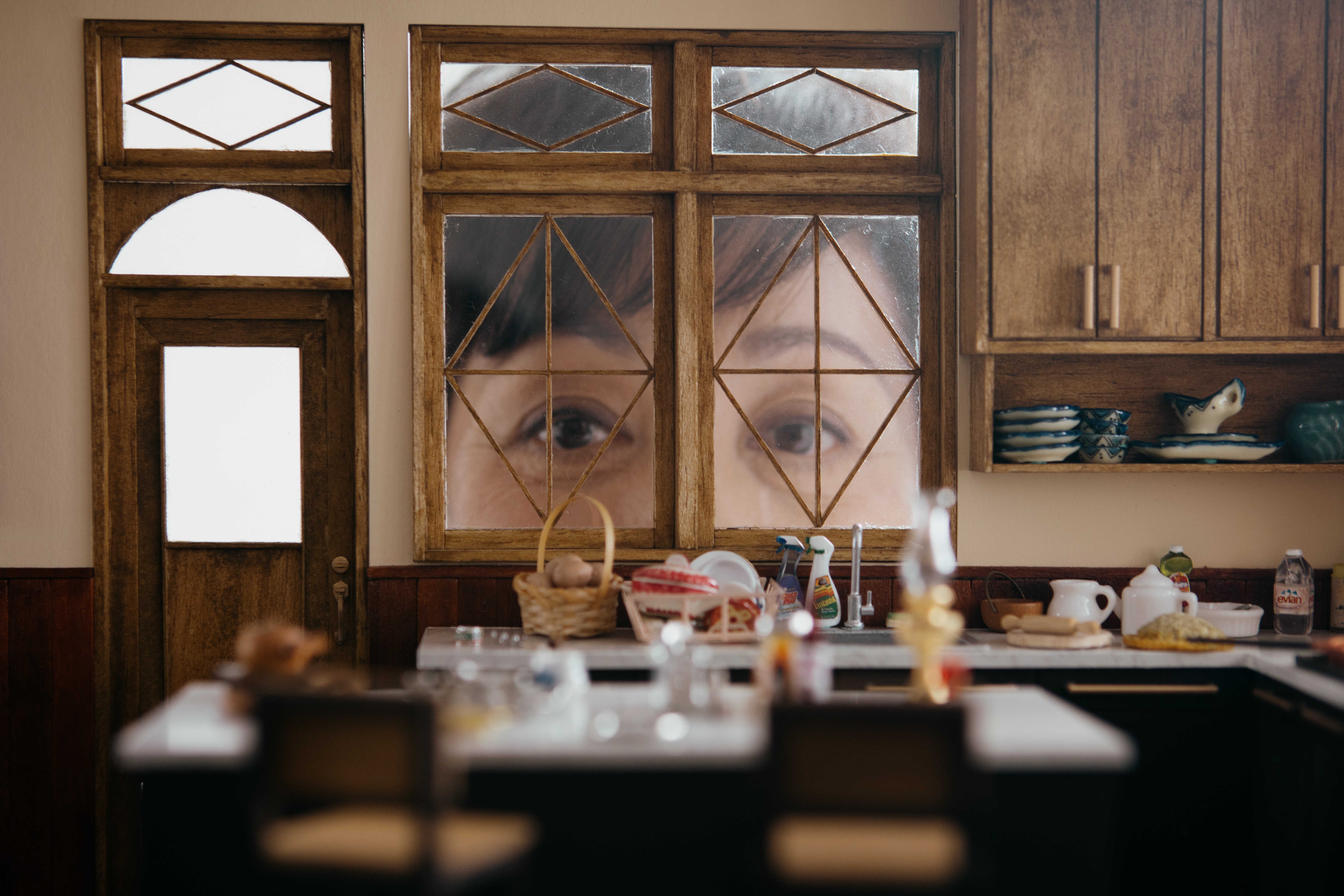
There may be a degree of personal myth making in her meditating on the lost opportunity of a Parisian education as implied in an imaginary conversation with her mother, though as her miniature-making hobby implies perhaps she played the role she wanted to play but lost sight of herself somewhere along the way. A voyage into her own memory reunites her with her essential self and allows her to reclaim her name no longer willing to be subservient to her husband’s desires but prioritising her own. As in her dream, all her sacrifices will eventually be repaid while Jia-ning too comes to a better understanding of her mother and grandmother along with her own place in a changing society. Lan-xin is finally a master of herself no longer afraid to take up space in her own home and in full control of her own aspirations and desires. 


Reclaim screened as part of this year’s New York Asian Film Festival. It is also available to stream in many territories via Netflix.

Netflix trailer (English subtitles)

Images: ©2022 Rong Gwan Productions ALL RIGHTS RESERVED
As We Like It (揭大歡喜, Chen Hung-i & Muni Wei, 2021)

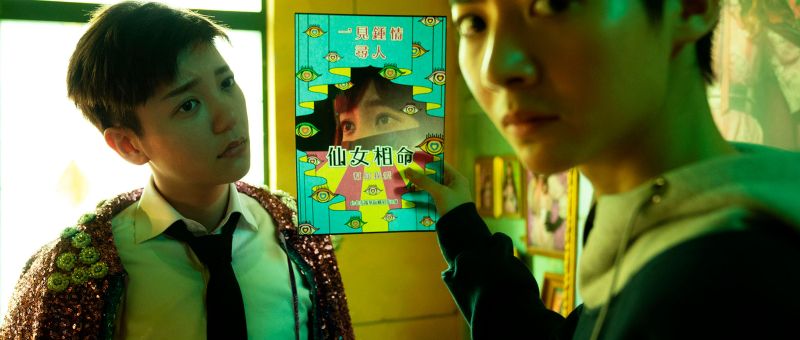
“It’s the crazy madness we call love” according to a series of bemused bystanders in Chen Hung-i and Muni Wei’s modernist take on the Shakespeare play, As We Like It (揭大歡喜, Jiēdàhuānxǐ). As the reframing of the title implies, no longer pleasing “you” but “we”, Chen and Wei’s all-female adaptation is an attempt to reclaim the stage taking a swipe at the Elizabethan prohibition on actresses while undermining the notion of a gender binary as the various lovers pursue their romantic destiny in defiance of heteronormative ideas of sex and sexuality. 

Rather than palace intrigue, however, the force which sends Rosalind (Puff Kuo) into the forest is romantic failure coupled with filial and financial anxiety. Her father, the Duke, has been missing for seven years and will shortly be declared dead at which point his company will be divided between the father of her best friend, Celia (Camille Chalons), and a random young man named Orlando (Aggie Hsieh) she was previously unaware of. Hoping to locate him, she winds up at a street fight in which she becomes Orlando’s eyes and he falls in love with her at first sight. For unclear reasons and drawing inspiration from traditional Taiwanese opera, Rosalind then decides to pose as a man, taking the name of Roosevelt, and later teaming up with Orlando in the hope of finding the Duke. 

Despite its best intentions, the awkward irony at the centre of As We Like It is that it accidentally ends up re-inforcing the patriarchal ideology it otherwise seeks to critique in that Rosalind’s romantic adventure turns out to be a series of manipulations at the hands of her long absent father. A romantic exile, it is she who remains unsure of her feelings, unwilling to admit the possibility that she is finally in love with Orlando and hiding behind the mask of masculinity in order to test her would-be-lover’s sincerity. The strange scavenger hunt the pair are forced to follow in order to find their way to the Duke amounts to a forced courtship, each of the pitstops another level up in terms of romantic intimacy culminating in an oddly eroticised ear cleaning date. While Orlando vacillates over whether it’s OK to fall for a boy because he reminds you of a girl, Rosalind is tasked with rediscovering her faith in romantic love which she does but only after talking to her father first. 

Celia, by contrast, seizes her own agency by defiantly seducing sometime antagonist Oliver (Joelle Lu) and becoming pregnant by him even before marriage. In this instance, Oliver is still the villain attempting to steal the business, even going so far as to send his thugs to chase Orlando down, the implication being that Celia’s love softens and then corrects him so that he might reconcile with his brother. Yet the final showdown introduces a new villain in the figure of Charles (J.C. Lei), Oliver’s chief thug apparently harbouring an unrequited crush on his boss and therefore extremely resentful of Celia. Yet her taunting of him asserting that hers is the final victory because she has done what Charles never could in conceiving Oliver’s child seems to fly in the face of the film’s otherwise egalitarian views on love, negating not only same sex love but also love between those unable to produce children uncomfortably heading back into a gender binary which makes maternity the essence of womanhood. This message is perhaps undercut by the closing moments in which Oliver and Celia argue about whether to buy boy clothes or girl clothes for the baby only for the shop assistant to advise a neutral white and cede the “choice” to the child in time but nevertheless seems an odd means of defeating the spectre of the unexpected antagonist driven to a dark place by the “madness” of love. 

Love’s “madness” may be the central theme though the sense of a world turned upside down is undermined by Celia’s maintenance of her position as a princess rather than relegation to the role of a peasant even as it affords her unexpected agency over the surprisingly pliable Oliver. The world’s uncanniness is fulfilled by its unreachability, set in an “internet-free” district of near future Taipei enhanced with frequent onscreen graphics where people send each other “slo-express” letter-pressed telegrams in place of “text messages” delivered by the human touch, implying perhaps that our increasingly depersonalised society is actively frustrating the path to love even while the idea of the idyllic and utopian Forest of Arden seems to have been co-opted by venal developers. Nevertheless, journeys end in lovers meeting to quote another play and love’s madness is eventually cured in its fulfilment. 


As We Like It screens on July 8 and streams online in Switzerland until July 10 as part of this year’s Neuchâtel International Fantastic Film Festival (NIFFF). Readers in London will also have the opportunity to see As We Like It at Genesis Cinema on 16th July courtesy of Chinese Visual Festival & Queer East

Original trailer (English subtitles)