The Roundup: Punishment (범죄도시 4, Heo Myeong-haeng, 2024)

There’s a moment in the fourth instalment of the Roundup series when monster cop Seok-do’s boss asks him what good his fists are in the age of cyber crime. More so than in previous episodes, Punishment (범죄도시 4, Beomjoedosi 4) seems to lean hard into the idea that Seok-do iMa Dong-seok) is a dinosaur stuck in the 1970s and unable to understand the modern world. He’s a bruiser cop in an era of supposedly compassionate policing, a thug sent to catch a thug. Yet he’s also presented, as is actually said by his superior officer, as everything a good cop should be in his determination to nail the bad guys to keep a promise to a murder victim’s devastated mother.

But as in the previous films, the victim largely gets forgotten until the very end when Seok-do and his colleagues pay a visit to his grave. Set in 2018, the film is apparently inspired by a real life case and in an echo of the kinds of explanatory title cards seen at the end of Chinese films, ends with a reminder that the government began cracking down on cybercrime in that year. Reminiscent of anti-gambling drama No More Bets, the victim here is also a computer programmer effectively enslaved after being lured to the Philippines on a promising job offer only to be forced to work on casino websites by organised crime. Seok-do is mostly concerned with catching the bad guys rather than exposing this nefarious practice or its effects on those who fall victim to its addictive gambling scam. 

In any case, a running joke sees Seok-do once again cast as a dinosaur apparently unable to grasp simple concepts of modern technology. “Right, we’ll go get it before it closes, then,” he replies when informed the villains used “open source software”. He thinks syncing to the cloud means a crowd of people will come help you set up your phone and he never replaces his because it’s a bother to put in all those numbers into your contacts again. The team end up having to recruit a new team member from cybercrime, the only woman in the room which comes in handy when they need her to pose as the girlfriend of familiar comic foil Jang Yi-soo (Park Ji-hwan) who is tricked into thinking he’s been deputised with a shiny badge that looks like it fell out of a serial packet and has the telltale letters FDA at the top which Seok-do convinces him stands for Police Dark Army.

Despite all the thuggery, there’s something essentially childlike about Seok-do’s roguishness that sees him delight in playing a trick on Jang Yi-soo. After wrecking the first class cabin of a soon to depart plane, he walks off sheepishly like naughty little boy ignoring his boss’ frantic calls to come back and explain himself. In this instalment, we get less of the overt references to police brutality with one brief scene of Seok-do putting a motorbike helmet on a suspect and beating him over the head while his colleague keeps watch outside as we peek in through the widow. To remind us he’s still the good neighbourhood cop, we see several scenes of him visiting a restaurant run by the widow of a colleague killed in the line of duty and secretly slip his teenage daughter wads of cash to buy something nice for herself. 

What it all amounts to is a slightly awkward advocation for the police who are directly stated to be always there to protect the citizens and catch criminals who harm them even if they do It abroad. To this extent, Seok-do is a good cop literally smacking some sense into bad guys because it turns out his giant fists can fight “digital” crime after all and there’s no denying that it does feel good to see Ma Dong-seok smack bad guys. The action scenes this time around are visceral and surprisingly bloody not to mention loud with the sound of Ma’s thunderous fists flailing around. The film’s distinctly retro sensibility is echoed in the ‘70s score which seems to hark back to an era of maverick cop movies about men like Seok-do who keep order on the streets while Seok-do himself seems increasingly like a man out of time, a throwback to a bygone era perhaps uncomfortably romanticised in the quasi-authoritarian sensibility which seems to underpin it.


Festival trailer (English subtitles)

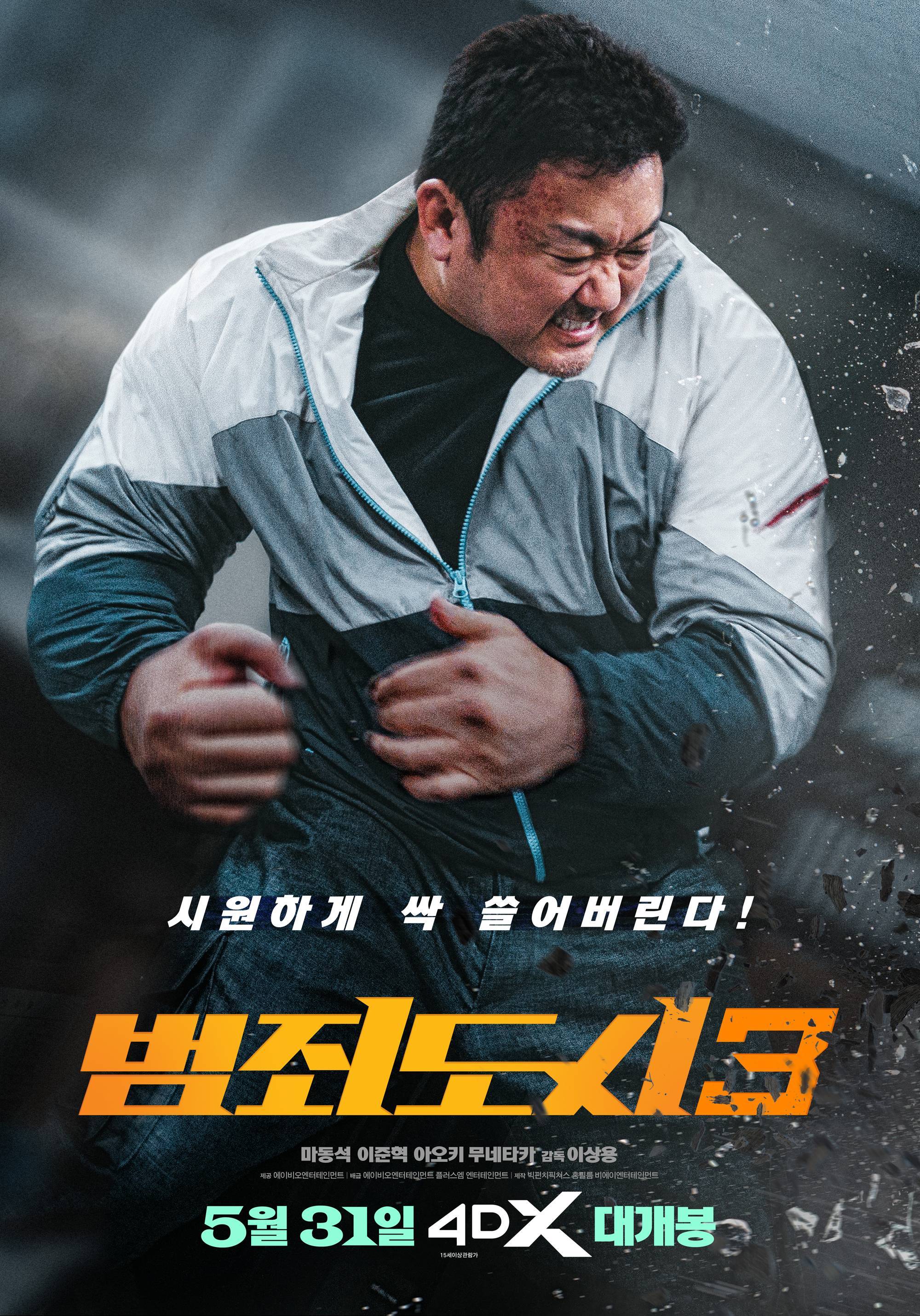
The Roundup: No Way Out (범죄도시 3, Lee Sang-yong, 2023)

Ma Dong-seok has been cultivating an image of himself as an action star for quite some time. The kind of marquee name who generally plays the hero, Ma looks back to the genre’s heyday presenting an uncomplicated vision of righteous masculinity, a bruiser with a heart of gold. The Roundup: No Way Out (범죄도시 3, Beomjoedosi 3) is the third in a series of films that began with The Outlaws and is projected to total at least eight instalments each starring Ma as the maverick detective his superiors hate to love. 

It’s true enough that you can’t get away from the more problematic elements of his unreconstructed good bad cop persona. We often see Seok-do (Ma Dong-seok) beat information out of suspects which the film treats as a cheeky joke in an otherwise tacit endorsement of police brutality that suggests red tape is the reason the guilty often evade justice. Meanwhile, in a step back from other Ma vehicles there are almost no women in the film and none in the police force. The heart of the case is the death of a 28-year-old woman who “fell” from a hotel room window and is later discovered to have died of a heart attack after being drugged in a club and dragged off by a random man who then literally threw her away to distance himself from the crime. The murder which Seok-do is supposed to be investigating is totally forgotten in his all encompassing drive to find out where the drugs are coming from which eventually descends into a battle of wits with a corrupt police officer who’s teamed up with a Korean-Japanese yakuza to skim his boss’ supply of new designer drug Hiper. 

There is a distinctly uncomfortable thread of xenophobia that runs through the series even if in this case the villainy is discovered closer to home in the form of police corruption. This time around, the threat is once again Japan which is apparently where Hiper originated though petty yakuza Tomo (An Se-ho) now manufactures it in Korea where he’s cut a freelance deal with dodgy cop Joo (Lee Joon-hyuk) to distribute it in the local night life scene without the knowledge of his boss back in Japan, Ichijo (Jun Kunimura). Joo has also cut a deal to sell the drugs to a Chinese gang, so it’s quite bad news for him when Ichijo gets wind of the situation and Tomo takes off with a suitcase full of pills for his own protection. Unluckily for him, Ichijo has already sent his most intimidating assassin, Riki (Munetaka Aoki), to find out what’s been going on behind his back. 

Problematic as it may be, Ma’s retro take on the action star is undeniably entertaining with his frequent hero moments and penchant for one liners. The first time he appears, we see him break up a street fight but mostly interested in finding out if the guy on the ground started it the implication being that perhaps if he did it’s none of his business but otherwise he’s going to have to intervene. Then again as he tells his exasperated boss, his personal motto is “punish and serve” and he’s here to get the job done even if that means wading in all fists blazing without much thought for regulations or procedure. At one point Seok-do and his guys stumble on a crime scene and walk around it touching everything in sight without bothering to even put on so much as gloves. 

In any case, Lee makes every punch land and quite literally as the screen seems to vibrate on contact almost as if the camera itself were taking a blow. Ma’s thunderous fists clash with the sound of justice as he all too easily disables hardened gangsters with one well placed slap. At times, his invincibility borders on the ridiculous but he does eventually allow himself be “defeated” if only temporarily as in his miraculous recovery from being run over by a gangster’s car. In many ways, Joo is Seok-do’s mirror, a bad bad cop with crazy eyes who kills without a second thought and behaves with narcissistic recklessness, overconfident in his abilities to sort his problems through his status as a law enforcement officer. Bruiser he may be, but Seok-do likes arresting people and never uses lethal force even when the opportunity is presented to him, symbolically snapping Riki’s katana and then proceeding to slap him seven ways to Sunday leaving the ice cool assassin collapsed amid a display of Japanese parasols. An end credits scene set three years later in 2018 sets up a fourth instalment and the return of a familiar face besides that of Seok-do himself who continues to charm as the world weary bruiser slapping down crime wherever it rears its ugly head. 


The Roundup: No Way Out is in UK cinemas now.

International trailer (English subtitles)

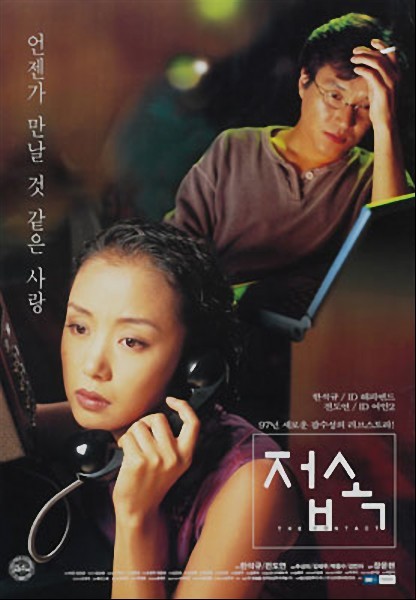
The Contact (접속, Chang Yoon-hyun, 1997)

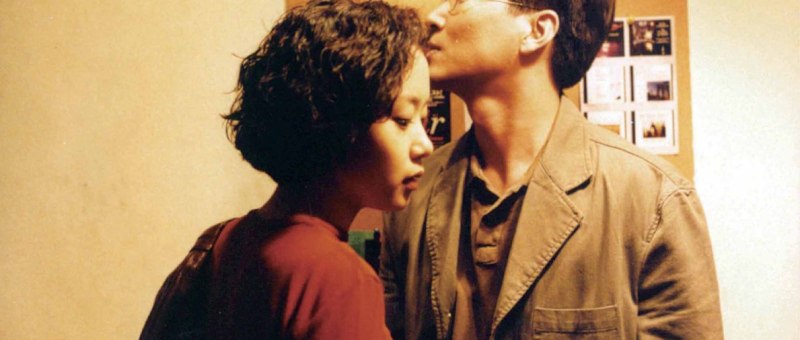
The Contact poster 1Even in 1997, it was supposedly much easier than ever before to make contact with pretty much anyone anywhere in the world, yet most of use chose not to. Twenty years later, perhaps not much has changed as we remain increasingly disconnected in an evermore connected world. Sometimes, however, as a radio host’s opening monologue reminds us, life has you take the long way round and it’s not until you hit a bump in the road that you start to think about what’s really important. The melancholy heroes of Chang Yoon-hyun’s The Contact (접속, Jeopsok) are each reeling from romantic disappointment, but brought together by a series of coincidences eventually find an outlet for their woes in the newfangled world of online chat.

Dong-hyeon (Han Suk-kyu) is the producer of a successful radio show but constantly in trouble with the suits for his uncommercial music choices. When someone anonymously sends in a battered copy of The Velvet Underground’s self titled album, he decides to switch up the order and play Pale Blue Eyes partly out of a sense of nostalgia and partly because he is hoping the woman he suspects may have sent it will be listening.

Meanwhile, across town, Soo-hyeon (Jeon Do-yeon) is sharing a moment with a cheerful young man, Ki-cheol (Choi Cheol-ho), who turns out not to be her boyfriend, but that of her roommate. To get away from the pain of seeing them cosied up together, she goes out for a drive and turns the radio on for company just as Dong-hyeon drops the needle on Pale Blue Eyes. So moved by the song that she only narrowly escapes a multi-car pileup, Soo-hyeon writes in to request it again which leads Dong-hyeon to wonder if she’s his old flame using an alias. Obviously, she isn’t, but excited to get an email from a radio show producer and not wanting to disappoint him she lies and says the request was for her friend who might be the one he’s looking for.

A pair of brokenhearted romantics, Dong-hyeon and Soo-hyeon are old souls who like rainy days and going to the movies in the afternoon but they’re also intensely online and attuned to the possibilities of indirect communication. Despite the “instant” nature of modern technology, the pair send intermittent emails, leave messages on answerphones, and fax each other, only sometimes replying in the moment via IRC but communicating on a much deeper level than they might have meeting face to face. Because they live in a city and have much more than they know in common, they unwittingly slip past each other with improbable frequency but would likely never meet, the act of making “contact” in person all but an impossibility.

The curiously analogue, nostalgia-laden, and above all physical device of the LP brings the pair together through a shared sense of loneliness born of frustrated love as they attempt to support each other through differing stages of romantic grief. While Dong-hyeon remains wilfully trapped in the past, mooning over an old flame while blaming himself for possibly coming between the woman he knew did not love him and the man she did, Soo-hyeon is in the thick of it struggling with her feelings for her roommate’s boyfriend. Calling himself “Happy End” because he’s read about them in books but doesn’t believe they exist in the “real” world, Dong-hyeon gives Soo-hyeon contradictory advice while making an ill-advised romantic overture to straightforward writer Eun-hee (Chu Sang-mi) who, unlike Dong-hyeon and Soo-hyeon, knows exactly what she wants and isn’t afraid to state it directly. “Why can’t you be honest with your feelings?” she repeatedly asks Dong-hyeon, but predictably gets no reply.

Soo-hyeon meanwhile has given herself the rather depressing name of “female 2” online, apparently inspired by a series of walk-on parts in plays, but perhaps hinting at her categorisation of herself as an invisible face in the crowd while also ironically pointing at her awkward position as the third wheel in her friend’s relationship. Berated for his emotional diffidence by Eun-hee, Dong-hyeon nevertheless tells Soo-hyeon she’s better off to forget Ki-cheol if she can’t find the courage to tell him how she really feels but as good as his advice sounds it’s primed to backfire, potentially costing not just one but two friendships and seeing Ki-cheol disappear from her life forever. Braver than Dong-hyeon, she resolves to give it a go and whatever happens it will at least answer a question, putting an end to the continued suffering of being merely friends with the man she loves.

Perhaps out of a sense of guilt for having selfishly prioritised his own feelings with tragic consequences, Dong-hyeon has decided to keep them to himself, but if so it’s also made him casually cruel and infinitely insensitive. Giving up on his romantic dream, he contemplates running away and starting a new life abroad, while Soo-hyeon risks everything in pursuit of love. Not knowing how to connect with her in the offline world, Dong-hyeon once again resorts to the physical in order to make contact, waving a tiny document like a one-way passport to love in order prove his identity and romantic destination. Finally finding the strength to let go of lost love and take a chance on new ones, the pair shift their relationship from digital to analogue as they, ironically, resolve to leave the past behind for more connected future.


The Contact was screened as part of the 2019 London Korean Film Festival.

Bungee Jumping of Their Own (번지점프를 하다, Kim Dae-seung, 2001)

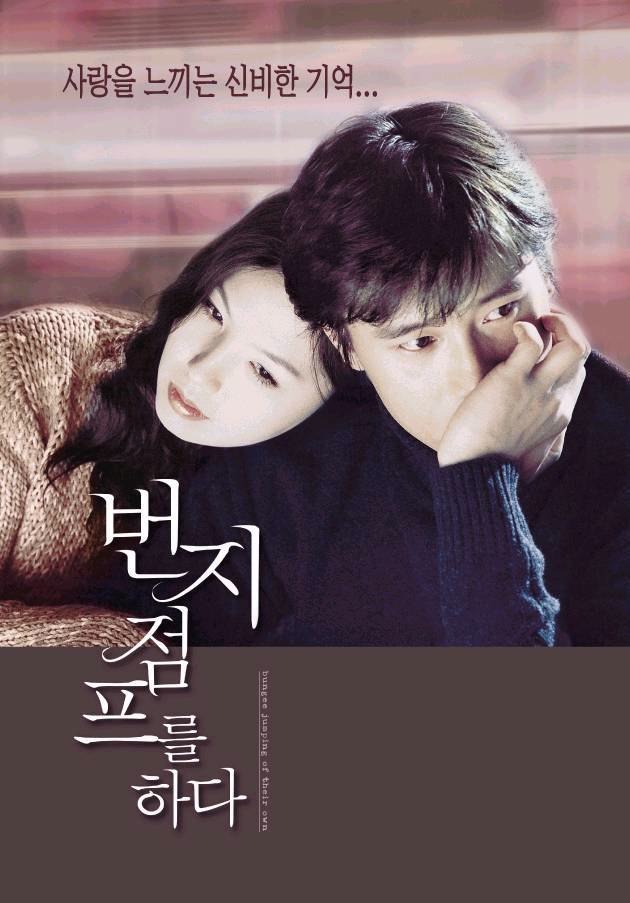
Bungee Jumping on theie own posterLove is a continuous stream, according to the debut film of Kim Dae-seung, Bungee Jumping of Their Own (번지점프를 하다, Bungee Jump Hada). The title may sound whimsical, but it’s less the physical act of fall and rebound we’re talking about here than a spiritual bounce, souls which spring from one body to another and eventually find their way home. Kim presents eternity as one great confluence and love as an enduring bond which survives not only death and time but transcends existence itself. Love is a spiritual cause, but, as the rather muddy philosophy goes on to suggest, perhaps not so free of social mores as it would like to believe itself to be.

In 1983 university student In-woo (Lee Byung-hun) meets the love of his life, Tae-hee (Lee Eun-ju), as she steals a place under his umbrella during a violent rainstorm. Shy and introverted, In-woo waits at the bus stop where Tae-hee abruptly left him hoping to see her again, finally encountering her by chance on his university campus. Despite his diffidence, the pair eventually become a couple and are very happy together but In-woo will shortly have to leave for his military service. He asks Tae-hee to meet him at the station, waiting once again only to be left alone on the platform as the trains fly by.

Flashforward 17 years to the start of a new millennium and In-woo is now a slick, confident man entering middle-age, married to someone else and with a small daughter of his own. He teaches high school and is the kind of inspirational teacher many dream of being, well-respected by his students for his patience and faith as he remains committed to stand up for them no matter what. In-woo might have thought he’d put the memory of Tae-hee to the back of his mind to go on living, but a strange young man, Hyun-bin (Yeo Hyeon-soo), begins to reawaken in him the buried memory of his first love. Seeing echoes of Tae-hee in the young male student, In-woo finds himself facing several different kinds of social and internal pressures to which he had previously given little thought.

Arriving in 2001, Bungee Jumping of Their Own is (sadly) one of the first “mainstream” films to touch on the theme of homosexuality, only the film itself is quite determined to negate any kind of homosexual reading into its central love affair – it is, after all, not “Hyun-bin” that In-woo is falling in love with, but the reincarnated soul of Tae-hee, which is to say a “female” soul and not a male one. Though Kim’s metaphor of existence as a great river through which love endures across time and societies ought to make gender and the physical body an irrelevance, same-sex love is relegated to an inappropriate absurdity. In a playful conversation about reincarnation in which In-woo and Tae-hee pledge their love to one another, In-woo jokingly asks what would happen if he were too were reincarnated as a girl, to which Tae-hee replies that they’d just have to wait for the next reincarnation. Despite the endurance of their love, it is apparently not viable outside of a traditional male/female pairing and any other iteration is tragedy to which the only solution is suicide and the hope for a quick reincarnation to find each other again in more socially appropriate forms.

Nevertheless, Kim does also do his best to criticise a still conservative society’s prejudice against homosexuality though this too has its problematic elements in unwittingly conflating two issues which ideally speaking are better not conflated. In-woo is a teacher falling in love with a boy who is not only a minor but also his student – a situation clearly inappropriate in any and all circumstances. However, the while the crusty old dinosaurs in the staffroom lament the new liberal society and fear being branded sex pests for leering at the girls, claiming it’s their own fault for “looking like that”, In-woo comes in for an especial level of vitriol targeted not at a pervy teacher but simply at a “gay” man while Hyun-bin is gradually ostracised by his friends simply for being the object of his affection and therefore tarred with the gay brush.

Meanwhile, the conflicted In-woo goes to see a doctor to correct his “sickness” only to be told that his responses indicate a “normal” heterosexual man with that caveat that he should also regard his interest in men as a “normal” part of life. Desperate to not to acknowledge his same-sex desire, In-woo becomes violent towards his wife in an effort to reinforce his masculinity, unwilling to discuss with her the real reasons their marriage has always been hollow – not his possible bisexuality, but that he has only ever loved Tae-hee and will only ever love Tae-hee in whichever form she appears.

In-woo makes a point of teaching his students that “different” does not mean “wrong” but it’s apparently not a lesson he’s able to internalise. Kim plays with dualities, idealises imperfect symmetries, and shows us that things which might seem “different” from one perspective are in essence the same, yet he walks back his message of acceptance to emphasise the importance of conforming to social norms rather than allowing the love between Tae-hee and In-woo to exist in the physical world in any other iteration than male/female. Nevertheless, Kim’s true intention of painting love as a continuous stream made possible by cosmic serendipity is a romantic notion difficult to resist and even if his reasoning proves occasionally hollow he has perhaps opened a door towards a greater understanding.


Bungee Jumping on Their Own was screened as part of the Rebels With a Cause series at the Korean Cultural Centre London.

Original trailer (no subtitles)