Following the assassination of president Park Chung-hee in 1979, many assumed that democracy would return and that the society would be liberated from its authoritarian past. That did not, however, come to pass. While the government floundered, general Chun Doo-hwan launched a coup that led to nothing other than a second military dictatorship. Citizens continued to press for democratisation and the lifting of the martial law that had been declared in the wake of Park’s death. In order to cement his authoritarian rule, Chun embarked on an oppressive crackdown of resistance activity, actually expanding martial law and sending troops to monitor universities where the majority of protests were taking place.
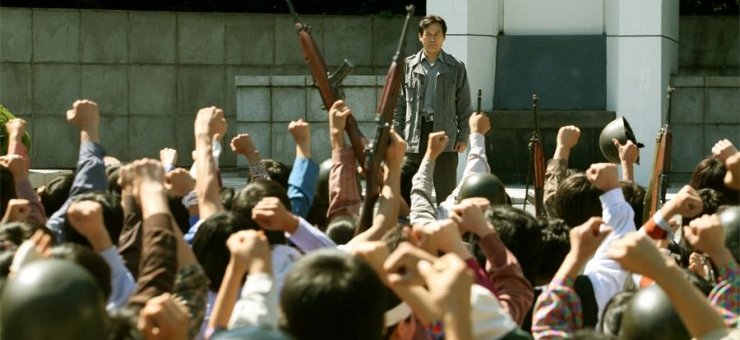
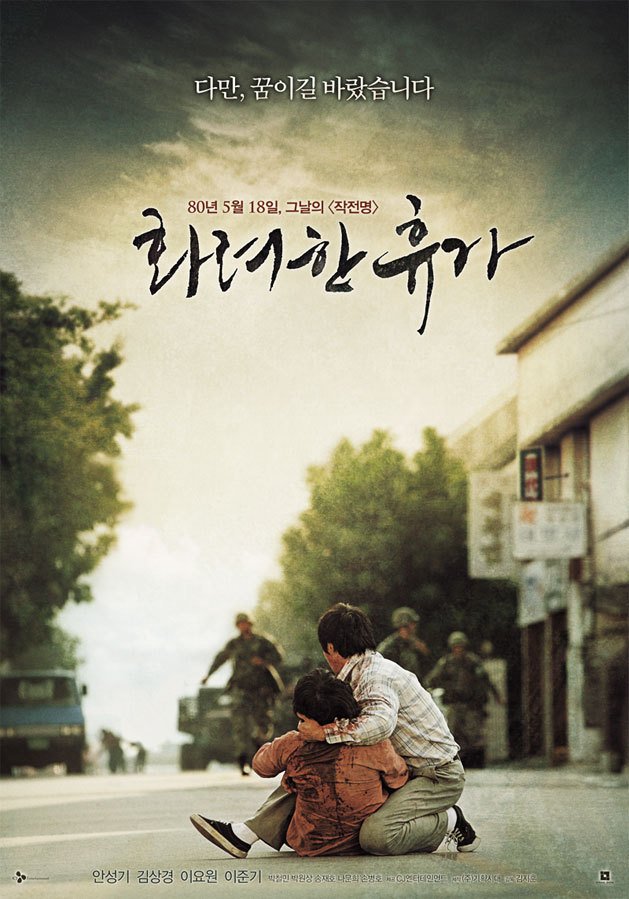
It’s against this backdrop that Kim Ji-hoon’s May 18 (화려한 휴가, Hwaryeohan hyuga) unfolds, so named for the first day of Gwangju Uprising in which citizens of the small provincial city were subject to beatings, torture, rape and murder at the hands of military forces. He opens however with pleasant scenes of the local countryside as taxi driver Min-woo (Kim Sang-kyung) heads back into the city eventually arriving to pick up his younger brother Jin-woo (Lee Joon-gi) from high school and deliver him to the local church. Min-woo also has a crush on mutual friend and fellow attendee, Shin-ae (Lee Yo-won), who works as a nurse at the local hospital. For some reason even though this is a fairly small place, Min-woo also seems to be unaware that Shin-ae is the daughter of his boss Heung-su (Ahn Sung-ki ), a former army captain now retired and running a taxi firm.
In an attempt to make the political personal, Kim spends the first hour on Min-woo’s awkward romance which by modern standards is quite problematic in that he basically ends up following Shin-ae around and offering to give her free lifts even though she seems annoyed to see him and isn’t keen on him effectively deciding where she doesn’t and doesn’t go. Meanwhile, as he and his brother are orphaned he’s adopted a paternal role towards Jin-woo who is bright and studying hard with the aim of getting into Seoul University to study law while Min-woo most likely had to give up school to drive the taxi so he could support them both. This is also in its way a little uncomfortable in its emphasis on Jin-woo’s bright future which is about to be destroyed by the uprising as if his life is worth more because of all the ruined potential rather than just because he was an ordinary human betrayed by his government and trapped by hellish atrocity. Even so, it hints at a conflict within Min-woo as he wants to keep his brother safe but also has a natural desire to resist injustice and is moved when Jin-woo explains that one of his best friends has been murdered by state violence.
Then again, the film’s framing is also in a sense reactionary in Jin-woo’s intense offence against being branded as a “rebel” or a “communist” rather refocusing on the fact the military’s actions are inhuman and the their attempt to slur the local people only a means of justification. As the local priest accurately suggests, the military provokes them in order to have an excuse to crack down with extreme prejudice ensuring that there will be no further resistance to increasing authoritarianism. Some army officers begin to ask questions but are quickly shut down by their overzealous commander who claims the North may be on its way to link up with these “communists” and is quite clearly prepared to wipe out the entire town rather than back down and risk a further escalation of their resistance.
While the soldiers are faceless and implacable, the townspeople are sometimes depicted as naive bumblers with significant time spent on a “loudmouth” comic relief character who is nevertheless one of the first to pick up a gun and join the town’s civilian army led by Heung-su who like the priest is under no illusions and assumes troops will soon storm the town. The comedic tone and melodramatic undercurrent often undercut Kim’s attempts to depict the horror of the massacre even in the irony of their juxtaposition as bullets suddenly rip into a cheerful crowd which had been laughing and joking only seconds before. The closing scenes in which a man refuses to surrender and is killed are framed as heroic but in the end seem futile, as if he’s thrown his life away for no reason. Even so there is something Shin-ae’s loudspeaker pleas to remember the citizens of Gwangju who stayed strong and resisted to the last rather than consent to their oppression even if she is in a sense condemned to be the storyteller bearing the horror of it all alone along with the loss of her own happy future crushed under the boots of violent authoritarianism.
International trailer (English subtitles)
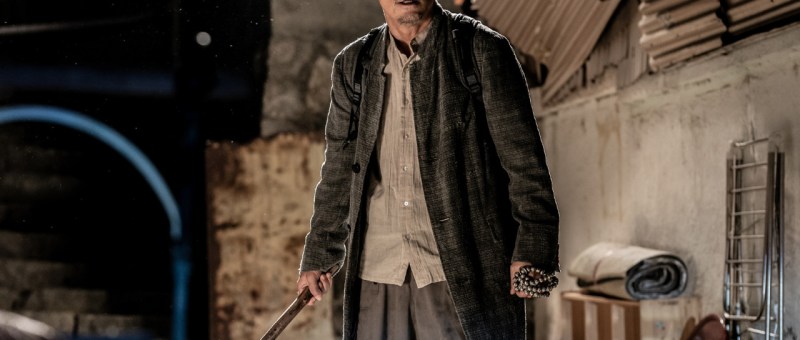


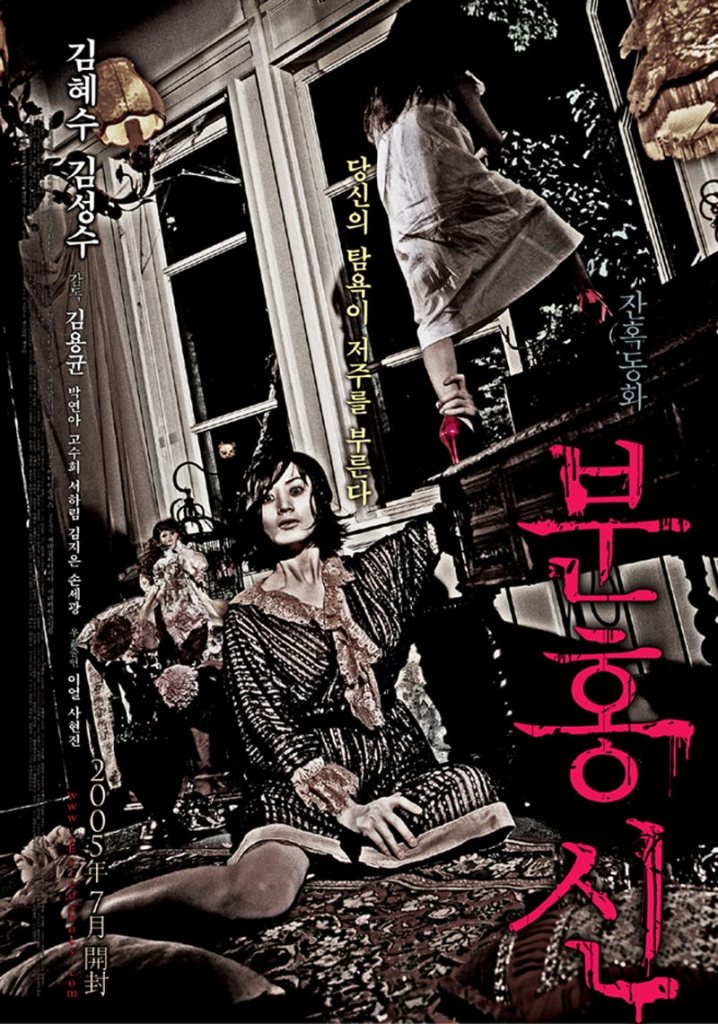 Walk a mile in a man’s shoes, they say, if you really want to understand him. If Kim Yong-gyun’s The Red Shoes (분홍신, Bunhongsin, 2005) is anything to go by, you’d better make sure you ask first and return them to their rightful owner afterwards without fear or covetousness. Loosely based on the classic Hans Christian Andersen tale this Korean take replaces dancing with murder and also mixes in elements from other popular Asian horror movies of the day, most notably
  Windows on Worlds