A Water Mill (물레방아, Lee Man-hee, 1966)

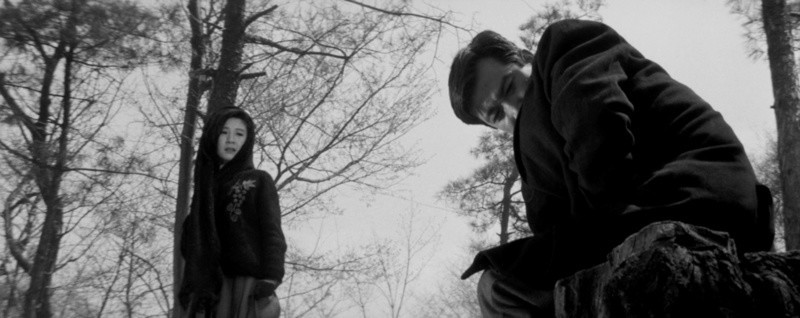
It’s not every day you wander into your own funeral. Or to be more precise, the death rite that Bong-won (Shin Young-kyun) unwittingly intrudes on in Lee Man-Hee’s feudal era fable A Water Mill (물레방아, Mullebanga) is for someone who died in a time no can remember. The old lady who explains it to him says that it happened long before she was born, implying at least the villagers have been enacting this ritual since time immemorial yet it’s almost as if Bong-won were walking towards a point of origin, drawn inexorably by forces beyond his control to play his part in this immortal ritual dance.

To that extent, Bong-won becomes a kind of “everyman” in this cautionary tale by virtue of the fact that he is nameless. Asked for his surname, he says he isn’t sure. It might be Kim or Park, later someone else says Lee which fills out the triumvirate of Korea’s most common family names. He says at one point that he doesn’t remember his mother, but thinks that she may have been a sex worker and his father a man who didn’t pay. But the fact he has no last name places him firmly at the bottom of the feudal hierarchy and most at the mercy of its hypocrisies and contradictions. He was on his way somewhere else when he fatefully found a sock floating the river that seems to flow towards him from his own future but that he will later gift perhaps to its original owner, the mysterious Geum-boon (Ko Eun-ah) with whom he falls in a deep, obsessive love that takes over the whole of his life.

Others in the village tell him that there is no such woman. An old man assures him she must have been some kind of ghost or supernatural creature come to trick him and Geum-boon does indeed take on a kind of eeriness. After deciding to stay in the village and look for her, Bong-won catches sight of Geum-boon in a forest glade bathing naked in a pool as the bright summer sun beats down on her but when he eventually makes his way down the mountain she has already disappeared. In chasing Geum-boon, he chases death but most evidently in the ways his obsession with her causes him to contravene the feudal order. He rebels against the landlord he was working for in refusing to collect her debt, then contracts himself to another in order to pay it so that he might marry her.

But ghost or not, Geum-boon is herself constrained by feudalism’s aggressive patriarchy. Force married to an invalid, she cared for him for three years until his death and then is pressed for his debts by the local landlord who wields them against her in order to claim her body. Married to Bong-won who has become an indentured servant, she is once again pursued by a landlord insistent on his droit du seigneur who exiles Bong-won to the pottery fields to get him out of the way. Geum-boon’s ambivalence does seem to give her a sometimes demonic quality as she laughs in the face of the landlord like something possessed and though she at first seems to like Bong-won and fear the attentions of the landlord she is also intrigued by the frankness of his current mistress who sees in her relationship with him the possibilities of transgressing class boundaries not to mention escaping a dull husband who will never be anything other than a servant. 

The film seems to suggest that Bong-won is powerless, while Geum-boon does at least have some power to wield. Even the landlord tells her that he has nothing to offer other than his money and power and even if becoming lady of the manor is a little far-fetched it seems unreasonable to criticise her if she did decide to become the landlord’s mistress as the path towards overcoming her circumstances lies in trading her body for influence. One could argue Bong-won does the same in leveraging his strength and his labour, but all it buys him is further exploitation and the eventual humiliation of knowing the landlord has been sleeping with his wife. 

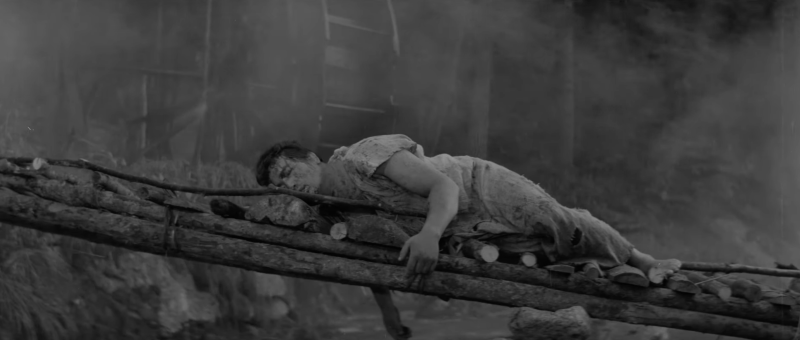
Feudalism therefore destroys natural human emotions such as love when all life is transactional in a constant, and largely futile, struggle for survival. Bong-won turns to the spiritual realm for help, asking a shaman how he can win back his wife but she gives him the rather bizarre instructions to steal three sets of underwear and throw them in the river on 3rd August while bowing to the west. Needless to say, that doesn’t work out very well for him. The fates truly do seem to be against Bong-won. Lee adds a touch of supernatural dread as Bong-won finds himself surrounded by howling winds as he fatefully makes his way towards the water mill and his destiny. The ritual dance is perfectly recreated as Bong-won and Geum-boon retake their roles in the play, their actions matching those of the masked players as Bong-won collapses on the bridge just as the demon had though there is no positive resolution in what is now both reality and fable. What we’re left with is the tragedy of feudalism, but also the maddening futility of obsessive desire for that which is and has always been ever so slightly out of reach.
The Starting Point (원점, Lee Man-hee, 1967)

A hired thug and a sex worker dreaming of a new life are set on a collision course at mountain retreat in Lee Man-hee’s noirish thriller, Starting Point (원점, Wonjeom). A melancholy existential drama, the film nevertheless has a darkly comic absurdity and becomes for a time almost a satire of changing sexual mores and the anxiety surrounding the post-war population explosion while simultaneously hinting at corporate corruption in economically straitened times. 

Played in near total silence, the opening pre-credits scenes find the otherwise unnamed (the name given in the promotional material is never spoken) lackey (Shin Seong-il) raiding an office building with the intention of retrieving some mysterious documents the people who hire him later claim threaten to expose their “seven-year-secret”. The Lackey takes time to smoke a cigarette and read through some of the papers before putting them into a briefcase to make his escape but is soon met by a man with a rifle who challenges him. A fight ensues on the staircase from which the Lackey is able to escape, activating a rolling gate to get out of the building. But the other man keeps coming after him, managing to cling on the briefcase while his neck is crushed by the unstoppable motion of the shutter. 

Mirroring him, the unnamed Sex Worker (Moon Hee) is also intruded in a wordless sequence shot with the kind of realism seen in American independent and European arthouse cinema as she stares forlornly at the pretty dresses behind the glass in a small boutique before sadly making her way towards a streetlight near the Choseon Hotel where she wordlessly picks up a customer through suggestive looks and gestures. 

The Lackey knows too much, which is why his bosses want to take him out but for unclear reasons Mr Choi comes up with a bizarre and convoluted scheme which involves hiring the Sex Worker to pose as the Lackey’s wife during a honeymoon getaway to Mt. Seorak. What the Lackey thinks is going on or why the mountain is important is never really explained just like the nature of the seven-year-secret, but once there the film changes tack becoming a kind of ensemble mystery as the various guests each become suspicious of one another while the Lackey and the Sex Worker slowly fall in love for real perhaps bonding their mutual sense of existential peril and outsider status. 

In the liminal space of the mountain, both fear rejection by those around them who come to represent mainstream society, the Lackey because he has killed and Sex Worker because of her profession. Ironically, one of the other guests is a dodgy gynaecologist who makes a point of saying that most of his clients are sex workers from around the Choseon Hotel at least implying that he regularly performs abortions. He recognises the Sex Worker as a previous patient and tries to take advantage of her sexually but commits a breach of medical ethics by leaking her profession to the rest of the group who then shun her. When the planned camping trip encounters a snag seeing as only two tents have been provided and the obvious solution is for men to take one and the women the other, the women all immediately leave on the Sex Worker’s arrival refusing a share a space with a “fallen woman” in case they are somehow tainted by her shame. 

But then, the goings on at the mountain inn are strange in themselves. A middle-aged man who inexplicably doesn’t seem to have encountered a transistor radio before accidentally tunes into a news broadcast discussing the effectiveness of the contraceptive pill while the young people dance with wild abandon to music they don’t really understand. Meanwhile, the gynaecologist wades in when another of the women experiences terrible stomach pains insisting that he is “familiar with women’s issues” and informs the husband that his wife is pregnant which is confuses him because they only married the day before and he’s been a good boy so the news is perplexing. He spends the rest of the film counting dates on his fingers and at one point attempts to hang himself certain that his wife must have slept with another man before their wedding instead of maybe considering that the dodgy gynaecologist may be mistaken.  

When the couples are divided into separate tents, one guest quips that it’ll be good for keeping the birth rate down hinting at an anxiety about a new sexual freedom among the young coupled with the impact of the ongoing baby boom and its economic implications. The gynaecologist’s wife is the first to join in with the youngsters, but she’s also a rabid penny pincher making sure the newlywed husband pays for her husband’s treatment of his wife while intensely jealous constantly trying to keep the randy doctor’s attention off the other women. The sense of economic anxiety is echoed in the Sex Worker’s melancholy longing onto looking into the shop window while dreaming of opening her own hair salon though sex work is the only way she can support herself and leaves her with intense shame that like the Lackey exiles her from mainstream society. 

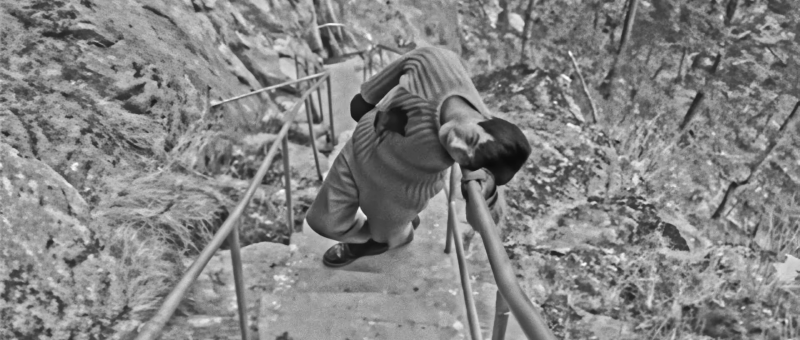
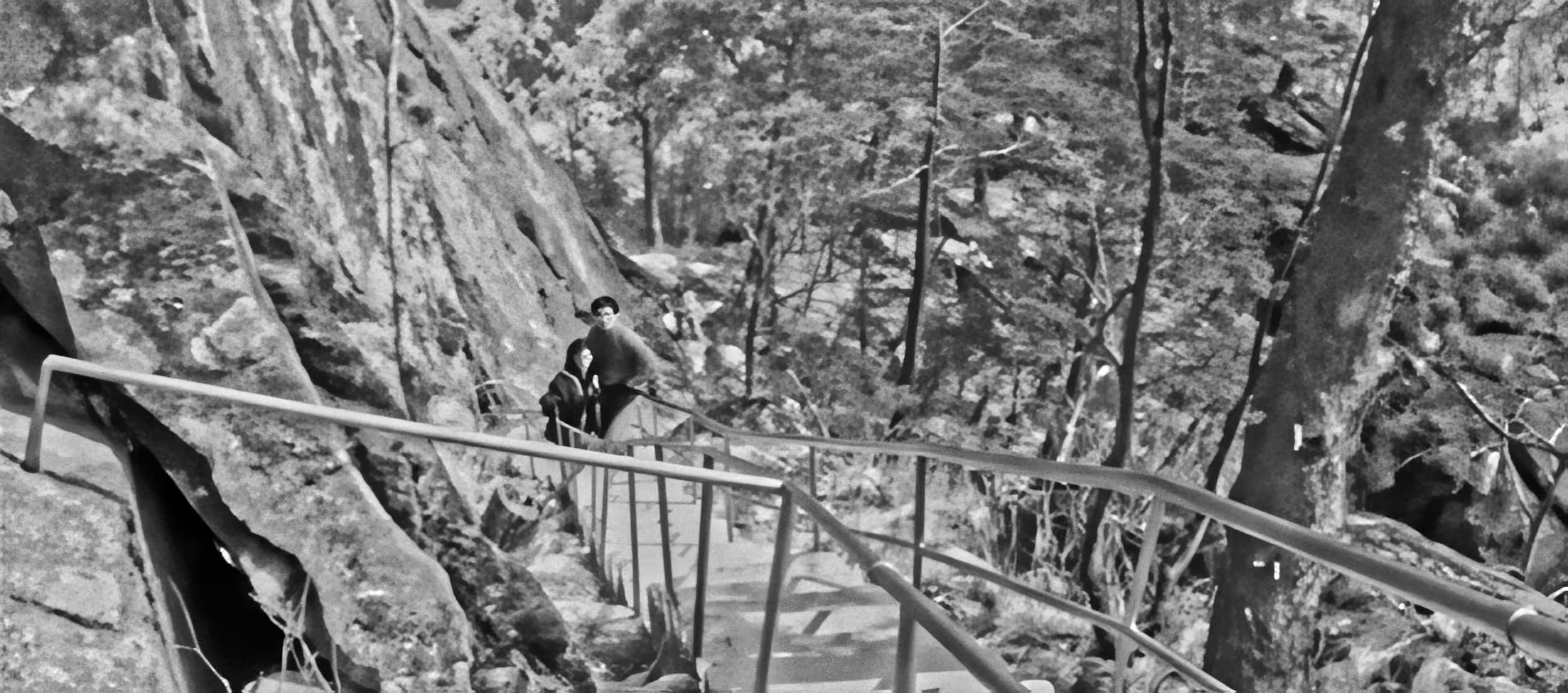
As she says while embracing her covert identity as a cheerful newlywed, she’s been looking up all her life and would like to look down for once which she ironically does atop the stairway on which the Lackey fights his existential battle with Choi and his minions. They each want to find a way to get off the mountain and return to the world, but are prevented from doing so by the forces that pursue them and will not let them go. Finally questioned, the Sex Worker is forced to admit that she knows nothing about the Lackey, not his name or where he lived or what he did for a living, only that he did not hate her which is as close to a declaration of love as it might be possible to get in this cold and dark world of exploitation and violence. Lee films with a noirish intensity and melancholy fatalism as the pair attempt to fight back against the forces which constrain them with the pureness of their love but later discover that, as they feared, all that is left to them are painful memories of momentary happiness. 


Break up the Chain (쇠사슬을 끊어라, Lee Man-hee, 1971)

Break Up the Chain poster1970 had been a difficult year for Lee Man-hee. A conflict on the set of The Goboi Bridge in which Lee intended to star against the advice of his regular team resulted in the end of his creative relationship with screenwriter Baek Gyeol and cinematographer Lee Suck-ki. Meanwhile, he’d also suffered a crisis in his personal life after parting ways with actress Moon Jeong-suk who had been both a lover and a muse. To top it all off he also had some financial problems and didn’t work at all for the year following Goboi Bridge’s release – a significant period of time in the high-speed world of early ‘70s Korean cinema in which it was not unheard of for a director to make as many as 10 films in one year. Break Up the Chain (쇠사슬을 끊어라, Shwisaseuleul Geunheola) was intended to be something of a “come back” but it finds Lee defeated, doing what he does best but also playing the game he never really wanted to play in succumbing to the patriotism epic (albeit a little tongue in cheek).

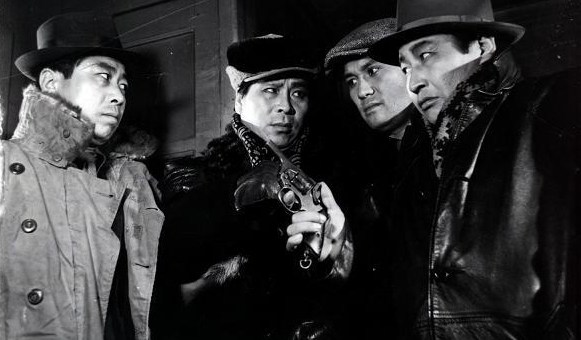
Riffing off Sergio Leone, Lee frames his resistance romp as a Manchurian western. A mysterious golden Buddhist statue has more than just monetary value as it also contains a list of the names of resistance operatives which can be revealed with the use of a special chemical formula. Three men are after it – Cheol-su (Namkoong Won), an adventurer for hire who might or might not be working for the resistance; Tae-ho (Jang Dong-hwi), a petty gangster; and Dal-geon (Heo Jang-kang), a collaborator working with the Japanese. The men are each interested in the statue for selfish reasons – Cheol-su for his reputation, Tae-ho for the money, and Dal-geon for the prestige. None of them is interested in the resistance movement itself, the statue’s importance in relation to it, or anything really beyond themselves and their day-to-day lives.

Of course, as this is a patriotism epic, the men eventually come round to the greatness of Korea as their individual quests converge and they find themselves alongside the resistance surrounded by the Japanese. The Japanese are largely a bumbling bunch who remain unaware of the statue’s “real” power even whilst holding it, thinking only of its monetary value as a lump of gold or work of art they could export abroad for financial gain. Confronted and faced with failure, the leader of the Japanese is firstly humiliated by his defeat at the hands of the resistance but then decides to show them the greatness of the Japanese army by committing Harakiri right there on the spot. Stripping off the captain begins to get cold feet, suddenly struck by the enormity of the moment when one of his lieutenants draws his sword ready for the beheading. The Japanese captain then seems to come down with “a cold” and resolves to visit the medical tent instead.

The early drama revolves around the interplay of the three self-interested outsiders as they scheme and plot to make use of each other and get the statue for themselves. Of the three, Cheol-su emerges as the most “noble” even though his quest is mercenary enough – his name is his business and thus he wants the statue to fulfil his contract and maintain his sense of integrity as a gun for hire. Tae-ho is merely interested in financial gain with a mild desire for social revenge and the thrill of outsmarting a rival, but both men are filled with an intense distaste for men like Dal-geon who have “betrayed” the countrymen they too have refused to serve. That aside, Tae-ho and Dal-geon begin to form a weak alliance of the opportunistic as they bond in their mercenary intentions, while Cheol-su lingers on the outside as his quest ties him more closely with the independence movement. Eventually the trio realise they have to work together to get the statue, even if their ultimate intention is to double cross the others and keep it for themselves. They do however suddenly rediscover their patriotic spirit, resolving to give the statue to the people who need to most while they ride off into the sunset in search of other ways to serve their country.

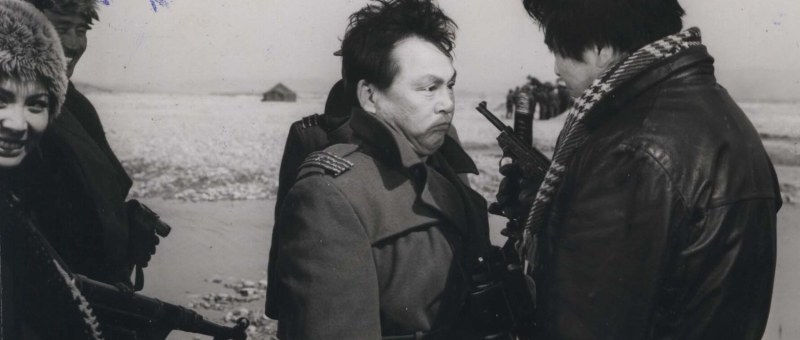
Set in dusty Manchuria (where the resistance movement operated in exile), Break Up the Chain is part of the short-lived boom of Korean “westerns” which were popular in the late ‘60s and early ‘70s. Lee abandons his experimental ambitions and aims squarely for the populist, reaching only for post-modern irony in his boys own adventure story filled with feats of daring do and flight on horseback. Yet he comforts himself with that sense of irony, pulling away from the absurd adventures of our heroes to show the faces of men dying in snow reminding us that their flight from the horror of war was perhaps a rational one rather than an act of cowardice or a failure of patriotism. Nevertheless, Lee seems to be at odds with himself as he gives in (to a point) and presents a silly story of amoral chancers suddenly rediscovering their “Koreanness” in the barren wastelands of Manchuria but does so with a sense of bitterness which conspires to rob the tale of its childish sense of fun.


Available to stream online via the Korean Film Archive’s YouTube Channel.

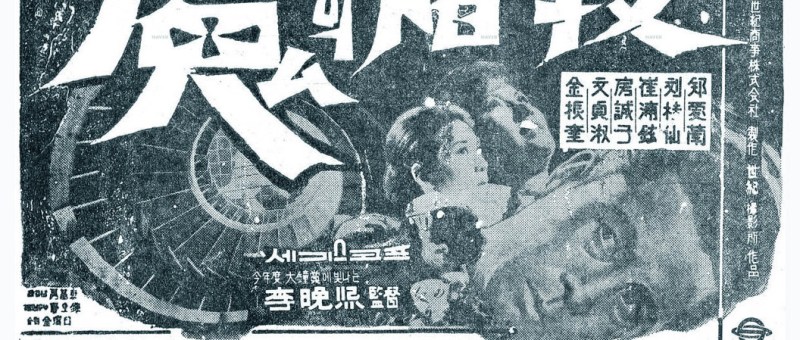
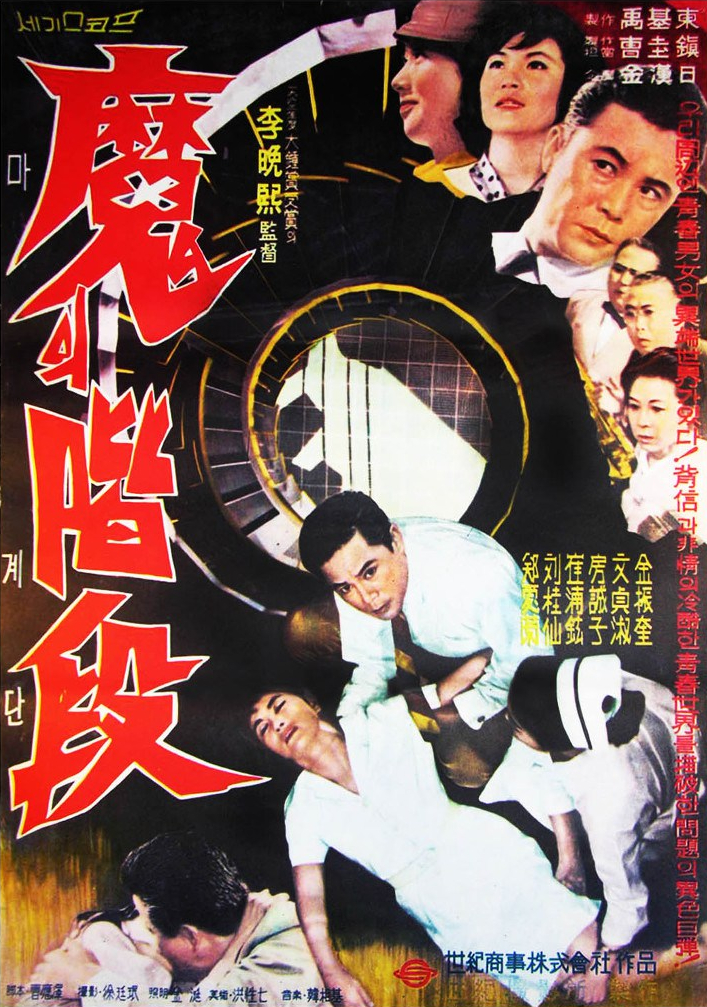
The Devil’s Stairway (마의 계단 / 魔의 階段, Lee Man-hee, 1964)

devils-staircase-poster.jpg

By 1964, Korea’s economic situation was beginning to improve and for many there seemed to be a bright light shining in the distance, a fixed point to which they could aspire and felt was in their grasp if they could only catch a lucky break. Throughout Lee Man-hee’s relatively short career (the director sadly passed away at the young age of only 45 – apparently a casualty of his fondness for drink and intensive work habit which accounts for his high output), his protagonists struggle with a conflict between the desire for the new kind of “success” their society promises them, and a feeling that they can never truly obtain it. Ambitious surgeon Dr. Hyeon (Kim Jin-kyu) attempts to climb The Devil’s Stairway (마의 계단 / 魔의 階段, Maui Gyedan, AKA The Evil Stairs) by abandoning the compassion that ought to define his profession for coldhearted pragmatism but discovers that the path has its price while his victims are not quite so passive as he’d assumed them to be.

When we first meet Dr. Hyeon he’s lounging around in bed while his female companion, Nurse Nam (Moon Jeong-suk), dresses and prepares to leave. Somewhat coldly, Hyeon tells her to exit via the back stairs and avoid being seen by the security guard on her way. Irritated, Nam leaves and the pair go back to work at the hospital the next morning pretending there’s nothing more between them than the relationship between a nurse and a chief surgeon. This situation might have continued indefinitely were it not for the fact that Jeong-ja (Bang Sung-ja), the daughter of the hospital’s head doctor, has taken a liking to Hyeon and seeing as her father has no sons to take over when he retires, an arranged marriage is in the offing. Dr. Hyeon, who is ambitious and emotionally cold, considers accepting the offer but Nurse Nam is unwilling to let him go, especially as she is pregnant with his child. When she threatens to spill the beans about their illicit relationship, he decides to kill her by dosing her up with sedatives and throwing her body in the pool behind the hospital to make it look like she drowned herself in heartbreak and shame, but Nurse Nam refuses to go quietly.

The titular “Devil’s Stairway” is a literal staircase from the hospital floor to the head doctor’s office. There has recently been accident in which the bannister was broken and a woman was killed. The banister is repeatedly mended throughout the film but represents a point of fracture in the spiritual path to success. Nurse Nam is another early casualty when she and Hyeon argue in the middle of the stairs and the recently mended bannister breaks as he struggles with her. Despite the minimal drop to the floor, Nam is left with serious injuries requiring surgery, loses her baby, and gains a conviction that Hyeon bears her ill will. Her position is extremely difficult – the accident has exposed the fact that she had conceived a child outside of wedlock and though she has not yet disclosed the name of the father, Hyeon fears that she will destroy his bright future either by speaking out or through forcing him to marry her to avoid social disgrace.

Hyeon gives in to darker instincts. He tells Nam that his heart is hers, perhaps intending to carry on an arrangement even after he’s decided to accept the marriage proposal, but excuses himself for stringing her along by reminding her of his lack of financial stability and comparatively low social status. We are reminded later that he is old be unmarried and, even stranger, is assumed to be a “virgin” – a solitary, perhaps dull, bachelor not known for mixing with women. This again signals his coldhearted ambition – he waits and he calculates. He wants a hospital of his own and knows his only way to get one is to marry into it, and so he does even if it means sacrificing “love” and emotional happiness for the cold comforts of conventional success and the false acclamation of social status.

Hyeon thinks he’s got away with it, but his crime haunts him. Going slowly out of his mind, Hyeon sees Nam everywhere, placing a strain on his relationship with his new wife who grows wary of his increasing violence and bad temper. His madness culminates in a tense surgery scene in which everyone around him has Nam’s face and he finds himself surrounded by his crime, forced to confess himself as a murderer in order to free himself of her ghost. Yet, things are not quite as they seem and it is not he alone who finds his grand plan floundering.

Hyeon posits his poverty as a reason for his crime, but it’s his greed which guides him towards the Devil’s Stairway. He could have married Nam, had his child, and led an ordinary middle-class life of relative comfort perhaps even opening his own clinic in good time, but he chose the quick fix in marrying for money and (literally) throwing over the woman he claimed to love to ease his feelings of insecurity and resentment at his position in the social order. His murder is cowardly but, as Nam points out, the law may protect him while there are precious few looking out for her, a betrayed woman, pregnant outside of marriage, and without a family to press her case.

As he did in the same year’s Black Hair, Lee co-opts the murkiness of the film noir, sending its sense of betrayed morality into the realms of the gothic with an ever increasing atmosphere of supernatural dread. The pond seems to emanate evil while the stairs beckon ominously, the wind rattles the doors open without warning and the rain pours down outside adding to the claustrophobic gloom of the creepy old hospital as if attempting to embody the evil that lies at its centre. Drawing heavily from Les Diaboliques, Lee declares no winners in his tale of fractured morality and emotional betrayal, painting it as a symptom of a confused era in which all emerge tarnished from a struggle to gain some kind of personal agency in an otherwise oppressive environment. Taut to the last, The Devil’s Stairway is a forgotten masterpiece of psychological horror and a mild condemnation of a society’s slide into national paranoia and greedy consumerism at the cost of true human feeling.


Available to stream online via the Korean Film Archive’s YouTube Channel.

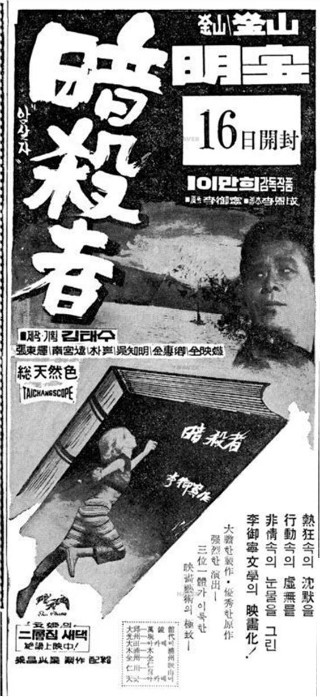
Assassin (암살자, Lee Man-hee, 1969)

Lee Man-hee Assassin vertical

Lee Man-hee thought he’d made an “anti-communist” film in 1965, but apparently he was wrong. The Seven Female POWs was severely edited and retitled Returned Female Soldiers when eventually released, meanwhile Lee did some jail time for supposedly breaking the law in his sympathetic depiction of leftist soldiers. In 1969’s Assassin (암살자, Amsalija) he takes no chances. Set directly after the liberation, Assassin makes no attempt to deny that this was a cruel and chaotic time in which loyalties were to be questioned and honour mourned.

The hardline communists have a problem. One of their top generals, Nam (Park Am), is about to defect and ally with the ruling regime. They need to get rid of him in a hurry. Their plan is to hire an assassin and frame “the Right” before Nam can defect. The Assassin (Jang Dong-hui) they call on is the number one pro but some worry he’s too softhearted for what they have planned. Despite his cold hearted profession, the Assassin has been raising the daughter of a man he killed nine years ago as his own and will not take being dragged away from her at short notice kindly,

Though the communist agents turn up somewhat ominously – one hiding out and lending an umbrella to the Assassin’s little girl and the other inviting himself into the house, they do not directly threaten the Assassin or even offer him money when he tries to turn them down. He eventually decides to take the assignment only on hearing the target’s name and realising he would make a perfect addition to his hit list firstly because they have an old score to settle and secondly because the Assassin has long wanted to see the face of a man meeting his death bravely as he pulls the trigger.

Shooting in colour and with a more experimental mindset, Lee’s use of time is strange and bewildering. The entire enterprise takes place over one night yet much of the outdoor scenes are in daylight. He stages two monologues as a conversation by cutting between two different couples on boats – the Assassin recounting his childhood to a communist foot soldier, and Nam having a heart to heart with his lady love. Meanwhile, Lee also cuts back to the Assassin’s home where the innocent little girl is chatting playfully with another of the communist goons who has been sent to keep an eye on (and then perhaps eliminate) her while her father is out on the job.

Lee begins with a voice over stating that the film will expose the truth about communist violence, instantly locating its own political intentions. The communists are a bad bunch who have no honour, no loyalty, no compassion, and no interest in anything other than their own cause. The cause itself is thereby rendered irrelevant through their own hypocrisy. In order to get the job done, the communists have recruited a local boy to drive the boat and carry messages. They’ve promised him a place in a good school in Seoul. Needless to say they will not be honouring that promise. No one can know of this job – it’s supposed to be a rightest plot, and so all loose ends must be eliminated, including those currently members of the communist faction. 

The Assassin does not approve of this. His ideas are old fashioned and he believes in a kind of code even within the darkness of his own profession. The Assassin’s only joy is in his little girl – really the daughter of a man he murdered. This is both proof of his adherence to his code of honour and to his generally compassionate nature. Nam is much the same. He has his code too, though it has recently been ruptured by the intrusion of love. Before, he could have said anything but now he’s found love he’s happy to go and will bear his sentence with dignity. Strangely, neither Nam nor the Assassin pause to consider what will happen to the women in their lives when they are gone, even if it is these women and their relations with them that have humanised their otherwise calculating hearts.

The Assassin’s little girl remains completely unaware of her adopted father’s profession or of the danger posed by a man she doesn’t know sitting at her bedside fondling a gun. Her one request of her father is that he bring her back an apple with the leaves still on it – a symbol of her own innocence and naivety, but the apples he picks for her are later smashed to smithereens under a communist’s boot. The communist gets his own comeuppance (these communists do seem to be quite a dim bunch, gleefully felling their fellow officers yet never guessing they may be next), but Lee’s rather unsubtle message is clear as “the left” stomps all over any and all signs of love, compassion, innocence or beauty.

Unlike Lee’s other films this one ends with a heavy handed voice over but no “The End” – presumably the story of the struggle against communism is not yet finished. The story is an old one, men who live by the sword die by the sword – they know this and accept it almost as a religious rite. Both Nam and the Assassin know their place within this cycle and so they submit to it with bravery and stoicism whereas the strangely manic villain attempts to run from his fate but fails miserably. Lee experiments with time and form, perhaps attempting to move past the obvious propaganda element of the project but never manages to escape it. Still, The Assassin is oddly moving in its final moments even if tinged with cynicism and a sense of the world’s cruelty untempered by Lee’s generally forgiving melancholy.


Assassin is the fourth and final film in The Korean Film Archive’s Lee Man-hee box set which comes with English subtitles on all four films as well as a bilingual booklet. Also available to stream online via the Korean Film Archive’s YouTube Channel.

A Day Off (휴일, Lee Man-hee, 1968)

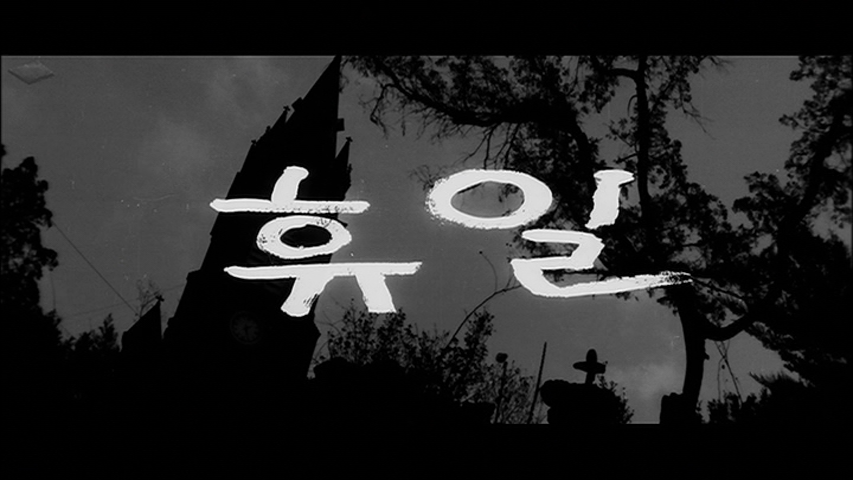
vlcsnap-2017-08-09-23h50m27s782Prolific as he was, Lee Man-hee had his fair share of troubles with the censors throughout Korea’s turbulent 1960s, most famously with his arrest for breaking anti-communism laws with The Seven Female POWs which was later heavily edited and released as Returned Female Soldiers (perhaps a neat nod back to Lee’s mega hit, The Marines who Never Returned). Before that, however, Lee’s poetic meditation of the difficulties of being young in the increasingly heartless capital, A Day Off (휴일, Hyuil), was banned altogether for painting an all too gloomy picture of modern life and love. Though modern Korean cinema has gained itself a reputation for gloominess, that of the gloomy years was still expected to be, in some way, “inspirational”. Refusing to end on a happier note, Lee shelved the film leaving it unseen until rediscovered for a retrospective in 2005.

The elliptical narrative begins with Huh Wook (Shin Seong-il), trapped by another listless Sunday and remembering a girl he used to spend them with, Ji-youn (Jeon Ji-youn). Huh Wook and Ji-youn can only meet on Sundays. They count down the hours until they can be together again but then when the day closes they almost wish they’d never met at all. Neither of them have any money – Huh Wook can’t even afford a cup of coffee, let alone a wife. The relationship reaches a crisis point when Ji-youn, whose constitution is weak, becomes pregnant.

Huh Wook and Ji-youn’s conversation is raw and painful, filled with half spoken thoughts and an unwillingness to confront the depth of their despair. The couple half discuss their predicament with the assumption that they are talking about a child they cannot afford to have and an abortion they cannot pay for but it turns out the operation that Ji-youn means may be for an unrelated illness. When they finally see a doctor he advises that Ji-youn have an abortion because her health is so poor that she would likely not survive a pregnancy.

This is a city which is rapidly expanding, living conditions and opportunities should be improving but for the left behind like Huh Wook and ji-youn Sunday is all they have to live for, and so they can hardly stand it. Their situation is so hopeless, so filled with despair that there is nothing at all waiting for them but a perpetual cycle of work and release. While Ji-youn is in hospital, Huh Wook wastes time at a bar where he gets chatting to another woman. They talk, they drink, they spend the night together in a derelict building before Huh Wook is woken by church bells and remembers poor Ji-youn lying in hospital, fighting for her life.

Huh Wook is the more romantic but also the least willing to confront the situation. He criticises Ji-youn for her silence but she fires back at him with a description of an idealised life she knows they can’t have – a nice house, flowers in the garden, and yes, children. An ordinary dream but one she knows will never be a reality. Huh Wook leaves her alone to try and borrow money, wasting one of their precious Sundays. His friends have all found different kinds of release – the first is a womaniser but flat refuses Huh Wook money he assumes is for an abortion, the second is a drunk who advises him to have the baby and spend the money on drink, and the third is a wealthy man with a live-in maid. Huh Wook never gets round to asking him for the money but steals it from his jacket while he’s in the bath. 

Completed in 1968, A Day Off has echoes of Antonioni in its beautifully empty cinematography and bleak view of human relationships in an increasingly modern world. Huh Wook and Ji-youn appear to have a deep and genuine connection but their existence is so fraught with financial and social difficulties that the future is always an impossibility and, in a sense, already the past. Huh Wook wanders alone. Beaten up by the friend he stole the money from, he’s tired, bloody, and worn out. Yet all he feels is relief. All his hope is gone and now he’s free of its burden, left with nothing other than the false promise of a new dawn on the unforgiving streets of Seoul.


A Day Off is the third in The Korean Film Archive’s Lee Man-hee box set which comes with English subtitles on all four films as well as a bilingual booklet. Also available to stream online via the Korean Film Archive’s YouTube Channel.

Black Hair (검은 머리, Lee Man-hee, 1964)

Black Hair 1964 posterFilm noir can be the most contradictory of genres. A moralistic world filled with immortality, fatalism mixed with existential angst, and a rage against society which is always tinged with a resignation to living on its margins. Genre in Korean cinema has always been a little more fluid than elsewhere and Lee Man-hee’s seminal crime thriller Black Hair (검은 머리, Geomeun Meori) is also a melodrama – the story of a self loathing man committed to his own arbitrary codes, and a woman he expects to pay the price for them.

In a brief prologue that has little to do with the ongoing narrative, ruthless gangster Dong-il (Jang Dong-hui) extorts a corrupt CEO by blackmailing him over some illicit smuggling. Meanwhile, across town, the gangster’s wife, Yeon-sil (Moon Jeong-suk), meets with a man, Man-ho (Chae Rang), in a hotel room. She’s come to pay him off, hoping it will be for the last time but Manh-ho, an opium addict, knows he’s onto an endless cash cow and refuses to put an end to their “arrangement”. Sometime ago, Man-ho raped Yeon-sil and has been blackmailing her for money and sexual favours ever since. Yeon-sil threatens to tell her husband and the police and suffer the consequences, but Man-ho knows she won’t. Dong-il’s gang have a strict rule about adultery and if Yeon-sil trusted him enough to believe he would believe her about the rape, she would have told him already.

Another goon hides behind a screen, snapping photos of Yeon-sil and Man-ho which he later passes on to Dong-il. The boss is shocked and shaken. He knows he has to enforce the rules he himself set down for the gang, but he never expected them to cost him his wife. Eventually Dong-il orders an underling to slash Yeon-sil’s face with a broken bottle, after which she is exiled from the gang. Anyone who tries to repair her scars or help her in any other way will be treated as an enemy.

At this point the narrative splits as Yeon-sil is cast down into a sleazy underworld, living with her blackmailer who pimps her out as a common streetwalker and then steals all her money to spend on drugs and booze. She pines for her husband whom she has been prevented from seeing, longing to at least explain why she did what she did and ensure he knows that her heart has always been with him. Dong-il, by contrast, is going to pieces – his gang no longer respect him, he feels guilty about the way he treated his wife, and he has no idea where to go from here.

Unlike other films of the era or film noir in general, Lee’s world view is non-judgemental in its treatment of the respective paths of Yeon-sil and Dong-il. Yeon-sil is left with no choice than to enter into a life of casual prostitution and the film forgives her for this – the fault is that of Dong-il and Man-ho rather than her own. Having been horribly scarred, she wears her hair longer on one side to hide her disfigurement but is constantly reminded of her emotional damage through its physical manifestation and the reactions it often elicits. Picking up a client in the street, she’s threatened with violence and cruel words for having “deceived” him when he catches sight of her disfigured face. A passing taxi driver witnesses the attack and challenges the man so Yeon-sil can escape. The cabbie then hires her and they spend the night together in a nearby brothel. He surprises Yeon-sil by being entirely unfazed about her facial scarring, offering to help her get it treated if that’s what she wants, and making it clear he would like to spend more time with her off the clock.

Yeon-sil’s life is completely controlled by her triangular relationship to the three men – her unforgiving husband Dong-il, the cruel and venal Man-ho, and the good and decent cab driver. After meeting the cabbie, Yeon-sil tries to see Dong-il again but his boys stop her. They say they’ll take her to see him, but really they’re planning quite another destination. Luckily, in a staggering coincidence, they’re spotted by the taxi driver who once again saves Yeon-sil, taking her home to stay with him and proposing they embark on a more formal relationship.

This is more of a problem than it seems for Dong-il’s guys who now fear their boss will find out they tried to kill his wife in an effort to wake him up from his ongoing existential malaise. The rules of the gang are tough and clear – adultery is not permissible, no woman is allowed to leave, no exceptions are to be made. Dong-il, however, is beginning to rethink the code he himself designed. A conversation with his childhood nanny throws up a number of interesting questions. She blames herself for giving Dong-il “evil” milk which has led to his spiritual corruption, though Dong-il later tells Yeon-sil that he did not choose evil so much evil chose him. He created these “evil” gang rules, but failed to live up to them in continuing to feel attached to Yeon-sil – he feels he must punish himself for the “sin” of being unable to forget her and abide by his own honour system which he now feels to be pointless and arbitrary. Effectively issuing himself a death sentence, Dong-il changes tack confirming that he has, in a sense, chosen evil even if it was a “choice” of refusing to resist the path set down for him. Suddenly realising the emotion he felt for Yeon-sil was love, he is struck by a terrible feeling of loneliness. 

As in much of Lee’s work, Yeon-sil and Dong-il are trapped by their own society and belief systems and finally perhaps by feeling. Yeong-sil is frequently captured behind bars or caught in a window, imprisoned within the frame as she tries to reconcile herself to her precarious position, daring to hope for a new, decent life with the good hearted taxi driver while also mourning her love for Dong-il and living with the humiliation caused to her by Man-ho. Lee’s structure is sometimes unclear as he introduces a fairly pointless subplot about the taxi driver’s modern woman little sister who has moved out to be independent but works in a hostess bar, inhabiting the same sleazy world as Yeon-sil and Dong-il, only more innocently, but never does much with it beyond contrasting the lives of the two women who occupy slightly different generations and have very different options open to them. There’s a fatalism and inevitability in the way Yeong-sil and Dong-il live their lives to which the taxi driver and his sister do not quite subscribe but Lee breaks with the genre’s trademark pessimism to offer the glimmer of a bittersweet ending and the chance of a new beginning for the much abused Yeon-sil now freed of her dark associations.


Black Hair is the second in The Korean Film Archive’s Lee Man-hee box set which comes with English subtitles on all four films as well as a bilingual booklet. (Not currently available to stream online)

The Marines Who Never Returned (돌아오지 않는 해병, Lee Man-hee, 1963)

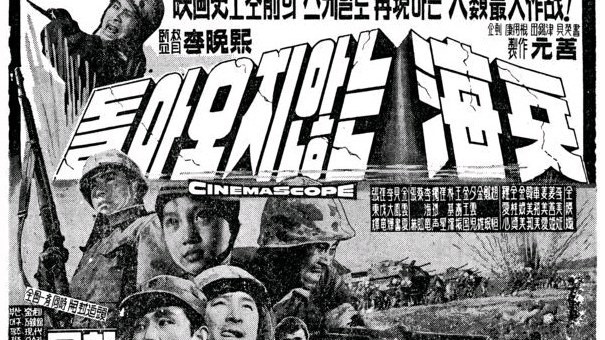
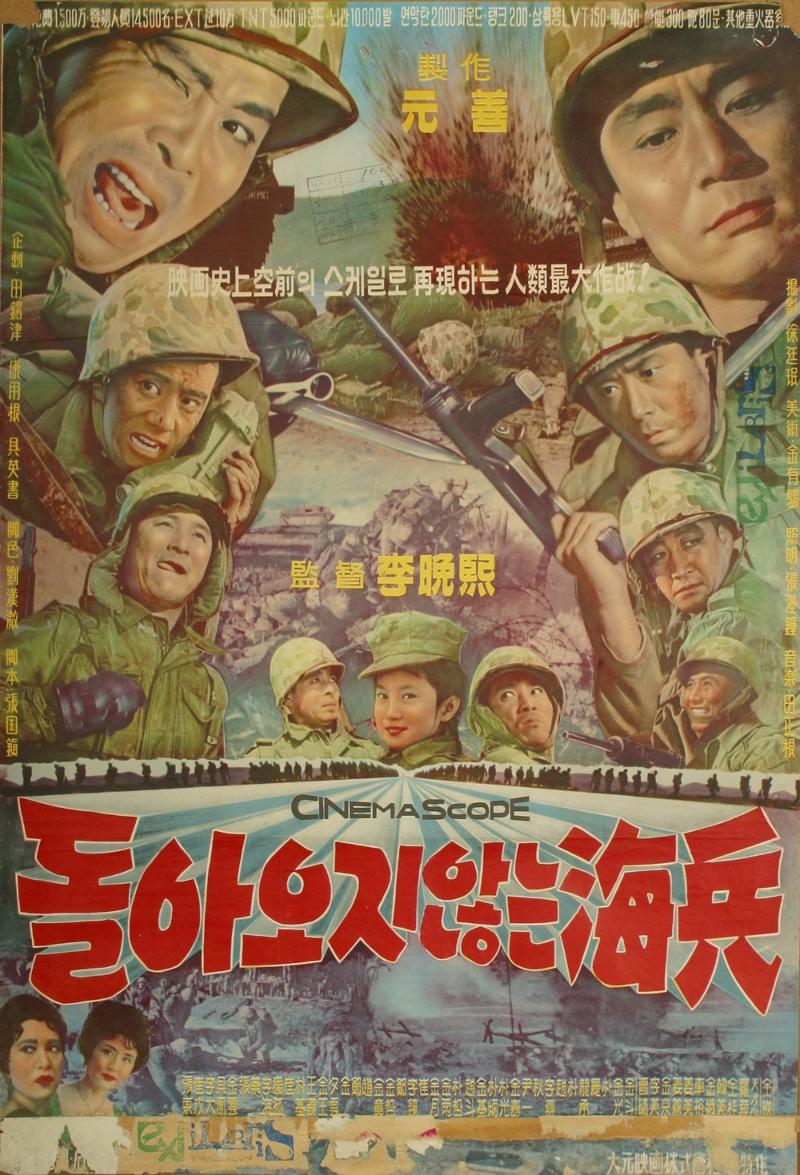
Marines Who Never ReturnedLee Man-hee was among the most prolific of Korean directors until his untimely death at the age of just 43 in 1975, but even among so many well regarded works The Marines Who Never Returned (돌아오지 않는 해병, 돌아오지 않는 해병, Doraoji Anneun Haebyong) has taken on an especial place in Korean film culture. Lee had himself served in the Korean War and brought his own ambivalent attitudes to the piece, expressing both an abject rejection of the senseless loss of life but also a warmth and nostalgia for the camaraderie born only out of such immediate danger. The film’s title, as melancholy as it is, points to this same ambivalence by signalling the eventually unhappy fates of these ordinary men but also according them a ghostly, unresolved future.

In the midst of the Korean War, a squad of South Korean soldiers is on patrol and taking fire from the Chinese in an urban environment. While they bide their time in a trench, a young girl and her pregnant mother run out of a nearby building. The girl runs clear but the mother is shot and killed in the crossfire. One of the soldiers is deeply struck by the scene and insists they at least make sure the little girl is safe. Pushing deeper into the building, the soldiers come upon a truly horrifying, hellish scene of men trussed up and hanging from the ceilings while bodies of the townspeople lie piled along the floor. The same soldier who wanted to save the little girl finds his own sister among the dead, just one face among so many.

From this point on the tale is narrated by the little girl, Young-hui (Jeon Young-sun), who is adopted by the troop of marines and smuggled around inside an old army kit bag so that the superiors do not find out about her presence. Young-hui proves a resilient little girl who obviously misses her parents but begins to care deeply for the soldiers who have taken her in. Giving each of her new uncles nicknames, Young-hui becomes the squad’s mascot and a symbol of everything it is they’re fighting for. Yet this makeshift family also has its share of difficulties. A problem arises when Young-hui recognises a new recruit, Choi (Choi Moo-ryong), as a man from her village. Choi is the brother of the man who joined the other side, took Young-hui’s father away and killed the sister of Private Goo, discovered so casually among the many dead in Young-hui’s village alone.

The conflict between Choi and Goo is emblematic of many ordinary families throughout Korea as fathers and sons, brothers and sisters, decided on different paths and found themselves on opposing sides of a war. Choi, as is pointed out, is not responsible for his brother’s actions – he clearly does not condone or agree with them, but still he feels responsible enough to understand Goo’s anger and resentment. Goo in turn realises his anger is pointless and misdirected but is powerless to change the way he feels. This situation is no one’s fault, but they’ll all pay the price anyway.

Lee spares no expense in recreating the hellish battles scenes more akin to the first war than the second with its outdated tanks, dugouts, and trenches. The easy, familial life of the camp soon gives way to action and danger as the squad meet their ends one by one. Away from the battlefield the men feel displaced within their own country – caught in the midst of a civil war yet also subjugated by foreign forces, barred from UN only bars and referred to as “tuppenny Koreans” by the “hostesses” in comparison to their big spending compatriots. Making his goodbye speech, the commanding officer instructs his comrade to return home and ask if anybody really needs to go to war, but rising from the trenches their thoughts are all for their fallen friends who will never see home again. These men remain “lost” on the battlefield, a lingering memory of loss and sacrifice which is impossible to resolve even so many years later.


The Marines Who Never Returned is the first in The Korean Film Archive’s Lee Man-hee box set which comes with English subtitles on all four films as well as a bilingual booklet but the film is also currently available to stream via the Korean Film Archive’s YouTube channel.


Homebound (歸路 / 귀로, Lee Man-hee, 1967)

homeboundLee Man-hee was one of the most prolific and high profile filmmakers of Korea’s golden age until his untimely death at the age of 43 in 1975. Like many directors of the era he had his fare share of struggles with the censorship regime enduring more than most when he was arrested for contravention of the code with his 1965 film Seven Female POWs and later decided to shelve an entire project in 1968’s A Day Off rather than tailor it to the concerns of the day. For these reasons it’s not difficult to read a political message into Lee’s 1967 tale of the (im)possibility of escape from a moribund marriage, Homebound (歸路 / 귀로, Gwiro). Like her country, Ji-yoen finds herself at a crossroads in the battle scarred post-war world which asks her to choose between a life of miserable servitude in fulfilment of her duty or one of accepting the painfulness of public disapproval in choosing to strike out for a happier future.

For fourteen years, Ji-yeon (Moon Jeong-suk) has been more caretaker than wife to her paralysed war hero husband, Dong-u (Kim Jin-gyu), who is so absorbed in his own sense of impotence that he has almost come to resent the extreme sacrifice he feels his wife has made for him. Dong-u is now a writer earning his living through serialised newspaper stories which at least affords Ji-yoen the opportunity of frequent trips into the city to deliver his manuscripts and meet with the publishers.

As it happens, the novel Dong-u is currently writing has a meta-dimension in that it’s extremely close to his own life. The ongoing story of a paralysed writer and his “saintly” wife who endures all hardships to stay at her husband’s side has proved popular with readers but now the editor is minded to warn Ji-yoen that some are becoming bored with the wife’s unrealistic goodness. They want something more human, he says, that sort of devotedness is nothing short of dull. Offended (the editor is almost talking about her real life, after all), Ji-yeon storms out leaving her bag behind. A young reporter, Gang Uk (Kim Jeong-cheol), runs out after her and becomes instantly smitten. This fateful meeting will lead to a number of subsequent ones but like the heroine of the story the jury is out on whether Ji-yeon should leave her embittered husband for a better life with a younger man, or accept the vow she made as his wife and stay by his side no matter how unhappy it will ultimately make her.

Ji-yeon’s life is undoubtedly a difficult one despite her frequent protestations that she’s happy with her husband and could never love anyone else. Dong-u is forever trapped in the past, dreaming of his military glory and unable to accept his new life to move forward into the increasingly modern world. An early scene sees Ji-yeon deliver a letter congratulating him on the fourteenth anniversary of his wartime service. Dong-u asks Ji-yeon to help him into his uniform after which he puts on a recording of a parade and attempts to stand and salute only to immediately fall over, leading to a brief flashback of the battlefield as Ji-yeon cowers to the side, only later lifting the needle to end the ordeal.

Trapped within his own history, Dong-u berates himself for his physical failings in being unable to be a “full” husband to his self sacrificing wife. The couple have separate bedrooms and share no particular intimacy, barely even friends let alone husband and wife. Dong-u’s bitterness is all encompassing, claiming to be in regret of a sacrifice he feels has been made on his behalf which only brings him additional guilt for destroying his wife’s future happiness as the childless wife of a paralysed man. This same internalised frustration leads him to treat Ji-yeon coldly in intense resentment for the way in which she forces him to feel all of these negative emotions.

Receiving affection only from the family dog, few would blame Ji-yeon if she did find herself a way out through romance. Even Dong-u’s sister who confronts Ji-yeon after catching sight of her with Gang Uk expresses sympathy for her situation, but urges the couple to divorce in order to prevent greater suffering further down the line. Ji-yeon is torn between her uncertain feelings for Gang Uk and her duty as a wife to her husband. At one point, Ji-yeon asks a question about who in the world is the most unfortunate only to answer that it is the person who can neither be respected or hated. She can’t bear the idea of being the woman who abandoned her disabled husband for a younger man, but neither can she endure untold years of respect as his devoted wife trapped in that lonely, claustrophobic house forever.

Torn between modernity in the form of her young lover, and tradition in the form of her embittered former soldier, Ji-yeon is in a similar dilemma to her nation as she looks out at a transformed Seoul standing ready to strike out onto the world stage only to return home to her dark and dingy Incheon cottage which almost seems to exist in the never was of fourteen years before. Her final decision is an ambiguous one, paralysed in indecision as she longs for forward movement but is terrified to accept it. Lee’s film is subtle and subversive, not least in its social messages which lean towards individual freedom and happiness over duty bound tradition even whilst suggesting that those two ideals may be impossible to achieve. Shot in a crisp black and white, Homebound is a study in alienation with its claustrophobic angles and wide sweeping shots of the prospering city which seems to warn that those caught between the past and the future are likely to find themselves crushed by fear and memory in equal measure.