Devils Stay (사흘, Hyun Moon-seop, 2024)

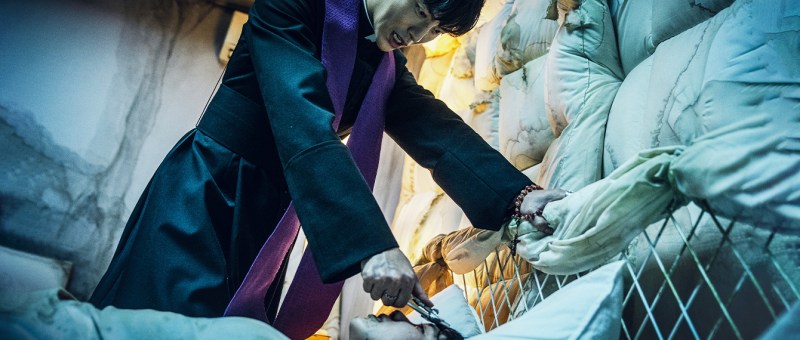
Unable to accept his daughter’s death, a father refuses to let her soul rest in Hyun Moon-seop’s possession thriller, Devil’s Stay (사흘, Saheul). The film’s Korean title “the Third Day” hints at its inverted religious overtones as a priest explains that she will indeed rise again like the Lord himself three days after her death, but as a destroyer of worlds in the incarnation of powerful demon. Heart surgeon Seung-do (Park Shin-Yang) isn’t sure that’s such a bad thing if only his daughter survives.

Then again, there’s a sense that Seung-do himself may share that So-mi’s (Lee Re) plight was partly down to his hubristic conviction in his skills as a surgeon that he alone could save her. So-mi evidently had some kind of serious medical condition that could only be cured by a heart transplant, but the obvious implication of that is if So-mi is to survive then another child must die. There is a kind of equivalent exchange in play and a wager that Seung-do is making with the universe. He may not think of it that way, but he is in fact making a deal with the Devil in his willingness to commit a human sacrifice to save his own child at the expense of someone else’s that in turn would colour the rest of So-mi’s life even if she had not become possessed by a demon.

Father Ban (Lee Min-Ki), a young and intense priest very committed to exorcisms and demon hunting, presses Seung-do as to how he came by this heart that he gave to his daughter, already sensing that this is how the demon crept in. Seung-do must in effect wrestle with the decision he made that has both damned and saved his daughter in equal measure along with the reality that whatever has survived is not So-mi, or at least, not So-mi alone. Father Ban tells him that when the demon rises on the third day, it will immediately turn on those closest to its host. He must then place another wager, deciding whether saving So-mi is worth risking the lives of his wife and son in addition to his own rather than letting her go gracefully and attempting to go on with his life while carrying the burden of paternal failure. 

But to all around him, it appears as if Seung-do has lost his mind. He rants and raves, insisting that his daughter isn’t really dead and even at times interfering with the funeral process to take charge of her body. Like him, Father Ban is also considered an outsider by other members of his church who think he’s too invested in demonology and possibly also blame him for the death of another exorcist priest who saved him when he was demonically possessed himself while serving in the army. Perhaps subversively, the film heavily implies that there was more than friendship to Father Ban’s relationship with the other priest and that his desire to vanquish the demon is also one of vengeance. In this, he may be Seung-do’s enemy as he is gradually seduced by the demon and considers appeasing it to save So-mi, encouraged to make another equivalent exchange and in a sense enact his own funeral to take her place.

In this way, the religiosity is undercut by the implication that the “light” that guided So-mi belonged to father rather than to God as he fulfilled his role as a her polestar and his promise that he’d come find her if she made sure to stay where she was. Even so, it amounts to an awkward advocation that father knows best in that So-mi’s salvation lies in her obedience to Seung-do, rejecting her autonomy to place her faith in her earthly father to save her as he promised he would. In many ways, it’s a story of paternal redemption in which Seung-do must reckon with the transgressive choice he made, no longer able to run or hide from it to but forced to accept his weakness and failure along with the morality of what he did. Essentially a character study, Hyun Moon-seop’s conjures a palpable sense of evil and eeriness but also hope as Father Ban’s mentor had reminded him, that demons too can be beaten though the worst of all dwells in the human heart. 


Devils Stay is released in the US on Blu-ray, DVD and Digital March 18 courtesy of Well Go USA.

International trailer (English subtitles)
It’s Okay! (괜찮아 괜찮아 괜찮아!, Kim Hye-young, 2023)

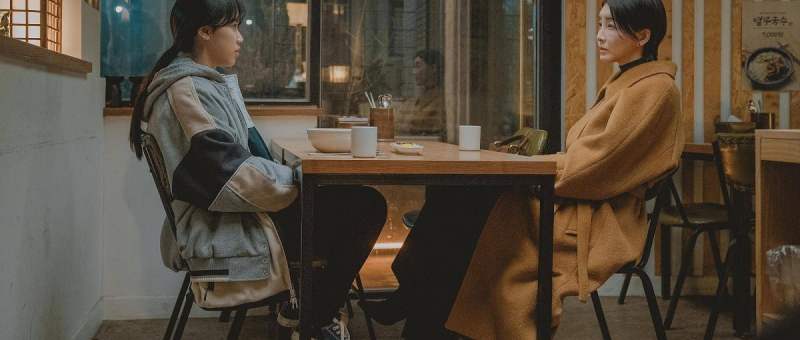
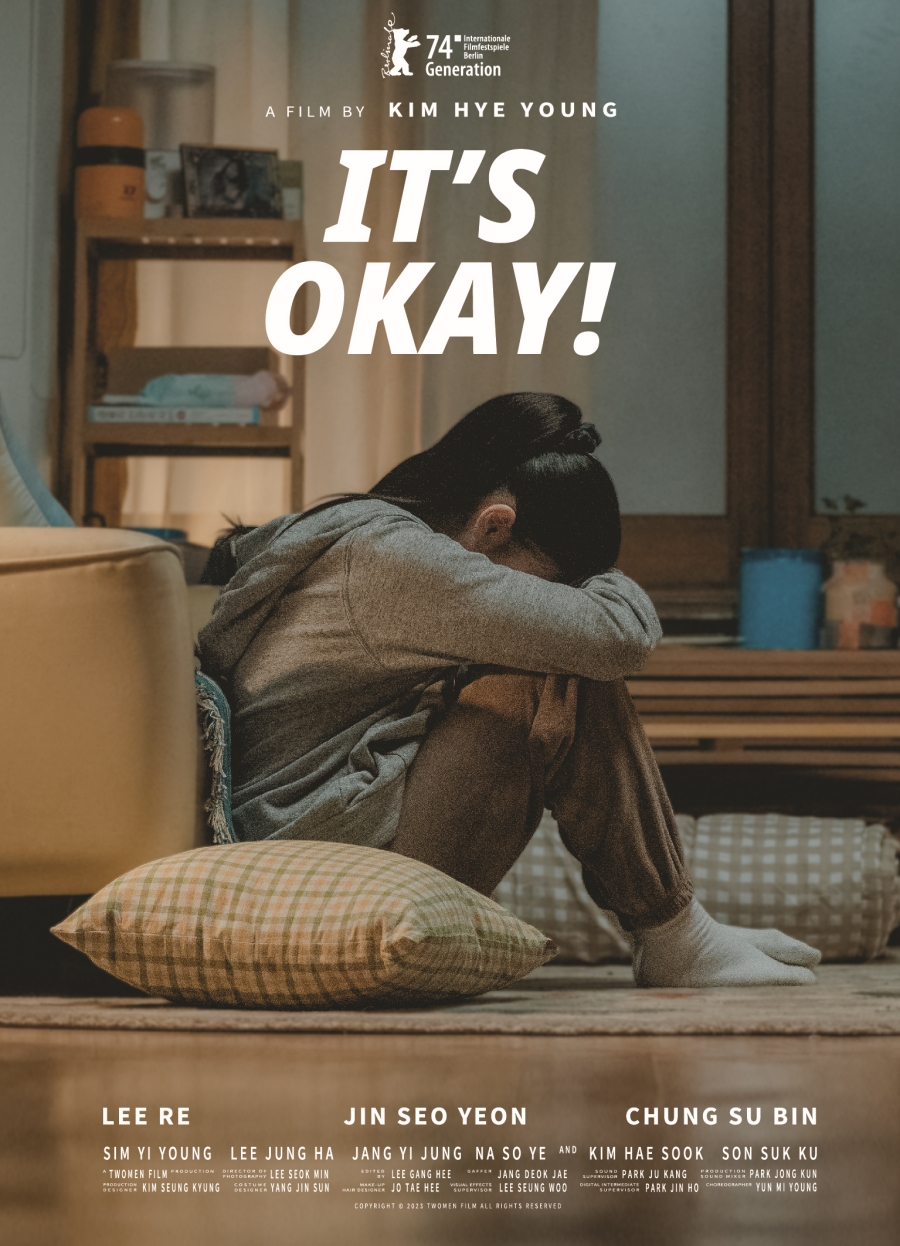
The ironic thing about the title of Kim Hye-young’s debut feature It’s Okay (괜찮아 괜찮아 괜찮아!, Gwaenchanh-a Gwaenchanh-a Gwaenchanh-a!) is that for the most part it really isn’t but the ever cheerful heroine In-young (Lee Re) manages to face her hardship and loneliness with down-to earth-practicality and good grace. It’s her infectious happiness that begins to improve the lives of those around her, many of whom have their own issues often stemming from entrenched patriarchy, classism, and a conformist culture that railroads the young into futures they may not want and will not make them happy.

At least that’s how it is for Na-ri (Chung Su-bin), the star of Il-young’s traditional dance troupe who has developed bulimia partly to adhere to contemporary codes of feminine perfection but also as a means of asserting control over her life which is otherwise micromanaged by her mother, once a dancer herself but now a wealthy housewife who uses her privilege to ensure her daughter is always centrestage. For these reasons she crassly remarks that she envies Il-young whose mother was killed in a car accident leaving her orphaned and entirely alone but in Na-ri’s eyes free and independent. 

It’s Na-ri’s mother who later refers to Il-young as a “worthless” person who does not deserve and will not have the opportunity to steal Na-ri’s spotlight even if she were good enough to seize it. The other girls in the troupe resent Il-young because her fees are paid by a scheme set up to help children of single-parent families, though technically she isn’t one anymore. They think it’s unfair she doesn’t have to pay when they do and also look down on her for being poor and an orphan when the rest of them come from wealthy backgrounds and are serious enough about traditional dance to consider going on to study it at university. Il-young isn’t a particularly good dancer nor does she put a lot of effort into it, but unlike Na-ri whose dancing is technically proficient but cold Il-young dances with a palpable sense of joy.

That might be why she catches the attention of otherwise stern choreographer Seol-ah (Jin Seo-yeon) who harbours resentment towards Na-ri’s snooty mother but lives a life that seems very repressed, tightly controlled and devoid of the kind of exuberance that comes naturally to Il-young. Her palatial apartment is cold, neutrally decorated, and spotlessly clean while, contrary to Na-ri, she forgoes the pleasures of eating subsisting entirely on green health drinks. Her decision to take in Il-young after finding her secretly living at the studio after her landlord evicted her from the home her mother had rented, may also reflect her own desire for a less constrained life and the familial warmth which seems otherwise lacking in her overly ordered existence. Gradually nibbling at the fried spam Il-young has a habit of cooking in the morning, she begins to open herself to the idea of a less regimented, happier life.

The same is true for Na-ri who is fed up with being forced to live out her mother’s vicarious dreams, literally letting her hair down and abandoning her need for control and dominance to embrace more genuine friendships with the other girls including Il-young. The lesson seems to be that there’s too much pressure placed on these young women in a society that dictates to them who and what they should be while shunning those like Il-young who are defiantly who they are and all the more cheerful for it even in the face of their hidden loneliness. Yet as Seol-ah eventually tells her, you’re the centre of wherever you are and Il-young’s life is her own to live in the way she chooses.

What emerges is a sense of female solidarity in the various ways Il-young is also parenting Seol-ah as she at first perhaps grudgingly offers her support and acceptance while taking on a maternal role that allows her to break free of the rigidity which had left her so unhappy. Told with a true sense of warmth that belies an inner melancholia, the film advocates for laughing through the tears and meeting with the world with an openhearted goodness that in itself allows others to break free of their own grief and pain and discover a happiness of their own bolstered by a sense of friendship and community rather than live their lives isolated and alone to conform to someone else’s ideal.


It’s Okay! screened as part of this year’s London Korean Film Festival.

Trailer (English subtitles)

Miss & Mrs. Cops (걸캅스, Jung Da-won, 2019)

When the Burning Sun scandal exploded in early 2019 it promised but perhaps did not deliver a reckoning with the generalised misogyny at the heart of a fiercely patriarchal society. Almost a year previously, 12,000 women had assembled at Hyehwa Station to protest the prevalence of “molka” or spy cam pornography in which footage captured of ordinary women through the use of hidden cameras in ladies’ bathrooms, changing areas, and fitting rooms had been uploaded to the internet without their knowledge or consent. Despite all of this, there has been relatively little progress. Miss & Mrs. Cops (걸캅스, Girl Cops), a lighthearted comedy dealing with the weighty issues of molka, date rape, and the indifference with which they are treated by an overwhelmingly male police force obsessed with targets and performance, was filmed before the Burning Sun story broke but drops neatly into the post-scandal society as two women discover that they’re on their own when it comes to taking down a vicious drug gang. 

Mi-young (Ra Mi-ran) was once an ace detective well known for her ice cool arrests, but after marrying a feckless man who repeatedly failed to pass the bar exam she was forced to leave active policing and take an admin job in the complaints department for higher pay. Her sister-in-law, Ji-hye (Lee Sung-kyung), has since joined the force as a rookie officer but has little support amongst her colleagues and is often in trouble for her worryingly aggressive policing which eventually gets her “demoted” to complaints where she ends up working with Mi-young. While they’re busy bickering, a young woman arrives looking lost and confused but is frightened off by a rowdy group of men before she can say anything. As she’s left her phone behind, Mi-young chases after her, but the woman immediately steps out into traffic and is hit by a car. Obviously extremely concerned, Mi-young and Ji-hye get their tech expert colleague to Jang-mi (Choi Soo-young) to help them crack the phone and discover a compromising photo of the young woman posted on an illicit web channel promising to release the full video when it reaches 30,000 likes. 

Talking to her friend, Mi-young and Ji-hye realise that the young woman has tried to take her own life out of shame because of what these men did to her. Yet their attempts to report the matter to the legitimate authorities fall on deaf ears. Ji-hye’s colleagues joke and complain about having to investigate “perverts” instead of doing “real” policing, as if it’s all just meaningless silliness. Back when Mi-young was on the force she was placed into a special woman’s squad dedicated to dealing with crimes against women. Ji-hye quite rightly points out that times have moved on and the woman’s squads were in their own way essentially sexist in that they were created because the male police force did not regard crimes against women as “serious”, nor did they regard female officers as “real” police, so they killed two birds with one stone to allow them to get on with more “important” matters. 

The women realise that they’ll have to deal with this on their own, but even once they do discover that the male officers are only too keen to take the credit for exposing a drug ring while leaving the “peeping toms” to the ladies as not worth their time. Ji-hye’s boss even lets his mask slip in irritatedly suggesting she’s being over emotional because she is a woman and should let the boys get on with their jobs, but it’s only when she has a moment of impassioned rage explaining to them that they’re consistently failing in their duty to protect the women of Korea that they are finally shamed into realising the consequences of their lack of concern. 

Meanwhile, each of the women has been in some way been deliberately obstructed in their career solely for being a woman. Mi-young was forced off the force and is now in danger of losing her complaints job because of budget cuts. An older woman doesn’t tick any boxes on the employment quotas and so they have no reason to keep her. Ji-hye, meanwhile, is ignored by most of her team and left without support, and even Jang-mi, we discover, had NIS training but quit in resentment after they put her on a pointless Twitter monitoring programme. Their much maligned boss was also a part of the woman’s squad and wanted to continue in the police after having children, but they put her in charge of complaints instead. 

Yet Mi-young says she isn’t on the case because of female solidarity but because it makes her so angry that most of the women this happens to, like the woman who stepped in front of a moving car, blame themselves. The woman’s friend blames herself too for getting her friend into a dangerous situation because she convinced her to come to a private party with guys in a club thinking “they seemed OK”. In that sense it’s a shame that the villain concerned turns out to be a drug-addled sociopath who apparently only does the date rape stuff “for fun” because the real reason for all those clicks is data collection, rather than a perfectly ordinary guy who is probably someone’s son, brother, or even husband, not to mention chaebol kid or Kpop star. Still even if a little flippant in presentation (including some extremely unfortunate racist “humour”), Miss & Mrs Cops maybe no Midnight Runners but has its moments as its determined heroines strike back against patriarchal indifference by refusing to give up on justice.


International trailer (English subtitles)
Innocent Witness (증인, Lee Han, 2019)

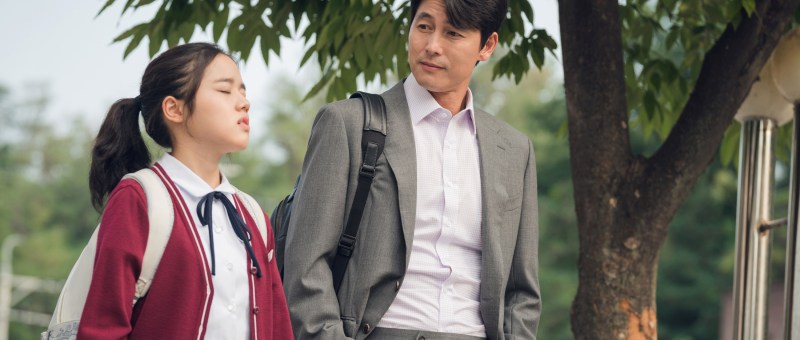
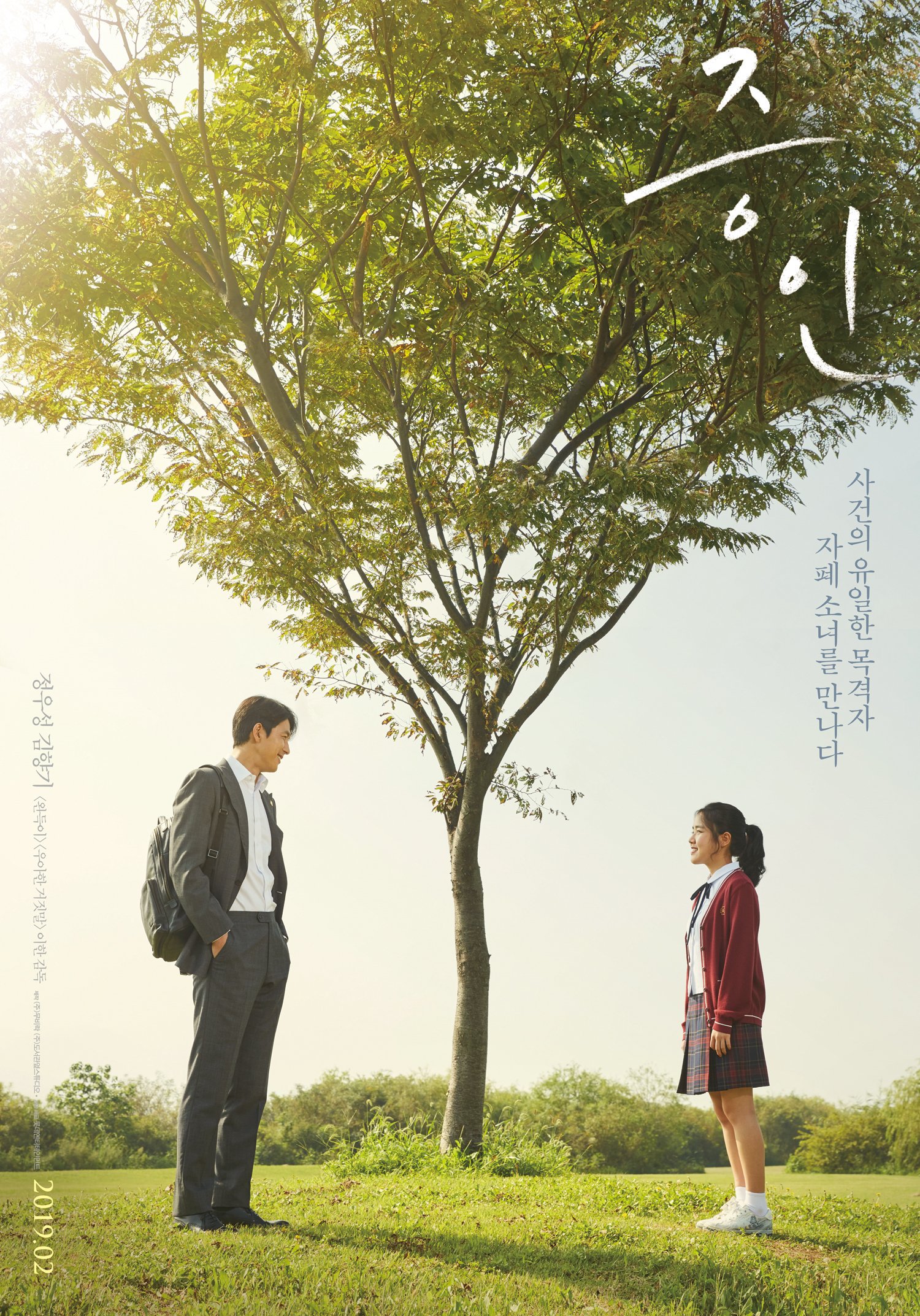
Innocent Witness poster“Are you a good person?” asks the confused girl at the centre of Lee Han’s Innocent Witness (증인, Jeungin). Her question comes after a series of surprising revelations which have left her questioning all of her relationships and the nature of the world itself, yet it’s one that’s largely impossible to answer. Formerly idealistic lawyer Soon-ho (Jung Woo-sung) thinks he’s been given the kind of case he can get behind, but as usual nothing is quite as it seems and if he wants to get to the truth of the matter he’ll have to learn to think differently.

Soon-ho began his career as an activist lawyer working for NGOs, but now he’s “sold out” to join an elite law firm with a dodgy reputation in order to pay back debts his father unwisely guaranteed for a friend. Because of his precarious financial status, Soon-ho has put-off marriage and relationships, despite his father’s nagging, believing them to be out of his reach and is conflicted by his recent career choices which leave him on the opposite side from old friends. When he’s handed a pro-bono case to defend a housekeeper (Yum Hye-ran) accused of murdering her employer he thinks it’s the best of both worlds. All the evidence points to suicide, but there’s a witness testimony which suggests otherwise. Seeing as the testimony is from a 15-year-old autistic girl who witnessed the crime from across the street, Soon-ho feels he can easily have it discounted.

Like many in the film, Soon-ho doesn’t know much about autism and writes Ji-woo (Kim Hyang-gi) off as “mentally impaired”, believing that will be enough for the jury to disregard her testimony especially as it so strongly conflicts with the rest of the evidence. Refused permission to meet with her in person, Soon-ho begins trying to befriend Ji-woo on the way home from school and eventually comes to realise that she is highly intelligent if easily distracted and uneasy in social situations. What he discovers is not that Ji-woo is unable to communicate with the world, but that the world is unwilling to communicate with her. If he wants to bond, he will need to learn her language and earn her trust.

Trust maybe he hard to come by as he witnesses the minor aggressions she goes through every day like the horrible boys at school who taunt her mercilessly and the supposed friend bullying her in secret, not to mention a world full of barking dogs and ringing telephones. When he finally puts her on the stand, his own co-defence chair reads out passages from a book about autism which describe it as a “mental disability” before painting her as a deranged idiot who probably half-imagined what she saw from things she’d seen on television – an act which has profound ethical implications in eroding Ji-woo’s sense of self. Ji-woo told Soon-ho she wanted to be a lawyer because lawyers are good people who help those in need, but Soon-ho has to ask himself whose interest destroying a 15-year-old girl on the stand is really serving.

The law firm Soon-ho joined does seem to be a sleazy one. Despite hiring him to improve their image, Soon-ho’s boss tells him that his new clients won’t be comfortable with him unless he gets himself a little “dirty” while inviting him to awkward parties with call girls in high class hotels. Meanwhile, Soon-ho remains conflicted – especially after potentially losing a 20-year friendship through saying the wrong thing to a still idealistic lawyer and passing it off as an attempt to be “realistic”. Realism is one thing, but Soon-ho seems to have given up and decided if you can’t beat them join them. His dad, sensing his son’s unease, writes him an impassioned letter in which he tells him that the most important thing in life is to be happy with yourself, everything else you can figure out later.

Realising his mistake, Soon-ho begins to see the light. Through bonding with Ji-woo, he learns that seeing things differently can be advantage and that society should have a place for everyone where they shouldn’t have to worry about being themselves. Tellingly, no one ever bothered to ask Ji-woo about the most important part of evidence in her testimony because they all had too many prejudices about her delivery. Only Soon-ho, having bothered to get to know her, was able see what it was that she wasn’t saying. The film perhaps missteps when it has Ji-woo come to the conclusion that she can’t be a lawyer because of her autism, but otherwise presents a sensitive portrayal of a society trying to be better in accommodating difference and doing it with empathetic positivity while subtly waving a finger at the self-serving forces of conservative corruption.


Innocent Witness was screened as part of the 2019 Udine Far East Film Festival.

International trailer (English subtitles)

Seven Years of Night (7년의 밤, Choo Chang-min, 2018)

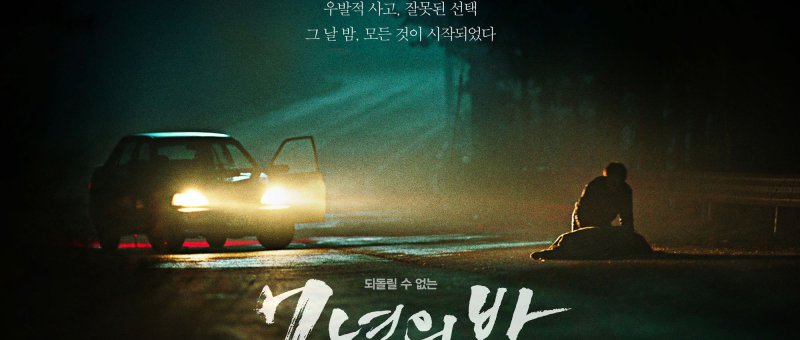
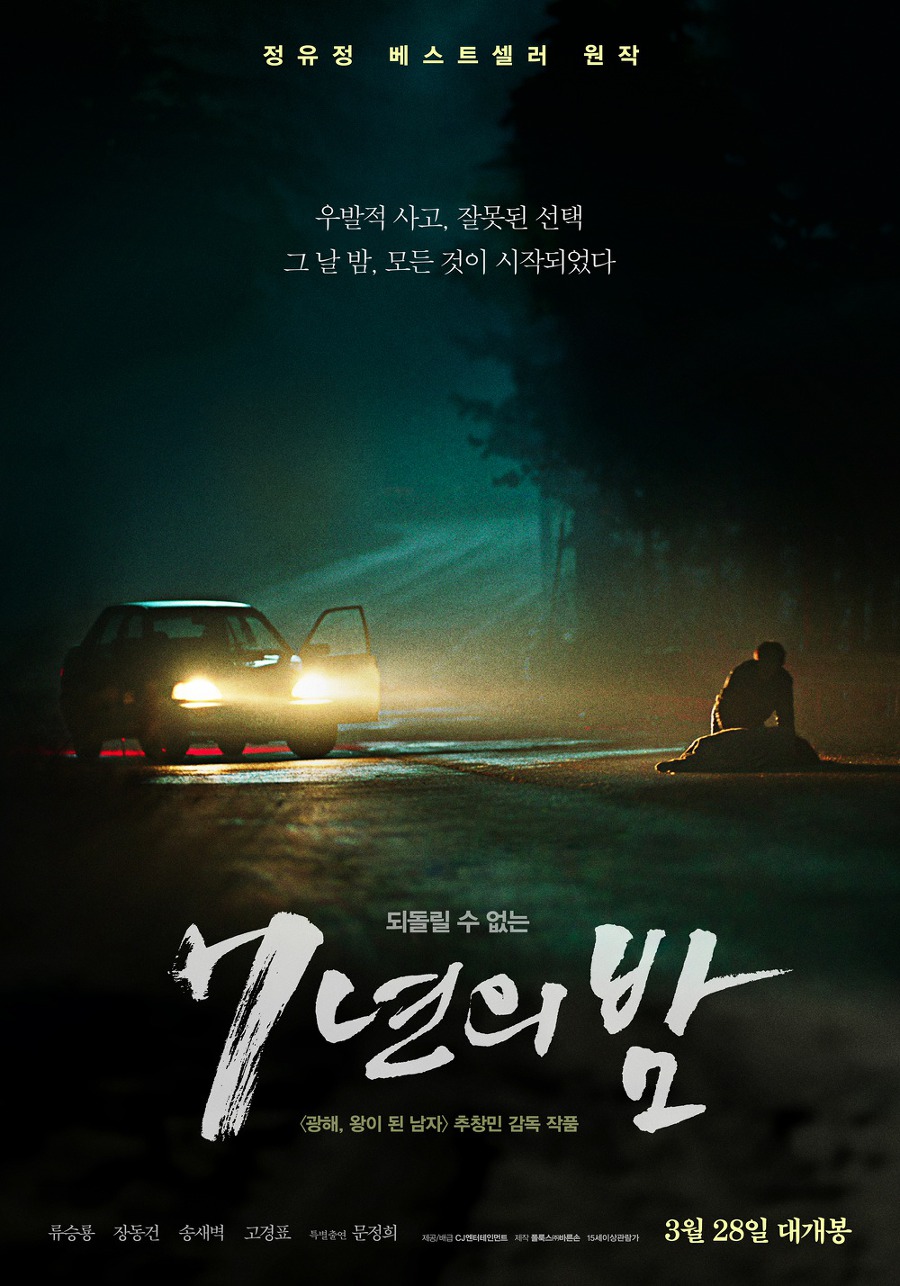
Seven Years of Night posterThe sins of the father are visited upon the son. Cycles of abuse and fatalistic retribution are a persistent theme in Korean cinema but Choo Chang-min plunges them to new depths of tragic inevitability in his adaptation of the best selling novel by Jeong You-jeong. The biblically titled Seven Years of Night (7년의 밤, 7 Nyeonui Bam) pits two visions of failed fatherhood against each other as two broken men attempt to restore order to their lives but damn their children in the process through their own refusal to engage with past trauma.

In 2004, security guard Hyun-su (Ryu Seung-ryong) buys an apartment he can’t afford in order to placate his wife who is in constant worry over their precarious financial circumstances. Hyun-su can’t really manage the interest payments on the mortgage so the family will be renting out the fancy apartment and moving to a remote house provided by his new employers at a hydroelectric dam. On the day that he was supposed to go and check over his new accommodation, Hyun-su partied hard with his former colleagues and set off drunk, getting into an altercation with another driver on the way. Lost in a thick fog and fuzzy from the drink, he hits a little girl who ran out in the middle of the road, panics and hides her body, planning to forget any of this ever really happened.

Forgetting is not, however, something anyone is permitted to do in Choo’s world of elemental retribution in which the buried past is always destined to make its way to the surface sooner or later. The lake around the dam was once home to a village which was sunk, intact, to make way for its construction. Locals fear the water with superstitious dread, believing the lake sucks the souls of men and is polluted with something darker and older than industrial corruption. Attempting to drown the inconvenient may have its appeal, but nothing stays underwater for long and the harder you try to push it down, the faster it will rise.

Unfortunately for Hyun-su, the father of the girl he has killed, known to all as Dr. Oh (Jang Dong-gun), is not a man to be messed with. Dr. Oh, apparently an upscale dentist in the city, rules over all with a tyrannical authority and, as he owns almost all the land around here, enjoys a near feudal level of deference from the villagers. Violent and controlling, Oh’s wife, who describes him as the Devil incarnate, has recently escaped and gone into hiding leaving their small daughter Se-ryung (whose name is coincidentally the same as that of the sunken village) alone to face his wrath. Doubtless, Dr. Oh was raised with an authoritarian father of his own and is unable to see beyond himself and understand that his reign of terror prevents him from achieving the very thing he craves – the love of his wife and daughter.

Desperate for revenge, needing to prove that this is all someone else’s fault to avoid admitting that his own violence drove his wife from him and his daughter into the path of another violent man, Dr. Oh vows poetic retribution by targeting the life of Hyun-su’s innocent son, Seo-won (Go Kyung-pyo). Increasingly disturbed by his crime, Hyun-su dreams of his own father – a violent drunk with PTSD from a pointless war whose death he longed for and who he swore never to become, only to be confronted with a vision of himself as a small boy in the face of his own son watching his father strike his mother in anger. Hyun-su sees. He sees what his father passed to him and what he fears he will pass to his own son. He wants to break the curse, but doesn’t know how. 

Still, Hyun-su would drown the world to save his son even if he hates him for it. Seo-won, left with a series of dubious legacies, struggles to emerge from the shadow of his father’s crimes, is disowned by his family as the son of a murderer and cast out from regular society as one polluted by murderous blood but eventually saves himself through skills learned from a second father, himself hoping to atone for a selfish decision that led only to tragedy. Deliberately disjointed and self-reflexive, Seven Years of Night is a dark tale of supernatural dread masking a horror all too real in the impossible task of exorcising the living ghost of defeated male pride.


Seven Years of Night was screened as part of the 2018 London Korean Film Festival.

International teaser trailer (English subtitles)

How to Steal a Dog (개를 훔치는 완벽한 방법, Kim Sung-ho, 2014)

how to steal a dog posterEverything seems so simple to children. The logic maybe surreal, but it is direct. Problems have solutions and there are clear pathways to achieve them even if they seem odd to a more adult way of thinking. Perhaps we’d all be better off if we thought about social issues in the same way children do, though naivety and innocence often prove blindspots in otherwise solid plans. How to Steal a Dog (개를 훔치는 완벽한 방법, Gaereul Hoomchineun Wanbyeokhan Bangbub) is basically a heist movie in which two adorable little girls plan to kidnap a beloved pooch from a rich old lady who will then be only too happy to part with her millions to get it back but it’s also a subtle social satire on class relations and the economic causes of family breakdown in modern Korea.

Little Ji-soo (Lee Re) tries her best to put brave face on it, but at home everything’s gone wrong. In fact, they don’t even have a home any more – Ji-soo’s dad’s pizza business failed and he’s run off and left them. Evicted, the family have been living in the old pizza van while Ji-soo’s mum (Kang Hye-jung) has convinced an old flame (Lee Chun-hee) to give her a job as a waitress in a posh cafe. It’s approaching crunch time because Ji-soo’s birthday is coming up and the other kids are expecting to be invited to a party at a house Ji-soo doesn’t have. When she spots an ad for a lost dog which promises a reward, Ji-soo strikes on an idea. Together with a new found friend (Lee Ji-won), she hatches a complicated plan to steal the beloved dog of the grumpy old lady (Kim Hye-ja) who owns the cafe where her mother works and extort enough money to buy a lovely new house for her family where she can have her birthday in style.

Ji-soo’s worldview is both cheerfully innocent and extremely cynical. Sad and lonely with her dad gone, she blames her mother’s fecklessness for their present plight, berating her lack of practicality and failure to get her kids into a proper home in good time. Playing the sensible one for her family of three, Ji-soo is always on the look out for scams and trickery, assuming most people are up to something especially when it comes to innocent little girls. Hence she quickly has the number of the local pizza boy (Lee Hong-ki) who takes orders for family size pizzas but writes regular on the order slips and then pockets the difference from the unsuspecting customer. When she spots an ad in an estate agent’s window for houses at 5 million won she becomes fixated on gaining exactly that amount of money, thinking “per three square metre” is the name of an area and little knowing that 5 million won won’t even buy you a front porch in Seoul let alone an entire house.

Though living in a van is not exactly pleasant, Ji-soo’s problem is more one of social shame than it is of actual discomfort. All the kids at school have already been indoctrinated with class competitiveness and everyone is still talking about the last birthday party, the subject of which is getting a little nervous in case Ji-soo’s house turns out to be nicer than his. No one knows Ji-soo’s dad has run off and they’re living in a van, even the teacher seems curious enough about Ji-soo’s putative birthday party to actively remind her about it and enquire when she plans to make some kind of announcement to her schoolmates.

Thankfully, Ji-soon does eventually learn that money and status aren’t everything. The mean old lady turns out just to be sad and lonely, filled with regrets about a mistake made in her past. The scary homeless man (Choi Min-soo) turns out to be a goodhearted free spirit, and Ji-soo’s mum finally finds her feet after buckling down in an honest yet low paying job which requires a lot of early morning starts. From Ji-soo’s point of view, adults are still a bit rubbish but everything seems to be working out for the best. Oddly pure hearted for a story about dognapping, How to Steal a Dog is a charming, whimsical adventure in which a little girl’s faith in the goodness of the world is finally rewarded, even if not quite in the way she imagined.


Original trailer (no subtitles)

https://www.youtube.com/watch?v=X87IdmUIPZw