
New Life (我会好好的, Dong Hongjie, 2025)

A lost young woman begins to find new purpose in life after taking in a stray dog in Dong Hongjie’s tearjerking drama, A New Life (我会好好的, wǒ, huì hǎohǎo de). A tribute to the healing power of a dog’s unconditional love, the film is partly about the grieving process and learning to let go, but also about what it’s like to feel abandoned and hopeless. Having something to look after gives Xiaoman (Zhang Zifeng) a reason to look after herself as well as her heartbroken father who’s turned to drunken rages in the wake of his wife’s death and subsequent loss of his business.

Ironically, Zhao Bujin’s (Wang Jingchun) old wood carving shop has been taken over by a vet, though Bujin can’t seem to let it go and is intent on causing trouble there. Having lost her mother due to an illness, Xiaoman is intent on not taking up her place at university and instead is earning money as a removals driver often helping to clear houses after the death of the owner. It’s during one particular job that she’s confronted by an angry dog who refuses to leave a cardboard box where, a neighbour explains, it stayed with its mother until she died. Ever since then, he’s been unable to get out, much like Xiaoman who also remains trapped within the box of her grief.

Identifying with the dog, she begins to worry about him during a rainstorm and decides to rescue him as a means of rescuing herself. But at the same time, she doesn’t really want to keep him and continues referring to the dog as “doggie” rather than naming him while he imprints on her as a new maternal figure. There’s a half an idea in the back of her mind that there might be money in it if she cleans the dog up a bit and sells him on with the help of the vet, Chuan (Zhang Zixian), who promises to help her find a good home for it. The first couple he suggests appear to be extremely wealthy and keen to adopt, but the film seems to be critiquing the idea that a life of material comfort is better than one spent struggling with family. The wealthy couple clearly have ideas about their ideal dog and how it would fit into their Instagram-worthy life including a name that skews feminine while Xiaoman’s dog is a boy. Predictably, the couple eventually send it back when it fails to bond with them and insists on returning to Xiaoman. 

Then again, Xiaoman and her father don’t necessarily seem to be struggling all that much. Though they don’t have much money, they’ve managed to keep their sizeable home and furniture even they’re economising on food and worrying about how to make ends meet with Bujin unable to find work. Xiaoman attributes this to his drinking, though it seems he actually sustained an injury he never got treatment for which has damaged his ability to carve. In any case, his industry has also changed. Though Xiaoman is led to believe he’s found a well-paying job at a factory producing wooden statues, she later learns that he’s being paid a pittance to do an apprentice’s job doing things like prepping wood. His friend explains that only elite master carvers make money these days because all the lower grade stuff is all mass-produced by machine so there aren’t any jobs for mid-grade craftsmen like Bujin. Bujin keeps on about finding an amazing log he’ll use for his masterpiece, but like so much in his life it seems like an impossible pipe dream.

Meanwhile, Xiaoman tries to keep it together with her only goal being to buy a proper grave for her mother overlooking ocean. Nevertheless, bonding with the dog, whom she later names Xiaoyi as if it were really her brother gives, her new reasons to look after herself and think about her future. Identifying with it closely, she also comes to realise how little people value the lives of cats and dogs and by extension other people too. That’s one reason why she begins holding proper funerals for pets to give them a little dignity in death when some owners just tell the vets to get rid of their remains and don’t even bother to collect the ashes. Adopting a quasi-maternal position in caring for Xiaoyi also helps her process her own mother’s death and begin letting her go so that both she and her father can start to move on. Truly tugging at the heartstrings, Dong’s film is a tribute to the unconditional love of a dog and the healing effects it can have on a life if only someone is willing to offer it the same in return.


Trailer (no subtitles)
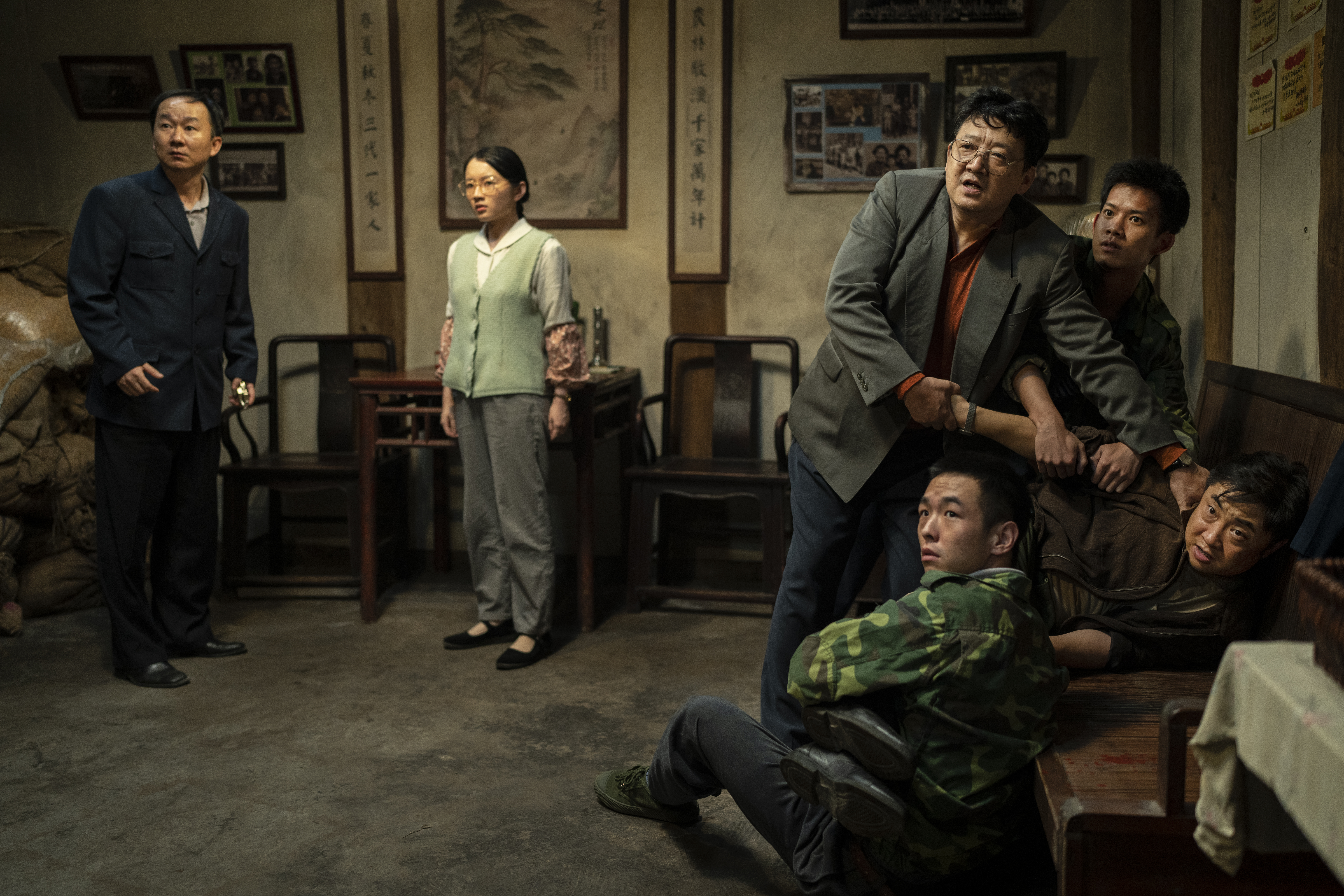
Deep in the Mountains (如意饭店, Li Yongyi, 2025)

Such in the confusion in mid-90s China that the chaos has penetrated all the way to a remote village in Li Yongyi’s satirical farce Deep in the Mountains (如意饭店, rúyì fàndiàn). What begins as gritty Sino-noir soon turns into black comedy as the unfairly demoted policeman hero finds himself chasing a serial killer right into a traditional village community that seems to be home to some of the nation’s least astute people who are themselves caught between the old China and the New but also obsessed with their own status and petty vendettas.

The problems begin when middle-aged former detective Yao (Qiao Shan), now working as a vehicle checker after being demoted for chasing a woman he thought was a missing person while in his underpants which frightened her so much she ran into traffic, is knocked out by criminal mastermind Ge Wenyong (Wang Yanhui) and the pair are taken into custody by the current village chief’’s daughter. She hopes that by catching the “thief” before the public security representative she can secure her succession to the role. As such, she’s inclined to believe Ge Wenyong when he says that he caught Yao breaking into his restaurant while as Yao came out in search of his missing friend on his off hours, he doesn’t have anything on him that proves he works in law enforcement. The villagers’ inability to believe him signals their declining faith in the authorities, while Ge Wenyong signals the rise of the new merchant class which is in this case quite literally bludgeoning the workers to death. 

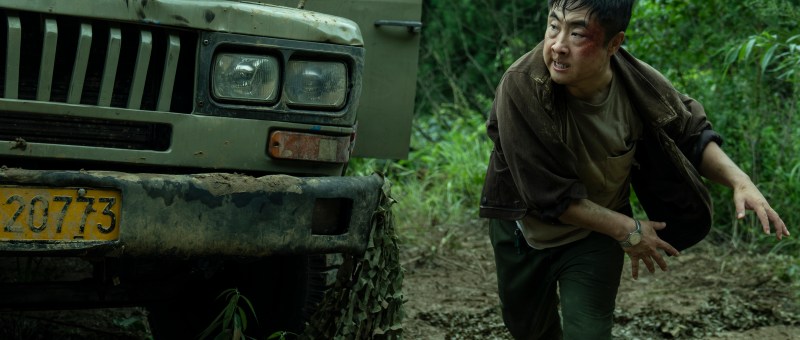
As a vehicle checker, Yao is immediately suspicious when one of the fog light caps he fitted on a now-missing lorry turns up on another one. The increasingly nervous driver tells him there’s an out of the way place where people sell parts from scrapped vehicles on the black market. Amid the economic reforms of the 90s as the nation transitioned away from the planned economy to a market one, many lost their jobs along with, at least as far as the film goes, their moral compass. Infected by greed, they climb over each other in search of material wealth. In some ways repentant lorry driver Yang is symbol of this newly materialistic impulse. His business went bust and he’s racked up massive debts which is why he ended up becoming a long-distance lorry driver. Even if his gift of pretty white shoes for his wife hints at this new consumerist society in their frivolity, the fact that Yang is dying of pancreatic cancer suggest that he too has been poisoned by the corrupting influence of capitalism. Now his only wish is to clear his debts so that his wife and daughter won’t be burdened by them when he’s gone. 

There are a series of family photos that appear in the film besides the one that Yang keeps in his lorry beginning with the wedding photo which is dramatically shattered in the opening sequence. The “missing” woman we’re first introduced to is perhaps of this new China and looking for a more modern “freedom” in fleeing an abusive marriage to a man who tells the police that he didn’t hit her “that hard”. But unfortunately, she ends up running into Ge Wenyong who takes her prisoner and forces her to be a tool in his dark and exploitative criminal enterprise which involves knocking off lorry drivers and stealing their vehicles which are often carrying new consumerist goods such as televisions and video players. Yet, suave and manipulative, he manages to convince the villagers that he is actually an undercover public security agent while Yao is just a thief. 

Meanwhile, they squabble amongst themselves while ironically preparing to accept an award as a “civilised advanced village”. The title cards at the end of the film assure us they were all punished too for “obstructing official duties, picking quarrels and provoking troubles”, though they are perhaps symptomatic of the problems of the old China, which have not exactly gone away, in their petty politicking at the expense of the people they’re supposed to be protecting. Yao, however, is redeemed by solving the case, if not without a few casualties, and is rewarded with reinstatement as a detective. He continues to be plagued by anxiety about the “missing persons” of China’s transitionary period as a representative of an authority almost certainly a little less benevolent than it’s being made out to be if also positioned as the only real force of resistance towards the rise of rampant capitalism and heartless “entrepreneurs” like Ge Wenyong.


Deep in the Mountains screened as part of this year’s New York Asian Film Festival.

The Fallen Bridge (断.桥, Li Yu, 2022)

Li Yu’s mystery thriller The Fallen Bridge (断.桥. duàn.qiáo) finds itself at a series of contradictions in the modern China and its film industry. The film was an unexpected box office success, though largely because it falls into a new category of boy band film in starring TFBoys’ Karry Wang locking in an audience of ardent fans much as Jackson Yee’s presence in Better Days had though it also plays into ongoing anti-corruption theme in recent cinema while simultaneously adopting a mildly positive stance towards whistleblowers if specifically within the field of construction.

It is of course an unescapable fact that hypercapitalistic working practices and ingrained corruption have led to numerous public safety failures with bridge collapses unfortunately a fairly common occurrence. This one is particularly problematic as a skeleton is discovered encased in the concrete during the cleanup effort. From the way it’s posed, it appears the man may have been buried alive. A preserved piece of paper found in a bag accompanying the skeleton states his intention to take his concerns to the head of the construction project that the structure is unsafe and should be entirely rebuilt. Of course, that would be incredibly expensive, embarrassing, and disadvantageous to others who have used the bridge as a way of forging connections with important people.

The bridge’s collapse is therefore also symbolic in pointing to the fracturing instability of these relationships along with that between college friends Zhu Fengzheng (Fan Wei), the project manager, and Wen Liang (Mo Chunlin), the would-be-whistleblower. Fengzheng has also been raising Liang’s daughter Xiaoyu (Ma Sichun) who was 12 at the time her father disappeared after seemingly being disowned by her mother who was under the impression he had runaway with his mistress. Now in her 20s and an architecture student, Xiaoyu becomes determined to learn the truth even as she begins to suspect Fengzheng who has otherwise become a second father to her and does at least seem to care for her as a daughter while his own son is apparently living in Australia. Teaming up with a fugitive, Meng Chao (Karry Wang), on the run for killing the man who raped his sister, she begins plotting her revenge while a police investigation into the bridge collapse and an additional suspicious death otherwise seems to flounder.

Though it may not mean to (as it seems unlikely to please the censors) the film gives tacit approval to vigilante violence in subtly suggesting that “official” justice is rendered impossible because of the complex networks of corruption that exist within the soceity. Meng Chao says the man who raped his sister was a judge which is why he had to kill him, while Xiaoyu seems to desire individual vengeance believing the police aren’t investigating properly but refusing to go to them with key evidence because she wants to kill her father’s killer herself. While carrying out their investigation, the pair end up adopting the wily daughter of another casualty of the villain’s greed and form an unlikely family unit marking them all out as good people who have been betrayed by the system which is itself corrupted by the nation’s headlong slide into irresponsible capitalism. 

Even so, revealing the villain so early weakens the suspense while their own motivations are left unexplored, assumed to be merely greed if perhaps also a wish to remain connected to influential people and be thought of as important at the cost of the lives of the general public (along with those of often exploited labourers) endangered by shoddy construction practices. It isn’t entirely clear how they intended to deal with the fallout of their machinations to cover up their past misdeeds, especially as the sub-standard work on the bridge has already been exposed though obviously could be blamed on others no longer around to defend themselves, but perhaps it all amounts to crazed self-preservation pitched against the righteousness of Xiaoyu and Meng Chao who are after all wronged parties in China’s deeply entrenched judicial inequality. Nevertheless, we get the inevitable title card (left untranslated in the overseas release) explaining that justice was served and a censor-pleasing ending that still in its way suggests the police are incapable of solving these crimes and that the petty corruptions of small-town life are otherwise impossible to prosecute. 


The Fallen Bridge streamed as part of the 18th Season of Asian Pop-Up Cinema.

Original trailer (English subtitles)