Back to the Wharf (风平浪静, Li Xiaofeng, 2020)

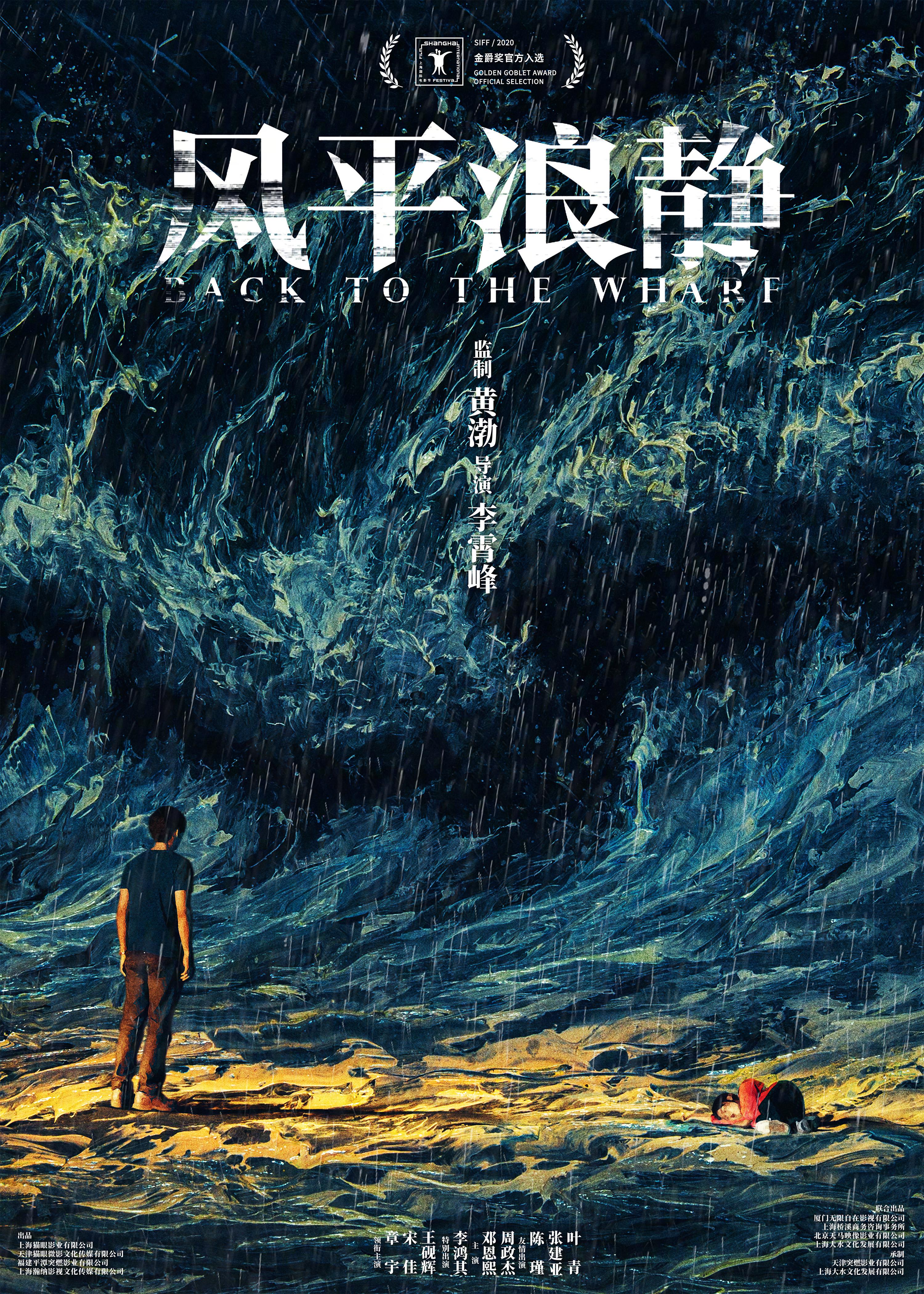
“How dare you want to live when your existence is pointless” a father admonishes his blameless son, deflecting his own willing complicity in the persistent decline of the modern China. Repeatedly abandoned and betrayed firstly by his society, then by his friend, and finally by his father, the hero of Li Xiaofeng’s moody neo-noir Back to the Wharf (风平浪静, Fēngpínglàngjìng) first chooses self-exile only to eventually return and wonder if his crime has been forgotten allowing him to live again before discovering that nothing really changes, there is no escape from the whims of the rich and powerful in an increasingly feudal society. 

Quiet and studious, Song Hao (at 17: Zhou Zhengjie / at 32: Zhang Yu) first wakes up to life’s unfairness in 1992 when he’s called into school on a holiday by his headmaster who breaks the news that he’s losing his guaranteed university place supposedly because his grades are good enough to get there on his own and others need it more. “I like to prioritise the collective over the individual” he explains, reminding him that an extra person from the school going to a top uni can only be a good thing though it’s obviously a blow to Hao not to mention his ambitious father Jianfei (Wang Yanhui) who immediately rings up to complain and discovers that the place is going not to a needy student but Hao’s best friend Li Tang (Lee Hong-chi), son of the local mayor. Angry and confused, father and son set off on circular journeys to confront their respective counterparts, but there’s a storm raging and Hao accidentally wanders into the wrong house after noticing the door flapping in the wind. After walking past a baby sleeping upstairs he runs into an old man who mistakes him for someone else and soon lashes out, shoving fruit into his mouth and trying to suffocate him at which point Hao picks up a knife and stabs his attacker in the belly. Taking flight in terror Hao believes he has just killed a man and orphaned a little girl, never knowing that his father arrived a few minutes later and finished the old man off to stop him talking or that Li Tang was watching the whole thing from a window in the opposite building. 

Returning 15 years later for his mother’s funeral, it’s Li Tang who is most pleased to see Hao when he runs into him by chance at the ruins of the scene of his crime now a future development site for the young real estate tycoon, that is if the now young woman (Den Enxi) the orphaned baby has become whom Hao had been following out of guilt-ridden curiosity would agree to vacate her family property. While Hao has been languishing as a lonely construction worker, Tang has prospered off the back of the 90s economic boom largely thanks to an entrenched network of local corruption that runs from his father the mayor through Hao’s father Jianfei who was handed a fat promotion presumably to placate him over the uni places scandal. Tang has, in a sense, stolen his future leaving him quite literally displaced wandering in the ruined landscape of a haunted past while his father, he discovers, had divorced his mother and remarried in order to have another son. “Your upbringing was a failure” he cooly explains, he needed another male heir to salvage the family reputation and restore his name. Jianfei has, however, done pretty well out of the arrangement now a wealthy man with a separate apartment Hao is not welcome to visit but planning to send his wife and child abroad and retire to Australia. 

Intending to leave as soon as possible, Hao nevertheless starts to wonder if it hasn’t blown over and he might in a sense be allowed to seek happiness, bamboozled into a romance with an old school friend (Song Jia) apparently carrying a torch for him all this time. The past, however, will not let him go. The corruption runs deeper than he even suspected as does Li Tang’s insecure greed and duplicity, attempting to force friendship through blackmail. An embodiment of post-70s fuerdai Li Tang is an amoral capitalist willing to do anything it takes in pursuit of wealth, but at heart a coward ashamed that he owes everything to his father’s machinations and perhaps projecting all of his resentment onto his old friend Hao whose future he so casually stole.   

Yet the message seems clear, men like Hao will always be at the mercy of men like Tang. Perhaps this is the bargain his father has made, but it’s one that Hao can no longer tolerate once Tang forces him to destroy the roots of his redemption. The only sane response to the madness of the modern China, he seems to say, is to go mad in one way or another. Even so, this being a Mainland movie, the nihilistic fatalism of the inevitable conclusion is somewhat undermined by the brief coda in which a policeman reassures a young woman that the crime has been investigated and the wrongdoers punished while the now familiar title card explains to us who went to prison and for how long for their many and various moral transgressions. Hao’s existence is rendered “pointless” because he is unable to live by the rules of a corrupt society, yet his self-destructive act of rebellion does perhaps bring about change if only in the names involved. Beautifully shot with brief flashes of expressionism amid the rain drenched streets of a decaying city to the melancholy strains of a noirish jazz score, Li’s fatalistic takedown of the inequalities of the post-90s society is an exercise in style but one which lets few off the hook as its nihilistic conclusion stabs right at the heart of patriarchal corruption. 


Back to the Wharf streamed as part of the Glasgow Film Festival.

Original trailer (simplified Chinese subtitles only)

Fagara (花椒之味, Heiward Mak, 2019)

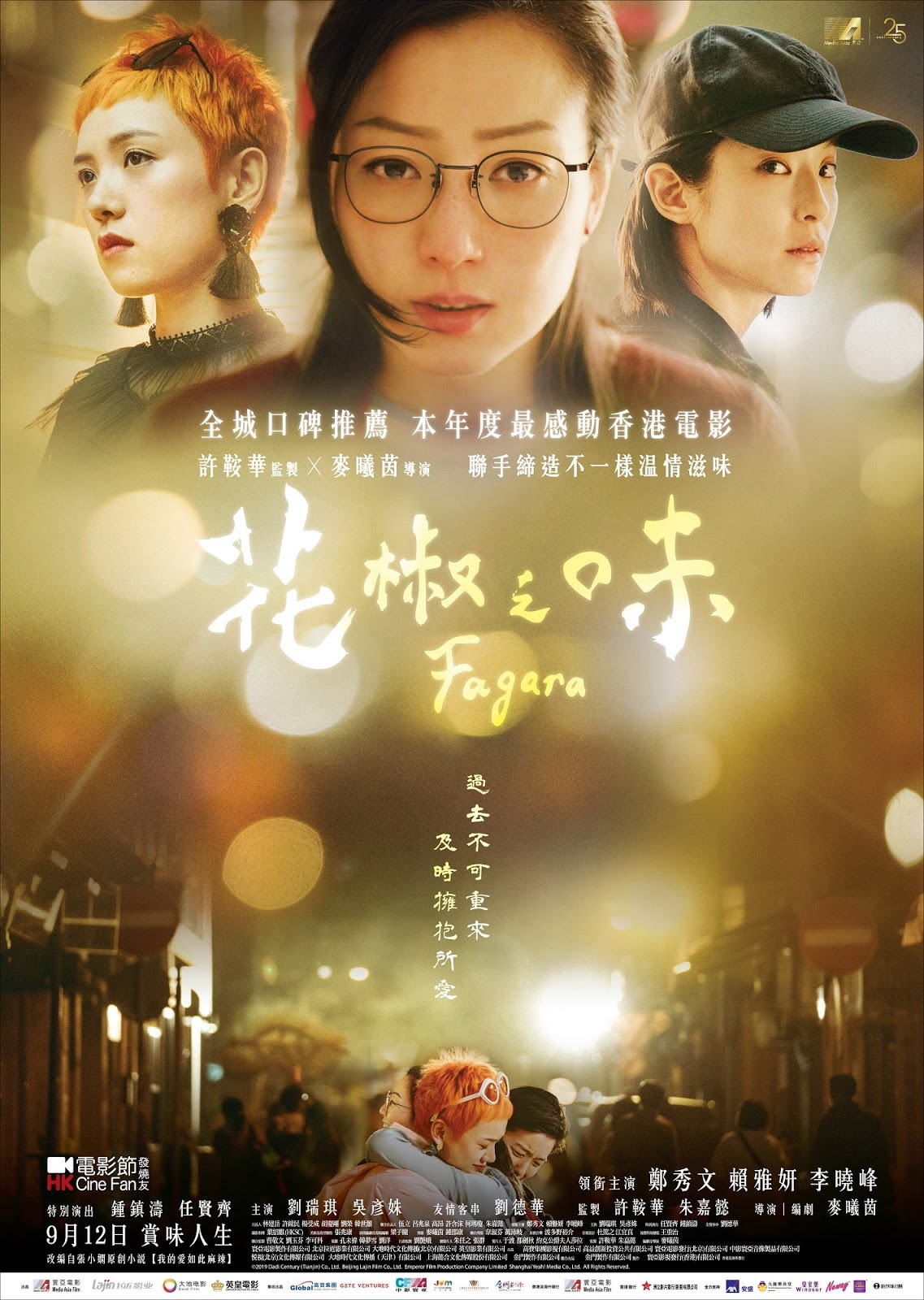
Fagara poster 2“We remember the bad and forget the good” a regretful mother laments, trying to find the right words to connect with her emotionally distant daughter. Heiward Mak’s adaptation of the Amy Cheung novel Fagara (花椒之味, Hjiāo zhī Wèi) melts a subtle One China narrative into a heartwarming meditation on unexpected connections and the modern family as three women from three cultures discover an instant and easy bond, meeting as sisters in adulthood united in a shared sense of hurt and disappointment but learning to find the good among the bad as they process the legacy of their late father and the pain he left behind.

Harried middle-aged travel agent Acacia (Sammi Cheng Sau-man) spends her days fending off junk calls and booking discreet getaways for executives going on “business trips” with their secretaries. So, when she gets a panicked message that her estranged father Ha Leung (Kenny Bee) is in hospital she naturally assumes it’s a scam, only it’s not – she needs to get across the Harbour to Victoria Hospital, but in a motif that will be repeated finds it difficult to get a cab willing to take her. By the time she arrives, it’s too late. Her dad has passed away. So little does she know about him that she has to double check what year he was born on his driving licence, passed to her by a young man working at her father’s “family” hotpot restaurant.

On charging his phone, Acacia is shocked to discover that he’s been exchanging text messages with two other young women, apparently his daughters from other relationships in Taiwan and on the Mainland. Thinking they ought to at least know, Acacia invites them to the funeral, which, embarrassingly enough, she has arranged as a Taoist ceremony because she was unaware her father was actually a Buddhist (something apparently known to some of the other guests only they were too polite to say). Meeting for the first time and setting aside their mutual resentments, the three women find an easy connection, uniting to save the restaurant by figuring out Ha Leung’s secret recipe for his famed Fagara soup.

Though Mak largely minimises the obvious political allegory in favour of the human story, it’s impossible to miss the message that these three women are all daughters of the One China, let down by a well meaning but flawed “father” who nevertheless loved them all if imperfectly. Given the current tensions, some might find the implications of that message trite at best, but you can’t argue with the positivities of finding common ground as children failed by distant paternity, or as Acacia puts us, “regardless of the choice he made, he hurt us all”.

Cherry (Li Xiaofeng), the daughter from the Mainland, counters that she was never “hurt” because she was never anyone’s “choice”. Abandoned twice over, Cherry has lived with her grandmother (Wu Yanshu) since her mother remarried in Canada, leaving her behind. A young woman of her times, she’s staked everything on Instagram fame, rejecting the idea of marriage in favour of perpetual independence but unselfishly. The most family oriented of the sisters, she is determined to take care of her grandmother even while she tries to push her away partly in vanity, afraid to let her see the vulnerability of ageing, and partly not wanting to feel as if she’s trapped her granddaughter in a life of servitude to an old woman that will leave her lonely in her own old age.

Acacia meanwhile also remains lukewarm on the idea of “family”, resentful towards her father and insecure in her relationships, breaking up with a meek but supportive fiancée (Andy Lau Tak-wah) because he was only ever bold enough to say he was “OK” with getting married. Striking up a friendship with a cheerful doctor (Richie Jen Hsien-chi) who knew her father, she meditates on her future while trying to sort out her complicated feelings about her father’s “family” hotpot shop.  What she discovers is that her father, while useless at the business of family, had a gift for the family business, turning the hotpot shop into a makeshift community offering second chances to those who couldn’t find them elsewhere.

Uncle Leung, as they called him, was also the only one to encourage Taiwanese daughter Branch (Megan Lai) to follow her dreams when everyone else told her to give up and settle down. Unlike Acacia and Cherry, Branch has a relationship, albeit a strained one, with her mother (Liu Juei-chi) who, as she reveals to Acacia, struggles to connect with her daughter, never quite knowing the right words to say, always striking on the ones sure to work the wound. Heavily coded as gay, Branch is aloof and closed off, literally shutting a devoted young woman out of her life, but begins to brighten on connecting with her sisters, shifting from silent but deeply felt sadness at the funeral to a cheerful solidarity helping to make the restaurant a success. Of course, it turns out that the secret ingredient in the soup was memories of everyone Ha Leung had loved, literally a “family hotpot”. Finally learning to remember the good as well as the bad, Acacia finds the strength to forgive her father, seizing her independence and driving off into a freer future full of possibility but with her sisters, in spirit at least, right alongside her.


Fagara was screened as part of the 2019 Five Flavours Film Festival.

Original trailer (English subtitles)

Youth (芳华, Feng Xiaogang, 2017)

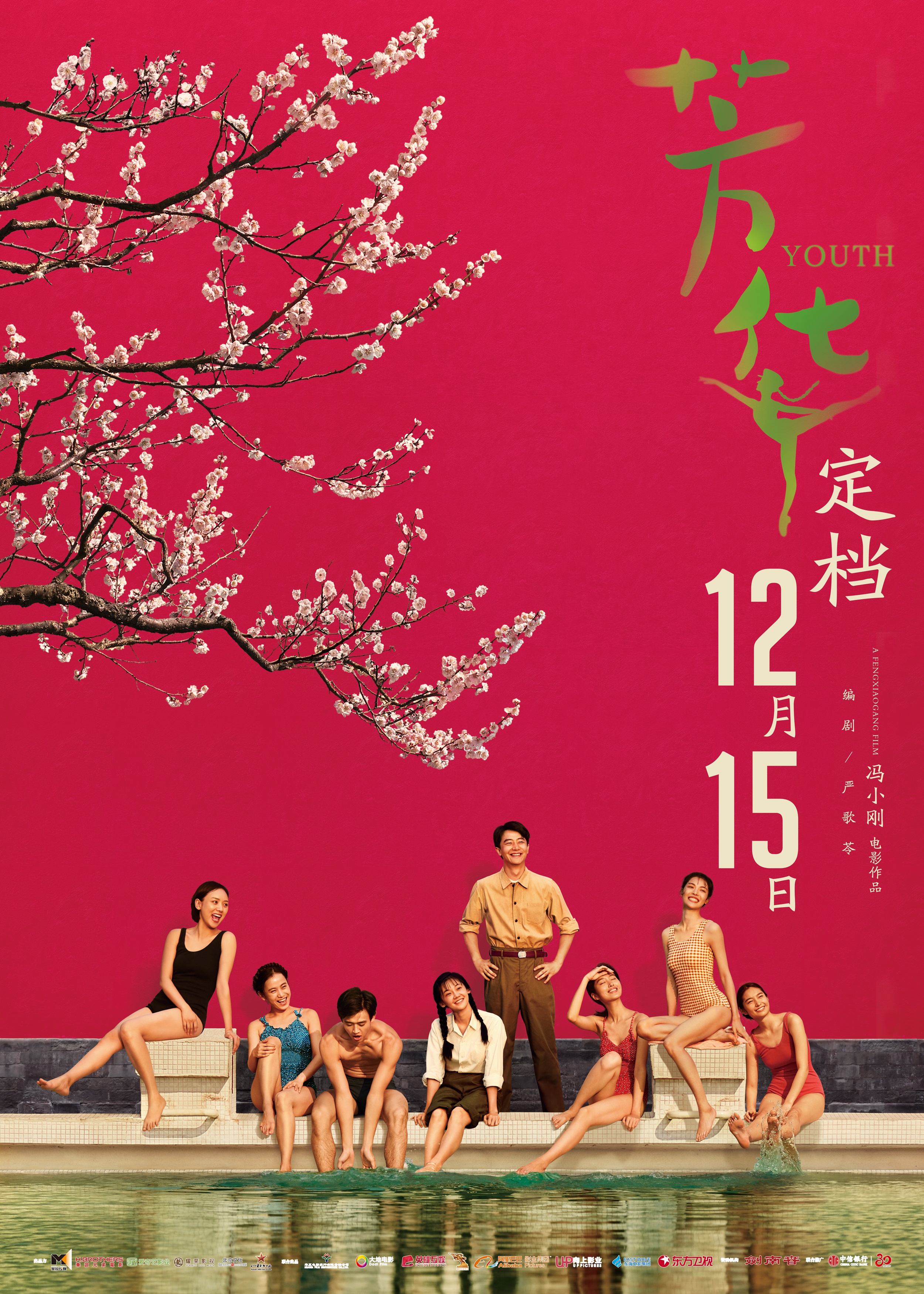
youth posterOn the surface of things, one might be forgiven for thinking that Feng Xiaogang, “China’s Spielberg” – the director of such fluffy hits as If You Are the One and the prestige picture The Banquet, might not be the one to look to for nuanced takes on the state of his nation but, as he proved with the irony filled I am Not Madame Bovary, there has always been a persistent resistance in his superficially crowd-pleasing filmography. The exact nature and extent of that resistance is however harder to assess. Youth (芳华, Fāng huá), Feng’s latest historically probing epic, made headlines when its mainland release was blocked at short notice immediately before its international premiere at the Toronto International Film Festival and in some respects it’s easy to see why it may have raised an eyebrow or two at the censor’s board. A literal story of “youth” and the various ways that the concept becomes romanticised even when one’s own coming of age took place in otherwise difficult times, Feng’s film is also the story of modern China, baptised in the fire of the Cultural Revolution only to finally succumb to the consumerist one 15 years later.

Narrated by bystander Suizi (Zhong Chuxi), later a successful author apparently looking back on her own “youth” with a writerly eye, the tale begins in the early 1970s with two pillars of the arts division of the People’s Liberation Army. Suizi informs us the the protagonists of this story are Lui Feng (Huang Xuan) – a model soldier, and Xiaoping (Miao Miao) – a poor girl mercilessly tormented by everyone throughout her entire life. Xiaoping’s birth father has long been languishing in a re-education camp but as she’s taken her step-father’s name, Liu Feng assures her that he’s kept her bad class background off her record and will make sure no one else knows about it.

Performing propaganda ballets, the arts division is at its zenith at the height of the Cultural Revolution. The troop as a whole enjoys extreme privilege – they are well fed and cared for, evade the dangerous front line work many other members of the armed forces are subject to, and receive the respect due to them as the embodiment of a revolutionary ideal. They are, however, still guilty of the various hypocrisies coded into the system. Though many of the dancers have family members with “bad class backgrounds”, undergoing re-education or otherwise better not mentioned, the top guys and girls are the ones with parents high up in the party who use their untouchable status to paper over cracks in their own development with inherited superiority.

Lui Feng is perhaps an aberration. Nicknamed “Lei Feng” – a mythical figure created for propaganda purposes to embody the “ideal” revolutionary soldier in his selfless dedication to his comrades and communist virtues, Lui Feng is indeed a model party member whose goodness and kindness know no bounds. Unlike Lei Feng, however, he is a real man of flesh and blood not some far off and untouchable god. Having sanctified him in this way, the collective has effectively raised Lui Feng up to an unfair and unattainable ideal and is then “betrayed” on realising that Lui Feng is a man with a man’s hopes and desires. Lui Feng’s transgression is inappropriate to be sure but also somehow innocent in its naivety and his counter betrayal by the system to which he has dedicated his life all the more difficult to bear because of the unfair deification his better qualities have earned him.

Xiaoping meanwhile, who expected only betrayal, betrays the system through passive resistance in resentment of the way it has treated her friend. “Abandoned” by the collective which is the arts troop, Xiaoping exiles herself from a society she thinks has little need of her yet she then continues to serve it fully as a frontline nurse. The “youthful” idealism of Lui Feng and Xiaoping is tested as they find themselves caught up in a far off war while their former comrades dance around with wooden swords on a painted stage. Wounded in body and mind, the pair continue onwards even as their nation conspires to leave them behind.

Shifting into the ‘90s and then the 21st century, Feng’s messages become muddier and harder to grasp. In one sense what is celebrated is “youth” itself which, in this case, happened to take place against the backdrop of terrible events (albeit it ones from which many of the protagonists save Lui Feng and Xiaoping were largely shielded) enabling the growth of a generational family destroyed by a change in the political wind. It is however hard not to infer that everything was better during the turbulent ‘70s in which the delusion of innocence, if not its actual existence, was easier to bear than the soulless march into the future of Coca-Cola signs, Transformers toys and fathers who never come home because they’re too busy making money. Feng’s heroes are the ones who exiled themselves from the reality of China as a modern economic superpower, holding fast to their innate senses of honour and justice, yet in this Feng does to them exactly what he criticises his society for doing – he makes them martyrs, mythologises them as embodiments of revolutionary ideals, a pair of real life Lei Fengs all over again. In telling a story of how the revolution betrays and is betrayed, Feng makes the heroes emerge damaged but unbroken, chaste children trapped by the “innocence” of the pre-capitalist age, but whether their survival is victory or defeat remains unclear. 


Youth is currently screening at selected cinemas across the UK courtesy of CineAsia.

UK release trailer (English subtitles)