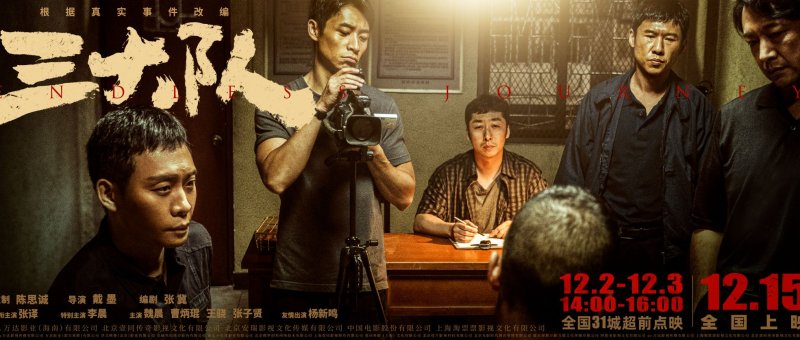
Endless Journey (三大队, Dai Mo, 2023)

The police officers at the centre of Dai Mo’s Endless Journey (三大队, Sān Dàduì) are soon stripped of their badges, accused of excessive force contravening laws existing since the medieval era to prevent vigilante justice. Yet in someways that’s essentially what they end up doing, extra-judicial investigators with a personal vendetta rather than a pure-hearted interest in justice even if the victim of the crime weighs heavily on their conscience. 

Though the film plays into the recent trend in Sino-noir and popularity of mystery thrillers at the Chinese box office, it is surprising that a film that is at least subtly critical of the justice system, featuring police who break the rules and are sent to prison, was approved by the censors board even if the central message is one of heroism as Captain Cheng (Zhang Yi) doggedly chases his suspect all over China for several years. Then again, the hero of this true life case turns out to be China itself as Cheng is reminded that his search is unnecessary given that the fugitive, Eryong (Zheng Benyu), is sure to be captured by the burgeoning surveillance network of CCTV cameras then being rolled out across the country. Years later, it’s the system that allows Cheng to identify Eryong as his DNA and fingerprints throw up positive matches within seconds of samples being taken thanks to the nation’s DNA database. 

Even so, as the veteran officer, Zhang (Yang Xinming), reminds the rookie behind every major case there’s a ruined family broken by their loss which is one reason why he doesn’t relish the prospect of investigating one so late in his career. This particular crime is so heinous that it’s become front page news which means that they’ve also got their boss breathing down their necks to get it solved as soon as possible with the existence of Division 3 itself on the line. Cheng pops home for a matter of minutes to check on his wife and daughter, shutting down his wife’s suggestion that they get a security system for their windows on the grounds that it would be an embarrassing thing for a detective’s home to have. The reason she wants one is that the victim in this case had been a little girl of around their daughter’s age unexpectedly home alone when thieves broke in by climbing over their aircon unit and smashing a window. Finding nothing of value they raped and killed the daughter. 

After a police officer dies as a result of the investigation, the squad take things too far questioning the first suspect leading to his death which is how they end up disgraced and sent to prison. After his release, Cheng has lost his family, his home, his job and identity as a protector of justice yet his determination to catch Eryong is born more of his desire to avenge a friend than it is to prevent further crime. His fellow officers join him in the beginning, but during the endless searching each make the decision to move on for easily understandable reasons such as their marriages, children, and illness but Cheng cannot let go even when prompted by an old friend from the force who tells him they have this in hand though there is perhaps a subtle implication that the police force isn’t really doing enough otherwise Cheng wouldn’t have to be chasing Eryong all over the country. 

But haunted by reflections of his own face, ageing, at times dishevelled and hopeless, Cheng is also searching for himself and a means to reclaim the self he once was by vindicating himself as a policeman along with Division 3 in finally completing their mission. The ominous score by Peng Fei with its stinging strings adds to the noirish feel as does the perpetual inevitability of Cheng’s forward motion in the dogged pursuit of his prey, unable to rest until Eryong has been brought to ground. His quest robs him of his life, but there is an undeniable poignancy to it in Cheng’s inability to find himself outside of the chase only to be left with a moment of uncertainty no longer sure who he is or where he goes now, left alone and with no sense of direction in the absence of his quarry.


Endless Journey is in UK cinemas now courtesy of CMC.

International trailer (English subtitles)

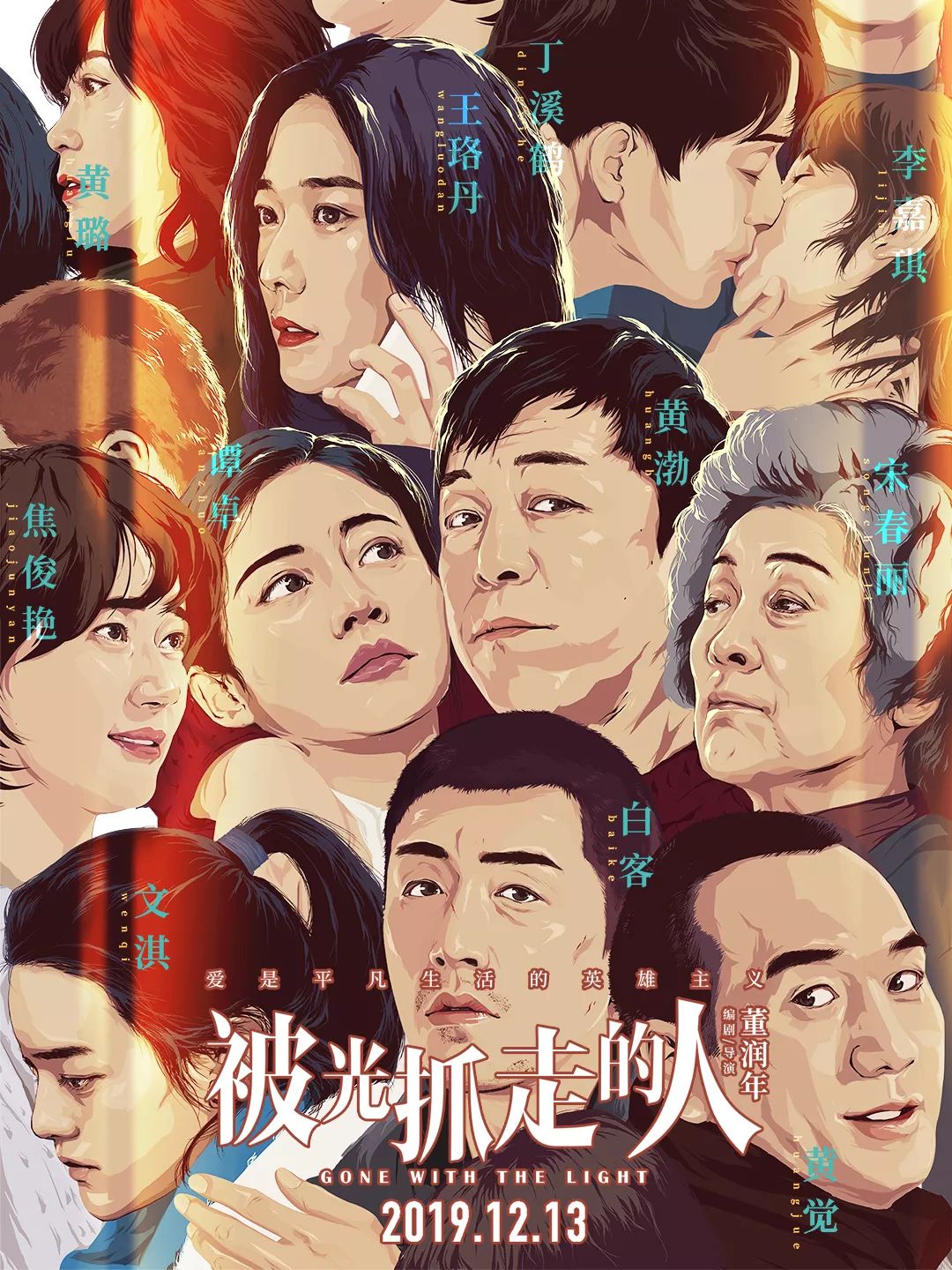
Gone with the Light (被光抓走的人, Dong Runnian, 2019)

What is love, and in the end does it really matter? It’s a question the mostly middle-aged couples of Gone with the Light (被光抓走的人, Bèi Guāng Zhuāzǒu de Rén) who perhaps assumed they were past such existential questioning find themselves contemplating after an unprecedented event causes the disappearance of seemingly random people from all over the world giving rise to the rumour that those taken were those truly in love. But if that’s so, what does it mean for the overwhelming majority left behind, suddenly lonely and uncertain wondering if they’ve been spared or judged and found wanting for their lack of emotional fulfilment. 

At 10am one spring morning, a brief flash of light creates a slight temporal disturbance causing a small percentage of the population to simply vanish. No one knows what happened or where they’ve gone, but the connection is later made that many seem to have been taken in pairs giving rise to the theory that the disappeared are the only true lovers. This is a minor problem for some of the left behind who have lost spouses twice over, not only literally but emotionally in realising that their loved one was in real, deep love with someone else. Meanwhile, those not taken begin to wonder why, questioning the validity of their relationships, doubting that their loved ones really love them but not quite daring to ask the same question in reverse. 

Dong opens the film with a vox pop session questioning several people about the nature of love, some of whom we’ll get to know better and others not. Our hero, school teacher, Wenxue (Huang Bo), unconvincingly claims that he does not put any stock in the admittedly unscientific theory that only true lovers were taken and that the rumours have not affected him or his wife but as we later see they have profoundly unsettled his unexceptional, middle-class family life which was at least superficially happy or perhaps merely unhappy in the most ordinary of ways. Before the light, we see him annoy his wife by waking her up smoking in bed before they have perfunctory, routine sex over which they discuss Wenxue’s hopes for promotion and whether or not it’s appropriate to schmooze with the headmaster to smooth the path. The fact they weren’t chosen eventually becomes a kind of embarrassment, the promotion going to a man whose wife disappeared on him for the slightly strange reason that being betrayed in love somehow grants him the moral high ground. Wenxue, like many, goes to great lengths to excuse himself, getting a fixer to photoshop pictures of his wife along with train tickets to make out she was in another town when the light descended.

Meanwhile, Li Nan (Wang Luodan), a woman who was in the middle of trying to divorce her husband when the light struck finds herself accosted by his mistress (Huang Lu) demanding to know where he is seeing as he did not ascend with her. The obvious conclusion is that he had another woman, but the quest forces each of them to reassess their true feelings towards the missing man, the mistress desperate to prove she wasn’t just an “adulteress” but a woman in love, and the wife that she really is ready to let him go. A young woman (Li Jiaqi) who threatened to commit suicide by jumping off a roof when her parents tried to stop her marrying her boyfriend (Ding Xihe) suddenly doubts her feelings when her parents disappear together while she and the man she thought she loved are left behind. A petty thug (Bai-ke), in the only subtle implication of a same sex love, becomes obsessed with the idea that his friend has been murdered by a TV presenter who had been bothering him and his death has been covered up to look like one of the disappearances, perhaps again hoping to find evidence against a romantic rejection. 

Talking to another man in a similar situation Wenxue is given a dressing-down, reminded that he’s been extremely self-involved and that the problems he’s now able to see in his marriage thanks to the light were there all along, only now he’s refusing to face them in a much more direct way. He couldn’t or chose not to see that his wife was lonely and filled with despair while flirting with an equally lonely woman at work. His confrontation with her provokes his only real moment of emotional reckoning as they each reflect on the fantasy of romance and its capacity to dissipate when realised. Walking in on his teenage daughter getting dumped for the first time he’s perhaps in the best position to offer advice, even if it’s of the fairly prosaic kind to the effect that she’ll get over it in time. “Your lies make me ashamed” she’d fired back at her parents’ middle-aged hypocrisy, a very ordinary marriage in which perhaps the “love” has gone, in one sense, but equally might be succeeded by something else. “It’s alright, you will know it in the future” Wenxue tells his heartbroken daughter but might as well be talking to himself, beginning to feel the love after love in conceding that perhaps this is what “love” is rather than any kind of “rapture” literal or otherwise. A beautifully pitched meditation on the consequences of love, the madness, violence, and loss, Gone with the Light finds its release in stillness and a gentle contemplation of that which remains when everything else is burned away. 


Gone with the Light streamed as part of this year’s New York Asian Film Festival.

Original trailer (Simplified Chinese subtitles only)

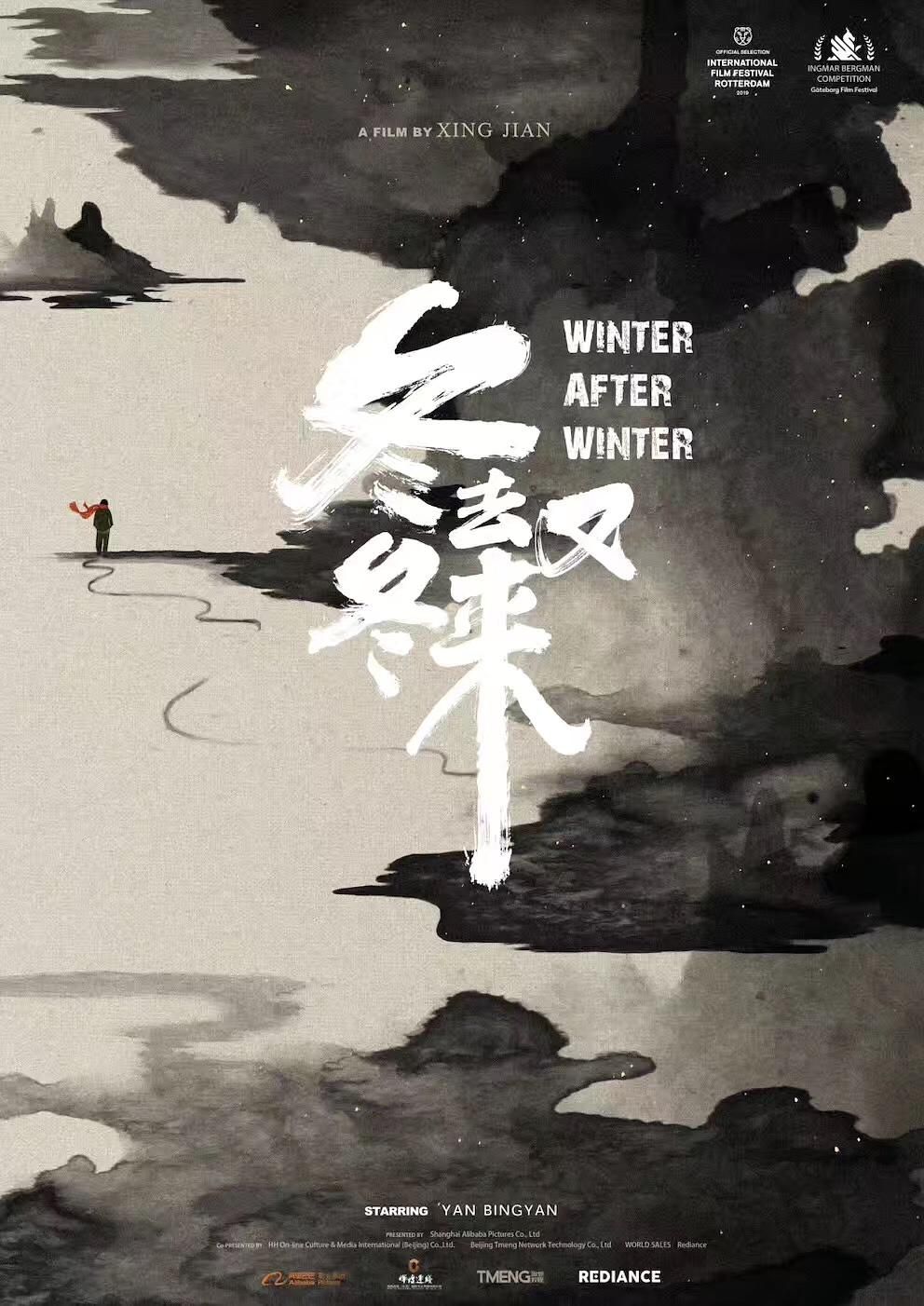
Winter After Winter (冬去冬又来, Xing Jian, 2019)

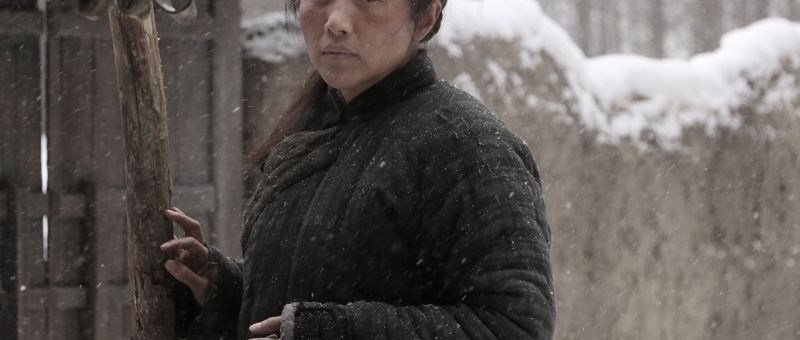
Winter After Winter posterEven in the midst of war, life goes on. How to ensure it keeps doing so becomes a major preoccupation for one peasant farmer, confused as to how he’s supposed to fulfil his obligation to his ancestors if the Japanese insist on taking his sons. Xing Jian’s Winter After Winter (冬去冬又来, Dōng Qù Dōng Yòu Lái) takes a more stoical view of life under the occupation than you’d usually find in Mainland wartime drama, but then its themes are perhaps a little grander as it adopts the perspective of its most oppressed protagonist – the silent Kun (Yan Bingyan) whose bodily destiny is dictated by the men around her while her mild resistance is offered only through small acts of humanistic kindness.

Set in 1944 in the puppet state of Manchuria, Winter After Winter situates itself largely within a single farmhouse where ageing peasant Lao Si (Gao Qiang) is trying to fob off the local Japanese commander (Hibino Akira) who has come for his three sons. Though Lao Si of course does not want his children to go, his concern is more that his oldest son (Dong Lianhai) is impotent and has been unable to impregnate his daughter-in-law Kun so if all the boys are taken now the family line will die. To stop this happening, he tries to force his other two sons to have sex with Kun while he keeps Nakamura busy in the kitchen. His middle son (Yuan Liguo) flees in disgust, running off to join the guerrillas fighting the Japanese while the youngest, shy and inarticulate, tries his best but doesn’t really know what he’s supposed to be doing and is eventually dragged away mid-act, bound for a Japanese forced labour camp.

In some ways, the atmosphere in Lao Si’s village is not as oppressive as one might expect. Now the men have gone, the other villagers are largely left alone with a minimal military presence in the town while they each figure out schemes for keeping the Japanese at bay. The main problem is that once winter sets in there is very little food and the Japanese are intent on keeping most of it for themselves while using their magnanimity as a bargaining chip. Regular searches are made of homes suspected of hoarding rice, while the residents are made to vomit to prove they’ve eaten nothing they weren’t supposed to. Nevertheless, the Japanese commander Nakamura is otherwise shown to be a fair and compassionate man if only largely when dealing with his countrymen – doting over his bedridden wife and little daughter, or making sure to ask a female assistant if she’s warm enough when they sit down to watch a film. Dealing with the Chinese, however, he remains rigid and unforgiving if not actually cruel or abusive. He presses Lao Si for the service owed to him by his absent sons, only reluctantly relenting when told that Kun is unable to work because she has become pregnant but expecting Lao Si to come up with a solution on his own.

Kun’s eventual pregnancy is a problem in itself. Unbeknownst to anyone, the youngest brother manages to escape and begins hiding in the family’s cellar where Kun finds him, keeping the secret and supplying him with food. The pair eventually bond and comfort each other through sex during which Kun conceives a child, but as no one can know of his return, Lao Si arranges to have her marry the “idiot” son (Young Fan) of the local teacher who he assumes is an innocent and will not bother his daughter-in-law with unwanted sexual contact (something that didn’t really bother him when he was keeping it all in the family).

Throughout it all Kun remains stoically silent, never complaining or resisting but simply existing as the right to decide is taken from her by the feckless menfolk who swap and share her with nary a word of kindness. Apparently “adopted” by Lao Si and brought up as a daughter until force married to the oldest son, Kun is made to feel beholden to her father-in-law who behaves as if she owes him her life. Lao Si, meanwhile, blames her for his misfortune – for not being attractive enough to enflame the desire of his oldest son and for sending the middle one running, denying him the heir he so longs for to fulfil his filial duties.

All Kun can do to resist is to rebel against the austerity of her surroundings with kindness. She fulfils her daughterly duties to Lao Si without complaint, tenderly looks after the boys, and finally even offers her own precious food to a Japanese soldier on the run only to pay dearly for it when he brutally betrays her. In the end, all Lao Si’s scheming comes to nothing, defeated by time and circumstance, but it’s Kun who finally makes a positive decision for the future as she perhaps finds him an “heir” even if not the kind he wanted in extending a hand to a crying child signalling an end to conflict and the advent of compassion in the willingness to move forward together without blame or rancour.


Winter After Winter screens on 5th July as part of the 2019 New York Asian Film Festival

Clip (English / simplified Chinese subtitles)