Montages of a Modern Motherhood (虎毒不, Oliver Chan Siu-kuen, 2024)

A title card at the end of Oliver Chan’s Montages of a Modern Motherhood (虎毒不) dedicates the film to all women who chose not to become mothers, and it’s true enough that the picture it paints of contemporary child rearing is relentlessly bleak. Governments in much of the developed world are fiercely trying to encourage more couples to have children, but few are really addressing the reasons why they aren’t while the ways people live their lives have undeniably changed rendering commonly held notions about parenting incompatible with the contemporary reality.

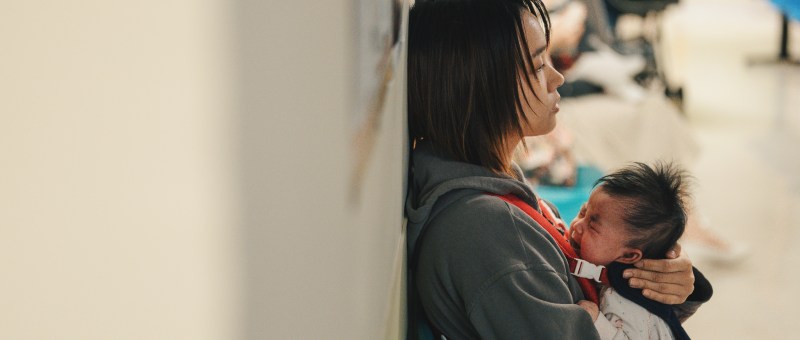
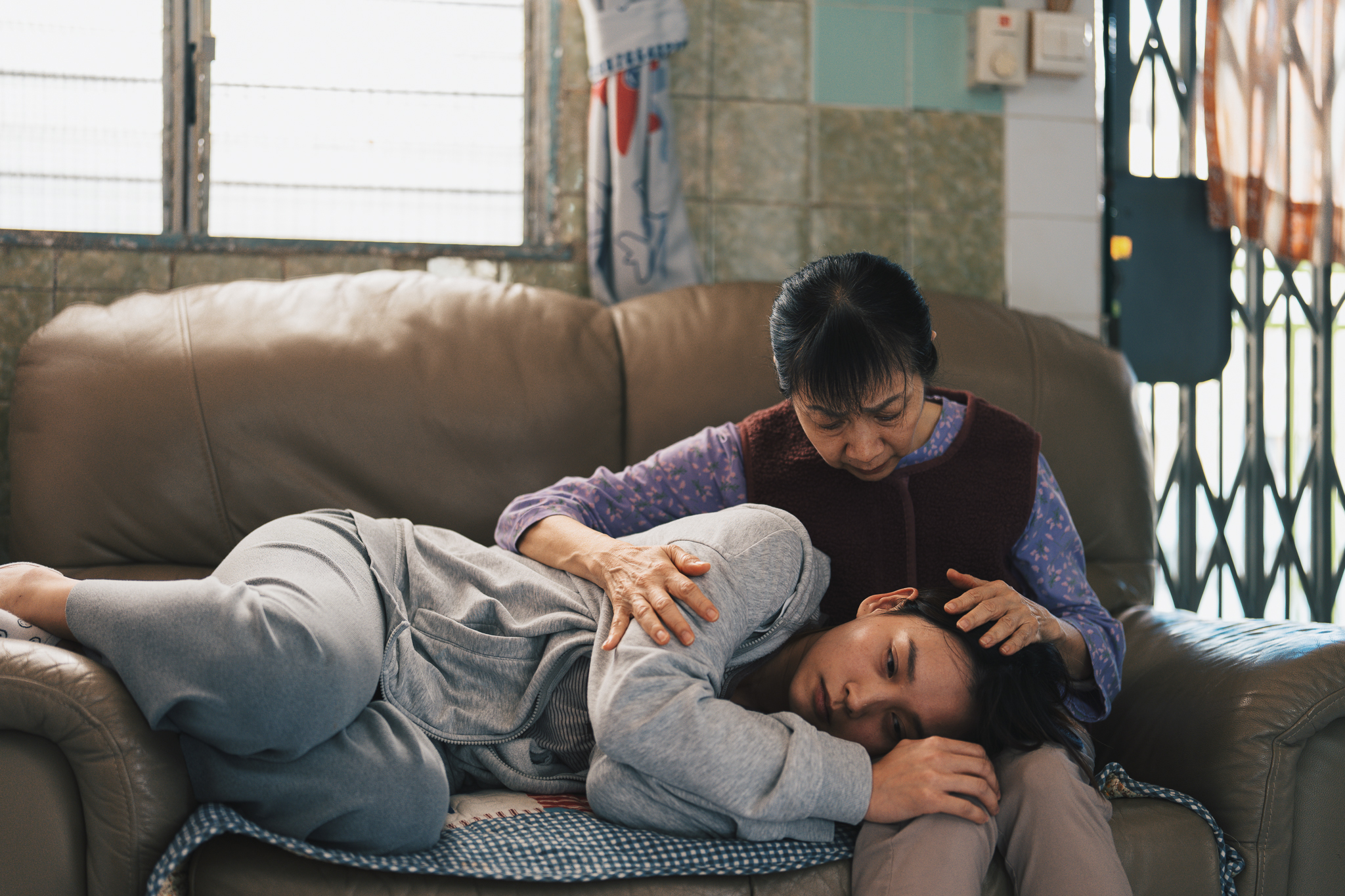
A case in point, Jing (Hedwig Tam) lives a long way from her birth family and is not surrounded by a supportive community network of other women in similar positions. Though her mother-in-law lives next-door and offers to help with the baby, it soon proves more trouble than it’s worth as she more or less takes over and runs Jing down in the process. Jing describes her to friends as “conservative,” and it’s clear that she disagrees with Jing’s parenting choices while also trying to exclude her from the family as if the baby were only her and her son’s. Ching, a fussy newborn who cries nonstop from morning to night, isn’t gaining weight and the mother-in-law immediately jumps straight to the conclusion that it’s because Jing’s milk isn’t good enough. According to her she doesn’t eat right, and going back to work may also have somehow caused a problem. Her unilateral decision to switch formula milk, tipping away all the breast milk Jing has been painstakingly expressing, without telling either of the parents is a huge overstepping of the boundaries and a betrayal of the trust Jing placed in her to look after her child, though of course the mother-in-law insists that she was only trying to do what’s best for the baby despite also having bathed her in burnt sutras.

The problem is compounded by the fact the in-laws seem to own the apartment they live in, which is why her husband, Wai, is reluctant to move closer to her family when she suggests it. As the oldest son, he is also supposed to be caring for his parents though in reality this of course also falls to Jing. As Ching’s crying is so loud and piercing, they begin receiving complaints from neighbours which eventually leaves Jing forced to take the baby outside in the middle of the night. This might not have been so much of a problem in the past before urban living environments became so cramped and people began having less children making the noise more obvious, but it’s nevertheless an unavoidable obstacle for the new parents who find themselves additionally pressured by the necessity of maintaining good relationships with their neighbours. 

To make matters worse, Jing’s husband Wai pats himself on the back for “helping” with the baby, which is after all also his responsibility so he should be doing his fair share. He still seems to operate with a patriarchal mindset that tells him the home and flat are Jing’s to take care of while his job is to earn the money. Both he and his mother seem to hold it against Jing that their baby is a girl. She asks him for more help, but he responds by getting a job that pays more but requires further hours. He spends evenings out with his friends and repeatedly fails to get the breast milk pump fixed despite frequent reminders before accusing her of “whining” too much when she tries to tell him how difficult it’s been for her stuck at home all day with the baby. Like his mother, his ideal solution is for her to give up work and devote herself to their home because they don’t “need” her money and her working is perhaps a suggestion that they might which offends his sense of masculinity.

But Jing wants to work for reasons of personal fulfilment and safety. As other women remind her, you need your own money in case there comes a time you need to leave, but also because some men keep a tight grip on the purse strings and often won’t give their wives enough housekeeping money. Jing was paying for a lot of the baby stuff herself out of the money from her job at a bakery, but after she loses it and her savings run out she has to ask Wai who isn’t keen to chip in. Ironically, her boss chooses to make her redundant when the bakery hits a bad patch because her colleague is single and at least she has her husband’s wage to rely on. Jing continues applying for similar jobs, but they all fall through when she reveals she is married with a newborn child. In the end, she lies that she’s single but the job only offers night work which is obviously no good for her situation.  

Her job was the last thing that Jing felt connected her to her old self. With no one to talk to but the baby, she fears the erasure of her identity and tells her mother that she misses the time that she was a daughter rather than a mother. She gets some support from a kind retired lady who looks after Ching and tries to encourage her, reminding her that it was different for their generation because they could just leave the kids in the house and ask a neighbour to check in on them and no one thought anything of it. But Jing still feels herself inadequate, as if she’s failing at motherhood or breaking a taboo by asking to have some sort of life for herself without being completely subsumed by the image of “motherhood”. The in-laws keep a little bird in a cage with which Jing seems to identify, even as its chirping adds to the noise and the constant thrumming of the breast pump raises her stress levels. Left with no real support, there is only really one way that Jing can escape from a world of sleeplessness and anxiety as she tries to find the smallest moment of peace and tranquility free of social expectation and the crushing guilt of maternity.


Montages of a Modern Motherhood screened as part of this year’s New York Asian Film Festival.

Trailer (Traditional Chinese / English subtitles)
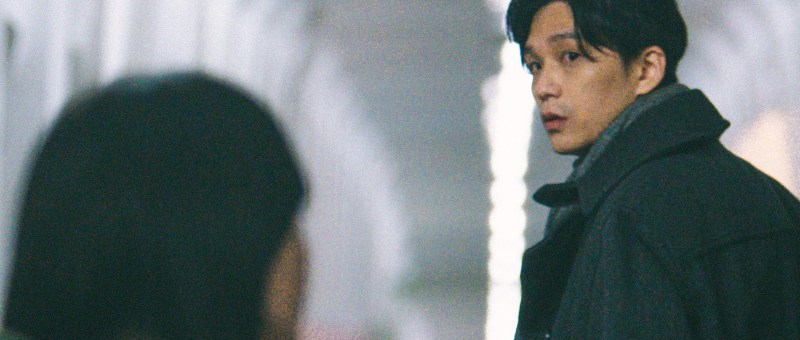
Time Still Turns the Pages (年少日記, Nick Cheuk, 2023)

A dejected teacher is forced to deal with his own unresolved traumatic past when the draft of a suicide note is discovered screwed up in a bin at the school in Nick Cheuk’s poignant drama, Time Still Turns the Pages (年少日記). Informed by a recent rise in the number of adolescents taking their own lives, the film takes aim at those who refuse to take depression among children and young people seriously while simultaneously adopting conservative social attitudes which insist that children who don’t conform to their ideas of conventional success are somehow lazy and selfish. 

That’s definitely not a view held by empathetic teacher, Cheng (Lo Chun-Yip), though he is frustrated by the school’s inability to take the note at face value while otherwise trying to keep it under wraps to avoid potential embarrassment or disruption with the exam season approaching. Consequently, the desire to find the student who wrote the note has the potential to develop into a witch hunt that might only make their situation worse, though Cheng tries to go about it as sensitively as possible. In any case, he discovers that many of his students feel lost and hopeless with no one around to turn to. One boy who is being relentlessly bullied eventually fights back but ends up getting the blame while well-meaning as he is even Cheng originally misreads the situation and fails to help him. 

Meanwhile, Cheng is also under a lot of stress following the breakdown of his marriage caused in part by his issues with emotional intimacy. Called back towards the past, he begins re-reading the diary of a young boy who details physical abuse at the hands of his authoritarian father (Ronald Cheng Chung-Kei) that left him feeling worthless as if the world had no place for him. Eli struggles academically and particularly in comparison with his younger brother Alan while his hardline father views him only as an extension of himself and is embarrassed on a personal level that his son doesn’t measure up. Consequently, he beats him senselessly while insisting that he is simply lazy and doesn’t apply himself rather than accepting that he isn’t academically inclined and is unlikely to ever master the piano. 

Only his piano teacher, Miss Chan, is kind and patient with him though his father soon ruins that relationship too leaving the boy with nothing. Learning from this example, Cheng vows to become a different kind of teacher who doesn’t become angry with children who aren’t reaching their potential but makes a point of talking to them to figure out what’s wrong and how he can help. Unfortunately, he feels as if he’s failing to become the person he wanted to be in part because there are too many problems in the contemporary society which places intense pressure on people to conform to outdated notions of conventional success largely though academic achievement. 

Yet what Cheng discovers to be more dangerous is a growing sense of loneliness and alienation among young people who feel lost and hopeless in the contemporary society. He reflects that Eli’s despair stemmed from feeling as if no one wanted him and he wasn’t really included as a member of his family who looked down on and rejected him because of his lack of academic success. Cheng doesn’t want anyone else to feel that way, but ironically isolates himself, alienating his wife who fears he’ll never really be ready to move on into a more settled adulthood as a father with children of his own. 

In many ways, Cheng’s desire to end the cycle turning away from his father’s authoritarian violence towards care and compassion in looking after his students even as he struggles to come to terms with his own traumatic past and fears of abandonment. Granted, he doesn’t and perhaps can’t do very much to tackle the causes of the teens’ depression and their roots in the status-obsessed, politically turbulent contemporary society, but he can at least learn to open himself up to be of help to others who like him are struggling and feel as if they have nowhere to turn. Poignant and empathetic, Cheuk’s drama makes a plea for a little more compassion and understanding not only for the young but for those carrying a heavy burden in the best way they can. 


Time Still Turns the Pages opens in UK cinemas 24th November courtesy of CineAsia.

UK trailer (Traditional Chinese / English subtitles)

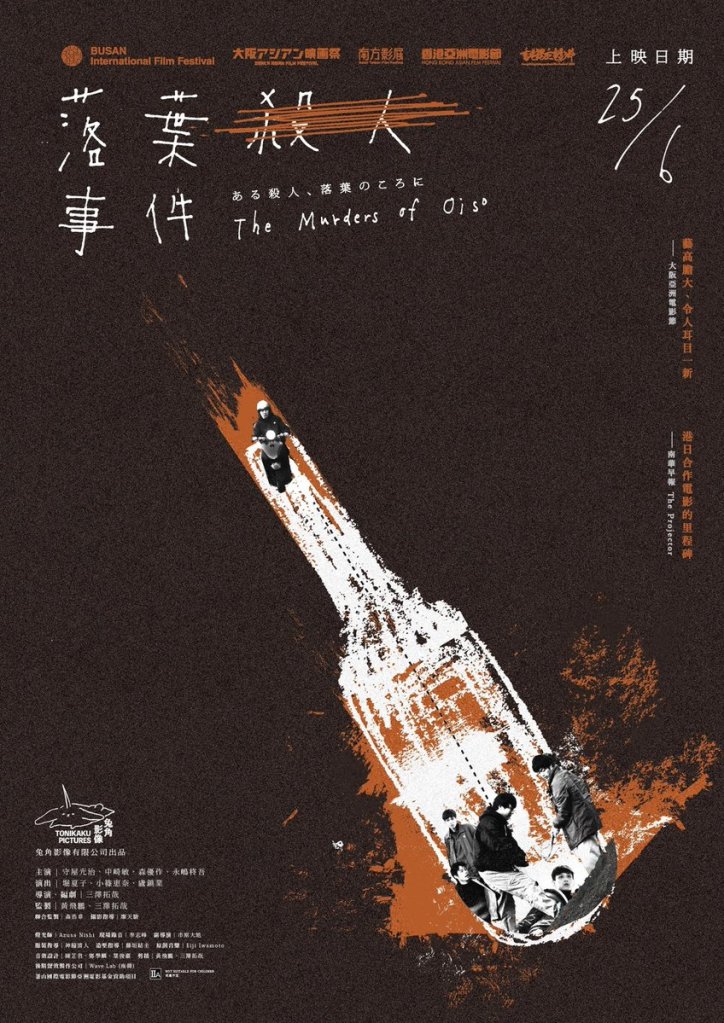
The Murders of Oiso (ある殺人、落葉のころに, Takuya Misawa, 2019)

(C) Wong Fei Pang & Takuya Misawa

The dark heart of wholesome small-town Japan is fully illuminated in Takuya Misawa’s second feature, The Murders of Oiso (ある殺人、落葉のころに, Aru Satsujin, Rakuyo no Koro ni). Then again, depending on your point of view, there might not be any “murders” in this murder story only a series of admittedly strange deaths, but even if you choose to exclude the idea that these unfortunate victims were done in by their society, there would be several possible explanations and a variety of suspects on offer. Employing a bold non-linear structure across several levels of thematic complexity, Misawa plays with the unreliability not only of memory but of narrative in leaving us to contemplate the subjective truths of our own perception as we search for connection to make sense of the fragmentary evidence presented to us. 

As far as certainties go, Misawa sets his tale in the small coastal town of Oiso, its faded grandeur perfectly matching the defeated hopes of our four protagonists: former high school buddies Kazuya (Yusaku Mori), Tomoki (Haya Nakazaki), Eita (Shugo Nagashima), and Shun (Koji Moriya). Now in their early 20s, the boys are all working construction jobs at the company owned by Kazuya’s family thanks in part to his uncle, Hiroki, who was their basketball coach at school. When Hiroki is found dead in a freak gardening accident, their lives are turned upside down not only in the sudden loss of their primary figure of authority but in a series of unexpected reversals which directly threaten their way of life. 

Even before that, however, we get the impression that these “friends” don’t actually like each other very much and are only together out of a combination of fear, habit, and lack of other options. Kazuya, the thuggish leader, never misses an opportunity to remind the guys they have (and keep) their jobs only because of his largesse while quietly resentful of Eita’s relationship with his girlfriend Saki (Ena Koshino) who is, in actuality, the narrator of this complicated tale of small-town pettiness. Like Kazuya, Tomoki (a classic underling) fears the fracturing of the group, alarmed by news from Shun that he’s thinking of quitting his job and moving away, and goes to great lengths to protect it. 

Hiroki’s death, however, presents a series of problems besides its suspicious quality in that he had apparently remarried in secret, keeping the existence of his much younger wife Chisato (Natsuko Hori) even from his closest family which of course includes Kazuya something which causes him a degree of embarrassment on top of his anxiety. As the only son, Kazuya is perhaps overburdened by filial responsibilities in needing to take over the family firm whether he wants to or not. His thuggishness is in essence a rebellion against his lack of agency, but he’s also unaware that his father seems to be in debt and mixed up with loanshark gangsters who frequently need stuff dumped on the sly. If they were hoping that Hiroki’s death would result in a windfall, the existence of a wife is a major inconvenience as is her quite reasonable eying up of the funerary donations and hope that the inheritance will come through as quickly as possible. 

According to the narrator, the town is much more scandalised by Chisato’s existence than they are by Hiroki’s death. Small-town life is still fiercely patriarchal and socially conservative. Immature, Kazuya has outlawed women in the “workplace” (a den where the boys hang out playing cards, smoking, and drinking) and resents Eita’s girlfriend for weakening his ties to the group. With Hiroki, the authority figure, gone, an emboldened Kazuya makes a pass at his friend’s girlfriend which she manages to dodge while Eita does nothing more than watch from outside. He confronts Kazuya on realising that Saki is upset enough to mention the police, but Kazuya brushes it off, claiming that she was drunk and is mistaken before instructing Eita to fix his girlfriend’s “funny” dress sense. Tomoki chimes in too, laughing that he doesn’t see why Saki is outraged because it’s not as if Kazuya succeeded in raping her and in his view it’s disproportionate to be so upset about “touching”. He also points out that Saki’s attitude is a threat to their group and to Eita’s employment prospects (eventually going so far as threatening Saki at her place of work), leaving him with a clear choice and, it seems, he chooses Kazuya making no attempt whatsoever to defend his future wife or dare to criticise his friend’s bad behaviour. 

Kazuya may be resentful at his lack of agency, but the other guys seems to have internalised a sense of futility and hitched their carts to his wagon no matter how much they hate him or themselves. Only Shun seems to be conflicted, turning away while Kazuya mugs an old high school friend in a local subway tunnel, later joking about his weakness for handing over the money right away. Misawa adds to the sense of Lynchian dread through noirish composition, all empty streets and canted angles, along with a moody jazz score to find the menace lurking round every corner in this strangely violent town apparently ruled by corruption and nepotism while breaking off into Ozu-esque pillow shots of vacant hallways and urban decay alternating with nature at the turn of autumn. Frequent shots of the director himself apparently writing the female narration we are hearing further add to the sense of unreality as we meditate on the single phase “I remember” while hearing the narrator mislead and contradict herself. Were there murders in Oiso, or is this all a dream from the mind of a frustrated young man realising he’s hit a dead end and teenage friendship can’t last forever? That’s one mystery (among many others) you’ll have to solve for yourself. 


The Murders of Oiso is available to stream in the US until July 30 as part of this year’s Japan Cuts.

Original trailer (English / Traditional Chinese subtitles)