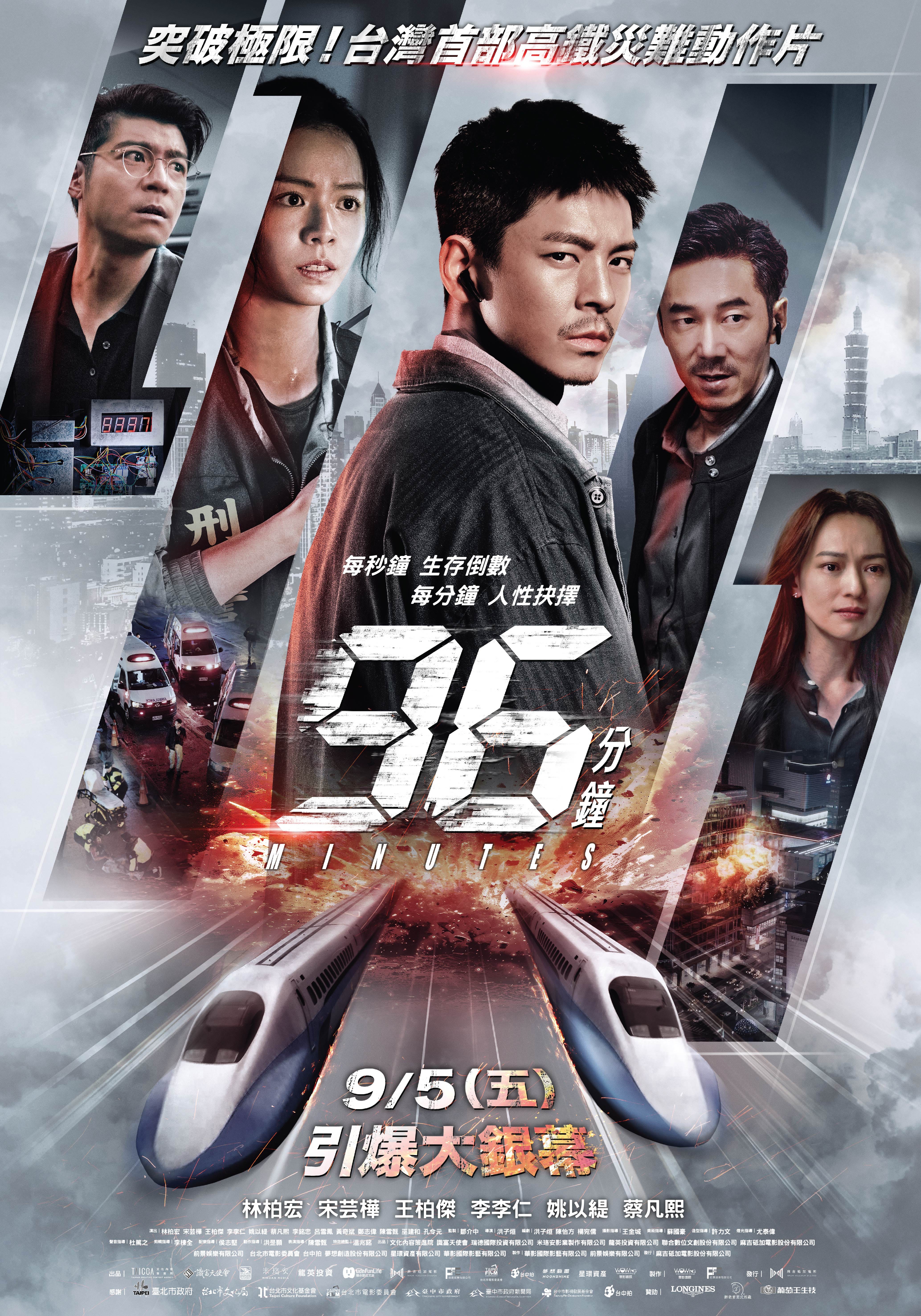
96 Minutes (96分鐘, Hung Tzu-Hsuan, 2025)

The needs of the many outweigh the needs of the few, as the famous goes. Prioritising saving lives where you can rather than risk spreading yourself too thin and not helping anyone as a result may be a sensible decision. But what if you or a loved are among those who’ve been deprioritised? Like many things, now it’s not just theory but here right in front of you and victims are real people not just anonymous numbers, it looks quite different.

At least, that’s how it is for A-Ren (Austin Lin), a brash bomb disposal expert. Though he disarmed a bomb in a cinema, another one went off across the road in a department store. The bomber had warned them that might happen, but A-Ren’s commanding officer Liu (Wang Bo-Chieh) convinced him they were probably bluffing. They were told there were two more bombs, one located in their command centre, and the other in the department store, and given a choice. Save the people in the department store by heroically blowing themselves up, or choose to save themselves even though this time they’re in the minority. 

Three years later, A-Ren has never forgiven himself, or Liu, for the bomb going off. He’s quit the police and though he’s married fellow officer Huang Xin (Vivian Sung), they never had a wedding and still haven’t been on honeymoon. His guilt is compounded by the fact that he’s been feted as a hero even though he knows he’s directly responsible for everyone who died in the department store. He gets a shot at redemption when the train he’s travelling on returning home after a memorial service for victims of the bombing receives a bomb threat, but at the same time he fears the eventual exposure of what really happened three years ago and is too ashamed to get his mind fully on the job.

On the other hand, it’s true that, ironically, no one on the train has been able to move on from the incident. All of them are mired in their grief and confusion, while looking for someone to blame. Needing to solve the case quickly, the police named a random victim with a criminal past as the bomber rather than admit they didn’t know who did it, making the police themselves a legitimate target for the resentment of the victims’ families given their cavalier attitude to life and death. Liu reminded A-Ren that the policemen in the command centre had families too, as if the people in the department store didn’t or that having a family made their lives weigh more, while Huang Xin was there too further influencing their decision and feeding into A-Ren’s guilt wondering if he was just selfish and made a choice to save her at the expense of the lives of a large number of people he didn’t know.

The bomber essentially gives him the same choice again, putting two bombs on two trains and leaving A-Ren with a binary choice of choosing to sacrifice one or the other to see if he will make the same hypocritical decision again in opting to save the minority because he is among them. Of course, they try a number of other high-risk strategies to disarm both bombs and/or evacuate passengers, but the bomber leaves them with little choice other than to accept the fact that one of the bombs has to go off. A-Ren and Liu can either blow themselves up figuratively by admitting that they chose to sacrifice the lives of the department store victims, or they can save themselves by blowing up the other train.

During a train derailment incident, Liu had cited his greater good philosophy in prioritising passengers who remained outside the tunnel rather than those trapped in the carriages inside, but he perhaps he was wrong to do so and should either have made more of an effort to help everyone or refrained from announcing his decision to let some of the victims die live on television. But then again, the victims’ families are also torn now they are directly involved with some leaning towards saving themselves rather the passengers on the other train whom they don’t after all even know. A-Ren, meanwhile, is in a race against time to restore his sense of integrity by disarming the bombs inside his mind to cure the lingering trauma of the department store bombing as the train rockets forward with only him between it and certain destruction.


96 Minutes screened as part of this year’s LEAFF.

Trailer (Traditional Chinese / English subtitles)
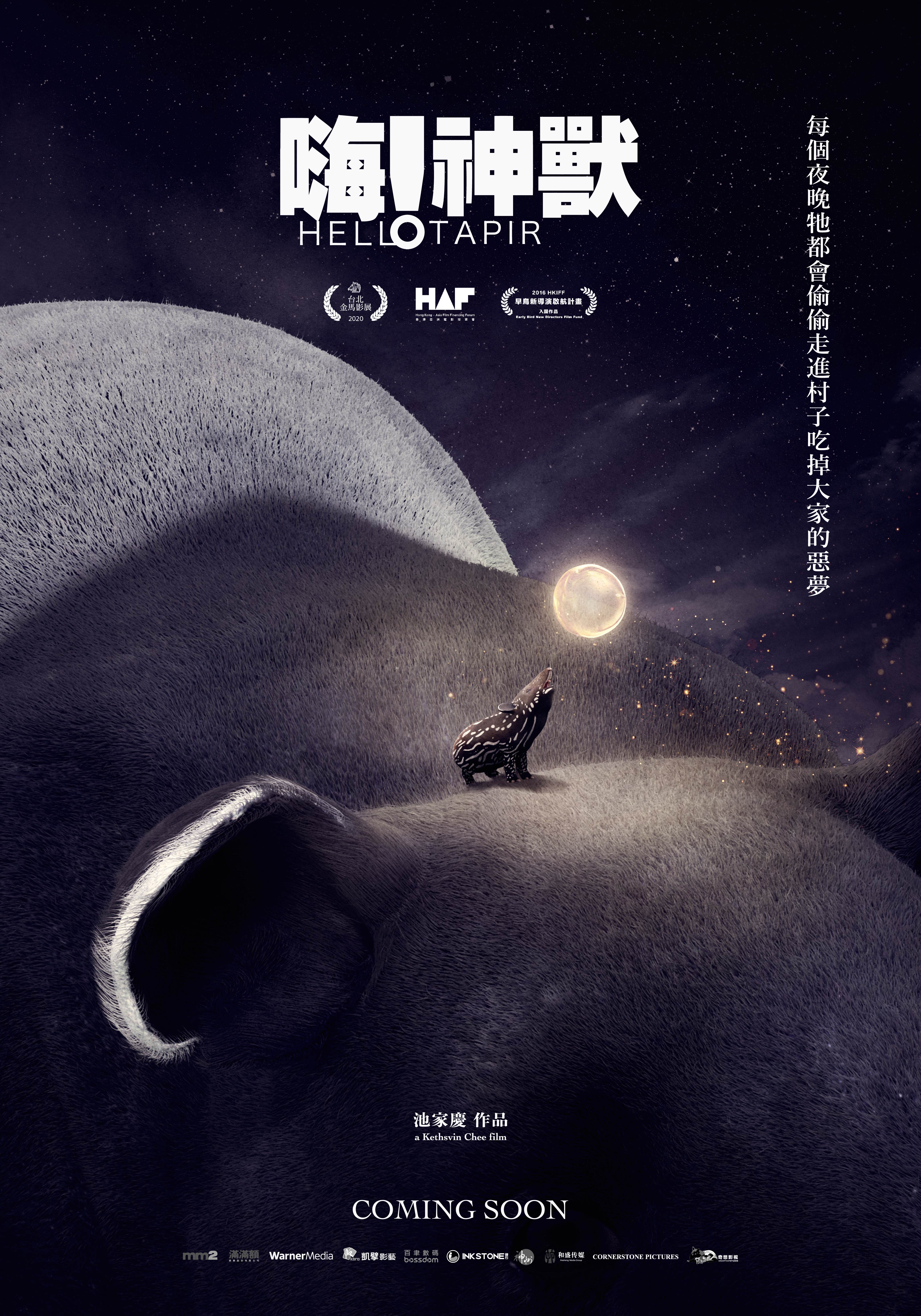
Hello! Tapir (嗨!神獸, Kethsvin Chee, 2020) [Fantasia 2021]

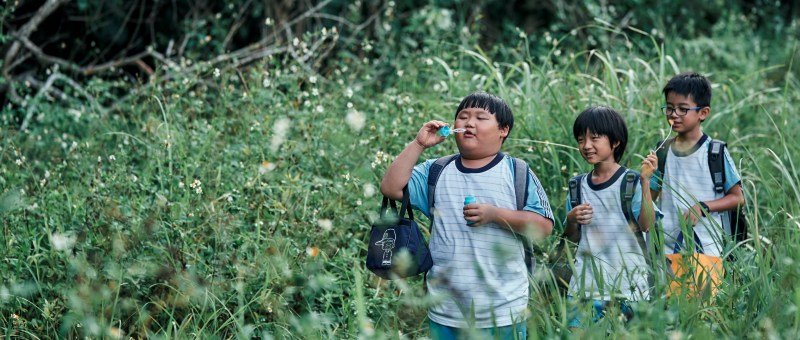
“In this world, everything disappears eventually” according to the prophetic words of the absent father of young Keat in Kethsvin Chee’s charmingly retro children’s fantasy adventure Hello! Tapir (嗨!神獸, Hāi Shénshòu). At heart a tale of grief and a small child’s acceptance of death, Hello! Tapir is also one of gentle adventure as the hero and his two friends search for tapirs in the undergrowth but eventually discover an accommodation with loss in the knowledge that nothing’s ever really gone even if you can’t see it. 

Keat (Bai Run-yin) lives in a small fishing village with his fisherman father (Lee Lee-zen) and grandma (Lü Hsueh-feng) who sells seafood at the market. Captivated by his father’s improbabe tale of having encountered a tapir who eats people’s nightmares in the forest, Keat implores his dad to take him to see it too but Keat’s father Sheng is always too busy and often reneges on his promises. Ominous winds start to blow when news of a typhoon is broadcast over the radio while Keat is angry that no one woke him before his father left on the boat as he had asked them to do. Sure enough, not long after Keat discovers a commotion at the harbour and gathers there has been some kind of accident at sea. His father hasn’t come home and his grandma is frantic but he’s just a little boy and no one is telling him anything. 

Told from a child’s point of view, Chee’s melancholy tale perfectly captures the confusion and resentment of a small boy in the midst of crisis. Keat cannot conceive of the idea his father may never come home again, replying to his friend’s questions that he’ll be back maybe tomorrow or the day after that. After all, he was supposed to take him to see the tapir. Because he’s sure his dad’s coming back, he grows resentful towards his recently returned mother (Charlie Yeung Choi-Nei) who left the family some time previously and had been living in Taipei and his grandmother for taking his father’s place away by boxing up his clothes and preparing to sell the fishing boat which came back empty on its own for scrap. 

Meanwhile he attempts to secure his father’s legacy by searching for the tapir on his own, encountering a baby which later leads him into the forest and towards its giant parent sucking on golden nightmare orbs all the way. Tapirs are obviously not native to Taiwan and so their presence is as decidedly unexpected as their unusual appearance. You would’t expect to see one wandering through town unless it had recently escaped from a zoo, but they are perhaps Keat’s way of processing the loss of his father the adult tapir gently showing him what it was he most wanted but feared to know while comforting him with its reassuringly warm presence. 

On the cusp of adolescence, Keat finds himself squarely between two sets of overlapping worlds caught between the fantasy of nightmare-eating tapirs and the reality of his grief while also remaining firmly in the realms of childhood having innocent adventures with his two friends as they try all sorts of tricks to draw out the mystical creatures just as his mother deals with the difficulties of planning a funeral and making plans for the future without overburdening her son with impending change. Nobody tells Keat anything because he’s just a child and they think he won’t understand, but he understands that they’re not telling him and the knowledge further increases his sense of loneliness and alienation left entirely alone with his grief and anxiety. 

A beautifully drawn magical realist fable, Chee’s charmingly old fashioned kids fantasy adventure makes the most of its idyllic seaside setting replete with a warm and friendly atmosphere despite its concurrent tragedy. Keat is forced to face the reality of his loss, but does so while maintaining a sense of wonder for the natural world secure in the knowledge that all things disappear in the end, but it isn’t the end of the story and death is merely another part of life. Warm and empathetic, Hello! Tapir paints its coastal setting with an uncanny sense of magic coupled with a cosmological sense of security as its young hero begins to come to terms with his loss thanks to the gentleness of sleeping creatures. 


Hello! Tapir streamed as part of this year’s Fantasia International Film Festival

Original trailer (English subtitles)

When Love Comes (當愛來的時候, Chang Tso-Chi, 2010)

“I like the feeling of home” the conflicted heroine of Chang Tso-Chi’s When Love Comes (當愛來的時候, Dāng Ài lái de Shíhou) eventually admits, finally coming to an understanding of her admittedly unusual family even if not, it seems, fully aware of her place within it. A chronicle of displacements, cultural, familial, adolescent, and romantic, When Loves Comes is also in its own way an ode to female solidarity as well as a coming-of-age tale as its feisty young heroine gains the courage to step into herself while preparing for the role of matriarch in accepting her responsibility towards those around her. 

About to turn 16, Laichun (Lee Yi-chieh) is a rebellious teenager who enjoys scandalising her heavily pregnant mother by walking out in skimpy outfits and elaborate makeup. So displaced is she within her own family, that she is not invited to meet her new baby brother at the hospital but is asked to stay home looking after recently arrived uncle Jie (Kao Meng-chieh), her father’s younger brother who has learning difficulties and has come to live with them following the death of his grandmother. Laichun, however, goes out anyway, meeting her as we soon discover no good boyfriend Zongfu (Chris Wu Kang-ren) in a love hotel. Like any teenager, Laichun thinks she’s invincible but she’s also incredibly naive or perhaps merely in denial. By the time she realises she might be pregnant, it’s already too late for an abortion and Zongfu has vanished into thin air. 

“It’s because you’re a girl” a postman with whom Laichun had been engaged in an elaborate flirtation unironically tells her after her impassioned monologue railing against the unfairness of her situation, that Zongfu has vanished while she is blamed for everything, branded a “slut” simply for embracing her sexuality. Her pregnancy places a further strain on her familial relations, though she finds an unexpected ally in her emotionally austere second mother, her father’s first wife Xuefeng (Lu Hsueh-Feng). As we gradually come to understand, Laichun’s father “Dark Face” (Lin Yu-Shun) hailed from rural Kinmen and married into Xuefeng’s family. But Xuefeng was not able to have children of her own so she allowed Dark Face to take a second wife, accepting Laichun’s mother, former gangster Zihua (Ho Tzu-Hua), into their family. 

“I was scared to be responsible for him” Dark Face later admits of his brother, revealing that he left his island home in secret, abandoning Jie to their grandmother who cared for him until the day she died. Dark Face indeed struggles to understand Jie, often frustrated by quirks and frequent meltdowns, cruelly tearing up his drawings somehow incensed as if refusing his brother’s attempt to communicate with the world around him. Jie has been patiently filling a jar with pennies because his grandmother told him to save up for a wife, but like Laichun remains an outsider in the family with only Xuefeng willing to include him. Yet faced with her impending maternity it’s Laichun who eventually becomes his primary carer, patiently taking him to the bank to pay in all his pennies, embracing her responsibility as a member of a family. 

“I like the feeling of being protected”, Laichun had said, “so why is it that I end up looking after everyone else?” only figuring out later that perhaps that’s because they’re sometimes the same thing. Gaining a sense of confidence from her father who reassured her that “you can face whatever comes along” she begins to step into a maternal role, emerging with a new respect for each of her mothers and for the complicated yet functional unit which is her unconventional family. Chang both begins and ends with a birth, taking place on the same spot behind a screen in the family restaurant as the family is first destabilised and then repaired by its new additions. In the opening scene Laichun had been told off for flirting with a man in the family’s restaurant who told her he was unafraid of the “unlucky” table because he worked as a mortician only to get run over on his way out. At the conclusion she meets him again along with his wife who just happened to be the woman who was driving the car that hit him. Not so “unlucky” after all. Life is chaotic and unpredictable, sometimes it presents you with a problem that’s really a solution. “I really very much like the feeling of sunlight” Laichun affirms, no longer so worried about the dark skies, now more assured in herself and her family as she prepares to welcome a new life that anchors her to the old. 


When Love Comes streams in the UK until 27th September as part of the Taiwan Film Festival Edinburgh.

Original trailer (English subtitles)

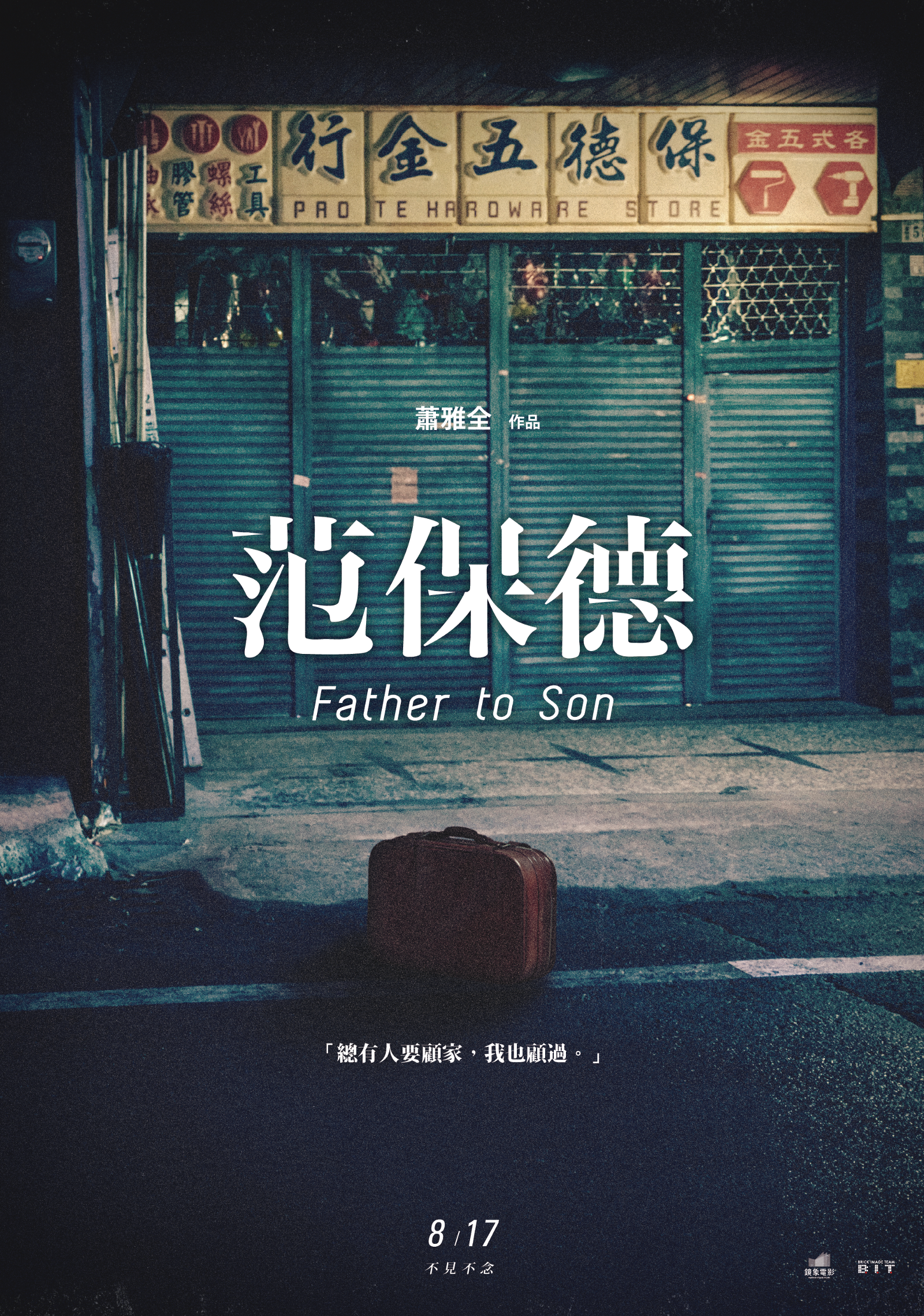
Father to Son (范保德, Hsiao Ya-Chuan, 2018)

Father to Son posterEvery son kills his father, but echoes of the past prove hard to escape in Hsiao Ya-Chuan’s Father to Son (范保德, Van Pao-te). Legacies national and personal conspire to frustrate the dreams of the young while the old are left with nothing more than enduring mystery after a lifetime of disappointment. Faint notions of mortality send an old man on a quest to understand himself by making peace with his long absent father and taking his own son along for the ride, but perhaps there really are no answers to the questions you most want to ask, or to put it another way perhaps it’s better to answer them yourself.

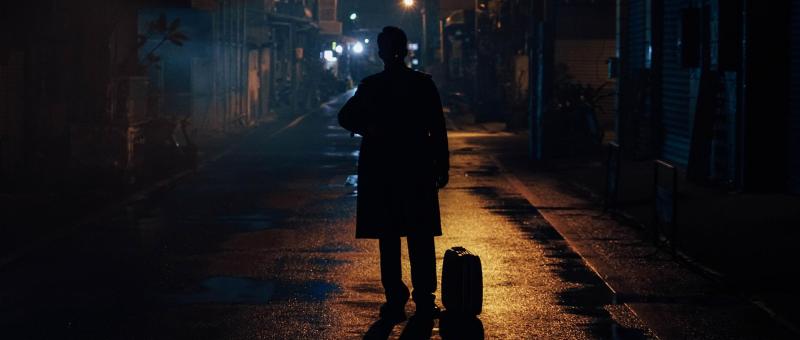
60-year-old Van Pao-te (Michael Jq Huang) is feeling his age. He’s taking longer in the bathroom and he’s no longer as agile as he was. A handyman with a hardware store, Van is also something of an “inventor” and has several patents in his name but cannot escape the feeling of being unfulfilled, as if something in his life has always been missing. A twinge fixing a pipe for a doctor friend provokes a fuller examination as a result of which Van is told he may have a serious pancreatic illness and is advised to see a specialist in Taipei, but Van hates doctors and so he puts the decision off. Meanwhile, he goes to the city on other business. Honoured for his contribution to Taiwan’s intellectual economy thanks to his inventions, Van is also presented with an unexpected opportunity to do business with a Japanese company. Rather than deal with his medical problem, Van visits an old friend for an address he was first offered 30 years ago and decides to look for his long lost father who abandoned the family when Van was 10 in order to try his luck in the burgeoning Japanese post-war economy.

History repeats itself eerily. Van dreams of the night his father left in anger and resolves never to become the kind of man that he was but finds himself falling into his father’s footsteps. His own son, Ta-Chi (Fu Meng-Po), is a man much like him – which is to say, he is torn between duty to family and a desire to follow his dreams. Ta-Chi works in the hardware store, but his talent is for coding and he’s already a mildly successful app builder. Van thinks he should go to the city and make something of himself, but is worried that he won’t because he can’t leave his ageing parents behind alone.

Meanwhile, trouble is brewing because the beautiful niece of the woman who runs the dry cleaners has just blown in from Taipei to cover the shop while her aunt goes to the city for cancer treatment. A splash of excitement in this tiny town, she has created quite a stir among Ta-Chi and his friends which is exactly the same thing that happened thirty year’s previously when the current hotel owner first arrived in town. At select moments we also get voice over narration from Kuo Yu-Chin (Aria Wang) who, as she tells a friend, caused some “trouble” back in 1987 only to leave and then return again later. She and Van seem to share a painful history and mutual resentment over a future that never was. Yu-Chin wonders if the stories of the past that you want to hear are hidden in the future or if it’s the other way round, but if their background music choices are to be believed there seems to be a part of them always stuck in 1987 and waiting for an excuse to leave.

Like his father, Van considered leaving his family to chase a dream but he couldn’t do it. As Ta-Chi later puts it, he wasn’t “heartless” enough. Van learns enough about his father’s later life to confirm what he suspected, that his dad was no good and best forgotten, but that only leaves him with a lingering sense of resentment and inferiority in wondering if he wasted his life sticking around his hometown to make a point about a man who never gave him a second thought. He doesn’t want the same thing for his son, but hasn’t figured out the best way to push him out of the nest without breaking his heart.

While Van is caught in a web of existential confusion attempting to break free once and for all from the destructive memory of his father, Taiwan too finds itself pulled between conflicting colonial echoes while striving to embrace an identity all of its own. Hsiao paints a melancholy picture of inescapable tragedies and generational miscommunications, eventually advancing that a father’s love for his son is often buried in silent sacrifice, but does so with warmth and sympathy, resigned to the cruel ironies of time.


Screened as part of the 2018 London East Asia Film Festival.

International trailer (English subtitles)

Take Me to the Moon (帶我去月球, Hsieh Chun-Yi, 2017)

take me to the moon posterShould you continue pursuing your dreams even after you know they won’t come true or just give in and live a dull but comfortable life of conformity? These are questions most young people face at one time or another, but for the hero of Hsieh Chun-Yi’s Take me to the Moon (帶我去月球, Dài Wǒ Qù Yuèqiú), they take on an extra dimension when he is suddenly thrown back into the past with an opportunity to “save” the life of a friend if only he can convince her to abandon her dreams of stardom and stay home instead. A melancholy nostalgia fest for late ‘90s Taiwan (and the late ‘90s in general), Take me to the Moon is an ode to lost opportunities, words unsaid, and the immutability of the past which nevertheless makes room for the odd miracle or two as its hero realises perhaps he’s not grown up as much as he thought.

Three years prior to the main action, 30-something Wang (Jasper Liu) takes a business trip to Tokyo where he reconnects with high school friend Emma (Vivian Sung) who won a prestigious competition to go to Japan and train with a big idol producer. Sadly, Emma’s dreams have not panned out and she’s embarrassed to let her old friend see just how badly things have been going for her. Fast-forward three years to the present and Emma has unfortunately passed away at only 38 after years of hard drinking in hostess bars, poor nutrition, and overwork finally caught up with her. The once tight group of high school bandmates, two of whom have become a married couple, argue over their collective failure to save their friend at which point Wang walks out, meets a weird old woman who gives him some strange flowers, and is knocked over by a car only to wake up back in 1997. Desperate to save Emma, Wang thinks his best bet lies in ruining her chance to go to Japan so that she will never experience the failure of her hopes and dreams and will stay home to live a simpler, safer life.

Filled with a youthful nostalgia and feeling of authenticity, Take me to the Moon makes the most of its ‘90s setting, recreating the late 20th century city through impressive CGI. Wang reacquaints himself with his teenage self, retrieving his well hidden box of tame pornography and enjoying another few bowls of his mother’s delicious fish soup, but his main goal is essentially to ruin the dreams of his friend – an act of betrayal which might be in her interest, but then again it isn’t Wang’s choice to make and perhaps Emma would rather follow her heart even if it means it’s going to get broken.

What Wang eventually realises, as one of the Tom Chang tracks which pepper the narrative points out, is that what he should have been treasuring was the extra time spent with friends rather than worrying about the future. Back in his teenage years Wang was too shy to confess his lifelong crush on Emma and then went on to be plagued by classic bad timing in adulthood until finally it was too late. His attempts to “save” Emma by ruining her life are in part selfish but also cowardly in taking the place of simply saying the things he needed to say at the right time. Finally figuring this out, Wang realises that he can’t “save” Emma like the hero of a time travel movie by manipulating the past, but he has been given a second chance to let her know how he felt. This, in the end, is what may finally, really “save” his friend – simply letting her know that he is there supporting her, that she’s fine as she is and doesn’t need to be “perfect” to be loved as her overbearing parents have led her to believe.

Though Wang awakens to a more positive change than he might have expected, the general idea is that you can’t rehash the past and should make sure that you’re happy with your present to avoid the desire to try. Having given up on his youthful dreams for a lonely corporate existence, middle-aged Wang regains a little of his essential self and decides to fight for a more authentic way of life even if it doesn’t really go anywhere. Warm and fuzzy yet also strangely melancholy, Take me to the Moon is another in a long line of Taiwanese high school nostalgia movies but proves a fitting tribute both to its era and the singer songwriter featured throughout who himself died young in a tragic car accident in 1997 aged just 31.


Screened at the 20th Udine Far East Film Festival.

Original trailer (English subtitles)

Original 1997 music video for Tom Chang’s Take Me to the Moon