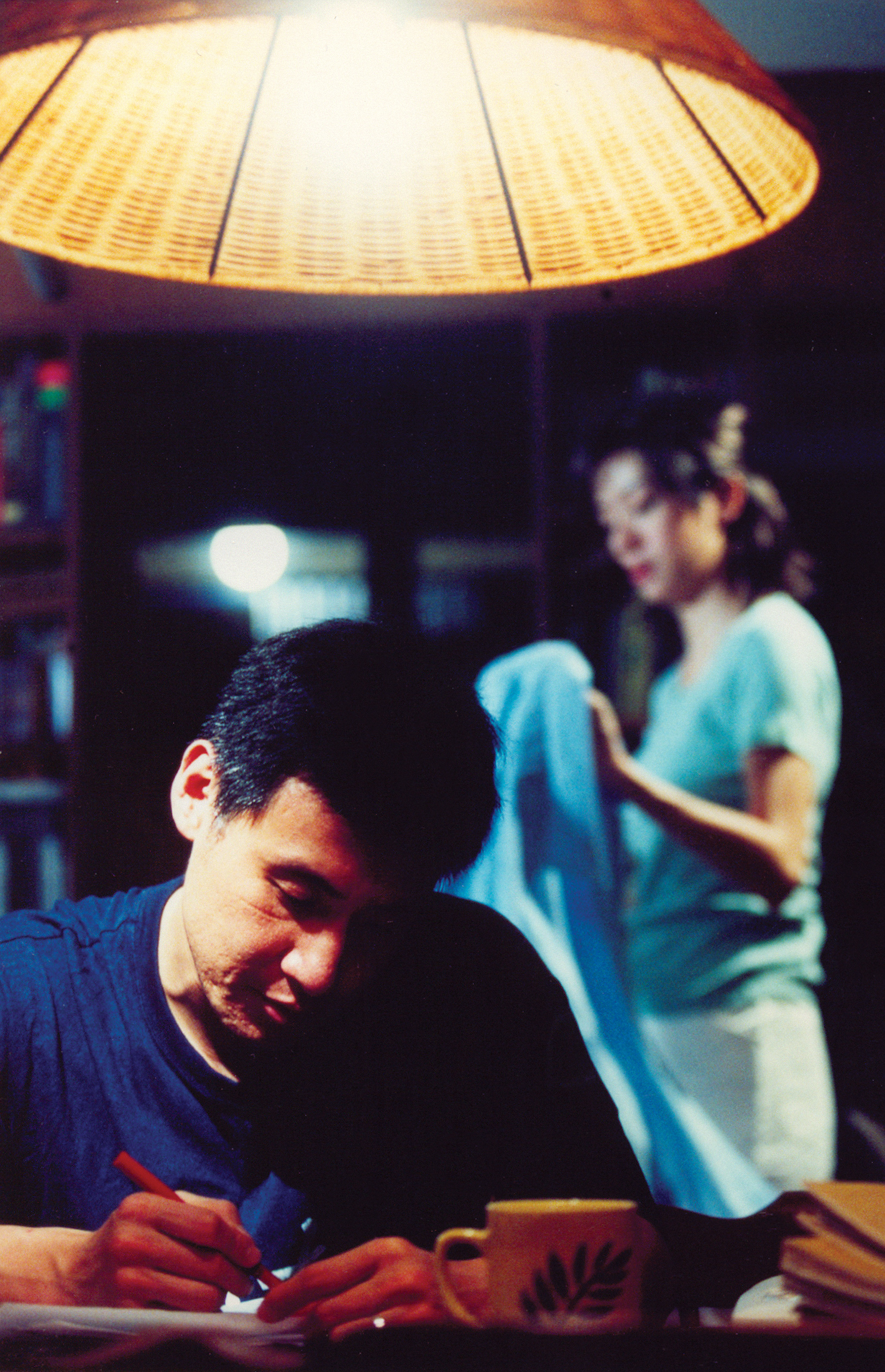
July Rhapsody (男人四十, Ann Hui, 2002)

“Not every ending fulfils your expectations” a weary mother advises her son sharing long buried family secrets which will at least set them free if not perhaps happily. Scripted by Ivy Ho, Ann Hui’s July Rhapsody (男人四十) is as the Chinese title “a man at 40” implies a film about mid-life crises and quiet desperation as a middle-aged school teacher begins to resent the loss of his youth while transgressively drawn to a free-spirited student. 

Lam (Jacky Cheung Hok-Yau) describes himself as “stiff”, a “boring” man who teaches Chinese literature to disinterested students while privately consumed by a sense of inferiority observing with envy the yachts that litter the horizon on a trip to the beach with his son. At a reunion dinner he gets up with irritation when one of his former classmates now a wealthy financier tries to pay the bill for everyone insisting on paying his own way while perhaps exposing the sense of belittlement he feels around his more successful friends. His wife Ching (Anita Mui Yim-Fong) questions his decision pointing out that even if he could afford to pay his bit perhaps his friend Yue (Eric Kot Man-Fai) couldn’t and would feel equally insulted should Lam simply agree to pay his share too. To add insult to injury, one of his friends also wants to hire him to tutor his young son in classical Chinese poetry which leaves him feeling somewhat humiliated but on the other hand not wanting to turn the money down. 

These feelings of dissatisfaction with the way his life has turned out only intensify as he reaches the age of 40 and begins to feel his options narrowing wondering if this is really all there is. He and Ching recall a melancholy poem they learnt at school in which a scholar on a boat laments “the limitations of life” only for the poem to be ironically cut short when the couple’s younger son, Stone, comes to fetch his mum because the soup is boiling dry. Even without knowledge of the final revelations told in a two part story divided between a mother and a father to a son, we can gather that Lam married extremely young and became a father soon after. He studied at night school and became a teacher as a steady job to provide for his family and perhaps to a degree resents them for limiting his choices. His classmates, aside from Yue, all went on to find more lucrative careers while he lives in a small two bed flat snapping at his wife that he’s unlikely to find the money to buy a bigger one. 

When he irritably tells her a tube of glue they bought is “all dried up” it sounds like an insult and a way of describing their moribund relationship. Beginning to bond with free-spirited high school girl Wu (Karena Lam Ka-Yan), Lam initiates intimacy with Ching but then turns away leaving her lonely and disappointed. She meanwhile explains to him that a figure from their past whom he seems to resent has become ill and is all alone. She would like to care for him but only with Lam’s consent which he gives but grudgingly. Talking to her son, Ching admits that she isn’t sure if she’s helping this man out of pity or because she simply wants to see him suffer given the effect he has had on her life. Similarly Lam later confesses to Wu that he may have befriended Yue because he was a poor student and unpopular. At his side, Lam was always going to look good bearing out his sense of insecurity in wanting to be seen as the best, idolising his Chinese literature teacher and desperate for his praise only to find himself ironically echoing his transgressions in allowing himself to be seduced by a student. 

Ironically enough, Lam tells his son that he became a teacher because he sat behind Ching in class and wanted to stand out front so that he could see her face. Wu represents for him that same innocent teenage romance, but also a sense of the path not taken in her free-spiritedness and confidence. Lam followed the conventional path, did everything right, and now he’s unhappy. Wu rejects education and goes straight into business, supported by a wealthy father, planning to go travelling in India to look for new stock for her shop. His sons too perhaps echo his conflicting desires, Ang the older studious and responsible, and the younger Stone (changing his name to the cooler “Rocky”) uninterested in his studies. The melancholy poem which frequently recurs hints at a parting while husband and wife each attempt to resolve something but are left only with uncertainty and perhaps tragically in opposing positions in considering the further course of their lives. 

This very literary drama is related in a series of stories, Lam’s told to his son first in person and then in a letter, followed by Ching’s and the constant stream of classical Chinese poetry that floods the screen guiding the couple towards the expanse of the Yangtze River. As Ching had said, not every ending fulfils your expectations because in the end life is not so neatly packaged. There may be no real accommodation with middle-aged disappointment but there may be new ways forward to be found in resolving the traumatic past.


July Rhapsody screens at Garden Cinema, London on 10th July as part of Focus Hong Kong’s Making Waves – Navigators of Hong Kong Cinema.

Original trailer (Traditional Chinese / English subtitles)
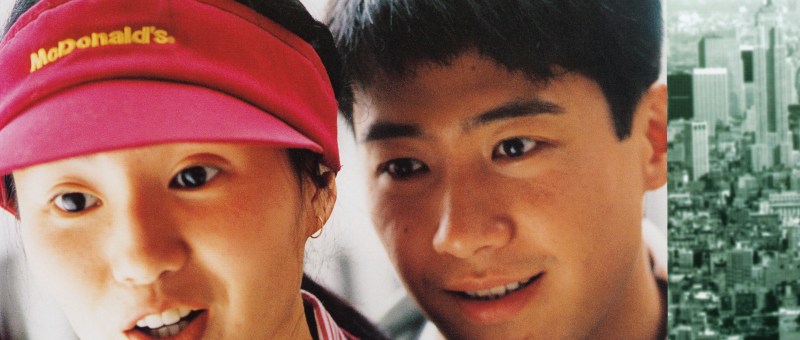
Comrades, Almost a Love Story (甜蜜蜜, Peter Chan, 1996)

“Fate brings people together, no matter how far” according to a wise old chef in early ‘90s New York. He’s not wrong though Peter Chan’s seminal 1996 tale of fated romance Comrades, Almost a Love Story (甜蜜蜜) is in its own way also about partings, about the failure of dreams and the importance of timing in the way time seems to have of spinning on itself in a great shell game of interpersonal connection. But then, it seems to say, you get there in the end even if there wasn’t quite where you thought you were going. 

As the film opens, simple village boy from Northern China Xiaojun (Leon Lai Ming) arrives in Hong Kong in search of a more comfortable life intending to bring his hometown girlfriend Xiaoting (Kristy Yeung Kung-Yu) to join him once he establishes himself. His first impressions of the city are not however all that positive. In a letter home, he describes the local Cantonese speakers as loud and rude, and while there are lots of people and cars there are lots of pickpockets too. It’s in venturing into a McDonald’s, that beacon of capitalist success, that he first meets Qiao (Maggie Cheung Man-Yuk), a cynical young woman hellbent on getting rich who nevertheless decides to help him by whispering in Mandarin realising he doesn’t understand the menu. Hailing from Guangdong, Qiao can speak fluent Cantonese along with some English and thus has much better prospects of succeeding in Hong Kong but takes Xiaojun under wing mostly out of loneliness though accepting a kickback to get him into an English language school where she piggybacks on lessons while working as a cleaner. Bonding through the music of Teresa Teng, they become friends, and then lovers, but Xiaojun still has his hometown girlfriend and Qiao still wants to get rich. 

As we later learn in one of the film’s many coincidences, Xiaojun and Qiao arrived on the same train if facing in different directions. Hong Kong changes each of them. When Xiaojun eventually manages to bring Xiaoting across the border, he’s no longer the simple village boy he was when he arrived while Qiao struggles with herself in her buried feelings for Xiaojun unwilling to risk the vulnerability of affection but visibly pained when confronted by Xiaojun’s responsibility to Xiaoting. She finds her mirror in tattooed gangster Pao (Eric Tsang Chi-Wai) who, like her, shrinks from love and is forever telling her to find another guy but is obviously hoping she won’t as afraid of settling as she is. 

For each of them this rootlessness is born of searching for something better yet the irony is as Xiaojun says that Hong Kong is a dream for Mainlanders, but the Mainland is not a dream for most in Hong Kong who with the Handover looming are mainly looking to leave for the Anglophone West. Qiao’s early business venture selling knock off Teresa Teng tapes fails because only Mainlanders like Teresa Teng so no-one wants to buy one and accidentally out themselves in a city often hostile to Mandarin speakers as Xiaojun has found it to be. What they chased was a taste of capitalist comforts, Qiao literally working in a McDonald’s and forever dressed in Mickey Mouse clothing which Pao ironically imitates by getting a little Mickey tattooed on his back right next to the dragon’s mouth. But when they eventually end up in the capitalist homeland of New York, a driver chows down on a greasy, disgustingly floppy hamburger while Qiao finds herself giving tours of the Statue of Liberty to Mainland tourists in town to buy Gucchi bags who tell her she made a mistake to leave for there are plenty of opportunities to make money in the new China. 

Ironically enough it’s hometown innocence that brings them back together. The ring of Xiaojun’s bicycle bell catches Qiao’s attention though she’d thought of it as a corny and bumpkinish when he’d given her rides on it in their early days in Hong Kong. Xiaojun had in fact disposed of it entirely when Xiaoting arrived partly for the same reason and partly because it reminded him of Qiao. The pair are reunited by the death of Teresa Teng which in its own way is the death of a dream and of an era but also a symbol of their shared connection, Mainlanders meeting again in this strange place neither China nor Hong Kong, comrades, almost lovers now perhaps finally in the right place at the right time to start again. Peter Chan’s aching romance my suggest that the future exists in this third space, rejecting the rampant consumerist desire which defined Qiao’s life along with the wholesome naivety of Xiaojun’s country boy innocence, but finally finds solid ground in the mutual solidarity of lonely migrants finding each other again in another new place in search of another new future. 


Comrades, Almost a Love Story screens at Soho Hotel, London on 9th July as part of Focus Hong Kong’s Making Waves – Navigators of Hong Kong Cinema.

Short clip (English subtitles)

Teresa Teng – Tian Mi Mi

Tales from the Occult (失衡凶間, Fruit Chan, Fung Chih-Chiang, Wesley Hoi Ip-Sang, 2022)

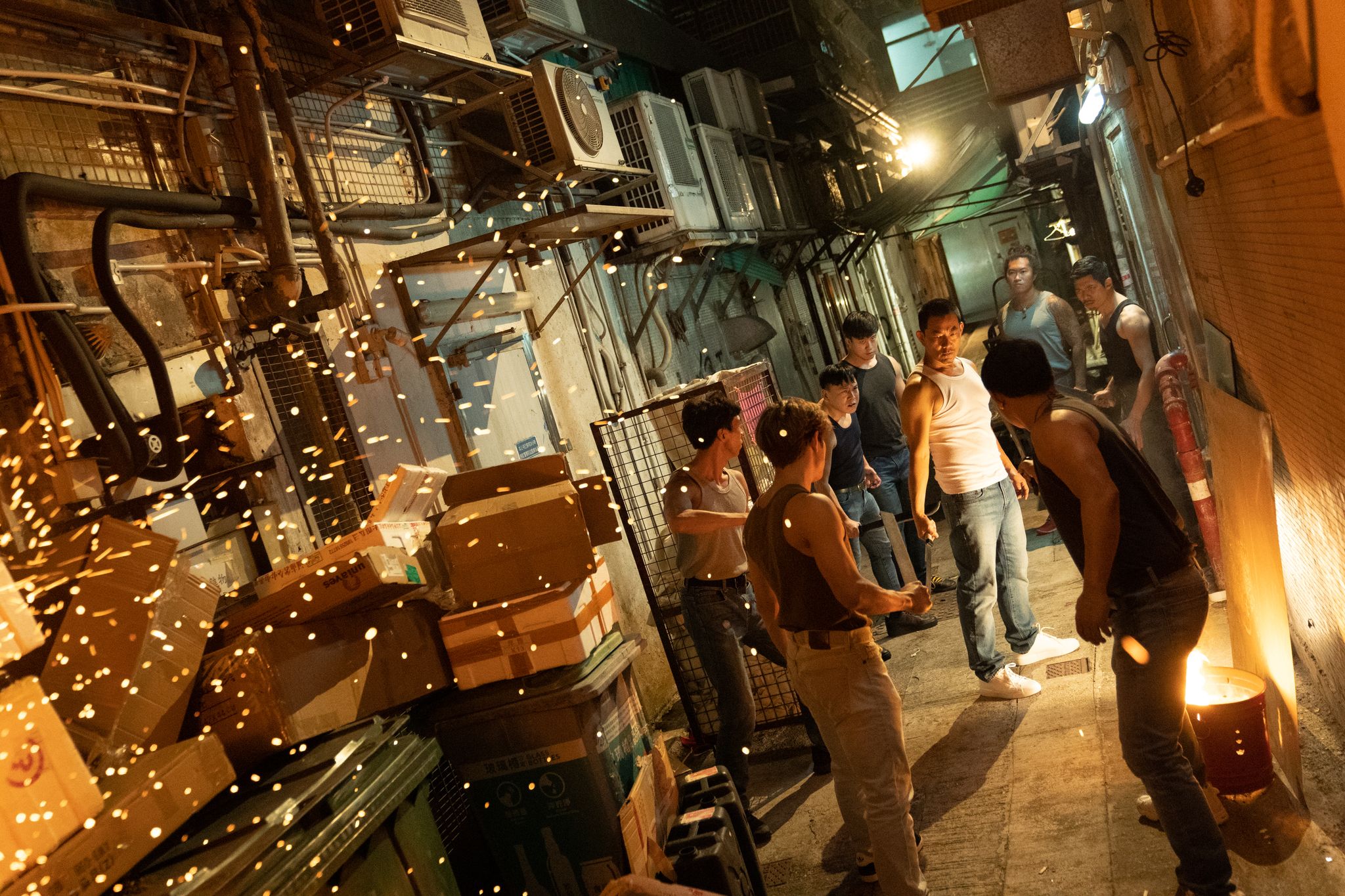
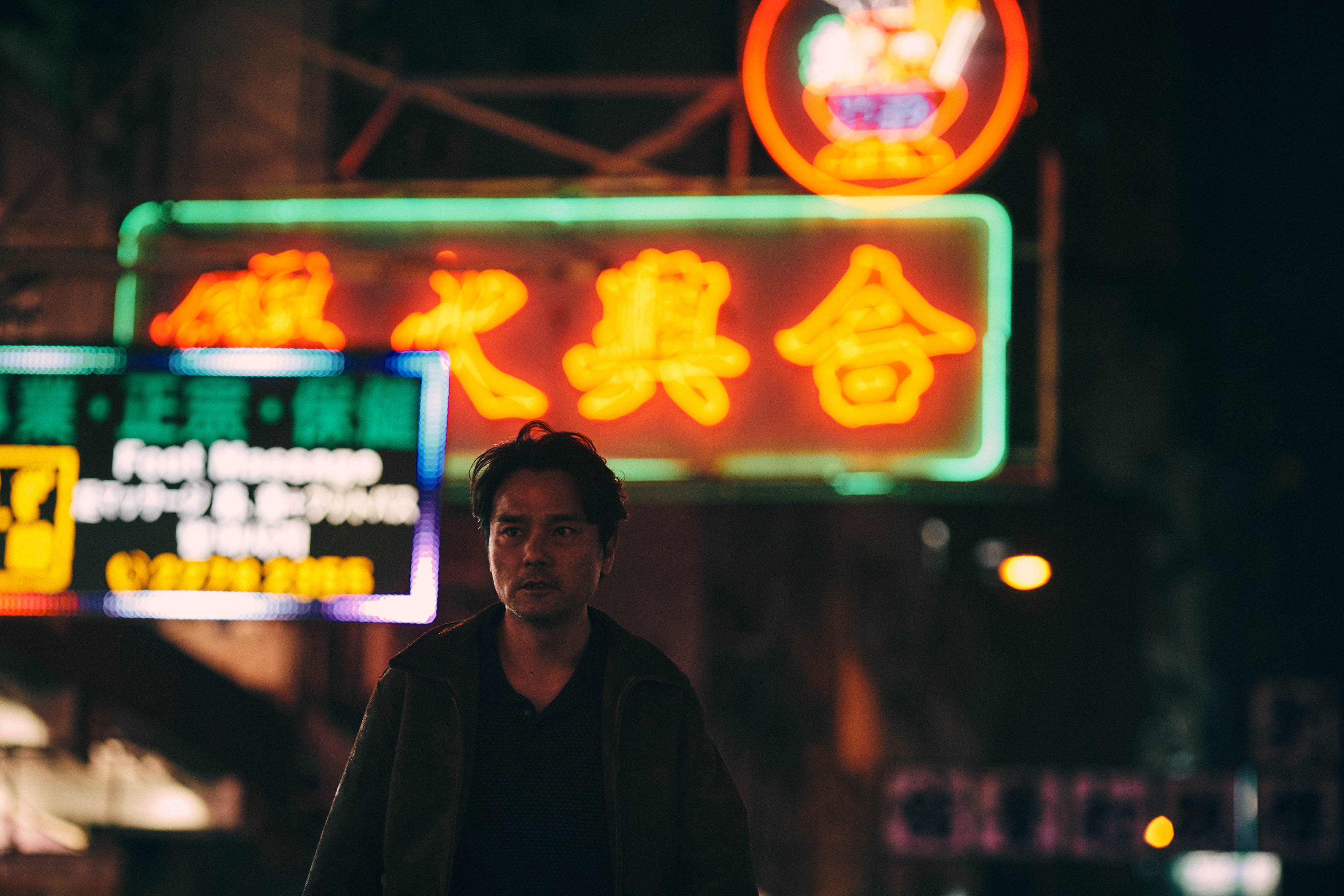
A collection of Hong Kongers contend with the hidden horrors of the contemporary society in the first instalment in a series of anthology horror films, Tales from the Occult (失衡凶間,). Veterans Fruit Chan and Fung Chih-Chiang are accompanied by Wesley Hoi Ip-Sang making his directorial debut as the three directors each tackle lingering terrors as the protagonists of the three chapters are quite literally haunted by past transgressions from a pop singer on the edge consumed with guilt over a teenage trauma, to a sleazy financial influencer who might inadvertently have killed a hundred people, and the denizens of a rundown tenement who are too afraid to report a possibly dangerous presence to the police lest it damage the property value of their flats. 

In Wesley Hoi Ip-Sang’s opening instalment The Chink, a carefree high school girl chasing a stray cat stumbles on the body of a burglar who apparently fell from the rooftops and was trapped in a tiny cavity between two buildings. Some years later Yoyi (Cherry Ngan) has become a successful pop star but is still haunted by her failure to report the body to the police all those years ago worried that perhaps if she had he might have been saved though he had obviously been dead for some time when she found him. Her kindly psychiatrist uncle Ronald (Lawrence Cheng Tan-shui) tries to assuage her anxiety but fails to consider that there might actually be a dark presence in her new flat. Meanwhile, she’s also under considerable stress given that she’s in an ill-defined relationship with Alan, her married manager, who eventually brands her “mentally unstable”, and she’s somehow oblivious to the fact her high school best friend is clearly in love with her. Even so, as it turns out, perhaps you can also be haunted by the living while there are some threats that even the most well-meaning of psychiatrists is ill-equipped to cure. 

It’s ironic in a sense that Yoyi was provided with her new apartment as a path towards an illusionary freedom which is really only a means for Alan to exert greater control over her life while the heroine of Fung Chih-Chiang’s final sequence The Tenement has in a sense chosen seclusion in installing herself in a moribund tenement block in order to concentrate on her writing. The contrast between the two buildings couldn’t be more stark but even the tenement dwellers are paranoid about house prices while assuming the creepy, water-drenched presence encountered by author of pulpy internet novels Ginny (Sofiee Ng Hoi Yan) is an attempt by developers to scare them out of their homes amid Hong Kong’s horrifyingly competitive housing market. Still, like Yoyi they are each haunted by past transgressions but pinning the blame on former gangster Frankie Ho (Richie Jen) who was once accused of drowning a man. What began as a haunting soon descends into farce as they realise the “water ghost” seems to be a young woman who has passed away in their stairwell and decide to “dispose” of her with Frankie’s help to avoid a scandal destroying the value of their homes. But then, all is not quite as it seems as the sudden appearance of a journalist investigating a scandalous “love crime” makes clear. 

Fruit Chan’s middle chapter Dead Mall also takes aim at internet investigators and dodgy “influencers” as sleazy financial snake oil vlogger Wilson (Jerry Lamb) fetches up at a shopping centre surrounded by shoppers in masks to advertise that the mall is actually doing fine despite the economic downturn produced by the pandemic which he describes as worse than that of SARS. In reality the mall is “dead” with barely any customers and rows of shuttered stores, Wilson is simply doing a paid post in an attempt to raise its fortunes not least because the original mall was destroyed in a fire 14 years previously started by a carelessly discarded cigarette. Wilson is pursued not only by those who claim they lost money because of his terrible financial advice, but by a paranormal live streamer who has a separate grudge against him while he continues to refuse any responsibility for his actions answering only that investment carries risk and there’s no opportunity without crisis. What he discovers is perhaps that you reap what you sow, Chan frequently cutting to hugely entertained netizens baying for his blood while he attempts to outrun his fiery karma. 

In each of the increasingly humorous storylines, Chan’s being a particular highlight of wit and irony, there is a lingering dissatisfaction with the contemporary society from the pressures of the fiercely competitive housing market to the kind of financial desperation and longing for connection that fuels the consumerist emptiness of influencer culture. The jury might be out on whether there’s really any such thing as “ghosts” but the haunting is real enough even if it’s only in your mind. 


Tales from the Occult screens at the Garden Cinema, London on 9th July as part of Focus Hong Kong’s Making Waves – Navigators of Hong Kong Cinema.

Original trailer (English subtitles)

Making Waves – Navigators of Hong Kong Cinema Comes to London 8th to 10th July

Focus Hong Kong is back this July with Making Waves – Navigators of Hong Kong Cinema, a touring film programme marking the 25th anniversary of the Handover presented in partnership with Create Hong Kong. Opening with the highly anticipated Anita Mui biopic Anita, the festival will close with the legendary actress’ final screen appearance in the landmark 2004 Ann Hui drama, July Rhapsody.

Friday 8 July, 7pm: Opening Gala Anita (Soho Hotel)

Longman Leung’s highly anticipated biopic of iconic Cantopop superstar and revered Hong Kong actress Anita Mui who sadly passed away after battling cervical cancer at the young age 40 in 2003.

Saturday 9 July

12:00: Comrades, Almost a Love Story + Peter Chan holo-presence (Soho Hotel)

Maggie Cheung and Leon Lai star as a pair of star-crossed Mainlanders seeking new futures in Hong Kong. While he, naive and earnest, hopes to make enough money to marry his hometown girlfriend, she, more cynical, seeks security in consumerism but the pair are finally brought together by the music of Teresa Teng.

16:30: The First Girl I Loved (Garden Cinema)

A young woman begins to re-evaluate her teenage romance when her first love asks her to be maid of honour at her wedding in Yeung Chiu-hoi & Candy Ng Wing-shan’s youth nostalgia romance. Review.


19:00: Tales From the Occult (Garden Cinema)

Three-part horror anthology featuring contributions from Fruit Chan, Fung Chih Chiang, and Wesley Hoi Ip Sang exploring the hidden horrors of the contemporary Hong Kong society.

Sunday 10 July

12:30: Hand Rolled Cigarette (Garden Cinema)

Gordon Lam stars as a former British soldier unable to adjust to the post-handover society and trapped in a triad-adjacent existence while bonding with a South Asian migrant on the run from gangsters from whom his cousin stole a large amount of drugs. Review.

15:30 : Breakout Brothers (Garden Cinema)

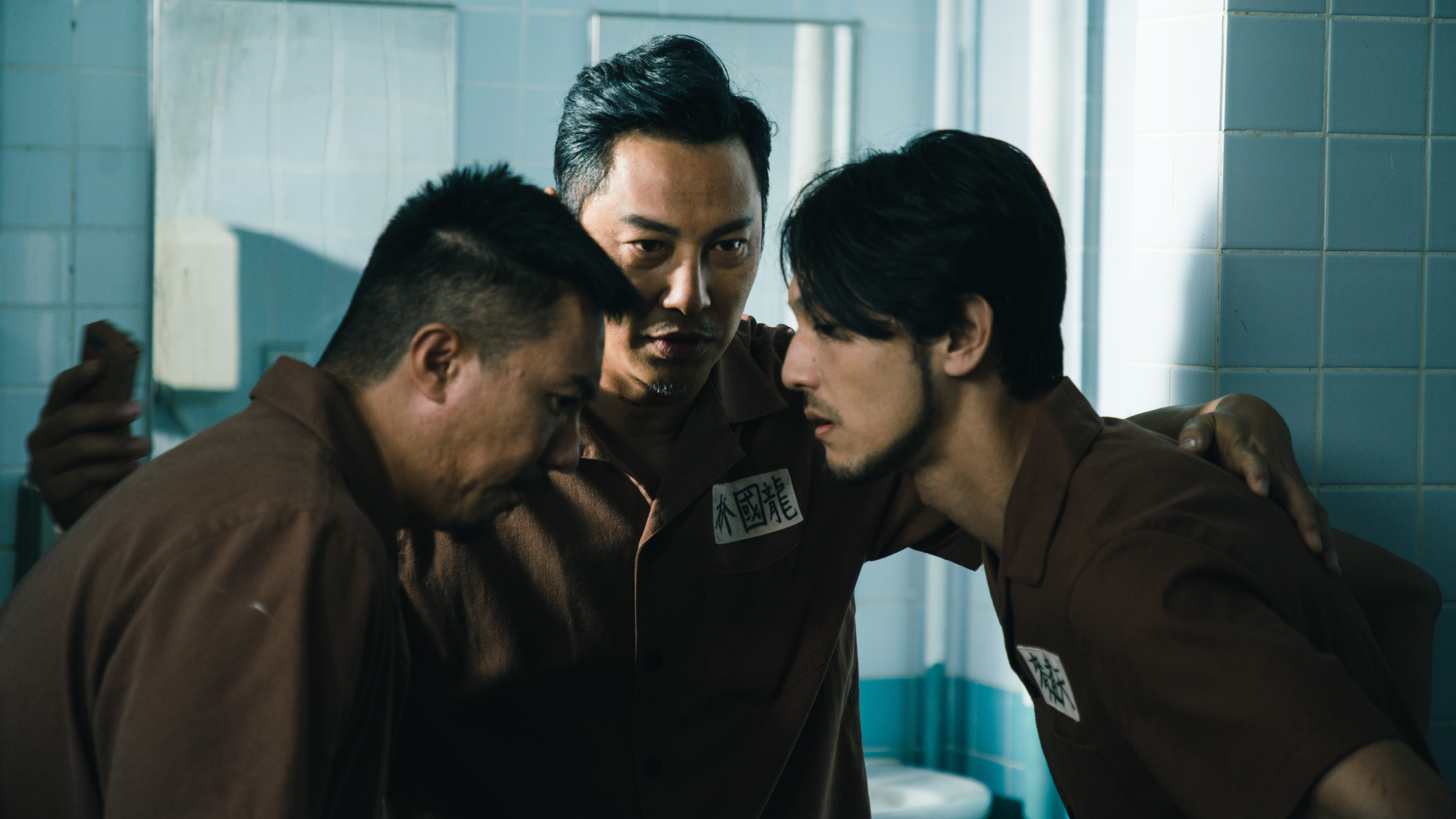
A cheerful triad who wants to give his mother a kidney transplant, a falsely convicted architect, and a veteran inmate who wants to see his daughter get married decide to break out of prison but discover that it’s friendship that sets them free in Mak Ho-Pong’s cartoonish crime caper. Review.


18:00: Closing Gala July Rhapsody (Garden Cinema)

Landmark 2004 drama from Ann Hui featuring Anita Mui in her final screen role as the wife of a schoolteacher (Jackie Cheung) whose marriage is destabilised when an old lover returns from abroad and her husband is tempted by the attentions of a precocious student.

Making Waves – Navigators of Hong Kong Cinema runs in London 8 to 10 July at Soho Hotel and the Garden Cinema. The programme will also be touring to cities around the world including: Udine, Shanghai, Bali, Bangkok, Singapore, Sydney, Copenhagen, Stockholm, Tokyo, Warsaw, Prague, Dubai, and Hong Kong later in the year with full details to be available via the Making Waves website in due course. Tickets are already on sale via Focus Hong Kong and you can keep up to date with all the latest news via Focus Hong Kong’s official websiteFacebook PageTwitter account, and Instagram channel.