76 Days (Wu Hao, Chen Weixi & Anonymous, 2020)

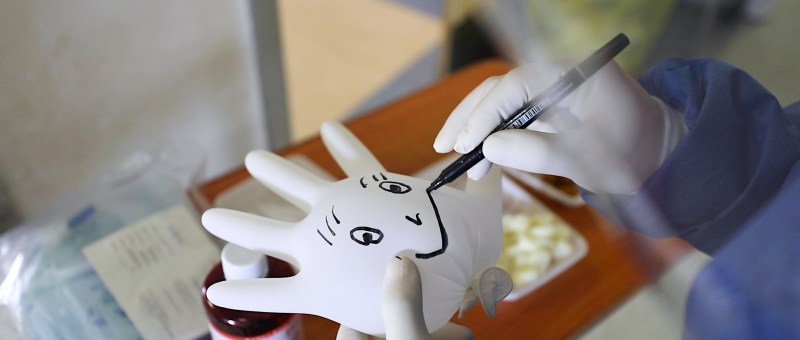
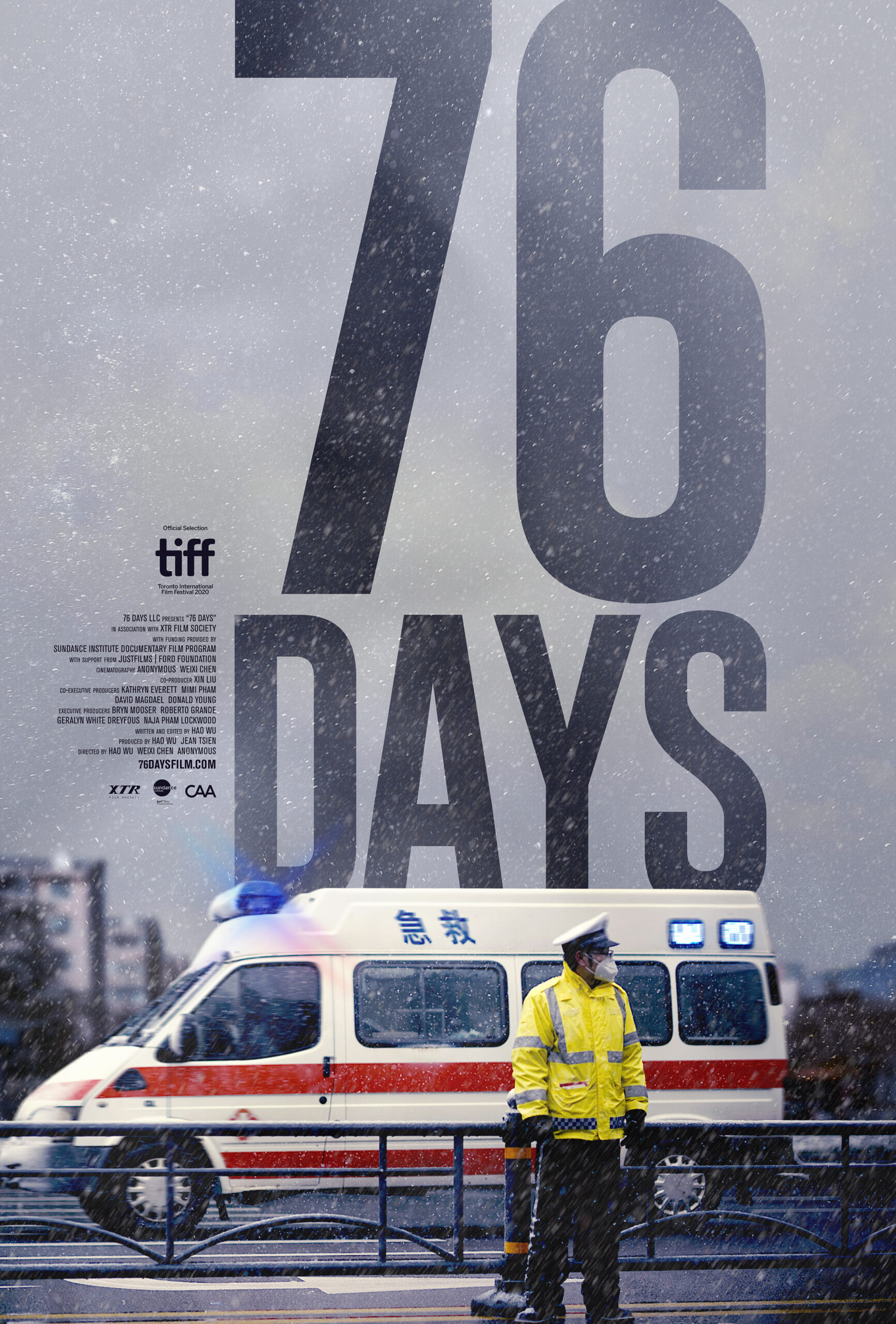
“Don’t worry, so many of us are here for you” a nurse tries to reassure a pregnant woman understandably anxious in being told that her husband cannot be in the room with her while she undergoes an emergency C-section in 76 Days, an observational documentary shot almost entirely within a series of hospitals during the Wuhan lockdown. Co-directed by New York-based director Wu Hao and two on the ground reporters, Chen Weixi and another who has elected to be credited anonymously, 76 Days is testimony to the heroism of the frontline medical personnel who found themselves dealing with a new and mysterious illness, but also a record of a moment as it happened through the eyes of those who were there. 

As such, it opens in chaos with a hospital overrun by those who desperately need help and have nowhere else to turn. “Let’s not panic, OK?” the head nurse adds to the end of her briefing as the team prepare for still more patients, many of them waiting in a small room complaining of the cold. Meanwhile, another healthcare worker in a full hazmat suit breaks down in tears not allowed to attend her own dying father while her colleagues try to offer comfort at the same time as encouraging her to pull herself together because they need her on the ward. She can only watch as he’s taken out of the room in an orange bodybag, two of her colleagues continue to take hold of her at the armpits, less for solidarity it seems than to keep her safe while while she follows the gurney down towards the van which will take his body away. 

Meanwhile, the doctors attempt to help those who’ve come in looking for treatment including one confused older gentleman who keeps insisting he’s not really ill and wants to go home. Making repeated attempts to escape which might be comical if it were not for the gravity of the situation, the old man is obviously frightened and alone alternating between crying on his bed and wandering around in search of company. Later his son rings him to give him a telling off for causing the doctors so much trouble, reminding him that he’s been a Party Member for decades and ought to be acting with a little more dignity while the doctors do their best to be patient with both men, especially when the son later expresses reluctance to have him back in case he’s not really “cured” (the old man will be one of last to leave the hospital). The old man’s anxiety raises another issue in that he’s used to speaking in dialect and so there is an obvious difficulty in communication between some of the patients, particularly those among the older generation, and the hospital staff some of whom are secondments from Shanghai rather than from the local area. Other patients, meanwhile have been looking up their symptoms on the internet which is causing them additional anxiety and headaches for their doctors who then have to re-explain all their treatment decisions. 

We also realise that certain procedures cannot be delayed just because there is so much to do leaving personnel tied up with bureaucracy, often needing to ring grieving relatives to ask them for a copy of their loved ones’ documentation so they can issue a death certificate. Some of the nurses also make a point of rescuing the personal affects of those who’ve died such as bracelets and other items of jewellery so they can be disinfected and returned to family members along with more practical items such as mobile phones and ID cards. At the height of the crisis, there is a large box filled with phones belonging to those who have already passed away some of which are still ringing. 

Keeping in touch becomes a secondary problem as couples come in and are shuffled into separate wards, an old woman making regular requests for updates on her husband and a compassionate nurse going so far as to show her his dinner so she can see that he’s eating. Meanwhile the woman who underwent the C-section is isolating away from her baby, she and her husband later enduring another anxious wait towards the end of the lockdown until they’re told that it’s safe for their little girl come home with them. There are no title cards or explanatory text, like everyone else we have no idea where we are or when this will end save for a few brief glances of the daily roster as we notice that admissions seem to be decreasing, people are beginning to go home, and on the momentary glimpses of the outside traffic seems to be increasing on the streets.  

Yet even when it’s over it’s not really over. A nurse has to sit and go through that box of phones ringing relatives again, some of whom evidently had not been made aware their loved one had died, to ask them what to do with the affects. The bracelet of one old woman is dutifully returned to her daughter who cannot help crying as she receives it, but like everyone else goes out of her way to thank the doctors for doing all they could while the nurse profusely apologies that they weren’t able to save her. A valuable historical document, 76 Days is also strangely imbued with a kind of hope in the selfless dedication of the doctors and medical staff who daily risked their own lives to save those they could, while proving that this will someday if not exactly end then at least stabilise. 


76 Days streamed as part of this year’s San Diego Asian Film Festival.

Clip (English subtitles)

The Age of Awakening (前進, Ke Chin-Yuan, 2018)

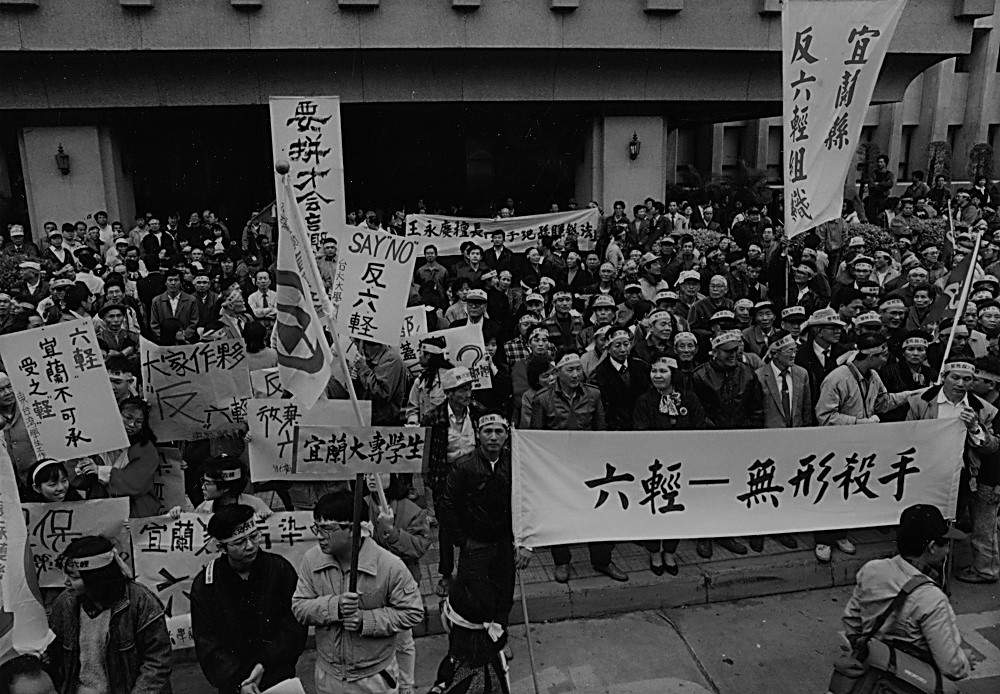
Taiwan is now a prosperous society regarded as most the progressive in Asia, yet for some that prosperity has come at too high a cost. Ke Chin-yuan’s documentary The Age of Awakening (前進, Qiánjìn) looks back over the last thirty years and wonders how it can be that in a little under half a century humanity has managed to “devastate this beautiful, mountainous island”. Tracing the links between the authoritarian past and the origins of eco-activism, Ke is nevertheless keen to remind us that the environmental costs of unchecked capitalism are not a local issue. 

Ke cites the titular “awakening” at the tail end of the martial law era, explaining that the picturesque coastline where he first picked up a camera was forever ruined when the area was re-designated as an industrial park. His own eyes were awakened to the environmental costs of development when local residents rose in opposition to the building of a petrochemical plant, apparently a key part of the nation’s economic strategy. Charting the resistance towards the DuPont plant in Lugang and the LCY Chemical Corp in Hsinchu, he uncovers the hidden link of environmental harm and authoritarianism as centralised government and a prohibition on protest largely prevent the local community having a say over their own land. Though some may have been glad to see the plants arrive, misled by false promises of good jobs and the benefits of development, they were soon disillusioned by the reality in which industrial pollution poisoned the sea life on which the local economy was otherwise dependent while also destroying farmland and leaving an acrid, near unbearable smell in the air. 

As one of the protestors puts it, all they want is breathable air and drinkable water. If your government cannot guarantee you such basic rights, then what really is it for? Yet the government, Ke seems to suggest, is minded to make a tradeoff and thinks this is an acceptable price for the prize of economic growth. Seeing the imposition of the plants and misinformation surrounding their foundation as yet more evidence of the various ways in which those with the least power suffer most under authoritarianism, Ke centres the awakening to environmentalism as a cornerstone of the movement against martial law in which communities sought the power and freedom to be able to advocate for their rights on a local level.

Yet as he points out the environment is never just a local issue. The protestors may be successful in keeping the plant out their town, but maybe the plant gets built the next town over where they perhaps aren’t so lucky possibly because they have less sympathetic political leaders keener to toe the government line. Taiwan is a small island, and at least according to some you can’t ever really be far enough away to escape the effects of industrial pollution. Yet even when prevented from building in Taiwan, local companies simply shift overseas to other, even less empowered, areas of Asia where the same thing happens again. The poor are misled by offers of good jobs only to find dead fish washing up on their shores, eventually mounting protests against the unfair imposition of having a chemical plant built on their land. In Taiwan, meanwhile, the issue is even thornier with large developments built on territory which belongs to the indigenous community. 

Nevertheless, the drive for economic development continued after the martial law era. According to another protestor, it’s a matter of conscience rather than technology with the choice to favour the economy over the environment seemingly irreversible even when major parties win on an economic platform and govern with the knowledge that such policies have widespread public support. So, Ke asks, why is the government so unwilling to listen when the idea that the environment itself is also a basic human right is almost a given? What has actually changed in the last three decades with Taiwan’s transition to democracy? Not enough, according to his veteran activists, but it’s not all doom and gloom. Awareness has improved, people care more than they used to. They’ve been ‘awakened” to the issues in all of their complexity and Taiwan has a lively, diverse and intersectional activist scene in which environmental concerns are very much part of a social justice movement full in the knowledge that the environment is never just a local issue. The age of awakening may have come to an end, but the age of action is only just beginning. 


The Age of Awakening screens on 6th December at London’s Rio Cinema as part of Taiwan Film Festival UK 2020.

Original trailer (no subtitles)

Not My Mother’s Baking (不是我妈妈的烘焙, Remi M. Sali, 2020)

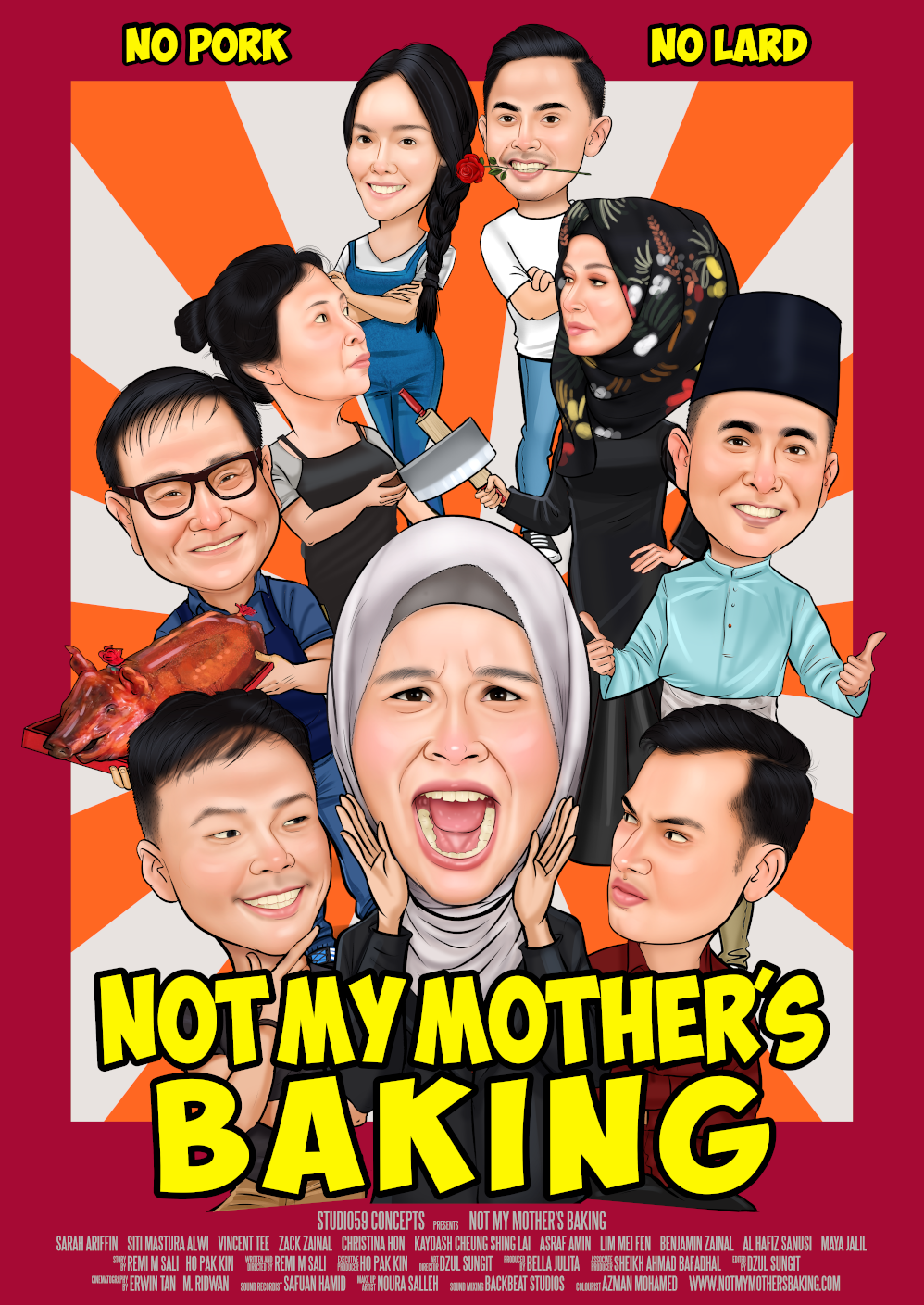
True love conquers all in Remi M Sali’s warmhearted Singaporean rom-com Not My Mother’s Baking (不是我妈妈的烘焙, Búshi Wǒ Māma de Hōngbèi). Spinning a Romeo and Juliet romance between an aspiring Malay Muslim cook and the heir to a roast pork hawker stall, Not My Mother’s Baking is as much about cross-cultural connection as it is about two young people finding their own directions and the strength to pursue them free of parental expectation as they figure out what it is that will really make them happy.

Daughter of celebrity chef Siti (Siti Mastura Alwi), Sarah (Sarah Ariffin) has always lived in her mother’s shadow, harbouring a mild sense of resentment towards her for neglecting her family in favour of her career. The little brother of her best friend Tini (Maya Jalil), Imran (Asraf Amin), who has long been carrying a torch for her suggests starting her own online cookery series to establish her brand as distinct from her mother’s setting her up with Edwin (Kaydash Cheung Shing Lai), an aspiring Chinese video producer. The two do not exactly hit it off thanks to some cultural misunderstandings, but begin to grow closer after they each reluctantly agree to work together in order to avoid having to spend more time with their families, Sarah potentially roped in as a temporary/free assistant to her mum and Edwin needed to help out at his parents’ hawker stand selling roast pork. 

Cheerfully narrated by Edwin’s upbeat dad Mr. Tan (Vincent Tee), this is a story which begins with a wedding and so we know right away that it all works out and Sarah and Edwin will get their happy ending, yet there are a lot of obstacles standing in the way of their burgeoning love story not least a lack of understanding that begins with Edwin somewhat insensitively advising Sarah to remove her headscarf to make a better impression in the videos. Ill-advised by Imran, Edwin is wary of telling Sarah about his family’s occupation firstly in case it causes offence and then later uncertain what level of interaction is permitted between them considering he’s been handling pork. Sarah’s cheeky brother Yusri (Benjamin Zainal) jokes that her potential love interest is not “halal”, but then her parents aren’t quite as against the idea as she might have assumed them to be while she finds herself somewhat conflicted, not least in her ambiguous relationship with the superficially “perfect” Imran whose cheesy pick up lines and tendency to try far too hard perhaps convince her that he might in fact be too perfect or at least the wrong kind of perfect for her. 

Meanwhile, she’s also trying to find her way out of her mother’s shadow as a cook, scoring a hit online when she retitles her show “Not my Mother’s Baking” and affectionately mocks Chef Siti’s signature TV star style claiming to be a little more real and authentic in contrast to her mother’s seeming affectation. In a meta twist, Sarah and her mother are played by real life mother and daughter celebrity chefs Sarah Ariffin and Siti Mastura Alwi, though their onscreen relationship is one defined by rivalry and frustrated connection. Chef Siti is understandably hurt by Sarah’s direct attack on her brand, but it does at least enable an overdue heart to heart which brings the two women closer as they work through their complicated relationship while bonding through their shared love of cooking. 

Edwin, meanwhile, has no real desire to take over the pork stand as his parents expect while no one seems to take his video career very seriously. In a slight twist, the Tans have decided Edwin rather than his sister Joyce (Lim Mei Fen) should take over not because she’s a girl but because she went to university and so they think it’s beneath her, stubbornly refusing to see that Joyce actually loves the business and has a few ideas how to bring it into the 21st century making full use of her skills and education. Unlike Sarah’s family, Edwin’s parents are less keen on a cross-cultural romance because they fear losing their son knowing that to marry a Malay muslim woman means not only leaving the pork shop behind but fully converting to her religion. 

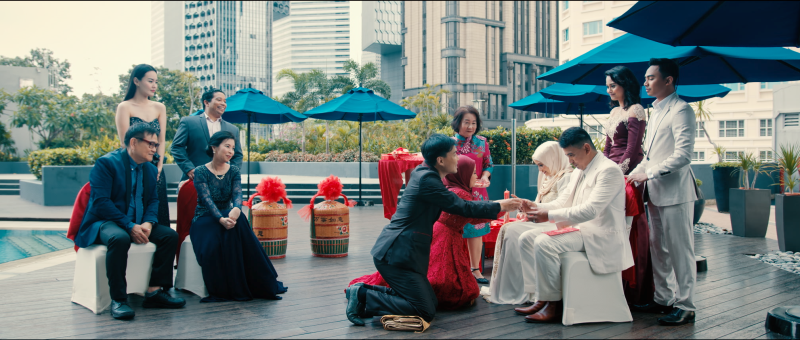
Yet as the female religious leader who accepts his conversion points out (Singapore is apparently the first country to allow women to approve a man’s conversion to Islam), there is no issue with Edwin keeping his Chinese name and it’s not as if he has to cut off contact with his family even considering the problematic nature of their occupation as demonstrated in the couple’s beautifully colourful fusion wedding at which a roast pig is served for the Chinese guests alongside halal Malay cuisine, while Edwin is followed into the ceremony by two large pink dancing lions and the nuptials are concluded with a traditional tea ceremony. A very millennial romance, Not My Mother’s Baking allows its young heroes to forge their own paths outside of those their parents might have chosen for them, proving that love really does conquer all while bringing together two very different cultures each united by the desire to see their children happy. 


Not My Mother’s Baking streams in Poland until 6th December as part of the 14th Five Flavours Film Festival.

International trailer (English subtitles)

Looking For? (你找什麼?, Chou Tung-yen, 2017)

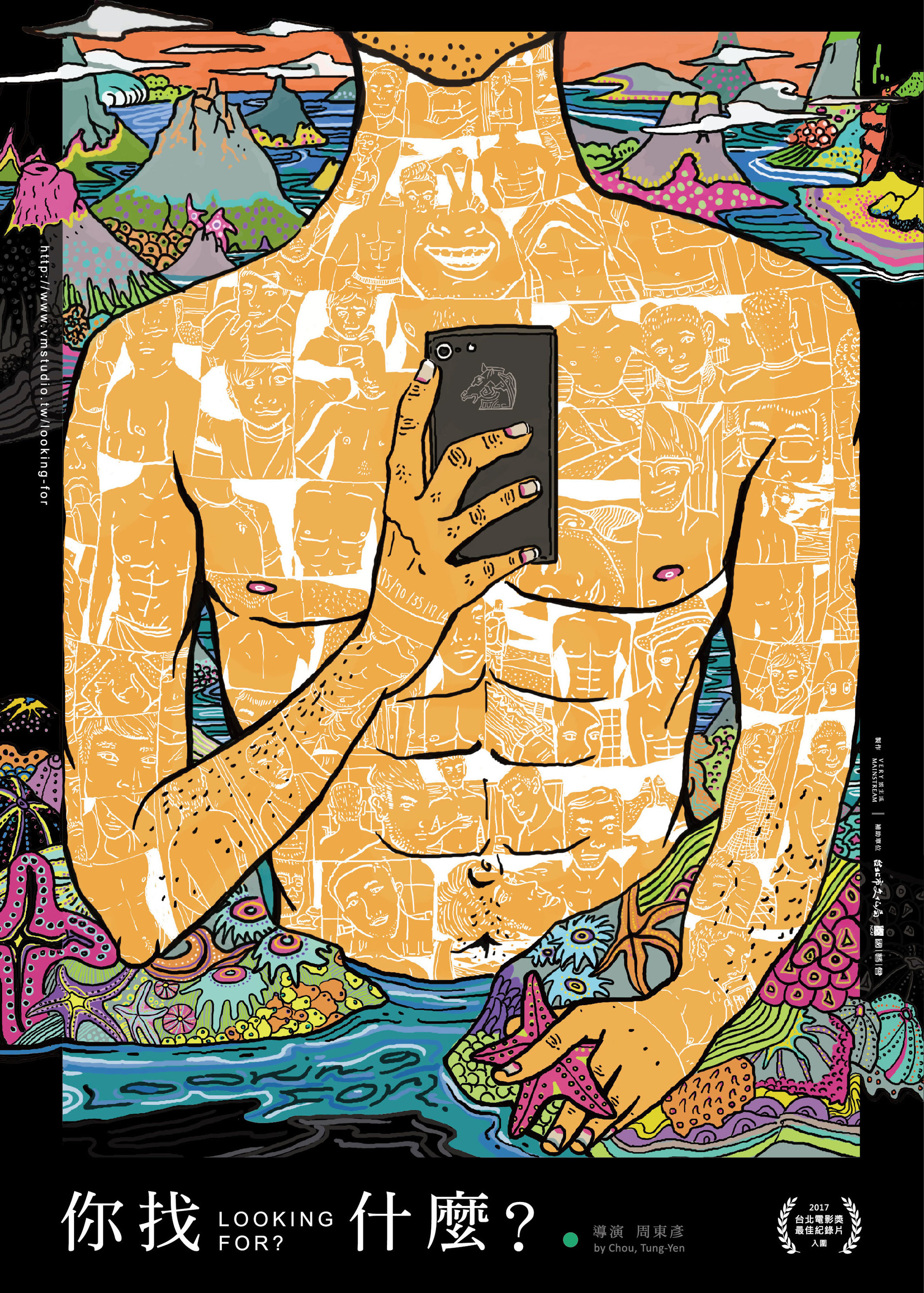
“Looking for?” (你找什麼?, Nǐ Zhǎo Shénme?) is a common enough ice breaker on gay dating apps but when you get right down to it it’s a difficult one to answer. Struggling with the question himself as someone who came to the app scene fairly late, director Chou Tung-yen interviewed 60 men from all around the world to ask them what it is they’ve been looking for, why they use dating apps, and how they really feel about them. 

As might be assumed, many of the men are using the apps for casual hook-ups citing the convenience as a major motivating factor. In the old days you wrote letters and hoped to get a reply to your PO box, or you went to a bathhouse, or invested time in someone at a bar, but now you just exchange messages and get what you need when you need it. One older user even likens the experience to that of a supermarket or even ordering fast food, an entirely disposable satisfaction of needs. He’s not necessarily making a criticism, but others ask if the commodification of the community is really a good thing. Most assume that in a more open society and most especially within your own community there ought to be more freedom to be your authentic self, but the apps are so interested in finding a perfect match that they try to force those who use them inside their narrow lines, tagged as a particular brand with some feeling as if they have to change themselves to be “marketable” or no one is ever going to be interested in them. 

Social media of all kinds can foster feelings of inadequacy, but paradoxically others report that they use dating apps precisely in order to boost their self esteem. They like it when people like their photos and enjoy the feeling of being desirable, counting the messages roll in from various suitors to whom they may or may not choose to reply. Those who’d previously felt themselves unattractive have learned to find their niche and become more comfortable in their bodies able to own their sensuality in all areas of their lives. But then some have run the other way, obsessively working out becoming perhaps dangerously addicted to online praise as they continue to alter their physicality to better conform to an external idea of conventional attractiveness. 

And then there are the other dark sides, the inherent danger and the potential toxicity of a party culture that encourages excessive drug use. One young man who appears only in silhouette, his voice disguised, reveals that he thoughtlessly had unprotected sex while high, while another man explains that he eventually decided to leave rave culture behind after a friend took his own life while under the influence and another died of a short illness caused by longterm drug use during which his friends continued to take him out partying despite knowing that he was seriously ill. 

The man whose face appears in silhouette laments that he no longer thinks it’s possible to find true love online, though there are those for whom that is exactly what they were looking for and some of them seem to have found it. Several couples report that they met through a dating app and then stayed together, even later got married. Others however find that while using the app their desire to find a monogamous partner decreased, they enjoyed the ability to have various experiences instead. Still more are looking for friendship or companionship more than romance, someone just to have dinner or share a deep conservation with. 

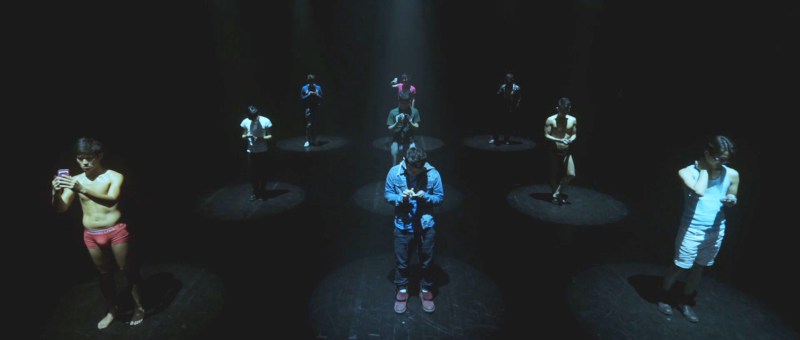
Towards the end, one interviewee reveals he no longer uses dating apps because he couldn’t figure out what it was he was looking for. Others drift away from them either because they found a stable relationship, began to age out or lost interest in the scene, whether having figured out what they want(ed) or not. Chou asks each of the respondents what love is, many of them talking wistfully about first love but seemingly jaded about grown-up romance or at least resigned to a cooler kind if perhaps still chasing that first flush of passion. Concentrating mainly on the interview sessions, Chou intersperses brief theatrical dance sequences and shots of himself captured alone at various points of transit in different cities, discovering at least a kind of commonality in the community of dating app users the world over who can understand each other even in the absence of shared language. Chou may not have discovered what it is he’s looking for, but has perhaps learned something else in his voyage through the trials of 21st century dating in that in the end you get out what you put in, which is to say what you’re looking for finds you whether you recognise it or not. 


Looking For? streams in the UK via Rio Player 20th – 26th November as part of this year’s Queer East.

Original trailer (English subtitles)

Dear Loneliness (致親愛的孤獨者, Lien Chien-hung & Sunny Yu & Liao Che-yi, 2019)

“After 10 years or 20 years, you will feel less lonely. Surely you will not be hurt anymore due to your pure feeling and kindness” a warmhearted bookstore owner (played by literary superstar Lo Yi-chin AKA Lou Yi-chun/Luo Yijun) advises a series of young women in a parting letter, reminding them that the reason they suffer so is only their youth and that too shall pass. Inspired by Hou Chi-jan’s documentary series Poetries from the Bookstores which highlighted 40 Taiwanese indie bookshops, omnibus film Dear Loneliness (致親愛的孤獨者, Zhì Qīn’ài de Gūdú Zhě) features three segments helmed by three promising young directors selected through Dreamland Image’s Storylab featuring three women each consumed by loneliness at differing stages of youth. 

In the first of the stories, 12-year-old Xiaoyu (Lin Chi-en) is introverted and friendless. In common with the heroines of the other two segments, she is disconnected from her family, raised by a grumpy grandpa who hates her reading habit which he sees as a waste of time because it makes no money. Like many of the other girls at school, she has a crush on handsome teacher David (Chung Cheng-Chun) whose obvious enjoyment of the attention he receives has his relatively more authoritative colleague feeling worried enough to ask him if his behaviour isn’t a little inappropriate. Burying herself in romance novels and engaging in mental fantasies of her teacher Xiaoyu struggles with her adolescent desire while firmly rejected by her peer group, the girl on the next desk going so far as to adjust the angle of her selfie to avoid Xiaoyu being caught in the background. The irony is that David may indeed be engaging in inappropriate conduct with his students, just not with Xiaoyu whose jealousy and resentment may accidentally expose him for what he is but leave her even more marginalised. 

Kai-han (Angel Lee), meanwhile, also experiences parental alienation, yelled at by her unsupportive father just at the moment she really needs some help. Having left her small town for uni in Taipei she discovers a girl from the Mainland already in the room she thought was hers. Owing to some kind of mix up, she finds herself abruptly without accommodation with term about while the harried office admin lady is decidedly unhelpful. After taking temporary refuge in a bookshop where she’s berated by her father over the phone who accuses her of being lax with details and bringing this on herself, she decides to try getting the Mainlander to vacate “her’ room, but she is understandably unwilling seeing as she’s paid her rent for the term already. Things take a turn for the unpleasant when Kai-han discovers her wallet missing and after reading a series of xenophobic online comments decides the Mainland girl took it. She tries to get it back, perhaps mistakenly feeling she’s standing up for herself and taking responsibility but incurring only tragic consequences which yield ironic results. 

The oldest of the women, Xiaoxun (Chang Ning) who gives her age perhaps unconvincingly as 20, left her “indifferent” family in Kaohsiung for love, ending up on the fringes of the sex trade because she needed money. Yet she ends up taking a strange job in prison “rehabilitation”, flirting with the various lonely men who request her and vowing to wait for each of them until they get out. Prisoner 2923 (Liu Kuan-ting) is a little different, deep and introspective he forces her to realise that she too is imprisoned. “Each day goes by whether you’re happy or sad” she cheerfully advances, deflecting his questioning until the time runs out. He sends her to a book store, because you can’t recommend the best book, the best book chooses you. Meanwhile, she reflects on her problematic relationship with her ex who is now dating her friend before realising she’s hooked on the mystery of 2923, eventually hearing his story but allowing it to free her from her sense of shame and inertia as she ponders a return to source, perhaps finally meaning it when she tells him too that she will wait for him. 

The three women each experience loneliness and despair at different stages of life, but as the bookseller points out they are all very young. The key to escaping their loneliness, he claims, lies in experience, filling the void with “the fullness of life”. Asked what it is they should do he can’t say, but assures them that he would give them a hug “because you are very precious, you just don’t realise that now”. A strangely life affirming experience, Dear Loneliness is a gentle hand in the darkness pointing the way for those who feel hopeless and alone back towards a place of light and safety to be found, it seems, in your local indie bookshop.


Dear Loneliness streamed as part of this year’s New York Asian Film Festival.

Original trailer (English/Traditional Chinese subtitles)

Turning 18 (未來無恙, Ho Chao-ti, 2018)

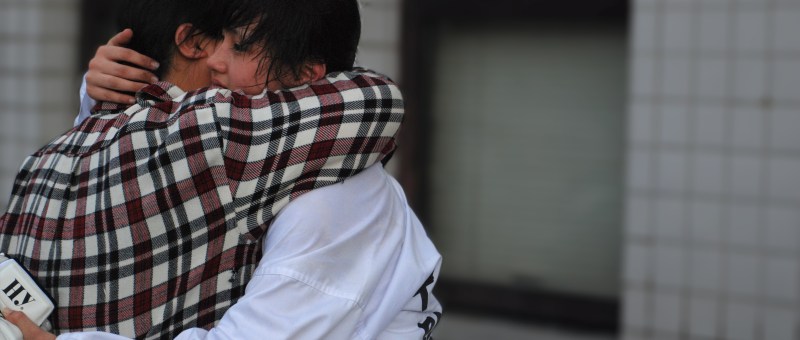
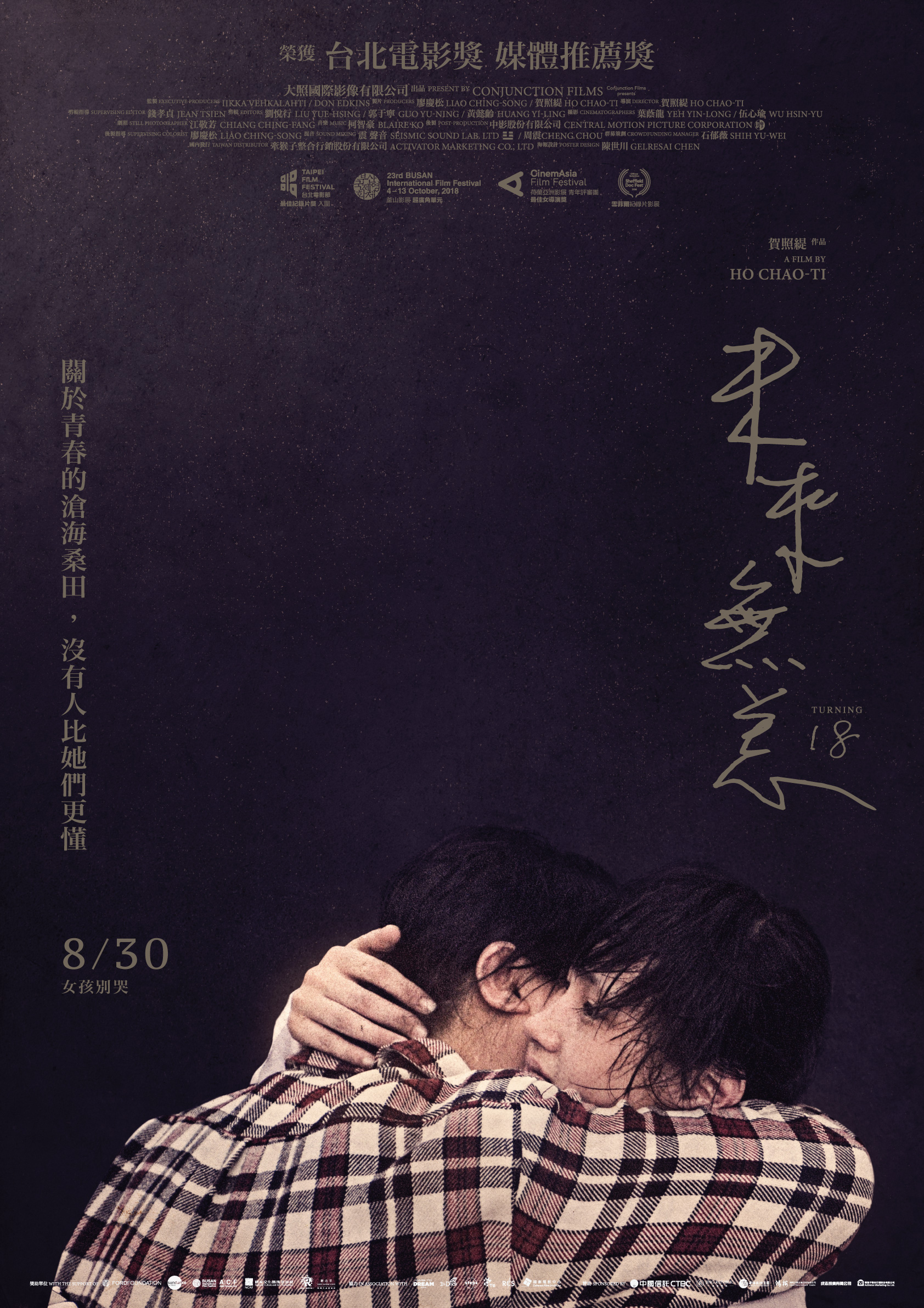
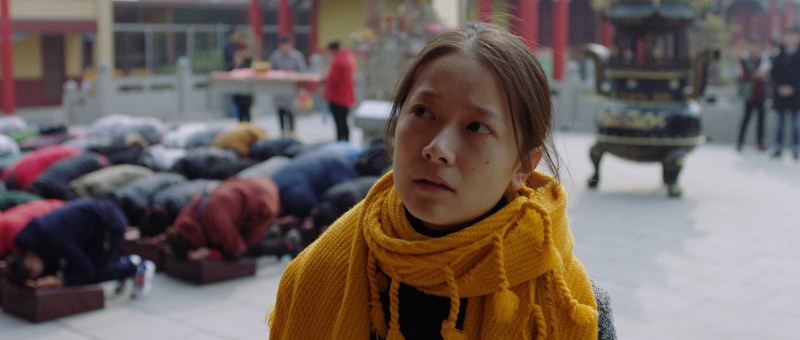
How much do you really owe a family that has failed you? A difficult question at the best of times, it’s one that continues to play on the mind of teenager Chen, one of two young women from indigenous communities at the centre of Ho Chao-ti’s documentary Turning 18 (未來無恙, Wèilái Wúyàng). Following the two girls who each come from challenging family backgrounds from the ages of 15 to 18, Ho perhaps draws a slightly uncomfortable contrast in the differing paths their lives eventually take after they briefly meet during an internship at funeral home but nevertheless presents an all too often ignored perspective on a hidden side of the island nation.  

Forced to grow up far too soon, both young women are children of single parent families in which there has been a history of domestic violence and, as we later discover, in Chen’s case sexual abuse. In response to her difficult family circumstances in which her mother has become an alcoholic and she has become the primary carer for her eight siblings, Chen has grown serious and mature. She intensely resents her mother’s drinking, not least because it plays into a racist stereotype about indigenous people while also trapping them in desperate poverty. Chen has had to take time out of education to look after her siblings and is grateful for the internship opportunity after which she will return to high school. 

Pei, meanwhile, has moved in with her possessive boyfriend, Wei, and his despairing mother. She is slightly less enthused about the internship, but dutifully completes it. Unlike Chen she never returns to school but remains with Wei who later becomes a delinquent and encounters trouble with the law. Pregnant before her 18th birthday, Pei finds herself navigating teenage motherhood and economic instability while the increasingly irresponsible Wei gravitates towards a life on the margins of crime. 

As such, it seems almost as if we’re being pushed towards judgement of the unlucky Pei for, perhaps, making the same mistake as her mother in unwisely depending on an unreliable man though they are both only teenagers, while it is undoubtedly much easier to get behind the earnest Chen who is determined to make something of her life while fiercely defending her family. Nevertheless, their marginalised status as members of an indigenous community is quickly brought home to us. Ho throws in a few snippets from post-war propaganda programs regarding the development of Hualien which describe the local Tayan population alternately as savage and uncivilised and then simple and innocent, apparently grateful for their “civilisation” at the hands of the KMT government which recommends Hualien to industry leaders as a source of cheap labour. 

Both the young women suffer at the hands of a patriarchal social code and fractured economy. Forced to compromise her education, Chen resents her mother for being unable to hold down a job of her own while it seems clear that she has little education herself and that her drinking is in part a response to her despair. Having escaped abusive spouses, the mothers of both girls have been left without effective means to support themselves in the absence of men, Chen’s mother depending on the support of her extended family who, we later learn, were also abusive. When the abuse is brought to light, Chen’s mother encourages her to lie to the court in order to protect her family members afraid perhaps of the shame but equally of the impossibility of surviving without them. 

Yet Chen continues to try to love her mother no matter how much she disappoints her, sorry only that her mother could not learn to love herself enough to save herself and determined never to make the same mistake. Finding an outlet in Taekwondo which she sees as another way to protect her family, Chen discovers another side of herself in dating another girl, at this young stage of her life incongruously insisting on referring to her as a “boyfriend” though the relationship appears to be accepted by her classmates as entirely normal. We never see how Chen’s family feels about her sexual identity save that she later affirms her desire to march in the Pride parade in Taipei precisely because she wants them to understand she loves women and that’s not something that will change, no one has the right to tell her who to love or who to marry. 

In this at least, Chen appears to have broken the cycle in definitively embracing her identities as a queer indigenous woman while also continuing to love and support her problematic family. Pei meanwhile is in a much less advantageous position, having perhaps repeated the same behaviour patterns in being letdown by an unreliable man and left to bring up a baby on her own though little more than a baby herself. Nevertheless, Ho’s camera is never judgemental in capturing this largely hidden side of Taiwanese society in which systemic male failure and entrenched patriarchy contribute to the marginalisation of the indigenous community even in the contemporary era. 


Turning 18 screens at London’s Riverside Studios on 3rd November as part of this year’s Queer East Film Festival.

Original trailer (English subtitles)

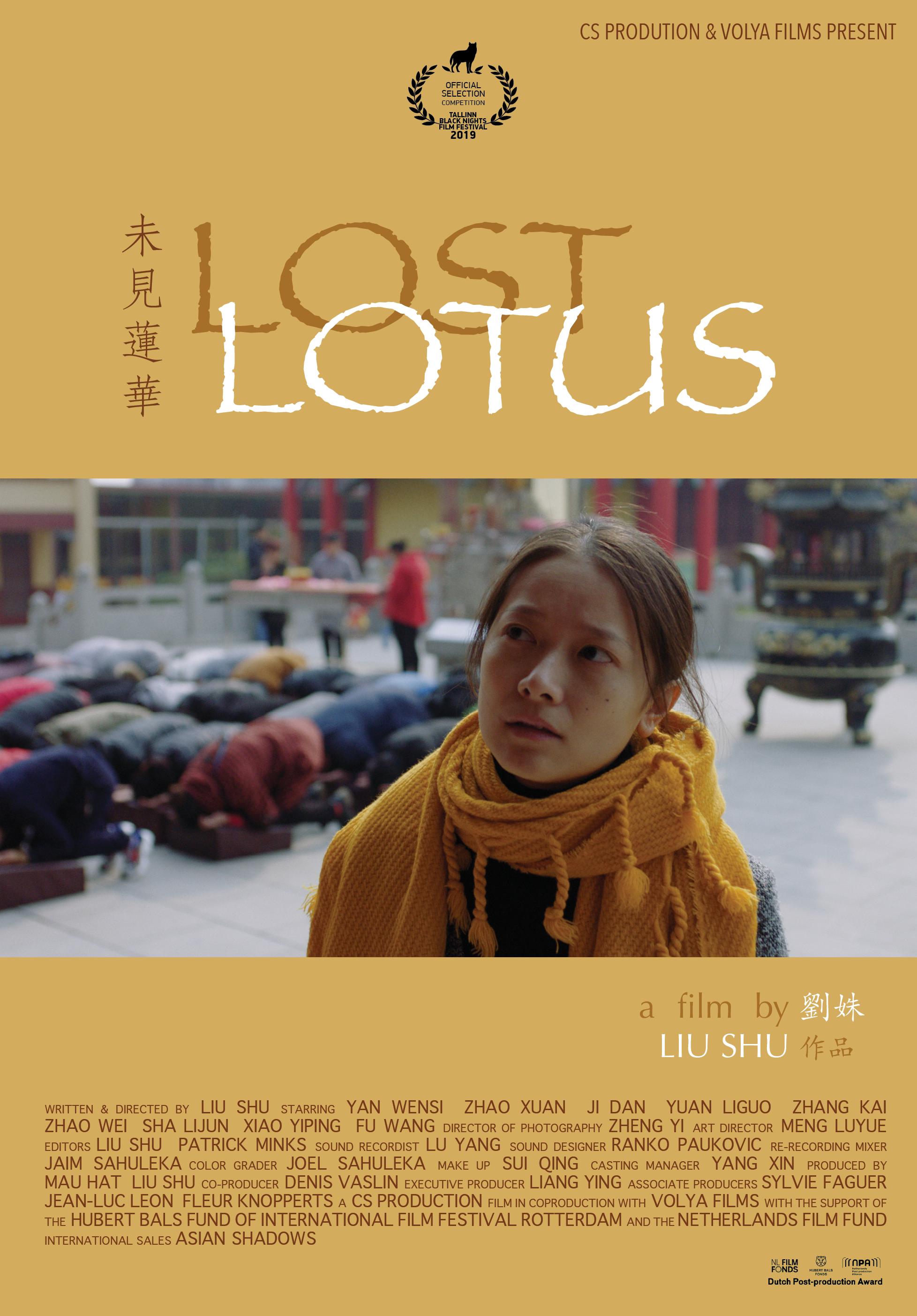
Lost Lotus (未见莲华, Liu Shu, 2019)

A grieving woman finds herself caught between the tenets of Buddhist thought and the contradictions of the modern China in Liu Shu’s emotionally complex drama, Lost Lotus (未见莲华, wèi jiàn lián huá). The paradoxes of Buddhism are, in a sense, a mirror for those of the contemporary society which has become mercilessly consumerist, obsessed with the material in direct rejection of the spiritual, yet even those who outwardly profess Buddhist values of compassion, goodness, and forgiveness are not perhaps free of the consumerist mindset in which everything has a price and for every transgression there is simply a fine to be paid in the next life rather than this. 

An intellectual teacher, Wu Yu (Yan Wensi) describes herself as irritated by her mother’s (Zhao Wei) devotion to Buddhism, viewing it in a sense as slightly backward and superstitious. Nevertheless when her mother is suddenly killed in a late night hit and run, she finds herself agreeing to hold a traditional Buddhist funeral guided by her mother’s friends at the temple despite having been warned by the police that going ahead with the cremation will obviously make it much more difficult to find the killer. While immersing herself in Buddhist thought helps her reconnect with her mother and deal with her grief, she continues to search for the driver determined to get some kind of Earthly justice in addition to the karmic. 

Increasingly worried and frustrated by Yu’s growing religious mania, her husband (Zhao Xuan) concentrates on finding those responsible in the hope of bringing closure so that they can try to move on with their lives as a couple. A kind and compassionate, modern man (he evidently does all the cooking), Yu’s husband does his best to support his wife in the depths of her grief but is himself conflicted particularly when he discovers that the man driving the car is a member of a rich and powerful elite who believes himself to be above the laws of men. 

Yu’s newfound Buddhism begins to change her outlook, though she struggles to orient herself in a world which is so at odds with its twin contradictory philosophies. Running parallel to her own quest for justice, she finds herself drawn into the struggles of one of her pupils who wanted to quit school because he has to look after his father who was badly beaten by thugs working for developers angry that he had refused relocation. Yu is originally quite unsympathetic, she and her husband blaming the boy’s father for valuing money over his life, cynically believing he must have been angling for a bigger compensation pay out though of course it is probably not so simple. While Yu and her husband are a two-income, professional household, the boy’s family are living in poverty having been evicted from their home, the father bedridden because of his injuries and therefore unable to work. Yu’s quest for justice strains her relationship with her husband and may later have economic consequences as his career prospects are used as a tool to convince them to back off, but her need for retribution affects only herself. The boy’s mother, however, feels terribly guilty knowing her obsessive quest to have the thugs held accountable is endangering her son’s future, but knowing also that she cannot simply give up and let them win. 

This is exactly the dilemma that preoccupies Yu as she weighs up how much of her anger is personal and how much societal. The driver, Chen (Xiao Yiping), offers them sizeable compensation which her husband is minded to accept, not for its monetary value but because taking the money means it’s over. But Yu wants “justice”, she resents the idea that there was a price on her mother’s life or that the culprit can simply pay a fine to assuage his guilt. Even justice, it seems, has been commodified. Yet Chen is also a Buddhist, subverting his beliefs to absolve himself in emphasising that all is fated and Yu’s mother’s death is a result of her karma from a previous life. His sin now pay later philosophy grates with Yu, undermining her new found faith in the Buddhist principles of compassion and goodness as the supposed devotee directly refuses to apologise for his role in the death of her mother. 

As her husband asks her, however, what sort of justice is she looking for? Does she want an apology, a jail sentence, to kill him with her own hands? Yu doesn’t know, lost in a fog of grief and spiritual confusion attempting to parse the contradictions of her mother’s faith and a society that has become selfish and consumerist, founded on elitist inequality which allows the rich and powerful to escape the constraints of conventional morality let alone the laws of men. In the end the only justice she can find is a retributive act of violence that perhaps forces Chen to feel something at least of her pain, paving the way for a kind of catharsis though not perhaps healing. An embittered portrait of the modern China, Lost Lotus suggests there can be no justice in an unjust society and only an eternal purgatory for those who cannot abandon their desire to find it. 


Lost Lotus streamed as part of this year’s San Diego Asian Film Festival.

The Shepherds (牧者, Elvis Lu, 2018)

Among the most liberal of Asian nations, Taiwan became the first to legalise same-sex marriage in 2019 but that doesn’t mean that it’s always easy to be LGBTQ+ particularly if you come from a religious background and wish to maintain your faith. Elvis Lu’s documentary The Shepherds (牧者, Mùzhě) follows a small group of religious leaders who are or have been involved with a progressive church, Tong-Kwang, which was the first in Taiwan to expressly embrace the LGBTQ+ community on its foundation back in 1996. Unfortunately, however, the pastors have faced significant barriers in their personal and professional lives because of their views on homosexuality which face staunch opposition from mainstream religious organisations. The founder of Tong-Kwang Yang Ya-hui, a heterosexual female pastor, eventually took her own life because of the discrimination she later faced within the religious community which made it impossible for her to continue working and support herself without compromising her beliefs. 

Discrimination is also something which has affected pastor Huang Guo-yao and his wife who now work for Tong-Kwang but began their careers in Hong Kong. Huang was forced to give up his ministry after advocating for LGBTQ+ rights brought him into conflict with the more conservative local Churches, eventually making the decision to migrate to Taiwan while his children remained in Hong Kong. He laments that the situation in which he found himself may have had a negative effect on his now grown-up sons, the younger one he worries having become increasingly withdrawn and unwilling to talk about his feelings. 

Zeng Shu-min, meanwhile, is in a similar position unable to find employment with more conventional churches as an openly gay pastor. While officiating at same sex weddings, he’s had to look for other employment to support himself and generally lives an ascetic existence, dependent on the kindness of friends such as Hsiao-en, a lesbian advocate for LGBTQ+ Christians who was herself ejected from the seminary for her liberal views. Running the Light Up project, she provides a more positive religious presence at rallies where conservative voices loudly protest against the advancement of rights for LGBTQ+ people and the movement for marriage equality. Presenting a united front in their priestly outfits, conservative preachers openly commit to undermining the seats of local politicians sympathetic to LGBTQ+ issues, some advancing that they want to “protect” the LGBTQ+ community who must be living “very painfully”, while they refuse to compromise the “basic values” of their society. 

As part of her outreach, Hsaio-en also liaises with the parents of LGBTQ+ children who often find themselves ostracised from their church community solely because of their children’s sexual orientation. Like Shu-min, she also has to work a regular job to support herself while feeling guilty for not being able to devote herself to activism full time and lamenting that hard as she works it often feels as if she isn’t getting anywhere and her efforts don’t make much difference. Yet Tong-Kwang in itself provides a valuable safe place for LGBTQ+ Christians, running a hotline those in distress can call for relief when experiencing difficulty in their personal or religious lives and affirming that their sexuality need not conflict with their faith nor is it a barrier to God’s love. 

With a mixture of observational footage and talking heads interviews, Lu bookends the film with poetic black and white re-enactment featuring the words of pastor Yang Ya-hui taken directly from her autobiography, positioning her as a kind of martyr for the rights of LGBTQ+ people in Taiwan and particularly for LGBTQ+ Christians. The film ends with the passing of the marriage equality act, but is quick to point out that that does not mean that prejudice and discrimination evaporated overnight, Hsiao-en in particular worried that organisations such as hers will come under greater pressure from conservative religious voices intensifying their opposition. Nevertheless, despite the sometimes great toll on their personal lives and those of their families, each of the shepherds remains committed to defending the rights of LGBTQ+ people not only to occupy an equal place within their society but also within their faith as members of a compassionate and progressive religious community. 


The Shepherds streams in the UK 30th October to 5th November courtesy of Queer East and Taiwan Film Festival Edinburgh.

Original trailer (English subtitles)

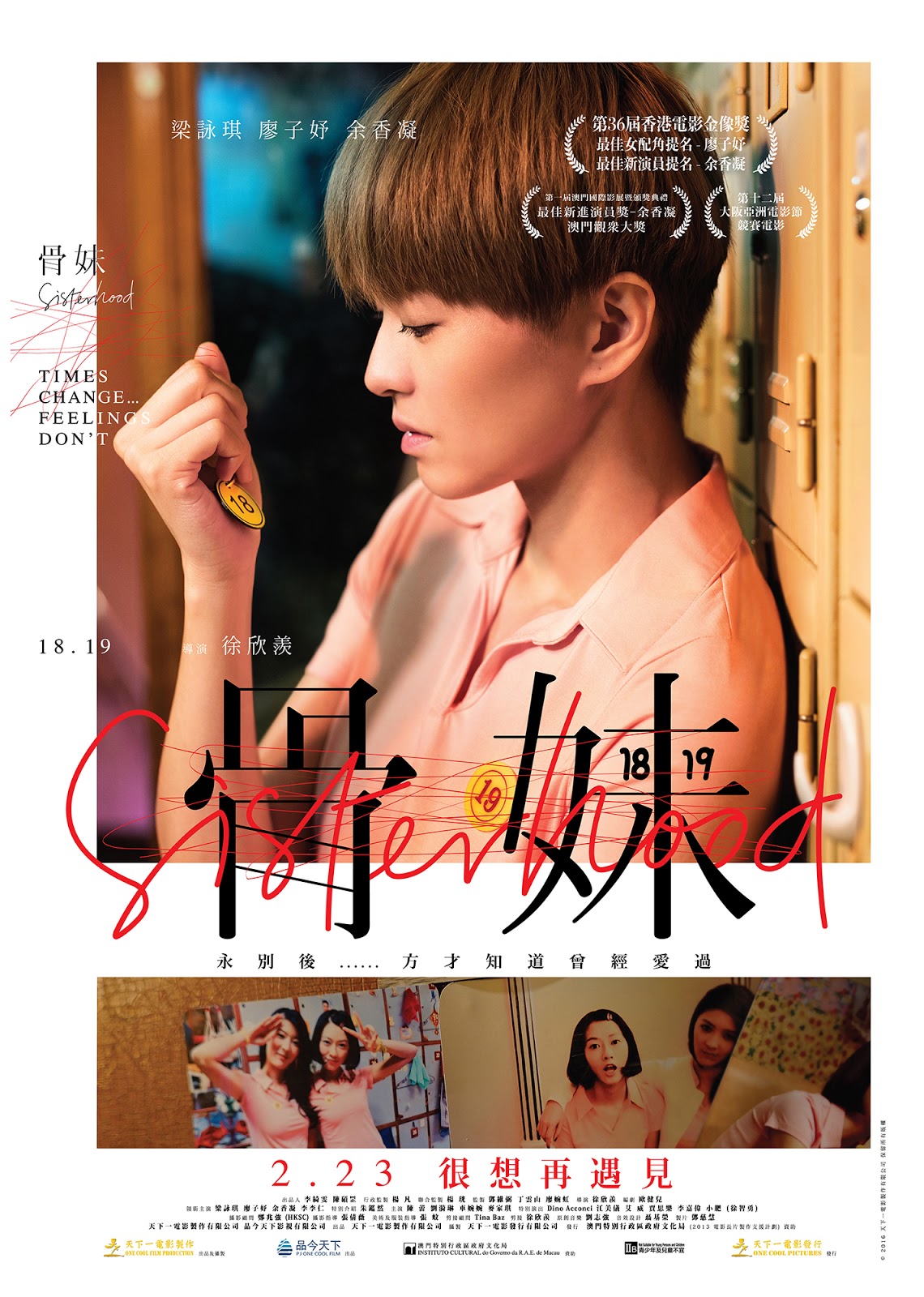
Sisterhood (骨妹, Tracy Choi, 2016)

Middle-aged regret and irreconcilable loss bring one lonely woman home from exile in Tracy Choi’s melancholy exploration of impossible love and illusionary futures, Sisterhood (骨妹, Gwat Mui). Moving from present day Taiwan to pre-handover Macao, Choi’s emotionally complex drama is both a chronicle of changing times and not as the collection of women at its centre attempt to protect themselves from a relentlessly patriarchal society through female solidarity only to see their fragile bonds disrupted by a political sea change. 

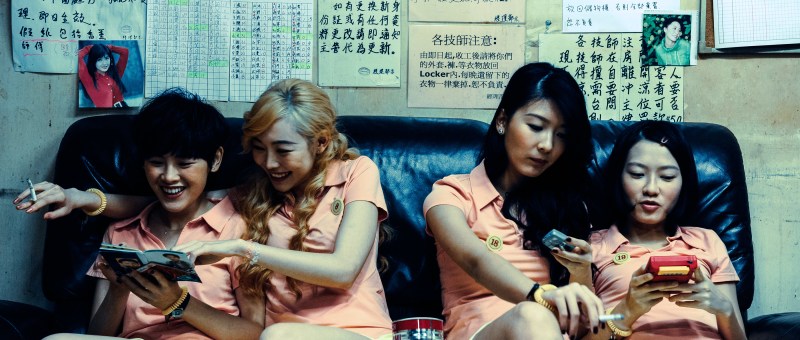
Choi opens in the present day with a now almost middle-aged Sei (Gigi Leung Wing-kei) visiting a doctor’s surgery after fracturing her wrist, apparently the result of an all too common drunken accident. Now living in Taiwan and running a small inn with her devoted husband who is perhaps overly supportive in his willingness to enable her drinking on the grounds that it keeps her “happy”, Sei appears to be quietly miserable. Spotting an ad in a newspaper telling her that an old friend, Ling (Jennifer Yu Heung-ying), with whom she’d long since lost touch has passed away jolts her out of her inertia, journeying back into the past as she finds herself travelling to a very different Macao to that of her youth in which the young Sei (Fish Liew) worked as a masseuse and was part of a quartet of close friends trying to survive the indignities of life on the margins through shared sisterhood. 

Sei’s “breakup” with Ling occurs on the very day that Macao returns to China, her friends seemingly thereafter scattering as she finds herself agreeing to a rebound marriage with an earnest Taiwanese customer who abruptly proposed on their very first date. We hear Ling tell her that she has found a man willing to marry her, but that her son Lok is an obstacle and so she plans to send him to the Mainland, cruelly ignoring the part that Sei has been playing in their lives as a co-parent even if, as we discover, the relationship between the two women goes largely undefined. Having moved in with her after losing her apartment, it is Sei who is there to support Ling when she becomes unexpectedly pregnant by a casual boyfriend/customer, eventually convincing her to have the baby by assuring her they’ll raise it together, but despite their pledges to stay together always the spectre of heteronormativity hangs over them constantly. Mocked in the street by a couple of old busybodies, Ling reacts with extreme sensitivity to the word “lesbian”, quickly moving her hand away from Sei’s as they push their son together in his pushchair lest conclusions be drawn from their closeness. Sei, by contrast, pays it no mind though this could easily be because she knows it isn’t “true”, at least in any concrete sense. The two women are evidently not lovers, if perhaps in love, but so impossible does their relationship seem to them that they lack the ability to recognise it let alone envisage its future. 

It is perhaps this degree of internalised shame that leads Ling to push Sei away, believing either that she will be “happier” in a heterosexual relationship, that she is in some way preventing her from living a more socially conventional life, or just afraid of her own feelings in assuming they are not returned and that she does not in any case deserve romantic happiness. The irony being that Sei’s married life seems to have been one of miserable emptiness and regret, stubbornly attempting to make the conventional work without quite knowing what the cause of her pain really is. On her return to post-handover Macao, she’s confronted with the failed futures of all her friends, one now a young grandmother owning her own business but forced to work herself to the bone to provide for her family, and the other near destitute and alone, floundering in the casino paradise of the upscale modern city. Meeting the now grown Lok she confides that she’s happy for him because lost as he is he has choices they never had in their young lives in which they did anything they could just to survive. 

The female solidarity which had enabled the four women to navigate a world in which they were encouraged to believe that their only option was to gain access to male economic power has thoroughly broken down in the post-handover society, and so Sei’s return is also a healing in helping to repair the broken bonds between her friends and restore the “sisterhood” which had been ruptured by the passing of an era. She can no longer repair her relationship with Ling and is perhaps left with a sense of longing and regret for an irretrievable past, but in coming to an understanding of her youth, her own feelings and desires, she gains the self-knowledge denied to her during her 15 years of exile, finally in a sense returning “home”. 


Sisterhood is available to stream in the UK 23rd October to 5th November via Barbican on Demand as part of this year’s Queer East Film Festival.

Original trailer (English subtitles)

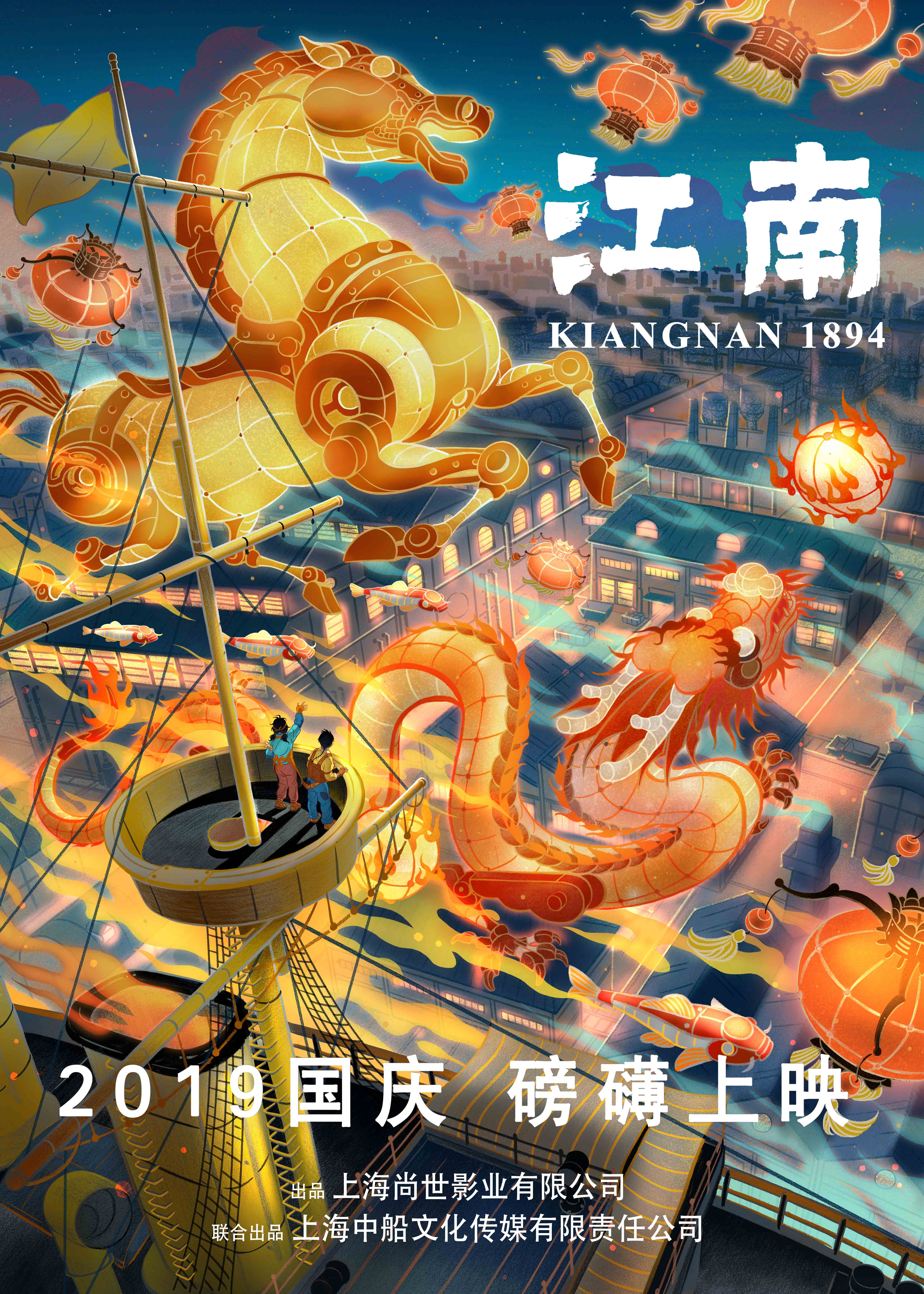
Kiangnan 1894 (江南, Wu Xiaogang, 2019)

“Remain true to our original aspirations. In honour of China’s military industry” runs the dedication card at the end of the thrilling animated adventure Kiangnan 1984 (江南, Jiāngnán). Sponsored by Shanghai’s Jiangnan Shipyard (Group) Co Ltd, the modern successor of the Kiangnan Arsenal, the film is both an unabashed love letter to the city of Shanghai and a celebration of Chinese engineering that, albeit subtly, reinforces China’s status as a powerful, technologically advanced nation fully prepared to defend itself militarily if threatened. 

Set in the late 19th century at the close of Qing dynasty, the film opens in fantasy as mechanical engineering enthusiast Lang (Ma Yang) dreams himself a king in a steampunk land daringly flying a celestial aircraft above a platoon of walking houses. Of course, he soon wakes up in a less fantastical world but is fascinated by the iron warships in the harbour and gets himself into trouble sneaking into the Manufacturing Bureau to show his friends a cool steamboat he’s found in a warehouse. Challenged by a young girl, Yulan (Zhang Qi), whose dog he ends up accidentally kidnapping as he escapes, Lang knocks over a candle and burns the whole place down, earning himself massive debts for the warehouse’s repair. To help pay them off, Yulan suggests he join the Manufacturing Bureau as an apprentice but the master, Chen (Zhou Yemang), who turns out to be her father, is a hard taskmaster offending Lang’s pride in refusing to take him on as anything other than a lowly assistant. 

All of that is somewhat secondary to the main plot which begins two years later as a cohort of Japanese spies desperately attempt to prevent a set of blueprints for a gatling gun reaching the Manufacturing Bureau. The historical Kiangnan Arsenal was founded as part of the Self Strengthening Movement which aimed to bolster the nation’s defensive capabilities, producing both firearms and warships at the beginning of the first Sino-Japanese war. This Kiangnan is however slightly more fantastical in its steampunk futurism which sees the workers wearing biomechanical aids extending to metallic gloves on their hands. The “Flying Fish” which captured Lang’s imagination was a high tech steamboat unbeknownst to him piloted by Chen’s late son who fell in battle, bravely making use of his experimental technology to serve his country. “Ordinance is essential for the greatness of our nation” Chen avows when agreeing to attempt to build the gun even without the plans, “faced with a great war we should do our best in duty bound”. 

Yet Chen’s grief-stricken rejection of Lang despite realising his genius, along with his rather sexist sidelining of his talented daughter, perhaps undermines his statement in allowing his personal feelings to holdback progress. Lang, meanwhile, patiently hones his craft while continuing to hope that Chen will one day allow him to become a real mechanic as his true apprentice, eventually building on the legacy of the Flying Fish to craft his own high tech steamboat complete with gatling gun and sailing it into the heart of danger carrying fresh supplies. A dreamer, Lang’s vision of a more technologically advanced future is fulfilled in a coda taking place 60 years later in which Communist China launches its first submarine at the Jiangnan Shipyard, the scene then shifting to an image of the modern Shanghai with its distinctive towers and high-rise cityscape. 

Patriotic concerns aside, the film also provides several opportunities for Lang to show off his equally proficient skills in martial arts, sparring with Yulan, fighting off gangsters, and efficiently dispatching the Japanese spies one of whom actually dies by his hand in quite a calculated manner which though not violent or gory is perhaps out of keeping with the family friendly flavour even as it once again demonstrates his cool-headedness, ingenuity, and heroism, while the persistent militarism has an uncomfortable quality given that the target audience is younger children. Nevertheless, such concerns are likely to fly over their heads thanks to the frequently exciting fight scenes and derring-do as Lang and Yulan take on spies and conspirators while working hard to achieve their dreams, “stubbornly” as the closing suggests refusing to give up on their future. Featuring bold steampunk design and painterly backgrounds showcasing major Shanghai landmarks, Kiangnan 1894 is an action-packed historical drama which aside from a slightly unpalatable militaristic fervour is also an impassioned defence of the right to dream as a path towards technological innovation.


Kiangnan 1894 screens at Vue cinemas across the UK from 23rd October courtesy of The Media Pioneers.

UK release trailer (Mandarin with English subtitles)