Hope (望み, Yukihiko Tsutsumi, 2020)

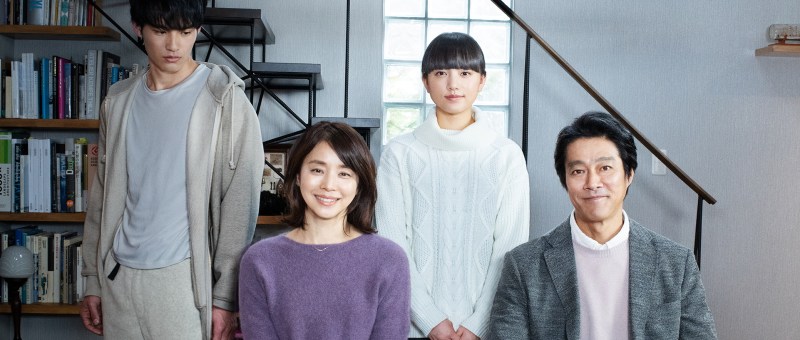
What would you prefer, that your son is alive but a murderer, or that he’s dead but blameless? That’s the dilemma faced by the family at the centre of Yukihiro Tsutsumi’s Hope (望み, Nozomi) who find themselves wondering if they really knew their son at all or had been deluded by an image of familial harmony that was only ever superficial. Meanwhile, they’re also at the centre of a media storm, on the receiving harassment from the press and neighbours, along with the potential financial strain of lost business and fracturing relationships in the local community.

Teenage daughter Miyabi (Kaya Kiyohara) tells her father that she’s read online some families have to move after a relative becomes involved with a crime, that they lose their jobs and place in the community. She’s been studying hard to get into a top high school and is worried that they may not now accept her even if she passed the exam because of something her brother may or may not have done. Some might say that a being a part of the family means that you live or die together, but there is a persistent sense of unfairness felt by all they are being made to suffer because of something over which they had and have no control.

Tadashi (Koshi Mizukami) never explained of this to them and it’s true that he had been behaving differently, was sullen, stayed out all night coming home with bruises, and had in fact recently purchased a knife but it’s difficult for them to believe that he could really have gone on the run after murdering a classmate. At the beginning of the film, architect Kazuto (Shinichi Tsutsumi) had shown off their warm family home to some prospective clients remarking that they wanted to ensure close relationships with the their children and that the design is a good opportunity to plan ahead for the next 10 or 20 years but perhaps there’s something a little hubristic in that statement. Kazuto is trying to sell an image of familial bliss that his house design can bring, but when he knocks on Tadashi’s door the boy is rude and resents the intrusion. Typical teen behaviour, the clients might think, but still it’s a minor crack in the edifice of the image of a perfect family.

But for all that it’s Kazuto who most strongly resists the idea that Tadashi may really have killed his friend and clings fast to the hope that he may be a victim too even though, as mother Kiyomi (Yuriko Ishida) points out, that might mean that he’s already dead and was killed alongside him. For Kiyomi, she just wants Tadashi, whose name means “correctness”, to be alive even if that means he really did do it. If that were the case, the family would also face constant harassment for the rest of their lives, Tadashi would be in prison for the next 15 years, and they would likely have to compensate the other family financially for the boy’s lost future and 50+ years’ worth of lost earning potential. None of that matters to her so long as Tadashi is alive, but to Kazuto it seems more important that Tadashi not be guilty and he reclaim the image he had of his son as a good and honest young man rather than a delinquent killer and bully.

Investigations among the teens turn up contradictory reports, some saying that Tadashi was aloof and arrogant while a group of girls insist on his innocence and even contemplate going to the police to help clear his name. What’s clear is that everyone seems to have taken football far too seriously and a situation among hotheaded young men went way out of control. As a policeman later says, problems often occur at this age because children who are mature enough to think for themselves start wanting to solve their own problems without worrying the adults around them but don’t always know the best way to do it and end up making everything worse. The irony may be that in the end Tadashi may indeed restore a sense of hope for his family that they can turn things around and regain a more genuine sense of familial harmony no matter what the outcome may be.


Hope screens as part of this year’s Japan Foundation Touring Film Programme.

Trailer (English subtitles)
The Rest of Our Lives (ラストターン 福山健二71歳、二度目の青春, Shinji Kuma, 2023)

A pair of elderly men struggle to find meaning in their lives in the face of well-meaning infantilism and health anxiety in Shinji Kuma’s warmhearted ageing drama, The Rest of Our Lives (ラストターン 福山健二71歳、二度目の青春,, Last Turn: Fukuyama Kenji 71-sai, Nidome no Seishun). They are not, however, the only ones as even younger people find themselves consumed by existential confusion when reaching a natural turning point and accepting that their lives will have to change. Yet through their various relationships each begins to come to a new accommodation with the present and accept that though their lives may be different than before there are still many things for them to do. 

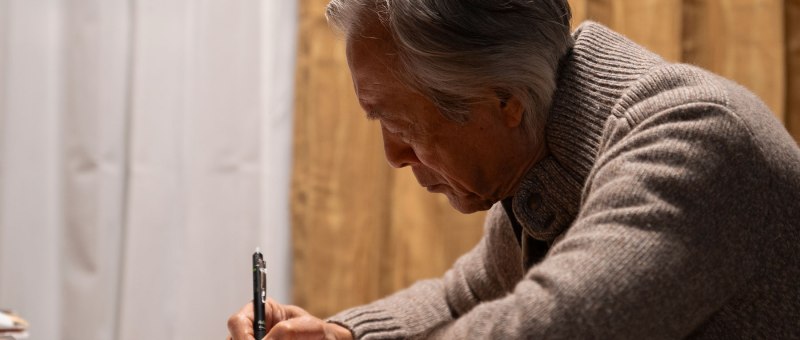
Kenji lost his wife two years previously having cared for her as she succumbed to Alzheimer’s. These days he likes to take a walk around the neighbourhood and then get on with his usual business though even he begins to realise that he’s become forgetful and is prone to doing strange things like leaving the remote control for the TV in the freezer. His son lives far away but is worried enough about him to install an iPad on the wall so they can call each other any time and he can also check in on him to make sure Kenji hasn’t had a fall or anything like that. But to Kenji it obviously seems like an imposition, his son’s basically spying on him and taking away his privacy along with a little of his independence. Satoru has also been checking out homes and recommends an organisation for elderly people where he can get health advice, stay active, and avoid social isolation. 

Only at the centre he starts to feel insulted, irritated that the staff members talk to them as if there were small children while getting them to do weird exercise regimes that make him feel silly. One elderly gentleman, Hashimoto, eventually storms out exclaiming that they aren’t in kindergarten anymore instantly earning Kenji’s admiration. Even so, as it turns out they are very different men. While Kenji is somewhat reserved and polite, Hashimoto is a chatterbox who makes constant inappropriate comments about women he probably only (just) gets away with because of his age and otherwise loudmouth personality. The friendship between them is slow to develop for this reason, but also because Kenji seems to have forgotten what it’s like to have a friend and accidentally upsets him leading Hashimoto to think that perhaps he is just annoying Kenji and should leave him alone. 

At the swimming pool they’re encouraged to go to, the pair run into Kaori, a former competitive swimmer like them struggling to accept the physical decline of her body along the end of her sporting career. Now working as an instructor she finds teaching an uphill battle partly in her buried resentment but also through a lack of empathy for her students unable to remember what it was like to not be able to swim and impatient with those lagging behind. They are all looking for ways to reorient themselves, not so much because of their age because of the immense changes in their lives along with a sense of loneliness. Kenji lives alone, but even Hashimoto who has moved in with his son confesses that the often feels in the way and once again infantilised seeing as they’ve given him a traditional Japanese room which lacks a locking door. 

Yet the realisation Kenji comes to is that their fear of becoming a burden is misplaced. It’s alright to ask for help when you need it and even better to offer it where you can such as in his thoughtful decision to walk a neighbourhood dog that barks all the time because the elderly lady who owned him passed away and her son’s out all day at work. Shining a light on the lives of the elderly in an increasingly ageing Japan, the film is makes a gentle plea for intergenerational solidarity and a more compassionate society that is responsive to the needs of others and cares for everyone equally. Kenji and Hashimoto marvel that even in their old age they still take pleasure in learning new things while allowing themselves to accept help as a gesture of love while making sure to return the favour wherever they can. 


The Rest of Our Lives screened as part of this year’s Camera Japan.

Dolls (ドールズ, Takeshi Kitano, 2002)

dolls posterOutside of Japan where he is still primarily thought of as a TV comedian and celebrity figure, Takeshi Kitano is most closely associated with his often melancholy yet insistently violent existential gangster tales. His filmography, however, is one of the most diverse of all the Japanese “auteurs” and encompasses not only the aforementioned theatre of violence but also pure comedy and even coming of age drama. Dolls is not quite the anomaly that it might at first seem but perhaps few would have expected Kitano to direct such a beautifully colourful film inspired by one of Japan’s most traditional, if most obscure, art forms – bunraku puppet theatre.
After opening with a bunraku performance featuring an excerpt from the Chikamatsu play Courier For Hell, Kitano moves on to his overarching narrative which connects the tripartite structure in a tale inspired by the classic story The Bound Beggars. This first pair of lovers, Sawako and Matsumoto, wander blankly through the ever changing landscape tied together with a long red rope. The two had previously been a young couple, very much in love, but Matsumoto was pressured into abandoning Sawako to accept a semi-arranged marriage to his boss’ daughter. Distraught, Sawako attempts suicide only to survive but in an almost catatonic state.

The second pair of doomed romantics consists of an ageing yakuza who looks back on his life which has forced him to act in a way that he is not always proud of and now finds himself remembering the girlfriend he parted with thirty years ago after fearing he was about to lose his job. She promised to wait for him, he promised to return a fine man but he became a yakuza and never saw her again. All these years later, she’s still exactly where she said she’d be, waiting.

Story three is strange tale of modern love as a young man becomes obsessed with an idol star who only ever notices his rival. After she is injured in a car accident and decides to retire, the young man takes drastic action to be able to meet with her on what he sees as a more equal footing.

Fools for love, each and every one of them. Love has ruined them, removed rational choice from their field of vision, yet there’s something noble and beautiful in the way in which it has penetrated each of their lives. They love as if possessed by an incurable madness, Sawako tries to kill herself because her heart is broken, a woman grows old spending each Saturday lunch time sitting on a bench with a second lunch box which is going to go to waste, and a young man maims himself to finally get his love’s attention. Was it worth it, in the end? Perhaps not if the desperately sad outcomes of each of these stories is anything to go by.

Kitano rejects his idiosyncratic blue colour palate for a world of vibrant colours. Travelling through a year we move along the seasons as punctuated by their symbolic scenery from cherry blossoms to green verdant landscapes, the overwhelming redness of autumn leaves and finally the purity of the winter snow. We travel one way, but also in circles as we navigate the story of love as it too changes with its seasons yet remains unchanged in essence. Each of the lovers is no more free than a bunraku puppet, manipulated by forces outside of their control and forced into a desperate unhappiness that is in part vindicated by their romantic bonds.

Love is tender, love is cruel. Each of the men, in particular, makes terrible choices which cause only pain to the women they supposedly love and, in their pride and arrogance, they fail to realise the consequences of their actions until it is far too late. The tragic inevitability of life’s suffering and the inability to escape it are the foundation stones of Chikamatsu’s world.

Working with fashion designer Yohji Yamamoto Kitano has created a beautiful, theatrical world of hyper realistic colour and life. Like much of Kitano’s work, Dolls amounts to a sad collection of tales coloured by melancholy and a resignation to the pain and suffering inherent in being alive. The lovers are inexorably bound to each other for all eternity because of the suffering they have each endured at the other’s hand. This is a sad world, but it’s a beautiful one too and even if hurts one must try to live.


Dolls is re-released in the UK on blu-ray courtesy of Third Window films.

(This is an original release trailer and does not reflect the quality upgrade of Third Window Films’ blu-ray release)

I first saw this film I guess almost fifteen years ago (!) and I still occassionally get this song stuck in my head:

Review of Takeshi Kitano’s Dolls (ドールズ) – first published by UK Anime Network.


Wandering Home (酔いがさめたら、うちに帰ろう, Yoichi Higashi, 2010)

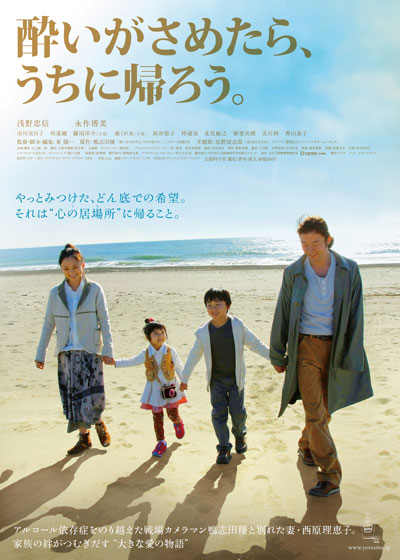
wandering homeAlcoholism is not a theme which has exactly been absent from the history of cinema. From the booze drenched regret of Days of Wine and Roses to the melancholic inevitability of Leaving Las Vegas and the disdaining irony of Barfly, there has been no shortage of unsympathetic portrayals of drunkenness when it comes to the silver screen. Yoichi Higashi’s Wandering Home (酔いがさめたら、うちに帰ろう, Yoi Ga Sametara, Uchi Ni Kaerou) walks something of a middle road here as it embraces the classic “issue drama” mould but also aims for a naturalistic character study in adapting the true life memoirs of photojournalist Yutaka Kamoshida (husband of well known mangaka Reiko Saibara).

The film begins with a touch of magical realism as Tsukahara (Tadanobu Asano) literally falls off his barstool and has a vision of his wife and two children urging him to get up. Of course, they aren’t “real”. Tsukara lives with his mother after his marriage to a successful mangaka broke down due to his alcoholism. Returning home and ignoring his mother’s advice to get something to eat, Tsukarahara has another drink whilst swearing that this time he’ll be sober when he sees his kids but shortly after retreats to the bathroom to vomit where he experiences a massive haemorrhage and is taken to hospital. Things have already gone too far, he’s told he’s lucky to be alive and the next time this happens he will die.

Swearing to finally come off the booze, Tsukahara goes home but is immediately tempted by a side dish in a restaurant which contains alcohol. He makes the wise choice not to buy the vodka in the off-licence but eventually talks himself into buying beer which he drinks right away and then falls over and hits his head on the way home. His ex-wife, Yuki (Hiromi Nagasaku), and his long suffering mother have gone through this too many times before to even be disappointed. Eventually, they ship Tsukahara off to a residential facility in the hope that they can finally help him beat the booze for good.

Wandering Home is inspired by the real life story of a photojournalist which has also inspired a few other films including the following year’s Kaasan which told the same story from the point of view of Kamoshida’s mangaka wife. Therefore, the ending of this story might perhaps be known to you already but needless to say it isn’t an altogether happy one. The film doesn’t go into the reasons Tsukahara started drinking save for emphasising that it’s rarely one root cause that starts someone on the road to alcohol addiction. Tsukahara’s father had been an alcoholic and had also behaved violently in the home – something which Tsukahara despised and yet he ultimately became exactly like his dad. Having started to drink as a young teenager he drifted into an aimless life and then witnessed a number of traumatic events in his career as a photojournalist which also left their mark on him.

Though the film is never shy about the disruption Tsukahara’s drunkeness causes to his family, it mitigates the effects by casting them as surreal episodes such as the only scene in the film where Tsukahara is shown to be violent towards his wife in which another soot covered version of himself emerges from a zipper in his back to shout abuse and trash the place as his children retreat in horror to their bedroom. It’s not Tsukahara, it’s the alcohol, the film tries to say but actually lays the message on a little thick and often neglects the trauma that his behaviour is, in turn, causing to his own son and daughter.

That said, there is remarkably little animosity between Yuki and her ex-husband despite the way that he has behaved. Yes, the pair are divorced but Yuki is called right away when Tsukahara is taken to hospital and when she brings the children to visit him the couple talk warmly with no bitterness or recrimination. The children too are happy to see their father and do not seem afraid of him in any way at all.

Higashi does, however, fall into standard “issue drama” tropes and perhaps spends too much time exploring the rehab facility where Tsukahara is sent for treatment. Though hearing something of the other characters’ paths to alcohol dependency is enlightening, it can’t help but feel more like a public information film at times than the affecting character drama it should be. Small touches like Tsukahara’s longing for something a simple as being able to enjoy curry again like everyone else on the ward or his more frequent difficulties of being able to distinguish a hallucination from something he’s doing for real lend weight to the central story but they can’t quite save it.

Higashi’s tone is generally straightforward and mostly avoids melodrama or sentimentality except during the film’s ending. This sounds like a strength but turns out to be a weakness as something about Tsukahara’s plight never quite grabs the heartstrings in the way it seems to want to. The film’s unsentimental depiction of alcohol dependency and one man’s struggle to try and regain his place within his own family is an admirable one, but Wandering Home ultimately falls far short of its intended destination.


The Japanese dvd/blu-ray release of Wandering Home includes English subtitles!

Unsubtitled trailer: