Strangers (Kenta Ikeda, 2024)

Naoko, the heroine of Kenta Ikeda’s Strangers, says she’s been pretending all her life. She’s been pretending to be what everyone wanted her to without really knowing or thinking about what it was she wanted to be or who she really is. On a baseline level, Ikeda suggests that we are and remain strangers to ourselves while equally confused about those around us, seeing what we want or expect to see rather than who they really are.

In part that may explain why Naoko has stayed with her unfaithful fiancé Takeo who got a colleague pregnant and then seemingly abandoned her. Shimizu then began harassing Naoko, stalking her and making silent calls. To make matters worse, Takeo is often away on “business trips”. He’s not currently responding to her phone calls or messages and has just embarrassed her by not turning up to a family event. Naoko’s sister thinks she should leave him and doesn’t understand why she hasn’t already. But Naoko just sighs that she’s decided not to expect too much from life and seems prepared to put up with this degradation because she doesn’t think she deserves anything better. 

That might be why she’s so drawn to her enigmatic colleague Yamaguchi who waltzes in past noon wearing a distinctive blue dress that floats in the air behind her. The other ladies at work gossip that their bullying boss Satome, who is married with two children, got her the job after picking her up on a dating app and the reason why she can get away with such unprofessional behaviour is because she’s sleeping with him. But Naoko later discovers that Yamaguchi’s dating app activities are a kind of side hustle in which she participates in idealised dating scenarios pretending to be the lover of lonely men who pay her handsomely for a few hours of fantasy romance.

Or as Yamaguchi describes it, the opportunity to experience only the good parts of love before you get sick of each other and run out of things to say. It sounds more than a little like the logic of someone who’s decided not to expect too much from life, and while it seems Yamaguchi may be trying to avoid her own grief and loneliness, it’s true that she otherwise remains a cypher. After losing contact with Yamaguchi and being left with her smartphone, Naoko receives a call from her handler who tells her that it doesn’t matter who she is or why she has “Yamaguchi’s” phone, all that matters is turning up at the appointment and never letting it slip that it’s all just role-play.

On her dating app profile, Yamaguchi’s face is blurred so that you only really see the image of her in her distinctive blue dress which Naoko too later starts wearing. The people around Naoko are often shot in soft focus so that we can’t really be sure of their identity beyond using their clothing to infer who they are. Men in particular are often shot from behind or with their faces out of frame as if they were all just a much of a muchness. We never even meet Takeo, who apparently does not return from his “business trip”. In any case, in agreeing to the fantasy date, Naoko is gradually taken over by the Yamaguchi persona. The spread of the graze she sustained at the beginning of the film seems to indicate the gradual erasure of her identity, yet in another sense becoming Yamaguchi also gives Naoko an excuse to stop pretending and accept herself or at least to start expecting more from life. She becomes more assertive, flirtatious, and confident in confronting Shimizu only to realise that she may not have been the mysterious force she felt watching her after all. 

In her Yamaguchi persona, Shimizu describes Naoko as a like a colourless and doorless detergent, but she replies she’s been hiding all her life. She ran ran away from her problems, refused confronting Takeo or Shimizu, avoided being honest with her family and simply played up to the image they had of her of a shy and obedient woman. There might be something in the fact that Yamaguchi kisses her suggesting that Naoko may have been running away from her sexuality, but equally it could just be that this is how the Yamaguchi curse is passed from woman to woman. Having once assumed it, Naoko now must try to shake it off but that too might not be as easy as she might assume. Meanwhile, those around her also have their own secret lives and faces they keep hidden from others. Ikeda creates a atmosphere of eeriness and hovering violence amid the faceless city where it doesn’t matter who you are so long as you show up and everyone is to some extent participating in a temporary fantasy in order to overcome the disappointment of life in which as Naoko had told herself it seems better not to expect too much.
So Beautiful, Wonderful and Lovely (素敵すぎて素敵すぎて素敵すぎる, Megumi Okawara, 2025)

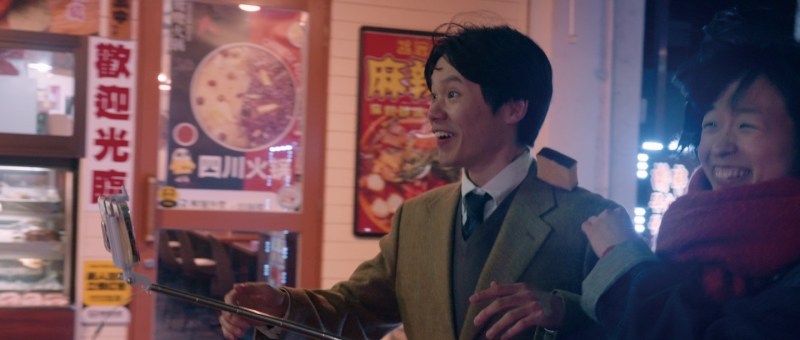
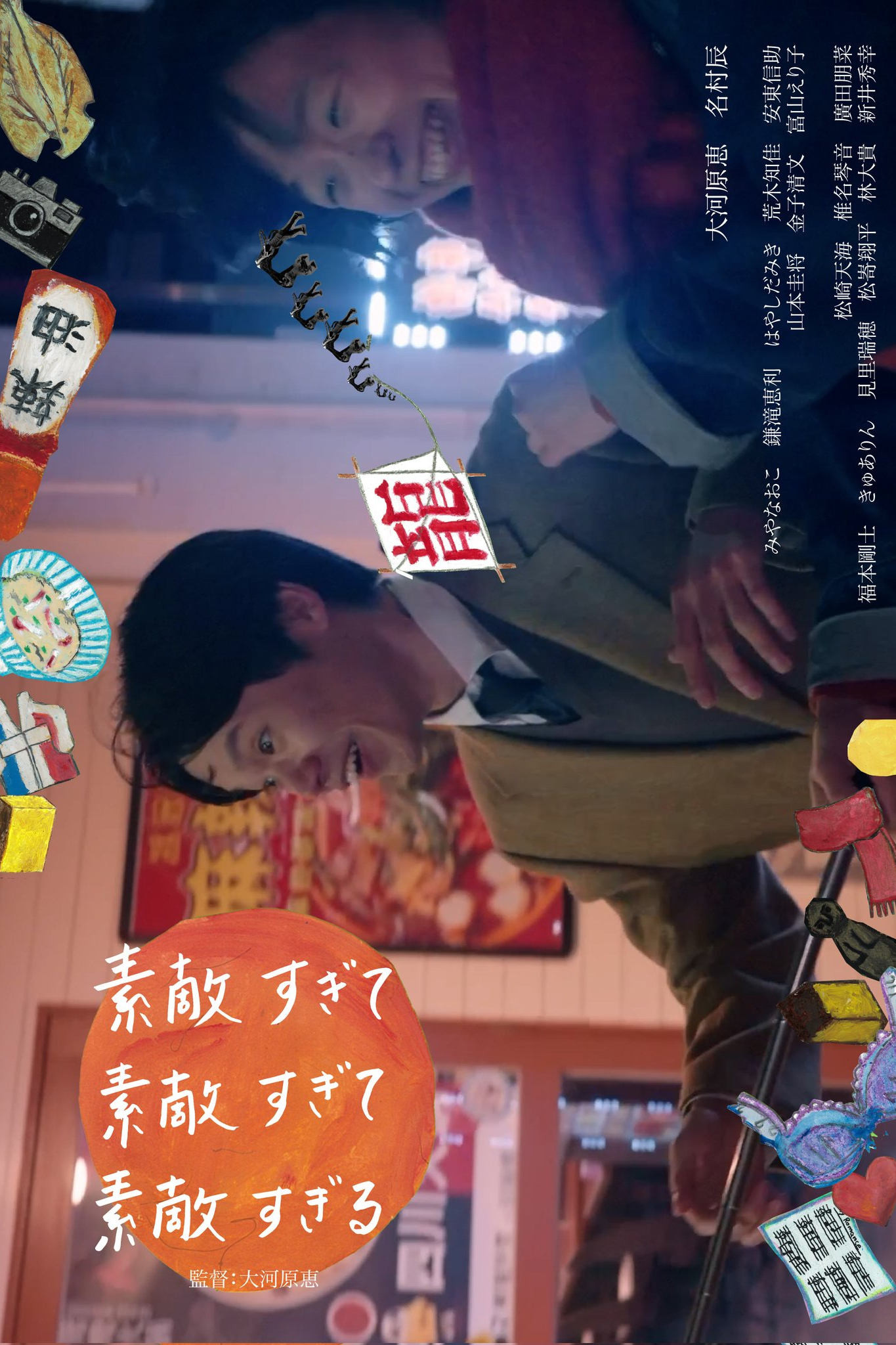
Is it better to have a dream that will never come true or to have no dreams at all? That’s a question that Nozomi can’t help asking herself after her world comes crashing down when she discovers her boyfriend is randomly marrying someone else. Nevertheless, she comes to realise that her life is and always has been So Beautiful, Wonderful, and Lovely (素敵すぎて素敵すぎて素敵すぎる, Sutekisugite, Sutekisugite, Suteki Sugite) in Megumi Okawara’s quirky indie dramedy of endless heartbreak and constant absurdity.

At least, there’s nothing more absurd than being haunted by the spirit of your very much still alive boyfriend in the form of a slice of castella cake. Nozomi’s mother has been tearfully trying to perfect a party trick to perform at the wedding of her daughter to boyfriend Chitose, but unbeknownst to her, Chitose has married someone else. Gatecrashing the ceremony, Nozomi teamed up with Chitose’s brother Susumu to hijack the wedding photo and then run off with the camera though she ended up crashing into a castella cake delivery guy and landing in hospital with a brace around her neck. The neck brace is perhaps a symbol of the way Nozomi’s world has been narrowed, preventing her from turning her head to find new directions in life. But those would be hard to find anyway when you’re being followed around by a guy who looks like your ex but also claims to be a piece of sentient cake. 

To begin with, she tries to have fun with Castella-Chitose by going on influencer-style dates such as a visit to his “birthplace” (a castella cake shop) while trying to understand her relationship with the “real” Chitose who not is particularly nice and very pissed off about everything that happened with his wedding along with Nozomi’s lingering attachment to him. She seems to want to continue with the relationship as it was even though he treats her poorly and has already married someone else, while he just seems to be paranoid that she plans to expose their affair even if he does accept responsibility in having behaved badly by never mentioning that he already had girlfriend and for an unknown reason also keeping his wedding and marriage a secret from his colleagues at the school where they both work. 

After making an “affair”-themed video it seems designed to blackmail him into getting back with her, Nozomi (whose name means “hope”) decides to make a fresh start by getting a job in a stationery shop which also turns out to be staffed by people with broken dreams. Her eccentric boss Yoko and the other clerk apparently live in adjacent wardrobes at a rented apartment while Anita, a middle-aged man too timid to interact with customers, worries for his daughter who has broken dreams of her own. Surreal as it is with its weird customers who turn up to see the “new products” or try to buy crab rice which they obviously don’t sell, Nozomi begins to find a new sense of belonging and solidarity as she grieves her failed relationship with Chitose which is set to expire in exactly two weeks’ time when the castella finally meets its best before date.

But then what she discovers is that the thing about dreams that don’t come is that they never expire. Perhaps it really is better to have a dream that won’t come true than not have a dream at all. Or at least, that’s what her new colleagues seem to show her even the midst of their loneliness as they latch on to each other and remind Nozomi that as Castella-Chitose said she matters and that there are people who love and care for her in ways that the real Chitose obviously never did. She wishes most of her life were a dream, while her dreams never come true but still her life is and has always been so beautiful, wonderful, and lovely even if she’s only just really becoming able to appreciate it thanks to her new friends who are giving her the courage to dream new dreams and move on from her disappointing relationship with Chitose while watched over by the spirit of castella cake. Defiantly weird but also warm and wholesome, the final message is that it’s best to embrace life’s strangeness along with its joys and heartbreaks while continuing to dream even if those dreams may never come true.


So Beautiful, Wonderful and Lovely screened as part of this year’s Osaka Asian Film Festival.

Trailer (English subtitles)

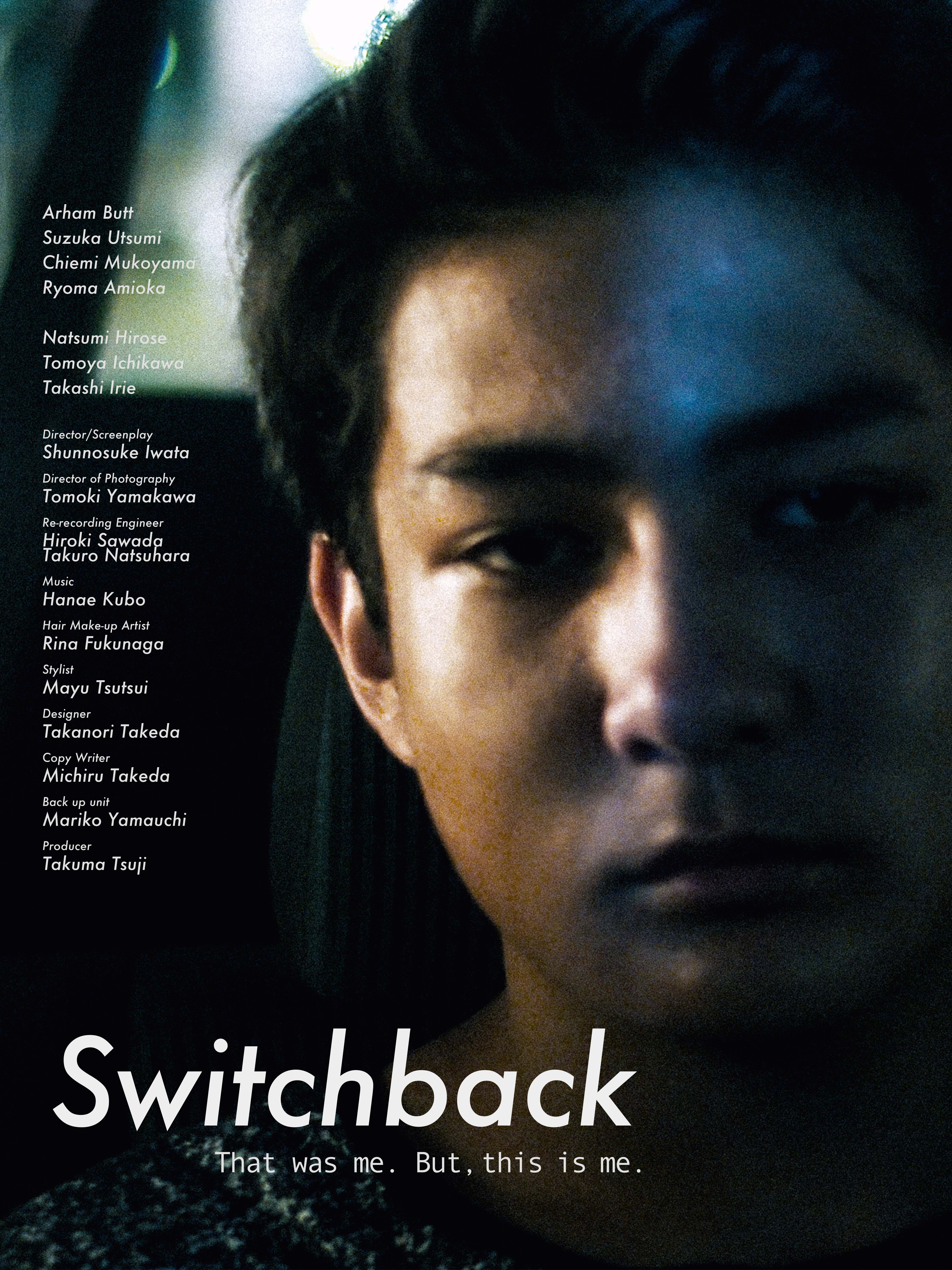
Switchback (スイッチバック, Shunnosuke Iwata, 2022)

Really, everything in life is a learning experience but how should you feel if something that you thought was quite profound and serendipitous was actually engineered even if the way you reacted to it wasn’t? The young heroes of Shunnosuke Iwata’s Switchback (スイッチバック) find themselves caught in a moment of confusion uncertain how far they should trust the adult world while equally at odds with each other and trying to figure out what it is they may want out of life. 

Brazilian-Japanese teenagers Arham and Chiemi are attending a summer workshop project along with basketball enthusiast Suzuka while her childhood friend Eiichiro never actually shows up. Led by Tokyo influencer Rei, the kids will be working together in order to produce a video of a ball bouncing through the countryside. By reversing the footage to make it seem as if the ball is on its own little adventure she hopes to create a sense of the uncanny and with it a new perspective. Arham doesn’t quite get the point of it, but participates anyway and ends up forming a special bond with an old man in a wheelchair they encounter who has a hobby of flying drones. Yet when he finally arrives, Eiichiro claims to have seen the old man walking around and accepting something from Rei assuming he must be some kind of stooge and the children’s adventure they’ve all been on since has been a setup. 

Arham is very invested in the old man’s story and outright rejects Eiichiro’s suggestions that he isn’t “real”, carrying out an investigation into everything he told them about a former airfield that had been built in their town during the war and was later bought by a media company for recording aerial footage. What he discovers is that all of that seems to be true save for one crucial personal detail the old man had mentioned, leaving a grain of doubt in his mind while he continues to resent Eiichiro despite being unable to come up with a reason as to why he would lie. Eiichiro is in fact not quite telling the whole truth though he’s right about the old man, engaging in a kind of engineered adventure of his own but later offers the explanation that adults too are often frustrated and they may have tried to “destroy” Arham because they’re jealous of his cheerful and openhearted nature. 

Even though he concedes that he still experienced what he experienced for himself after meeting the old man, developing an interest in drones and learning a lot of local and aviation history, Arham is uncertain how he should feel about being manipulated, disappointed on trying to confront Rei and hearing exactly the same speech as she’d used in her influencer videos explaining her approach to life and art aiming to give young people a head start in gaining new experiences without them realising that they’re being taught something even if she doesn’t otherwise attempt to push them in a particular direction simply provide the catalyst for growth. Chiemi experiences something similar when she’s offered the opportunity to become a model, a skeevy older man repeatedly telling her she is suited to the work and may have a promising future, adding that she has a quality of ferocity that “Japanese” kids don’t while she complains that she dislikes being told what does and doesn’t suit her preferring to do as she pleases whether other people think it suits her or not. 

Suzuka meanwhile quietly struggles to fit in on her own having come to the town only eight years previously hinting that she and her family may have moved in the wake of the 2011 earthquake but stating only that she doesn’t like to talk of it either traumatised or fearing stigmatisation. Unity came first security second she claims of her basketball team reflecting on the positivity she experienced as they came together before a match in the face of their opponents. The kids perhaps do something similar as they each in their own way react to adult duplicity while deciding to take it in their stride embracing the experiences they’ve had as their own. Rei’s social experiment could easily have backfired leaving them cynical and indifferent, unwilling to believe in or pursue anything fearing that there is no objective truth only manipulation but in they end they run the other way, deciding to trust each other and themselves while creating new experiences of their own. Produced in celebration of the 50th anniversary of the town of Obu in rural Aichi Prefecture, Iwata captures the beauty of the local landscape along with the natural openness it engenders in allowing the children to become fully themselves as they ride their own individual switchbacks to adulthood.   


Switchback screened as part of Osaka Asian Film Festival 2022

Original trailer (no subtitles)