4PM (오후 네시, Jay Song, 2024)

What is the proper etiquette for dealing with an unwanted house guest? It is acceptable to ask them to leave directly, to usher them out of the house by making an excuse that you are leaving yourself, or are you duty bound by virtue of your place in society to put up with it and wait politely until said guest leaves of their own accord, assuming that they ever do? At the end of the day, perhaps it’s foolish to allow our time to be wasted on petty worries about propriety when the best thing to do is really to be direct and explain that you do not enjoy this person’s company and would appreciate it if they did not call on you again.

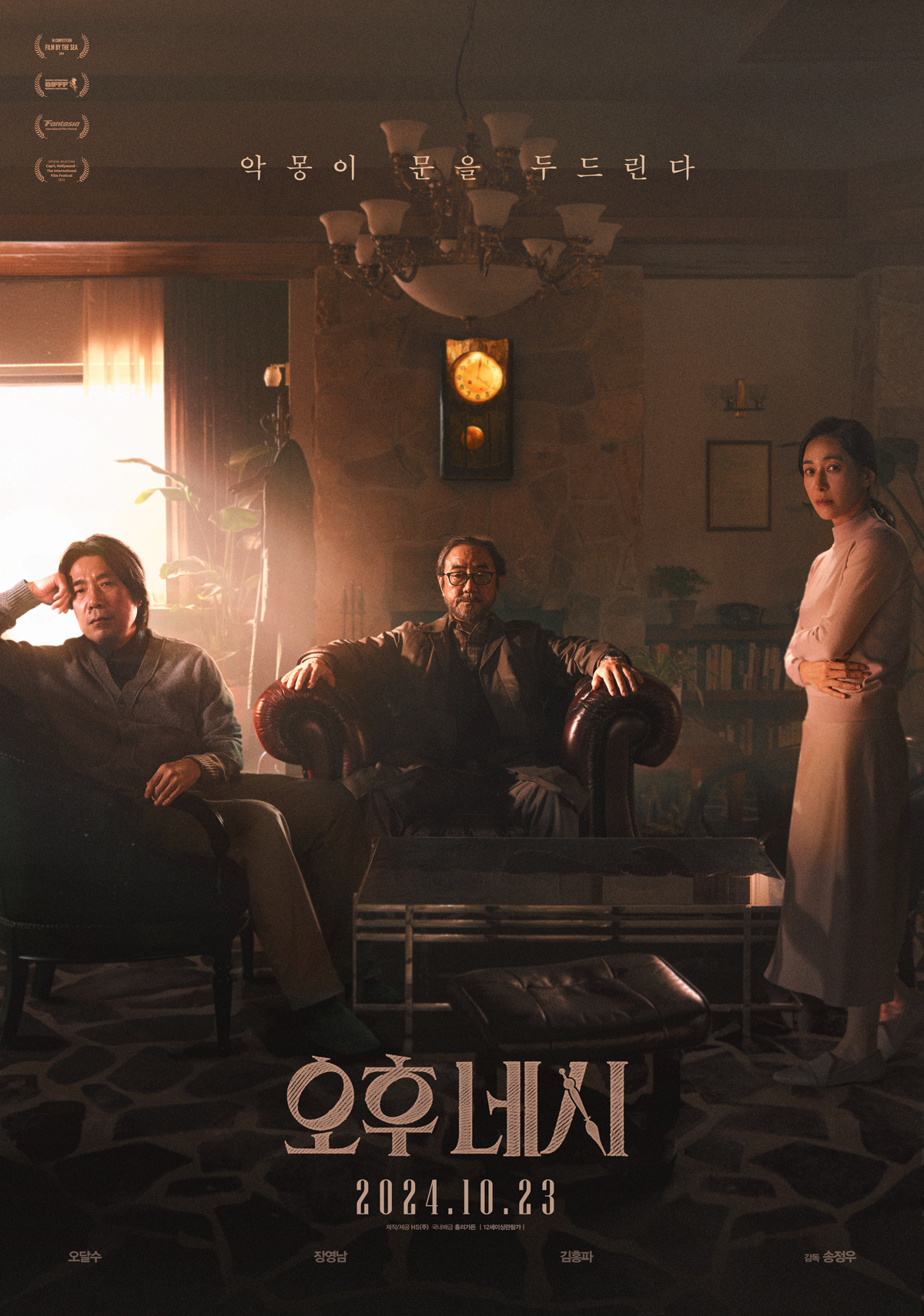
Based on a novel by Amélie Nothomb, Jay Song’s increasingly absurd psychological drama 4PM (오후 네시, Ohu Nesi) is indeed about the suffocating qualities of politeness, but also in the ways that it interacts with class and masculinity along with the very image of ourselves. As a character in an Ibsen play once said, to take away a man’s life lie is to take away his happiness, and professor Jung-in (Oh Dal-su) is keen to caution against looking too deeply into one’s own soul for the only gifts of self-knowledge are unbearable shame and misery. “I am defined by my kindness to others as a educated man,” Jung-in reminds himself, but in saying so he also makes it clear that his politeness is a conscious affectation rather than an innate character trait. He behaves in a certain way because he fears judgement and wants others to approve of him as a nice person who has been raised well to have good manners. Fulfiling this image is key to his idea of self in the persona of a cultured professor and marks him out from those he may secretly see as “lower” than himself, in being “uneducated” and “rude”, ignorant of the “proper” way to behave. 

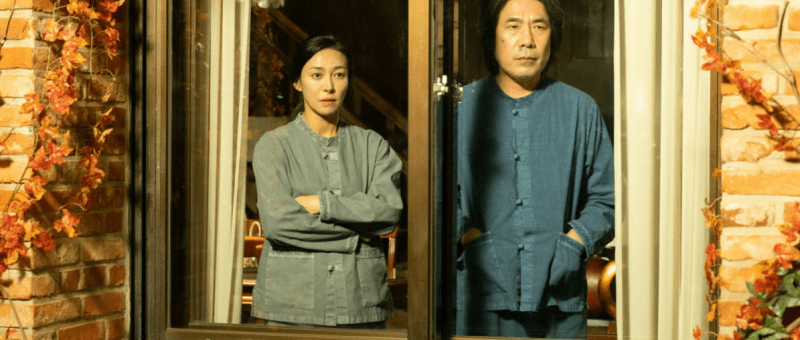
But whatever way you look at it, Yook-nam’s (Kim Hong-pa) behaviour is “impolite” despite his apparently being a doctor, though we’ve really got his word for it. Having taken a sabbatical, Jung-in and his wife Hyun-sook (Jang Young-nam) have bought a house in the country, but unusually for such a property, it’s overlooked by an adjacent home positioned a little too close for comfort. The couple figure they should introduce themselves, but the lights are always out and the place doesn’t look lived in, so they leave a note inviting the occupant to visit at their convenience. Unfortunately, Yook-nam takes them at their word, shows up at 4pm, barges his way in, and then just sits there for two hours snapping at them with monosyllabic answers to their questions as if he were burning with rage. He does the same thing every day until it begins to drive the couple out of their minds. 

Of course, they have to ask themselves why they allow this. Why can’t they ask him to leave, or refuse to open the door? They find it impossible to break the psychological barrier of politeness by stating pointe-blank that Yook-nam is a bore and they wish him to leave. They are in a sense suffocated by the need to conform to these deeply ingrained social codes of what it means to be a good person even when others are clearly not abiding by the same set of rules. The absurdity eats away at them as they find themselves humiliated by their own cowardice in becoming complicit in Yook-nam’s oppression. Jung-in begins to realise that his civility interferes with the demands of socially defined masculinity in that he is failing to protect his home by being unable even to eject an unwanted guest and in effect ceding power to him even within the safe and personal space of the domestic environment which should also be free of such oppressive rules for being.

Jung-in anfd Hyun-sook may be getting an idea of why the last person moved, but there’s also a kind of symmetry in the two houses which are in their way each haunted. Both couples say they have no children, but there’s a family photo with a little girl in Jung-in and Hyun-sook’s house that does not appear to be of their surrogate daughter, Jung-in’s former student So-jung (Min Do-hee), just as there’s a family photo with a little boy in Yook-nam’s house that hints at a buried tragedy. While Jung-in and Hyun-sook’s house seems to be full of light, uncluttered, clean and tranquil, Yook-nam sleeps in soiled sheets in a room that apparently smells in home that is filled with unwashed dishes while the walls are coated in grime. The whole place is covered in loudly ticking ticks in contrast to the silence of Jung-in’s home which brings new meaning to his words about living in the present. 

It isn’t really clear what Yam-nook wants out of all this, whether he’s just looking for some kind of escape or actively rebelling by being deliberately unpleasant while exerting his power through wasting Jung-in’s time. “He was still my guest,” Jung-in insists emphasising the roles they are each playing along with his own determination not to deviate from them. Perhaps Yook-nam actually wants them to break protocol by telling him to go away, but instead they live in tyranny of 4pm and sit quietly until Yook-nam abruptly leaves at six rather than say anything or at the very least tell their unwanted guest that he’s free to stay but they’re going to get on with their business. Meanwhile, Jung-in’s civility is slowly eroded, exposing the primitive man inside who fantasies about killing Yook-nam and is suffocated by his his hate for him. But in seeing this true side of himself, Jung-in discovers only shame rather than authenticity or empowerment, and in creating another persona is again ironically suffocated, silenced in his own rebellion. Quietly unsettling, the film suggests that we all, in a sense, live in tyranny of 4pm by allowing ourselves to be oppressed for propriety’s sake rather than risk being “rude” in the knowledge that to do so would be to risk releasing the monster inside us that “politeness” alone keeps at bay.


Trailer (English subtitles)
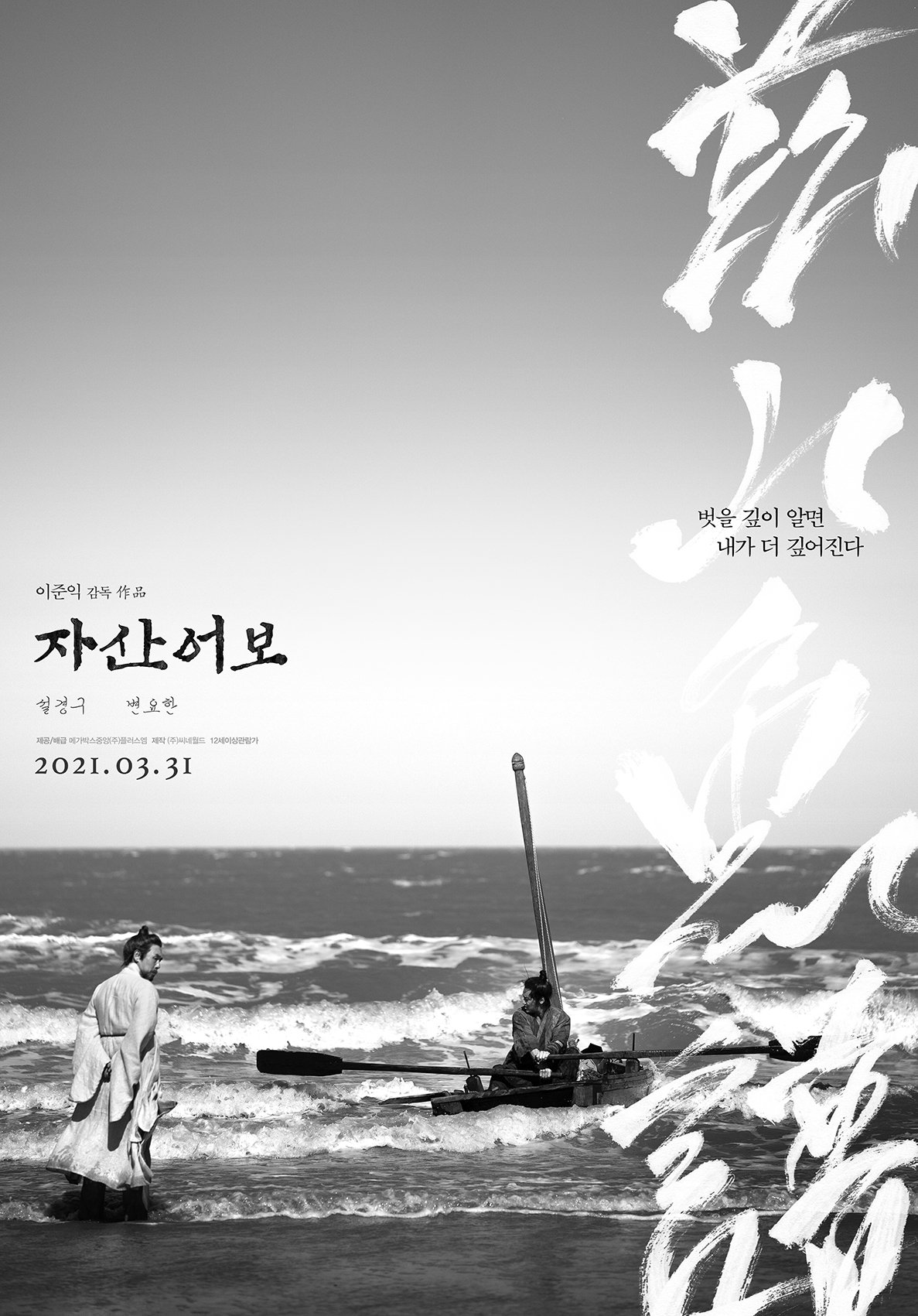
The Book of Fish (자산어보, Lee Joon-ik, 2021)

An “evil learning sinner” and a young man fixated on Neo-Buddhist thought develop an unlikely friendship while compiling an encyclopaedia about sea life in Lee Joon-ik’s contemplative period drama, The Book of Fish (자산어보, Jasaneobo). Like those of Hur Jin-ho’s Forbidden Dream, the hero of Lee’s historical tale of competing ideologies dreams of a classless future but is exiled from mainstream society not for his revolutionary rejection of a Confucianist hierarchal society but for his embrace of Western learning and religion. 

Like his two brothers, Chung Yak-jeon (Sol Kyung-gu) reluctantly joins the imperial court but later falls foul of intrigue when the progressive king falls only to be replaced by his underage son controlled by the more conservative dowager empress. Having converted to Christianity, Yak-jeon and his brothers are faced with execution but unexpectedly reprieved when the oldest agrees to renounce Catholicism and root out other secret Christians. Yak-jeon is then exiled to a remote island while his better known brother, the poet Yak-yong (Ryu Seung-ryong), is sent to the mountains. On his arrival, the local governor introduces Yak-jeon as a “traitor” and instructs the islanders not to be too friendly with him but island people do not have it in them to be unjustly unkind and so Yak-jeon is, if warily, welcomed into their community. “He maybe be a traitor, but he’s still a guest” his new landlady (Lee Jung-eun) explains as she prepares him some of the local seafood. 

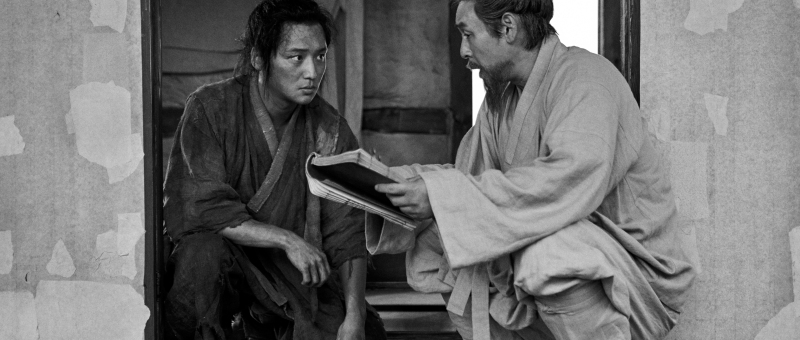
Yet Yak-jeon encounters resistance from an unexpected source, intellectual fisherman Chang-dae (Byun Yo-han) who goes to great lengths to acquire scholarly books despite his otherwise low level of education. Somewhat patronisingly, Yak-jeong offers to tutor him, but Chang-dae is a rigid thinker who believes the world is going to hell because people have forgotten their Confucian ideals so he’s no desire to be taught by a treacherous “evil learner” or be sucked in to his dangerous Catholicism. Surprisingly, however, for a man who risked death rather than renounce his religion, Yak-jeong is no fanatic and in fact does not appear to practice Christianity at any point while living on the island. What he professes is that Eastern and Western thought need not be enemies but can go hand in hand while a rigid adherence to any particular doctrine is what constitutes danger. 

Chang-dae had insisted that he studied “to become a better human” but he also has a large class chip on his shoulder as the illegitimate son of a nobleman who refuses to acknowledge him, fully aware that as a “lowborn” man he is not allowed to take the civil service exam and in any case would not have the money to buy his way in to the court. Despite later professing egalitarianism, Yak-jeong treats the islanders, and particular Chang-dae, with a degree of superiority extremely irritated by Chang-dae’s refusal to become his pupil in the slight of his elite status often making reference to his “low birth”. Confessing his desire for a classless society with no emperor, however, Yak-jeong encounters unexpected resistance as the young man finds it impossible to envisage a world free of social hierarchy based on rights of birth and swings back towards desiring the approval of his elite father in the determination to climb the ladder rather than pull it down. 

Chang-dae finds himself caught between two fathers who embody two differing ways of being, Yak-jeong advising him to think for himself rather than blindly follow Confucianist thought, while his father encourages him to towards the court and the infinite corruptions of the feudal order. Chang-dae does begin to interrogate some of the more persistently problematic elements of Confucian teaching including its views on women and entrenched social hierarchy but also feels insecure and desperately desires conventional success and entrance into a world he thinks unfairly denied to him. Once there, however, he discovers he cannot submit himself to duplicities of feudalism. The islanders are being taxed to into oblivion, not only is there a random counter-intuitive tax on pine trees but the government is also extracting taxes from the family members of the deceased as well as newborn babies while cutting sand into the rice rations it promises in return. His father and superiors laugh at him for his squeamishness, seeing nothing at all wrong in the right of the elite to exploit the poor. Trying to blow a whistle, Chang-dae is reminded that the courtly system is an extension of the monarchy, and so criticising a lord is the same as criticising the king which is to say an act of treason. 

Having been accused of treason himself, Yak-jeong declines to enact his revolutionary ideas penning only a couple of books during his time in exile in contrast to his brother who published many treatises on effective government. Yak-jeong explains he dare not risk writing his real views which is why he’s immersed himself in the beauty of the natural world, exercising his curiosity writing about fish while making use of Chang-dae’s vast knowledge of the sea. The two men develop a loose paternal bond but are later separated by conflicting desires, Chang-dae eventually choosing conventional success over personal integrity only to regret his decision on being confronted with the duplicities of the feudal order. Shot in a crisp black and white save for two brief flashes of colour and inspired by traditional ink painting, Lee’s contemplative drama finds itself at a fracture point of enlightenment as two men debate the relative limits of knowledge along with the most effective way to resist a cruel and oppressive social order but eventually discover only wilful self exile as Chang-dae learns to re-embrace his roots as an islander along with the openminded simplicity of Yak-jeong’s doctrine of catholicity in learning. 


The Book of Fish screened as part of this year’s New York Asian Film Festival.

Original trailer (Korean subtitles only)