Kizumonogatari -Koyomi Vamp- (傷物語 -こよみヴァンプ-, Tatsuya Oishi, 2023) [Fantasia 2024]

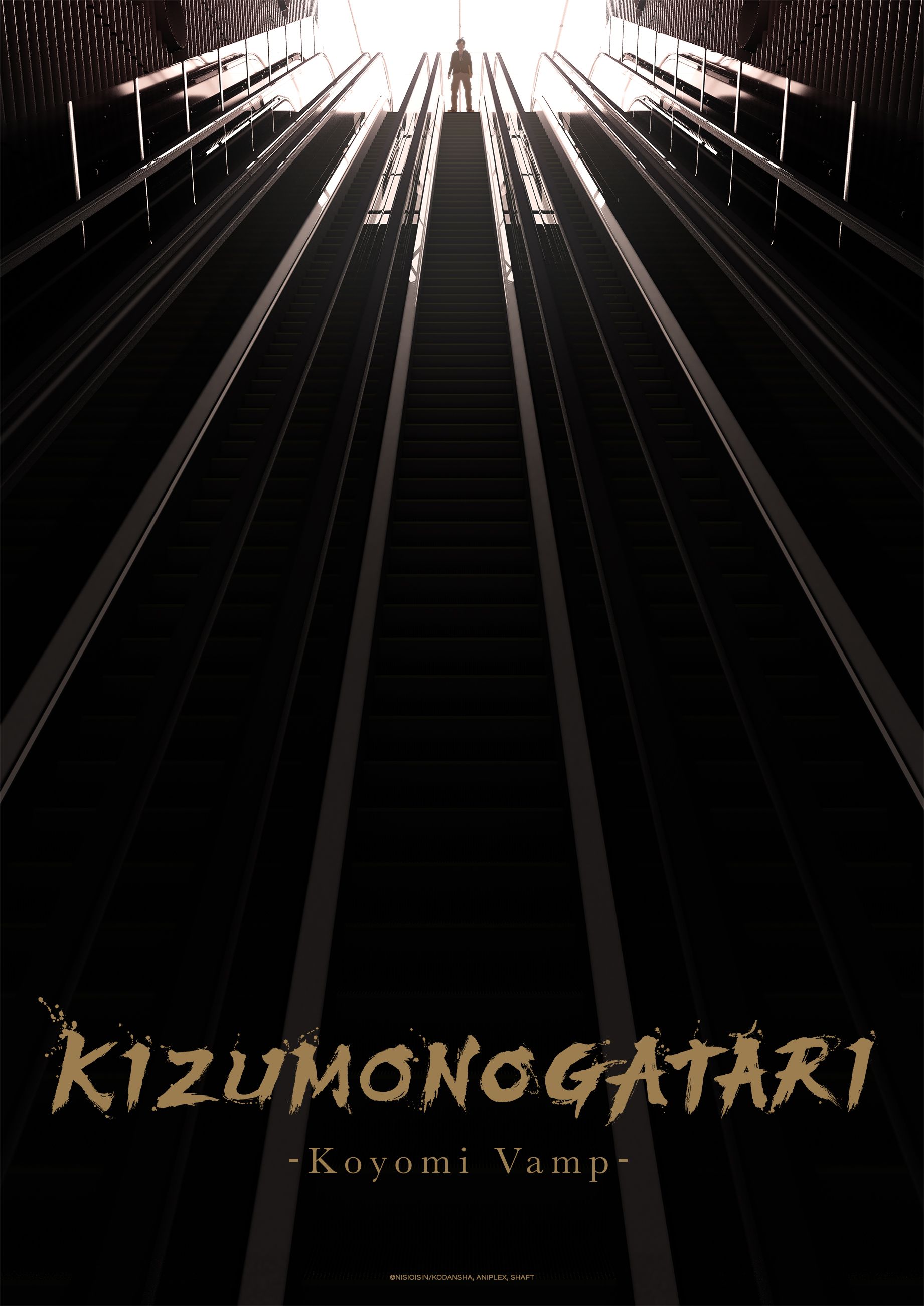
A young man walks into an empty subway station already ominously strewn with blood and finds there the corpse of a woman shorn of her limbs. The corpse rises and begs him to have her life by sacrificing his own in allowing her to suck his blood and surprisingly the young man agrees. He does not, however, die but is brought back as something else, not quite human and definitely subservient to the creature he has saved. 

Running 2.5 hours, Tatsuya Oishi’s Kizumonogatari -Koyomi Vamp- (傷物語 -こよみヴァンプ-) is in fact a compilation of three films released in 2016 and a part of the long running Kizumonogatari series which originated with Nisio Isin’s light novels and has gone to spawn an expansive universe of interconnecting spin-offs. This is technically a prequel, and in that sense begins with a black slate but also deliberately drops us into confusion with breakneck pace through the hero’s quest to recover himself and his place in the world after this rude awakening to the supernatural. 

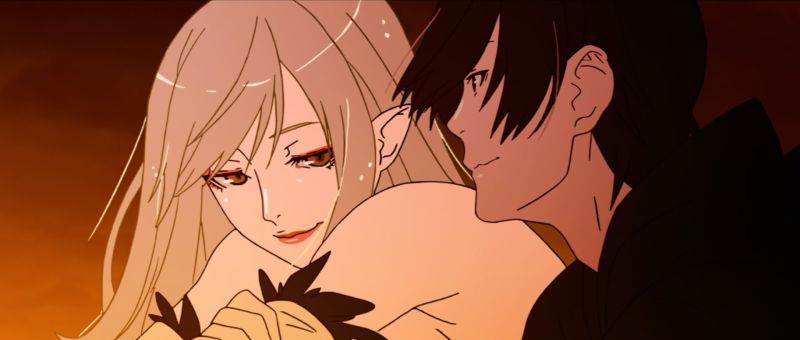
Rude is in many ways a defining characteristic of Kiss-shot, the 500-year old vampire Araragi finds bleeding in the subway station at that point a blonde and alluring figure of forbidden desire. Araragi is drawn to her in an unconscious death wish linked with the sexual desire he struggles to understand, running into the subway minutes after buying a pornographic magazine from a convenience store after striking up a friendship with fellow student Hanekawa. But once he saves her life, Kiss-shot is transformed into a cheeky little girl who now tells him that he is her minion and he must recover her severed limbs from a trio of vampire in order to be restored to humanity even as the power dynamic between them becomes confused and distorted.

In his vampire state, Araragi becomes immortal, powerful and free of mortal jeopardy yet he remains uncertain and insecure while reliant on the support of Hanekawa who encourages him to reject his desire for death and remain alive. But this also presents a problem to Araragi who sees himself as self-sacrificing and is unwilling to accept the what he sees as a self-sacrifice from Hanekawa for whom he feels unworthy and inadequate. In some senses it’s a typically self-centred, adolescent male perspective that rejects any idea of her own agency and assumes Hanekawa performs these actions for him rather than considering that she performs them for herself and is simply doing what she wants to do which in the end is not really about him at all. He declares it a burden he’s too weak to carry, which might in some senses be fair but also again a mischaracterisation that is further evidence of his lack of self-worth.

It’s this sense of inadequacy that lies behind his desire to reclaim his humanity along with the concurrent disgust he feels in the degradations of vampirism. It genuinely comes as a surprise to him that Kiss-shot feeds on human beings and lost her own humanity so long ago that she no longer gives it a second thought. She is after all only being what she is, but like Araragi is drawn to death partly out of frustrated longing and lingering boredom with a relentless yet apparently uneventful 500 years behind her in which the only other highlight was her previous minion who rejected this life much more quickly than she ever expected.

Even so, Oishi lends their mutual dilemma a degree of absurdity in the expectedly comic sight of severed heads littering a sports filed or launching themselves in toothy attacks. Heavily inspired by the French New Wave, he breaks the action with sometimes barely legible title cards often reading a single world while his composition has a kind of jauntiness that is also bleak and melancholy. The world surrounding Araragi veers between the pristine entrance to the high school, and post apocalyptic devastation littered with crows emblematised by the depilated cram school in which Kiss-shot keeps him. Backgrounds often have a photo realistic quality that further sets the world at a kilter when matched with the more conventional character designs of the central players. The conclusion that Araragi is presented with amounts a sharing of the misery which is also akin the burden he didn’t want to carry but also perhaps symbolic of his path towards adulthood in acceptance of compromise and selflessness in being willing to carry a small part of others’ pain and despair and allowing them to carry a part of his own.


Kizumonogatari -Koyomi Vamp- screened as part of this year’s Fantasia International Film Festival.

Original trailer (English subtitles)

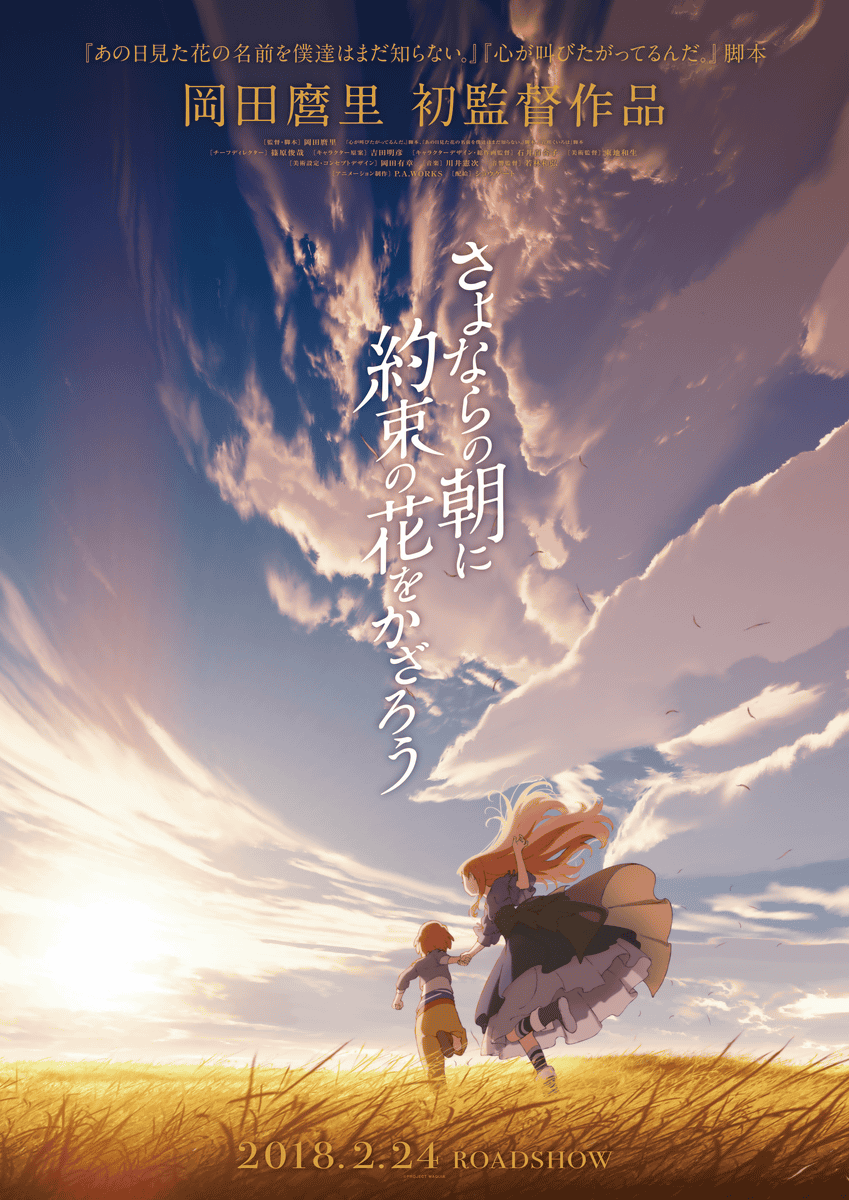
Maquia: When the Promised Flower Blooms (さよならの朝に約束の花をかざろう, Mari Okada, 2018)

maquia poster 1Perhaps because of its often adolescent target audience, the “hahamono” or mother movie is a relatively rare genre in the world of anime despite its importance in other Japanese media. Wolf Children aside, most anime prefer to focus on the problems of young people dealing with an absentee or unreasonable parent who unwittingly enables the teen to undergo the adventures shortly to ensue. Maquia: When the Promised Flower Blooms (さよならの朝に約束の花をかざろう, Sayonara no Asa ni Yakusoku no Hana wo Kazaro), is an exception to the rule in examining the complex nature of motherhood with a sideline in the legacy of familial disconnection, alienation, and the cyclical natures of life and memory. Flawed if ambitious, the first directorial feature from scriptwriter Mari Okada is a sprawling fantasy epic but one with its heart firmly on its sleeve.

Maquia (Manaka Iwami) is a member of the Separated Clan – an Iolf who weaves time and life into being. The life in Iolf is idyllic, if dull, and consists of little other than weaving. Maquia’s tomboyish friend, Leilia (Ai Kayano) rejoices in daring stunts and precocious flirtations that the shy and introverted Maquia can only dream of, while Maquia, an orphan, feels herself alone and remains somehow incapable of bonding with the other children. When Iolf is raided by Mesarte soldiers, Maquia is carried off by one of their great stone dragons. Now forced to explore the world outside of Iolf, Maquia chances on the remains of a ruined camp, stumbling over bodies only to discover a howling baby boy still held in the icy grip of his mother who tried her best to protect him even as she died. Perhaps identifying with another soul so completely alone, Maquia picks the boy up and decides to raise him though she is barely more than a child herself.

As the Iolf age much slower than the average human, Maquia’s quest to find true connection through maternity is destined to end in tragedy. Maquia christens her son Arial (Miyu Irino) and finds a home with a kindly ranch woman raising two sons of her own alone after her husband was killed by a rabid dragon, and begins to bond with her little boy. Meanwhile Leilia has been kidnapped and forced married to the Mesarte prince in the hope that his heir will inherit some Iolf lengevity. While Maquia is beginning to find connection, Leilia now tastes isolation as an imprisoned minority in the imperial court where she is also separated from the daughter born from a non-consensual union but loved all the same.

Though she already feels so alone, Maquia is warned by her Elder that if she wants to experience true loneliness she need only fall in love with a mortal. Maquia falls in love, or rather tries to, but as a mother rather than a lover. Pouring everything into her child Maquia knows the day will come when she must lose him, but for her it is in a more concrete sense than the normal breaking of a mother/son bond. The notion of mortality and differing lifespans is somewhat uncomfortably dramatised by the passing of the aged family dog who reaches the end of his journey long before his master. Though the message is sound is enough it does rather negate Maquia’s insistence that Arial is not a toy, implying that humans are almost like pets to the long-lived Iolf, something to be loved and fussed over in knowledge of its impermanence but something to which a lesser attachment is formed. 

Maquia, however, hurtles in the opposite direction, vowing to sacrifice all of herself in service of her son. Turning down a suitor in order to remain true and pure as an idealised mother figure, Maquia perhaps takes a retrograde step in agreeing to negate her own personality to become “a mother”, but like the classic hahamono, her overwhelming love proves too much for her growing son who grows tired of the burden of a mother’s expectation, longing to be free of her somewhat suffocating need to protect him while belittled by the knowledge that he, a mortal yet still a man, is incapable of protecting her. Maquia must find the strength to let her son go if she is to see him grow, but to do so will require a shift in self-knowledge born of truly learning what it means put another’s interest above one’s own.

Maquia’s struggles play out in parallel with the ongoing political drama surrounding the corrupt and oppressive Mesarte regime which seeks to rule by fear and violence, stealing the gifts of the Iolf only to abuse them. No matter the genesis, Prince Hazel seems to have formed a genuine attachment to his stolen bride (even if it is not returned) and does what he can to “protect” her, while her former love from the Iolf, Krim, has gone half mad through love denied, kidnapping Maquia to rope her into a half-baked rescue plot before threatening to burn the world if he cannot have his love for the price he is willing to pay.

The question is one of whether it is better to connect fully in the knowledge of a coming heartbreak, or hold back in self protection. In this Maquia learns the true meaning of her Elder’s instruction and begins to realise that the fabric that she weaves is spun from love and memory. Nothing is ever truly lost, merely laid down for someone else to pick up, and while parting is inevitable meeting is not and is something to be treasured no matter how painful it may be.


Distributed in the UK by Anime Limited

Original trailer (English subtitles)

https://youtu.be/Fv7lYdMYhI0https://youtu.be/Fv7lYdMYhI0

Note: there seems to be some variation in the translation of the names of various characters, this review uses Anime Limited‘s list.

A Silent Voice (聲の形, Naoko Yamada, 2016)

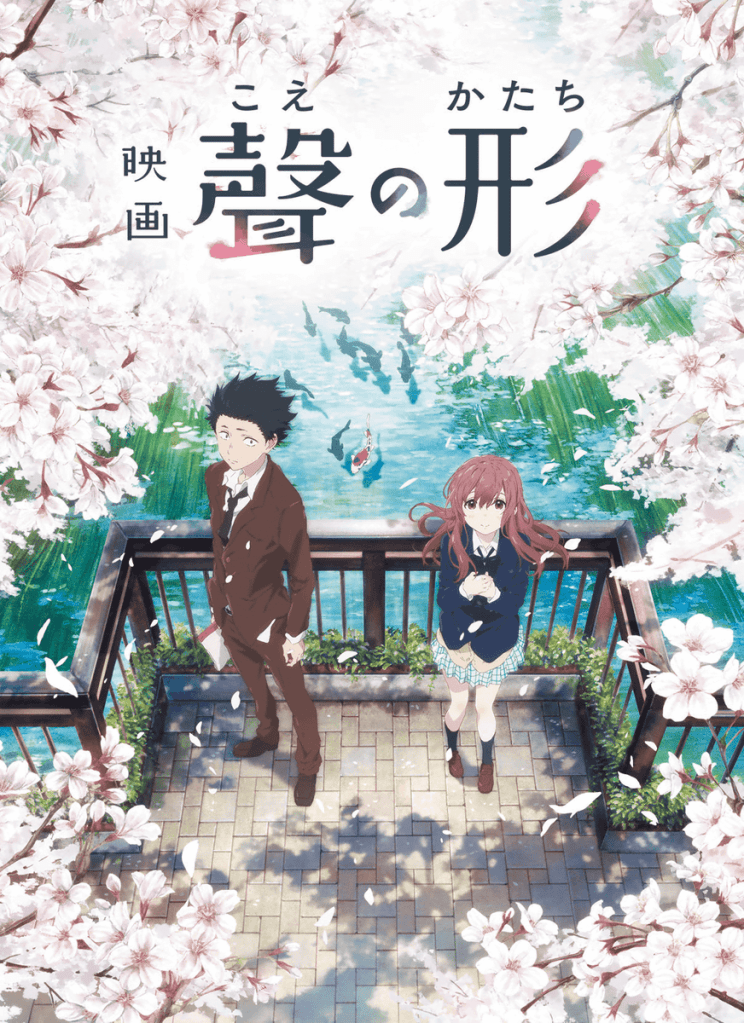
silent-voiceChildren – not always the most tolerant bunch. For every kind and innocent film in which youngsters band together to overcome their differences and head off on a grand world saving mission, there are a fair few in which all of the other kids gang up on the one who doesn’t quite fit in. Given Japan’s generally conformist outlook, this phenomenon is all the more pronounced and you only have to look back to the filmography of famously child friendly director Hiroshi Shimizu to discover a dozen tales of broken hearted children suddenly finding that their friends just won’t play with them anymore. Where A Silent Voice (聲の形, Koe no Katachi) differs is in its gentle acceptance that the bully is also a victim, capable of redemption but requiring both external and internal forgiveness.

Classmates Shoko (Saori Hayami) and Shoya (Miyu Irino/Mayu Matsuoka) are almost mirror images of each other, sharing the first syllable of their names (at least phonetically) but representing two entirely opposite poles. Before Shoko transferred into his school, Shoya was the class clown, behaving disruptively and acting as the leader of a group of mean kids who, if not exactly bullies, certainly exert a degree of superiority over their meeker classmates. Shoko, hard of hearing, remains necessarily quiet, communicating through messages written on a notepad. Though some of the other pupils are fascinated by the novelty of someone like Shoko suddenly appearing, delighting in writing messages back and for and eagerly embracing the opportunity to learn sign language in order to communicate with her more easily, the mean kids, with Shoya as the ringleader, delight in making her life a misery just because they can.

Though some of the other children object to the way Shoya and the others are behaving, they do little to defend their new friend. Some of the more impressionable kids even halfheartedly join in, perhaps feeling bad about it but also enjoying being part of the angsty pre-teen group of nasty kids, but when it all gets too much and Shoko decides to move on everyone is suddenly struck with remorse and a need to blame someone else for the harm they’ve caused. Hence, Shoya gets a taste of his own medicine, ostracised by his peers as the lowlife who hounded a deaf girl out of school. Who’d want to hang around with someone like that?

Humbled, the stigma follows Shoya on into his next school as feelings of guilt and self loathing intensify until he reaches a point at which he can’t go on. Intending to finally end it all, Shoya unexpectedly runs into Shoko again and eventually manages to make a kind of motion towards an apology, attempting to make friends after all this time and making use of the sign language he’s taught himself to show his sincerity.

Isolated both by the continuing rumours of his primary school days and an intense personal feeling of unworthiness, Shoya finds it impossible to interact with his fellow students whose faces are each covered by a large blue cross. Bonding first with another lonely outcast, Shoya’s world begins to open up again but the spectre of his past continues to haunt him. Reconnecting with some of the other kids from primary school he finds that not everyone remembers things the same way they’ve become engraved in his mind. Though a few are anxious to atone, one of his former friends, Naoka (Yuki Kaneko), takes a different approach to the problem in continuing to blame Shoko – for the “attention” her condition attracts, the “requirement” for others to modify their behaviour to suit her, for simply existing in the first place enabling the behaviour which took place (about which Naoka remains unrepentant), and being the root cause that her merry band of friends fell apart.

If it seems like the tale disproportionately focuses on Shoya’s guilt and and redemption rather than Shoko’s suffering the balance shifts back towards the end as the pair truly mirror each other with another suicide attempt forming the climax of the second act. Shoko responds to her often cruel treatment with nothing other than friendliness, smiling with hands outstretched even whilst continuing to receive nothing but rejection. Though she may seem all smiles and sweetness, her overly genial persona is itself an act as she tries to overcompensate for the “burden” she feels herself to be causing through her need for “special treatment”. Eventually, Shoko snaps – firstly in primary school as her well meaning attempts to bring Shoya over to her side fail once again, and then later in a much more final way as she decides that there is nothing left for her in a world which fails to accommodate for difference.

The story of a girl who struggles to be heard, and a boy who refuses to listen, A Silent Voice is a quiet plea for the power of mutual understanding and reconciliation. Director Naoko Yamada and screenwriter Reiko Yoshida bring the same kind of quirky slice of life humour which made K-On and Tamako Market so enjoyable along with the raw visual beauty which has come to define Kyoto Animation to this often dark tale, perfectly integrating the more dramatic elements into the otherwise warm and forgiving world in a believable and natural way. Nuanced, complicated and defiantly refusing total resolution, A Silent Voice is one of the more interesting animated projects to come out of Japan in recent times and further marks out Yamada as one of its most important animation auteurs.


Screened as part of the Japan Foundation Touring Film Programme 2017.

Original trailer (English subtitles)
https://www.youtube.com/watch?v=9aRexOtovXY

Miss Hokusai (百日紅, Keiichi Hara, 2015)

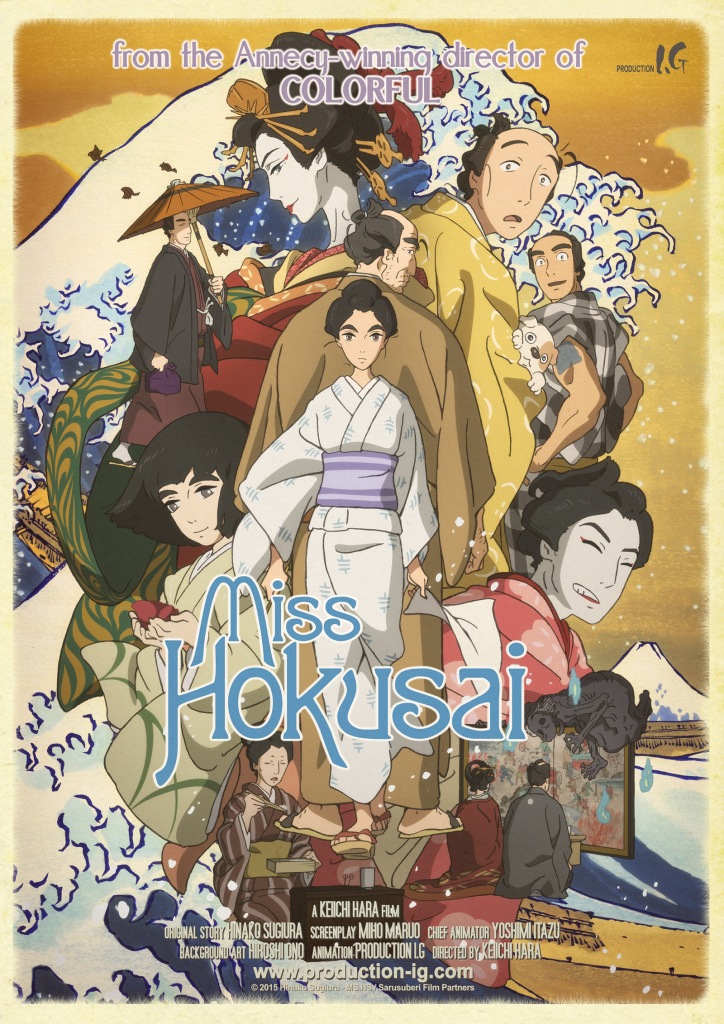
MISS_HOKUSAI_teaser_A4_oldpaper_1600When it comes to the great Japanese artworks that everybody knows, the figure of Hokusai looms large. From the ubiquitous The Great Wave off Kanagawa to the infamous Dream of the Fisherman’s Wife, the work of Hokusai has come to represent the art of Edo woodblocks almost single handedly in the popular imagination yet there has long been scholarly debate about the true artist behind some of the pieces which are attributed to his name. Hokusai had a daughter – uniquely gifted, perhaps even surpassing the skills of her father, O-Ei was a talented artist in her own right as well as her father’s assistant and caregiver in his old age.

Miss Hokusai, based on the popular 1980s manga Sarusuberi by Hinako Sugiura, takes up O-Ei’s story towards the beginning of her career before her marriage and subsequent divorce, after which she returned to her father’s side to nurse him as his health declined. Like the manga, the film is a collection of scenes from Edo life loosely tied together by its overarching theme, but broadly follows O-Ei as she lives her life as a young woman with a level of forthrightness and determination which sets her apart from the women of the time. Determined to become an artist, she lives with her father in their studio where neither of them cooks or cleans but each devotes themselves solely to art. Also living with them at the time is an ex-samurai and aspiring artist, Zenjiro, who specialises in erotica which has its own particular qualities even if his skills aren’t on a par with Hokusai or O-Ei.

When not in her father’s studio, O-Ei likes to visit her younger sister who, ironically, was born blind and is being cared for by the local nuns. O-Nao’s blindness is a sore spot for her father who hardly ever visits her, feeling as if her lack of sight is some sort of cosmic slight against him – the master painter with the daughter unable to appreciate his art and therefore his entire life philosophy. O-Ei is not so rigid and delights taking the girl out on trips where she can experience the world through her richly developed other senses. O-Nao particularly likes visiting the bridge with its complicated soundscape from the river below to the vendors above and all the passersby. There’s also a lovely set piece in which a young boy who quickly figures out that O-Nao can’t see tries to entertain her by knocking snow off a tree. Miss Hokusai, though a story of visual art, has an especially intricate sound design which proves that you can paint with materials other than ink and makes a point of calling out the stubbornness inherent in the world view of someone like Hokusai whose singleminded vision has become his entire universe.

O-Ei has her fair share of troubles as a young woman, though living with her father as his assistant she is a relatively free and unsheltered one. Her father doesn’t hide any aspect of his work from her – she even assists him with his erotic pieces and is said to be a particularly fine painter of women though her male figures lack conviction. “Sensation” itself becomes a theme, art is something which must be felt and therefore must have feeling imbued within it. As an unmarried woman O-Ei is ill equipt to complete these kinds of assignments and some say perhaps she should not be given them though her determination would never permit her to turn them down leading to rather a strange interlude in which she tries to gain some “experience” in a presumably “safe” way which won’t have much effect on her later life.

Less successfully, the film also attempts to enter the realm of the supernatural as we learn a painting can have other effects on the viewer particularly if it isn’t completed in the proper fashion. From a possessed geisha to a woman driven mad by O-Ei’s suitably creepy painting which features terrifying scenes from hell, Miss Hokusai most definitely occupies a world where ghosts, spirits and demons are real things which co-exist with real people. Luckily, Hokusai is able to fix the problem with the disturbing painting by closing its symbolic imagery with a suitable addition whilst berating O-Ei for having cut corners and not properly complete her vision so as to leave the onlooker “haunted” in an unintended way. Again, the painter is parent to the painting which attains the kind of immortality impossible for its creator in this transient world.

Clearly bound-up with the notion of transience, Miss Hokusai makes a valiant attempt to bring ordinary Edo living with its geisha houses, dusty rooms and drinking songs to life in vivid detail. However, its message becomes slightly confused with the superimposition of the modern Tokyo in the final frame of the film. At this point, the rather bizarre choice of a modern, electric guitar based soundtrack, begins to make a degree of sense at least on a thematic level but nowhere near enough to mitigate its jarring presence throughout the film.

Animated by animation powerhouse Production I.G who have been responsible for some of the most beautifully made animated movies of recent times, Miss Hokusai is a giant step up from Hara’s previous film, Colorful, in terms of its execution and boasts a number of scenes which are remarkable in their technical proficiency. The sky in particular as well as the background in general takes on a dreamy, woodblock style which is perfectly fitting for the film’s themes. An interesting look at the young O-Ei, an inexperienced female artist still looking for her voice in a world where the only thing that counts is the signature, Miss Hokusai doesn’t quite succeed in breathing life into its disparate collection of tales but makes a valiant attempt all the same.


Miss Hokusai is currently touring the UK with the Japan Foundation Touring Film Programme 2016 and will be released by All the Anime later in the year.