Sabakan (サバカン SABAKAN, Tomoki Kanazawa, 2022)

A melancholy middle-aged writer looks back to a climactic summer of his youth and the ghost of fractured friendship in Tomoki Kanazawa’s heartwarming nostalgia fest, Sabakan (サバカン SABAKAN). A classic summer adventure movie, the film finds a sense of warmth in childhood memory but also reflects on all that at the time it was impossible to understand along with a sadness in the inevitable end of summer as two boys chase the spectre of dolphins in an otherwise tranquil seaside town.

In the present day, Takaaki (Tsuyoshi Kusanagi) is a struggling author and divorced father already behind on his child support. When he mentions working on another novel, his agent laughs at him that books like that don’t sell while trying to convince him to take a job ghostwriting for an Instagram influencer going viral for her dieting tips. Perhaps because the agent had described his writing as “quick and easy to read”, essentially anonymous and empty, he begins meditating on his childhood self repeatedly praised for his writing by a teacher who is perhaps a little easily moved. 

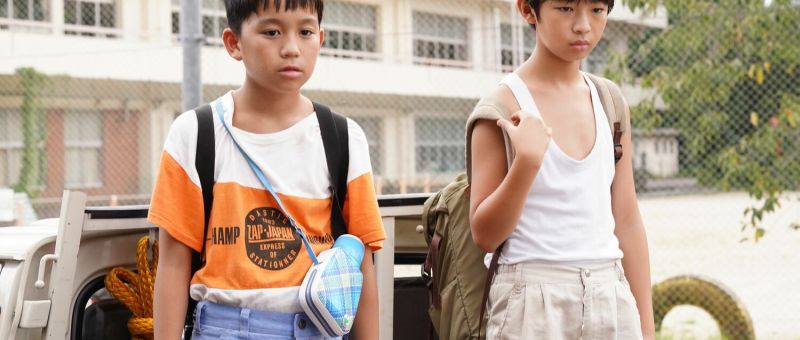
The summer of 1986 was the beginning of the Bubble era and Takaaki’s memories are indeed filled with a series of cultural touchstones such as the idol Yuki Saito whose poster the young Takaaki sometimes kisses after dancing around singing her hits. All of which is one reason why the poverty of his classmate Kenji (Konosuke Harada) has made him even more of an outcast bullied by the other kids who follow him home and make fun of the rundown house with tarp covering the roof that he lives in with his mother (Shihori Kanjiya) and several siblings. His fisherman father died some years ago and his mother works in the local supermarket doing her best to support five kinds on a part-timer’s salary. Kenji takes a liking to Takaaki because he’s the only kid who didn’t join with the others when they laughed at him, more or less blackmailing him into a summer adventure looking for dolphins in a cove over the mountain. 

Even the younger Takaaki reflects there probably weren’t any dolphins in the first place, Kenji just wanted to go on adventure with him and didn’t otherwise know how to ask. A careless word from his otherwise warm and supportive mother provokes a minor rift in the boys’ relationship that despite himself the younger Takaaki didn’t quite understand causing him to pull away from Kenji in an unwarranted sense of rejection unable to recognise that he is simply awkward and has low self-esteem which caused him to question the reality of their friendship. In any case though they are later separated by unexpected tragedy, their connection becomes a touchstone for each of them reminding them that they are not alone even if no longer together. 

Kanazawa captures an impish sense of fun the boys’ adventure as they find themselves in a tricky situation with a trio of thuggish delinquents and meet an equally melancholy teenage girl at the shore who stares mournfully at a washed up can of Korean soda and explains sadly as she looks out over the sea that she herself has not been there yet. The Yuki Saito poster comes down, signalling the arrival of a coming of age and the putting away of childish things as Takaaki moves into a more concrete adulthood while still floundering in adolescent confusion and the inability to fully understand his new friendship or its growing importance in his life. 

The adult him understands only too well, meditating on his memories and triggered by nostalgia on seeing a can of mackerel and remembering the carefree summer of his youth. The rediscovery of a childhood bond begins to open him up both artistically and in his relationship with the wife and daughter from whom he is separated. Told with humour and warmth, the film is filled with a sense of childhood wonder and the comfort of the everyday largely undimmed by the entrance of tragedy and the essential sadness of summer’s end. Even so it allows its melancholy hero to find a kind of salvation not only in childhood memories of dolphins and canned mackerel but in the enduring quality of a friendship that itself may have become distant.


Sabakan screened as part of this year’s Camera Japan.

Original trailer (no subtitles)
To Be Killed by a High School Girl (女子高生に殺されたい, Hideo Jojo, 2022)

Are there some desires so taboo that they can never be spoken of even if they cause no harm to others? Adapted from the manga by Usamaru Furuya, Hideo Jojo’s To Be Killed by a High School Girl (女子高生に殺されたい, Joshikosei ni Korosaretai) is indeed about a man fixated with the idea of being strangled by a teenage girl but one who also embodies the inspirational teacher stereotype planning to leave behind him a kind of manifesto instructing his pupils to live their lives to the full while remaining true to their authentic selves in the knowledge that their lives will be defined by the manner of their deaths. 

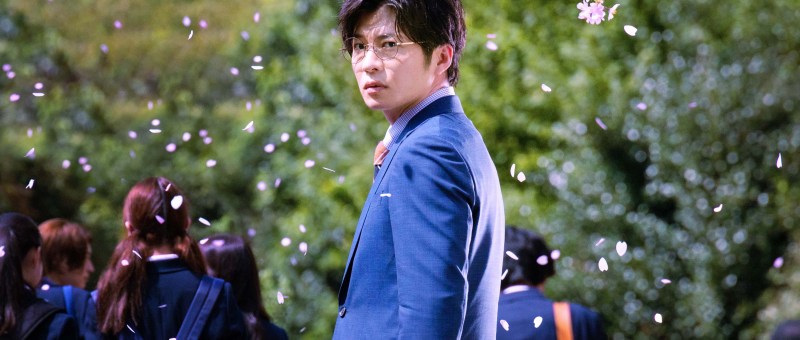
Subverting a trope from shojo manga, Higashiyama (Kei Tanaka) is the hot new teacher at school proving an instant hit with most of the girls in his class but he’s come with an ulterior motive in that his ultimate fetish is being murdered by a high school girl. Even so, he claims to feel no attraction to his teenage pupils and is sickened by teachers who abuse their position later revealing he orchestrated his predecessor’s downfall by accelerating a complaint that had already been registered against him for inappropriate contact with students. His fetish lies solely in being overpowered by someone he would ordinarily perceive as being weaker than himself after fighting for his life with all his strength. 

Then again, as Satsuki (Yuko Oshima), a councillor brought into the school following a traumatic incident who also happens to be Higashiyama’s uni ex, points out his techniques for manipulating the girls are little different than those of a predatory sex offender grooming their prey. He figures out their weaknesses and goes out of his way to make each of them feel special while simultaneously provoking a sense of jealousy so he can bend them to his will in enacting a plan that will eventually lead to his murder in the middle of the school cultural festival. On the other hand, he crafts his plan in such a way as to protect his killer, his fetish won’t be fulfilled unless it’s a perfect crime, and because of the nature of the girl he’s selected he’s confident she won’t even remember having killed him and therefore will remain largely unaffected. 

Higashiyama doesn’t give much an explanation for his fetish save an allusion to having been born with the cord around his neck, a sensation he claims to remember only later admitting that he “recovered” a memory of it after his mother described the event to him. He later says something similar to Satsuki after suffering with amnesia, claiming to remember how he ended up in the hospital but then confessing that Satsuki had explained it to him on a previous occasion. He claims that he’s not suicidal but continues to fixate on death as force which gives life meaning, paradoxically insisting on living with all his might while otherwise drawn towards mortal extremity and fearing a “bad” ending such as being pushed off a cliff or poisoned with carbon monoxide neither of which would satisfy his fetish in their distinct lack of romance.  

Even so as another pupil suggests is he just a regular “pervert” after all despite his rather high minded-view of his proclivities? Despite all his manipulations, the various girls which he targets all seem to begin making progress in their lives, an angry judo enthusiast kicking back against a boy who’d long been bullying her, a shy theatre kid turning popular girl, and a young woman beginning to overcome her trauma thanks to the power of unconditional friendship. His replacement, a middle-aged man with a bad wig, is completely ignored by his pupils hinting perhaps that Higashiyama’s teaching practice was effective no matter now uncomfortable if not quite inappropriate some of his conduct may have turned out to be. After all he argues, he’s not a “pervert” just someone who wanted to be murdered by a teenage girl insisting that his fetish is essentially harmless because he has no sexual interest in the girl herself yet as we later see it does indeed involve inflicting violence on her. 

Playing with a series of B-movie tropes aside from Higashiyama’s taboo fetish from multiple personality disorder to premonition, traumatic memory, and fatalistic obsession, Jojo’s approach is arch in the extreme fully embracing the outlandishness of the material while both lending the troubled Higashiyama a degree of sympathy and hinting at the buried darkness beneath his handsome facade even as that darkness is essentially directed within, his death dictated by the circumstances of his birth as he “remembers” them. Occasionally shifting into the realms of giallo with creepy spiders and ominous red lighting, To Be Killed by a High School Girl never takes itself too seriously but revels in the inherent absurdity of its premise while remaining strangely respectful not only of the hero’s unique dilemma but of the ordinary problems among the otherwise besotted teens. 


To Be Killed by a High School Girl screened as part of Osaka Asian Film Festival 2022

Original trailer (no subtitles)

Blue, Painful, Fragile (青くて痛くて脆い, Shunsuke Kariyama, 2020)

“If I became the person I wanted to be, would the world have changed?” the conflicted hero of Shunsuke Kariyama’s Blue, Painful, Fragile (青くて痛くて脆い, Aokute Itakute Moroi) eventually asks having undergone a kind of awakening but still perhaps struggling with himself caught between the desire to be better and the fear of the vulnerability that may entail. As the title implies, this is a tale of painful youth and bitter revelations but also of the fragile male ego, the damage that can be done by a young man who feels himself scorned, and the various ways an embittered, self-absorbed mind can reorder the world to accommodate its sense of righteousness. 

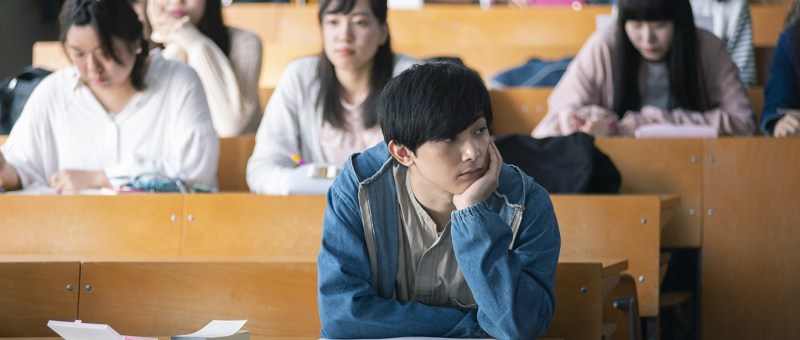
The hero, Kaede (Ryo Yoshizawa), opens with a voiceover revealing his life philosophy of social isolation afraid both of upsetting others and of getting hurt. Despite himself, however, he finds himself drawn into a friendship with the bright and friendly idealist, Hisano (Hana Sugisaki), whom he first noticed in one of his political science classes when she challenged the teacher advancing her life philosophy that peace is born only of mutual surrender and allows no role for violence. A true cynic, Kaede mocks her internally for her “naivety” but is moved on leaving the room to notice that she looks hurt not to have been taken seriously. Noticing him too, she tracks him down and makes a point of sitting next to him in the cafeteria, badgering him into a friendship he doesn’t resist because of his tenet of not challenging the views of others. Together they found the “Moai’ club which is dedicated to building a better world by helping people to become the people they want to be. 

Or at least, that’s what he tells us. As we slowly discover, Kaede is not a completely reliable narrator. Three years later he recruits a friend, Tosuke (Amane Okayama), to help him take down Moai, which has since become some kind of creepy cult corrupted by corporate interests that many seem to be using as a path towards employment, so that he can rebuild it to reflect the values he and Hisano intended when they founded the organisation she apparently having passed on. Yet the more he tells us, the more we start to wonder if there isn’t something else to it, especially when social welfare grad student Wakisaka (Tasuku Emoto) enters the scene. Is this really about the better world, or petty male romantic jealousy? Shy and introverted, it seems that Kaede never had the courage to tell Hisano how he felt and perhaps took it for granted that she understood, unfairly feeling betrayed when she showed interest in someone else despite her near constant prompts for him to speak up whether it be about her or their movement. Kaede says nothing, then blames Hisano for “rejecting” him as if the only reason she could have had for befriending him in the first place was the eventual breaking of his heart. 

In true “nice guy” fashion, Kaede can’t help but see himself as the wounded party. In the flip book he’s been idly drawing which opens the film, a man runs smack into a rock and bangs his head much in the way he seems to feel he has done in his abortive attempts to enter society. Yet later he begins to gain another understanding, his stick figure getting back up and climbing on top of the head of Moai to behold a new world below him. He starts to realise that to change the world you really do need to start with yourself and that in this he has resolutely failed. His petty act of revenge may in a sense be morally justifiable, exposing Moai for the questionable force it has become, but it’s also sordid and unpleasant intended solely to wound in order to avenge his sense of male pride. Only too late does he realise the consequences of his actions and what they say about the kind of person he is and wanted to be. Consumed by a sense of inadequacy, he is defeated by life, too afraid to become the person he should be lest the world reject him but his brief moment of fantasy of what could have been if only he’d been less cynical and cold is bathed in a kind of golden light he perhaps realises he could feel again if only he change himself in order to change the world in which he lives. A masterclass in male gaslighting, Kariyama’s duplicitous drama refuses to let its hero off the hook but reserves for him the right to start again, become the person he wants to be and lay down his arms in willing vulnerability in the hope that others may do the same. 


Blue, Painful, Fragile is currently available to stream via Netflix in the UK and possibly other territories.

Original trailer (no subtitles)