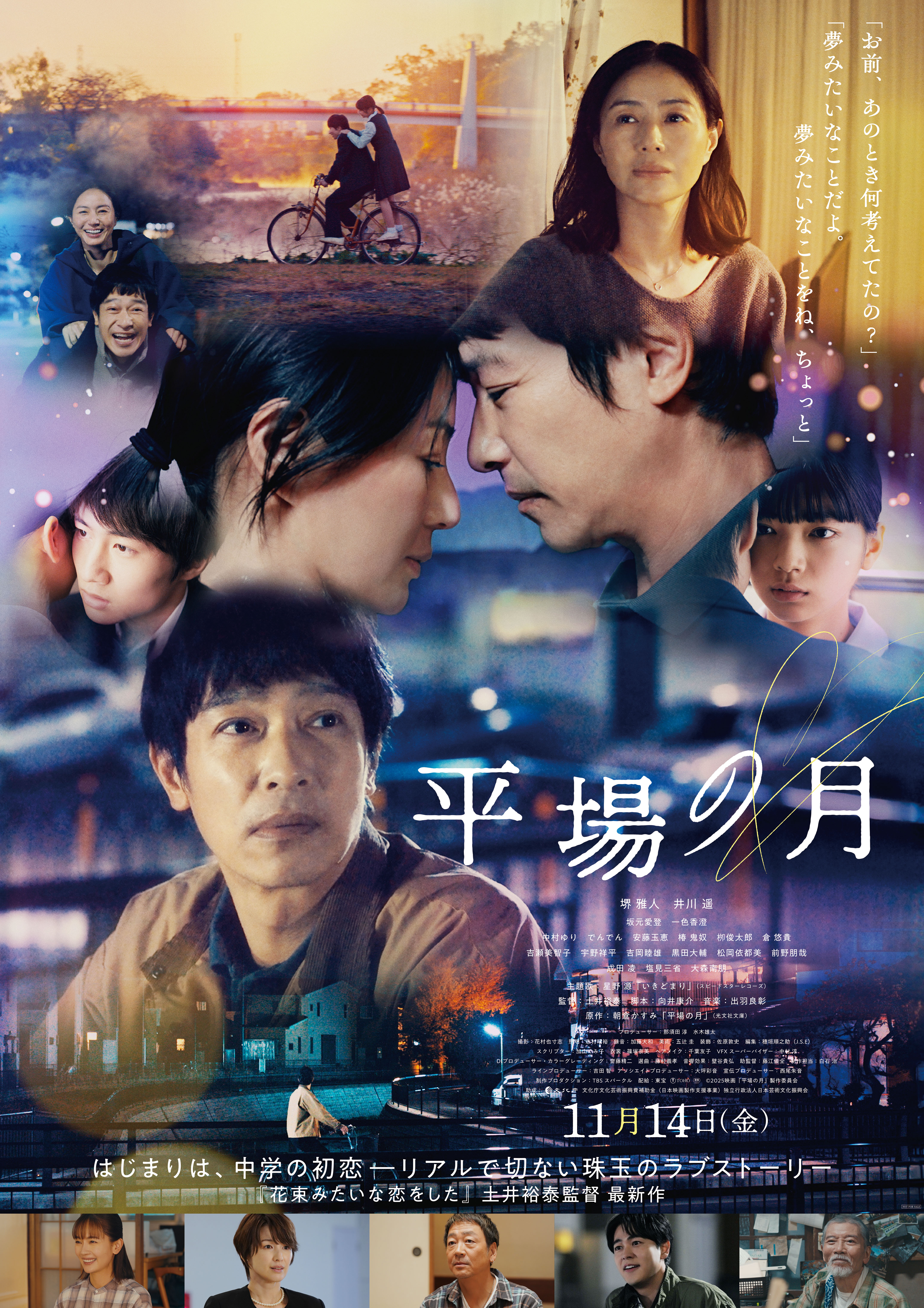
A Moon in the Ordinary (平場の月, Nobuhiro Doi, 2025)

Back in the early 2000s, Nobuhiro Doi was a leading figure of the short-lived “jun-ai” or “pure love” boom with films such as Be With You, and Tears for You, as well as TV dramas like Beautiful Life and Orange Days. Adapted from the novel by Kasumi Asakura, A Moon in the Ordinary (平場の月, Hiraba no Tsuki) is a kind middle-aged take on the same material in which former classmates reunite 35 years later but discover that they aren’t really any better equipped to understand what love is than they were as teenagers.

The pair even bond over hearing Hiroko Yakushimaru’s Main Theme, the title song of the movie of the same name, in which the singer laments that they still don’t understand love even after living 20 years. Kensho (Masato Sakai) and Yoko (Haruka Igawa) have lived more than 20 years since they last saw each other and are each carrying their own particular baggage of failed or compromised romances. Each having returned to their hometown where they’ve reconnected with their former classmates, there is something of a return to childhood in their relationship even while tempered by the compromises of age. As one of Kensho’s former classmates says, he’s reached the age where doing new things is a bother and now the conversation turns on people’s health issues or those of their parents. 

Kansho moved back after his divorce to care for his mother but she now lives in a care home and has advanced dementia. Every time he reminds her who he is, she replies that “Kensho is dead,” but he just humours her. Yoko, meanwhile, has moved back after an ill-advised affair with a younger man left her broke. Widowed young, she harbours a degree of guilt over the circumstances that led to her marriage while also perhaps a little embarrassed to be working in the hospital cafe having graduated from a good university and holding a well-paying job in the city. Despite her initial reluctance, she bonds with Kensho over their shared sense of middle-aged despair as he awaited the results of some potentially concerning medical tests.

Health issues are, however, only a part of the problem. Yoko is also carrying childhood trauma and a low sense of self-worth that once made her determine to live life alone, which is a difficult habit to break. Following her experiences, she lives in a spartan flat she says she keeps tidy to make life easier for whoever has to deal with it after she’s gone and also makes sure to sleep on the bed so the mess will be contained if it’s a while before anyone finds her if she passes away. Even before encountering her own life issues, she seems to be living in a kind of limbo state until reconnecting with Kensho. The “impossible dream” she describes might be as simple as getting to grow old with the person you love, though it’s something she doesn’t really think she’s entitled to or deserving of.

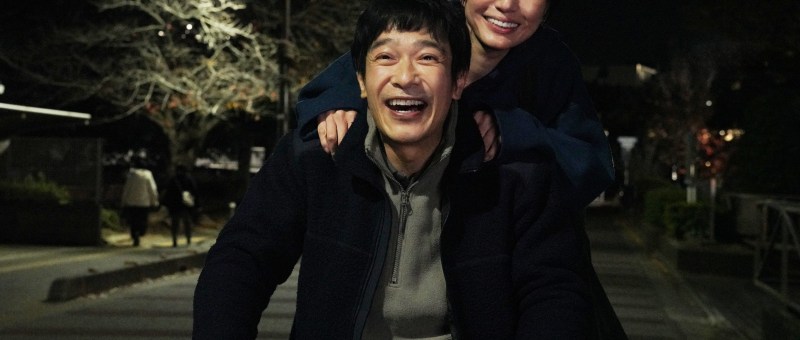
As Kensho says, they’ve both been plenty hurt already, what if they just end up hurting each other more? His older co-worker advises him that getting hurt is just part of it and he’d gladly go through it all again, but romance is as hard at 50 as it was at 15. Some things have changed and others haven’t. It’s a little ironic, in some ways, that the film ends with a Chinese-style disclaimer reminding audience members that it’s illegal for two people to be riding the same bike given that the film’s main theme is the unchanging innocence of romantic connection. After meeting Kensho, Yuko starts to plant flowers in her makeshift garden rather than purely practical herbs as if she were welcoming joy back into her life, but she still feels herself to be a burden and has a tendency to pull away rather than expose herself emotionally while Kensho’s decision to allow her to do that seems foolish in the extreme. In the end, perhaps there is only loneliness and absence. In a flashback to their teenage years, Kensho says that he didn’t want to become a regular grown-up which he inevitably has, now filled with middle-aged regrets while Yoko never quite managed to move past herself and accept the possibility of love as another than an impossible dream.


screens as part of this year’s Nippon Connection.

Trailer (English subtitles)
Blue, Painful, Fragile (青くて痛くて脆い, Shunsuke Kariyama, 2020)

“If I became the person I wanted to be, would the world have changed?” the conflicted hero of Shunsuke Kariyama’s Blue, Painful, Fragile (青くて痛くて脆い, Aokute Itakute Moroi) eventually asks having undergone a kind of awakening but still perhaps struggling with himself caught between the desire to be better and the fear of the vulnerability that may entail. As the title implies, this is a tale of painful youth and bitter revelations but also of the fragile male ego, the damage that can be done by a young man who feels himself scorned, and the various ways an embittered, self-absorbed mind can reorder the world to accommodate its sense of righteousness. 

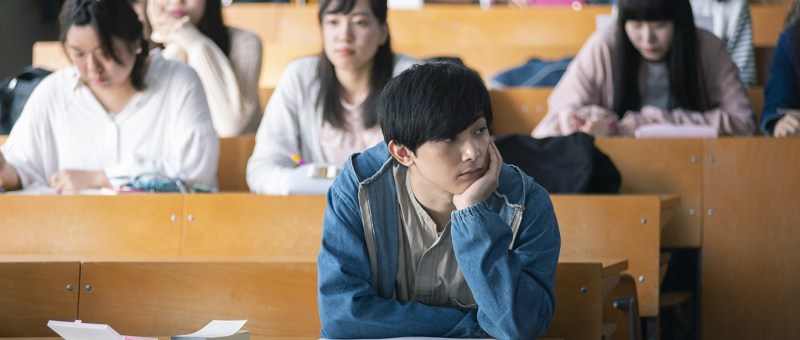
The hero, Kaede (Ryo Yoshizawa), opens with a voiceover revealing his life philosophy of social isolation afraid both of upsetting others and of getting hurt. Despite himself, however, he finds himself drawn into a friendship with the bright and friendly idealist, Hisano (Hana Sugisaki), whom he first noticed in one of his political science classes when she challenged the teacher advancing her life philosophy that peace is born only of mutual surrender and allows no role for violence. A true cynic, Kaede mocks her internally for her “naivety” but is moved on leaving the room to notice that she looks hurt not to have been taken seriously. Noticing him too, she tracks him down and makes a point of sitting next to him in the cafeteria, badgering him into a friendship he doesn’t resist because of his tenet of not challenging the views of others. Together they found the “Moai’ club which is dedicated to building a better world by helping people to become the people they want to be. 

Or at least, that’s what he tells us. As we slowly discover, Kaede is not a completely reliable narrator. Three years later he recruits a friend, Tosuke (Amane Okayama), to help him take down Moai, which has since become some kind of creepy cult corrupted by corporate interests that many seem to be using as a path towards employment, so that he can rebuild it to reflect the values he and Hisano intended when they founded the organisation she apparently having passed on. Yet the more he tells us, the more we start to wonder if there isn’t something else to it, especially when social welfare grad student Wakisaka (Tasuku Emoto) enters the scene. Is this really about the better world, or petty male romantic jealousy? Shy and introverted, it seems that Kaede never had the courage to tell Hisano how he felt and perhaps took it for granted that she understood, unfairly feeling betrayed when she showed interest in someone else despite her near constant prompts for him to speak up whether it be about her or their movement. Kaede says nothing, then blames Hisano for “rejecting” him as if the only reason she could have had for befriending him in the first place was the eventual breaking of his heart. 

In true “nice guy” fashion, Kaede can’t help but see himself as the wounded party. In the flip book he’s been idly drawing which opens the film, a man runs smack into a rock and bangs his head much in the way he seems to feel he has done in his abortive attempts to enter society. Yet later he begins to gain another understanding, his stick figure getting back up and climbing on top of the head of Moai to behold a new world below him. He starts to realise that to change the world you really do need to start with yourself and that in this he has resolutely failed. His petty act of revenge may in a sense be morally justifiable, exposing Moai for the questionable force it has become, but it’s also sordid and unpleasant intended solely to wound in order to avenge his sense of male pride. Only too late does he realise the consequences of his actions and what they say about the kind of person he is and wanted to be. Consumed by a sense of inadequacy, he is defeated by life, too afraid to become the person he should be lest the world reject him but his brief moment of fantasy of what could have been if only he’d been less cynical and cold is bathed in a kind of golden light he perhaps realises he could feel again if only he change himself in order to change the world in which he lives. A masterclass in male gaslighting, Kariyama’s duplicitous drama refuses to let its hero off the hook but reserves for him the right to start again, become the person he wants to be and lay down his arms in willing vulnerability in the hope that others may do the same. 


Blue, Painful, Fragile is currently available to stream via Netflix in the UK and possibly other territories.

Original trailer (no subtitles)