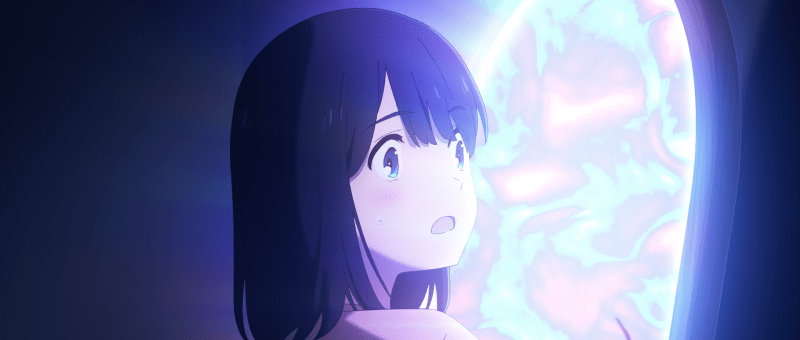
Lonely Castle in the Mirror (かがみの孤城, Keiichi Hara, 2022)

Kokoro isn’t “lying” when she complains of a stomach ache to avoid going to school, it’s just that it’s the anxiety she feels at the prospect that is making her physically ill. Based on a novel by Mizuki Tsujimura, Keiichi Hara’s fantasy-infused anime Lonely Castle in the Mirror (かがみの孤城, Kagami no Kojo) explores the effects of school phobia in uniting a series of teenagers who each for one reason or another have turned away from education often because of bullying or the rigidity of the contemporary schools system. 

As we discover, Kokoro (Ami Toma) gradually stopped going to school after her life was made a misery by manipulative popular girl Sanada who operates a small clique of bullying minions yet appears all sweetness and light with the teaching staff. Unable to fully explain what’s been going on, Kokoro largely remains at home while her understanding mother (Kumiko Aso) explores opportunities in alternative teaching and tries to support her as best she can. Though the film is very sympathetic towards Kokoro and the children in insisting that it isn’t their fault they can’t attend school but the fault of an unaccommodating system, it perhaps misses an opportunity to fully commit to educational diversity when the end goal becomes getting Koroko back in class undaunted by the presence of her bully. 

Nevertheless, it offers her another outlet when the mirror in her bedroom suddenly becomes a magic portal that transports her to a fantasy fairytale castle where she meets six other school phobic teens who are all dealing with similar issues. A young girl in wolf mask informs her that they have until the end of the school year to locate a key which if turned will grant one, but only one, of their wishes. When the key is turned, they will all lose their memory so it’s unclear if they will know whether or not the wish was granted but in any case are left with a choice between achieving their dreams and the new friendships they’ve formed at the castle. The issues that plague each of them are various from bullying to dealing with grief, purposelessness, a feeling of not fitting in, parental expectations, and an implication of sexual abuse at the hands of a close relative. As the Wolf Queen tells them “collaboration is beautiful” and it is the connections they forge with each other that give them strength to go back out into the world while each vowing to pay it forward and make sure to stand up to injustice by protecting other vulnerable kids like themselves when they’re able to. 

Even so, Kokoro takes her time on even deciding whether or not to use the mirror and for some reason the castle is only open business hours Japan time. If they stay past five they’ll be eaten by wolves! Many things about the fantasy land do not add up and Kokoro begins to worry that it’s all taking place in her head, her new friends aren’t really real, and she’s being driven out of her mind by the stress of being the victim of a campaign of harassment she can’t even escape by staying home minding her own business. But through her experiences she is finally able to gain the courage to speak out against her bullying while supported by her steadfast mother and an earnest teacher who is keen to find the best solution for each of her pupils rather than trying to force them back into a one size fits all educational system. 

In any case, Kokoro’s quest is to find her way back through the looking glass to rediscover her sense of self and take her place in mainstream society free of the sense of loneliness and inferiority she had felt while being bullied by Sanada and her clique of popular girls though in an ironic touch the film does not extend the same empathy to her or ask why Sanada has an apparent need to need to pick a target to destroy. A variable animation quality and occasional clash of styles sometimes frustrate what is at heart a poignant tale of finding strength in solidarity and learning to take care of each other in a world powered more by compassion than an unthinking devotion to the status quo.


Lonely Castle in the Mirror screened as part of this year’s Nippon Connection.

International trailer (English subtitles)
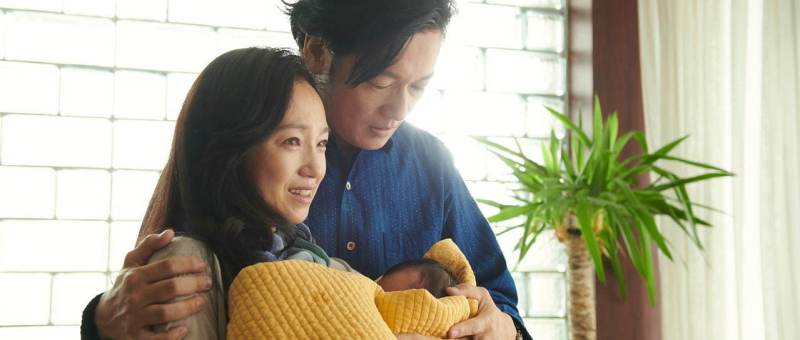
True Mothers (朝が来る, Naomi Kawase, 2020)

Perhaps surprisingly and in contrast with many other developed nations child adoption remains relatively rare in Japan with most children who for whatever reason cannot be raised by their birth families cared for by institutions while the adoption of adults is unusually common usually for the purposes of securing an heir for the family name or business. This might be one reason that the “secret” of adoption is touted as a subject for blackmail in Naomi Kawase’s adaptation of the mystery novel by Mizuki Tsujimura True Mothers (Asa ga Kuru), though in this case it will prove to be a fruitless one as the adoptive parents have already made an effort towards transparency having explained to their son that he has another mother while their friends, family, and the boy’s school are all fully aware that he is not their blood relation. 

The Kuriharas, Satoko (Hiromi Nagasaku) and Kiyokazu (Arata Iura), are a settled, wealthy married couple who are shocked to discover that they are unable to conceive a child naturally because Kiyokazu is suffering from infertility. After a few unsuccessful rounds of painful treatment, they decide to give up and resign themselves to growing old together just the two of them, but after accidentally stumbling over a TV spot about an adoption service which focuses on finding loving homes for children rather than finding children for couples who want to adopt they begin to consider taking in a child who is not theirs by blood. As Kiyokazu puts it, it’s not that he’s obsessed with the idea of having a child, but they have the means and the inclination to raise one and could be of help when there are so many children in need of good homes. After enrolling in the programme, they adopt a little boy, Asato (Reo Sato), and somewhat unusually are encouraged to meet the birth mother, Hikari (Aju Makita), who they discover is a 14-year-old girl tearfully entrusting her baby to them along with a letter to give him when he’s old enough to understand. 

The central drama begins six years later as Asato prepares to leave kindergarten for primary school. A crisis occurs when Satoko is called in because a boy, Sora, has accused Asato of pushing him off the jungle gym. Thankfully, Sora is not seriously hurt though according to the school Asato admits he was there at the time but says he doesn’t remember pushing anyone. The teachers don’t seem to regard him as a violent or naughty boy and wonder if he might have accidentally knocked Sora off without realising, while Satoko for her part tries to deal with the matter rationally neither leaping to his defence without the full facts or prepared to apologise for something that might not have been his fault. The other mother, however, somewhat crassly asks for compensation, bringing up the fact that the family live in a nice apartment and can’t be short of a bob or two. Stunned, Satoko does not respond while the other mother instructs her son not to play with Asato anymore. It’s around this time that she starts receiving anonymous calls that eventually turn out to be from a young woman claiming to be Hikari who first petitions to get her son back and then like Sora’s mother asks for monetary compensation. Only on meeting her the young woman seems completely different from the heartbroken teen they met six years’ previously and Satoko can’t bring herself to belief it’s really her, but if it isn’t who is she and what does she want?

Less a tug of love drama between an adoptive and a birth mother as in the recent After the Sunset, True Mothers places its most important clue in the title in that there need not be a monopoly on motherhood. A woman brought out at the adoption agency open day reveals that she’s explained to her son that he has three mothers, herself, his birth mother, and Asami (Miyoko Asada), the woman who runs “Baby Baton”. Asami encourages her prospective parents to explain to the children the circumstances of their birth before they enter primary school, keen both that they avoid the trauma of suddenly discovering the truth and that the birth mother not be “erased” from the child’s life and history. 

Though founded in love and with the best of intentions, Baby Baton also has its regressive sides in reinforcing conservative social norms, open only to heterosexual couples who’ve been married over three years (Japan does not yet have marriage equality or permit same sex couples to adopt) and requiring one parent, though it does not specify which, to give up their career and become a full-time parent. Its residential requirement is also not a million miles away from a home for unwed mothers hidden away on a remote island near Hiroshima which seems to be the way it is used and viewed by Hikari’s parents who force her to give up the baby more out of shame than practicality, telling people that she’s in hospital recovering from pneumonia. Nevertheless it’s at Baby Baton that Hikari finally finds acceptance and a sense of family, feeling rejected by the birth parents who have sent her away rather than embracing or supporting her in the depths of her emotional difficulty. Asami was there for her when no one else was, later explaining that unable to have children herself she founded Baby Baton as means of helping other women who found themselves in difficulty in the hope of “making sure all children are happy”. 

Like Hikari many of the other women at Baby Baton are there because of a corrupted connection with their own maternal figures, often rejected or abandoned many of them having participated in sex work as a means of survival. Reminiscent of her documentary capture of residents of the old persons’ home in The Mourning Forest or the former leper colony in Sweet Bean, Kawase films the scenes at Baby Baton with naturalistic realism as one young woman celebrates her 20th birthday sadly wondering if any one will ever celebrate her birthday again. A testament to female solidarity, the home presents itself as a kind of womb bathed in golden light and protected by a ring of water providing a refuge for often very young women at a time of intense vulnerability until they are eventually rebirthed by the surrogate maternal figure of Asami. 

The film’s Japanese title “Morning Will Come” as echoed in the song which plays frequently throughout hints at an eventual fated reunion while also pointing towards Asato the first character of whose name literally means “morning”, lending an ironic quality to its English counterpart which invites the conclusion that there are somehow false mothers while simultaneously evoking a sense of a great confluence of maternity in the unselfishness of maternal love. Immersed in a deep well of empathy, Kawase’s bittersweet drama is infinitely kind if not without its moments of darkness and pain resolute in its sense of fairness and the insistence there’s love enough to go around if only you’re brave enough to share it.


True Mothers streams in the UK from 16th April exclusively via Curzon Home Cinema.

UK trailer (English subtitles)