The 12th Suspect (열두 번째 용의자, Ko Myoung-sung, 2019)

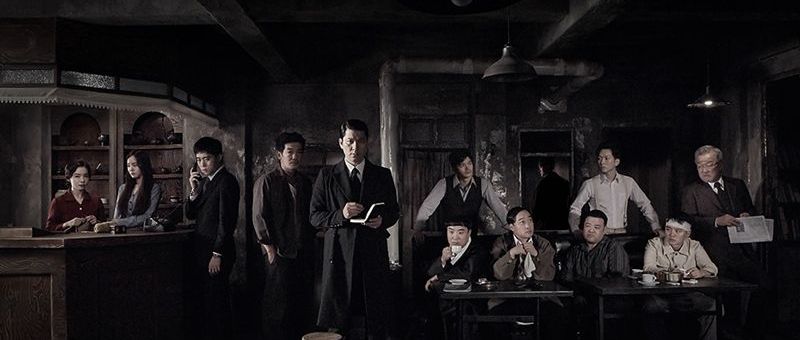
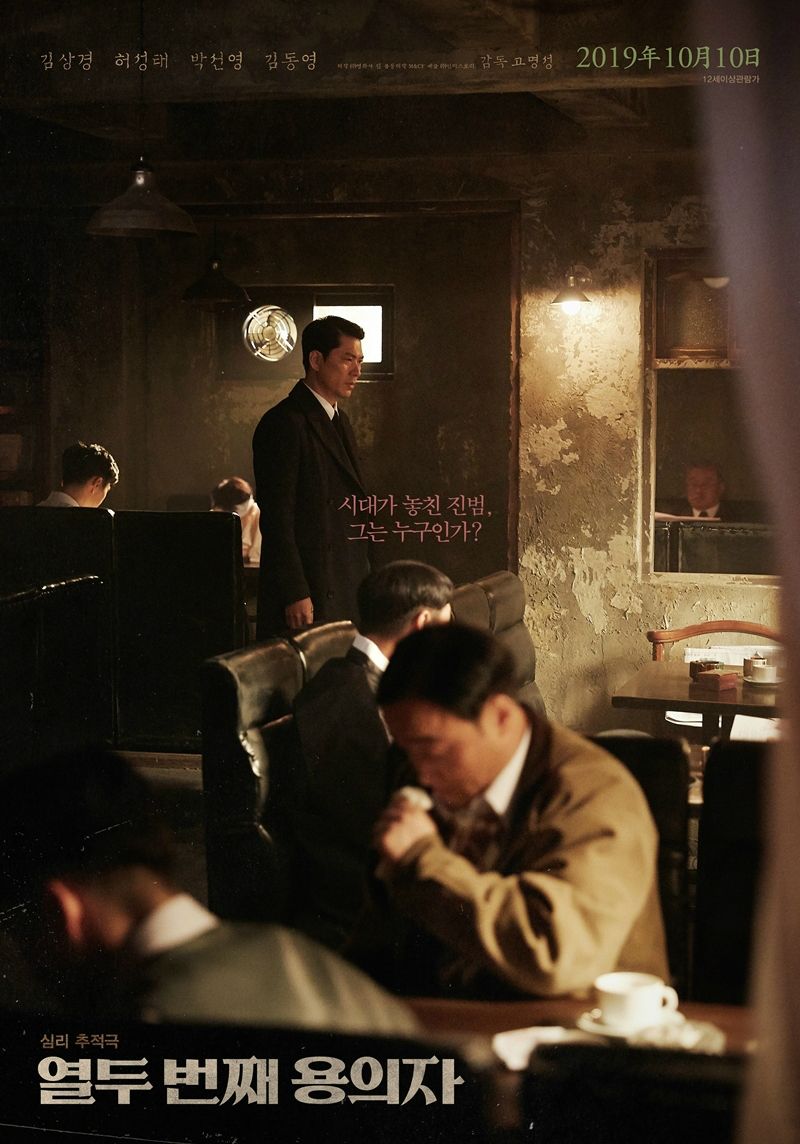
An inspector calls on a small group of artists in the immediate aftermath of the Korean War in Ko Myoung-sung’s taut psychological thriller, The 12th Suspect (열두 번째 용의자, Yeoldu beonjjae Yonguija). Set almost entirely within a tiny tea house, Ko’s steely drama lays bare the contradictions of the new society in slide towards authoritarianism which is itself a product of the failure to deal with the legacy of the colonial past while preoccupied about the “communist” threat in the quite literally divided nation. 

The Oriental Teahouse is home to a collection of poets, painters, and Bohemians seeking refuge from the everyday difficulties of life in the post-war city. Their peaceful idyll is rocked by the revelations that one of their number, Doo-hwan, died on a mountain the previous evening most likely murdered. As it turns out, no one seems to have liked Doo-hwan very much. He was “hateful and ignorant” not to mention a bad poet though many are sceptical of the story wondering if he might simply have had an accident. In any case, the newcomer to the cafe turns out to be a policeman, Ki-chae (Kim Sang-kyung), who confirms that Doo-hwan died of a gunshot wound and sets about asking a series of increasingly intense questions about his relations with the cafe’s denizens. 

To begin with, Ki-chae seems to be a Columbo-like avuncular detective, polite and sympathetic in his questioning until revealing his true purpose at which he turns into something of a firebreathing demon with a very particular vision of “justice”, hunting down “communist spies” in order to keep the South safe. As the murder weapon appears to be a Soviet-issue pistol, he assumes the killer(s) may be linked to the North accusing one of the patrons of having aided and abetted a cousin who was on the other side while throwing a book on Stalin at a university professor who desperately tries to explain that he’s had it since studying in Russia in his youth when times were different. 

Meanwhile, the policeman’s authoritarian sense of justice is gradually exposed as a kind of fascim born of his experiences under Japanese colonial rule. Doo-hwan may have died because of his actions during in the war when he collaborated with Japanese officers agreeing to send young men from his village as conscript soldiers to die for Japan on the frontlines or else as exploited slave labour in the coal mines. Ki-chae is hiding his own dark past while his quest for justice is riddled with corruption masked as patriotism as he vows to wipe out the “communist” threat in order to build a more secure Korea. “The existence of communists is a great misfortune to this country and also a danger” he adds before descending into a violent rage stamping on the face of his interviewee. 

His almost hysterical anti-communism is manifested in a general hatred for the kind of people who frequent the Oriental Teahouse, firstly taking them to task for their lifestyles in a time of chaos and privation while later viewing them as cowardly shirkers evading their duty to go to war. “I won’t let you ruin our country” he snarls while simultaneously embarking on an ill thought through argument that the communists are unfairly benefitting from the dire economic situation to “provoke good people”. He justifies his actions in insisting that everything he does is in order to prevent another “horrible war” while continuing to intimidate them into some kind of confession. His questioning reveals the petty jealousies and minor tensions between the artists along with the unreliability of their testimony while eventually exposing their small acts of resistance, cafe owner Suk-hyeon (Heo Sung-tae) determined to stand up to authoritarianism rather than forever be oppressed by it though others it seems are frightened enough by the potential dangers of rebellion to consider turning on their friends and allies. Locked in the tiny cafe with two soldiers blocking the exit, the artists are cornered and terrified as Ki-chae pits one against the other while all around them the prognosis looks bleak in a society in which men like Ki-chae wield ultimate power controlling the future through burying the past.


Original trailer (English subtitles)
Greenhouse (비닐하우스, Lee Sol-hui, 2022)

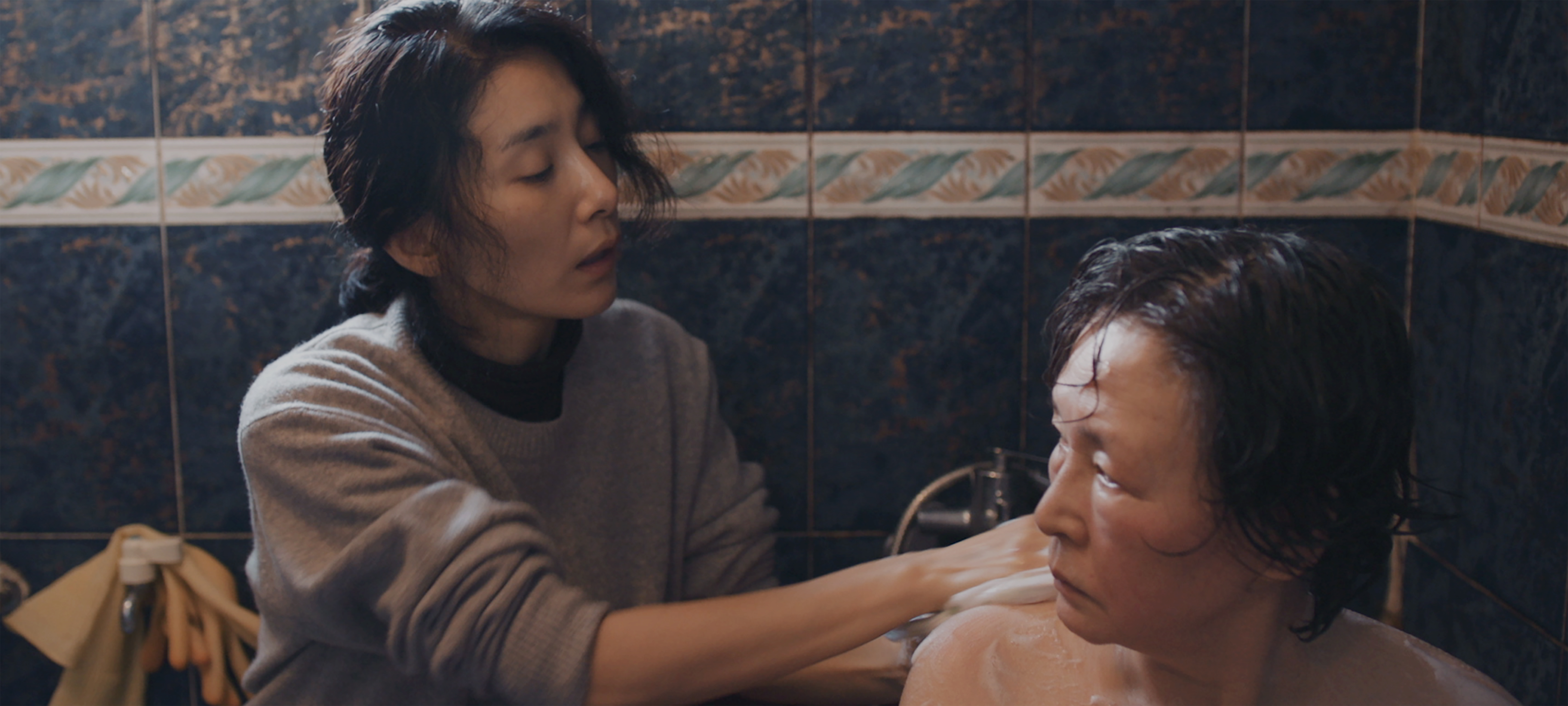
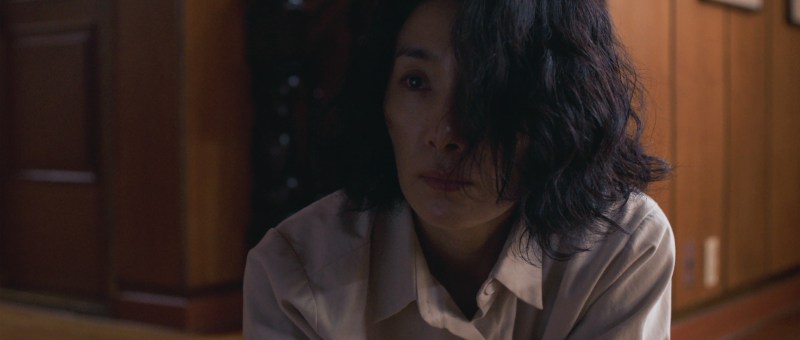
A middle-aged woman makes a series of questionable choices while pursuing her dream of a stable home with her teenage son in Lee Sol-hui’s downbeat tale of life on the margins of contemporary Korea, Greenhouse (비닐하우스). The Korean title of “Vinyl House” might be a little more accurate, in that the heroine lives in a disused polytunnel on an allotment her son later says the family used to go to every weekend before his parents’ divorce while eagerly waiting for his return after which she hopes to start again.

The son, however, first says that he has no desire to live with her and intends to stay with an uncle after leaving juvenile detention. The film never directly states what led him there, but he later mentions he and some friends all seemingly released at the same time used to break into houses owing to having “nowhere to drink.” One of his chief objections seems to be his mother’s lack of a more traditional home and the embarrassment it causes him with his delinquent friends which is one reason why Moon-jung (Kim Seo-hyung) is desperately saving her money for a deposit on a modern flat and a life of comfort she can otherwise only dream of. She has a job as a housekeeper for a wealthy older couple, the wife has dementia and is paranoid Moon-jung is trying to kill her, and the husband has all but completely lost his sight, but faces the implosion of her dreams with the announcement that they are considering moving into a nursing home.

In a repeated motif, Moon-jung often violently slaps herself on the side of the head in an apparent act of self-harm. Explaining that she used to see a psychiatrist but can no longer afford it, she joins a support group for people in a similar position and encounters a vulnerable young woman, Soo-nam (Ahn Ji-hye), with whom she later develops a sisterly connection after realising that she may be trapped in an abusive relationship she is unable to escape because of her learning difficulties. 

They are each in their way pushed out of mainstream society by virtue of their age, poverty, or disability and largely reliant on the kindness of strangers that rarely comes their way. The film only ever hints at the hard life Moon-jung may have lived but suggests that her past trauma may help to explain some of her otherwise incomprehensible decisions after the old lady hits her head and presumably dies in a domestic accident. While she cares for a wealthy older couple who remain independent in their own home, Moon-jung’s mother lives a miserable life in an inexpensive nursing home. A woman visiting her roommate soothes and strokes her mother encouraging her to keep on living as long as possible even if it’s “like this” while Moon-jung seems to have mixed emotions, on one level guilty not to be able to care for her mother herself and perhaps wanting to be relieved of any responsibility towards her. 

In some ways, Moon-jung’s tragedy may be that she is at heart just an ordinary, decent person and is torn between a genuine desire to help and care for others and a cynicism that tells her she is foolish for doing so. She wants to help Soon-nam perhaps identifying with her suffering, but is also resentful of her sudden attempt to latch on to her and fearful her presence may disrupt the new life she dreams of with her son which is the only ray of hope in an otherwise miserable existence. When that dream is threatened she decides to anything she can to save it even if it seems obvious that her series of bad decisions will not pay off because her subterfuge will quickly be exposed. 

What she doesn’t bank on is the sheer magnitude of cosmic ironies the film throws at her in which every avenue of her life is somehow undermined by another from her relationship with the elderly couple to her friendship with Soon-nam, and a romance with a man who may have been in someway abusive. Exploring the hopelessness experienced by an abandoned generation whose children have mostly moved abroad and outsourced their care, the plight of women like Moon-jung trying to do their best but frustrated by extreme bad luck, and vulnerable young people like Soon-nam who has no one to defend her as an orphan with learning difficulties, the film may suggest that they are each trapped in the hothouse of the modern society baked alive by hopelessness and indifference while struggling to find a place for themselves in an increasingly unforgiving city. 


Greenhouse screened as part of this year’s New York Asian Film Festival.

Original trailer (Korean subtitles only)

Fanfare (팡파레, Lee Don-ku, 2019)

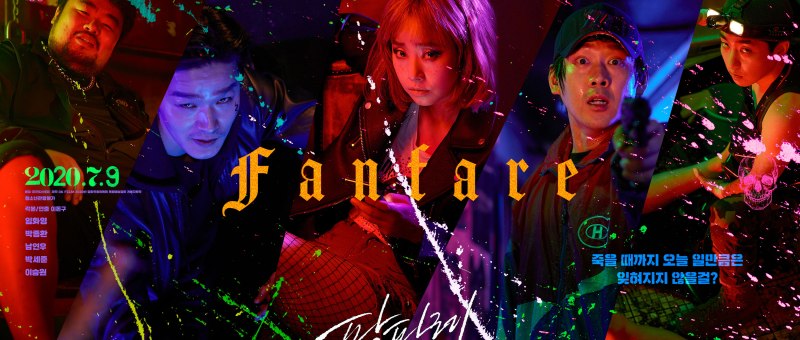
“I’m the only one who gets out alive!” insists an accidental antagonist in Lee Don-ku’s tense theatrical chamber piece, Fanfare (팡파레). The ironic title perhaps hints at the surreal pettiness of four criminals as they find themselves engaged in a pointless battle to the death trapped in a record shop / cafe bar one very bloody Halloween, but Lee’s drama is less concerned with their darkly comic fecklessness than with the rapidly changing power dynamics of an uncertain situation largely determined as they are by initial impressions and societal prejudices. 

That’s one reason no one pays too much attention to the mysterious J (Lim Hwa-young), a young woman we first meet putting on her makeup before getting a call from a man using a voice disguiser who is supposed to send her information on her upcoming “appointment”. We can’t really be sure what it is J’s job entails, but the three men who later take her hostage seem to have drawn the conclusion that she’s some kind of sex worker and largely regard her life as unimportant while believing that she poses no kind of threat to them. She, meanwhile, strangely calm bides her time watching largely passively while sometimes playing into their stereotypical view of her as a weak and defenceless woman, crying and pleading for her life. 

J later explains to her boss that she missed her appointment because she “ran into some fun guys” which may be a strange way of describing the evening’s events but perhaps makes sense given what we can gather of her. In fact she only snuck into the cafe a little before closing because she was early and needed somewhere to hang out, ordering a tequila from the sleazy barman, dressed as Dracula, while he continues to make somewhat inappropriate and flirtatious comments that she ignores. While he goes to tidy up after the Halloween party on the upper floor, a man comes to the door pleading to be let in explaining that his brother has been taken ill. J waves them through but of course it’s a ruse, they intended to rob the place but can’t figure out the till. Younger brother Hee-tae (Park Jong-hwan) goes looking for the barman but accidentally kills him, leaving the guys with a series of problems. To solve them, older brother Kang-tae (Nam Yeon-woo) calls an underworld friend, Sen (Lee Seung-won), promising him a share of his non-existent (?) drug stash in return for help. Sen calls “cleaner” Mr. Baek (Park Se-Jun), but after a series of arguments and altercations the situation continues to deteriorate. 

The problem is, perhaps, that everyone thinks of themselves as the good guy. Hee-tae is apparently in this out of desperation trying to pay off his student loans while painting his older half-brother Kang-tae as a deadbeat drop out whose involvement with drugs brings shame on their family, both boys keen to go home and see their mum anxious that they don’t cause her any more worry. Kang-tae meanwhile evidently thinks he’s some kind of gangster mastermind, entirely unaware he’s in way over his head but reacting to the news that his brother’s just killed someone with bemusement more than horror. Hee-tae didn’t think it was a good idea to involve anyone else in their situation but is persuaded by Kang-tae’s supposed underworld experience while later resenting him, wondering if he really has a valuable drug stash he never mentioned while forcing him to help in his criminal schemes knowing he needed the money. Meanwhile, the more experienced Sen thinks he’s in control but quickly finds himself outmanoeuvred in part because of the boys’ panicky naivety. Baek is there as a contractor but finds himself without protection, a continual outsider with only the necessity of his skills to leverage for his survival along with a possible professional alliance with Sen.  

Set almost entirely within the bar, Fanfare is testament to snowballing chaos of cumulative bad decisions along with the dangers of misreading others based on impressions formed through the prism of societal prejudice. Ironic music cues lend a sense of surreal irony, though Lee’s humour is pitch black as the gang of bumbling criminals eventually consumes itself while those assumed to have the least power simply wait for events to run their course.  


Fanfare screens at Chicago’s Lincoln Yards Drive-in on April 30 as part of the 12th season of Asian Pop-Up Cinema.

Original trailer (no subtitles)

A Tiger in Winter (호랑이보다 무서운 겨울손님, Lee Kwang-kuk, 2018)

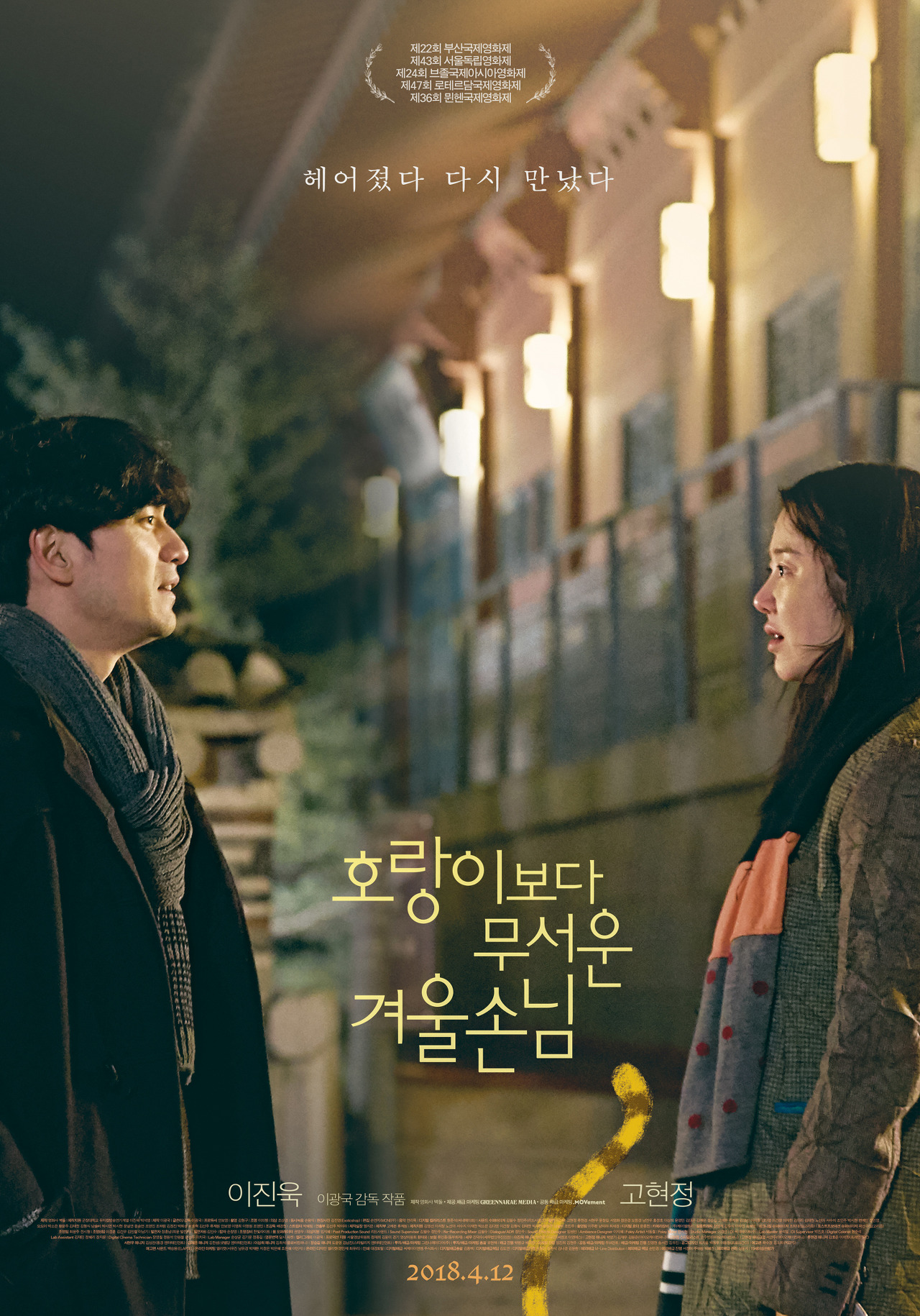
Tiger in Winter poster“Life just keeps getting harder” sighs a weary policeman charged with extracting a coherent statement from an accidental hero who only wants to talk about a tiger. Lee Kwang-kuk’s third feature, A Tiger in Winter (호랑이보다 무서운 겨울손님, Horangiboda Museoun Gyeoulsonnim), is in some ways a more conventional exercise in comparison with the time bending reflexivity of his earlier work, but the journey he takes us on is similarly circular as a melancholy young man finds himself chased out of his natural habitat and cast adrift, outside of his comfort zone too resentful to crawl back into a familiar cage but too afraid to embrace his freedom. 

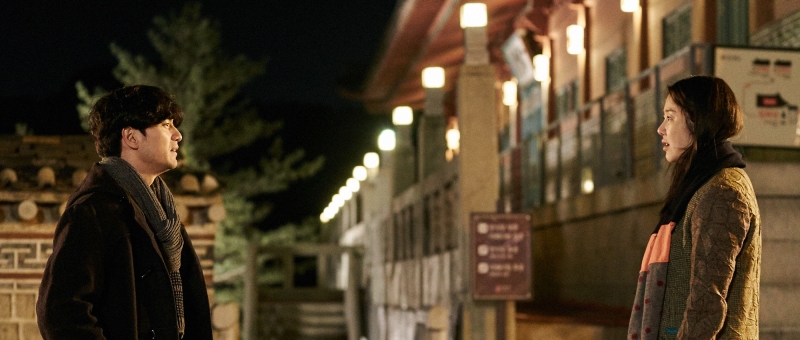
On the day a tiger escapes from the zoo, Gyeong-yu (Lee Jin-wook), a failed writer, “loses” his day job and has to temporarily vacate his apartment because his girlfriend’s parents are coming to visit and she evidently hasn’t told them she is “living in sin”. Gyeong-yu offers to stay and meet them, but bristles when his girlfriend wonders if he’s ready to make a firm a commitment. He packs and leaves, planning to return in a few days’ time when the coast is clear. Decamping to a friend’s place, Gyeong-yu continues his night “job” as a designated driver which brings him into contact with an old girlfriend – Yoo-jung (Ko Hyun-jung), who is also a writer and apparently successful but suffering from an extended bout of writer’s block and has descended into a self destructive spiral of alcohol fuelled existential desperation.

After reconnecting with Gyeong-yu, Yoo-jung pulls down a book he once gave her from her well stocked bookcase – a Korean translation of Hemingway’s The Old Man and the Sea. Hemingway’s hero fights his age as manifested in a powerful marlin and dreams of youth in the lions of Africa. The film’s English title, “A Tiger in Winter”, is perhaps a mild pun on “The Lion in Winter” which again tells of a once proud old man struggling to deal with his bodily decline, only Gyeong-yu is still young even if he feels himself diminished and brought low by life. Unlike the old man, he has stopped fighting and accepted his defeat. He no longer writes and flounders aimlessly, running away from the things that frighten him without aim or purpose. The loosed tiger is a manifestation of the fears Gyeong-yu refuses to fight which render him both physically and artistically impotent.

Writing, or perhaps art of any kind, becomes its own kind of vice – a dangerous addition, a need which must be sated or displaced without which the rest of life remains hollow. Unable to satisfy her need for creation, Yoo-jung has crumbled under the pressure of her own expectations and retreated into the comforting world of the permanently tipsy even whilst knowing that the alcohol itself inhibits her ability to create and forever separates her from that which would make her whole. She wants to stop, throws away her soju, but can’t move past her inability to face herself and resolve her creative doubts. Yoo-jung wants the quick fix, and like any addict, she is past caring about the harm she might do to herself and others in the pursuit of it.

Gyeong-yu, meanwhile, almost wallows in his degradation as he allows himself to be belittled by the customers who call for his services and insist on treating him like a servant. Designated driving doesn’t seem like a particularly safe arrangement for either party – many of Gyeong-yu’s customers are extremely drunk and willingly allowing a man they don’t know to drive them somewhere in their own car while they are barely conscious, while conversely many refuse to pay or accuse Gyeong-yu of damaging the car while berating him for acting in an insufficiently humble manner. Yet it’s not humiliation that knocks Gyeong-yu out of his stupor but trauma and a direct confrontation with someone else’s despair.

Tigers lurk everywhere, though when Gyeong-yu finally learns to look his in the eye it’s a very cute and non-threatening sort of tiger which perhaps makes him feel foolish for having evaded it for so long. Lee may not be playing with time in his usual fashion, but he sends Gyeong-yu retreating into the past all the same in an attempt to hide from his fears only to discover you can’t walk backwards into the future. An exploration of the destructive power of the creative urge, the soul crushing inertia of artistic block, and the continuing rootlessness of a life lived in flight, A Tiger in Winter is another beautifully poetic character drama from Lee whose world weary optimism loses nothing in its seeming simplicity.


A Tiger in Winter was screened as the final teaser for the London Korean Film Festival which will open on 1st November with Microhabitat. The full programme for this year’s event is now available on the official website – tickets on sale soon!

International trailer (English subtitles)