Every Trick In The Book (鳩の撃退法, Hideta Takahata, 2021)

A down on his luck writer finds himself at the centre of a mystery only how much is truth and how much “fiction”? Based on the novel by Shogo Sato, Hideta Takahata’s Every Trick in the Book (鳩の撃退法, Hato no gekitai-ho) ponders the possibilities of literature as the hero seems to create a fictional world around him in which it is largely unclear whether he is solving a real world mystery or simply imagining one based on his impressions of the strange characters he encounters through the course of his everyday life.

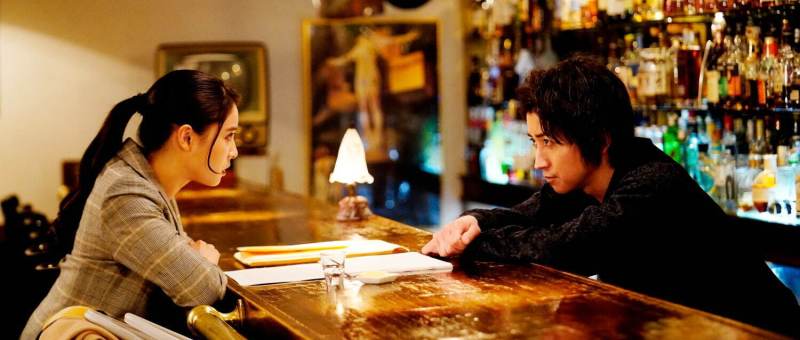
That everyday life is however eventful just in itself. Tsuda (Tatsuya Fujiwara) once won a prestigious literary prize and was destined to become a popular author but hasn’t written anything of note for some time and in fact now largely works as a driver ferrying sex workers around on behalf of his shady boss. The mystery begins when he approaches a man, a rare solo reader in an overnight cafe, and promises to lend him a copy of Peter and Wendy by JM Barrie only to later discover that the man went missing along with his wife and the daughter he had explained was fathered by another man. 

Like many of his subsequent encounters it isn’t entirely clear if this meeting really took place or at least as Tsuda said it did or is only part of the novel he is beginning to write. The man, Hideyoshi (Shunsuke Kazama), asks him if it’s a novelist’s habit to begin imagining backstories for everyone he sets eyes on and there may well be some of that even as Tsuda is fond of claiming that amazing things happen around us every day to which we are mostly oblivious. Still, Tsuda probably didn’t expect to be pulled into the orbit of local gangster Kurata (Etsushi Toyokawa) after accidentally passing on counterfeit currency he found by chance. It’s true that most of what’s happening to him is the result of a series of bizarre coincidences or cosmic confluence which has accidentally united this collection of people in an unintended mystery which Tsuda intends to solve in either literal or literary terms. 

“It’s all a novelist can do” he later claims in trying to write a better ending for “characters” he has come to like than the one he assumes they “actually” met. But then his editor Nahomi (Tao Tsuchiya) chief worry is that, like his previous novel, Tsuda’s story will contain too much of the “literal” truth which could cause his publishers some legal problems. Part of the reason Tsuda left the industry is apparently because his last book was inspired by a real life affair which was then considered somewhat hurtful and defamatory. For that reason it comes as quite a blow to Nahomi as she begins to investigate and discovers that much of Tsuda’s story lines up with “real” places and events, but then again as he says if you can draw connections between known facts then you begin to see a “hidden” truth which may in its own way be merely his invention. 

The film’s Japanese title translates more literally as something like “how to fend off a dove” which does indeed have its share of irony especially considering the meaning the dove symbolism turns out to have in the film but perhaps also hints at the essential absurdity of trying to fight back against something that is otherwise harmless and in fact represents peace. Tsuda may be onto something and nothing, embracing the bizarre serendipity of a writer’s life while trying to recover his creative mojo but embellishing it with more danger and strangeness than it actually has to offer. Then again as his editor discovers, there really is an incinerator it seems anyone can just walk up and use to burn whatever they want including dead bodies, while people in general are full of duplicities all of which keeps the “fake” money circulating as people use it to try to buy things that can’t really be bought. Hideyoshi calls them “miracles”, embracing the strange serendipity of his life as an orphan longing for a family to call his own and unexpectedly finding one which is “real” in someways and “fiction” and in others. Then again, if you believe in something does it really matter if it’s “real” or not? Hideyoshi and Tsuda might say it doesn’t, the publishing company’s lawyers might feel differently, but it seems there really are amazing things going on around us every day if only you stop to look. 


Original trailer (English subtitles)
Last of the Wolves (孤狼の血 LEVEL2, Kazuya Shiraishi, 2021)

“The Showa era’s over. We don’t use guns now, business is our battlefield.” a recently released foot soldier is told, finding himself in a whole new world emerging from a not so distant past of turf wars and street scuffles into a late bubble wonderland of besuited corporatised gangsters. Set in 1988, Kazuya Shiraishi’s Blood of Wolves had been about the twilight of post-war gangsterdom forever associated with an era that was literally about to pass. Set three years later in the twilight of the bubble economy and an already established Heisei, Last of the Wolves (孤狼の血 LEVEL2, Koro no chi: Level 2) finds no longer rookie cop Hioka (Tori Matsuzaka) taking on the mantle of his late mentor Ogami, attempting to broker peace by getting uncomfortably close to yakuza. 

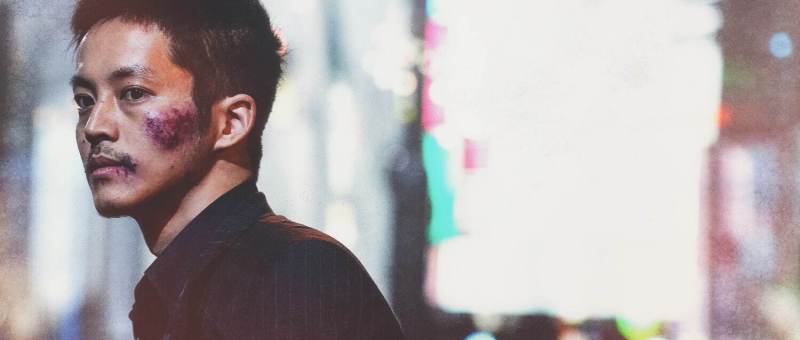
At the end of the previous film, Hioka had managed to engineer a truce between rival gangs Odani (with whom he is affiliated), and Irako through pushing top Odani guy Ichinose to take out boss Irako. Three years later, the peace has held and in any case Heisei yakuza no longer take violence to the streets. The release of crazed Irako foot soldier Uebayashi (Ryohei Suzuki), however, threatens to destabilise the local balance of power. Despite mournfully declaring that he doesn’t intend to wind up back in prison, Uebayashi’s first call on release is to the sister of one of his guards whom he rapes and kills in quite gruesome fashion. Hioka is put on the case and partnered with a genial veteran, Seshima (Yoshiko Miyazaki), weirdly excited about investigating a murder at this late stage of his career, but quickly realises that Uebayashi’s recklessness is primed to destroy everything he’s built. 

Having started out a straightlaced rookie, Hioka has fully incorporated the Ogami persona dressing in sharp suits and sunshades, driving a sports car, and hanging out with the Odani guys, while also using his girlfriend’s little brother Chinta (Nijiro Murakami) as a mole in rival gangs. As a cynical reporter points out, however, Ogami was essentially “undercover” in that he understood hobnobbing with yakuza was part of his job and something he did solely to keep civilians safe by preventing another street war. Hioka has started to lose his way, enjoying himself a little too much and already way out of his depth as the fragile peace he’d brokered by less than ethical means begins to crumble beneath his feet. 

Having been in prison, Uebayashi is unaware of the various ways in which the world has changed seeking to return to old school rules of gangsterdom, ironically lecturing his superiors on the absence of jingi (honour and humanity) in their new corporate existence. He’s a monster and a sadist, but his violence is also a result of the horrific abuse he suffered as a child which led to an equally heinous act of revenge while as a member of the ethnic Korean Zainichi community, like Chinta and his siblings, he continually faces discrimination and social oppression. His first act on release is of revenge against the guards who relentlessly tortured him in prison, the murdered woman’s brother confessing that they wrote him up as a model prisoner in the hope he’d be released early so they wouldn’t have to deal with him anymore.  

Yet what Hioka and Uebayashi have in common is that they’re both pawns in a game they were unaware was being played. As it turns out the police corruption Hioka discovered during the previous film did not go away, and in certain senses they liked things the way they were before. Hioka’s truce is very bad for business for a certain subset at least. They might be minded to let a dangerous killer go loose if it disrupts Hioka’s attempt to suppress the criminal underworld to manageable levels. Mimicking the classic jitsuroku, Shiraishi throws in occasional voiceover from an anonymous narrator along with freeze frame and montage while skewing still darker in the levels of depravity among these desperate men fighting over the scraps of a world already in terminal decline even as the bubble seems fit to burst. Shiraishi ends on a note of change with the institution of the organised crime laws which have contributed to the ongoing decline of the yakuza, a relic of the Showa era unfit and unwelcome in the modern society, but also discovers that for good or ill there may yet be wolves in Japan.


Last of the Wolves screened as part of this year’s New York Asian Film Festival.

Teaser trailer (English subtitles)

Not Quite Dead Yet (一度死んでみた, Shinji Hamasaki, 2020)

©2020 Shochiku Co., Ltd. Fuji Television Network, Inc.

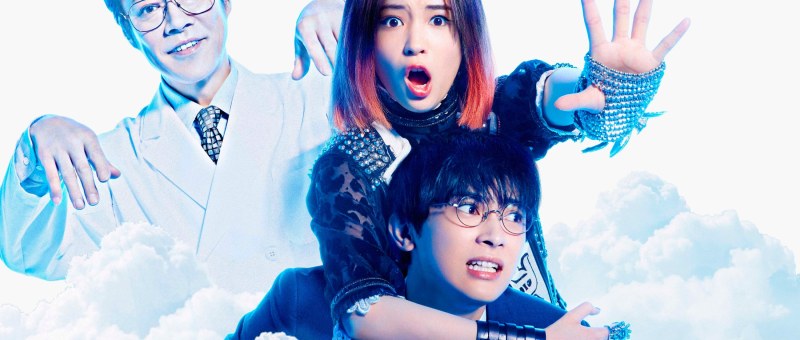
“What’s important is purpose, to live for something. Without it you’re as good as dead” according to the hero of madcap existentialist farce Not Quite Dead Yet (一度死んでみた, Ichido Shinde Mita). The feature debut from ad director Shinji Hamasaki pits a rebellious student against her overly literal, authoritarian dad as the pair begin to come to a kind mutual understanding only once he “dies” after being tricked into taking an experimental drug in order to unmask conspiracy within his own organisation. 

College student Nanase (Suzu Hirose) intensely resents her father (Shinichi Tsutsumi), the CEO of Nobata Pharmaceuticals which he has long been pressuring her to join. She’s currently the lead singer in death metal band Soulzz only according to a record scout at one of their shows their problem is that they’re all “zz” and no soul. Meanwhile, Nobata has assigned an underling, Matsuoka (Ryo Yoshizawa), to shadow her partly because Matsuoka too has very little presence and is in fact nicknamed “ghost” for his essential invisibility. The trouble starts with the escalation of a corporate feud as Nobata’s old buddy Tanabe (Kyusaku Shimada) starts manoeuvring to get his hands on the company’s research into an anti-ageing serum codenamed “Romeo”, planting a mole inside the organisation. As a consequence of his research another of the scientists nicknamed “Gramps” has stumbled on another drug which renders someone temporarily “dead” for a period of two days, naming it “Juliet”. Watabe (Yukiyoshi Ozawa), a consultant Nobata has brought in to streamline the business, convinces him to take the experimental drug in order to flush out the mole while secretly working with Tanabe to take over the company by forcing through a merger while Nobata is out of action. 

A typical socially awkward scientist, Nobata believes that life is about experiment and observation, a belief system which has thoroughly irritated his daughter who still lives at home but has divided the territory in half with clearly marked red tape. Nanase’s animosity towards her father apparently stems back to the death of her late mother Yuriko (Tae Kimura), angry with him that he never left his desk and didn’t make it to the hospital in time to see her before she passed away. “Life’s not a lab experiment” she sings, recalling her childhood during which her overly literal father took away life’s magic by patiently over explaining fairytales, scoffing that Prince Charming probably didn’t revive Sleeping Beauty with a kiss but a transfer of static electricity, while continuing to order her around in fatherly fashion now she’s all grown up. Perhaps still stuck in a petulant adolescence she started the band to vent her frustrations with the world in the form of a death metal “mass”, but she’s growing up. Her bandmates are getting jobs or getting married, she’s still stuck with no real clue about what it is she actually wants to do with her life except that she doesn’t want anything to do with Nobuta Pharmaceuticals.  

Once her father “dies”, however, she begins to gain a new appreciation for his life philosophy able to see but not hear his “ghost” while his body lies on a table in the office cafeteria. Nobata went into pharmaceuticals to help people, but has been led on a dark and vacuous path pursuing anti-ageing technology which is in itself a rejection of change and transience. Ending all her sentences with the word “death”, that’s not something Nanase can get behind. She believes in growing old gracefully, that they make drugs not to cheat death but to be able to spend longer with those they love. As her father had advised Matsuoka to do, she begins to find her purpose, rediscovers her soul, and figures out what it is she’s supposed to do with her life.

Matsuoka, however, seems to be permanently “invisible” despite the tentative romance that develops as he and Nanase attempt to subvert the conspiracy to stop them doing her dad in for good, brushing up against the venal Tanabe who seems set to muster all his corporate advantages against them partly because of an old grudge against Nobata. Of course, you have to wonder why the conspirators didn’t just poison him rather than having him go Juliet and then entering a race against time to cremate him before he wakes up, but as Nobata reminds us there are many things which science cannot explain. A cheerfully silly Christmas tale of rediscovering what it means to be “alive” in the presence of death, Not Quite Dead Yet is zany seasonal fun but with plenty of soul as its heroes learn to shake off cynical corporatism for a healthy respect of the values of transience.


Not Quite Dead Yet screened as part of Camera Japan 2020.

Original trailer (English subtitles)

Images: ©2020 Shochiku Co., Ltd. Fuji Television Network, Inc.