Torso (トルソ, Yutaka Yamazaki, 2009)

A traumatised woman overcomes her sense of loneliness by sharing her life with a limbless inflatable doll in the aptly named Torso (トルソ). More than a treatise on urban disconnection, the directorial debut from Yutaka Yamazaki is both an exploration of the lingering effects of childhood trauma and a contemplation of contemporary womanhood, the changing relationship dynamics between men and women, and the extent of bodily autonomy in an often conformist society while ending on a note of ambiguity which may represent either liberation or resignation. 

34-year-old Hiroko (Makiko Watanabe) works at an apparel studio where she is among the older of the employees and somewhat aloof with her colleagues, declining invitations to hang out after work or attend the singles mixers one of the other girls is forever organising. She is indeed the sort of person who likes to keep her distance, ostensibly preferring her own company spending her time working on a patchwork quilt but secretly cuddling up at night with a slightly smaller than life-size inflatable male torso which is anatomically correct yet has no head, arms, or legs and into which she must herself breathe life only to let it out again later. Her only other real connection is with her younger half-sister Mina (Sakura Ando) who is her polar opposite in terms of personality, a bubbly, energetic woman who seems to crave the kind of contact her sister is largely unable to give her. 

Even so despite claiming to hate having other people in her space, Hiroko is indulgent of Mina always giving in and allowing her to stay at her apartment at one point for an extended period of time even if not entirely happy about it. While Hiroko has eschewed male contact for the 100% controllable union with the torso pillow, Mina is trapped in an abusive relationship with a man, the otherwise unseen Jiro, whom we later learn to have been a long term boyfriend of Hiroko. Theirs is a relationship frustrated and defined by unresolved resentments, Hiroko complaining that Mina always takes everything she treasures beginning it seems with her mother’s love. A colleague of Hiroko’s around her own age laments that at their age weddings and funerals are the only occasions that they visit their hometowns, but Hiroko is reluctant to visit for reasons other than the usual awkwardness between grownup children and their parents, dressing up and catching a train to attend the funeral of the stepfather we gather must have abused her while her mother (Miyako Yamaguchi) turned a blind eye but finally unable to go through with it. 

For Hiroko’s mother, Hiroko is the embodiment of her resentment towards her first husband who left her, later on another visit snapping back that she must have got her “unpleasant personality” from him while otherwise praising Mina who admittedly has bad taste in men but a generous heart. Hiroko meanwhile projects her own resentment onto her mother who failed to protect her from abuse she wonders possibly because of the resentment she feels towards her while she also projects her feelings of jealous inadequacy onto Mina who may also in a sense resent her for being unable to return the sisterly affection she desires. As she replies, she took Hiroko’s things because she only wanted her love even if vicariously through the otherwise abusive relationship with Jiro whose child she is also carrying. 

In many ways it’s Mina’s pregnancy which forces Hiroko to reassess her life, not least in the accusation that she had wanted to carry Jiro’s child herself. At 34 Hiroko is perhaps at a moment of crisis, her frosty mother coldly telling her she’ll soon have to “give in” and abandon her solitary life for a conventional marriage (despite her recent widowhood her mother has already started another affair with the guy from the funeral parlour). On the other hand, are men actually very necessary anymore or has true independence become not only viable but a respected choice? Despite the constant mixers, some of the younger women at the office have decided not to wait for marriage and have already put a foot on the property ladder getting a good deal on a mortgage by starting young to own their own place and achieve financial independence. “You can’t rely on men these days” one of others agrees while recognising that choosing this kind of independence does not necessarily mean a rejection of romance or long term relationships. 

For her part, Hiroko is wary of men who do in the main seem to be sleazy and predatory, visibly flinching as an over-friendly clerk at the car rental office repeatedly attempts to lean across her while she’s sitting in the driving seat. Aside from its obvious insentience, the torso is symbolically unable to harm her in having no arms to strike, no legs to kick, and no head to hurt while preserving the part she most craves buried in its empty chest which she cradles constantly like a child with a favourite toy. Her attachment to it is not purely physical but emotional, taking it on a mini holiday to the beach dressed in a pair of tiny speedos as they frolic in the sea together alone on a private beach. Yet even this body as empty as she feels her own to be can also betray and be betrayed, another treasure to be stolen if only in the breaking of a spell on realising that Mina has discovered her secret. 

Mina’s final decision is both old-fashioned and ultra-contemporary, vowing to go back to the country and raise the child alone while in a symbolic sense becoming her mother in intending to take over her old part-time job at a nursing home. Hiroko meanwhile is preoccupied with the idea that she’s sacrificing her dreams and aspirations because of something that’s essentially Jiro’s fault, in part stripping her of her own agency in making her decisions and imposing on her the view that struggling in the city even if it doesn’t really suit you is inherently better than making a simple life at home. A brassy gravure model (Sora Aoi) who makes a point of the fact her body is business similarly looks down on Mina, suggesting that she’s simply weak and if she really wanted to pursue her dreams she’d have an abortion without a second thought. Yet does it really need to be an either or? The decision that Hiroko finally comes to may suggest that it might, or then again perhaps she’s merely freeing herself of her long held trauma and looking to lead a more emotionally fulfilling life. “We’re just starting out” Mina shouts back from from across the ticket barriers as she leaves hinting at new beginnings for each of the sisters having each at least laid something to rest. 


Original trailer (no subtitles)
Dare to Stop Us (止められるか、俺たちを, Kazuya Shiraishi, 2018)

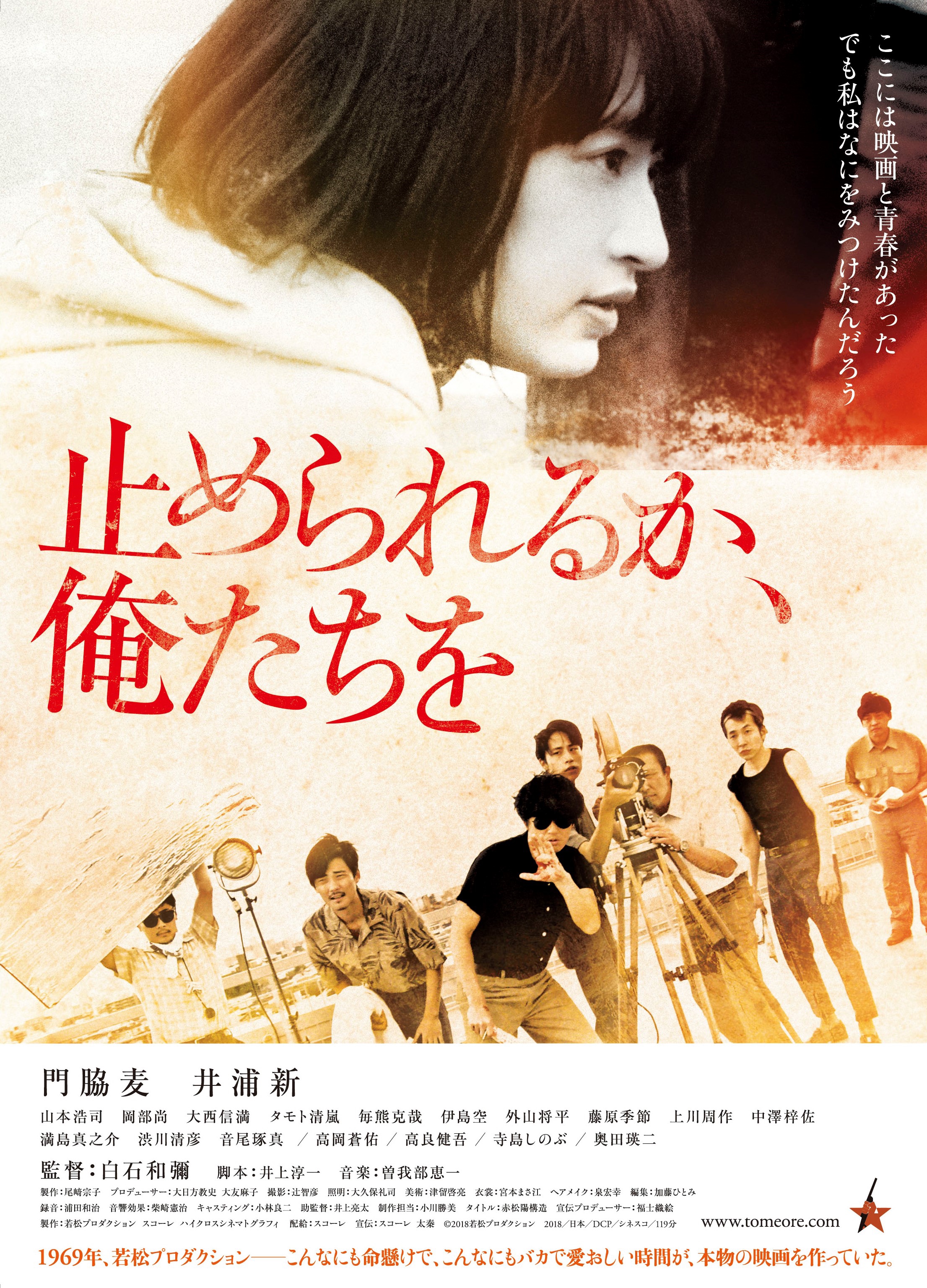
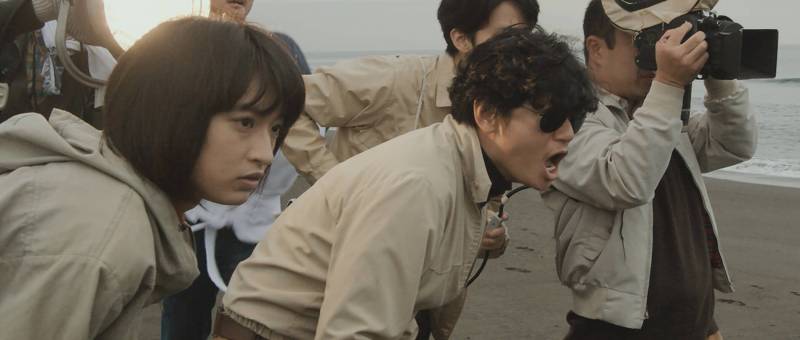
Dare to stop us posterUntil his untimely death in a road traffic accident in 2012, Koji Wakamatsu had been the enfant terrible of Japanese cinema. An irascible but somehow much loved figure, Wakamatsu is most closely associated with a series of provocative sex films which mixed politically radical avant-garde aesthetics with pink film exploitation. Kazuya Shiraishi, himself a former Wakamatsu apprentice, takes a look back at the heady years of Japanese indie cinema in the aptly titled Dare to Stop Us (止められるか、俺たちを, Tomerareruka, Oretachi wo) which explores the backstage environment at Wakamatsu Production from 1969 to 1972 (or, right before everything changed with the death of the student movement in Japan following the Asama-sanso incident).

Rather than follow Wakamatsu (Arata Iura) directly, Shiraishi frames his tale around aspiring director Megumi Yoshizumi (Mugi Kadowaki) – the only female presence (besides the actresses) at the otherwise extremely masculine studio which focusses mainly on artistic soft-core pornography. A Shinjuku hippie and self-confessed fan of Wakamatsu, Megumi finds herself joining the team after being recruited to scout potential starlets who could pass for high schoolers. On arrival at the studio, Megumi is quickly mistaken for an actress or mistress but finally manages to win the guys round and is taken on as an assistant director with the possibility of stepping up to the director’s chair if she lasts three years working under Wakamatsu.

As the gruff director warns her, most don’t even last the month. Megumi is however determined, despite Wakamatsu’s continued show of forgetting her name and harsh on-set demeanour. Commiserating with her, another veteran affirms that the big studios wilfully exploit their ADs, at least with Wakamatsu his heart is in the right place even if he’s only a different sort of difficult. He also, however, hands her a bottle of hooch which serves an unfortunate harbinger of things to come as Megumi finds herself playing along with the hard drinking boys club but becoming ever more confused about her role in the organisation and the further direction of her life.

Wakamatsu and his partner Masao Adachi (Hiroshi Yamamoto) vow to make films to shake the world, but are not above commercial concerns which is why they find themselves making pure sex films under pseudonyms to balance the books, much to the chagrin of some of the studio’s more politically engaged members. These are particularly politically engaged times in which the student movement is at its zenith, protesting not only the renewal of the ANPO treaty, but the Vietnam War, and the fiercely contested building of Narita airport. Mostly thanks to Adachi, Wakamatsu Production gradually shifts from indie film company to activist organisation in which political concerns are beginning to take precedence over the business of filmmaking.

The shift leaves those like Megumi who were not so interested in the political dimension floundering along behind and increasingly disillusioned with the world of Wakamatsu Pro. Megumi may admit that she had other problems that probably should have been better addressed, but remains conflicted as to her involvement with the studio. Feeling as if she has nothing in particular to say, she questions her desire to make films at all while clinging fiercely to the surrogate family that has grown up around the strangely fatherly director and continuing to feel insecure in her atypical femininity in a world which more or less requires her to act like a man but doesn’t quite accept her for doing so.

Wakamatsu said he wanted to hold the masses at knifepoint and create a film to blow up the world, but Megumi increasingly feels as if it’s she who will eventually face Wakamatsu with only one of them surviving. Megumi is, in a sense, a victim and encapsulation of her age in which she wanted a little more than it had to give her and found herself increasingly disillusioned with its various betrayals and disappointments. Given the chance to direct a 30-minute short for love hotels, Megumi spins a tale of Urashima Taro which is, as Adachi puts it, all about how she can’t go back to being a hippie after getting mixed up with Wakamatsu and has lost sight of her true self in her quest for acceptance. Both nostalgic look back to a heady era and a tragic tale of that era’s costs, Dare to Stop Us is a fitting tribute to the Wakamatsu legacy which portrays the irascible director as neither saint nor demon but painfully human and infinitely flawed.


Dare to Stop Us was screened as part of the 2019 Udine Far East Film Festival.

Original trailer (no subtitles)
Honey and Clover (ハチミツとクローバー, Masahiro Takada, 2006)

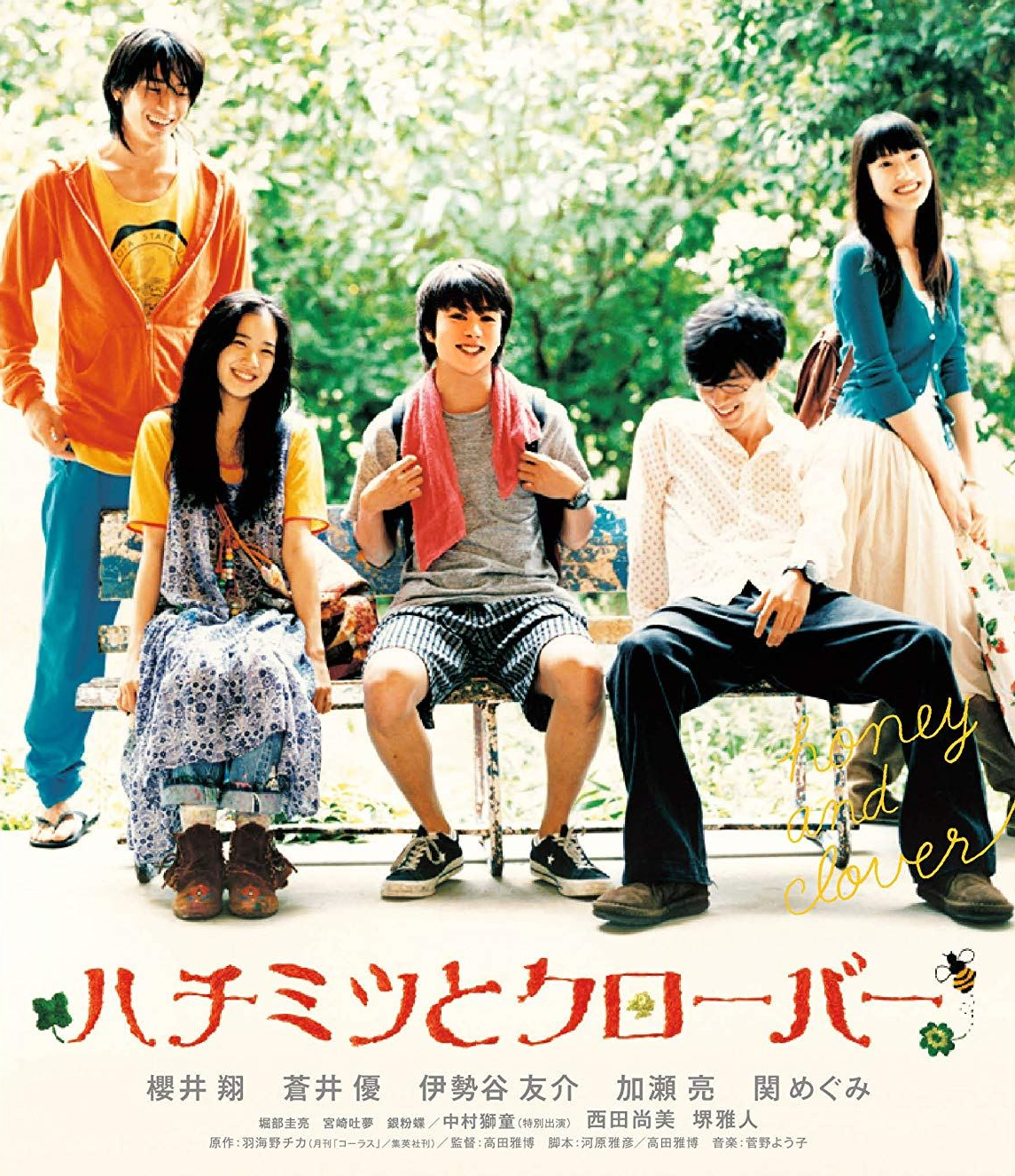
honey and clover blu-rayAh youth! Chica Umino’s phenomenally popular manga Honey and Clover (ハチミツとクローバー, Hachimitsu to Clover) is, essentially, a coming of age story in which love, requited and otherwise, plays a significant part. Masahiro Takada’s adaptation is no different in this respect as its central group of friends learn to come into themselves through various different kinds of heart break leading to soul searching and eventual self actualisation. The path to adulthood is rocky and strewn with anxieties, but has its own charms as our self branded Mr. Youth seems to have figured out, romanticising his own adolescence even while he lives it.

The action kicks off at an art college in Tokyo where a circle of friends is temporarily shaken by the arrival of a new student – a distant relative of a popular professor, Hanamoto (Masato Sakai). Our youth loving hero, Takemoto (Sho Sakurai), falls instantly in love with Hagu (Yu Aoi) – a genius self-taught painter with a dreamy, ethereal personality and negligible interpersonal skills. Hagu, however, seems to have developed a strange connection with conceited sculptor Morita (Yusuke Iseya) who continues to struggle with his conflicting interests in art and commerce. Meanwhile, geeky design student Mayama (Ryo Kase) has a problematic crush on his boss, Rika (Naomi Nishida), whose husband went missing some years ago, and has begun semi-stalking her. Unbeknownst to him, Mayama is also being semi-stalked by Yamada (Megumi Seki) – a spiky ceramicist who refuses to give up on her unrequited crush despite being fully aware of his one sided love for a brokenhearted middle-aged woman.

In actuality all of our protagonists are a little older than one might assume – all past the regular age for graduating college and either hanging around after being unable to complete their studies or pursuing additional training in the hope of furthering their art. They are all also hopelessly lost in terms of figuring out who they are – perhaps why they haven’t quite got a handle on their art, either. Hagu, younger than the others, seems to have an additional problem in existing outside of the mainstream, experiencing difficulties with communication and needing some additional help to get into the swing of college life. Perhaps for this reason, maverick professor Hanamoto palms her off on the “least arty” (read “most responsible”) of his students, Takemoto, who is tasked with accompanying her for meals – something for which he is quite grateful given his first brush with love on catching sight of her at her easel.

Hagu is also, however, the most sensitive and perceptive of the students even if she can only truly express herself through canvas. Her most instantaneous connection is with Morita, whose instinctive approach perhaps most closely mirrors her own though where Hagu is quiet and soulful, Morita is loud and impetuous. Watching him creating his centrepiece sculpture, Hagu is honest enough to tell Morita that he’s overdone it. Morita agrees but ends up exhibiting the piece anyway and not only that – he sells it for a serious amount of money despite knowing that it lacks artistic integrity. Hagu is unimpressed and her disapproval only adds to Morita’s sense of self loathing in his ambivalence towards to the fleeting rewards of superficial success versus the creation of artistic truth.

A similar sense of ambivalence imbues the romantic difficulties which neatly divide the group into a series of concentric love triangles. Takemoto, the selfless hero, realises the best thing he can do for Hagu is try to help Morita be less of a self-centred idiot while simultaneously dwelling on his fleeting youth and actively pursuing himself while debating whether or not to hit the road and leave his lovelorn friends to it. Mayama and Yamada, by contrast, are content to dance around each other, understanding the irony of their respective unreturned crushes while not quite bonding over them but both determined not to give up on their dreams (romantic and professional).

Despite the central positioning of our shy hero as he walks towards the end goal of being able to state his feelings plainly, the drama revolves around the enigmatic Hagu whose descent into an intense depression after an ill-advised moment on a beach is only eased by the careful attentions of her new friends finally realising that their artistic souls benefit from compassion for others rather than remaining solipsistically obsessed with their own romantic heartbreak. Despite its noble intentions, Honey and Clover misses the mark in charting the heady days of youth though our confused heroes do eventually manage to find themselves and each other along the road to adulthood as they chase down disappointments romantic and professional and discover what is they really want in the process.


Original trailer (no subtitles)

Heaven is Still Far Away (天国はまだ遠い, Ryusuke Hamaguchi, 2016)

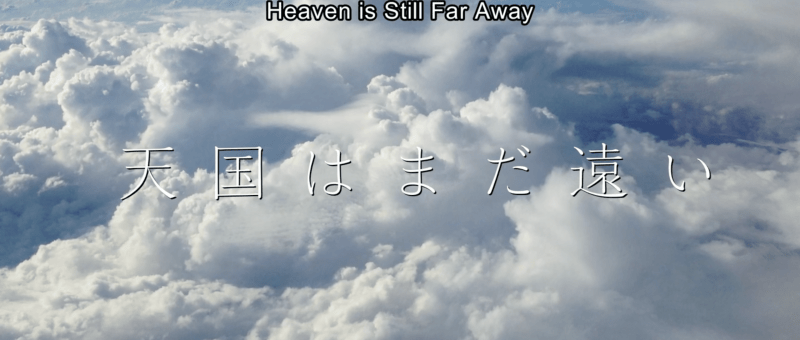
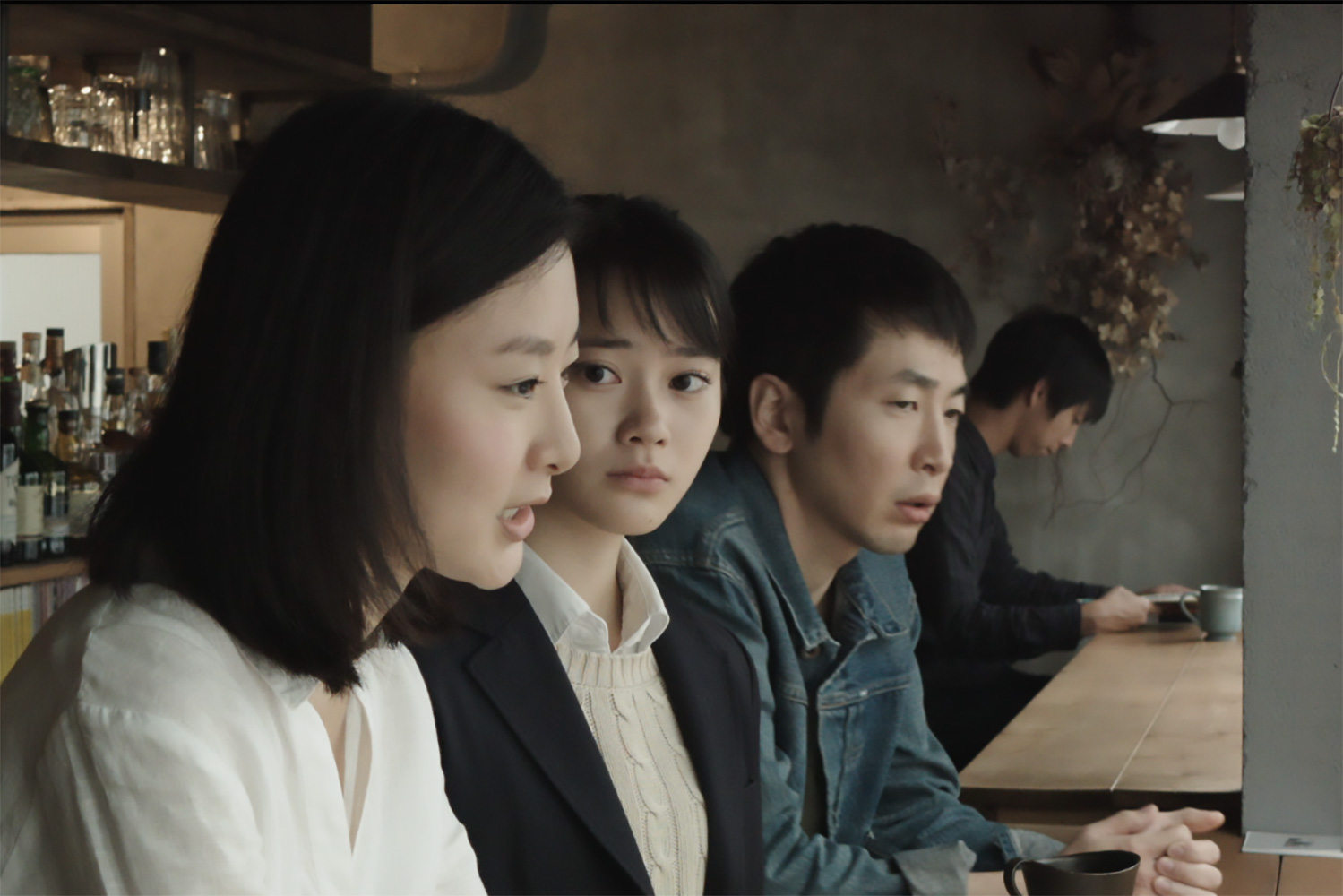
Heaven is still far away still 1Ryusuke Hamaguchi returns to the theme of objects in motion with his haunting short Heaven is Still Far Away (天国はまだ遠い, Tengoku wa Mada Toi). When one thing ends, conventional wisdom insists that something else must begin but real life shows us that that isn’t always the case. For three people attempting to deal with the legacy of an unsolved serial murder case, forward motion has been impeded, or perhaps refracted, and not least for the victim herself who remains a still point in an otherwise turning world.

Mitsuki (Anne Ogawa) tells us that her mother explained to her when she was a child that when you die you go to “heaven”, which is a place beyond the clouds. For Mitsuki, however, heaven still seems so very far off – after all, there are still so many things to experience here on Earth. At present, Mitsuki lives with Yuzo (Nao Okabe) – a strange and blunt young man who has the rather skeevy job of adding mosaics to pornographic videos. One day Yuzo gets a phone call from another young woman, Satsuki (Hyunri), who wants to interview him for a documentary she is making as a graduation project which will focus on her older sister who was murdered 17 years previously. Yuzo didn’t really know Satsuki’s sister but something he did after she died has captured her imagination and Satsuki would like to explore why he did it.

What ensues is a series of odd, concentric conversations as Satsuki tries to articulate her artistic intentions to the grumpy Yuzo who is either a quite a tactless person or one who likes to appear so for various unexplained reasons. Satsuki’s main hope, it seems, is a kind of exercise in emotional excavation. Confused by the way some things can carry on when others end, she wants to wants to mark out the shape her sister cut into the world by finding out how her presence and absence has affected the lives of those around her. For reasons which aren’t immediately clear, she wants to start with Yuzo because, through an accident of fate, he finds himself at the exact intersection of both of these points.

Satsuki asks if Yuzo bears a grudge towards her seeing as his life too has been derailed thanks to his connection with her sister’s life and death. Yuzo replies that he doesn’t – he bears the responsibility for the way his life has turned out, even if it might have been impacted by external events. Satsuki wrestles with trajectories, accepting that her family may have fallen apart on its own but always wondering what might have happened if she had died in her sister’s place, why her sister had to die rather than someone else’s, why parts of her life have also stopped in the wake of her sister’s absence. If Satsuki has “lost” something, did Yuzo “gain” it or did he “lose” too in gaining an additional burden? The only truth is that Mitsuki has become a point of refraction in each of their lives, looking on from the periphery unseen but making her presence felt even in her absence.

Hamaguchi once again makes the everyday seem strange as the past continues to haunt our protagonists, in ways both literal and metaphorical. An eery sense of sadness pervades, yet endings are refused in favour of dualistic circularity. Objects in motion must remain in motion, even if they appear to have stalled. One life refracts another, and absence defines presence. Heaven may still be far away, but it’s there all the same and its presence is felt, even if unseen.


Available to stream worldwide via Le CiNéMa Club until 24th May.

United Red Army (実録・連合赤軍 あさま山荘への道程, Koji Wakamatsu, 2007)

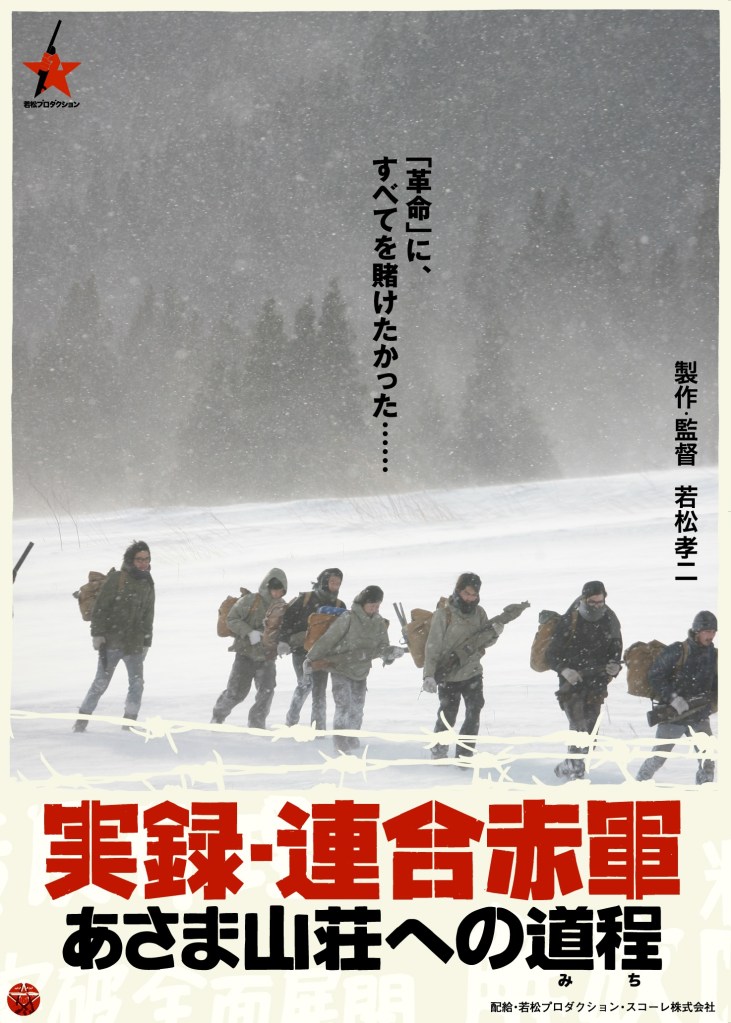
Koji Wakamtasu had a long and somewhat strange career, untimely ended by his death in a road traffic accident at the age of 76 with projects still in the pipeline destined never to be finished. 2008’s United Red Army (実録・連合赤軍 あさま山荘への道程, Jitsuroku Rengosekigun Asama-Sanso e no Michi) was far from his final film either in conception or actuality, but it does serve as a fitting epitaph for his oeuvre in its unflinching determination to tell the sad story of Japan’s leftist protest movement. Having been a member of the movement himself (though the extent to which he participated directly is unclear), Wakamatsu was perfectly placed to offer a subjective view of the scene, why and how it developed as it did and took the route it went on to take. This is not a story of revolution frustrated by the inevitability of defeat, there is no romance here – only the tragedy of young lives cut short by a war every bit as pointless as the one which they claimed to be in protest of. Young men and women who only wanted to create a better, fairer world found themselves indoctrinated into a fundamentalist political cult, misused by power hungry ideologues whose sole aims amounted to a war on their own souls, and finally martyred in an ongoing campaign of senseless death and violence.

Dividing the narrative into three distinct acts, Wakamatsu begins with a lengthy history lesson starting right back in 1960 with the birth of the student movement and the first casualty of the unborn revolution as a young woman loses her life protesting the rise of tuition fees. Despite the lack of success, the student movement intensifies during the turbulent 1960s with the renewal of the ANPO treaties and the perceived complicity of the Japanese government with America’s anti-communist warfare in Asia. Mixing archive footage with reconstructions and on screen text detailing timelines, names and affiliations these early segments are hard to follow but bear out the complexity and chaos which contributed to the inefficacy of the student movement. Soon, each of the leaders we have been introduced to has been removed from the scene leaving the older but inexperienced Tsuneo Mori (Go Jibiki) in charge of what was then the Red Army Faction.

Mori had only recently rejoined the movement after leaving in disgrace at fleeing a protest and thereby evading arrest. The Red Army Faction then merges with another sect, the Revolutionary Left Wing (RLF), to form the United Red Army. Led by Mori and a female commander, Nagata (Akie Namiki), the United Red Army holes up in a cabin in the woods in order to undergo military training for the upcoming armed insurrection. Prior to this, there had been a series of purges and executions in the city producing an atmosphere of terror and paranoia which only intensifies in the incestuous and claustrophobic environment of the ascetic mountain retreat.

Out of his depth and eager to prove himself, Mori’s revolutionary consciousness developes into a dangerous cult of personality in which his iron rule is more akin to fundamentalist religion than a serious political movement intended to change the world for the better. Wakamatsu’s depiction of these events is as terrifying as it is absurd. Maoist doctrine becomes a holy scripture as each of these would be revolutionaries is forced to undergo self criticism in order to devote themselves fully to the revolution and become a “true communist”. Brainwashed and naive, the cadre comply seeming not to realise that no self criticism they can offer will ever be good enough for Mori’s constant need for identity erasure and that each fault they offer will only be used to form the basis of the next charge levelled against them. What begins as questioning develops into screaming before descending into bloody violence and eventually murder.

If Mori’s fault is a kind of madness born of fear and insecurity, it is Nagata whose mania takes on an almost gleeful quality. A plain woman with unremarkable features and a sharp personality, Nagata, as she’s portrayed in the film, displays extreme issues relating to femininity. When an idealistic young woman arrives dressed in typical city fashions necessary to blend in with the capitalist bourgeoisie, Nagata wastes no time in berating her for her stylish clothes and makeup. Threatened both by the woman’s conventional beauty and high ranking position in another faction, Nagata takes especial care to make sure she herself remains on top. Despite being in a relationship with one cadre member and later leaving him for Mori (because it’s “right from the communist perspective”), Nagata cannot bear any hint of sexual activity and it is an ill judged kiss which ends up leading to the first set of mercilessly violent self criticism sessions eventually resulting in death as both parties are beaten and then tied up in the freezing mountain air where death by exposure is all but inevitable.

Mori declares that “leadership means beating” but when this is no longer enough the death sentences come thick and fast. Eventually, some members manage to escape and the mountain hideout is discovered. Splitting up and heading on the run, Mori and Nagata are captured while a group of five break into a mountain lodge where they take the caretaker’s wife hostage and remain under siege for nine days until the police eventually break in, arrest the terrorists and rescue the woman all of which became the first such event to be live broadcast on Japanese TV. The Asama-Sanso incident, as it came to be known, sealed the fate of the left wing protest movement in Japan as the terrorist violence of the renegade protestors forever coloured public perception.

Wakamatsu does not end his story here – returning to the captions which opened the film, he reveals to us the legacy of the failed student protest movement in the overseas activities of the Japanese Red Army, most notably in North Korea and the Middle East. The protest movement in Japan resulted in abject failure – the ANPO treaty survives, the Sanrizuka villages were destroyed and an airport built, the capitalist future arrived at speed heading into the bubble economy where the only revolution was consumerism. The glorious future of which these young people dreamed, free of class, gender, and social inequality, would not materialise as their idealism devolved into introspective dogmatic rhetoric, violence and murder. Trapped inside a fundamentalist cult, the true tragedy is that this was a children’s revolution – the vast majority of its victims under 25 years old, one just 16 and forced to participate in the death of his own brother. How much good could each of these socially conscious young people have gone on to do if only they’d found a less destructive cause? Would anyone want to live in the world born of this revolution? Contrasting the joyous camaraderie of the peaceful protests with the escalating, internecine violence of the URA, Wakamatsu’s vision of the movement he was once a part of is a necessarily bleak one but resolute in its gaze. Ugly, cold and unforgiving United Red Army is a warning from history which has only sympathy for those caught up in its terrible machinations.


Original trailer (English subtitles)