From the End of the World (世界の終わりから, Kazuaki Kiriya, 2023)

Charged with the responsibility of saving the world, a teenage girl wonders if she should in Kazuaki Kiriya’s pre-apocalyptic drama, From the End of the World (世界の終わりから, Sekai no Owari kara). After all, the suffering will continue. People will continue to be cruel and selfish. Maybe it’s better to let humanity fizzle out and least save the planet. But really whether any of this is “real” or not, what’s she’s looking for is an escape from her grief and loneliness and a world that is a little kinder and less self-destructive. 

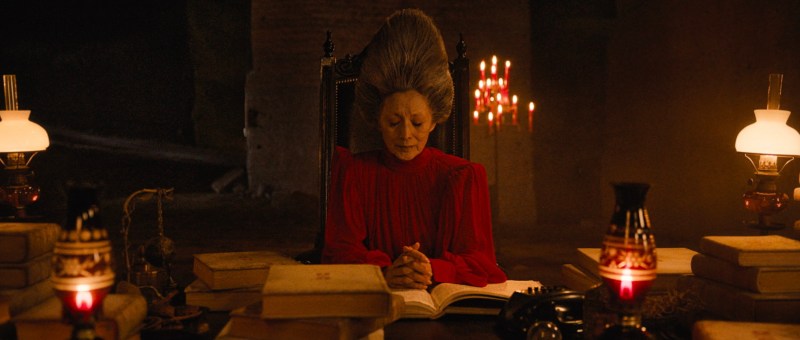
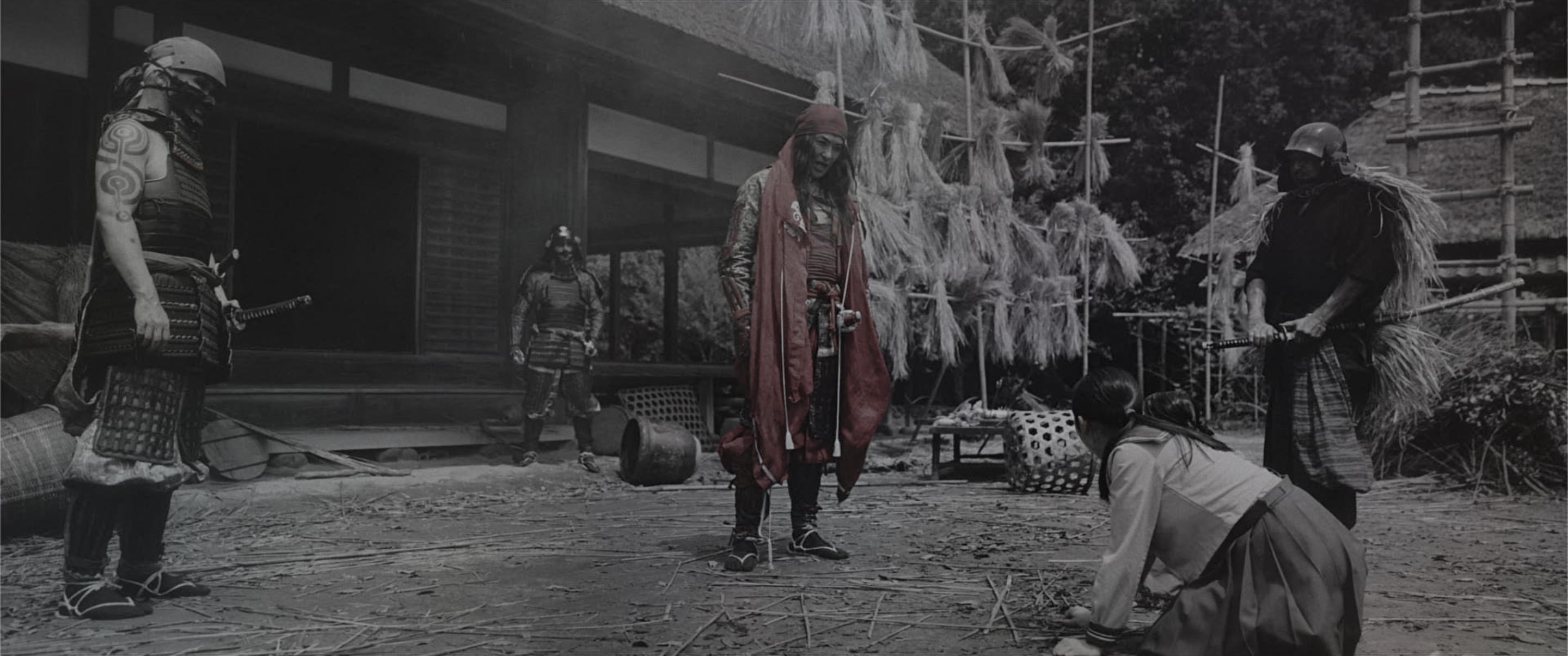
Shortly after losing her grandmother, who had been raising her after her parents were killed in a car accident, Hana (Aoi Ito) begins having strange dreams where she’s cast back to what seems to be feudal Japan where she meets a young indigenous girl whose family have been wiped out by marauding samurai. The girl’s guardian, an older woman (Mari Natsuki), explains to her that her arrival in this place has been foretold by some kind of scripture painted on the ceiling of a cave and that her duty is to deliver a letter to a shrine. Not too long later, she’s accosted by some kind of mysterious authority which seems very interested in her dreams, eventually taking her to a strange base in another cave where she meets an old woman (also Mari Natsuki) who looks exactly like the one saw in her dream. The world will apparently end in two week’s time, though she alone has the ability to alter what has been written through the power of her dreams which allows her to change people’s thoughts and thereby rewrite their destiny. 

She does not do this deliberately, but reacts instinctively to the events she encounters which the old woman claims exist in the “Sea of Sentiment”, a great confluence of human thought on which the world is built. “Understanding things is overrated. Everything’s an illusion. What’s important is your feelings,” another mysterious presence (Kazuki Kitamura) tells her, a man who exists between dream and reality and would rather the world end because as long as it exists he cannot die. In some respects, he may represent Hana’s depression suggesting that to continue to live is only to prolong her suffering and that it’s better for everyone to simply give in and let fate take its course while she weighs up kindness and vengeance using her newfound powers for “selfish” reasons to end the torment she’s been suffering at the hands of a bullying classmate who’s long been blackmailing her in taking advantage of her precarious position as a financially disadvantaged orphan. 

The quest that the old woman sends her on is really into the depths of her own heart which is wounded not only by a medical issue she seems to have forgotten but a pair of childhood traumas buried behind a door she did not want to open. The real message that she’s supposed to deliver has its own paradoxical sense of poignancy, “from the end of the world to you in the future”, which signals her nihilism and despair but also a desire for some kind of continuation or rebirth in a better, kinder world less marked by suffering or selfishness. Then again, the way of achieving that world is still rooted in violence only of a more knowing kind that heads off one particular kind of disaster and allows Hana to save “herself” in all her incarnations, but perhaps doesn’t do very much to change the human “foolishness” to which the old woman ascribes humanity’s destruction.  

Logically, it doesn’t quite hang together and not all of it makes sense (understanding things is overrated), but it has its own kind of internal consistency even if at times somewhat incoherent as it well might be if it were all the dream of a lonely teenage girl who’s given up on the idea of a future for herself because her life has been too full of suffering and unfairness. It’s no coincide the date of the end of the world is set for the same day as her high school graduation ceremony. Her world really is ending if in a less literal way leaving her all alone and forced into a more concrete adulthood while her peers get to chase their dreams a little longer by moving on to higher education while she’ll have to look for work to support herself. She may feel that nothing she does makes any difference and that she is powerless to change her fate, but also realises that she is not as alone as she thought. Featuring top notch production values and some striking production design, Kiriya’s sci-fi action drama is quietly touching in its final resolution that despite everything Hana still wants to love the world even if it’s making it very difficult. 


From the End of the World screens in New York Aug. 5 as part of this year’s JAPAN CUTS.

Teaser trailer (no subtitles)
Theatre: A Love Story (劇場, Isao Yukisada, 2020)

The problem with tortured artists is that rather than be content with destroying themselves, they destroy someone else instead. Japanese cinema has a preoccupation with narcissistic heroes, and even if he does have a rare degree of self-awareness the protagonist of Isao Yukisada’s adaptation of the novel by comedian Naoki Matayoshi, Theatre: A Love Story (劇場, Gekijo), is among the most insufferable in the sheer depths of his resentful self-loathing. The “a love story” suffix is an addition for the English title though it proves true enough in that this is a story about a love of theatre which is really a love of life and possibility only our gloomy hero is still far too much in the shadows to be able to see it clearly. 

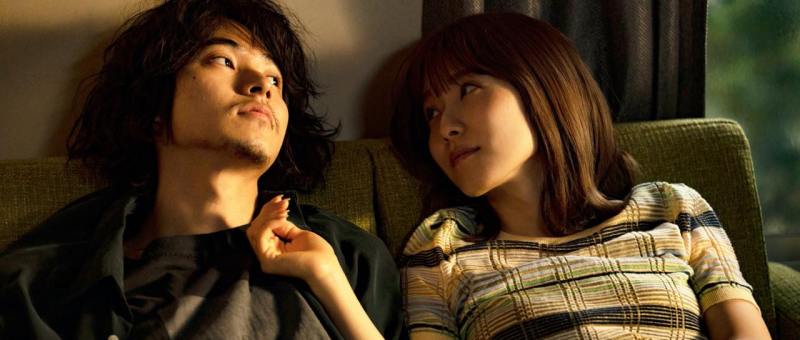
Nagata (Kento Yamazaki), whose fear of intimacy appears to be so great that he never gives away his first name, is first found wandering the streets like a zombie, muttering the words “How long will I last?” to himself before coming to a pause in front of a gallery window in which is displayed a painting of a monkey screaming under a full moon. The vision of existential despair appears to match his own and he’s obviously captivated by it, as is a young woman, Saki (Mayu Matsuoka), who quickly walks away after he creates awkwardness by intently staring at her. She tries to escape because, to be honest, not only is he a class A street creep, but he seems as if he might actually be disturbed. He asks her to go on a date the next day (today is too hot), later confessing he wanted to take her for a drink but is broke all of which makes it sound like he wants money as well as her phone number. Feeling sorry for him she gives in and is seemingly not even that bothered when he attempts to order her drink for her without asking what she wants at a nearby cafe. 

In many ways, the “meet cute” of Nagata and Saki typifies the entirety of their relationship which spans the better part of an ill-defined decade. The nicer she is to him, the more resentful he becomes. What the pair have in common is “theatre”. He’s a pretentious, avant-garde playwright, she’s a bubbly aspiring actress whose faith in the genius he keeps insisting he has only reinforces his sense of insecurity. The problem isn’t so much that lack of success is eating away at him, as it is that he actively resents the successes of others. He even becomes irritated when Saki praises Clint Eastwood, as if Clint Eastwood were his competition. Nagata simply can’t stand it when other people are praised as if the mere fact of someone else’s happiness actively depletes his own, has taken something from him, or is solely a reflection of his failures as an artist and a human being. It is really is all about him. He even refuses to take Saki to Disneyland because then he’d be in competition with Disney and if Saki said anything nice at all about the experience it would just piss him off. 

What seems impossible to understand is why Saki stays, especially after Nagata moves in with her and continues to bum around paying no rent while she works three jobs and tries to finish her uni degree. Eventually she asks him for a small contribution, maybe just something towards the utility bills, but he bizarrely replies that it’s her apartment and it’s irrational to pay for someone else’s utilities which is odd seeing as he’s just got out of the bath and has therefore clearly been using the facilities. In his voiceover, he confesses that he said that in order to avoid having a serious conversation and perhaps to mask a sense of internalised shame over essentially being a kept man, something which is only finally brought home to him by an old acting acquaintance, Aoyama (Sairi Ito), who offers him some freelance writing work but that only seems to deepen his artistic crisis as he battles a sense of selling out in neglecting his playwriting. 

If Saki is underwritten it is partly intentional in that we see her only through Nagata’s eyes and he barely looks, seeing in her only a source of a salvation he is too afraid to accept. He snaps at her and calls her stupid, causes her anxiety, embarrasses her in front of her friends and is, as Aoyama puts it, “a jerk”. His behaviour is in any case abusive, but he’s so blinkered that he never notices that she’s the same as him, anxious on an existential level and in search of mutual protection. By the time he’s done with her, she’s no longer so bright and cheerful, well on the way to alcoholism born of depression and sense of failure on reflecting that she’s a woman approaching 30 who has probably failed to make it as an actress in Tokyo, is exhausted by her city life, and has been slowly destroyed by Nagata’s mix of feigned indifference and possessiveness. Aoyama and his best friend from school Nohara (Kanichiro Sato) make a final desperate intervention to save Saki, pointing out that in his toxic narcissism he destroys her to save himself, unable to bear the idea of her awakening to that which he deeply believes but does not want to acknowledge, that really he’s just no good. 

“As long as we have theatre there’s no need to despair” Nagata finally exclaims, rediscovering a love for the form in its capacity to remake the world, to show him both what is and could be as he rewrites his tragic, delayed coming-of-age romance as an emotionally authentic stage play now convinced, like the old Saki, that he really does want everyone to be happy after all. Theatre: A Love Story is the age old tale of the curtain coming down on an arc of one’s life, accepting that something has ended and that it’s OK, it’s just the way life is. Saki, somewhat problematically declares she wouldn’t have it any other way because she loved Nagata for everything he was and if he’d changed he wouldn’t be the same. In a sense we’re left with Nagata’s artistic validation and a tacit condonation of his emotionally abusive behaviour, but then Yukisada undercuts the final message with a melancholy credits sequence in which he perhaps hands back to Saki even in her passivity as she finally looks for an exit.   


Currently available to stream via Amazon Prime Video in the UK (and possibly other territories).

Original trailer (no subtitles)