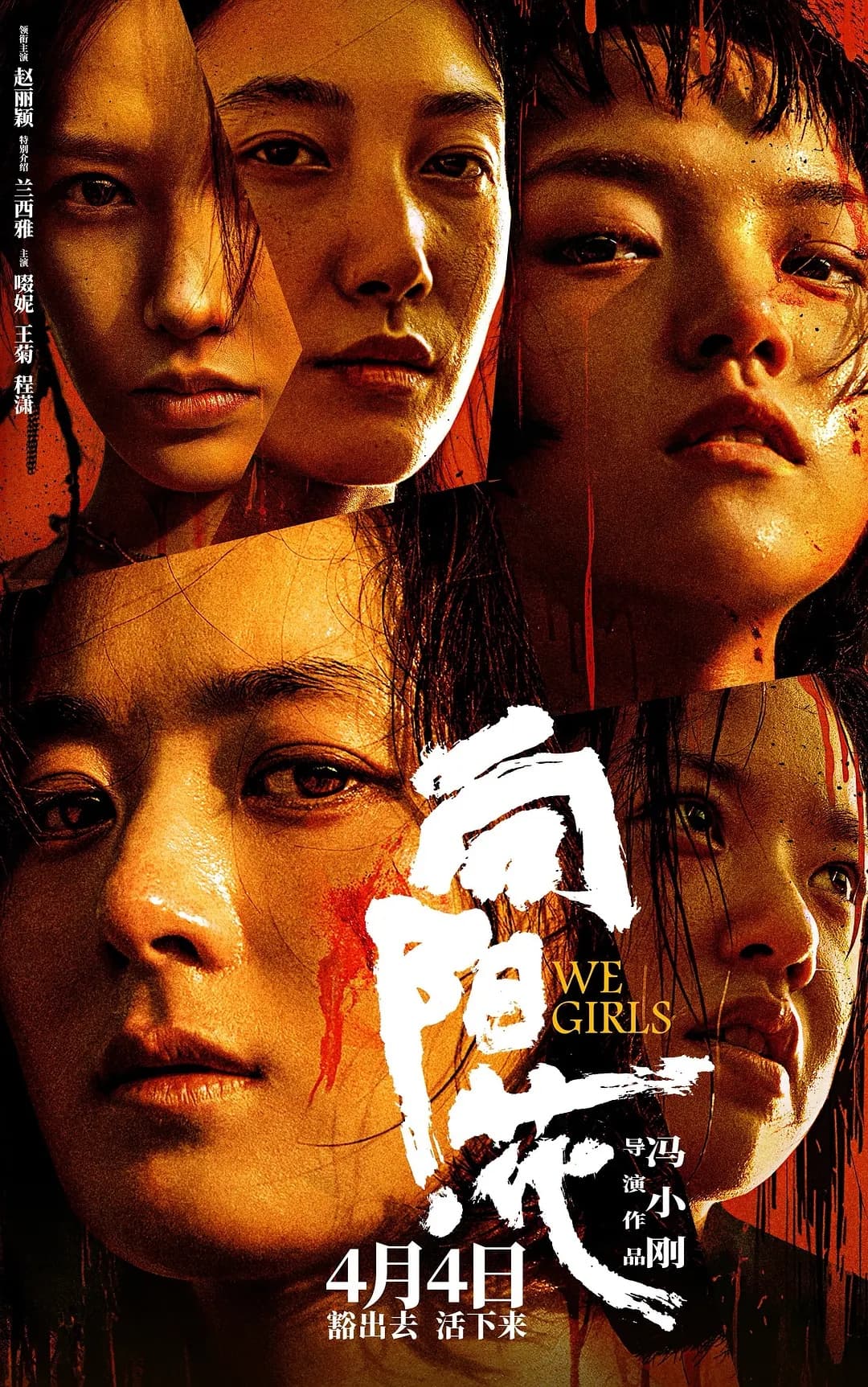
We Girls (向阳·花, Feng Xiaogang, 2025)

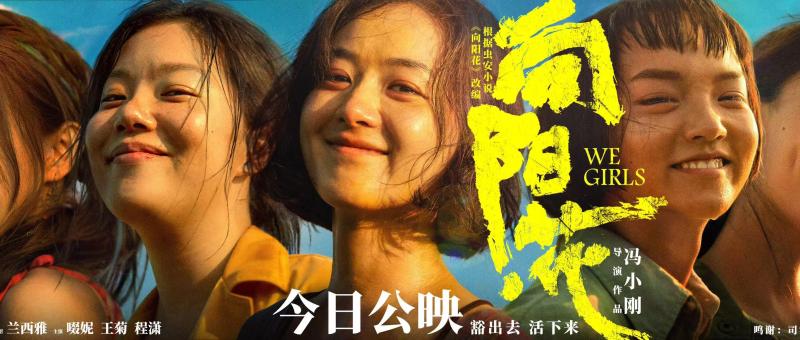
Feng Xiaogang’s films often straddle and awkward line in which it’s not entirely clear whether he’s deliberately being subversive or only unwittingly. The surprising thing about We Girls (向阳·花, Xiàngyáng·huā) is, however, its contradictory attitudes towards the modern China of which one would not otherwise assume the censors would approve. Nevertheless, the true goal appears to be paying tribute to the prison and probation service which is thoughtful and compassionate, geared towards helping these unfortunate young women who’ve made “poor choices” to reform and become responsible members of society. 

But like many films of this nature, the problem is that the society the prison authorities want these women to “reform” into doesn’t exist. The onus is all on the women to change, while no attempts have been made to address the circumstances that led to them being sent to prison which are also the same circumstances they will be returning to. The women don’t appear to receive any additional education or learn any new skills while inside, and when they get out it’s impossible to find a mainstream job that will hire a woman with a criminal record. Consequently, they are forced into short-term, casual labour which is often exploitative while male employers withhold pay to extract sexual favours. 

Aside from praise for the police force, the film is also a celebration of female solidarity and it’s clear that their biggest enemy is entrenched misogyny and the patriarchal society. Yuexing (Zhao Liying) is forced into a marriage with a man who couldn’t work because of a physical disability. As he resented their daughter and gave her no help with childcare, Yuexing felt responsible when the baby experienced hearing loss after contracting meningitis and was determined to save for a cochlear implant. To earn more money, she became a cam girl but was caught and sent to prison for two years for obscenity. Mao Amei (Cheng Xiao), meanwhile, is an 18-year-old deaf-mute orphan exploited by criminal gang who are sort of like her “family” but force her to steal for them. 

Having learned a little sign language for her daughter, Yuxing becomes Mao Amei’s interpreter in prison, but the pair find things on the outside much more difficult than in. Apparently illiterate and unable to speak, Mao Amei cannot rent a place to stay and is caught breaking into an abandoned car. The police take pity and let her go, but also take most of the money she was given on her release. Yuexing, meanwhile, discovers her husband abandoned their daughter who is now in an orphanage but is unable to reclaim her without a stable income and permanent address. She finds a job as a hotel maid, but is falsely accused of thievery by a wealthy businessman on a power trip and subsequently fired for concealing her previous conviction. Realistically, the women have little option but to fall into criminality because there really are no other options. 

Still, they’re supported by a network of female solidarity from sympathetic corrections officer Deng Hong (Chuai Ni), herself a foundling raised by a policeman, to another young girl sent to prison for reselling exotic animals off the internet. Orphanhood is a persistent theme with China’s longtime child trafficking problem ticking away in the background. The gang of thieves is eventually exposed as running a baby farm to make up for the decline in their traditional line of work thanks to digitalisation. Yuexing is faced with an impossible decision when she discovers that a wealthy couple are keen to adopt her daughter and are prepared to buy her a cochlear implant right away, knowing that it would be wrong to deny her this “better life” but also that her child has been taken away from her because of her socio-economic marginalisation and husband’s indifference. 

It’s only thanks to the found family that emerges between the women because of their shared experiences that they are able to find a way through, while small acts of “foolish” kindness are later repaid in kind. To that extent, the resolution falls into the realms of fantasy as the women are saved by a deus ex machina rather than through finding a place for themselves within the contemporary society and “reforming” themselves in the way the prison service insists. In the end, they are only able to free themselves through an act of violence that comes with additional, though bearable, costs and grants them the possibility of making a new life for themselves if one spiritually and geographically still on the margins of the contemporary society.


Trailer (Simplified Chinese / English subtitles)
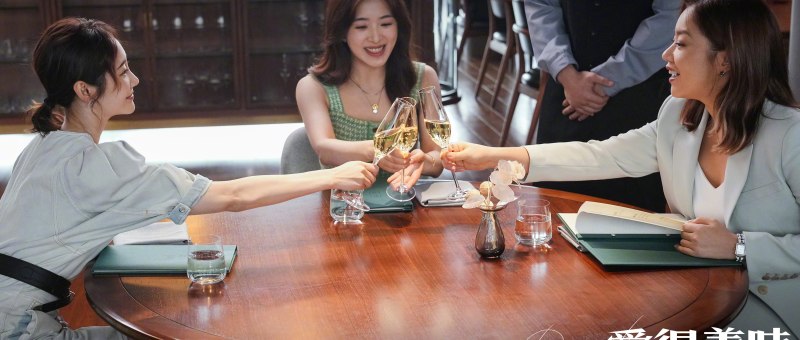
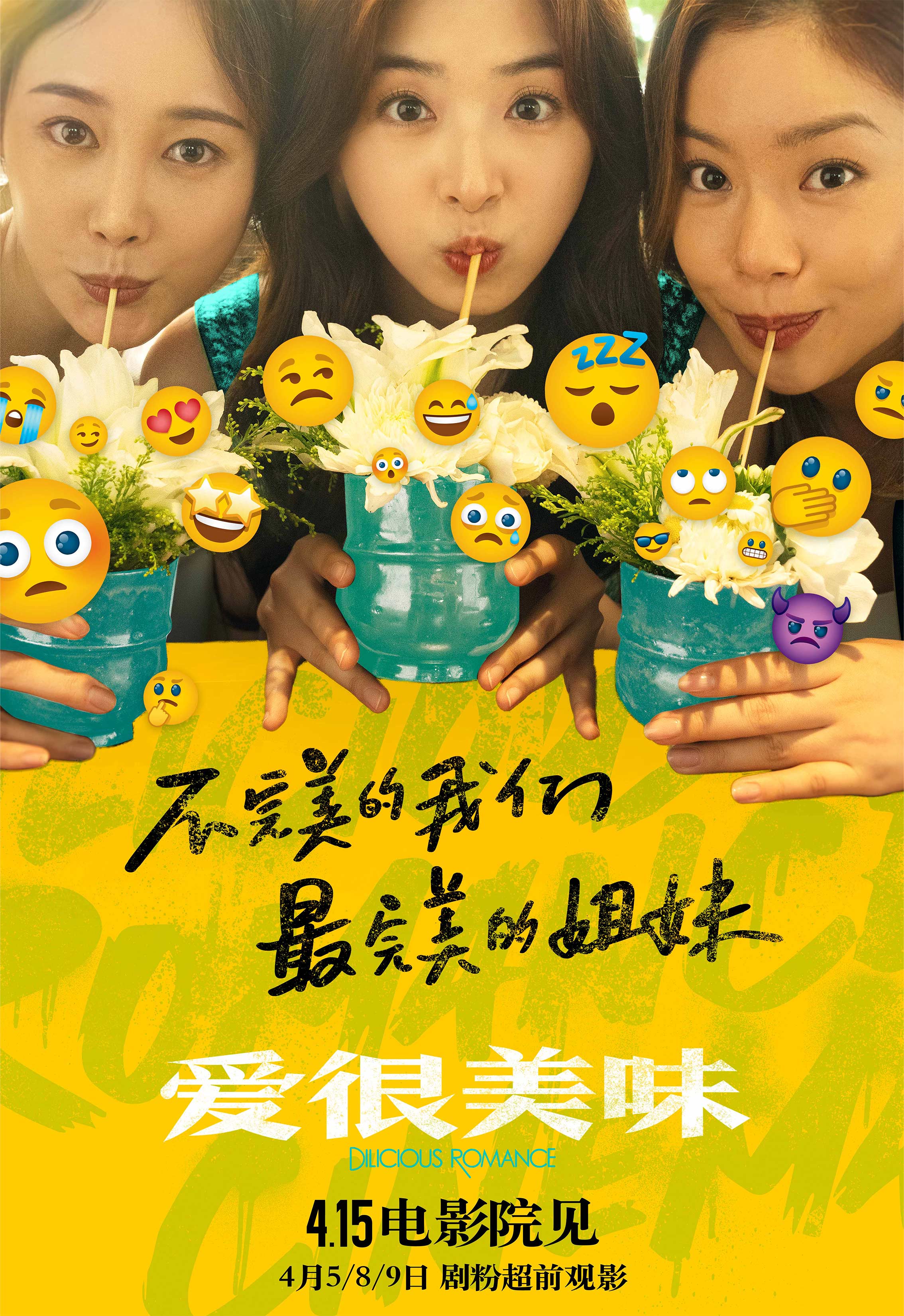
Delicious Romance (爱很美味, Leste Chen & Hsu Chao-Jen, 2023)

Three “best friends forever” find themselves struggling with happy ever after in the big screen sequel to the hit TV show Delicious Romance (爱很美味, ài hěn měiwèi). Exploring the lives of contemporary women, the often hilarious and infinitely relatable film is both a female friendship drama and a quiet advocation for the right to find one’s own balance in life even amid the series of social expectations each of the women quietly contends with that eventually threaten their friendship.

Meng (Wang Ju), Xin (Baby Zhang Hanyun), and Jing (Li Chun) have been friends since school where they vowed to always remain so. 20 years later, they have each attained a kind of success in both career and romance but are now beginning to flounder as the warm glow of temporary fulfilment starts to wear off. TV producer Meng is happily living with fitness enthusiast Lu Bin (Zhang Fan) but the difference in their social status continues to disrupt the relationship while she encounters workplace strife. Xin works in PR for a wedding company and is expecting a baby with boyfriend Zhang Ting (Ren Bin) but is having second thoughts about marrying him in part because of the failure of her first marriage but also because he’s become worryingly overprotective. Jing, meanwhile, quit her job in IT to open a restaurant but is experiencing difficulty keeping it afloat amid the coronavirus pandemic while she abruptly breaks up with her film exec boyfriend Shanmu (Zhao Chengao) after discovering that he still hasn’t deleted the dating apps on his phone. 

Many of the problems they face are the same given that they all live in a patriarchal society, but each of them faces them slightly differently. Xin, for example, explains that he’s joined a company which has a majority female staff and is run by a progressive female boss who assures her her pregnancy won’t be a problem as they run a flexible workplace geared towards supporting women in society. Yet she soon realises that her boss is run ragged and her image of “having it all” is largely a PR front as Xin discovers when she’s pulled off a campaign to do her boss’ son’s art homework. Feeling professionally sidelined especially as the controlling Ting doesn’t let her attend after work events, Xin starts to wonder if she’s made the right decision doubting that it’s really possible to have fully balanced and fulfilling personal and professional lives. 

Meng finds something similar when her boss gives her a warning and insists she land the TV rights for a popular sci-fi novel by a good-looking author or fire one of her team. Working for a station that specialises in TV drama aimed at a stereotypical female audience, she too looks down on her work but immediately faces sexism from author LuoKK (Patrick Nattawat Finkler) who dismisses her suggesting that a woman won’t be able to do his sci-fi novel justice. In a minor gag, neither he nor any of his obnoxious buddies understand the concept of entropy which is central to the novel though both Meng and LuoKK’s  female agent easily explain it. Having spent a long time abroad, LuoKK appears prefer speaking English and originally claims not to have a WeChat which would make his life near impossible in contemporary China. To land the contract, Meng has to pretend to be into mobile gaming getting her boyfriend Lu Bin to play on her behalf while squaring off against an unpleasant ex who has also befriended LuoKK. 

Jing also takes on alternate personalities while trying to trap Shanmu into exposing himself as a cheat. With her restaurant shut down for a fire system repair, she’s offered the opportunity to become an influencer trashing highly rated restaurants for clicks but is quickly disillusioned with the duplicity of online video culture. Like Xin she struggles with her decision to follow her dreams as she faces both personal loss and professional setbacks while battling parental expectation in her family’s continued disapproval of her desire for independence. 

The women are brought together by Meng’s quest to triumph at the office party with a dance routine just like they did at school, only instead of an inappropriate song about “meeting people for drinks and gossip”, she plans to Fosse it up with All That Jazz. When their respective troubles put their relationship under strain, the trio reevaluate their friendship and realise its greatest quality is the unconditional support they give each other as each of them comes to an accommodation with their various difficulties through coming to understand themselves better. Authenticity really is the key as rammed home both by the skewering of the gimmicky restaurant the girls visit in the opening scene and Meng’s realisation that they should perform their high school dance after all rather than making a bid for an affected sophistication. Charmingly heartfelt and amusingly quirky, Chen and Hsu’s zeitgeisty comedy captures the absurdity of life as a woman in the contemporary society while allowing each of the women to take charge of their own lives and destinies through the power of self-knowledge and female solidarity.


Delicious Romance screened in UK cinemas courtesy of CMC

International trailer (English subtitles)

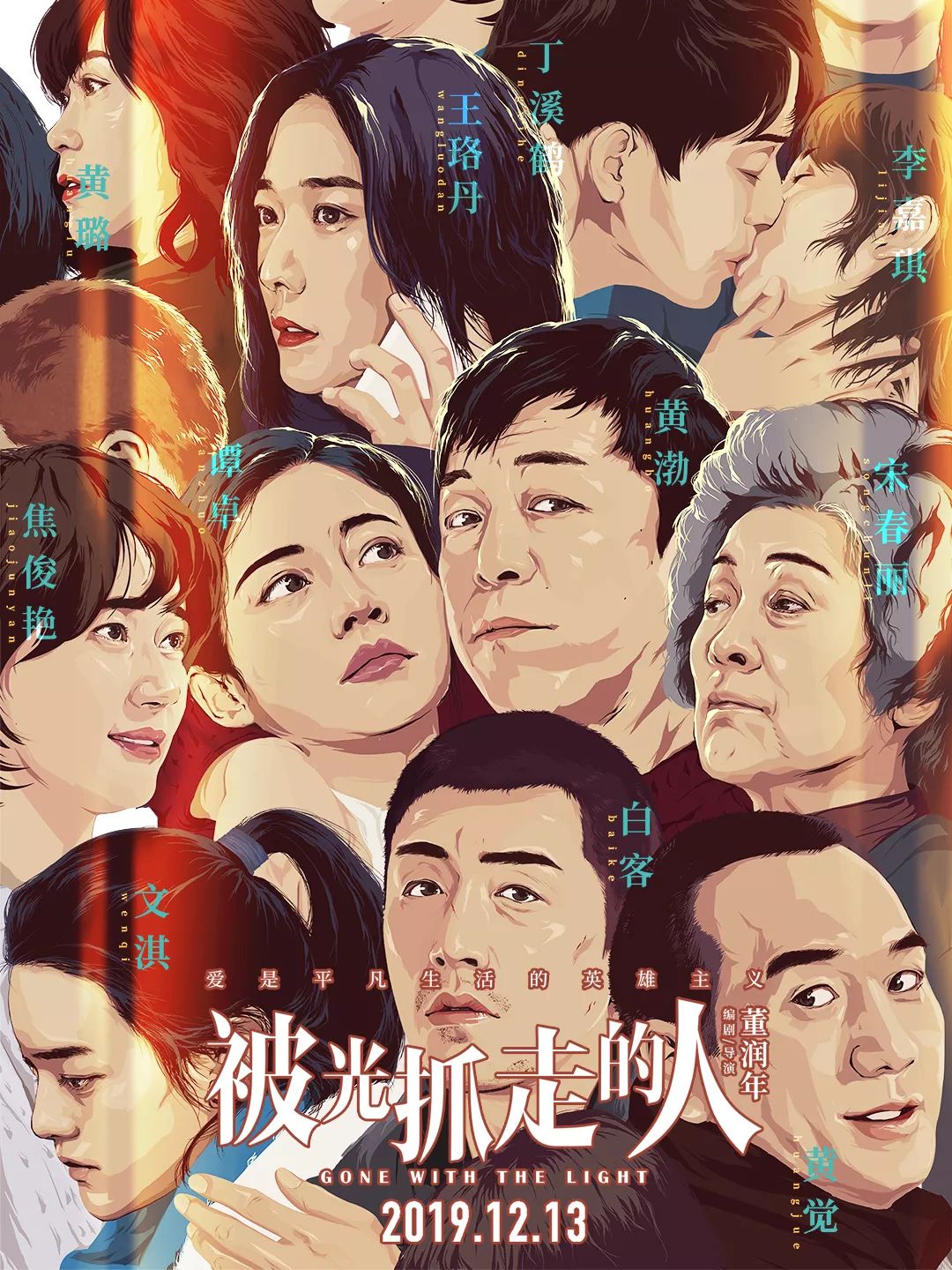
Gone with the Light (被光抓走的人, Dong Runnian, 2019)

What is love, and in the end does it really matter? It’s a question the mostly middle-aged couples of Gone with the Light (被光抓走的人, Bèi Guāng Zhuāzǒu de Rén) who perhaps assumed they were past such existential questioning find themselves contemplating after an unprecedented event causes the disappearance of seemingly random people from all over the world giving rise to the rumour that those taken were those truly in love. But if that’s so, what does it mean for the overwhelming majority left behind, suddenly lonely and uncertain wondering if they’ve been spared or judged and found wanting for their lack of emotional fulfilment. 

At 10am one spring morning, a brief flash of light creates a slight temporal disturbance causing a small percentage of the population to simply vanish. No one knows what happened or where they’ve gone, but the connection is later made that many seem to have been taken in pairs giving rise to the theory that the disappeared are the only true lovers. This is a minor problem for some of the left behind who have lost spouses twice over, not only literally but emotionally in realising that their loved one was in real, deep love with someone else. Meanwhile, those not taken begin to wonder why, questioning the validity of their relationships, doubting that their loved ones really love them but not quite daring to ask the same question in reverse. 

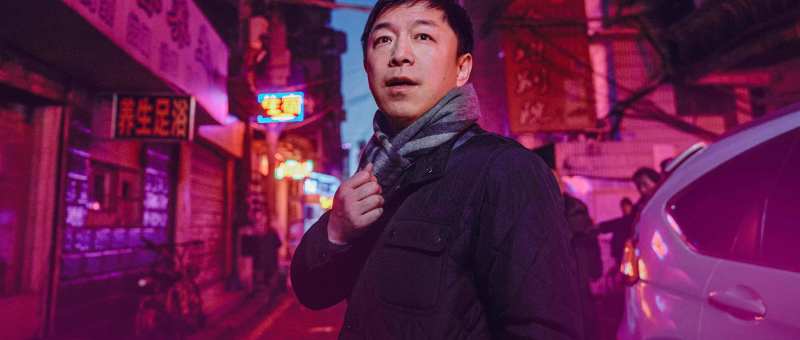
Dong opens the film with a vox pop session questioning several people about the nature of love, some of whom we’ll get to know better and others not. Our hero, school teacher, Wenxue (Huang Bo), unconvincingly claims that he does not put any stock in the admittedly unscientific theory that only true lovers were taken and that the rumours have not affected him or his wife but as we later see they have profoundly unsettled his unexceptional, middle-class family life which was at least superficially happy or perhaps merely unhappy in the most ordinary of ways. Before the light, we see him annoy his wife by waking her up smoking in bed before they have perfunctory, routine sex over which they discuss Wenxue’s hopes for promotion and whether or not it’s appropriate to schmooze with the headmaster to smooth the path. The fact they weren’t chosen eventually becomes a kind of embarrassment, the promotion going to a man whose wife disappeared on him for the slightly strange reason that being betrayed in love somehow grants him the moral high ground. Wenxue, like many, goes to great lengths to excuse himself, getting a fixer to photoshop pictures of his wife along with train tickets to make out she was in another town when the light descended.

Meanwhile, Li Nan (Wang Luodan), a woman who was in the middle of trying to divorce her husband when the light struck finds herself accosted by his mistress (Huang Lu) demanding to know where he is seeing as he did not ascend with her. The obvious conclusion is that he had another woman, but the quest forces each of them to reassess their true feelings towards the missing man, the mistress desperate to prove she wasn’t just an “adulteress” but a woman in love, and the wife that she really is ready to let him go. A young woman (Li Jiaqi) who threatened to commit suicide by jumping off a roof when her parents tried to stop her marrying her boyfriend (Ding Xihe) suddenly doubts her feelings when her parents disappear together while she and the man she thought she loved are left behind. A petty thug (Bai-ke), in the only subtle implication of a same sex love, becomes obsessed with the idea that his friend has been murdered by a TV presenter who had been bothering him and his death has been covered up to look like one of the disappearances, perhaps again hoping to find evidence against a romantic rejection. 

Talking to another man in a similar situation Wenxue is given a dressing-down, reminded that he’s been extremely self-involved and that the problems he’s now able to see in his marriage thanks to the light were there all along, only now he’s refusing to face them in a much more direct way. He couldn’t or chose not to see that his wife was lonely and filled with despair while flirting with an equally lonely woman at work. His confrontation with her provokes his only real moment of emotional reckoning as they each reflect on the fantasy of romance and its capacity to dissipate when realised. Walking in on his teenage daughter getting dumped for the first time he’s perhaps in the best position to offer advice, even if it’s of the fairly prosaic kind to the effect that she’ll get over it in time. “Your lies make me ashamed” she’d fired back at her parents’ middle-aged hypocrisy, a very ordinary marriage in which perhaps the “love” has gone, in one sense, but equally might be succeeded by something else. “It’s alright, you will know it in the future” Wenxue tells his heartbroken daughter but might as well be talking to himself, beginning to feel the love after love in conceding that perhaps this is what “love” is rather than any kind of “rapture” literal or otherwise. A beautifully pitched meditation on the consequences of love, the madness, violence, and loss, Gone with the Light finds its release in stillness and a gentle contemplation of that which remains when everything else is burned away. 


Gone with the Light streamed as part of this year’s New York Asian Film Festival.

Original trailer (Simplified Chinese subtitles only)