A Century in Sound (百年の音色, Nick Dwyer & Tu Neill, 2024)

Listening cafes are a phenomenon particular to Japan in which the music is the draw rather than the quality of whatever refreshments are available. Indeed, as Nick Dwyer and Tu Neill’s documentary A Century in Sound (百年の音色, Hyakunen no neiro) makes plain, they are spaces of community and identity in which people with similar tastes come together even if, as at classical music cafe Lion, they sit in silence to better absorb the music. Exploring three such cafes which are themselves a dying breed, the film also examines Japan’s complicated 20th century history and the shifting tastes that accompanied it.

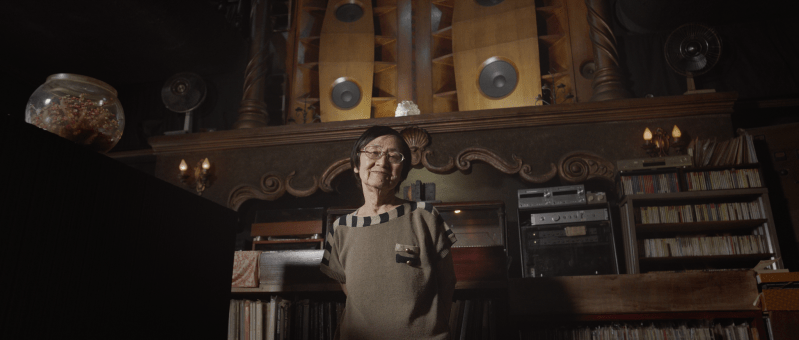
This is evident in the first cafe visited, Cafe Lion, which opened in 1926 and catered to a then new interest in European classical music which in Japan was viewed as something new and exciting. The nation was still emerging from Meiji-era transition and at that time, before the war, entering a moment of fierce internationalism and creativity. The current manager is in her 80s and relates her own memories of another Tokyo before the fire bombing along with the ways the city changed afterwards. Cafe Lion was among the first buildings to be rebuilt and they pride themselves on the quality of their sound system, even deciding to stop serving food because it was considered too noisy and got in the way of the customers’ ability to hear the music. Her son will be taking over the business, so she’s hopeful that this tradition will survive and they’ll be able to continue spreading the love of classical music in the wider community.

The reason these spaces originated was that in the beginning records and sound equipment were expensive so people couldn’t afford to buy their own and would request music they wanted to hear at a cafe instead. Jazz Kissa Eigakan didn’t open until 1978, but though it may have arrived earlier, the owner, Yoshida, attributes the popularity of jazz to a desire for freedom in the post-war society as exemplified by the protests against the security treaty with the Americans and subsequent anti-Vietnam War movement. A former film director, he found the same energy in the Japanese New Wave and opened the cafe to share his love of jazz and film even going so far as making it his life’s work to construct his own sound system to get the best possible sound for his customers that won’t leave them feeling tired or overwhelmed. He also hosts film screenings demonstrating the various ways these spaces have become community hubs that provide a refuge for people with similar interests along with a place to relax and be welcomed in an otherwise hectic city. 

That seems to be the draw for Atsuko, a regular at rock music cafe Bird Song which mainly plays Japanese music from the 70s and 80s. In her teenage years, she’d been a frequent visitor to famed rock cafe Blackhawk before going travelling and then settling down to have a family. Now regretting that she gave up her love of music, she’s returned to Bird Song to rediscover it along with another community of like-minded regulars. While Yoshida discusses the era of the student protests, the owner of Bird Song cites Happy End’s 1971 album as a turning point in not only in Japanese music but culturally in moving towards the post-Asama-Sanso society and the consumerist victory that led to the Bubble Era. He posits City Pop as the sound of consumerism and while looking back on his time as an ad exec in the era of high prosperity does not appear to think they were particularly good times or at least that they lacked a kind of spirituality that his customers are looking to rediscover in music. 

Dwyer and Neill make good use stock footage and films as well as artful composition to compensate for the talking heads while fully conveying the richness and warmth of these spaces along with their welcoming qualities. Though it’s obviously much easier now to access music wherever and whenever one wants, the cafes provide an optimal listening environment that no home system can replicate while simultaneously providing a place where people can come together and shut out the outside world. Though they may be dying out in a society driven by convenience, the owner of Bird Song has to work a second job as a security guard just to keep the lights on, the cafes represent the best of what a city can be in recreating, as one customer describes it, a village mentality of care and community built on the back of a love of music.


A Century in Sound Escape screened as part of this year’s Nippon Connection.

Trailer (English subtitles)
BAUS: The Ship’s Voyage Continues (BAUS 映画から船出した映画館, Hokimoto Sora, 2025)

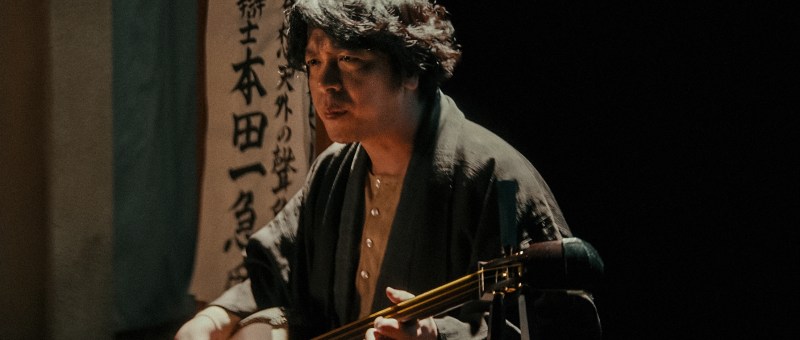
According to the hero of Sora Hokimoto’s BAUS: The Ship’s Voyage Continues (BAUS 映画から船出した映画館, Eiga kara Funadeshita Eigakan), films are born of man’s battle against time and the desire to extend one moment into eternity. Yet his father was always looking for a new “tomorrow” and a path towards the future that ironically kept him from being fully in the  present. Inspired by the memoirs of Takuo Honda, the film is effectively a people’s history of cinema culminating in 2014 with the closure of the Baus Town cinema amid a climate in which film itself seems to have entered a terminal decline.

Indeed, Takuo’s father Shigeo (Shota Sometani) becomes almost a ghost himself. Having come to Tokyo insisting that movies were his “tomorrow,” the war leaves him a shadow of his former self and a spectral presence in the auditorium. Though Takuo’s mother (Kaho) and others at the cinema have discovered a new community eating together every night after the final screening, Shigeo is often out drinking with the chamber of commerce and rarely returns home. Still looking for “tomorrow,” he appears lost for direction despite opening a new, more modern cinema fit for the post-war era. 

As the mother of Shigeo’s wife Hama says, men are focused on past and future while it’s women who are forced to face the present leaving most of the more practical problems for Hama to deal with. Shigeo’s brother Hajime (Kazunobu Mineta) had perhaps been overly obsessed with the past and ultimately unable to move forward. After coming to Tokyo with Shigeo, he became an unsuccessful benshi only to be rendered obsolete by the arrival of talkies. Despite being drawn to the anti-capitalist rhetoric of the migrant workers, he later falls hard for militarism and becomes a casualty of the war both literally and spiritually. Shigeo laments the increasing censorship of the late 1930s complaining that it has become impossible to make or show films, but it’s little better afterwards as the Occupation forces push Hollywood movies at the expense of the European or Japanese.

Hajime had snapped back that entertainment wouldn’t change anything and that war purified the world, but Shigeo insists that films are a window from which the local population can learn about other lives and other places, a means of “building the heart” that might a save a soul. The older Takuo envisages a world in which watching a film normally or loving someone normally might become political acts in themselves. He weaves his personal history of film, which is also that of his family, with the political realities of the mid-20th century in which beautiful forests are cut down to make coffins for the endless dead and unexploded incendiaries lurk like ticking time bombs both literally and psychologically as, as one old man puts it, the nation’s struggles to reckon with its role in the war or its traumatic consequences. 

Nevertheless, even if Takuo is closing Baus Town for reasons stemming from his own traumatic loss, he continues to look for tomorrow despite his old age. Asked what his dream was, he replies only that he wanted his children to have better lives than he did, though he worries he may have failed. In any case, he remains lost within the labyrinths of cinema. The building itself, originally surrounded by fields in a much smaller Kichijoji, becomes a haunted space in his memory, half dream and longed-for place of warmth and salvation in which he remains a small child searching for his father in the empty auditorium.

The name for Baus Town is taken from the bow and stern of a ship, echoing Takuo’s own search for other horizons and a constant process of moving through the world. He too is trying battle time and make a moment last an eternity while admitting that there’s nothing so beautiful as smoke in the projector beam. He asks his daughter if smoke, like movies, isn’t connected to the afterlife and there are ways in which Takuo has also become a ghost, both haunted and haunting while films are themselves a kind of other world of the living past and a way of communing with those no longer here. Taking over production after Shinji Aoyama passed away, Sora gives the film an elegiac, poetic quality while asking if cinemas too might be resurrected in the same way as film even as Takuo ponders new directions while continuing to sail ahead in search of tomorrow.


BAUS: The Ship’s Voyage Continues screened as part of this year’s Nippon Connection.

Original trailer (no subtitles)

Images: ©Honda Promotion BAUS/boid 

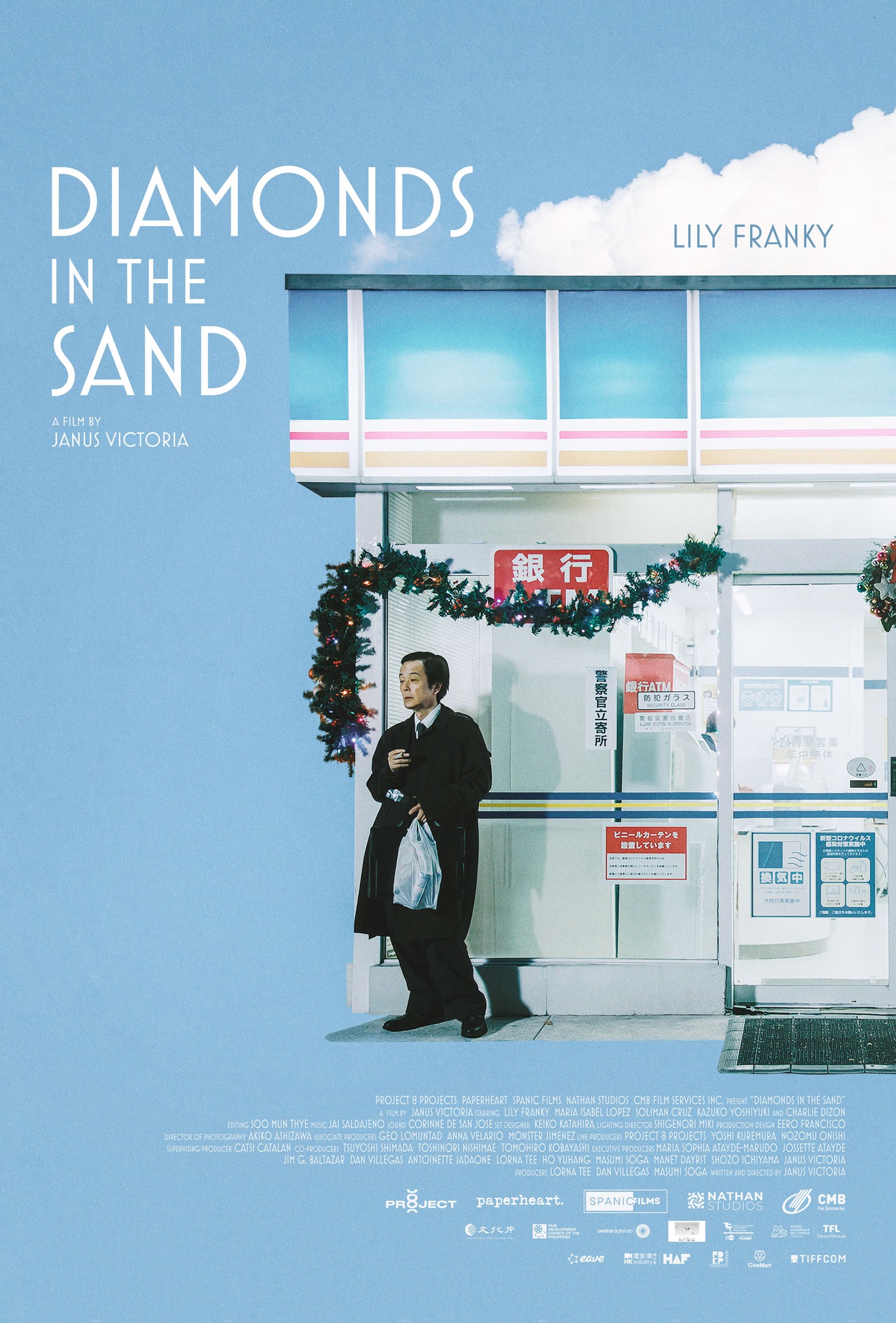
Diamonds in the Sand (砂の中のダイヤモンド, Janus Victoria, 2024)

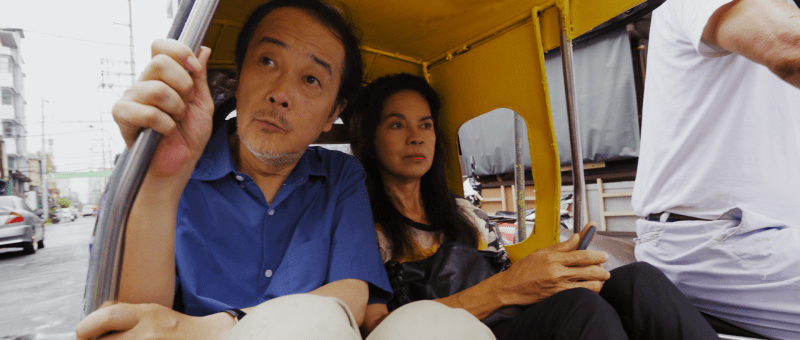
A middle-aged salaryman is awakened to the depths of his loneliness when his upstairs neighbour dies in an apparent lonely death in during the pandemic in Janus Victoria’s Filipino co-production, Diamonds in the Sand (砂の中のダイヤモンド, Suna no Naka no Diamond). Contrasting an epidemic of loneliness with the more literal spread of Covid-19, the film finds its hero trying to redefine his life and discover what gives it meaning in making connections with others. 

Yoji (Lily Franky) is indeed an isolated man whose world is shrinking around him. The DVD department of a large manufacturer where he works has been wound up and he’s been transferred to one that seems to deal in pornography is basically four men in a room with nothing to do. It’s no surprise that he tells his bosses he doesn’t need his computer when they go remote during the pandemic. A large clock seems to tick out his remaining time as if reminding him that his life is running out. Things aren’t much better at home, either. Divorced, he lives in a tiny, colourless flat and seems to have few friends. He’s aloof from even those he does know and always stands slightly outside of the group. One of his former colleagues has been given a big promotion, but it involves moving to Thailand which Yoji seems to regard as a kind of exile or age-based banishment even as he reminds them how much Japan has invested in the nation.

Yoji first becomes aware of the death of his upstairs neighbour when his discomposing body begins leaking through his ceiling. Staring at the stain left behind, he begins to contemplate the reality of his own lonely death and the meaninglessness of his life. He begins going to visit his mother in a care home and trying to rebuild a meaningful relationship with her, but she also asks him if he’s ever really been happy in his life. Though her body is failing and her days are sometimes dull or lonely, the memories of past happiness sustain her. If Yoji doesn’t even that, then his old age would be even more miserable and his life not worth living. The only spark of joy is a colourful pinwheel he bought for his mother on a whim but enlivens each of their worlds with a sense of fun and vibrancy.

This sense of encroaching isolation and emptiness is directly contrasted with the bustling streets of Manila which are alive with colour and life and where, Yoji is told, there is no loneliness. Minerva (Maria Isabel Lopez), the middle-aged woman who looked after his mother in the care home, is one of many working abroad to support a family in the Philippines and experiencing different kinds of loneliness and isolation in Japan. She has an almost grown-up daughter, Angel (Stefanie Arianne), whose father was Japanese, but she was not really accepted by his family and struggles to find a place for herself in either society. After abruptly travelling to Manila in search of a life less lonely, Yoji becomes to her almost a surrogate father offering the reassurance and connection that her own father obviously did not.

But Minerva has a point when she says Yoji lacks compassion and even after being warmly accepted by the community in the Philippines and witnessing their interconnected way of life refuses to become fully a part of it or to help others when they are in need. He sees coverage of extrajudicial killings on the television and is confronted by the fact that life is cheap here too, but is also judgemental and unwilling to fully embrace the community around him. Still, he ironically comes across a kind of graveyard of “surplus” Japanese goods like Mr Suzuki’s bowls that the house clearance staff patiently boxed up and threw away as if erasing his existence. One of the ashtrays still has ash in it. It’s this that perhaps enlightens him to what’s really important in life and convinces him of the necessity of accepting his responsibility to others rather wanting love connection from them without really thinking about giving anything in return. Like looking for diamonds in the sand, it’s the little things that matter and just asking someone if they’ve eaten yet can in its way save a life.


Diamonds in the Sand (砂の中のダイヤモンド, Janus Victoria, 2024) screened as part of this year’s Nippon Connection.

Trailer (English subtitles)
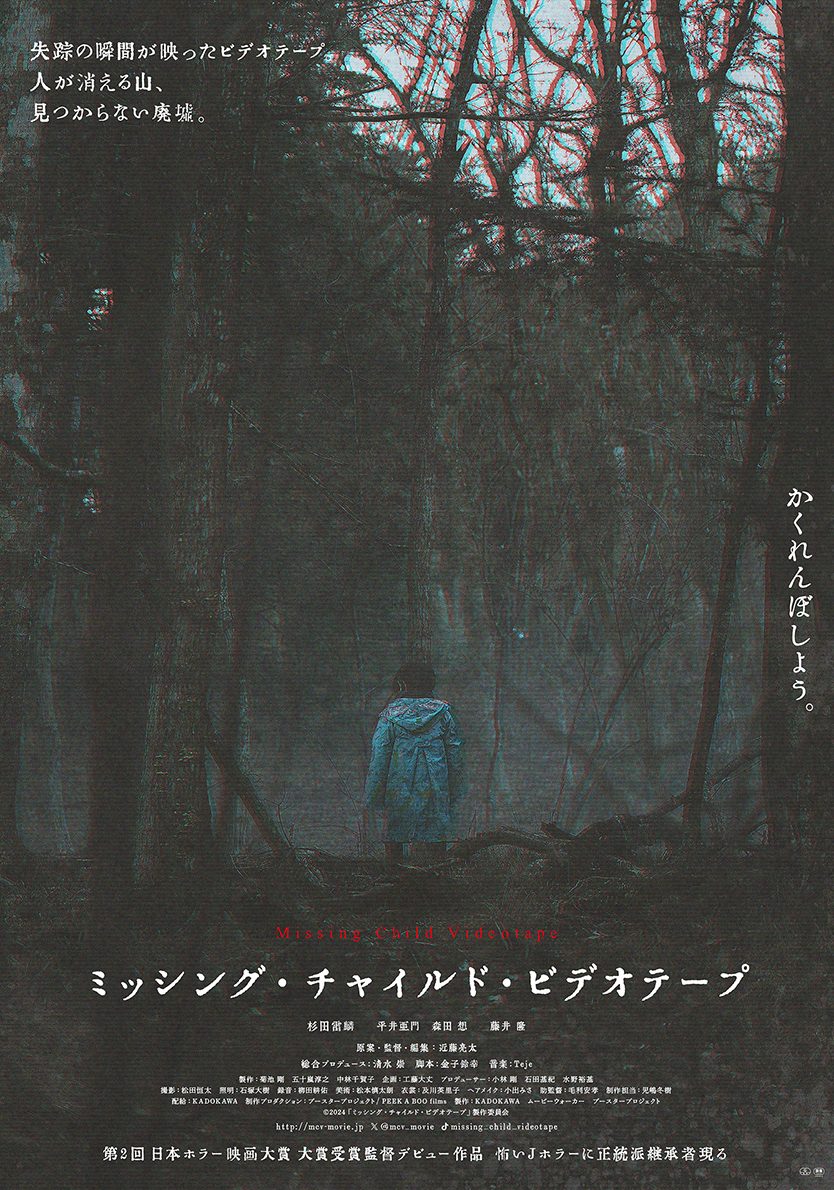
Missing Child Videotape (ミッシング・チャイルド・ビデオテープ, Ryota Kondo, 2024)

“Now you’re it,” a little boy says, but in a game of hide and seek it can be difficult to tell the seeker from the sought. Inspired by classic J-horror, Ryota Kondo’s eerie debut feature Missing Child Videotape (ミッシング・チャイルド・ビデオテープ) takes the innate fear we have of things that are so old they surpass our understanding and couples it with a more psychological dread in which the heroes are quite literally haunted by their personal traumas.

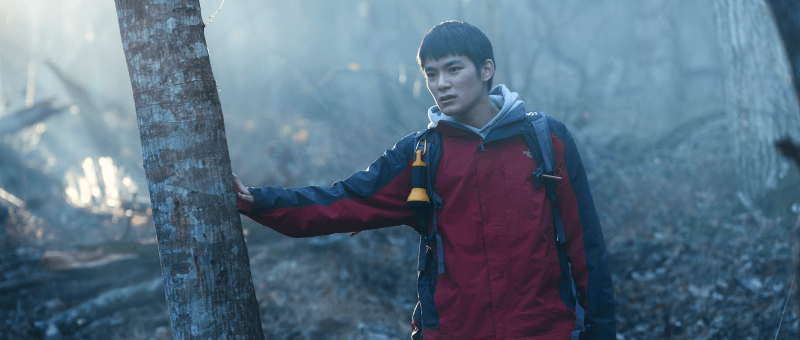
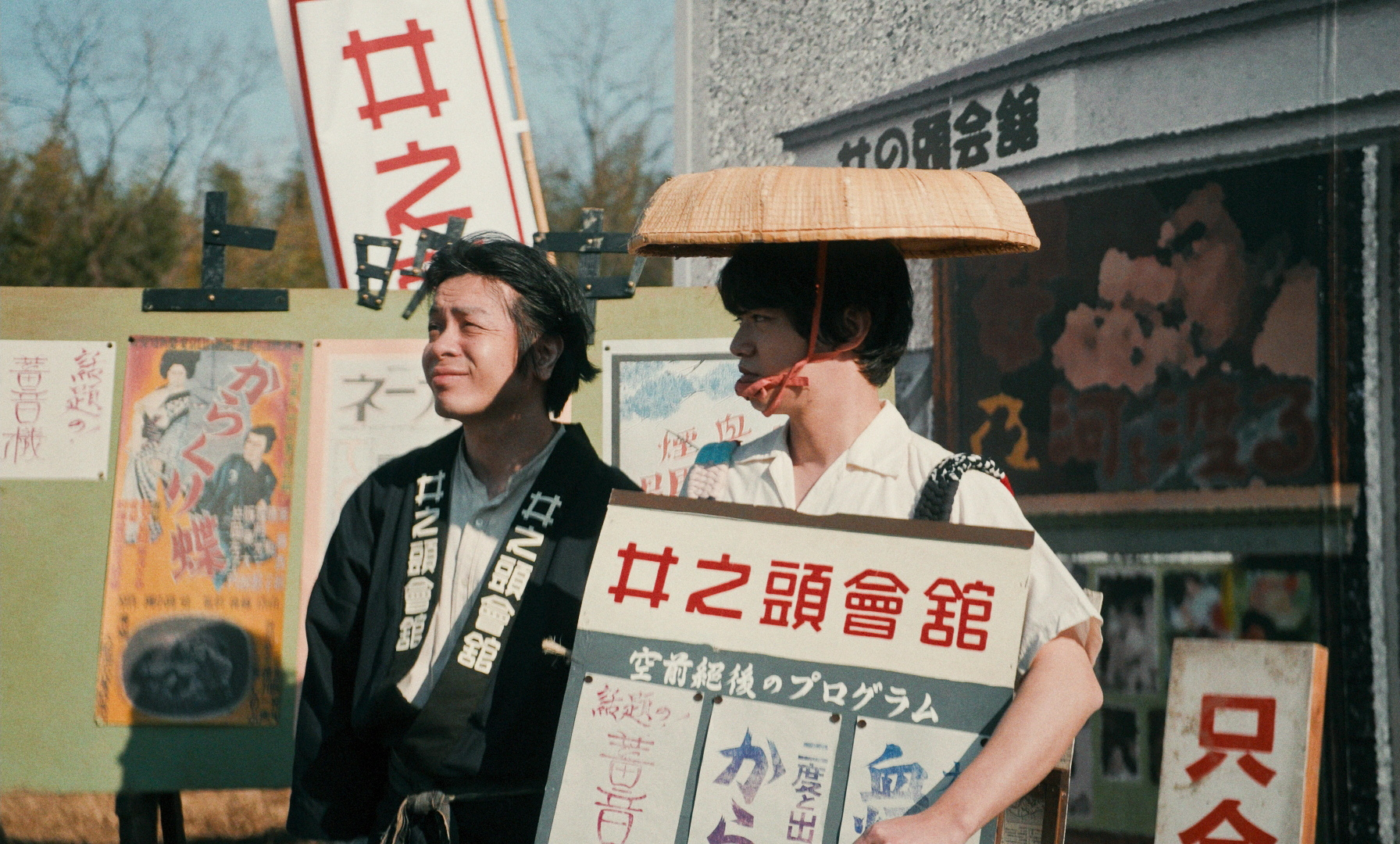
The irony is that we first meet Keita saving a little boy lost in the forest, though he’s haunted by his failure to do the same for his younger brother Hinata who disappeared 13 years previously when they were both children. Keita’s mother regularly sends him VHS tapes of the day Hintanta went missing he shot while playing with his father’s camera. Keita had been rude to his mother and seemingly resented his little brother tagging along behind him. He tells Hinata to go away, which he of course then does, never to be seen again. The boys somehow wander into a disused building where Keita suggests they play hide and seek, mostly so Hinata will go hide and stop bothering him. Catching sight of Hinata in a corridor, Keita tells him that he’s now “it” so it’s time to come look for him instead, but now he can’t find his brother anywhere. His rising panic is palpable from the terror in his voice to the increasing shakiness of the camera, even as it transitions into the mental state of the adult Keita as if the tape itself were on a constant loop in his mind. 

There is a suggestion that the boys are still playing hide and seek and that Hinata has also been trying to find his way back to his brother all this time. As for the now grown-up Keita, he’s fairly detached and on a surface level a little indifferent, still resenting his brother for seizing an eternal spotlight. He’s sick of everyone talking about it all the time and equally of the ambivalence of being the brother of the boy who disappeared, alternately pitied and suspected. He thinks his parents actually thought he probably killed Hinata but did nothing about it, while he always resented them anyway. Even as a child, it seemed apparent to him that they were only playing the roles of a family and none of it was “real”. In any case, he did not want to be forced into the role of big brother with all the responsibility that entails. 

To that extent, Keita is also a “missing child” and a man who is still a boy lost in a disused building that apparently never existed. His search for his brother is also a way of reclaiming himself and opening up to more complete human connections. The film is curiously ambiguous in its depiction of the relationship between Keita and Tsukasa, the man with whom he lives who has psychic abilities and is able to see ghosts and supernatural entities. Tsukasa tells the equally haunted reporter Mikoto that he’s “the person who lives with him,” but the pair otherwise behave more like a couple if one that seems content to let their secrets breathe.  

Nevertheless, Tsukasa comes to the conclusion that Keita is “under the influence of the mountain,” which as it turns out, has taken several more victims before and since Hinata’s disappearance. Another strange young man tries to warn Keita not to go back there, telling him a weird story about how his grandmother cannot really be his grandmother because of the ironic results of her sacrifice to the mountain gods. Indeed, this curse may reflect the lack of respect we’ve shown to the natural world as the mountain has become a dumping ground for unwanted things from bits of temples to a collection of funerary urns. Perhaps “unwanted” people are being thrown away there too, spirited away by the mountain and placed in some other realm. 

Kondo includes two kinds of tape each of which is imprinted with the psychic echoes of a traumatic event as Mikoto comes across a cassette recorded by students who also found the building that doesn’t exist, reflecting both the technological anxiety of classic J-horror along with the way that trauma replays and imprints itself on the present. Keita still appears to be haunted, and not least by himself as well as whatever did or didn’t happen the day his brother disappeared and the latent guilt he feels because of it. Playing hide and seek with himself, it seems that Hinata, and those he’s lost, may indeed have been with him all along, though both seeker and sought are apparently both trapped within this infinite loop of fear and loneliness. 


Missing Child Videotape screens 28th May as part of this year’s Nippon Connection.

Original trailer (English subtitles)

Images: ©2024 “Missing Child Videotape” Film Partners

18×2 Beyond Youthful Days (青春18×2 君へと続く道, Michihito Fujii, 2024)

Screenshot

Apparently inspired by a real life viral blog, the latest from the prolific Michihito Fujii, 18×2 Beyond Youthful Days (青春18×2 君へと続く道, Seishun 18×2 Kimi e to Tsudzuku Michi) is in many ways in dialogue with Shunji Iwai’s Lover Letter which itself makes an appearance in the film in a allusion to a love that as the hero says never quite even began. Even so, the he, as the heroine had, undertakes a journey not so much to find himself as to recover the young man he once was before romantic heartbreak and professional strife left him emotionally numb and filled with despair.

Jimmy (Greg Hsu Kuang-han) says he’s on a journey with no destination, and perhaps, he is though it’s clear there is an end point in sight only one he’s reluctant to go to. It’s never quite clear to what extent the film intends its big reveal to be quite so obvious, though it seems clear enough that this is a tale of lost love and a circular journey towards a new beginning. After being kicked off the board at the games company he started, Jimmy catches sight of an old postcard soaked in the perfume of a girl he once new perhaps ironically called the flow of time. It does indeed call him back to the past, sending him on a trip to Japan where he too encounters various people who help him to reaffirm himself during a solo trip towards the nexus of his emotional pain.

Back in Tainan 18 years previously, he developed a crush on a young Japanese woman, Ami (Kaya Kiyohara), who rocked up at the karaoke bar he was working at the summer before uni and asked for a job having lost her wallet. Ami is four years older than him and perhaps sees his clumsy attempts at courtship as childish even as he earnestly brushes up his Japanese to be able to converse with her but otherwise treats him warmly if keeping him at arms length. In his own recollections, Jimmy was a clueless teenager who never really picked up on the pregnant hints Ami was leaving him in her sometimes cryptic comments and confusing behaviour but nevertheless went into a massive sulk on hearing she planned to return to Japan wasting precious time with her and almost ruining the memories of their tentative relationship by allowing it to end on a sour note.

The 36-year-old Jimmy is only a little wiser, a lonely, melancholy man who appeared to have little aside from the work that been taken away from him. This apparent mid-point of his life, a double 18 split in the middle, affords him the opportunity for self-reflection as many of those he meets along his way remind him. What he’s doing in a way is travelling on the flow of time, heading back into the past in order to travel through it and out the other side as he later says leaving this moment of youth behind to move into a more settled adulthood and an end to his frustrated inertia. 

As in Love Letter, he ends up deep in frosty snow country reflecting the emotional coolness of his adult self in contrast with the tropical temperatures of Tainan and sunniness of his memories of the summer with Ami. What he discovers is also a kind of love letter as yet undelivered but waiting for him at the destination he was afraid to approach as a kind of closure that will allow him to begin moving forward while carrying his memories with him rather than remaining trapped inside them. Reflecting that the people we meet along the way each leave something of themselves behind in our hearts, Jimmy is finally able to recognise himself and discover a way forward in reaccepting the memories of his summer that never quite blossomed into love as warm and comforting rather than the chilly sadness of the pure white vistas of snow country on Ami’s postcard. Travel doesn’t as much broaden his horizons as remove them, leaving him with an endless, meandering journey open to the possibilities of life and a spirit of adventure born of a lost but not forgotten love.


18×2 Beyond Youthful Days screened as part of this year’s Nippon Connection

Trailer (English subtitles)

Fly Me To The Saitama -FROM BIWA LAKE WITH LOVE- (翔んで埼玉 ~琵琶湖より愛をこめて~, Hideki Takeuchi, 2023)

The Saitamafication of Japan continues in the long-awaited sequel to the hit 2019 comedy Fly Me to the Saitama. Though the visa system has been abolished and the citizens of Saitama are new free to enter the capital, that does not mean to say everyone is on the same page and the prefecture still faces internal divisions and increasing factionalism. Revolutionary Rei (Gackt) proposes a solution which involves connecting the series of train lines to make it easier to get around and building a beach resort to lesson their sense of inferiority over having no access to the sea.

Once again it has to be said that humour is very local and largely built around regional stereotypes, though it is perhaps curious that the ordinary citizens are often seen in clothing reminiscent of the 1930s something which is also echoed in scenes of trains arriving at stations greeted by crowds of well-wishers seeing soldiers off to war. This may in a sense echo the film’s central theme in the encroachment of Osaka imperialism in which Japan’s second city has launched a not so secret campaign to Osakify the rest of the nation, if not the world, using white powder manifesting as sand from Koshien Baseball Stadium which is a holy place to many as it is where the high school baseball championship takes place. 

They have a visa system in Osaka too, or more strictly the Kansai area, with Kyoto and Kobe apparently in on the plot and intent on looking down on suburban areas such as Wakayama and Shiga which is where Rei was planning on getting his sand. Shiga is set up as a the Saitama of the south west, a pleasant if dull sort of place with a lake its only claim to fame. Like Saitama it has a liberation front, led by Kikyo (Anne Watanabe) who known as the Oscar of Shiga because she went to France to study revolutions and is is dressed like Oscar from the Rose of Versailles. 

The citizens of Kyoto come in for a bit of a kicking for their stereotypically snobbish attitude, the natural politeness of the local dialect undone by a social gadget that reveals what they’re “really” thinking which is that their definition of Kyoite is very narrow. The stereotypical view of Osaka, as voiced towards the end of the film, is that the people are cheerful and warmhearted. The city is associated with comedy and particularly manzai double acts like the one which appears during the opening credits, which perhaps adds to the sense of despair and confusion that the normally nice Osakans could suddenly be hellbent on world domination aided by the already strong love for takoyaki throughout the nation.

As before, we also have a “real world” subplot in which members of a family listen to the radio broadcast outing the urban legend of Rei and his BL love story with Momomi, the Tokyo-raised governor of Saitama. These regional rivalries are tearing up the real world too with a tug of war match that threats to go incredibly wrong if the two areas with an existing beef are allowed to face each other in the final. In contrast, the fantasy world is a riot of zany 18th-century influenced design that sees Rei set off on a pirate ship to get his sand for the fake beach though the mayor of Kobe turns up dressed like Audrey Hepburn in Breakfast at Tiffany’s, and the Kyoto-ite has Taisho-esque straw hat. When the gang are caught by the fascisitic Osakans they’re relegated to a dungeon under Koshien Stadium and enslaved because of Saitama’s low ranking amid the other prefectures of Japan.

It’s all very silly, and somewhat impenetrable to non-Japanese speakers who can’t pick up on the dialect switching or zany wordplay while a certain degree of familiarity with regional stereotypes is certainly helpful. In any case, while the Osakafication of Japan undoubtedly sounded quite bad, the same cannot be said for its Saitamaification and Rei’s desire to create a land without discrimination free of the oppression and inequality born of pointless regional snobbery where everyone is free to go wherever they please without let or hinderance. 


Fly Me To The Saitama -FROM BIWA LAKE WITH LOVE- screened as part of this year’s Nippon Connection

Original trailer (English subtitles)

Hijacked Youth – Dare to Stop Us 2 (青春ジャック 止められるか、俺たちを2,  Junichi Inoue, 2024)

A loose sequel to 2018’s Dare to Stop Us, Hijacked Youth (青春ジャック 止められるか、俺たちを2, Seishun Hijack Tomerareruka, Oretachi wo 2) picks up a decade later with an autobiographically inspired tale from writer director Junichi Inouchi but in its way also becomes the latest in a series of indie films to offer a celebration of Japan’s mini theatres still struggling with the fallout from the COVID-19 pandemic while exploring the origins of the contemporary independent film scene. 

The allusion seems clear even from the film’s opening in which cinephile and former programmer Kimita (Masahiro Higashide) fears for the future of cinema amid the arrival of the VCR. Having quit his job to support a young family, he is puzzled but eventually won over when unexpectedly contacted by notorious film director Koji Wakamastu (Arata Iura) who has apparently decided to open a cinema in provinciail Nagoya after the screening of Ecstasy of the Angels was restricted because someone bombed a police box for real. Kimita wants to run it as a rep cinema, but Wakamatsu sees it partly as a vanity project and a side business so has his eye on the bottom line. Making the mistake of programming films he thinks are good rather than ones people want to see quickly puts them in the red with Wakamatsu pressuring Kimita to give in and agree to screen pink films even though he himself had admitted that pink cinema had had its day. 

Wakamatsu is forever taking Kimita to task for having a prejudice against these kinds of films which are after all the kind that Wakamatsu makes though he does concede that there are talented directors working in pink film who may someday become the leading lights of the Japanese cinema industry. Some of that is hindsight, but what the film is working towards is a link between pink film, which was independently produced in contrast to something like Roman Porno which was made by a studio with much higher budgets and production values, and the rise of independent cinema which is largely dependent on the mini cinema ecosystem to it keep going. 

But then the film is also a nostalgic memoir revolving around the director’s teenage dreams and his eventual meeting of Wakamatsu thanks to the cinema in Nagoya. The irony is that the first film had been titled “Dare to Stop Us,” focussing on Wakamatsu Pro during the turbulent days before Asama-sanso as an anarchic force in a sometimes staid film industry. But the through line here is that everyone gives up far too easily. Kimita abandoned his dreams to sell video recorders, while the young woman who works for him believes she has three strikes against her, the first being her gender, the second a lack of talent, and the third which she does not disclose that she’s a member of the Zainichi community of ethnic Koreans often discriminated against even the Japan of the 1980s and in fact today. 

Junichi gives up a bit easily too after making a twit of himself on Wakamatsu’s film set, though the picture he paints of him is larger than life. Fatherly and compassionate, he gives him solid advice to go to a proper uni and learn filmmaking with him while otherwise taking him under his wing, but also pretty much takes over after giving him his first opportunity to make a film and has a tendency to take no prisoners when it comes to his crew members. At least as far as the film would have it, he’s become a rather lonely figure now that his more politically minded friends have scattered following he decline of the student movement in Japan. As much as anything else, the film is a sort of hagiography as evidenced by the surreal coda which seems to reference the director’s early death in traffic accident in 2012, jumping forward 30 years to find the cinema still open and celebrating his legacy more literally yet also in its existence in supporting the indie scene Wakamatsu helped to birth. According to Wakamatsu, the most important thing is finding your own angle and sticking to it, something his rebellious spirit at least may have fostered in the many directors who started their careers at Wakamatsu Pro and not least Inoue himself.

Hijacked Youth – Dare to Stop Us 2  screened as part of this year’s Nippon Connection

Original trailer (English subtitles)

Secret: A Hidden Score (言えない秘密, Hayato Kawai, 2024)

The shojo manga vibes are so strong with Hayato Kawai’s Secret: A Hidden Score (言えない秘密, Ienai Himitsu) that it’s difficult to believe it’s actually a remake of a Taiwanese film from 2007. Anyone remotely familiar with the genre will have figured the mystery fairly early on though Kawai does his best to build on the gothic overtones in what is actually a story about the hero’s recovery of his love for music having had it beaten out of him while studying abroad in the UK. 

To that extent, Minato’s (Taiga Kyomoto) disillusionment with the piano is akin to a loss of the self. He’s come back from London earlier than expected and is quickly humiliated during his friends’ hazing ritual of making him participate in a piano duel with another student which he gives up on half way through. Having experienced a truly terrible teacher who shouted and bullied him into feeling as if he should give up on music if not life Minato is left listless and lonely with no sense of direction.

This might be why he’s drawn to Yukino (Kotone Furukawa), a mysterious presence he first encounters after being struck by the sound of her playing piano in an abandoned music room soon to be torn down. He asks her what the name of the song is, but she only tells him that it’s a secret like many other things about her. Minato is fascinated but also resentful, captivated by the mystery that surrounds Yukino while frustrated by the playful distance she keeps from him. In many ways she represents life, not only romantic love but restoring his love of music and a sense of confidence in it born of his rediscovery of the simple joy of playing as symbolised by the toy piano which his father (Toshinori Omi) is also trying to repair for him.

Yet it’s also clear something’s not quite right. Yukino’s clothes are slightly old-fashioned and she doesn’t own any kind of mobile phone. No one else on campus seems to know her and she often disappears without warning only to reappear just as unexpectedly. A minor love triangle develops between Minato, Yukino, and his childhood friend Hikari (Mayu Yokota) which later provokes a secondary emotional crisis though it’s clear this slippery duet that Minato is playing gradually allows him to open himself back up emotionally so that he can re-embrace his love of music and once again play the piano which is all he’d lived for until the cruel worlds of sadistic teacher caused him to want to give up on life.

Kawai certainly ups the romance with the gothic aesthetics of the disused music room along with the drafty corridors leading to it, though when the secret is eventually revealed it’s something of an anti-climax given its obviousness and the lack of effect it has on Minato who seems to be left with another unfinished symphony of longing and loneliness destined to echo through his music for years to come. There is however a poignancy in Yukino’s declaration that she just wanted to be an ordinary girl and in the shattering of her romantic illusions when she sees that Hikaru is in love with Minato and subject to none of the barriers that cause her to think her romance has no longterm possibilities. 

More than the Taiwanese original, the film leans into the tropes of shojo manga along with the junai classics of the early 2000s in its supernaturally-tinged tale of tragic romance and impossible love. As such, the film has a nostalgic quality though its retro touchstones seem somewhat out of sync in its polaroid cameras and ‘50s-themed disco even if that itself may equally be a kind of reference to Back to the Future, though more than anything else it’s a tale of a miracle created by music bringing two lonely souls together. It may seem as if Minato is drawn towards death or something dark, but is in reality chasing himself and the melody of a life that’s lost to him, perhaps finally catching it and learning to play again only to find that the dance ends much too soon leaving only the barest echo of itself behind.


Secret: A Hidden Score screened as part of this year’s Nippon Connection

Original trailer (English subtitles)

September 1923 (福田村事件, Tatsuya Mori, 2023)

After the devastating Great Kanto Earthquake struck in 1923, it led to a period of hysteria in which in the natural disaster somehow became equated with the Korean Independence Movement, foreigners, and socialists and who were after all thorns in the side of rising nationalism. Documentarian Tatsuya Mori makes his narrative film debut with September, 1923 (福田村事件, Fukudamura Jiken) released to mark the 100th anniversary of the incident and focussing on a little known episode in which villagers turned on a small group of itinerant medicine pedlars they were convinced were not Japanese. 

In this case, at least, they were Burakumin. An oppressed underclass of their own, they too are divided in their views about Koreans some finding solidarity with them as another minority who is bullied and discriminated against while others are quick assert themselves as at least being above them on the pecking order cheerfully using slur words as they go. Shinsuke (Eita Nagayama), the leader of the troupe, laments that they have to live this way, tricking those worse off than themselves into buying their snake oil cures while explaining that though people will often help each other out when times are good, if survival’s on the line they’ll turn against each other. 

Perhaps that’s difficult to imagine in a small village of genial farmers, but militarism has already corrupted its gentle rhythms. Men from the village are fond of telling war stories from their time as conscripts in China or Russia, though one has a particular bee in his bonnet about wives being left lonely with husbands away overseas and is convinced that his father has slept with his wife. Another local woman was indeed having an affair shortly before her husband was killed in action and is then ostracised by the village for her transgressive behaviour becoming yet another oppressed minority. The village chief is keen on democracy and progressive in his way yet soon finds himself powerless against the local militia mostly comprised of old men with a lust for blood and glory. It’s this militarist hysteria that eventually proves tragedy as they find themselves desperate to identify “spies” and protect the village only to murder children and a pregnant woman who were just passing through. 

The absurdity extends to asking those suspected of being Non-Japanese to repeat a particular phrase difficult for Koreans in particular to pronounce, only those from other areas of Japan also pronounce it in a way that might seem “foreign” in Tokyo. Cornered by the militia, Shinsuke asks if it would be alright to kill him even if he were Korean, taking issue with the militia’s absurdist and racist rationale that decides someone must die because of the way they pronounced a certain word or seemed uncomfortable shouting “banzai” at the point of a sword. But one of the villagers unwittingly uncovers a since of guilt felt even by a man in a village miles away from anything that the Koreans have been bullied for years, this the understandable result of their rage boiling over and a moment of retribution. 

The film seems to suggest that the buck doesn’t really stop, except perhaps with the bystander who merely watches this horrifying violence and does nothing. Tomokazu (Arata Iura) has recently returned to the village after many years living in Korea bringing back with him a Korean wife but his marriage is falling apart due to his own guilt and trauma having been complicit in a Japanese atrocity. Watching the massacre unfold, his wife, Shizuko (Rena Tanaka), asks him if he’s just going to watch this time again but his attempt to intervene makes no difference. An idealistic news reporter meanwhile takes her boss to task for publishing propaganda headlines associating Koreans with crime and terrorism rather than real truth of what’s happening on the ground, asking him what the point of the press is if it won’t speak truth to power. But militarists do not listen to reason, and as the headman points out they will have to keep living with those who’ve committed these heinous acts. Sometimes a little on the nose with its symbolism such as a literal murder of hope in the killing of an unborn child, Mori’s otherwise poignant drama lacks the impact it strives for but nevertheless addresses a shocking moment of mass hysteria that is not quite as historical as we’d like to think.


September 1923 screened as part of this year’s Nippon Connection

Original trailer (English subtitles)

We’re Millennials. Got a Problem? International (ゆとりですがなにか インターナショナル, Nobuo Mizuta, 2023)

Seven years on from the hit TV series, the guys find themselves dealing with the problems of early middle age along with increasing internationalisation as members of the so-called Yutori generation in Nobuo Mizuta’s We’re Millennials Got a Problem? (ゆとりですがなにか インターナショナル, Yutori desu ga, naninka Internationa). Now they’re in a different place and increasingly confused by the youth of the day while reconsidering their own life choices and facing a series of impromptu crises.

Among them would be that both the yakiniku restaurant where the guys worked in the TV series and the company that used to distribute the sake produced by Masakazu’s (Masaki Okada) family brewery have been taken over by Korean conglomerates. To make matters worse, the company tells Masakazu at an online meeting he’s embarrassingly turned up to in person because no one thought to tell him it was remote that they’re shifting production entirely to makgeolli because no one drinks sake anymore and his takings are about to fall off a cliff. The only way he can keep the contract is by agreeing to introduce a new product, either makgeolli or alcohol free sake. 

Meanwhile, his friend Maribu (Yuya Yagira) has returned after seven years in China with a Chinese wife and three children but apparently no job prospects. Masakazu offers him a job at the brewery, forgetting that it’s a bit awkward because he used to date his sister, Yutori (Haruka Shimazaki), who has quit her corporate job to start a business selling nordic knickknacks. It’s Maribu’s live streaming of the moribund brewery that unwittingly exposes the cracks in Masakazu’s marriage when Chinese netizens starts sending aphrodisiacs through the post to help him overcome the problems of his sexless life with wife Akane (Sakura Ando) who is herself struggling with the demands of looking after two small children and taking care of all the domestic chores with no help.

Later Akane tells mutual friend Yamaji (Tori Matsuzaka) that she’s worried she has post-natal depression and is fed up with her home life. We see can how stressful it is in the opening sequence in which Masakazu (ironically) tries to become a YouTube sake star but is repeatedly heckled by offscreen calls from Akane asking him to bathe the children and otherwise help out before she finally has no choice but to bring the kids to him. When they go to city hall to apply for a place in childcare they’re immediately dismissed, Akane somehow told that she doesn’t have as many “points” as her husband even though they’re both self-employed and there are many more needy candidates before the (probably well-meaning) civil servant not so subtly checks their daughter’s arm for signs of abuse or neglect. It’s not that surprising therefore that when the aphrodisiacs start piling up at home she wonders if Masakzau’s having an affair placing further strain on the relationship. 

Shin-hye (Haruka Kinami), the Korean-Japanese-American CEO of the company that bought out their old distributor (for whom Akane was once a regional manager) also a expresses a similar anxiety about the place of women in the workplace on the one hand coming from Korean corporate culture and finding that Japan might not as be “as bad” at least in its every increasing list of harassment which at least admit there’s problem with workplace bullying, sexist culture, and unwanted sexual advances from men in positions of power. Yamaji, meanwhile, finds his well-meaning attempts to foster diversity in the classroom floundering when the kids declare themselves unable to understand the intricacies of LGTBQ issues explaining that at their age “dating” just means hanging out though they’re unexpectedly accepting of the Thai transfer student with an inexplicable crush on the incredibly obnoxious American boy who transferred in the same time as him. 

In other ways, however, Yamaji is the same as ever. On his first appearance he’s on an awkward date with a woman from a dating app which he largely spends talking to his mentor on an iPad and making sexist remarks. They are all struggling with the demands of a more concrete adulthood in which much is already decided while their settled lives are undermined by unexpected crisis from the fallout from the conravirus pandemic and ongoing economic malaise to marital discord, the demands of caring for small children, and a friend a they had no idea was a top star live-streaming star in China. A recurring gag sees people undertake zoom meetings dressed in a suit jacked with sweatpants underneath. Yutori eventually exclaims that there’s no point even having dream while her family have a lot of sensible questions about her new business like where all the stock is whether it was worth the risk leaving her stable job that was presumably subject to all the harassment and otherwise oppressive corporate culture of contemporary Japan. Nevertheless, the millennials eventually come to a kind to acceptance and understanding of where they are in their lives along with a re-appreciation of everything they already have.


We’re Millennials. Got a Problem? International screened as part of this year’s Nippon Connection

Original trailer (English subtitles)