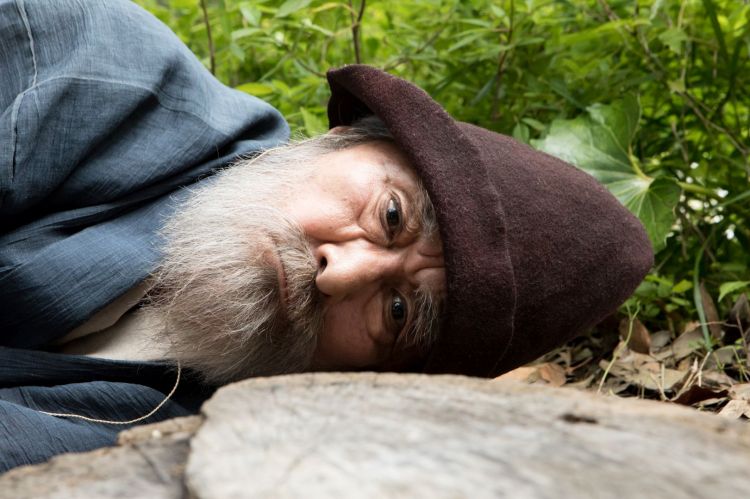
Hanagatami (花筐/HANAGATAMI, Nobuhiko Obayashi, 2017)

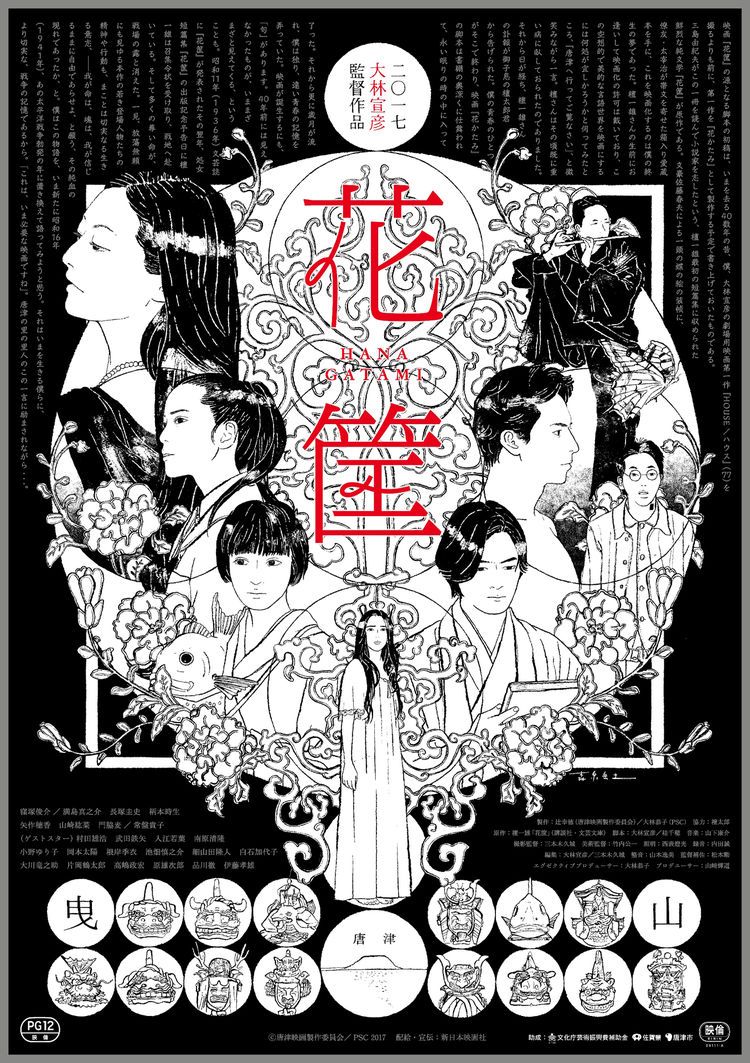
Hanagatami posterIn time the past becomes a dream. A world in and of itself, conjured from feeling and memory and painted in the imprecise strokes of one attempting to recreate a long forgotten scene. The melancholy heroes of Nobuhiko Obayashi’s long career were each trapped in a sense by nostalgia, a yearning for another time and place, or more precisely another, more innocent, version of themselves only with the benefit of hindsight and the confidence of age. Finally realising a long dreamt of project in dramatising Kazuo Dan’s classic wartime youth novel Hanagatami (花筐/HANAGATAMI), Obayashi reunites with another melancholy young man who as he puts it in the opening text wants to tell his story not out of a sense of nostalgia but out of longing for the things which were lost. Those like him who had the misfortune to be young before the war saw their whole world swept away by a kind of madness far beyond their control, losing not only a past but a future too.

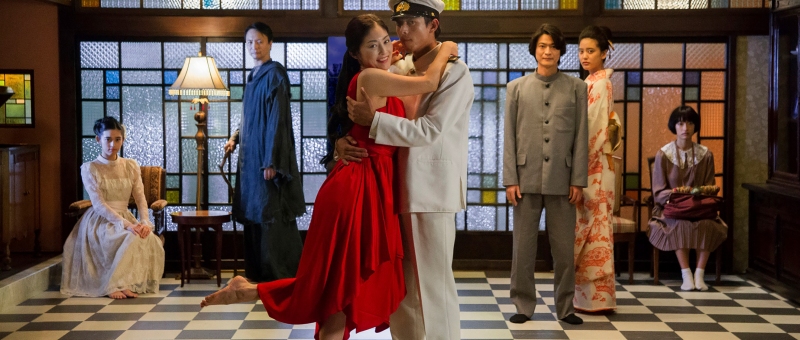
When Toshihiko Sakakiyama (Shunsuke Kubozuka) returns home from Amsterdam where he had been living with his parents, Japan is already at war in China. Though the times are changing, Toshihiko’s life remains relatively untouched by conflict, insulated from the concerns of the day by the pleasant natural surroundings of his old-fashioned country town. Returning to the family estate presided over by his war-widow aunt, Keiko (Takako Tokiwa), Toshihiko strikes up a friendship with her sickly sister-in-law, Mina (Honoka Yahagi), whose proximity to death only seems to enhance her beauty. At school he finds himself caught between two polar opposites – the strong and silent Ukai (Shinnosuke Mitsushima) and the cynical nihilist Kira (Keishi Nagatsuka), while his two sets of social circles finally combine with the addition of Mina’s friends Akine (Hirona Yamazaki) and Chitose (Mugi Kadowaki) who also happens to be Kira’s cousin. The world is on the brink of ruin, but there are dances and picnics and festivals and everywhere everyone is desperate to live even in the midst of such foreboding.

Obayashi opens with a quote from one of Dan’s poems in which he mourns the flowers in full bloom shortly to be cut down in their prime. Hanagatami itself means “flower basket” but is also the title of a noh play about a woman driven mad by love for a man from whom she is separated by the arbitrary rules of her society. Japan itself has become a basket of flowers, offering up its youth on a senseless altar to political hubris while a generation attends its own funeral and becomes obsessed with the idea of permanence in a permanently uncertain world. Chitose carries about her camera, bitterly claiming that she will confer immortality on her subjects while privately longing for an end to her loneliness and suffering.

Like the heroine of the noh play, our protagonists too are driven mad by love as the madness of their times spurs them on and holds them back in equal measure. Mina, in all her etherial beauty, becomes the symbol of an age – innocence about die, drowned in its own blood. All in love with Mina, or perhaps with death itself, the men sink further into petty rivalries and conflicted friendships all the while staving off the inevitabilities of their times – that soon they too will be expected to sacrifice themselves for a cause they don’t believe in or risk being left behind alone.

Toshihiko finds himself torn between his two friends – the light and the dark, the robust Ukai and the gloomy Kira. While Toshihiko’s wide-eyed hero worship of Ukai and his idealised male physique takes on an inescapable homoerotic quality, his relationship with Kira leads him towards a darker path on which everything is “worthless” and all pleasures impossible in a world apparently so close to its end. Kira, having committed a truly heinous act, reminds his friends that they routinely kill and eat animals, and that one day they too will be gobbled up, swallowed whole by the cruelty of their times.

One by one the war takes them, if indirectly, leaving only Toshihiko behind. Describing his youth as like a game of hide and seek in which he suddenly realised it had gotten dark and all his friends had gone home, Toshihiko recasts his tale as a ghost story in which he remains haunted by the visions of his younger self and longs for his long absent friends, robbed of the futures promised to them by right of birth. Free floating through dreams and memory, Obayashi conjures an etherial world overshadowed by tragedy but coloured with wistful melancholy as pale-faced soldiers march off for the land of the dead while youth does its best to live all its tomorrows today in rejecting the senseless cruelty of its age.


Screened at Nippon Connection 2018.

Update July 2020: Hanagatami is released on UK blu-ray from Third Window Films on 6th July in a set which also includes a 20-minute making of and 35-minute interview with director Nobuhiko Obayashi.

Original trailer (no subtitles)
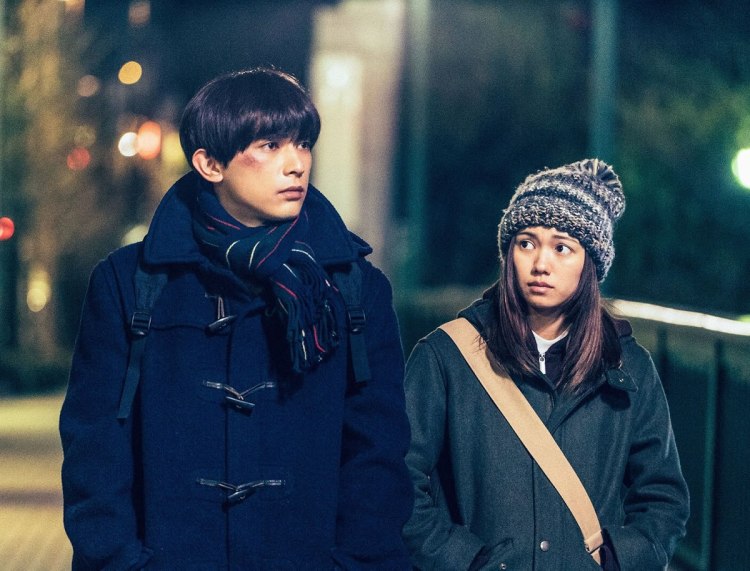
We Are (青の帰り道, Michihito Fujii, 2018)

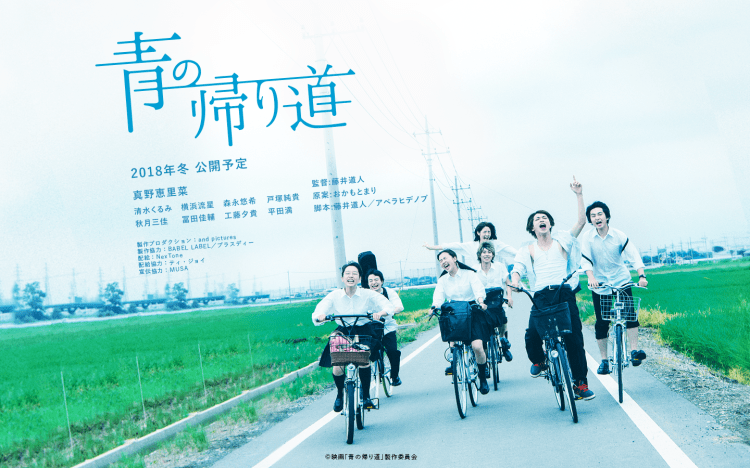
We Are horizontalThe youth movie perhaps hit its peak in the immediate post-war period, but poignant coming of age tales have always held a special place in Japanese cinema. We Are (青の帰り道, Ao no Kaerimichi) has a fairly troubled history of its own – the shoot was disrupted when one of its stars was arrested leading to the role being recast, requiring substantial reshoots which took place over a year later. Yet like its protagonists, We Are was finally able to rediscover itself and create something beautiful from admittedly difficult circumstances. Broken hearts, broken dreams, and broken futures conspire to scatter a once close group of high school friends as they each pursue individual dreams with individual success whilst looking alternately for a path both forward and back.

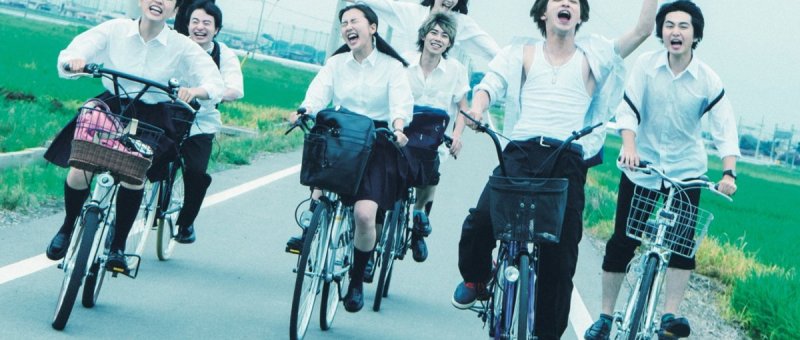
Spanning from 2008 to 2018, We Are follows seven ordinary small town teens from their high school graduation through to a more settled adulthood ten years later. In 2008, Kana (Erina Mano) and Tatsuo (Yuki Morinaga) have musical dreams which she is going to Tokyo to pursue while he is staying behind to study for medical school entrance exams in an attempt to fulfil his doctor father’s wishes. Kana’s best friend, Kiri (Kurumi Shimizu), is going with her, partly out of a want of anything else to do. She has dreams of becoming a photographer but her family are not supportive of her art and she has always struggled through feeling at odds with them. Loud mouth delinquent Ryo (Ryusei Yokohama) doesn’t really have a plan, save bumming around until something turns up and any plans Ko (Junki Tozuka) might have had would have been derailed seeing as he’s got his girlfriend (Mika Akizuki) pregnant and has decided on a shotgun wedding. Only Yuki (Keisuke Tomita) is following a more conventional path in going to Tokyo for university and then planning on finding a regular salaryman job.

The film opens with a scene of joy and freedom as the kids ride their bikes along an otherwise empty stretch of road between the fields, swearing to make the most of the last summer vacation. The road itself becomes a recurrent motif, stretching out into the distance seemingly full of promise but also strangely empty. The kids do indeed make some memories, but for some of them the hope proves too much to bear, soon turning to despair as their lives begin to spiral out of control, their dreams warped and ruined by the muddiness of the adult world.

Kana’s musical career is quickly derailed by an amoral producer who doesn’t believe in the artistic merit of music, only in its commercial capability. Kiri, dropping out of college, gives up on her dreams of photography to make Kana’s a success through acting as her manager but the two naive country girls are no match for the canny executive and Kiri is soon working for the company learning how to market soulless pap to a public desperate only for empty cuteness. While Kana struggles with accidentally becoming the poster girl for a brand of vegetable juice, Kiri embarks on her first love affair but is ill equipped to recognise the potential warning signs in her new boyfriend owing to a lack of emotional awareness brought about by her dysfunctional upbringing.

While Kana and Kiri struggle in the city, Ko has married, settled down and begun building a home for himself back in the country. An ordinary dream, but an achievable one if you’re willing to make it work and Ko takes to fatherhood with natural ease. Sadly, his friends are not so lucky. As their dreams fade, alcoholism, domestic abuse, crime, and finally suicide conspire to ruin their hopes, leaving each with a profound sense of guilt and defeat in finally finding themselves on the road home with not much to show for their travels besides a few fresh scars. Yet somehow, despite the myriad unforgivable things and a shared sadness in a collective failure to save each other, friendship endures, forgiveness is possible and though the days of youth will never return, there is a “way back” for those who’ve learned that there’s nothing wrong in wanting to start over. You can never go “home” again, but some things don’t change even when you do and if you’re very lucky the most important of them will still be there waiting for you no matter how long you’ve stayed away.


Screened at Nippon Connection 2018.

Bamy (バーミー, Jun Tanaka, 2017)

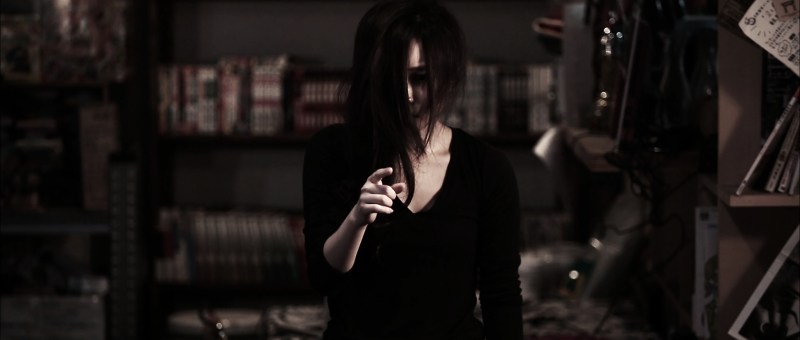
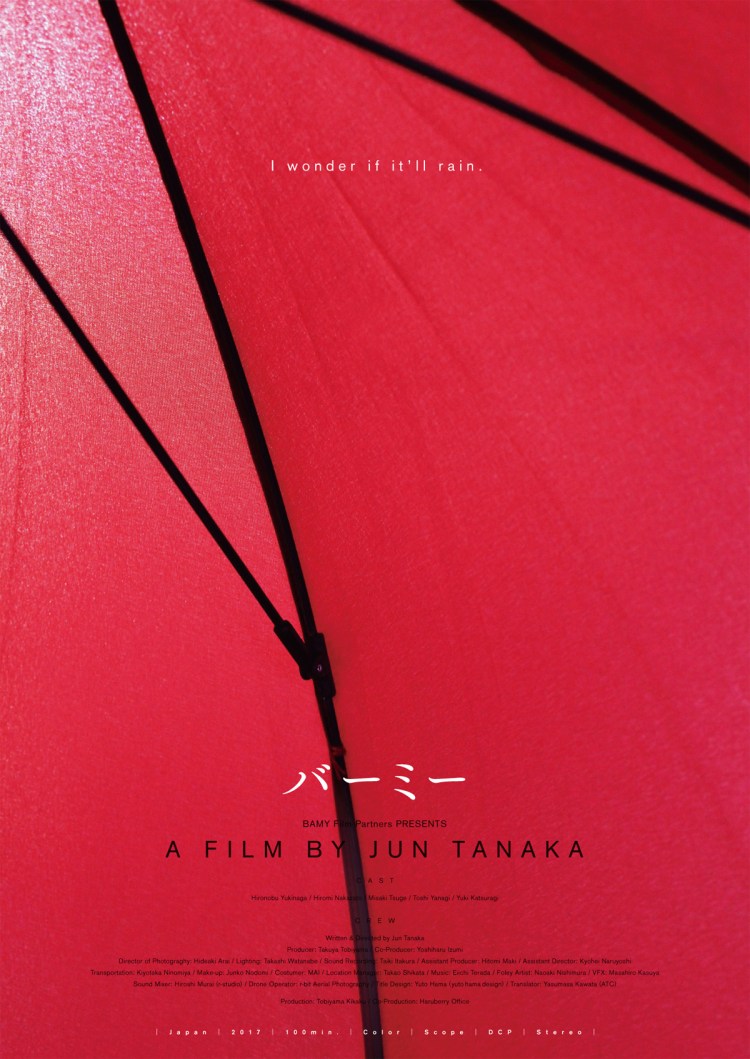
Bamy posterCan you be so haunted that you eventually become a ghost? The protagonist of Jun Tanaka’s Bamy (バーミー) sees lonely spirits everywhere but they don’t frighten him, in the expected sense at least, so much as act as supernatural jailers lurking just out of sight ready to remind you that there is no escape from their all seeing eyes. Which is to say, he begins to find them irritating especially as he feels himself pulled along by the unstoppable forces of “the expected” without being entirely sure “the expected” is what he really wants. Perhaps Ryota (Hironobu Yukinaga) is just another commitment-phobe getting cold feet before a wedding and looking for an excuse to find out if the grass is greener with someone else, but then again perhaps there are forces operating beyond our understanding, be they good or ill.

Our pair of lovers are brought together by the sudden and unexpected arrival of a bright red umbrella falling impossibly from on high. As their eyes meet across the incongruous sight, Fumiko (Hiromi Nakazato) recognises the man on the opposite side as Ryota – an old friend from her university days. Fast forward one year from this atypical meet cute and Fumiko and Ryota are moving in together with a wedding date already in place. The red umbrella hangs proudly on their balcony as a romantic tribute to their love but at odd times it seems to glow ominously, as if emanating a sense of inescapable unease. The couple’s happiness is ruptured when Ryota spots the first of his ghosts lurking in the bedroom. Before long he’s seeing them at work, in the streets, everywhere. He’s seen them all his life and though they do not frighten him, he is sick of their constant presence. Gradually the ghosts place a wedge between himself and Fumiko as he begins to neglect the wedding preparations before running into another woman, Sae (Misaki Tsuge), experiencing the same problem who might be better placed to understand what he’s going through.

The ability to see ghosts, it has to be said, is not an especially good excuse for neglecting one’s fiancée. Ryota, who seems to have forgotten there are many other words in the Japanese language besides the one which means “sorry”, does not appear to be a very good communicator and never thinks of confiding in Fumiko about what it is that is bothering him, nor does he ever try to communicate with the ghosts who perhaps are just looking for attention. In fact, Ryota never seems to take much of an active role in anything and almost “haunts” his own life, remaining isolated on the fringes, drifting along aimlessly like a man without a soul.

Existing to one side of the world around him, Ryota eventually makes ghosts of both his women. Sitting alone before a table on which lies a lovingly prepared meal, Ryota cannot see Fumiko as she lurks behind him, her form distorted and indistinct as filtered through the frosted glass which acts as divider to their living area. Later her face appears again through a frosted door as she grows ever more distant towards him, no longer “Fumiko” but a strange, unknowable being. Her hand on his face once grounded him, brought him back to the real but since the umbrella disappeared all that has changed. Meanwhile, Ryota wonders if the ghost seeing Sae is his real soulmate only to see her pale before him, her fingers dark and cold as she too becomes little more than something that will bind him to a fate he isn’t sure he wants.

The umbrellas at least seem to want Ryota to be with Fumiko, whatever he (or she) may think about it. An echo of the “red strings of fate”, the umbrellas bind the lovers on a cosmic level which can never be severed – Ryota’s “rebellion” is perhaps towards fate itself, towards having his life dictated to him (by an umbrella) with his personal agency all but removed. Then again, maybe “the umbrellas” know best and what they’ve given Ryota is a gift, only the pleasure of a gift begins to dissipate when it is made clear that it cannot be declined. The cosmos seems determined on railroading him and perhaps the only way to “escape” its harbingers is to accept its judgement and submit, turning a given fate into a chosen one through a conscious act of will. Echoing Kiyoshi Kurosawa in his conflicted romanticism and David Lynch in his eerie sense of the everyday surreal, Tanaka conjures an atmosphere of inescapable supernatural dread as his hero begins to realise his only source of salvation may lie in willing submission. 


Screened at Nippon Connection 2018.

TFF trailer (English subtitles)

Love and Wolbachia (恋とボルバキア, Sayaka Ono, 2017)

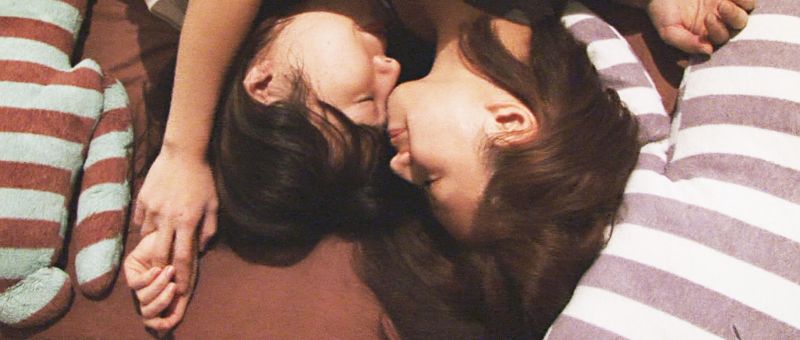
love-and-walbachia-poster-2-e1527641922439.jpgDocumentarian Sayaka Ono turned the camera on herself and her family seven years ago with her graduation project/debut feature The Duckling. Returning with her second feature after spending the intervening years in TV documentary, Ono tackles a subject perhaps more distant from her personal experience in exploring the lives of sexual minorities and particularly of transgender women in generally conformist Japan. Love and Wolbachia (恋とボルバキア, Koi to Wolbachia) takes its name from that of a parasitic bacteria which can cause its host to change sex. Love may very well be a kind of virus, but Ono seems more interested in answering the question of why someone might decide to live as a woman in a society so often hostile to them.

The first two protagonists Ono introduces us two were born intersex. Despite their personal feelings, each was encouraged to take hormones to conform more closely to their external appearance. Forced to make a perhaps false binary choice, or in essence being deprived of the right to make it for themselves, each has attempted to live in the way which bests suits their authentic selves though they often encounter discrimination and/or hostility from those around them.

The question of gender in and of itself appears more important to some than others. Another of our protagonists, Miya, refers to herself as a “makeup man” and runs a bar which acts as a kind of community space and refuge for other transgender and non-binary people who often have nowhere else to turn. Nevertheless, Miya struggles with her partner’s decision to undergo gender confirmation surgery and finds it difficult to understand why someone would be willing to put themselves through so much pain and suffering for something she sees as an external concern. For Miya the question of “gender” seems moot, not quite something requires only an individual identification but which scarcely requires one at all. It is she feels, in essence, something culturally defined which an individual is free to accept or reject in claiming their own personal identity as distinct from from social codes dictated by society.

Yet Miya also finds herself a victim of these social codes in a desire to provide protection to those who need it only to find herself ill equipped to cope with the intense responsibility of accidentally becoming a community leader if one without a particular political agenda save wanting to make other people’s lives easier. The question of gender roles becomes a more obvious problem in the relationship between lesbian Julian and her transgender partner Hazumi. Criticised by some of her friends for dating a transwoman, Julian also struggles with a perceived expectation to adopt a “masculine” role within the relationship, that Hazumi expects her to provide protection while also becoming the dominant partner which she seems to feel does not fit her personality. Conversely, Julian also longs for a conventional home and family as a married couple with children yet Hazumi wants to transition fully and, having left a marriage and a child to live a more authentic life, worries that starting another family with Julian may prevent her from achieving her dream.

A conventional family life also seems to have prevented 50-year-old Ichiko from pursuing her desire to live as a woman, having lived in a time when few knew such things were possible. A father with three children, most of her resources are given over to their care but she still finds time to enjoy a more authentic life and participate in the community. Like Ichiko, Mihiro began wearing women’s clothing after admiring her wife’s outfits only she later decided to leave her marriage and retains a male personality only for work. Having fallen in love with a man who himself feels uncomfortable with the culturally defined notions of “masculinity”, Mihiro is heartbroken to realise he already has a live-in girlfriend and worries his impression of their relationship may not match her own. This rings eerily true given a solo interview in which he jokingly laments Mihiro’s purehearted approach to romance which he believes leaves her open to male manipulation.

Ono does not particularly explore the lives of transmen, perhaps an anomaly seeing as Japan is one of few nations to have elected a transman to office (Japan also elected its first transgender female politician back in 2003), preferring to explore the place of trans and gay women in a society which can be deeply misogynistic and relentlessly conformist. Mihiro’s supportive mother, watching her carefully applying her makeup, remarks on how much time men must save in not needing to bother. Mihiro partially corrects her – wearing makeup is a choice which is open to women but not perhaps to men and choice, it seems, is the main thing or not so much “choice” but freedom to live in the way you choose rather than the way which is chosen for you by your society. 


Screened at Nippon Connection 2018.

Original trailer (no subtitles)
Mori, The Artist’s Habitat (モリのいる場所, Shuichi Okita, 2018)

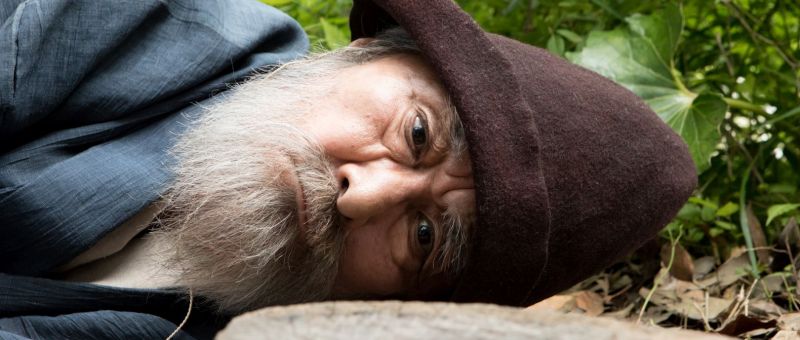
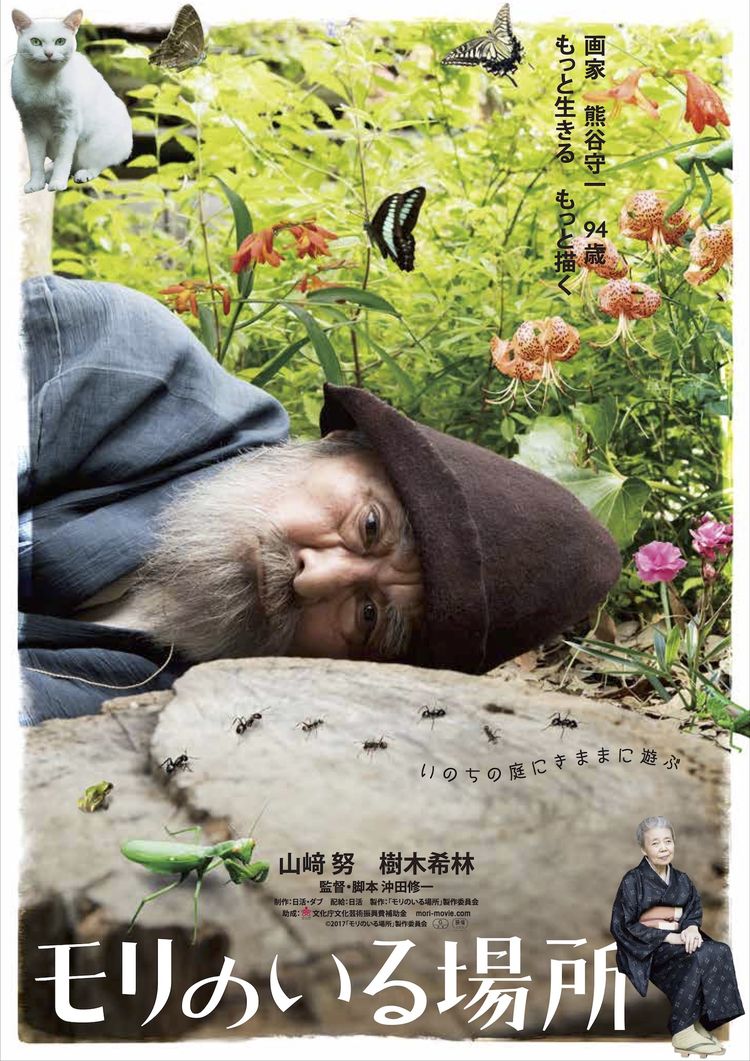
Mori an Artist's Habitat PosterThe world is vast and incomprehensible, but a lifetime’s study may begin to illuminate its hidden depths. At least it’s been that way for the hero of Shuichi Okita’s latest attempt at painting the joys and perils of a bubble existence. Mori, The Artist’s Habitat (モリのいる場所, Mori no Iru Basho) revolves around the real life figure of Morikazu Kumagai (Tsutomu Yamazaki), a well respected Japanese artist best known for his avant-garde depictions of the natural world, as well as for his eccentric personality. When we first meet him the early 1970s, Mori (a neat pun on his given name which uses the character for “protect” but also means “forest”), is 94 years old and has rarely left his beloved garden for the last 30 years. A man out of time, Mori’s world is however threatened by encroaching modernity – a gang of mobbed up property developers is after his land and is already in the process of constructing an apartment block that will rob Mori’s wonderful garden of its rightful sunlight.

Okita introduces us to Mori through an amusing scene which finds the Japanese emperor “admiring” one of his artworks only to turn around in confusion and ask how old the child was that made this painting. Spanning the Meiji and the Showa eras, Mori’s artwork is defined by its bold use of colour and minimalist aesthetic which outlines only the most essential elements of his subjects. As his wife of 52 years, Hideko (Kirin Kiki), explains to the various visitors who turn up at Mori’s studio/home hoping to commission him, Mori only paints what he feels like painting when he feels like painting it. Getting him to do anything else is a losing battle.

Painting mainly at night, Mori spends his days observing the natural world. Wandering around his garden he stops to sit in various places, gazing at the ants, and playing with the fish he put into a small pond dug way down into the earth over a period of 30 years. Despite his distaste for “visitors”, Mori has consented to be the subject of a documentary, followed around by a photojournalist (Ryo Kase) and his assistant (Kaito Yoshimura) keen to capture him in his “natural habitat”. The photographers, natural “shutterbugs”, gaze at Mori in the same way he gazes at his trees and insects. An irony which is not lost on the reticent artist.

Okita neatly symbolises Mori’s world as a place out of time by hovering over his desk on which lies a disassembled pocket watch. Eventually the watch will be repaired and time set back in motion but until now Mori’s garden has been a refuge of natural pleasures which itself contains the world entire. Receiving a surprise visitation from a supernatural being (Hiroshi Mikami), Mori is given an opportunity to explore the universe but turns it down. Firstly he doesn’t want to leave his wife on her own or see her “tired” by his absence, but secondly his garden has always been big enough for him and given thousands of years he fears he may never be able to explore it fully.

The garden, however, may not survive its owner. The 1970s, marked by early turmoil, later became a calm period of rising economic prosperity in which society began to move away from post-war privation towards economic prosperity. Hence our big bad is a property developer set on building apartment blocks – a symbol and symptom of the move away from large multi-generational homes to cramped nuclear family modernity. Unbeknownst to Mori, his garden has become a focal point for the environmental protest movement who have begun to set up signs and slogans around his home attacking the property developers for ruining a national landmark which has important cultural value in appreciating the work of one of Japan’s best known working artists.

Having lived through so much turmoil, Mori takes this in his stride. He knows his garden won’t last forever, and is resigned to the nature of the times. Mori may prefer to spend his days in quiet contemplation resenting the constant interruptions from all his “visitors” but makes time to talk seriously with those who seek his guidance such one of the developers (Munetaka Aoki) who’s brought along one of his son’s drawings, convinced that he must be a “genius”. Mori takes one look and tells him frankly that it’s awful, but adds that that’s a good thing – those with “talent” rarely do anything of note and even if it’s “bad” art is still art. Nevertheless there are those who try to profit from his work for less than altruistic purposes – the  hand-painted nameplate from outside the house is forever being stolen and he’s constantly petitioned to provide his services in service of someone else’s business.

Okita’s characterisation of the later life of a famous artist is another study of genial eccentricity as its hero commits himself fully to living in a way which pleases him, only bristling at those who describe his gnome-like garden presence as resembling a “Chinese Hermit Sage”. Mori himself is, of course, another living thing enjoying the natural world to its fullest and if it’s true that his time is ending there is something inescapably sad in looking up from the shadows of apartment blocks and finding nothing but lifeless concrete.


Screened at the 20th Udine Far East Film Festival. Mori, The Artist’s Habitat will also be screened as the opening gala of the 2018 Nippon Connection Japanese film festival, and will receive its North American premiere at Japan Cuts in July where Kirin Kiki will also receive the 2018 Cut Above Award.

Original trailer (no subtitles)
Nippon Connection 2018 to Open with Mori, The Artist’s Habitat

39415762940_128b534524_oNippon Connection, the largest showcase for Japanese cinema anywhere in the world, returns with over 100 brand new and classic films screening in Frankfurt from 29th May to 3rd June. The festival will open with the latest from Shuichi Okita, Mori: The Artist’s Habitat, and pay tribute to guest of honour Shinobu Terajima with screenings of Oh Lucy!, The City of Betrayal, and Dear Etranger, plus a special presentation of Ryuichi Hiroki’s Vibrator. The programme in full:

Nippon Cinema

River's edge still 1

  • Bamy – school friends reunite after many years, but their burgeoning romance is frustrated by a dark secret – the ability to see ghosts!
  • Birds Without Names – A young woman lives with an older man for reasons of convenience while continuing to pine for the violent boyfriend who has been missing for the last eight years in Kazuya Shiraishi’s dark romance. Review.
  • The Blood of Wolves – Koji Yakusho stars as a rogue cop trying to keep a lid on a yakuza gang war as Kazuya Shirashi updates Battles Without Honour for the bubble era. Review.
  • The City of Betrayal – an unhappy housewife and a depressed young man begin an unwise affair in Daisuke Miura’s romantic drama – with award presentation for guest of honour Shinobu Terajima. Review.
  • Dear Etranger – Tadanobu Asano stars as a “batsuichi” step-father encountering unexpected resistance from the elder of his second wife’s two daughters as the new couple expect their first child.
  • Destiny: The Tale of Kamakura – Mystery author Masakazu wakes up one morning to discover his wife has disappeared in the legendary city of Kamakura where humans and spiritual creatures co-exist.
  • Enokida Trading Post – Kiyohiko Shibukawa stars in this small town comedy in which a young man returns home from Tokyo to start afresh.
  • Flower and Sword – Samurai flower arranging!
  • Foreboding – Kiyoshi Kurosawa presages the apocalypse in this companion piece to Before We Vanish. Review.
  • Hanagatami – Nobuhiko Obayashi completes a personal passion project in examining youth on the brink of war.
  • Moon and Thunder – Yasuko, a young woman living alone, is prompted into a reevaluation of her life after her family unexpectedly descend on her home.
  • Mori: The Artist’s Habitat – Shuichi Okita returns with another portrait of an eccentric in the serene and sometimes surreal life of artist Mori Kumagai. Opening Night Gala.
  • Occult Bolshevism – A seance in an abandoned factory provokes malicious results in this horror feature from Ring scriptwriter Hiroshi Takahashi.
  • Oh Lucy! – a middle-aged office lady gets a new lease on life after an eccentric English teacher gives her a blonde wig and rechristens her “Lucy”. Review.
  • Outrage Coda – Takashi Miike closes out the Outrage trilogy.
  • Pumpkin and Mayonnaise – Tsuchida works as a hostess to support her aspiring musician boyfriend but her life is derailed when he finds out about the nature of her work while the resurfacing of an ex-lover also awakens long buried feelings.
  • Recall – A corporate scandal is exposed when an innocent woman is killed by a tire flying off a truck.
  • River’s Edge – A gay student bullied by his classmates discovers a dead body near a polluted river and shows it to his best friend in Isao Yukisada’s adaptation of the classic ’90s manga.
  • Blue Film Woman – a young woman attempts to blackmail the corrupt banker responsible for the deaths of her parents in Ken Mukai’s pink film from 1969.
  • Vibrator – a 30-something freelance writer embarks on a journey of self discovery after a chance meeting with a truck driver in Ryuichi Hiroki’s 2003 adaptation of Mari Akasaka’s novel
  • The Third Murder – Hirokazu Koreeda puts justice on trial in a tense courtroom drama in which a once convicted murderer pleads guilty to a second crime while his cynical lawyer becomes ever more uncertain his client is telling the truth. Review.
  • Tremble All You Want – a painfully shy woman with a long standing unrequited crush on a high school classmate reaches a crisis point when a bashful colleague confesses his love for her. Review.
  • We Are – coming of age story in which seven friends part ways after high school some heading to Tokyo some staying behind but their paths always crossing.

Nippon Visions

wilderness still 2

  • Breath of Rokkasho – childhood friends and former political activists are forced to question their ideals.
  • Cyclops – A man wrongfully incarcerated for the murder of his wife decides to look for the real killer alongside the policeman riddled with regret that he helped frame an innocent man.
  • The Hungry Lion – When a teacher is arrested for an inappropriate relationship with a minor, a video circulates online depicting him with another girl. As the girl rumoured to be on the tape, Hiromi’s life spirals out of control.
  • Ice Cream and the Sound of Raindrops – Shot in one 74 minute continuous take, Daigo Matsui’s drama follows six teens auditioning for a local theatre production.
  • The Name – A depressed former salaryman leading a series of double lives is given a sense of new possibilities by the appearance of a mysterious high school girl. Review.
  • The Night I Swam – A sleepy little boy goes on a snowy adventure in this magical, dialogue free odyssey. Review.
  • Noise – A stabbing spree in Akihabara continues to reverberate 10 years later in Yusaku Matsumoto’s debut feature. Review.
  • One Cut of the Dead – Real zombies invade the set of a horror movie in Shinichiro Ueda’s hilarious behind the scenes farce. Review.
  • Party ‘Round the Globe – Hirobumi Watanabe returns with another deadpan classic in which he stars as a lonely man on a roadtrip with a neighbour.
  • Passage of Life – an undocumented Burmese family living in Tokyo face intense pressure because of their precarious status.
  • Strange Fruit: Shorts – three short films by Kohei Nakayama, Noriko Yuasa, and Tetsuhiko Tsuchiya.
  • Topknot Detective – Australian mockumentary examining the creation of the titular TV series.
  • Wilderness – two men bond in the boxing ring in Yoshiyuki Kishi’s adaptation of the novel by Shuji Terayama.

Nippon Animation

The night is short still

Nippon Docs

Of love and law still 1

  • Danchi Woman – Akiko Sugimoto follows an 85-year-old woman who has been living in a danchi for over 30 years only to face upheaval when the estate is scheduled for demolition.
  • Exclusive Screening by NHK World-Japan – showcase of three NHK docs featuring traditional subjects including tea ceremony and ninjas, plus the docudrama following the life of Hokusai’s daughter Oei starring Aoi Miyazaki and Ryuhei Matsuda.
  • A Free Man – Andreas Hartmann follows a young man wilfully living on the streets to pursue a life of freedom.
  • Inland Sea – Kazuhiro Soda explores a traditional fishing village slowly dying out due to depopulation.
  • Japan Institute of the Moving Image: Short Docs – two documentary shorts focussing on the 2008 Akihabara attack and a young man who wanders the streets doing odd jobs.
  • Love and Walbachia – Sayaka Ono considers the interplay between love and gender.
  • Of Love and Law – Hikaru Toda reunites with Kazu and Fumi as they fight tirelessly to win recognition for those underrepresented in Japan’s conformist society. Review.
  • Ramen Heads – Koki Shigeno follows ramen chef Osamu Tomita.
  • Trace of Breath – Haruka Komori captures the life around a small garden centre in a town which was heavily affected by the 2011 earthquake and tsunami.
  • Zen and Bones – Takayuki Nakamura tells the amazing story behind Japanese/American monk  Henry Mittwer.

Nippon Retro

samurai rebellion still 2

  • Kiru – Also known as Destiny’s Son, Kenji Misumi’s Kiru is the story of a young boy who trains to become a skilled swordsman and then sets out on a journey to learn the secrets of his past.
  • On the Road Forever – sequel to Kiru in which the hero tracks down a man who may have been involved with the death of his father.
  • Red Peony Gambles Her Life – first instalment in the Red Peony series in which Junko Fuji plays female gambler Oryu.
  • Samurai Rebellion – a model samurai (Toshiro Mifune) decides he’s had enough of feudalism when his son is force married to the lord’s cast off only to have her called back once he’s fallen in love with her in Masaki Kobayashi’s enraged drama. Review.
  • Sanjuro – sequel to Yojimbo in which Mifune reassumes the role of the wandering hero to fight corruption.
  • Kurama Tengu – Screening of the 1928 silent film with benshi accompaniment. German subtitles only.
  • Sword of Doom – Tatsuya Nakadai stars as Kihachi Okamoto’s nihilistic swordsman.
  • Thirteen Assassins – remade by Takashi Miike in 2010, 13 Assassins follows the plot to take down a corrupt lord who raped a woman and murdered her husband but got away with it because of his connections.
  • Yojimbo – Kurosawa’s classic in which wandering ronin Sanjuro comes to the rescue of a town caught up in a gang war.

Nippon Connection takes place in Frankfurt, Germany from 29th May to 3rd June. Tickets are already on sale via the official website where you can also find full details on all the films as well as timetabling information. Unless otherwise stated, films screen in Japanese with English subtitles. In addition to the films the festival will also host a series of events including director talks and workshops in a rich cultural programme. You can keep up with all the latest information by following the festival on Facebook, Twitter, YouTube, Flickr, and Instagram.