Golden Partners (黄金のパートナー, Kiyoshi Nishimura, 1979)

Kiyoshi Nishimura began his career in the action genre with a series of paranoid thrillers so it feels particularly odd to see him tackle similar themes in such a breezy, lighthearted way as 1979’s Golden Partners (黄金のパートナー, Ogon no Partner). Though based on a novel by Kyotaro Nishimura, the film seems to have been envisioned as an homage to Robert Enrico’s Les Aventuriers in following two men and a young woman on a quest to track down a missing person and also find a large amount of gold supposedly contained in a downed submarine. 

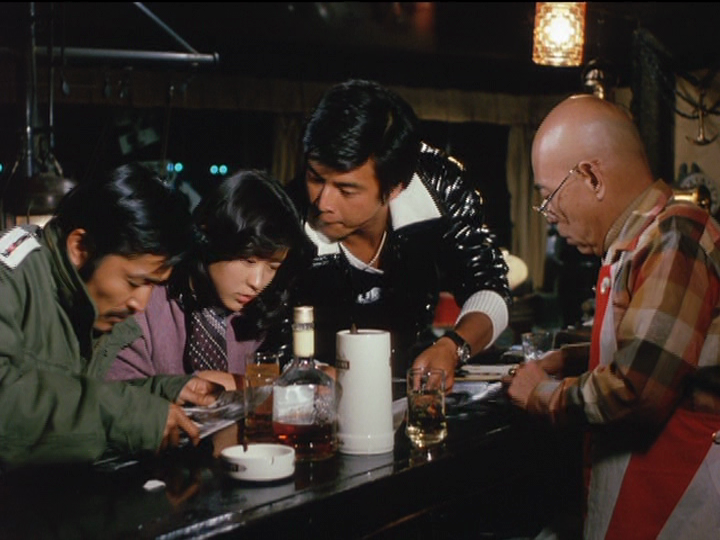
Kosuke (Tomokazu Miura) is a rather aimless young man who lives on a fishing boat and has a career as a freelance photographer taking photos of things people would rather weren’t photographed, while his best friend Shusaku (Tatsuya Fuji) is a motorcycle-riding policeman who has a strong sense of civic duty yet mostly spends his time giving out tickets to locals traveling slightly over the speed limit. They’re both good friends with the landlord at the Polestar bar whom they affectionately refer to as Pops (Taiji Tonoyama). Pops has let them run up a significant tab even though he doesn’t appear to have any other customers. In any case, their aimless days are interrupted when Kosuke begins hearing a strange SOS message but can’t seem to identify where it’s coming from to be able to help. Meanwhile, a young woman arrives looking for Pops and explains that her father, an old friend of his, has gone missing which may be connected to the mysterious stash of gold bars Pops is fond of talking about every time he has too much to drink. 

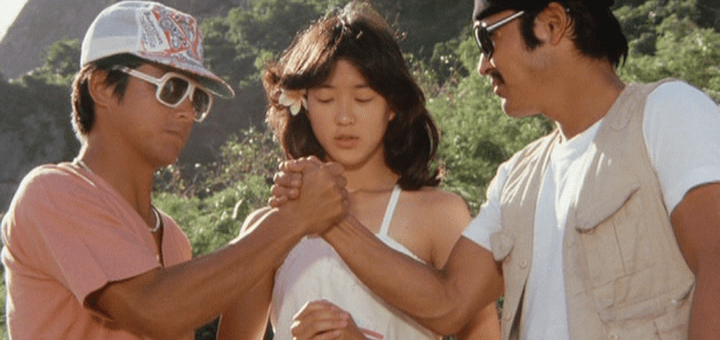
Figuring out that the SOS message is using a code employed by the Imperial Navy during the war, the trio embark on trying to solve the mystery partly to help the young woman, Yukibe (Misako Konno), and partly because they want to find the gold. Basically a buddy movie, the film has a childlike quality as it mainly follows the trio hanging out on the beach in Saipan solving puzzles and getting into minor arguments. Things take a slightly darker turn when Shusaku decides to stay on even after his paid leave from the police force ends despite realising it’s unlikely they’re going to find the gold bars or even figure out what’s happened to Yukibe’s father. Having realised that Yukibe likes Kosuke and despite his own feelings for her, he’s beginning to feel like a third wheel but in the end cannot bring himself to leave this unending holiday adventure.

But after making a shocking discovery, what they stumble on is a wartime conspiracy in which a corrupt spy killed the other men assigned to transport the gold and took it for himself. He then used it to become a rich and powerful man in post-war Japan, apparently suffering no consequences for his actions hinting at the essential corruption of the post-war society. Realising he likely can’t be prosecuted nor would justice really be served if he went to prison for a few years, they decide on blackmail as their way of recovering the gold little realising how far someone who has killed before will go to protect their secrets. Nevertheless, despite the conspiratorial overtones the atmosphere remains largely cartoonish rather than dark or threatening right up until another tragedy occurs and brings the whole thing to an end.

This laidback sensibility is aided by the soundtrack provided by Takao Kisugi who briefly appears at the end of the film as his city pop folk songs run constantly throughout. Nishimura’s use of a ghostly zero fighter as the gang investigate the former airbase on Saipan proves slightly uncomfortable though ties in with some ghostly imagery as an evocation of a past that’s apparently still very present and largely unresolved. In any case, like a classic children’s adventure story the film does not particularly engage with its larger themes but concentrates on the trio’s attempts to solve the mystery along with their zany plans and crazy stunts culminating in the guys parachuting out of a private plane after aiming it right at that of the bad guys in a moment of extreme irony. A little bit sad and more tragic than it perhaps ought to be, the film is nevertheless a warmhearted tale of male friendship, the childish glee of solving a mystery, and the satisfaction of getting one over on the bad guys even if it comes at a very high price.


Trailer (no subtitles)
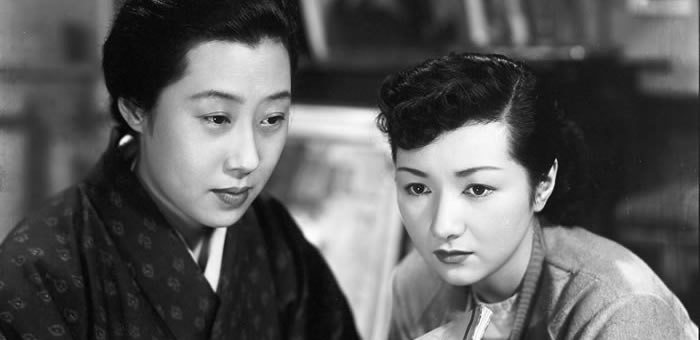
Home Sweet Home (我が家は樂し, Noboru Nakamura, 1951)

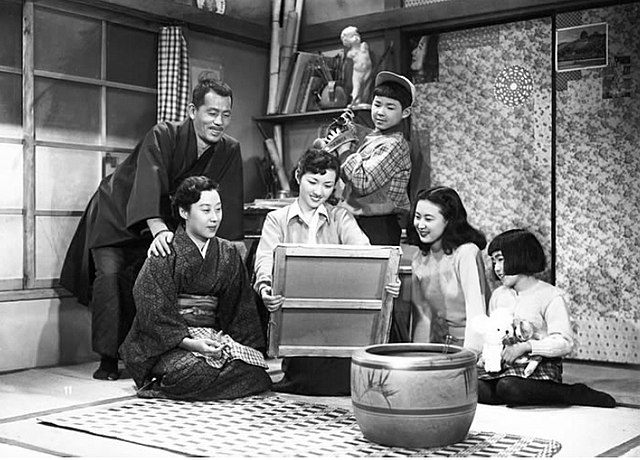
There must have been a lot of families like the Uemuras in the Japan of 1951. As film’s title implies, their home is a happy one and though they may not have much they make the most what they have and are cheerful and loving towards each other. Still, the world stores up trouble for them perhaps because they are so very defiant of their circumstances. In many ways a classic shomingeki, Home Sweet Home (我が家は樂し, Waga Ya wa Tanoshi) was the film that put Noboru Nakamura on the map and finds Japan at a kind of crossroads edging past post-war privation towards a broadly consumerist society.

We can get a sense of that in the constant needs of four children in the Uemura family, patriarch Kosaku (Chishu Ryu) picking up his young son Kazuo (Katsumasa Okamoto) after baseball on his way home and noticing that his mitt is almost worn through only to get there and spot his daughter’s boots are getting pretty thin too. It’s clear they struggle for money despite Kosaku’s steady job for which he is about to receive a 25-year good service commendation as wife Namiko (Isuzu Yamada) supplements the family income by taking in sewing at home while we later find out that she’s already sold most of her kimono to help make ends meet and is considering selling her wedding ring to pay for middle daughter Nobuko’s (Keiko Kishi) school trip to Kyoto.

But her hard-nosed sister Kayo (Mutsuko Sakura) tells her that secondhand kimono have lost their value with so many new ones now available. In the immediate post-war era, rice and kimono were the only things that had held their value and so selling one could bring in a lot of money quickly. Conversely, after receiving a sizeable bonus along with his commendation, Kosaku and Namiko visit a department store which has a large range of affordable clothing for sale though the kimono fabric Kosaku picks out for Namiko is still fairly expensive so she instinctively puts it back insisting that they buy the presents they promised the children first. 

That was probably a good move, seeing as the rest of the money is stolen from them on their way home to a congratulations party the children are busy setting up. Kosaku asks why someone would rob people like them, honest, hardworking types who don’t have much to begin with but as Namiko sensibly points out pickpockets don’t really think like that and how would they know anyway. The subtext is that times are still hard for a lot of people even if there are now more exciting, definitely non-essential things appearing on shelves for people with disposable income to buy and a new kimono, though out of fashion, is no longer so out of reach for the ordinary housewife. 

The loss of the money might seem as if it should place a wedge between husband and wife, but bar a moment of disappointment cured by the realisation that oldest daughter Tomoko (Hideko Takamine) has been considerate enough to place hot water bottles in their futons, they resolve to muddle through together and in any case they’re no worse off than they were before. Tomoko herself is conflicted, feeling as if as a young woman in her early 20s she should give up her dreams of becoming a painter and get a job to support the family but Namiko always tells her not to. She encourages each of her children to follow their dreams, perhaps a sign of a new post-war liberation, telling her sister that she’d happily sell all her kimono so that Tomoko could go on painting. Later we discover that she also dreamed of becoming an artist and that though Kosaku had encouraged her to keep it up, a housewife’s day is never done and there was simply no time left for herself. Painting is just another thing she sacrificed for her family and Namiko seems to be determined that Tomoko won’t have to do the same not that she particularly regrets her decision.

Tomoko only really comes to understand her mother’s sacrifices on noticing that the cupboards really are bare, she’s sold everything that could be sold and pawned her ring though the colleague that owned the house they were renting has encountered some financial difficulties of his own and going to to sell to the grumpy old man who bought the house across the way. The Uemuras are such obviously good people that it feels so unfair that so much bad luck has come their way all at once though it is their goodness that eventually saves them when the old man is touched by seeing youngest daughter Mitsuko (Kazuko Fukui) playing with his dog. He later comes to admire Tomoko’s painting of his garden though he’d put a fence up to stop her peering in. The scars of the post-war era are visible in the damage to Uemura’s front wall which would have blocked the way but now perhaps enables them to become good neighbours after all. Though the film may lack some of the visual flair present in Nakamura’s later work, it more than makes up for it with genuine sentiment and the implication that in the end the world is basically good and rewards those who are the same even if it sometimes tests their resilience.


The Shape of Night (夜の片鱗, Noboru Nakamura, 1964)

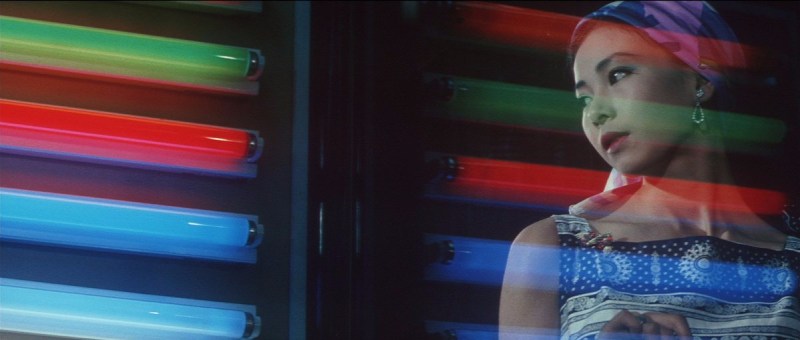
(C) Shochiku 1964Despite having two films nominated for a best foreign language Oscar and a handful of foreign festival hits under his belt, Noboru Nakamura has been largely forgotten by Western film criticism though a centennial retrospective of three of his most well regarded films at Tokyo Filmex in 2013 has helped to revive interest. The Shape of Night (夜の片鱗, Yoru no Henrin), Nakamura’s 1964 Shochiku melodrama focussing on the suffocating life of a young woman pulled into the Tokyo red light district, was one of the three newly restored films featured and was also screened in Berlin and Venice to great acclaim. Making full use of its vibrant colour palate, The Shape of Night paints its city as a constant tormentor filled with artificial light and false promises.

As we meet her, melancholy street walker Yoshie (Miyuki Kuwano) has been trapped in her dead end existence for six years and has lost all hope of living a “normal” life filled with love and happiness. A chance encounter with a supercilious client, Fujii (Keisuke Sonoi), prompts her into a series of recollections in an effort to explain exactly how it was she ended up in such a sorry state. As the eldest daughter of a poor family Yoshie left school early to work in a factory (making those neon tubes you see everywhere) while supplementing her income by working as a barmaid (not a hostess, just a girl behind the bar). Just shy of her 20th birthday, she meets a handsome “salaryman”, Eiji (Mikijiro Hira), who starts coming to the bar regularly to see her. The pair became a couple, and then lovers, and then cohabiters, but Eiji isn’t a “salaryman” so much as a low level gangster with a gambling problem whose street name is “princess”. Continual losses put Eiji in a tight spot with his crew and he begins borrowing money from Yoshie before asking her to prostitute herself to get him out of a hole. Thinking it will just be a one time thing, Yoshie resolves to make a sacrifice for her man but, of course, it wasn’t a one time thing.

Yoshie’s story is a sadly familiar one – an innocent woman duped by a duplicitous man whose empty promises aim to mask his continued fecklessness. Eiji, despite his smart suits and coolly confident attitude, is unlikely to make much of himself in the yakuza world yet is as tied into its hellish system of loyalty and reciprocity as Yoshie is in her non-marriage to the man she thinks she loves. Seeking constant approval, Eiji thinks nothing of living off a woman and his childishly excited smile on re-entering the apartment after Yoshie has sacrificed herself to save his face is a grim reminder of his priorities. When pleading doesn’t work Eiji turns violent, prompting Yoshie to finally consider leaving him but she’s too late – the yakuza world has already got its hooks into her and any attempt to escape will be met with terrifying resistance.

Fujii may seem as if he presents another option for Yoshie, a chance for a better, kinder existence but he too is merely another man trying to tell her how she should live her life. Hypocritical at best (as he freely admits), Fujii pays Yoshie to “ease his sexual urges” but expresses disgust and disapproval of her lifestyle and seeks to “save” her from her life of humiliating immorality, “purifying” her just like the dam he is building is supposed to do to the Sumida river. Fujii’s obvious saviour complex is worrying enough in itself though there is also the additional worry of what his “salvation” may entail if Yoshie decides to make a break from her yakuza chains and run off to the comparative safety of provincial Hokkaido. Fujii may claim to have fallen in love with her, but so did Eiji and who’s to say Fujii’s idea of wedded bliss will be any better than Eiji’s brutal reign as a common law spouse.

The situation is further complicated by Eiji’s gradual shift from a violent, overbearing, abusive boyfriend to a genial figure of gentle domesticity and what that shift later provokes in Yoshie. Rendered physically impotent by an incident during a gang fight, Eiji is literally and figuratively emasculated. Though his sudden inability to satisfy Yoshie originally provokes his jealously, it soon robs him of his violent impulses and turns Eiji into a willing housewife who dutifully does the couple’s washing and prepares the meals much to Yoshie’s consternation. This transformation is what finally kills her love for him, but still Yoshie cannot find it in herself to sever her connection with the man who has been the cause of all her suffering. Not quite hate or loathing, Yoshie’s burned out love has become a burden of care as she finds herself duty bound to look after a man she now believes incapable of looking after himself.

While Yoshie and Eiji sit in a bar one night after “work”, the television plays a report featuring the sad news of the death of a female student at the ANPO demonstrations. Prompting Yoshie to exclaim “what is ANPO anyway?”, the news report lays bare just how isolated her life as become – as all of Tokyo is aflame with with righteous indignation and the streets are filled with the largest protest in living memory, Yoshie is trapped in her tiny neon world which promises so much and delivers so little.

Nakamura makes fantastic use of sound design to capture Yoshie’s interior world – the background music rising over the droning voice of a boring client who hasn’t quite made up his mind, the radio cutting out at intense moments of violence, the terrible clanging of Eiji’s geta on the iron staircase which leads to his flat. Fading into blue dissolves of memory, Nakamura makes a hellish wonderland of nighttime Tokyo whose flashing neon lights, crowded bars and oddly darkened streets turn it into a prison of dubious delights. Finally making a drastic decision, Yoshie attempts to free herself from her burdens and sever the chains which bind her to her misery but in cutting the cord she finds the knots tightening, realising she will never be released from the source of all her suffering.


Screened at BFI as part of the Women in Japanese Melodrama season.