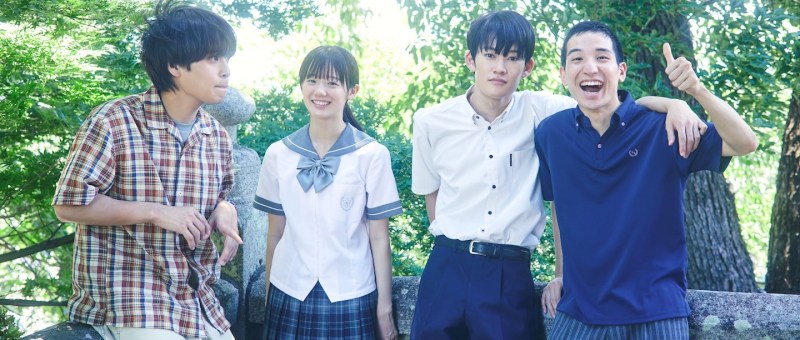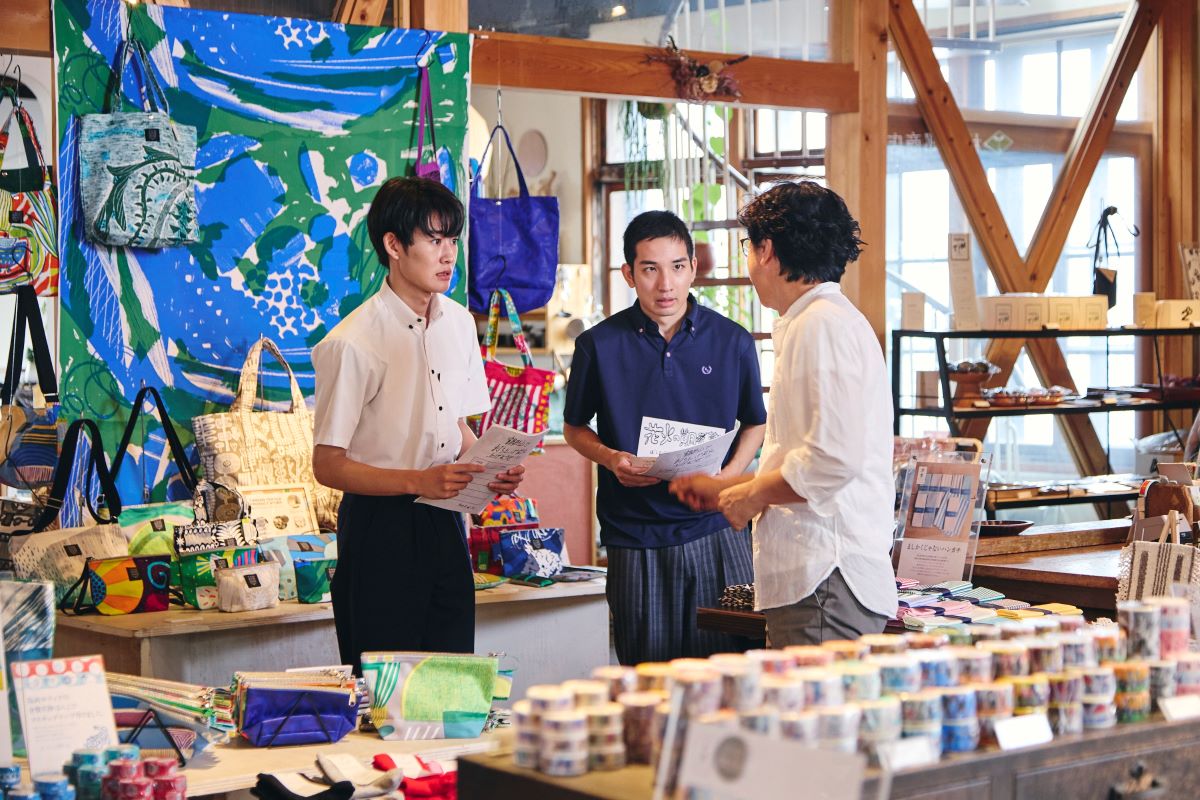
Rainy Blue (レイニー ブルー, Asuna Yanagi, 2025)

“You never know when it will end,” Aoi mutters to a concerned teacher. “The streaming period, and my life.” Asuna Yanagi’s Rainy Blue (レイニー ブルー) is a semi-autobiographical tale of a young woman figuring out how to live in the world while immersed in cinema. Her father may insist that she look at the reality, but Aoi’s world is already quite surreal even as she pours all her efforts into writing screenplays and watching films but otherwise floundering for direction.

To begin with, Aoi isn’t interested in cinema She just gets sent to see a film as punishment after getting caught setting off fireworks on the school roof because a local cinema has a special retrospective dedicated to actor Chishu Ryu who attended the same high school though probably 100 years previously. Despite scoffing at the idea and chuckling that everyone in the cinema is “old” while even the usher double checks to make sure she’s in the right place, Aoi is captivated by Ozu’s filmmaking and becomes a true convert to cinema to the extent that it completely takes over her life. She becomes the only member of the school’s film club, or as she’s find of reminding people “society”, and regularly turns up late after staying up all night watching movies. 

To that extent, Aoi’s film obsession may not quite be healthy in that it leads her to make some questionable decisions with unintended consequences, such as getting arrested for “stalking” people after following them around as research for her screenplays. She also finds out that one of her old friends, who is also her father’s favourite example of a “good” daughter, is into compensated dating and in reality perhaps just as lost as she is. Aoi’s father no longer understands her and has become authoritarian and unforgiving. He regularly berates and shouts at her while making no real attempt at communication. He simply asks why she can’t be “normal” and concentrate on going to uni like the other girls while complaining about how “embarrassed” he would be if she doesn’t go because it would reflect badly on him as a parent. 

Perhaps it’s not surprising that Aoi retreats into cinema to escape, but it’s also true that she finds a more supportive paternal presence in the guy at the cinema who turns out to have been a classmate of her mother’s. There’s a kind of poignancy in Aoi and her sister’s moment of confusion on realising that their mother was interested in films but they rarely watch them at home because her father doesn’t like them, while her mother rarely has time to go alone. Aoi’s love of cinemas as mediated by an old script she finds in the club room is also a way of connecting with her mother as a potentially more supportive parental figure in contrast to her father’s hardline authoritarianism.

But then, in her love of cinema Aoi is absolutely certain and she’s no reason why she should hide it from anyone else. Her best friend at school is rather bafflingly played by 43-year-old film director Hirobume Watanabe who dresses in a pre-war school uniform complete with student’s cap and little round glasses that make him look strangely like a Studio Ghibli character. Usami is an otaku with a love of anime he thinks he’s kept hidden despite having several anime badges on his backpack and is too afraid to be out and proud about it because he knows he’ll be bullied, which he eventually is when Aoi enters a deeper moment of crisis and more or less abandons him and the school. Watanabe also appears as a weirdly inspirational film director who has a go at an audience member at a q&a who asks him why his film is so nihilistic only for him to turn the question back on her and angrily insist that film can illuminate the way forward for those like Aoi who feel themselves to be lost. 

Thanks to all these strange adventures, her various friendships, and even her father’s animosity, Aoi eventually figures out what she wants to do with her life and gains the courage to go after it no matter what anyone else might say. Set in the picturesque environment of rural Kumamoto, the film’s gentle, laid-back aesthetic belies the storm at its centre and the rainy blue that surrounds the heroine until she too finally finds her way through the labyrinths of cinema.


Rainy Blue (レイニー ブルー, Asuna Yanagi, 2025) screened as part of this year’s Osaka Asian Film Festival.

Original trailer (no subtitles)
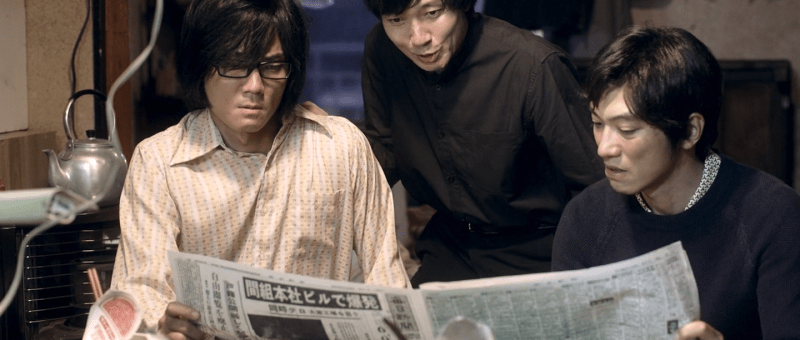
I Am Kirishima (桐島です, Banmei Takahashi, 2025)

In early 2024, an elderly man made a shocking confession. He told members of the medical staff at the hospital where he was being treated that his name was actually “Satoshi Kirishima” and that he was a fugitive from justice wanted for the terrorist bombing of Mitsubishi Industries in 1974 that resulted in the deaths of eight people. Banmei Takahashi’s I Am Kirishima (桐島です, Kirishima desu) attempts to chart the course of his lifetime on the run but may prove controversial in the depths of its sympathy for a man who was party to this kind violence and to a degree found it justified even if he could not justify that his organisation threatened the lives of ordinary people rather than simply the infrastructure of companies they believed to be fuelling corporate imperialism.

Takashi has visited this era before with 2001’s Rain of Light which like Wakamatsu’s United Red Army readdressed the Asama-Sanso Incident and the failure of the student movement in early 1970s of which both directors had been a part. In February 1972, five members of the URA fleeing a purge inside the group holed up in a mountain lodge taking the innkeeper’s wife hostage. The event was one of the first news events in Japan to be broadcast live and its aftermath exposed the cult-like depths of violence and abuse to which the URA had descended forever the souring the nation as a whole on the idea of left-wing revolution. Meanwhile, the fragmentary groups that remained shifted further towards the extremes such completing bombing campaigns to disrupt the new capitalistic prosperity of the economic miracle. Kirishima and his cell believe these large conglomerates, such as Mitsubishi, to be enacting a new kind of Japanese imperialism through exploitative labour practices often targeting migrant workers in much the same way they made use of the forced labour of Korean and Chinese people trafficked to Japan during the colonial period.

To this extent, Kirishima justifies acts of terrorism but thinks they should avoid ordinary people getting caught up in the blast. The film is keen to cast him as “a man behind the times,” an foolish idealist who is exiled from the modern society because of his outdated beliefs in equality and fairness. As such, it lends an elegiac quality to the tragedy of his life in which his 50 years on the run weren’t all that much better than prison given that he had to live under an assumed identity, forever watching his back and unable to put down roots. A tentative romance with a singer-songwriter is hinted at, but Kirishima forgoes his romantic desires out of a feeling that it would be irresponsible to marry without being able to reveal his true self. 

But the film equally seems to drawn a parallel with contemporary Japan in Kirishima finds himself working alongside a middle school drop out with openly xenophobic views who makes frequent racist remarks such as implicating a co-worker when he’s taken to task for being late by insisting that it must be the other guy’s fault because he’s Korean and Koreans always lie. He also says that the migrant workers whom he claims are working illegally should be grateful to be exploited in Japan and can always go home if they don’t like it. It’s all a little too much for Kirishima who sacrificed his life for an ideal this boy repudiates while Japan has become a nation ruled by capitalism and exploitation with the labour revolution he dreamed of now a distant memory. Watching a Shinzo Abe press conference in which he discusses revising the constitution, Kirishima throws a beer can at the TV in frustration. His old comrade dies in prison leaving only a book of poetry behind, while another is released after serving his time though he obviously can’t make contact with him without risking his identity being exposed and getting picked up after all these years. 

Indeed, the film romanticises this image of Kirishima as a man from a bygone age in which another Japan was possible but did not and now presumably cannot come to pass. In doing so, it gives tacit approval to some of the actions of the extremist groups of the 1970s while simultaneously declaring the end of an era as a “case closed” card is placed over the cheerfully smiling face of a young Kirishima which had graced wanted posters all over the country for the last 50 years. His life itself becomes a failed revolution, but also kind of victory in which he managed to “beat” the police by remaining a fugitive all that time even if in the end he seems to regret the life he was prevented from living along with the isolation and loneliness of which he may now at last be free.


I Am Kirishima screened as part of this year’s Osaka Asian Film Festival.

Trailer (no subtitles)

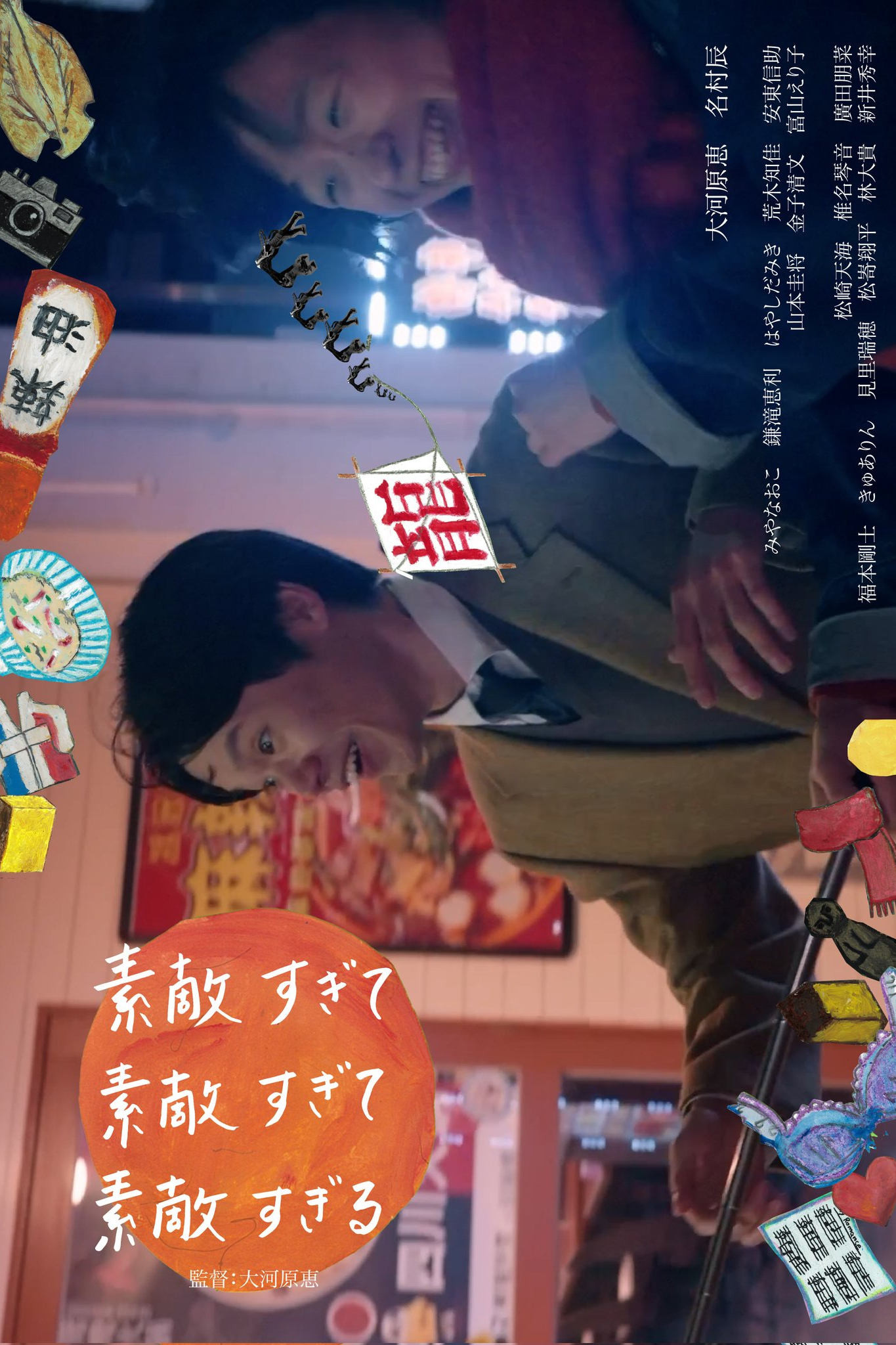
So Beautiful, Wonderful and Lovely (素敵すぎて素敵すぎて素敵すぎる, Megumi Okawara, 2025)

Is it better to have a dream that will never come true or to have no dreams at all? That’s a question that Nozomi can’t help asking herself after her world comes crashing down when she discovers her boyfriend is randomly marrying someone else. Nevertheless, she comes to realise that her life is and always has been So Beautiful, Wonderful, and Lovely (素敵すぎて素敵すぎて素敵すぎる, Sutekisugite, Sutekisugite, Suteki Sugite) in Megumi Okawara’s quirky indie dramedy of endless heartbreak and constant absurdity.

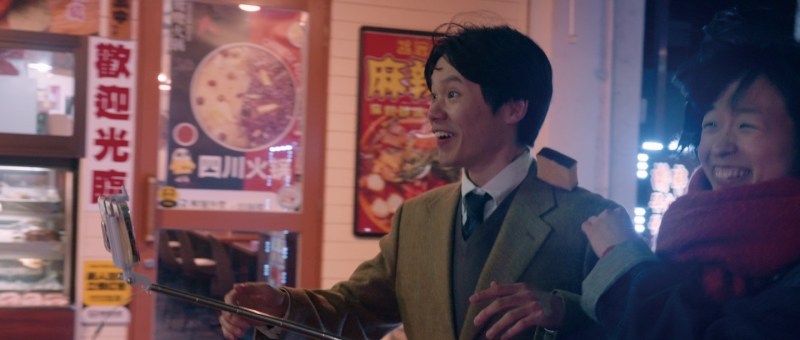
At least, there’s nothing more absurd than being haunted by the spirit of your very much still alive boyfriend in the form of a slice of castella cake. Nozomi’s mother has been tearfully trying to perfect a party trick to perform at the wedding of her daughter to boyfriend Chitose, but unbeknownst to her, Chitose has married someone else. Gatecrashing the ceremony, Nozomi teamed up with Chitose’s brother Susumu to hijack the wedding photo and then run off with the camera though she ended up crashing into a castella cake delivery guy and landing in hospital with a brace around her neck. The neck brace is perhaps a symbol of the way Nozomi’s world has been narrowed, preventing her from turning her head to find new directions in life. But those would be hard to find anyway when you’re being followed around by a guy who looks like your ex but also claims to be a piece of sentient cake. 

To begin with, she tries to have fun with Castella-Chitose by going on influencer-style dates such as a visit to his “birthplace” (a castella cake shop) while trying to understand her relationship with the “real” Chitose who not is particularly nice and very pissed off about everything that happened with his wedding along with Nozomi’s lingering attachment to him. She seems to want to continue with the relationship as it was even though he treats her poorly and has already married someone else, while he just seems to be paranoid that she plans to expose their affair even if he does accept responsibility in having behaved badly by never mentioning that he already had girlfriend and for an unknown reason also keeping his wedding and marriage a secret from his colleagues at the school where they both work. 

After making an “affair”-themed video it seems designed to blackmail him into getting back with her, Nozomi (whose name means “hope”) decides to make a fresh start by getting a job in a stationery shop which also turns out to be staffed by people with broken dreams. Her eccentric boss Yoko and the other clerk apparently live in adjacent wardrobes at a rented apartment while Anita, a middle-aged man too timid to interact with customers, worries for his daughter who has broken dreams of her own. Surreal as it is with its weird customers who turn up to see the “new products” or try to buy crab rice which they obviously don’t sell, Nozomi begins to find a new sense of belonging and solidarity as she grieves her failed relationship with Chitose which is set to expire in exactly two weeks’ time when the castella finally meets its best before date.

But then what she discovers is that the thing about dreams that don’t come is that they never expire. Perhaps it really is better to have a dream that won’t come true than not have a dream at all. Or at least, that’s what her new colleagues seem to show her even the midst of their loneliness as they latch on to each other and remind Nozomi that as Castella-Chitose said she matters and that there are people who love and care for her in ways that the real Chitose obviously never did. She wishes most of her life were a dream, while her dreams never come true but still her life is and has always been so beautiful, wonderful, and lovely even if she’s only just really becoming able to appreciate it thanks to her new friends who are giving her the courage to dream new dreams and move on from her disappointing relationship with Chitose while watched over by the spirit of castella cake. Defiantly weird but also warm and wholesome, the final message is that it’s best to embrace life’s strangeness along with its joys and heartbreaks while continuing to dream even if those dreams may never come true.


So Beautiful, Wonderful and Lovely screened as part of this year’s Osaka Asian Film Festival.

Trailer (English subtitles)

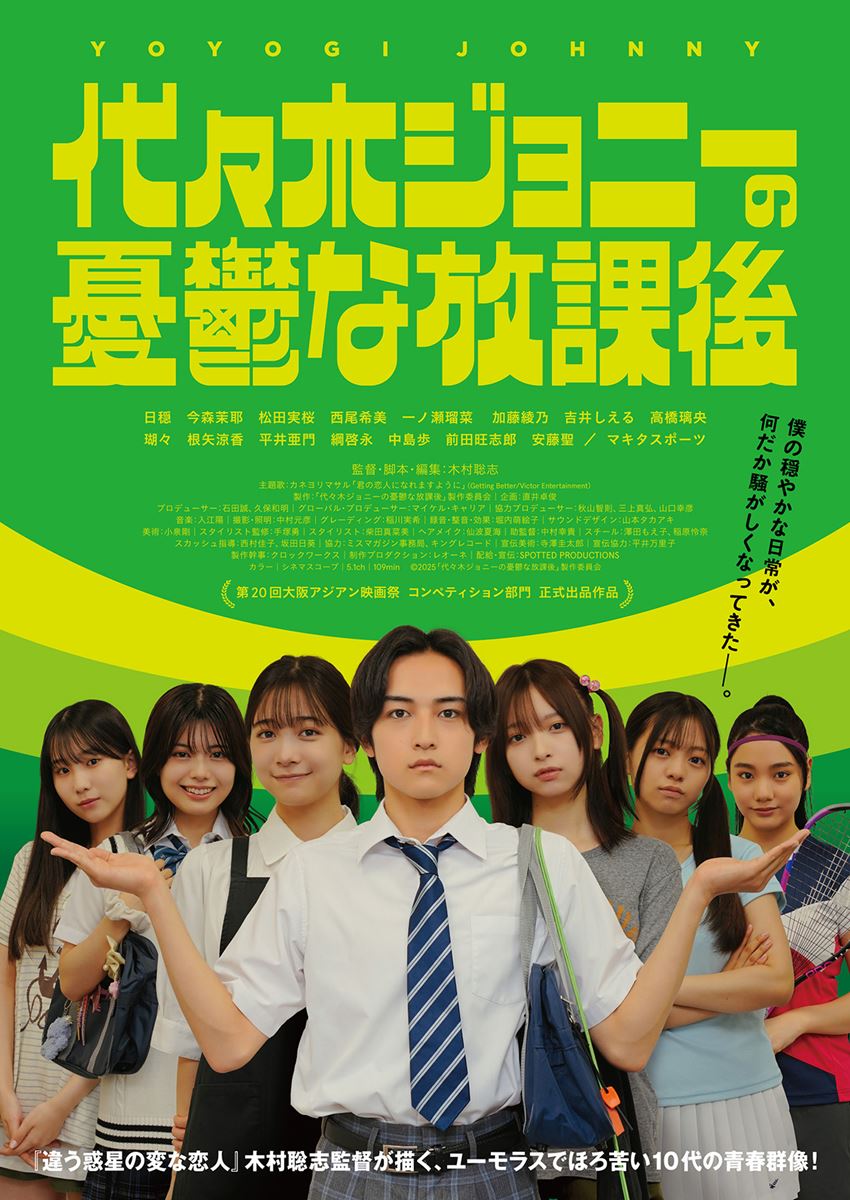
Yoyogi Johnny (代々木ジョニーの憂鬱な放課後, Satoshi Kimura, 2025)

Not much makes a lot of sense in the world of the titular Yoyogi Johnny. Nothing’s quite as it first seems and life is full of contradictions, but that’s alright, for the most part. Johnny just floats on through life going with the flow, but then he meets a series of girls who each for some reason want to practice things with him though for very different reasons while he tries to make sense of it all and gain the courage to push for what he really wants.

Then again, he breaks up with Asako (Mio Matsuda) because he realises he likes her in the same way he likes “history” which is to say, when someone asks him what his favourite subject is he just says that but doesn’t actually know if he even likes history or not. Having never been in love, he doesn’t know what it’s like and therefore wants to end the relationship. Mostly he just spends his time hanging out in the “squash club” where they don’t actually play any squash but just use the clubroom to hideout from the less satisfying aspects of their lives or otherwise avoid other people. In fact, they’re only in the squash club to make up the numbers and were all looking to start clubs of their own but for various reasons were prevented from doing so. But when a mysterious young woman they christen Deko (Shieru Yoshii) for her prominent forehead arrives at the club looking for the founder, Ondera, whom they call “Button”, it wrecks their peaceful lives because of her insistence that they actually play some squash.

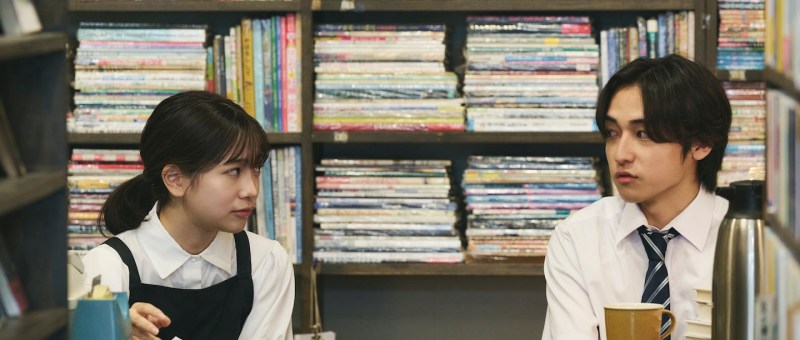
Deko wants to practice squash with him, but his childhood friend Kagura (Runa Ichinose) wants him to role play real world interactions while she has otherwise become a virtual recluse who no longer attends school. Meanwhile, he’s also drawn to a colleague at his part-time job at a bookshop/bar, Izumo (Maya Imamori), who is also the boss’ daughter. Somewhat salaciously, she wants him to practice “physical contact,” as that’s one of the areas she has difficulty in having herself also been a recluse who dropped out of school and has come to Tokyo for a fresh start. Johnny immediately picks up on this irony of Izumo salmoning her way to the capital while, in general, most people are travelling away from the city to a less populated area for a quieter life rather than the other way around though like many of these conversations it’s lost on Izumo to whom it is of course just normal. Johnny has several of these conversations in which he attempts to point out that something doesn’t make sense but just finds himself trapped in an infinite loop of back and fore as the other person struggles to understand his logic or he theirs. He is however a kind person who tries to help everyone who asks him though perhaps without really thinking about it. 

Yet most of the young women eventually oscillate out of his life depriving him of these very important friendships and ironically rebounding to the squash club even though they now actually have to play squash. Nevertheless, through his various relationships Johnny begins to gain a new perspective on himself and even finds out what it’s like to fall in love. A strange young woman who seems to be part of what very much looks like a cult, reminds him that “self-sufficiency” is a lie even though it’s supposedly what their cult is founded on. It is after all an organisation that promotes “independent living” while sending its members who all live in the dorm to farm the fields, though this yet another thing that doesn’t really make sense but Johnny just has to accept. Nevertheless, it seems she’s right when she says people can’t live by themselves alone and by and large need each other to survive. She tells Johnny that he should stop visiting Kagura because it’s “meaningless” and wouldn’t help her, but at the same time seems to appreciate his good-naturedness and the gentle positivity he puts out into the world in his ability to just be nice and be there for that want or need him while never expecting anything in return. As he’s fond of saying, if you regard a person as a friend then it doesn’t really matter whether they agree or not they’re still your friend and Johnny has more than many might awesome he would. Warm-hearted and filled zany humour, the retro aesthetic of its opening titles only adds to film’s charm as a little gem of indie comedy.


Yoyogi Johnny screened as part of this year’s Osaka Asian Film Festival.

Trailer (no subtitles)

The Tales of Kurashiki (蔵のある街, Emiko Hiramatsu, 2025)

Beniko’s high school art project involves recreating a picture her mother left behind that immortalised a memory of a happy family moment during the rare sight of fireworks. But Beniko can’t seem to make progress with her artwork and she’s thinking of giving up art altogether along with her ambition of attending an art school because for her painting is intrinsically linked with her familial trauma and fears for the future. It is also, however, the force that keeps her family together though not perhaps in the way she intended.

The attempt to recreate her mother’s drawing is that to reclaim her family as it was though as she later realises attempting to recreate the past exactly is a futile effort. Resentful towards her mother for leaving and perhaps also towards her father for his emotional abandonment and the absurd jealousy that left her mother with no choice but to leave, she reinvents herself as a caretaker as a way of rooting herself in the domestic space by taking care of her autistic older brother Kyosuke, affectionately known around the neighbourhood as Kyon-kun. Looking after Kyon-kun is one reason she gives for not going to art school, but as her friend points out much to Beniko’s shame, perhaps that’s not really fair to him either if she’s exploiting his need as an excuse for her cowardice while denying him the right to his own life too. He is after all a little more capable than she might give him credit for, travelling to the correct station on his own and waiting for her patiently at the other end when she misses her regular train. 

Beniko’s childhood friend Aoi later realises that he did something similar. When Kyon-kun wandered off while Beniko was distracted and climbed a tree at the shrine to watch imaginary fireworks, Aoi and his friend Kiichi, who is the son of the shrine owner, promised to set off some real fireworks for him without really thinking it through or having much intention to actually do it. But as Beniko points out, Kyon-kun never forgets a promise so now he’s asking every day when the fireworks are and is continually disappointed. Chastened by Beniko, Aoi’s half-hearted attempt to keep his promise backfires and he realises that he too thought that it didn’t really matter because it was Kyon-kun and he wouldn’t know the difference. 

Aoi’s desire to make good on his word is partly a sense of guilt and shame in his realisation of the way he’d thought of Kyon-kun, partly due to his feelings for Beniko, and partly adolescent insecurity in the acceptance that his unnecessarily harsh father has a point when he says he never follows anything through. Kiichi too is experiencing similar anxieties as his father threatens to leave the shrine to his more studious younger brother and is exasperated by his goodhearted goofiness. The trio are all really looking for new paths towards adulthood by trying to make peace with their younger selves and gain the confidence to follow their dreams even if it takes them away from the picturesque settings of provincial Kurashiki.

Beniko’s mother was fond of saying that there was a deity of waiting in the town, and there is a white-clad figure perhaps visible only to Kyon-kun who follows the youngsters around and looks on cheerfully as if embodying the sense of fun and warmth that lingers in the city. Kurashiki does indeed look like a nice place to live with its continual sunniness and traditional architecture though as someone points out that’s largely because the bombers flew past here and hit somewhere else instead. Fireworks are as apparent disruptor but eventual healer Kojo says a way of bringing people together, a source of joy happiness even amid difficult times just as they were during the pandemic. There’s something quite wholesome and comforting about the way the whole community comes together to make Kyon-kun’s dream come true, overcoming the obvious objections of the powers that be that it’s not a good idea to have a fireworks festival in a town that’s almost entirely constructed in wood to create a small marvel of human kindness and solidarity. It’s this that finally allows Beniko to remake her family, giving it her own light and colour while keeping a place for her mother having come to an acceptance of why she couldn’t stay and a conviction that she will one day return when she too has begun to heal her heart.


The Tales of Kurashiki screened as part of this year’s Osaka Asian Film Festival.

Trailer (no subtitles)