Dr. Cheon and the Lost Talisman (천박사 퇴마 연구소: 설경의 비밀, Kim Seong-sik, 2023)

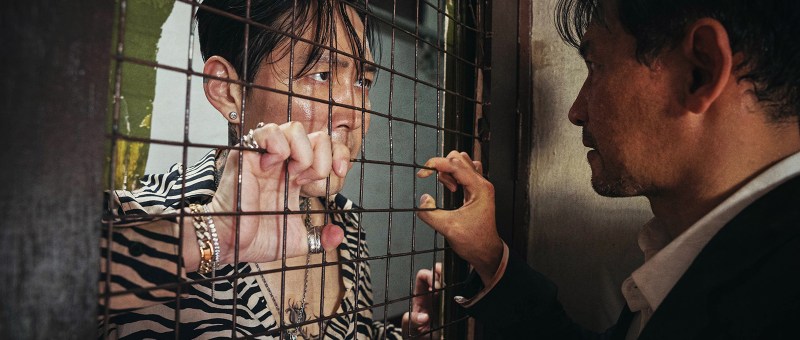
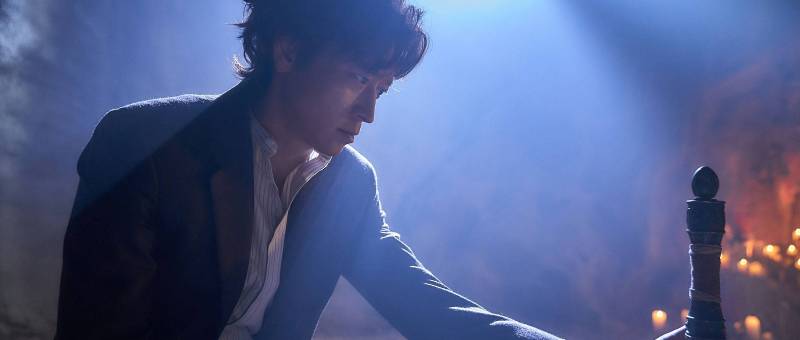
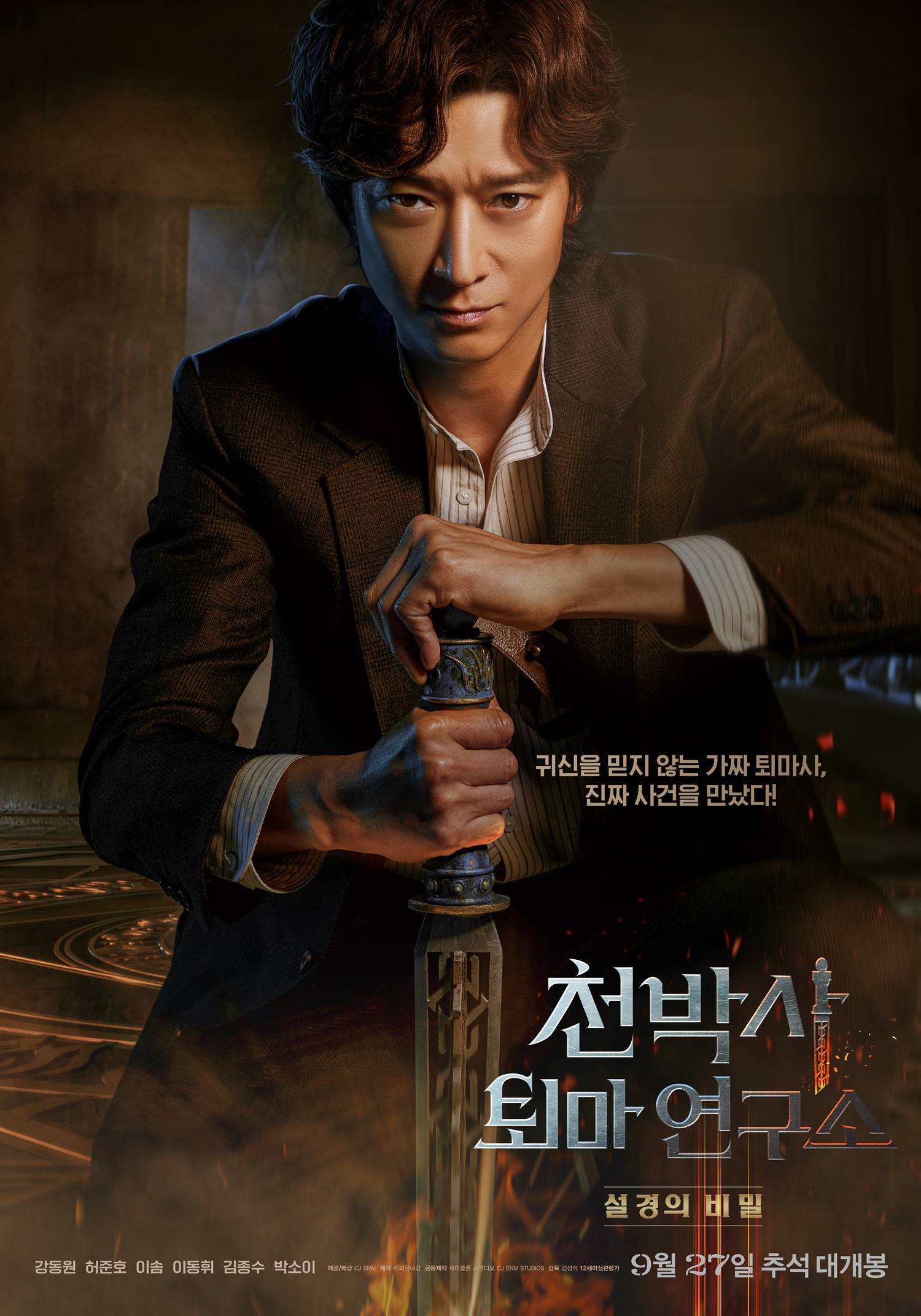
The titular Dr. Cheon (Gang Dong-won) doesn’t believe in ghosts. Some may see him as a scammer or a conman, but he is a real doctor and sees what he’s doing as a kind of role-play therapy exorcising the demons that disrupt human relationships through, essentially, giving people what they want but were unable ask to ask for. Inspired by a popular webtoon, Kim Seong-sik’s charmingly quirky supernatural adventure Dr. Cheon and the Last Talisman (천박사 퇴마 연구소: 설경의 비밀, Cheonbaksa Toema Yeonguso: Seolgyeongui Bimil) has a pleasing retro quality that recalls classic serials along with the wisecracking heroes of old as Cheon exorcises a few demons of his own while trying to constrain a great evil. 

In a strange way, Cheon’s cynicism maybe a direct result of knowing that ghosts are real and one of them killed his brother and grandfather who was in fact the chief shaman. These days, Cheon is YouTube celebrity exorcist who runs what he calls a “high tech psych” company carrying out fake rituals with the aid of a series of special effects designed by “Apprentice Gang”, or more accurately his assistant In-bae (Lee Dong-hwi), featuring ominous wind and more dynamite than seems advisable. Kim has some fun casting the couple from the bunker in Parasite, on which he served as an AD, as wealthy homeowners with more money than sense convinced they’ve got a ghost largely because because their teenage daughter has recently become moody. Using Sherlock Holmes-like powers of deduction, Cheon assesses what’s at the heart problem in the family and gives each of them some spiritually endorsed advice such as that the husband should stop buying ugly statues his wife doesn’t like and the parents should cut the teenage daughter some slack. 

As he suggests, every one is happy so it doesn’t really matter that he lied to them or that the ritual was fake because they’ve still been cured of what ails them albeit through some psychological manipulation rather than religious reassurance. Then again, those around Cheon may find it somewhat embarrassing that their teachings are being exploited to make money out of desperate people even if Cheon seems to think it was alright to scam the wealthy family because they can after all afford it. Conversely, he tries to turn down a young woman who comes to the office judging from her clothes that she wouldn’t be able to pay only to change his mind when she flashes a bag full of cash. 

Unlike Cheon, Yoo-kyoung (Esom) actually can see ghosts and ought to be able to see through Cheon but perhaps chooses not to while he, refreshingly, does not take too long to re-accept the fact that ghosts are real after all and this one has a particular bone to pick with him personally. Kim casts the ghost world in shades of blue and gives them untold power, able to fly around in spirit form and possess one person after another in quick succession, while otherwise lending the empty streets a kind of warmth in the orange glow of the flares In-Bae uses to survey the landscape. With gorgeous production design and impressive effects, the film incorporates the trappings of shamanism from drums to lines of prohibition but deepens its lore with a series of key artifacts as Cheon finds himself reaccepting his destiny as a shaman while weilding the sword of justice.

In any case, the film seems to ask why not both, suggesting that Cheon’s fake shaman business is sort of real anyway and in its way provides healing not least to himself. They are all haunted by ghosts of the past whether they see them or not, while Cheon’s eventual quest is one of vengeance that would also allow him to lock away his trauma in a sealed room deep underground and bound by the chains of hell. The sight of the many sutras the villain had placed to possess and control the townspeople suddenly bursting into flames implies a kind of liberation or purification in which the dark presence has finally been lifted even if it may not be for long. Hugely entertaining and fantastically witty, Kim ends the film with a post-credits sequence teasing a potential series and the irresistably intriguing further adventures of Dr. Cheon, fake shaman and real exorcist, showman and swordsman battling evils both ancient and modern.


Dr. Cheon and the Lost Talisman screened as part of this year’s London Korean Film Festival.

International trailer (English subtitles)
Switch (스위치, Ma Dae-yun, 2023)

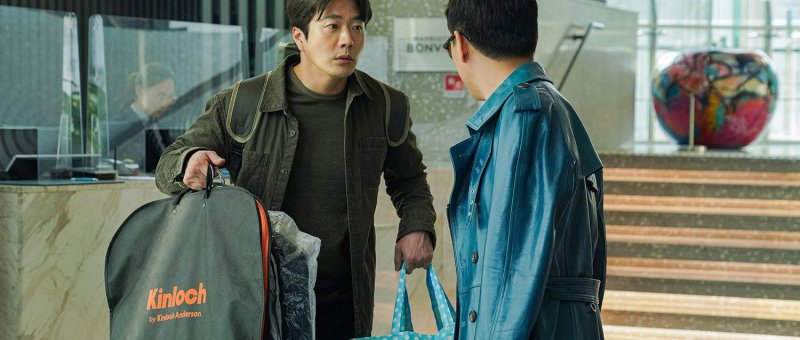
An egotistical actor is given an unexpected lesson in what it is that makes life worth living when he’s suddenly transported to a parallel world in Ma Dae-yun’s charming Christmas dramedy, Switch (스위치). Rather than the body swap comedy the title might suggest, Ma’s warmhearted morality tale is a more a meditation on what might have been and may be again while contemplating the emptiness of a life of fame and riches when there’s no one to share it with. 

“What matters more than money?” top star Park Kang (Kwon Sang-Woo) chuckles after telling his manager he’ll accept a job he just described in quite insulting terms after being informed it comes with a hefty paycheque. Kang is currently riding high. He’s become enormously successful and even a recent sex scandal involving his co-star in a TV drama has only boosted his profile. Yet he tells his analyst that he can’t sleep and attributes it to “depression and anxiety”. He treats those around him poorly and most particularly his long suffering best friend from his fringe theatre days, Joe Yoon (Oh Jung-Se) who now works as his manager, while struggling to accept his loneliness and meditating on lost love in the memory of the woman he broke up with in order to chase stardom. 

After getting into a weird taxi one Christmas Eve, he’s suddenly granted the “wish” of getting to find out what would have happened if he’d made a different choice. After waking up in an unfamiliar house he discovers that he’s married with two children and slumming it fringe theatre while Joe Yoon is now the superstar having aced the audition Kang ran out on to chase Soo-hyun (Lee Min-Jung) to the airport and convince her not to leave. Of course, Kang is originally quite unhappy about all of this. He doesn’t understand why no one recognises him anymore and resents that he’s suddenly subject to the rules of “ordinary” people again after a decade as a pampered star. In his acceptance speech after winning an award, he’d stated his intention to “forget” his roots as a humble actor and embrace his new role as a member of the showbiz elite fully demonstrating his sense of alienation and insecurity along with his intense loneliness. As the taxi driver had said, Kang has “everything”. He’s achieved his dreams and lives the high life he’d always dreamed of, yet he’s deeply unhappy.

But his “new” life immediately challenges his sense of masculinity in realising that he has little power without money and is in fact financially dependent on Soo-hyun whom he may also have robbed of a bright future by preventing her from studying abroad and achieving success as an artist. Meanwhile he looks down on himself for continuing to follow his artistic dreams in fringe theatre when his plays attract few audiences members and make little money. Just as Joe Yoon had become his manager, so he ends up getting a taste of what it’s like trying to manage a “star” while coming to appreciate that Joe Yoon may be feeling just as lonely and unfulfilled as he once had. 

Yet even as Kang settles into his new life as a husband and father while slowly rebuilding his acting career though a combination of talent, supportive friendship, and good luck, he fails to learn the right lessons continuing to yearn for external validation through material success. He spends money on fancy dinners and tries to move the family into a swanky apartment in Seoul without realising that he’s already got a “home” in the quaint little provincial house he and Soo-hyun set up together filled with memories (that admittedly he doesn’t actually have) of the children when they were small. Slowly, he begins to look beyond himself while developing a new sense of security that means he doesn’t need to chase status-based affirmation in empty materialism but now has a new sense of what’s really important. A charming season morality tale with a little more than a hint of A Christmas Carol, Ma’s gentle drama never suggests that success itself is wrong or that Kang must give up his movie star persona to become a happy everyman but only insists that true happiness is brokered by treating others well and being treated well in return much more than it is by consumerist success.


Switch screens at UltraStar Cinemas Mission Valley April 22/24 as part of this year’s San Diego Asian Film Festival Spring Showcase.

International trailer (English subtitles)

Deliver Us From Evil (다만 악에서 구하소서, Hong Won-chan, 2020)

A melancholy hitman bids for paternal redemption but finds himself literally stalked by the mistakes of his violent past in Hong Won-chan’s pulpy action drama, Deliver Us From Evil (다만 악에서 구하소서, Daman Akeseo Goohasoseo). Aptly named, Hong’s noirish thriller takes us from the back streets of Osaka to underground Bangkok while the hero longs for the tranquil horizons of Panama but finally discovers that he cannot outrun himself even if he can perhaps repay his karmic debt by freeing others from the riptide of his moral transgressions. 

A former government agent apparently unceremoniously burned, In-nam (Hwang Jung-min) has been earning his keep as a killer for hire hiding out in Japan. His “one last job” is knocking off a Zainichi Korean mob boss, Koreda (Kosuke Toyohara), after which he’ll be free to go wherever he wants, arbitrarily setting his sights on Panama solely because of the tranquil scene featured in a picture opposite his favourite seat in his local izakaya. The past is however not done with him yet. His old handler gets in touch to let him know old flame Young-ju (Choi Hee-seo) has been trying to contact him, but so consumed with shame and defeat is he that he declines to respond only to hear a short time later that Young-ju has been found dead in Bangkok and as she’d listed him as next of kin he’s responsible for the repatriation of her body. Remorseful, he’s shocked to discover that Young-ju had a daughter, Yoo-min (Park So-yi), whose kidnap by her Korean-Chinese nanny may be connected to her murder. Switching up his plans, In-nam determines to save the daughter he believes to be his own but is pursued by flamboyant Korean-Japanese gangster Ray (Lee Jung-jae) hellbent on getting revenge for his estranged blood brother Koreda. 

In-nam finds himself in a sense caught between a series of codes of masculinity, apparently a former government spy who seems to have been involved in state sanctioned acts of torture and murder that may privately be against his sense of morality only to fall still further as a killer for hire even if we’re told in no uncertain terms that Koreda was a bad guy, a killer of women whose death is perhaps morally justifiable within the codes of chivalry. In-nam’s partner warns him about Ray, reminding him that they should have killed him at some point in the past but apparently let him live, a decision that has led, as Ray later states, to their present confrontation. Quizzed by a local Thai mobster, Ray claims he can’t even remember why he’s so set on killing In-nam but is mindlessly bound to follow his own code of manliness in avenging the death of a blood brother he had apparently fallen out with some years previously.

Meanwhile, in retrieving his daughter In-nam attempts to reclaim the right to a peaceful life making up in a sense for the mistakes of the past in having first abandoned Young-ju because of his manly code and then failed her in refusing her request for help. He attempts to reassert himself as a father by saving his little girl, but in doing so opts only for the personal, unmoved on discovering a child trafficking network enabled by the peculiar medical regulations of Japan and Korea which prohibit child organ transplants looking to save only Yoo-min while making no real effort to help the others. On reporting her daughter missing to the police, Young-ju had been horrified to discover Yoo-min’s photo pasted onto a wall entirely covered in similar notices for other children the police, as we later discover somewhat complicit, have so far failed to find. Yet saving the children is more happy accident than design, an indirect consequence of In-nam’s violent intervention. 

Indeed, In-nam more or less leaves the kids to his local sidekick a Korean transgender woman whose confirmation surgery he’s promised to fund in return for her assistance as guide and translator while he remains bound to a nihilistic path of manliness knowing there’s no way out for him that does not end in violent confrontation with past sins. Caught between the outlandish pulp of the flamboyant Ray and the noirish fatalism of In-nam’s journey into the darkness of the Bangkok underworld, Deliver Us From Evil defiantly refuses to marry its conflicting sensibilities as the two men pursue their respective codes each looking for their own particular deliverance but finding that salvation lies only in confrontation. 


Deliver Us From Evil screens at Edinburgh Filmhouse on 22nd June and Genesis Cinema London 24th June as the first Teaser Screening for this year’s London Korean Film Festival. The next screening in the series, Voice of Silence, will screen at Edinburgh Filmhouse on 1st July and Curzon Soho 3rd July, while Samjin Company English Class will then screen at London’s Screen on the Green on 8th July.

International trailer (English subtitles)