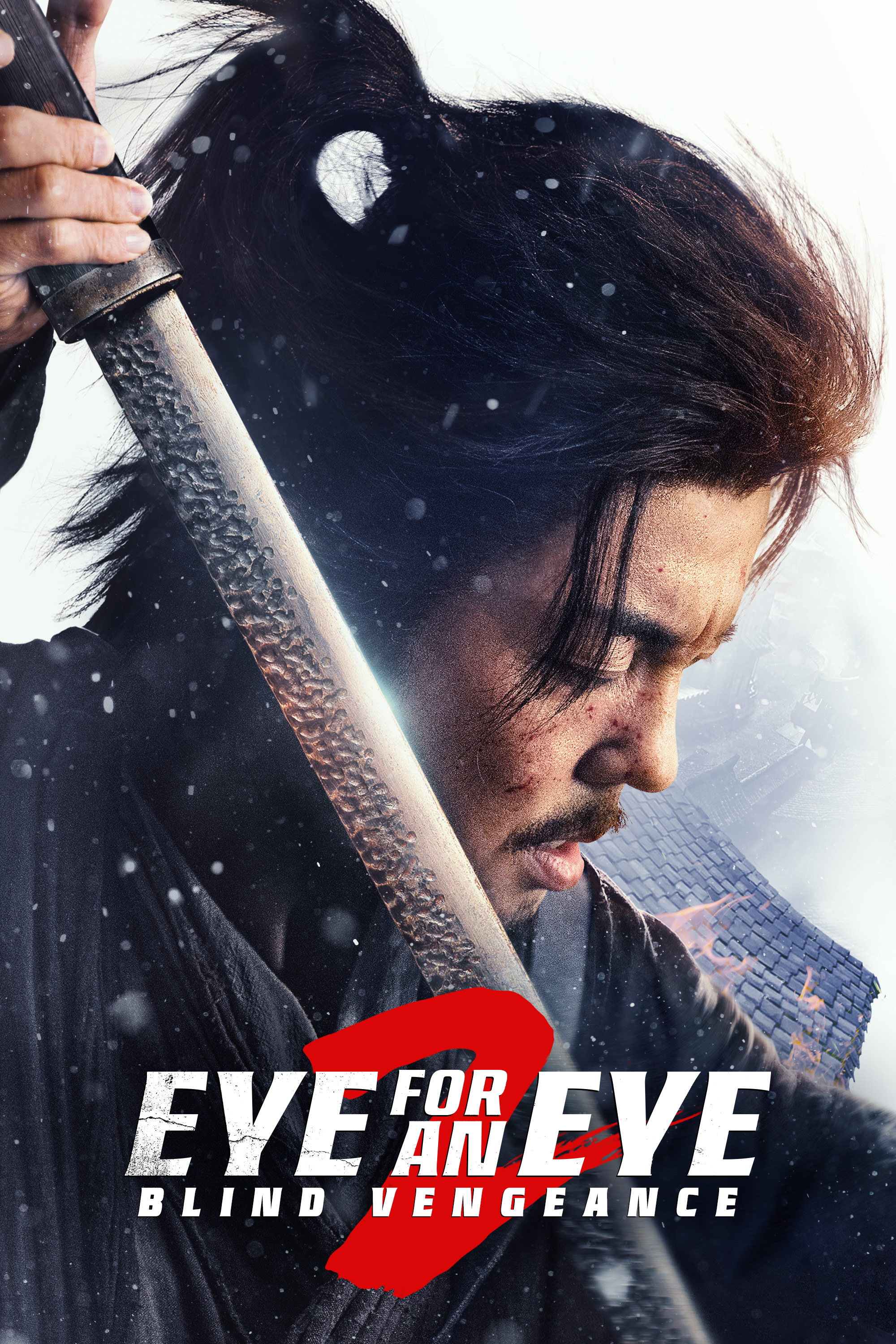
Eye for an Eye 2: Blind Vengeance (目中无人2, Yang Bingjia, 2024)

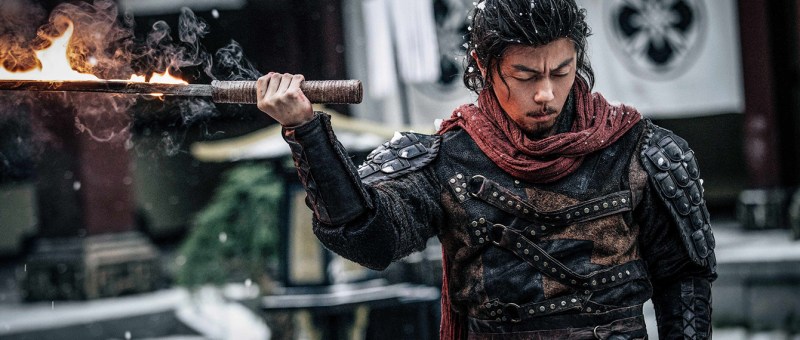
The wandering swordsman returns but this time to a world much more in disarray than when we last left it in the sequel to the surprise hit streaming movie An Eye for an Eye: The Blind Swordsman, An Eye for an Eye 2: Blind Vengeance (目中无人2, mùzhōngwúrén 2). Less origin story than endgame, the film finds bounty hunter Cheng Yi living in another dusty town and working for Youzhou Prefecture to bring in wanted criminals dead or alive but finally forced into the role of protector for a little girl dead set on vengeance against this world.

Richer in scope and ambition, this time around we’re given a little more backstory about the former lieutenant who is now using his martial skills to enact justice in an otherwise lawless society if only when he’s paid to do so. One of his targets turns out to be a man who served under him in the war and is disillusioned about its aftermath. “What did we gain in the end?” he asks, justifying himself that he may have killed a few people and taken some money but he was only claiming what he was owed. The argument doesn’t wash with Cheng Yi, but the war also took his sight from him and he too is a disillusioned exile from his home in Chang’an living a nihilistic life of drink of killing on the behalf of a distant and compromised authority. 

His wilful isolation may be why he is not originally motivated to help the orphan little girl Xiaoyu (Yang Enyou) who says her mother starved to death during their escape. Xiaoyu had tried to protect her little brother who seemed to be mute only to see him trampled beneath the hooves of a debauched nobleman who had just murdered an entire family because they had dared to tell on him to his father. The family had been planning to flee at dawn but Li Jiulang (Huang Tao) got there first. Xiaoyu witnessed his crime after sneaking in to steal the bread they were baking and was then freely given to her by a young woman Li later killed, further stirring her desire for revenge. Cheng Yi ends up saving her from Li on two separate occasions, though the second time it isn’t overly clear whether it was intentional or a drunken coincidence. Nevertheless, he continues to counsel her against pursuing her revenge, especially towards a man like Li who is wealthy and connected and has no compunctions about killing children. 

Li is also seen to abuse drugs and have a sadistic streak though no real explanation is given for his cruelty save that he is evil and has enough money and power to do as he pleases. No one except the little girl is going to put a bounty out on him, as she naively tries to do by selling her brother’s silver whistle to get a poster mocked up though Li simply offers a double bounty on her and it seems plenty are desperate enough to consider killing a defenceless girl to get their hands on it. Perhaps it’s this that eventually moves Cheng Yi’s heart as she continues to insist on an impossible justice even at the cost of her own life. Like him, she no longer has any family nor any place to call home and is displaced within the chaos of late Tang. Through bonding with her, he begins to rediscover his humanity and considers leaving the world of the bounty hunter behind to become an “ordinary person” in Chang’an to raise her away from this nihilistic way of life.

Building on the success of the first film, Yang Bingjia makes the most of an increased production budget to fully recreate the atmosphere of a bustling frontier town while continuing the Western influence as Cheng Yi hunts down wrongdoers in an otherwise lawless place. The connection between the cynical swordsman and his tiny charge has genuine poignancy as he continues to caution her against the path of revenge, reminding her that it is a continuous cycle and one act of vengeance merely sets another in motion, yet finally deciding that he must teach her what he knows anyway because like him she has no other way to live. Still, what he envisions for her is a peaceful life in Chang’an, far away from the chaos of the frontiers in a world that may not quite exist anymore but may yet come again if not, perhaps, for all.


Eye for an Eye 2: Blind Vengeance is released in the US on Digital, Blu-ray & DVD March 4 courtesy of Well Go USA.

Trailer (English subtitles)

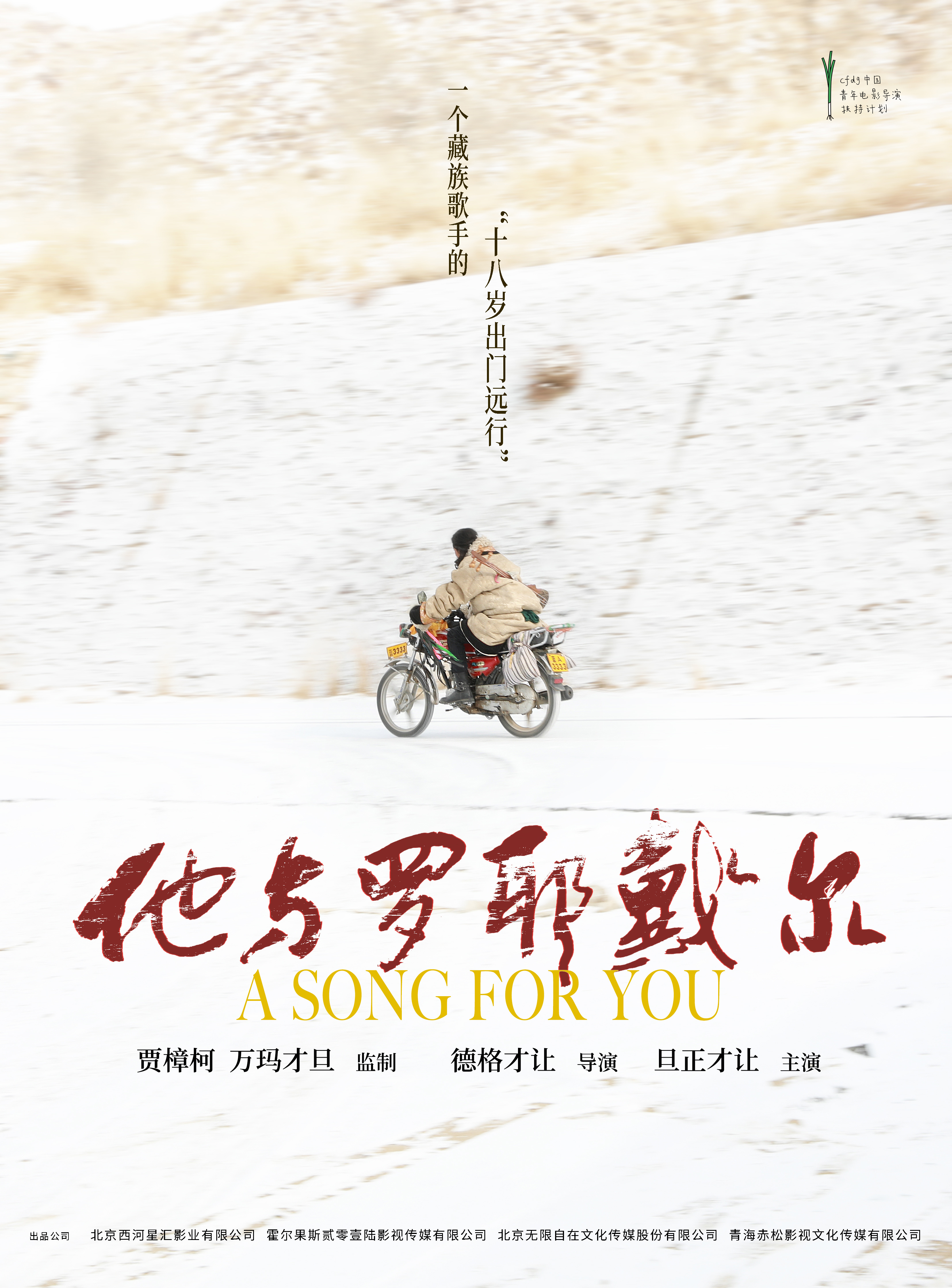
A Song for You (他与罗耶戴尔, Dukar Tserang, 2020)

A resentful musician is confronted with the corrupting influences of modernity while trying to make it as a singer in the directorial debut from Dukar Tserang, A Song For You (他与罗耶戴尔, tā yǔ luó ye dài’ ěr) . Guided by the goddess of music, Ngawang travels from his home in the desert to the city and then still further while holding fast to the purity of his traditional art but perhaps begins to discover that evolution is not always betrayal while learning a little something from those he meets along the way even if his elliptical journey ends in its own kind of tragedy. 

The son of a prominent musician in his home community, Ngawang (Damtin Tserang) longs to prove himself as a singer but is also rigid and uncompromising, getting into a fight with a friend of a friend who mocks him for stubbornly playing his traditional Zhanian zither when others have long since moved on to mandolin. Lhagyal sings the praises of popular musician Samdrup who seems to be something of a sore point to Ngawang, kickstarting a rant in which he accuses him of corrupting the art of Amdo singing with his modern evolutions such as drum machines and electronic backing. Lhagyal meanwhile argues that Samdrup has in fact saved their art and without his innovations no one would be at all interested in folk singing to begin with. The two men butt heads, but it’s Ngawang who ends up looking like a prig especially after he fails to place in the singing competition in which he’s come to perform after having arrogantly boasted of his talent. 

It’s at the concert that he first lays eyes on a mysterious woman, another singer singing of the birth of Amdo music. Ngawang later comes to believe she is some kind of incarnation of the goddess of music, Loyiter, owing to the similarity she bears to an icon revealed once he accidentally breaks open a talisman his father had given him after having a tantrum that it clearly doesn’t work because he didn’t win the competition. The nameless woman advises that the reason Ngawang’s talent was not appreciated was because no one takes you seriously if you don’t have an album which is why he ropes in his feckless friend Pathar to help him get to Xining where it seems records are made.

It’s in the cities where he begins to feel his most severe pangs of culture shock, taken to a bar where he again spots the mysterious woman but this time she’s a rock singer named Yangchen who again begins helping him meet the right people to further his musical ambitions. The contrast between his songs which sing of the beauty of the natural world, and the highly corporatised, technologically advanced world of the music business couldn’t be more stark. Ngawang could not understand the words of Yangchen’s song even though he appreciated the melody because it was in Mandarin, while the design shop he uses for a poster ends up making an embarrassing typo in the Tibetan script which they are unable to read. Ngawang just wants to sing, but finds himself roped in to making a “video album” with an over zealous director who accuses him of having no presence and a lack of expression that make him unfilmable as a performer. 

In any case, it isn’t just in the cities that modernity has begun to seep into the traditional. Stopping off on their road trip to deliver the sister of a man who ambushed them and then gave them a brief musical lesson to a monastery, Ngawang encounters a little boy begging in the street who seems to be homeless and alone. Noting the oversize Zhanian on his back he asks the boy for a song, which he sings in a melancholy rendition of life’s unfairness that some children have wealthy parents, some poor, and some none at all. Ngawang is embarrassed to realise he only has large notes, but the boy cheerfully pulls out a lanyard with a QR code Ngawang could have scanned to pay him via WeChat if only he had his phone. Throughout his wanderings Ngawang comes to a new understanding of the world around him which softens his rigidity while informing his music with a greater sense of openness even as he fails to notice a note of foreshadowing in Yangchen’s troubles only later realising he’s been away from home too long and there is always a price to be paid even if you serve the goddess of music. A light hearted musical odyssey and brief tour of the Tibetan plains, Dukar Tserang’s soulful road movie is an ode to singing for the love of it but also to openness and friendships, no matter how brief, made along the way. 


A Song for You screened as part of this year’s New York Asian Film Festival.

Trailer (English subtitles)

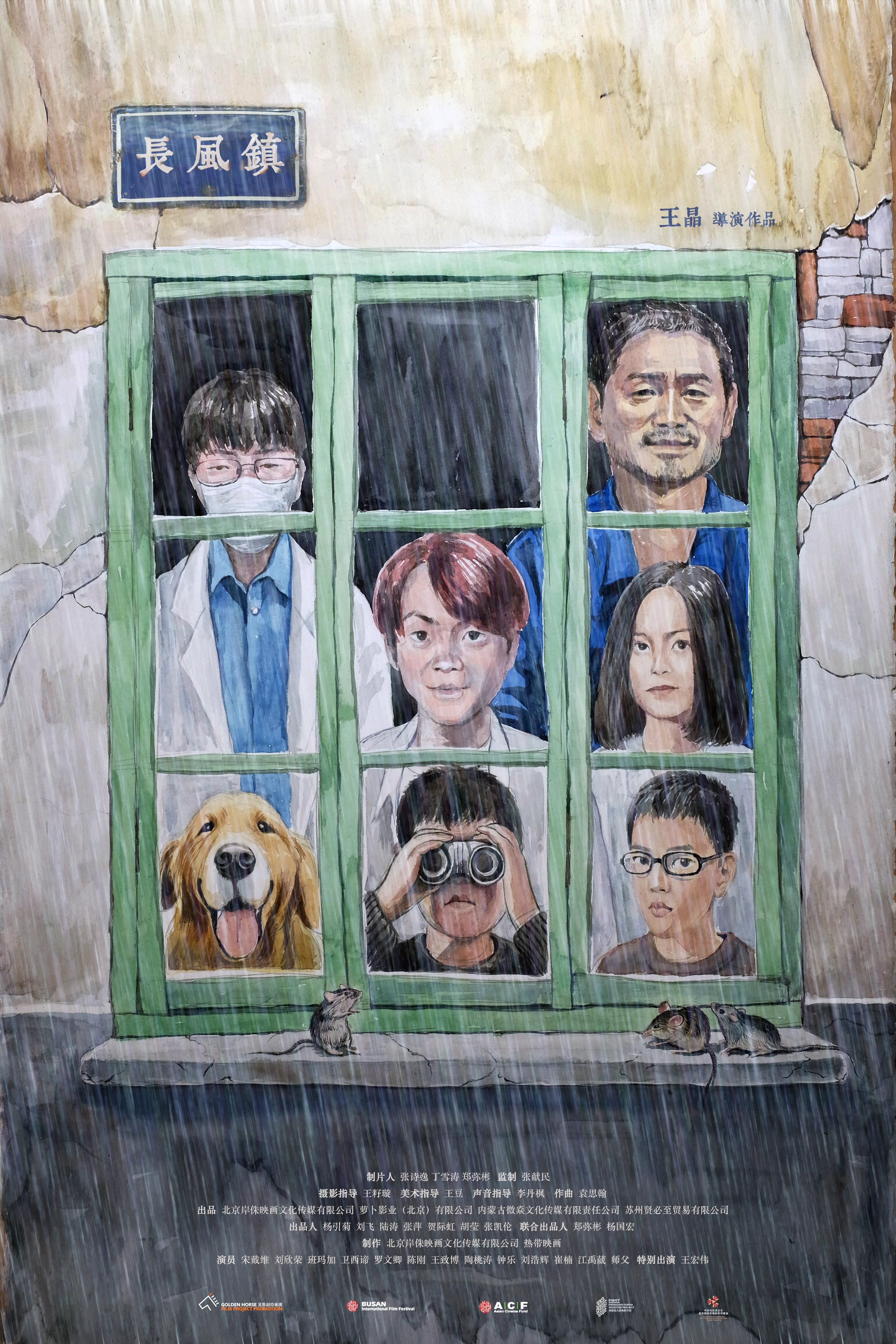
Changfeng Town (长风镇, Wang Jing, 2019)

“One strange thing follows another in this town” according to a world weary saloon owner attempting to process the mysterious theft of a handful of billiard balls. Like a magical realist fable, the village at the centre of Wang Jing’s whimsical nostalgia fest Changfeng Town (长风镇, Chángfēng Zhèn) exists slightly out of time, located at the intersection of memory and longing filled both with a sense of existential ennui and the comforting aimlessness of childhood. Yet even here where time passes and doesn’t the ironies of small-town life pervade as the older hero reflects on the wilful secrets and everyday mysteries which exist even in those places where everyone knows everyone and gossip is the lifeblood of the community. 

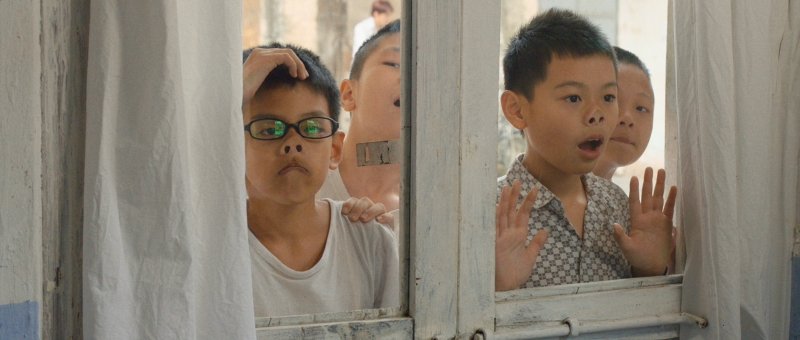
Narrated by the young “Scabby” (Song Daiwei), so nicknamed because of a prominent scar on the back of his head, Changfeng Town weaves together several stories set across one theoretical summer as seen through the eyes of a group of small boys continually on their periphery. Set comfortably in a “nostalgic past”, the atmosphere of the town shifts from a restrained post-war, early ‘60s tainted innocence towards something perhaps closer to its more logical position somewhere in the early to mid 1980s which of course places it after the Cultural Revolution but before Tiananmen Square in a China filled with a sense of hope and possibility for a brighter future mirroring perhaps Scabby’s own sense of growing adolescent energy. 

Nevertheless, Changfeng Town is a strange place where strange things do indeed happen though less one after another than all at once. Missing billiard balls, a plague of mice, a purifying flood, arrivals and disappearances each changing the unchanging town in small but marked ways, it’s nevertheless a sense of loneliness that defines each of the intersecting tales most of which have to do with misplaced or unfulfilled love. Redhead (Pema Jyad), the teenage ringleader of the local kids nicknamed for his red rinse hairdo, pines for the most beautiful girl in the village, Cai-xia (Luo Wenqing), half-sister of Scabby’s friend Four Eyes (Liu Xinrong) and box office girl at the local picture house, yet she has taken a liking to lovelorn poet Guang (Tao Taotao) who has just had his heart broken by the local school teacher. Redhead’s widowed mother (Cui Nan), meanwhile, has been carrying on an affair with the married local dentist (Wei Xidi), apparently an open secret in the village, while beloved truck driver Xi-shan (Chen Gang) continues to carry a torch for her knowing his love is impossible because he was involved in the accident which killed her husband. 

Known only as The Mute (San Shugong), an old man travels to the station every day with his parrot presumably hoping to meet someone who never arrives. One of the boys says his mother told him that he does so because he mistakenly thinks he can travel to other places by watching the trains go by, but no one really knows because no one really bothers to try to communicate with him. Some attempt to leave the village, occasionally returning like the much changed Redhead now dressed like someone who’s been to the city bringing back with him gifts of modernity such as a remote control Transformer that provokes a falling out between Four Eyes and Scabby which adds to the narrator’s growing sense of disillusionment, but to return is in many ways to fail, to be consumed by nostalgia and unable to move forward. Changfeng Town is also a charming trap. Scabby will soon outgrow it as spring travels towards autumn, the bald spot on the back of his head which gives him his name fast disappearing rendering him Scabby no more. Yet it will always in a sense be there for him, its residents permanently happy even as people come and go. 

Mirroring the ending of The 400 Blows, one of several films playing in the local cinema which also include Spring in a Small Town, A Touch of Zen, Steamboat Bill, Jr, and Nights of Cabiria among others, Wang closes with a freeze frame leaving Scabby “running towards the unknown” abandoning nostalgia in search of the elusive happiness of those who remain behind. Shot with a wistful ethereality, Changfeng Town marries an earthy, small-town rurality with an ironic absurdism as the various stories of its melancholy protagonists weave in and out of each other while remaining strangely unknown in the ever constant, ever changing village of nostalgia.


Changfeng Town streams in the US March 24 – 28 as part of the 12th season of Asian Pop-Up Cinema.

Original trailer (English subtitles)