Snow in Midsummer (五月雪, Chong Keat-Aun, 2023)

How should you deal with the traumatic past? In Chong Keat-Aun’s Snow in Midsummer (五月雪) it becomes clear that this past has not been dealt with and that its heroine has been living in a kind of limbo unable to move fully forward with her life in the constant search to discover what happened to her father and brother during the 513 Incident in 1969. The first act devotes itself to the slowly unfolding horror of the massacre which erupted shortly after a general election during which a number of smaller parties affiliated with the Chinese community had begun to gain ground from the Malay-dominated Alliance Party. 

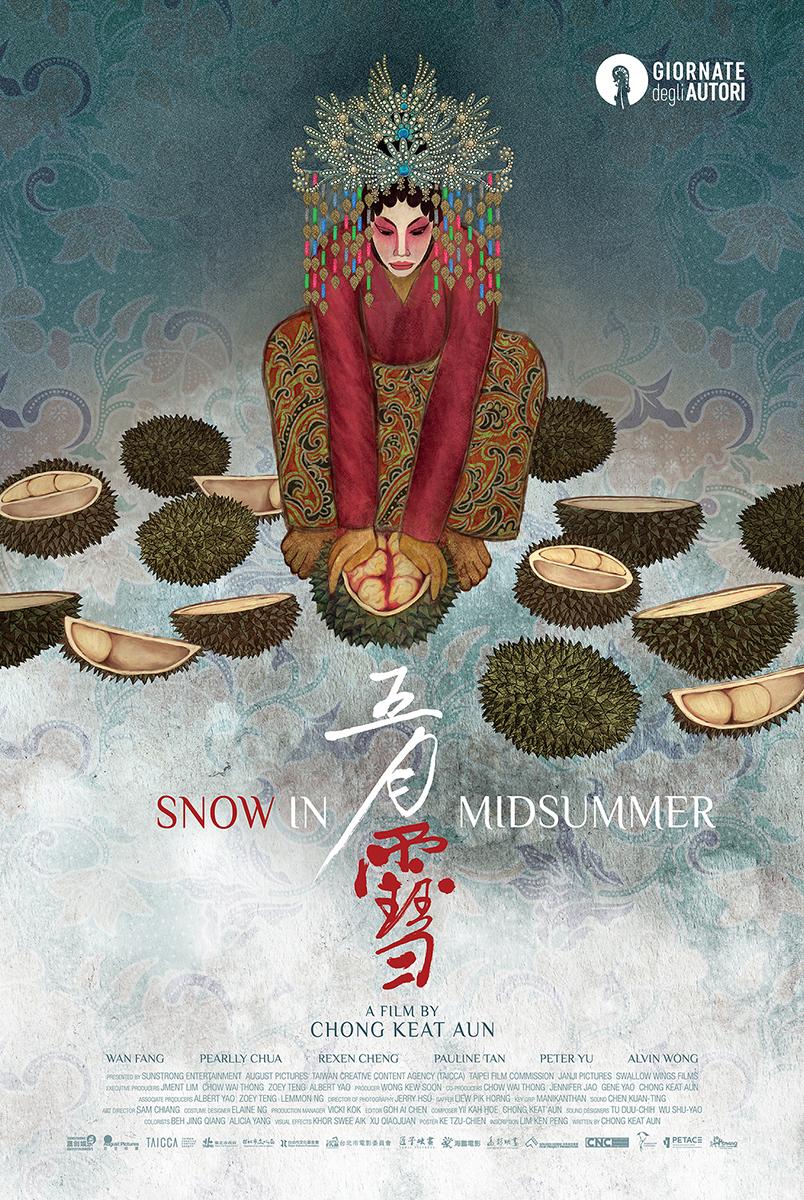
Bullied by her classmates as a Chinese student in a Malay school, Ah Eng spends the night of the massacre hiding in the backstage area of a Cantonese opera troupe as if in a literal act of taking refuge in fantasy. The film’s title alludes to the famous Cantonese opera Snow in Midsummer, actually “Snow in June” here retitled as “Snow in May”. The play’s theme is injustice as its heroine is condemned to die for a crime she didn’t commit, someone remarking that the gods must be outraged to provoke such an aberration of the natural order as snow in the height of summer. The ageing leader of the opera troupe ventures out during the incident in search her friends and relatives who had gone to the local cinema. Unable to open the door, she climbs onto the roof and sings a lament decrying the bloodshed and her own cruel fate as she watches the city burn beneath her. 

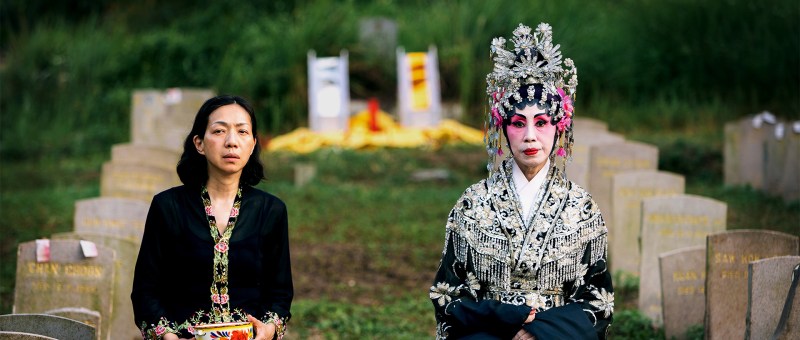
A similar lament is sung 49 years later in a graveyard we’re told is set to be “redeveloped”. The opera troupe had performed here for the dead during the intervening years, but in an event echoing that of 1969 are challenged by authorities asking if they have permits. That was in the past, they’re told, this is now and their performance causes a disturbance to a mosque which has recently been built close to the site. In a touch of irony, the taxi driver who brings the middle-aged Ah Eng to the cemetery asks her if she’s going to the leprosy hospital remarking that the Chinese community usually refuse to go anywhere near it. Each of the headstones, many of which read simply “unknown Chinese”, is marked “courtesy of the Malaysian government”, but it’s clear that this site was chosen because of its remoteness for similar reasons to the leper colony because they did not really want to address what had happened in any meaningful way.

That Ah Eng returns 49 years later hints at spiritual echoes of cycles of rebirth, but Ah Eng has lives her whole life in limbo haunted by the impossibility of discovering the resting place of her father and brother. Her father had refused to take her to the cinema, leaving her and her mother to watch the opera alone in echoes of the patriarchal oppression she continues to face as a middle-aged woman whose husband reacts with violence and anger simply because he suspects she intends to return to Kuala Lumpur to mourn her loss. Her sister-in-law gives her a lift to the station, but insists on being called by her Chinese name revealing that’s divorced her Muslim husband and intends to move to Australia with her child. On her arrival in the city, Ah Eng passes by the former sit of the Majestic Theatre which is now a fancy hotel with the same name in a very changed city. Her former Malay school is now Chinese but has a stand outside it selling Islamic food where the Cantonese opera troupe discuss their visit to the cemetery. 

“The past is dream,” the old woman sings to the grave echoing the surreality that runs through Chong Keat-Aun’s vision of the past as a man rides his elephant through the streets and lives the tale of a king forced to drink the Sultan’s foot water as a symbol of his subjugation, while others at the theatre are sold of a tale of a king with a quite literal bloodlust sustaining himself on the suffering of his subjects. A melancholy contemplation on lingering trauma, loss, and memory Chong Keat-Aun ends with a poignant image of comfort and catharsis but one is which is forever haunted by an intangible past and the wandering, unseen ghosts of buried injustice. 


Snow in Midsummer screens as part of this year’s Taiwan Film Festival in Australia.

Trailer (Traditional Chinese / English subtitles)

A Land Imagined (幻土, Yeo Siew Hua, 2018)

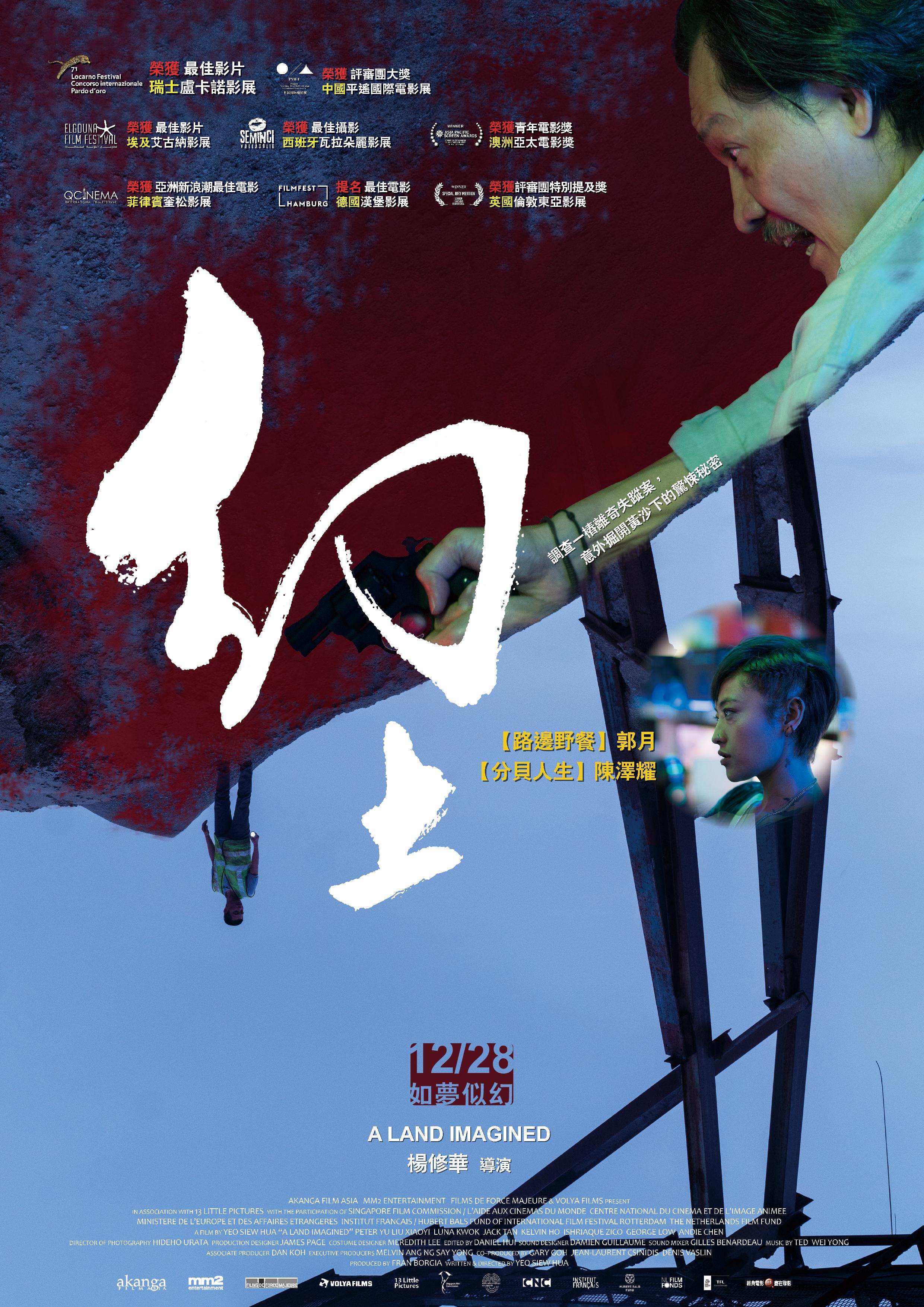
A Land Imagined posterAs the world gets bigger and smaller at the same time, it’s as well to be asking on whose labour these new lands are being forged. Yeo Siew Hua’s Locarno Golden Leopard winner A Land Imagined (幻土, Huàn Tǔ) attempts to do just that in digging deep into the reclaimed land that has made the island of Singapore, an economic powerhouse with a poor record in human rights, 22% bigger than it was in 1965. A migrant worker goes missing and no one really cares except for an insomniac policeman who dreams himself into a kind of alternate reality which is both existential nightmare and melancholy meditation on the rampant amorality of modern day capitalism.

Lok (Peter Yu), a hangdog middle-aged detective, is charged with looking for Wang Bi Cheng (Liu Xiaoyi), a missing migrant worker from China. Just who it was that noticed Wang’s absence is only latterly explained and in suitably ambiguous fashion, but the fact remains that there is an empty space where a man named Wang used to be and Lok is the man charged with resolving that space no matter who might or might not be interested. We discover that Wang was injured on the job, almost sacked and then reprieved to drive the workers’ bus where he befriended a worker from Bangladesh, Ajit (Ishtiaque Zico), who later disappeared sending Wang on his own mirrored missing persons case in which he begins to suspect something very bad may have happened to his friend.

Despite his presumably long years on the force and world weary bearing, Lok is refreshingly uncynical for a police detective but apparently extremely naive about the city in which he lives. Stepping into the world of Wang Bi Cheng, he is shocked to discover that people live “like this” – several men crammed into in tiny bed bug infested rooms so brightly lit from outside that it’s difficult to believe that anyone gets any sleep at all. Wang, in any case, like Lok did not sleep and gradually migrated over to the 24hr internet cafe across the way where he developed a fondness for the spiky proprietress, Mindy (Luna Kwok), while repeatedly dying in videogames and being trolled by a mysterious messenger who may or may not have information about his missing friend.

Like Lok, Wang Bi Cheng cannot sleep but lives in a waking dream – one in which he envisages his own absence and the two police detectives who will search for him, not because they care but because it’s their job and they’re good at it. Men like Wang are the invisible, ghostly presence that makes this kind of relentless progress possible yet they are also disposable, fodder for an unscrupulous and uncaring machine. Asked if it’s possible that Wang and his friend Ajit simply left, the foreman’s son Jason (Jack Tan ) answers that it’s not because the company keeps the men’s passports, adding a sheepish “for their own protection, in case they lose them” on realising the various ways he has just incriminated himself.

Yeo opens with a brief and largely unrelated sequence of a young Chinese migrant worker climbing a tower in his bright orange overalls. Later Lok reads a newspaper report about this same man who tried to launch a protest in having been denied his pay and forced to endure dangerous and unethical working conditions. Meanwhile, Mindy the internet cafe girl, is forced to resort to taking money for sex acts in order to make ends meet. Like Wang, she dreams of escape, of the right to simply go somewhere else without the hassle of visas and passports. Wang jokes that the sand that built the reclaimed beach they are sitting on came from Malaysia, and that in a sense they have already crossed borders, offering to take Mindy away from all this (for a moment at least) in his (borrowed) truck but knowing that their escape is only a mental exercise in transcending the futility of their precarious existences.

Indeed, Yeo seems to be saying that Singapore itself is a “land imagined” – constantly creating and recreating itself with repeated images of modernity. One could even read its artificial territorial expansion as reshaping of its mental landscape while all this progress is dependent on the exploitation of wayfarers like Wang and Ajit wooed by the promises of wages higher than in their home countries but left with little protection and entirely at the mercy of their unscrupulous employers. Yet a strange kind of affinity arises between the lost souls of Lok and Wang, united in a common dreamscape born of sleeplessness and lit by the anxious neon of rain-drenched noir as they pursue their parallel quests, looking for each other and themselves but finding only elusive shadows of half-remembered men dreaming themselves out of existential misery.


A Land Imagined screens as part of the eighth season of Chicago’s Asian Pop-Up Cinema on March 20, 7pm at AMC River East 21 where director Yeo Siew Hua will be present for an introduction and Q&A.

Original trailer (English subtitles)