My Daughter Is a Zombie (좀비딸, Pil Gam-seong, 2025)

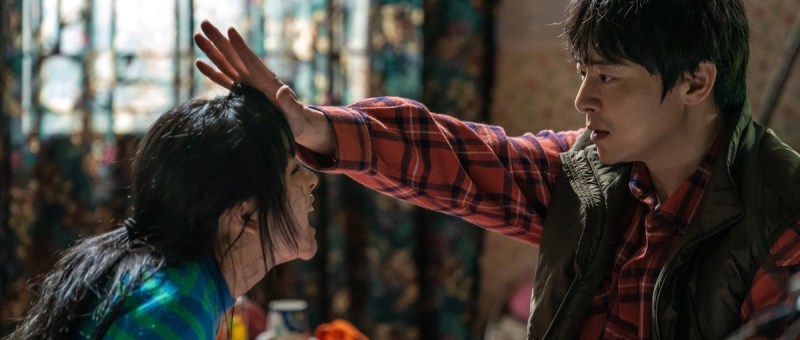
Jung-hwan’s (Jo Jung-suk) daughter Soo-a (Choi Yu-ri) is growing up. She’s no longer enthused about going to the amusement park for her birthday and wishes her father would stop buying churros to mark the occasion. Maybe there’s a part of Jung-hwan that’s frightened of this development, no longer quite knowing who his teenage daughter is becoming and confused by her moodiness. When she’s bitten during the zombie epidemic, however, it might be Jung-hwan who’s bitten off more than he can chew in deciding to hide her from the authorities in the hope she might get “better”.

More family drama than horror movie, Pil Gam-seong’s webtoon adaptation My Daughter is a Zombie (좀비딸, Jombittal) is on one level about unconditional parental love as Jung-hwan refuses to give up on Soo-a and continues to “train” her to regain her memories. With echoes of another pandemic, the film considers society’s reaction to “infectees” who are rounded up and killed to stop the threat of the infection. On returning to his rural hometown to live with his mother, Jung-hwan reunites with a childhood friend, Yeon-hwa (Cho Yeo-jeong), who has since become a teacher, but she has a pathological hated of zombies and until recently had made a point of beating them to death with her kendo sword. Still carrying the trauma of having to kill her fiancé who attacked her, Yeon-hwa doesn’t want to accept that Soo-a could be getting better because that would mean the “zombies” she killed were just people who were ill and could have recovered if she hadn’t murdered them out of rage and prejudice. Indeed, once the infection calms down, the relatives of people killed by state forces begin to ask questions and protest that their loved ones shouldn’t have been treated with such cruel indifference.

Then again, in terms of zombie movies, people who suggest that perhaps they should give the infected a chance rather than proactively killing them don’t usually last very long. The film takes place in a universe in which zombie movies exist with Train to Busan even getting a name check, but none of that’s very helpful to Jung-hwan as he tries to figure out how to keep his daughter safe while also trying to heal her. His job as a tiger trainer seems to come in handy in trying to navigate Soo-a’s new aggressive nature, while his mother Bam-soon (Lee Jung-eun) mostly makes use of her god-given granny powers and a wooden spoon to keep Soo-a in line. 

Meanwhile, the promise of a cure and treatment in America is waged agains the vast bounty the government is offering as a reward for turning in zombies. A not so friendly face shows up and tries to kidnap Soo-a for the reward money while even crassly suggesting to Jung-hwan that they split it between them when he tries to intervene and get Soo-a back. In healing Soo-a back to health, Jung-hwan is both attempting to repay a debt and assert himself as Soo-a’s father by essentially rebooting her so that she recovers the shared memories of her childhood.

To that extent, Soo-a’s time as a zombie is a kind of express adolescence in which she travels from grunting teenager to a young woman with a better appreciation for her father and the trouble he went to raise her. Of course, one could say that it’s all a little patriarchal and perhaps Jung-hwan is “taming” her to fit his own image of what his daughter should be much as he tamed the tiger and taught it to dance, but then again Soo-a is also readjusting herself and trying to figure out how to be a person in her own right after moving to her father’s rural hometown where she’s badgered into attending the local school despite her “illness” because there are only four other pupils and otherwise it’s going to have to close. The village is very proud of its current zero infections record, but the funny this they’re all very accepting of Soo-a, though they just think she’s a bit different rather than a “zombie” after buying Jung-hwan’s possibly uncomfortable excuse that she suffered brain damage in an accident. A father’s undying love does, however, eventually save the world after a continual process of being wounded by his daughter and healing again gives Jung-hwan a means to beat the disease if only in his refusal to give up on the idea his daughter will eventually recover.


Trailer (English subtitles)

Hostage: Missing Celebrity (인질, Pil Gam-seong, 2021)

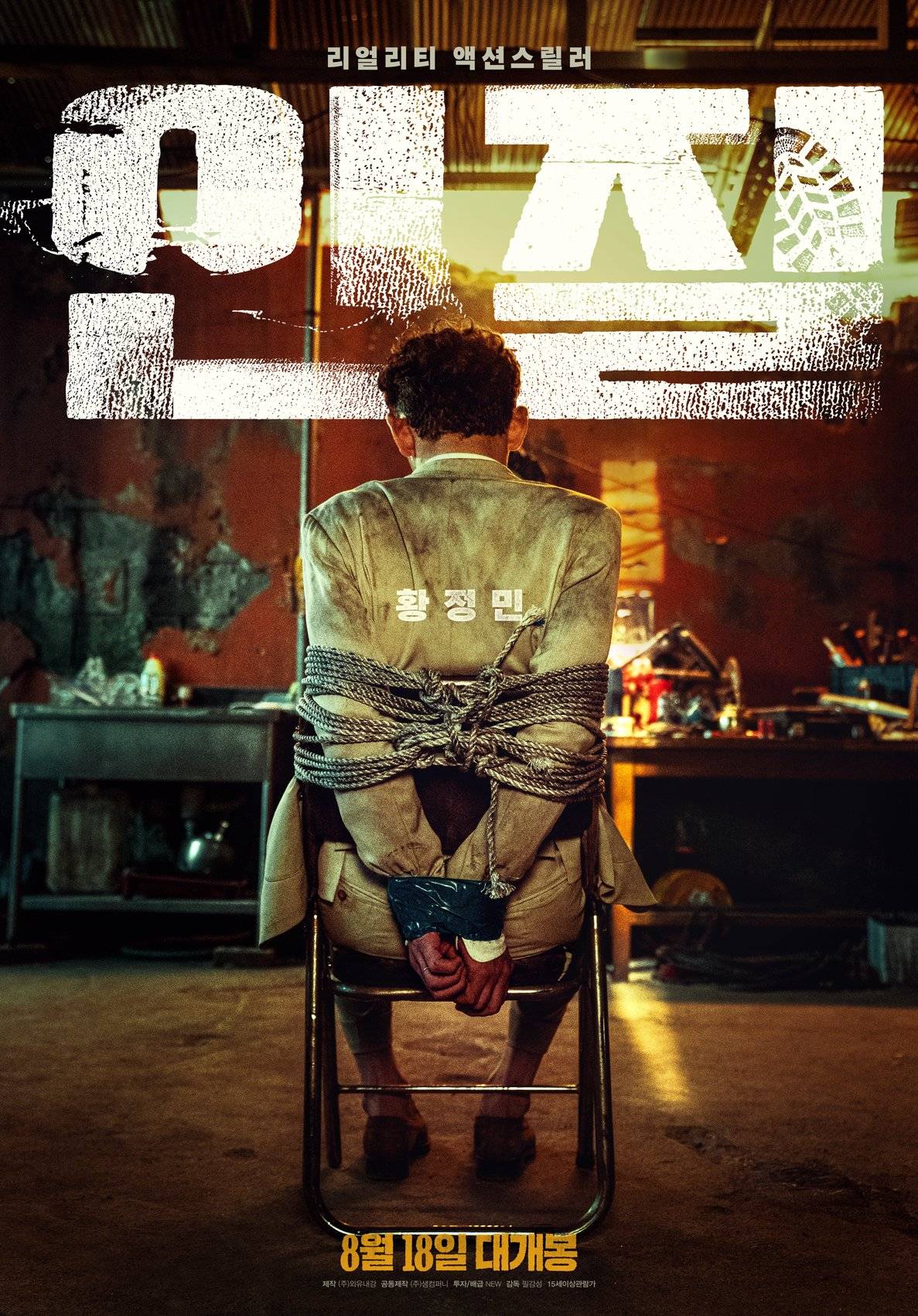
“This is real, birdbrain”. If you’re a famous actor, it might take a while to dawn on you that you’re in real trouble rather than the subject of an admittedly dark candid camera skit or variety show stunt. Real life and the movies begin to blur for top Korean actor Hwang Jung-min playing a fictionalised version of himself when he’s kidnapped by a gang of ruthless petty criminals in Pil Gam-seong’s meta take on Chinese thriller Saving Mr Wu, Hostage: Missing Celebrity (인질, Injil). 

Indeed the film opens with a montage of Hwang’s career to date including a degree of self-deprecation in which he describes himself as “just a petty actor” reminding the journalist interviewing him that film is a collaborative medium of which he is only a part. This version of himself that we see is modest and wholesome, going home early after an afterparty while his wife and son are away planning to relax alone. He seems to live a very lowkey life living in a fairly ordinary suburban house without domestic help or other signs of obvious wealth aside perhaps from an expensive car. Hwang is also on fairly friendly terms with the clerk at the local convenience store which he evidently visits frequently just like any other ordinary person rather than sending an underling to fetch him things or walking around with a massive entourage to remind people that he’s a movie star. Even while trying to escape his kidnappers he takes his shoes off before entering an old man’s home to use his landline telephone. 

Yet one can’t escape the fact that he is fantastically rich and perhaps out of touch with “real” life, his kidnappers targeting him mainly on a whim born of chance coincidence but also in resentment for everything he represents. The leader of the gang, Choi Ki-wan (Kim Jae-beom), is a crazed psychopath whose primary motivations are most likely sadistic rather than purely financial even if his targets are those with fancy cars but those of his underlings are perhaps more prosaic. When one of the gang members is captured, it emerges that he had massive debts to a casino loanshark while the most sympathetic of the kidnappers appears to have learning difficulties and later explains that he’s only doing this to pay for medical treatment to remove a prominent facial birthmark and scarring so he could live a more normal life. Because of his naivety he remains strangely loyal to Ki-wan believing that he’s looking after him while refusing any responsibility for his crimes. The gang’s only female member (Lee Ho-jung), by contrast, seems to be a North Korean refugee in a romantic relationship with Ki-wan’s less psychotic but no less cruel partner Dong-hoon (Ryu Kyung-soo) who just wants the money. 

Having literally played through scenarios just like these in his films, Hwang Jung-min the actor has perhaps gained a degree of experience that allows him to process his situation with a surprising degree of rationality quickly realising that as the kidnappers have made no attempt to hide their identities they most likely plan to kill him, and a young woman, So-yeon (Lee Yoo-mi), abducted alongside a wealthy cafe owner they killed when he couldn’t come up with the cash fast enough, after they’ve got the ransom payments. It isn’t that Hwang’s stingy, it’s that he knows there’s no point giving them the money but his only chance for survival lies in making them think he might. Even so, he gets to literally play the hero engaging in a battle of wits with the kidnappers before attempting to make a dashing escape while the on the outside the a dogged policewoman and her partner do their best to track them down despite the unhelpful interventions of their more conservative boss. 

Ki-wan might well have a point in admitting he’s overreached by going for such a high profile target. The police probably wouldn’t be investigating so heavily if the victim weren’t a famous movie star whose face is splashed across the papers. After all, they hadn’t done much for So-yeon whose sister had had to go to social media to raise awareness about her kidnapping fearing the police weren’t doing enough to help. Bearing out the underlying economic anxiety, So-yeon had only got the cafe job a few days previously after 37 failed interviews. Hwang’s response that he failed a hundred auditions before getting a break, people laughing at his acting dreams because he was a guy with curly hair and red skin who spoke with a strong southern accent, is intended to be reassuring in implying that even if it takes time you get there in the end but is also a little insensitive in the circumstances in downplaying So-yeon’s struggles in the contemporary economy having gone from elation in finally finding employment to being locked in a shed by a gang of psychos because of her boss’ personal greed which seems like quite the metaphor for the inequalities of the modern society. In any case, Pil crafts an intense kidnap thriller given an additional layer of absurdity in its meta dimensions but ends on a note of poignancy which suggests that Hwang himself is also and perhaps always will be hostage to his own image. 


Hostage: Missing Celebrity screened as part of this year’s Udine Far East Film Festival.

International trailer (English subtitles)