
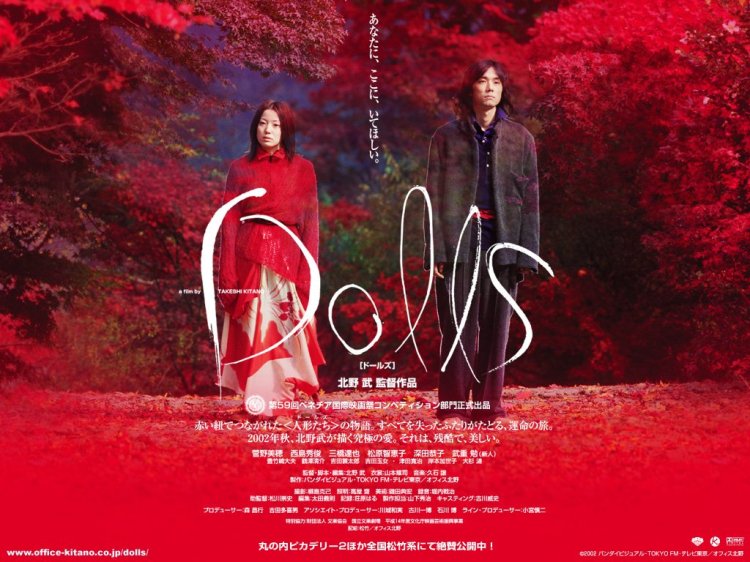
 Outside of Japan where he is still primarily thought of as a TV comedian and celebrity figure, Takeshi Kitano is most closely associated with his often melancholy yet insistently violent existential gangster tales. His filmography, however, is one of the most diverse of all the Japanese “auteurs” and encompasses not only the aforementioned theatre of violence but also pure comedy and even coming of age drama. Dolls is not quite the anomaly that it might at first seem but perhaps few would have expected Kitano to direct such a beautifully colourful film inspired by one of Japan’s most traditional, if most obscure, art forms – bunraku puppet theatre.
After opening with a bunraku performance featuring an excerpt from the Chikamatsu play Courier For Hell, Kitano moves on to his overarching narrative which connects the tripartite structure in a tale inspired by the classic story The Bound Beggars. This first pair of lovers, Sawako and Matsumoto, wander blankly through the ever changing landscape tied together with a long red rope. The two had previously been a young couple, very much in love, but Matsumoto was pressured into abandoning Sawako to accept a semi-arranged marriage to his boss’ daughter. Distraught, Sawako attempts suicide only to survive but in an almost catatonic state.
The second pair of doomed romantics consists of an ageing yakuza who looks back on his life which has forced him to act in a way that he is not always proud of and now finds himself remembering the girlfriend he parted with thirty years ago after fearing he was about to lose his job. She promised to wait for him, he promised to return a fine man but he became a yakuza and never saw her again. All these years later, she’s still exactly where she said she’d be, waiting.
Story three is strange tale of modern love as a young man becomes obsessed with an idol star who only ever notices his rival. After she is injured in a car accident and decides to retire, the young man takes drastic action to be able to meet with her on what he sees as a more equal footing.
Fools for love, each and every one of them. Love has ruined them, removed rational choice from their field of vision, yet there’s something noble and beautiful in the way in which it has penetrated each of their lives. They love as if possessed by an incurable madness, Sawako tries to kill herself because her heart is broken, a woman grows old spending each Saturday lunch time sitting on a bench with a second lunch box which is going to go to waste, and a young man maims himself to finally get his love’s attention. Was it worth it, in the end? Perhaps not if the desperately sad outcomes of each of these stories is anything to go by.
Kitano rejects his idiosyncratic blue colour palate for a world of vibrant colours. Travelling through a year we move along the seasons as punctuated by their symbolic scenery from cherry blossoms to green verdant landscapes, the overwhelming redness of autumn leaves and finally the purity of the winter snow. We travel one way, but also in circles as we navigate the story of love as it too changes with its seasons yet remains unchanged in essence. Each of the lovers is no more free than a bunraku puppet, manipulated by forces outside of their control and forced into a desperate unhappiness that is in part vindicated by their romantic bonds.
Love is tender, love is cruel. Each of the men, in particular, makes terrible choices which cause only pain to the women they supposedly love and, in their pride and arrogance, they fail to realise the consequences of their actions until it is far too late. The tragic inevitability of life’s suffering and the inability to escape it are the foundation stones of Chikamatsu’s world.
Working with fashion designer Yohji Yamamoto Kitano has created a beautiful, theatrical world of hyper realistic colour and life. Like much of Kitano’s work, Dolls amounts to a sad collection of tales coloured by melancholy and a resignation to the pain and suffering inherent in being alive. The lovers are inexorably bound to each other for all eternity because of the suffering they have each endured at the other’s hand. This is a sad world, but it’s a beautiful one too and even if hurts one must try to live.
Dolls is re-released in the UK on blu-ray courtesy of Third Window films.
(This is an original release trailer and does not reflect the quality upgrade of Third Window Films’ blu-ray release)
I first saw this film I guess almost fifteen years ago (!) and I still occassionally get this song stuck in my head:
Review of Takeshi Kitano’s Dolls (ドールズ) – first published by UK Anime Network.

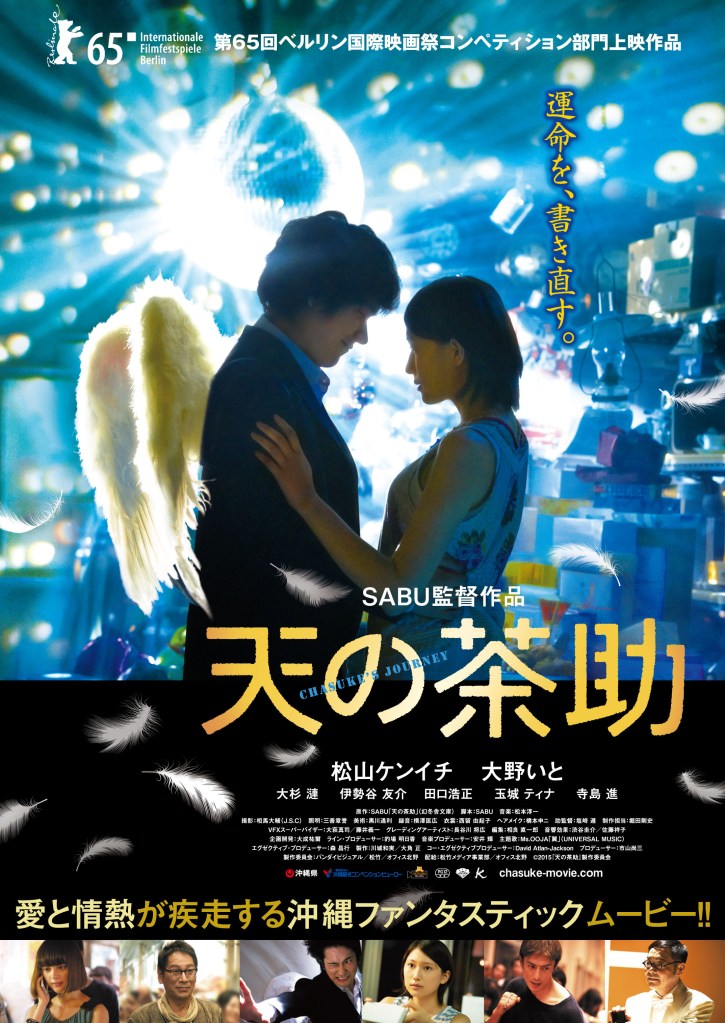 No fate but what we make – to steal the lines from another film just as one of the heavenly scriptwriters might in the latest film from the prolific Japanese director SABU (otherwise known as the actor Hiroyuki Tanaka), Chasuke’s Journey (天の茶助, Ten no Chasuke). Adapting his own novel for the screen (though the book was actually published after the film was completed), Sabu creates a romantic fantasy in which a lowly tea boy from heaven descends to Earth on a quest to save the woman he loves from certain death.
 Windows on Worlds