
Janur Ireng (Janur Ireng: Sewu Dino the Prequel, Kimo Stamboel, 2025)

If something seems to good to be true, it probably is. Sabdo (Marthino Lio) and his sister Intan (Nyimas Ratu Rafa) might be too young to know any better, but even they have their doubts when a mysterious man shows up after their house has burnt down claiming to be an estranged uncle. Their late father never mentioned having a brother or any family at all and did not ask for him when he was dying. As the siblings will discover, there’s a reason for that and they may not want this particular familial legacy no matter the trappings it comes with. 

A prequel to his previous film A Thousand Days (Sewu Dino), Kimo Stamboel’s Janur Ireng is partly a metaphor for the exploitative practices of the super rich who use their wealth to manipulate or abuse those with lesser means. Having grown up without much money and fallen into poverty after their father died to the extent that Intan had had to leave education, being suddenly adopted by their wealthy uncle plunges the pair into a new world they are not altogether equipped to understand even without all the weird black magic rituals and sense of unease pervading the country mansion. Intan complains that the house has creepy vibes, and there is something gothic about it aside from feeling lost amid its vastness. Intan dislikes sleeping alone because her new room is simply far too big, even it didn’t turn out to come with some unexpected residents. It’s wandering around the house that she discovers something shocking, unsure if it’s something she wasn’t supposed to see or if she was guided there by a mysterious force.

Sabdo, meanwhile, is taken on as his uncle’s heir and protege. He discovers that Arjo (Tora Sudiro) is trying to regain land lost to the family including a banana plantation he days will be his to run, though Arjo seems pretty wealthy already. He is, though, on frosty terms the “7 Families” who run things in the local area and appears to want to reassert his status. With little in the way of explanation, he gets Sabdo to repeatedly sacrifice goats and do other strange things “to protect the family”, which Sabdo goes along with because he doesn’t quite know how to refuse and is confused by this strange new life. But on the other hand, Sabdo is a stranger here. He’s only told that he’s a member of the family and has no other connection with it or proof that it’s true. His loyalty really is to Intan, and it may be that he stays and does these increasingly weird rituals because Arjo promised Intan what he couldn’t give her in sending her to school and allowing her to fulfil her dream of going to university and getting a good job. A friend had needled her a little bit about ending up like another girl who married young, laying bare the patriarchal nature of the society in which Intan is imprisoned even before finding herself more literally locked up in her uncle’s house. 

Even if Sabdo thinks he finds allies in this world, they too may be using him for their own ends and wielding the power of family against him. Arjo claims their success is down to the patronage of a demonic entity that keeps them safe from other supernatural creatures which what has made their family so wealthy and powerful, but there are reasons their father decided to leave this place even If it meant giving up on the privilege he was born with. There is definitely “a lot wrong with this house” as Sabdo says, though he only makes up his mind to leave it when he realises the threat it poses to Intan. She, however, has already been corrupted by the house as its ghosts and malevolent entities begin to get to her. Kimo Stamboel ups the ante with a series of increasingly bizarre sequences of severed eye balls and torn out hearts, culminating in another kind of ritual disrupted by a once in a generation act of black magic that sees party guests literally tearing their own heads off and continuing to dance. That does not, however, seem to be the end of it for Sabdo whose dark family legacy continues to overshadow his life in ironic ways as he does his best to escape the house his uncle built.


Trailer (English subtitles)
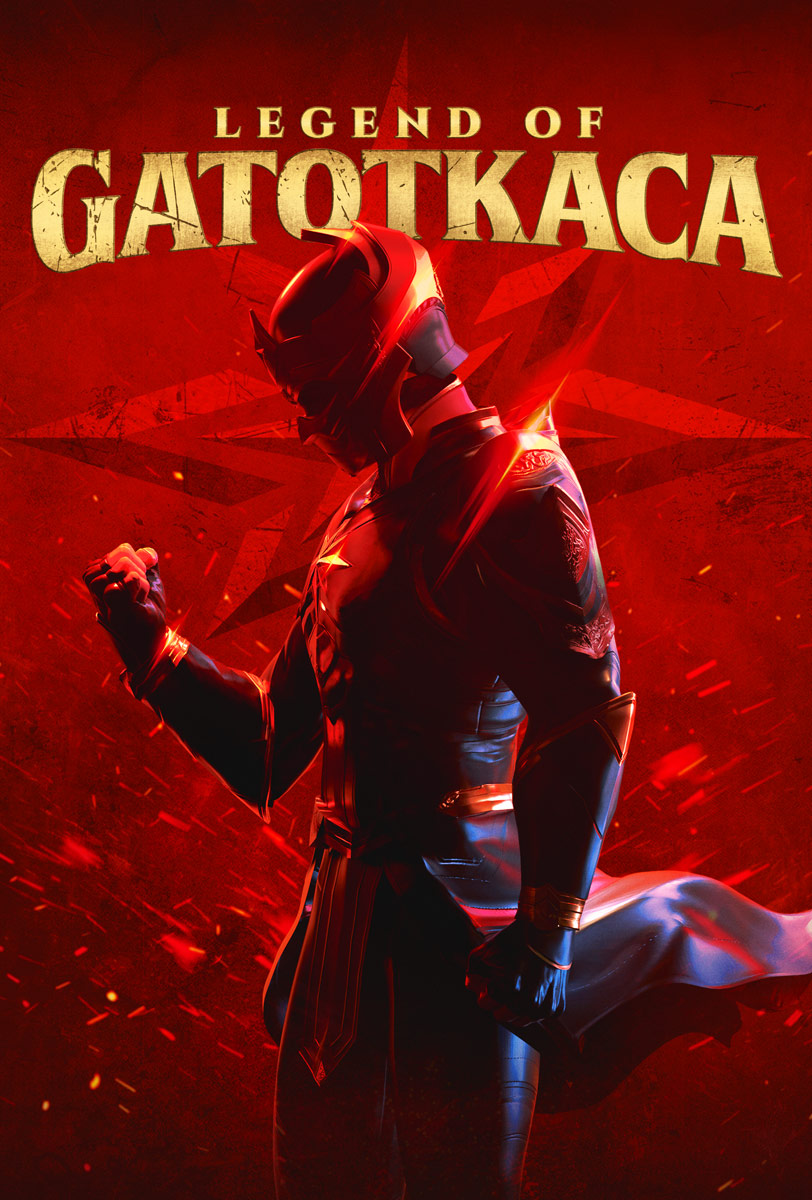
Legend of Gatotkaca (Satria Dewa: Gatotkaca, Hanung Bramantyo, 2022)

Indonesia has quietly been building its very own superhero cinematic universes over the past few years with Joko Anwar’s Gundala almost certainly the best known internationally. The Legend of Gatotkaca (Satria Dewa: Gatotkaca) is similarly intended to be the first in a new franchise, Satria Dewa, which draws influence from Indian mythology and is set in a dualistic world centuries after a battle between good and evil was ended by the gods to stop evil winning. 

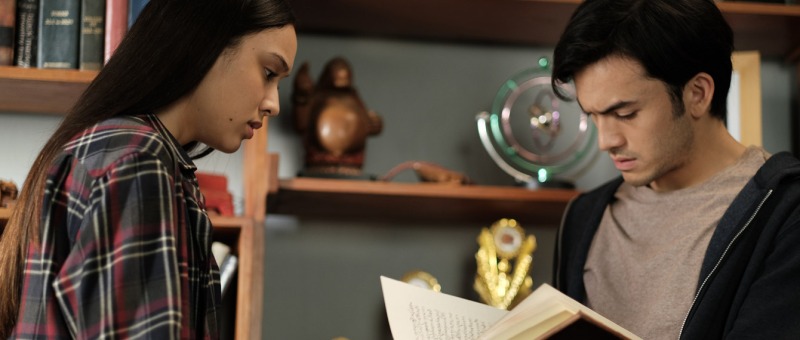
Essentially an origin story for the titular hero Gatotkaca, the film follows down on his luck photographer Yuda (Rizky Nazar) who had to drop out of university because he is poor and also responsible for taking care of his mother who is suffering with memory loss and mental illness following an incident 15 years previously in which the pair were attacked by a mysterious figure in black who could shoot lasers from his fingers. Yuda assumes his memories from back then must have been a dream and that his mother’s mental distress has more to do with his father, Pande (Cecep Arif Rahman), abandoning the family. Nevertheless, he is soon dragged into intrigue when his best friend Erlangga (Jerome Kurnia) is murdered in the same way his mother was attacked during his university graduation ceremony. Determined to figure out the truth, Yuda and professor’s daughter Agni (Yasmin Napper) find their way to a secret organisation Erlangga had been a part of which aims to save the world from destructive forces carrying the Kaurava gene. 

In the film’s dualistic world view, there was once a civil war between those carrying the Pandava gene which encourages good, humanistic qualities and the Kaurava whose impulses are dark and destructive. But then as Professor Arya (Edward Akbar) who studies such things points out, Pandava can also be destructive while Kaurava are capable of using their “destructive” qualities for good. Even so, most of the bad things that have happened in the world particularly in the last 15 years since a mysterious meteorite fell to earth, can be attributed to the rising Kaurava influence from political corruption to illegal logging and even the COVID-19 pandemic. Someone is bumping off Pandava in an effort to release evil Kaurava general Aswatama (Fedi Nuril) from his imprisonment within a giant gemstone which explains the “mysterious” deaths of talented people like Olympic sportmsmen and a doctor who discovered a COVID-19 vaccine. 

Of course, Yuda turns out to be a chosen one and must pursue his destiny as the defender of the Pandava before assuming his rightful role as Gatotkaca. Only by confronting his immediate family history can he make himself whole and gain the strength to defeat Aswatama, saving the world from chaos. Meanwhile he has to contend with a romantic subplot in which Agni is aggressively courted by the odious and entitled Nathan (Axel Matthew Thomas) and his father who have at least strong Kaurava energy aside from being embodiments of oppressive elitism looking down on Yuda simply because he is poor. The underground cell Yuda eventually comes into contact with are also in their way a resistance to this same elitism, though unusually well equipped in their incredibly expensive-looking lair filled with the latest technology and looked after by a kindly Indian granny who is herself a Karauna but uses her powers, and at one point a good old-fashioned shot gun, for good.

It’s this duality to which the film eventually returns as Yuda declares they must be the light in the darkness and the darkness in the light as they secretly wage a war against an ancient evil apparently already well established in the contemporary social order. This being the first instalment in what seems to be cued up as a burgeoning franchise, there is undoubtedly a lot to take in from the talk of heirlooms and amulets to holy water and ancient weapons though the film does boast some excellent production design even if the centralisation of genetics as an indicator of good and evil is equally uncomfortable. Nevertheless, it’s a promising start to the cycle with a series of exciting action set pieces showcasing the art of silat along with some impressive CGI in the Star Wars-esque laser warfare even if it’s clear Gatotkaca’s toughest battles are yet to come.


Legend of Gatotkaca streams in the US via Hi-YAH! from 17th February and will be released on Digital, blu-ray, and DVD on March 21 courtesy of Well Go USA.

International trailer (English subtitles)