Back To That Day (幕が下りたら会いましょう, Seira Maeda, 2021)

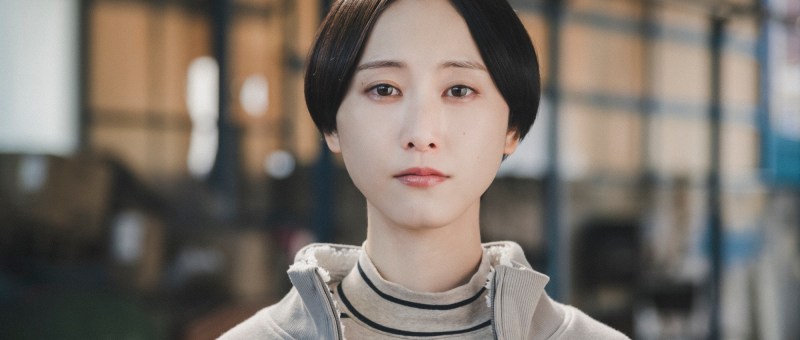
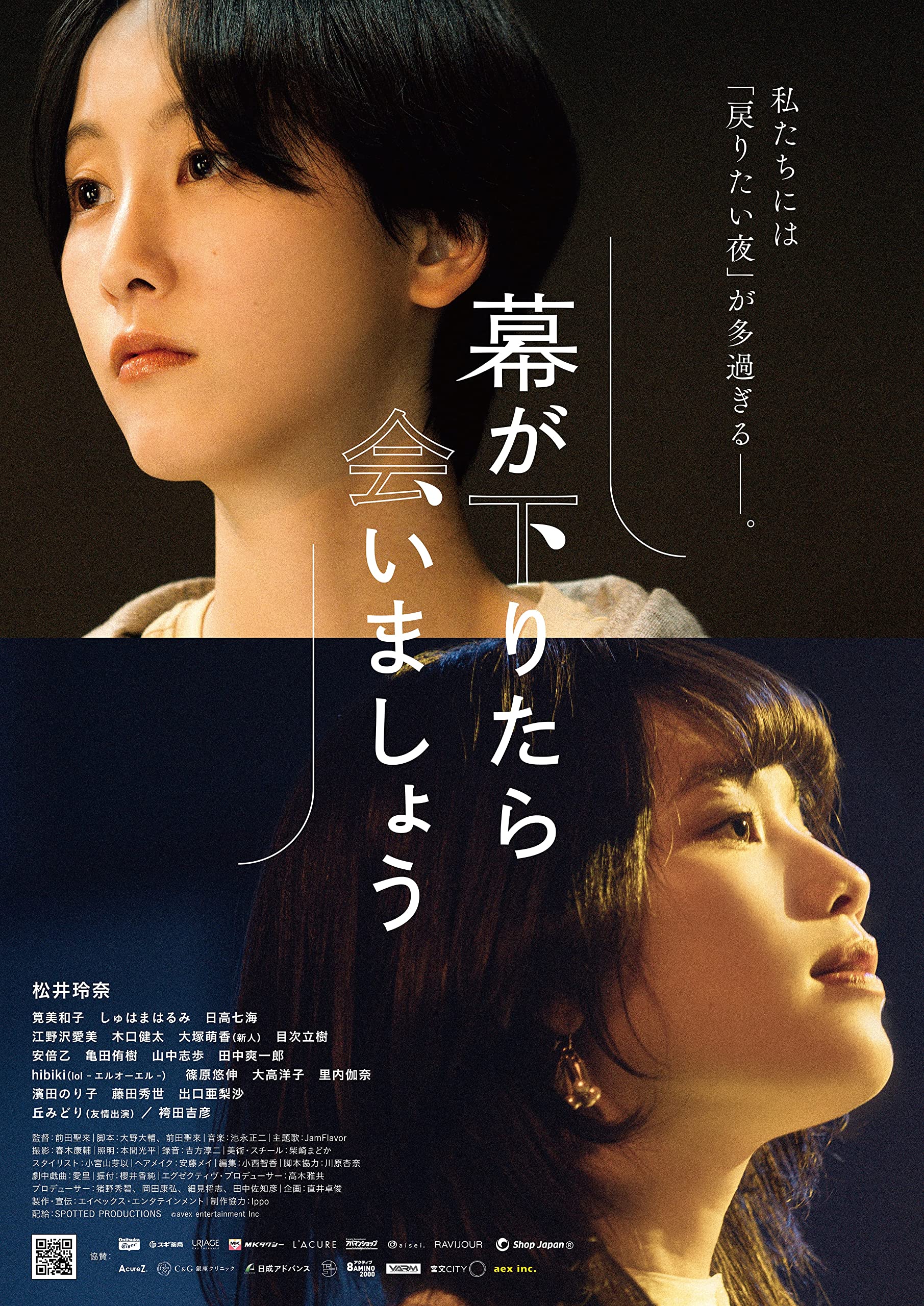
A young woman facing a life crisis is forced to reevaluate her relationships with art, friends, and family after learning that her estranged younger sister has suddenly passed away in Seira Maeda’s indie drama, Back to that Day (幕が下りたら会いましょう, Maku ga Oritara Aimasho). Facing a patriarchal society, the young women at the film’s centre wonder if it’s better to chase your dreams even if they won’t come true or contend with the unfair demands of contemporary salaryman culture in the hope of achieving conventional success and a comfortable life. 

At around thirty, Manami (Rena Matsui) is beginning to lose patience with herself feeling that she’s achieved little in her career as a theatre director in the last 10 years while continuing to work part time at her mother’s hair salon. Her younger sister, Nao (Miwako Kakei), left abruptly for the city some time previously and the pair have hardly spoken since partly as we discover because of a high school falling out that continues to play on Masami’s mind in undermining her sense of confidence in her art. 

The two women have in many ways chosen different paths, Nao striking out by heading to the city and getting a regular office job and Manami staying at home trying to make it work in theatre but finding herself treading water. On the night that Nao dies, the sisters mirror each other each black out drunk collapsed in the street but only one of them is alone which in the end perhaps makes all the difference. Out to dinner with members of her theatre troupe celebrating an engagement, Manami has far too much to drink, much more than than anyone else or than is really appropriate becoming embarrassing in her belligerence as she lays into even her closest friends while others wonder why they bother with the troupe at all now that most of them are ageing out of their carefree days, have full-time paying jobs and growing familial responsibilities to take of. 

Nao, meanwhile as we discover, was pressured into drinking more than was wise by her boss at a semi-compulsory work do, an all too common form of power play in the contemporary working culture. Carrying her own share of guilt, Manami is alerted to this hidden source of her sister’s suffering by one of Nao’s colleagues, Mihashi (Manami Enosawa), who alone attended the funeral. Facing the same continued harassment, Mihashi is determined to confront her boss with the help of Niiyama (Kenta Kiguchi), an activist working on behalf of employees experiencing workplace bullying, but is later blamed herself with the implication that Nao drank on her behalf while she perhaps should have stayed to make sure she was alright before leaving for the last train. Her colleagues insist that Nao seemed cheerful and engaged with the party, while Manami and her actress friend Sanae (Nanami Hidaka) wonder if she wasn’t just playing the part, that in feeling disconnected from her family she wanted to feel accepted by those around her. 

In an unexpected turn of events, however, Manami decides to not to take Nao’s employer to task or attempt to change a dangerous and outdated workplace culture but to try and make peace with difficult relationship they had through restaging the high school play that set them apart which as it turns out was actually written by Nao but for which Manami had taken credit. Along the way she’s led towards a more commercial path by the duplicitous Niiyama who turns out to be a bit of a sleaze and not much better than those he claimed to be challenging. What she discovers is that restaging Nao’s play may not be the best way to honour her, gradually working through her grief and guilt by writing an original piece inspired by their relationship while reconsidering herself and her life up to that point. Of course, in one sense, she reduces Nao to a plot device in the mere motivation for her own creative rejuvenation while partially letting herself off the hook in discovering a family secret that explains a lot about her difficult relationship with her mother but does at least allow her come to terms with her sister’s death in letting her burn out bright just as in the alternate ending she’d crafted for Anna Karenina as a woman driven to extremes by the strictures of her society. 


Original trailer (no subtitles)

Remain In Twilight (くれなずめ, Daigo Matsui, 2021) [Fantasia 2021]

“So what? We just live on.” remarks a bereaved young man learning to let go of his grief in Daigo Matsui’s melancholy ensemble drama Remain in Twilight (くれなずめ, Kurenazume). Matsui sets the scene at a wedding which is also in some ways a funeral during which the ghost at the feast will eventually be laid to rest but his study in loss is also a reflection of its eternal arrest as a group of high school friends learn to accept a sense of absence where their friend used to stand while processing the various ways their lives have and will continue to diverge where as his obviously will not. 

As the film opens a group of six men is surveying a wedding hall where they intend to recreate a dance they first performed at a high school culture festival. The wedding co-ordinator comes out to confirm that everything is in order and seating has been arranged for the five of them only to be reminded that actually they are six. Factory worker Nej (Rikki Metsugi) wants to hang out longer, but most of the other guys have other commitments from work to family but at a rambunctious karaoke session the next day during which they regress to their high school selves it becomes clear that one of their number, Yoshio (Ryo Narita), passed away five years previously but is quite literally there in spirit. 

In addition to Yoshio’s absence, it’s clear that the group has become distant since their high school days the wedding reunion highlighting the class differences between them with some going on to regular salaryman jobs, others working in fringe theatre, and Nej at the factory the uniform of which he is ubiquitously wearing at every occasion other than the wedding during which the guys’ black suits are identical to those they wore for the funeral save the substitution of a jauntier bow tie. The previously nicknamed “Sauce” is now Mr. Sogawa (Kenta Hamano) and a married father of one. They aren’t 17 anymore. 

Nevertheless, the guys can’t let go of the memory of Yoshio who remains among them as if he were still alive. Triggered by a seemingly trivial act such as eating a biscuit or hearing a particular turn of phrase each of the men is called back into the past towards a private memory of Yoshio some directly related to the performance at the cultural festival which seems to have marked their lives and others from later. They collectively meditate on the last time they saw each other, reliving the event, trying to prevent Yoshio from leaving but of course failing. Actor Akashi (Ryuya Wakaba) regrets not picking up his phone, little knowing it would be the last time he would see his friend because you can’t get away from the fact every time might be the last you just can’t know. 

“You’re only dead when it’s convenient” Yoshio’s high school crush Mikie (Atsuko Maeda) barks, seemingly unperturbed to see him in the flesh but also angry and resentful asking him to finally cancel his social media accounts so she won’t keep getting birthday reminders or see something about him popup on her feed, remember, and be sad. But softening she shows him a picture of her daughter, signalling that she’s moved on while he obviously cannot though he wishes her only happiness glad perhaps to have shared something he lacked the courage to confess while alive. 

So corporeal does Yoshio seem to be that he even receives a goodie bag from the wedding, again signalling his absence as the guys find themselves literally carrying extra baggage which they eventually decide to try burying leading to a rather surreal incident which confronts them directly with Yoshio’s liminal status and survival in their hearts. Travelling to the other side they begin to learn to let him go, poignantly once again considering calling a taxi though this time for five. Adapting stage play, Matsui’s sweeping handheld camera shifts effortlessly from one time period to another and finally into another realm with a giddy ethereality as the men, now approaching middle-age, meditate on the sense of loss in grieving teenage friendship along with its unlived future. It’s less the ghost than those who are left behind who must finally learn to “move on”, rewriting the past as they see fit in order to walk into a freer future. 


Remain In Twilight streams in Canada until Aug. 25 as part of this year’s Fantasia International Film Festival.

International trailer (English subtitles)