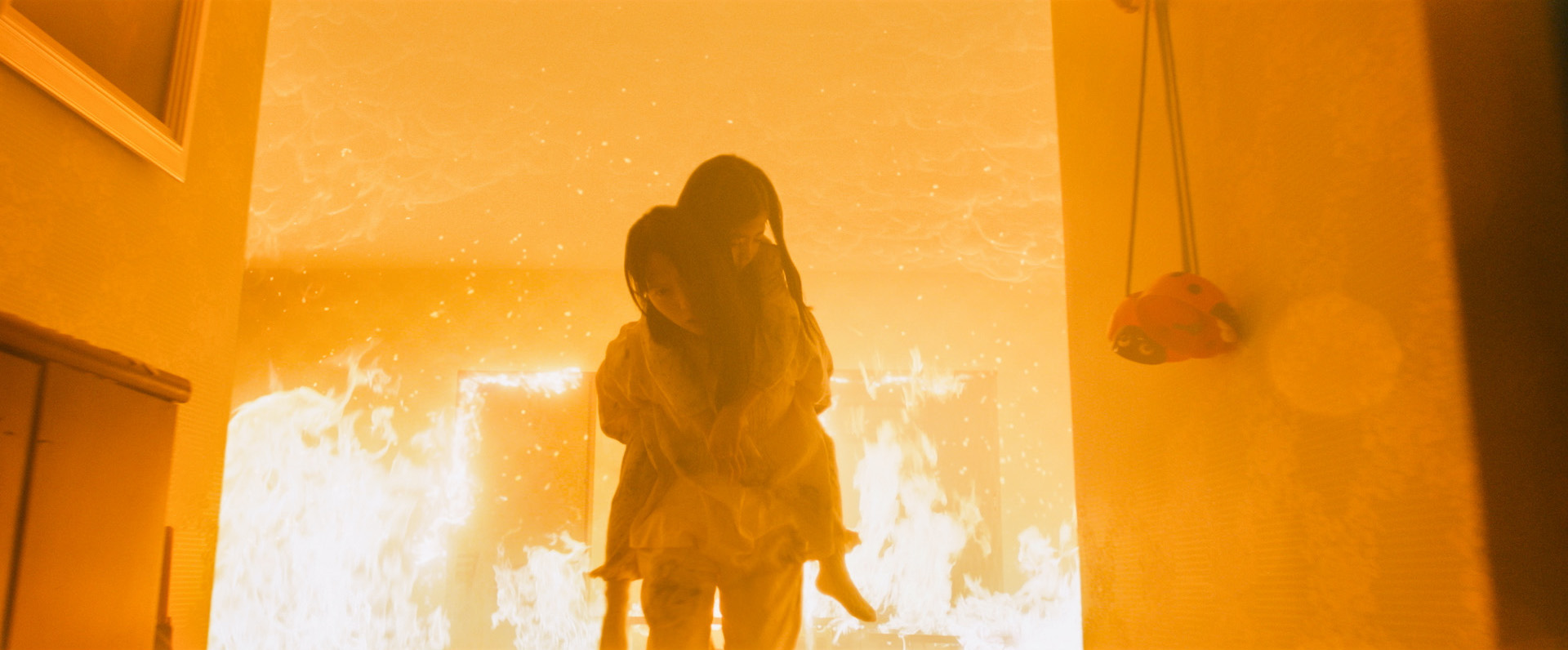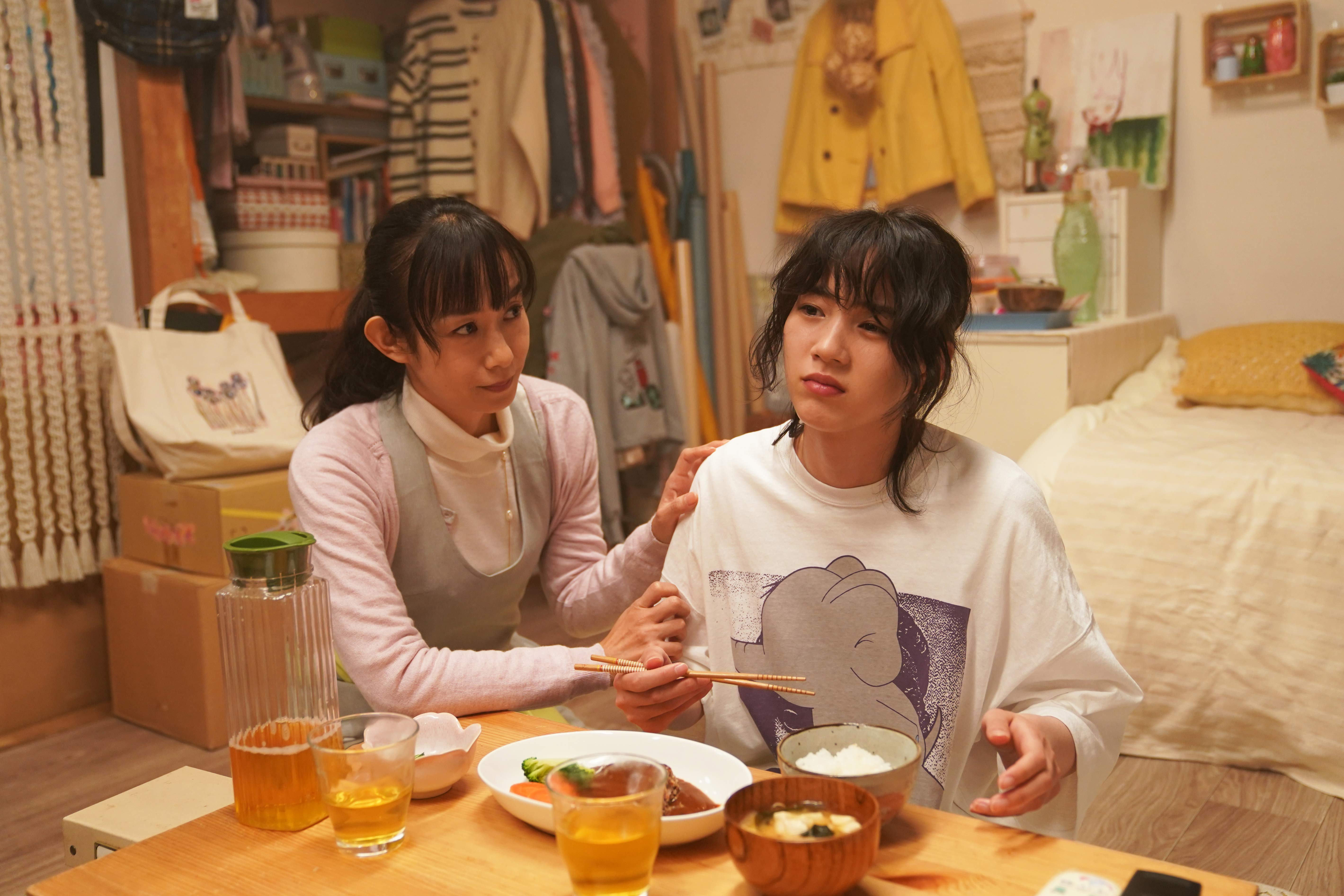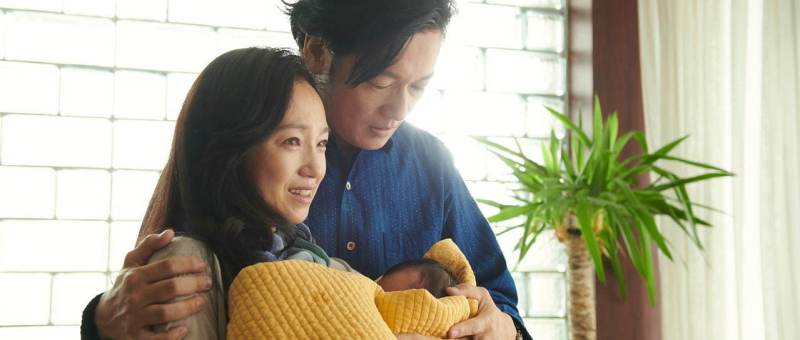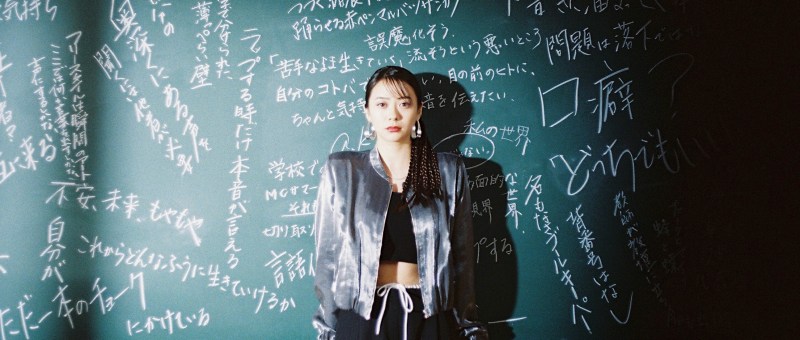
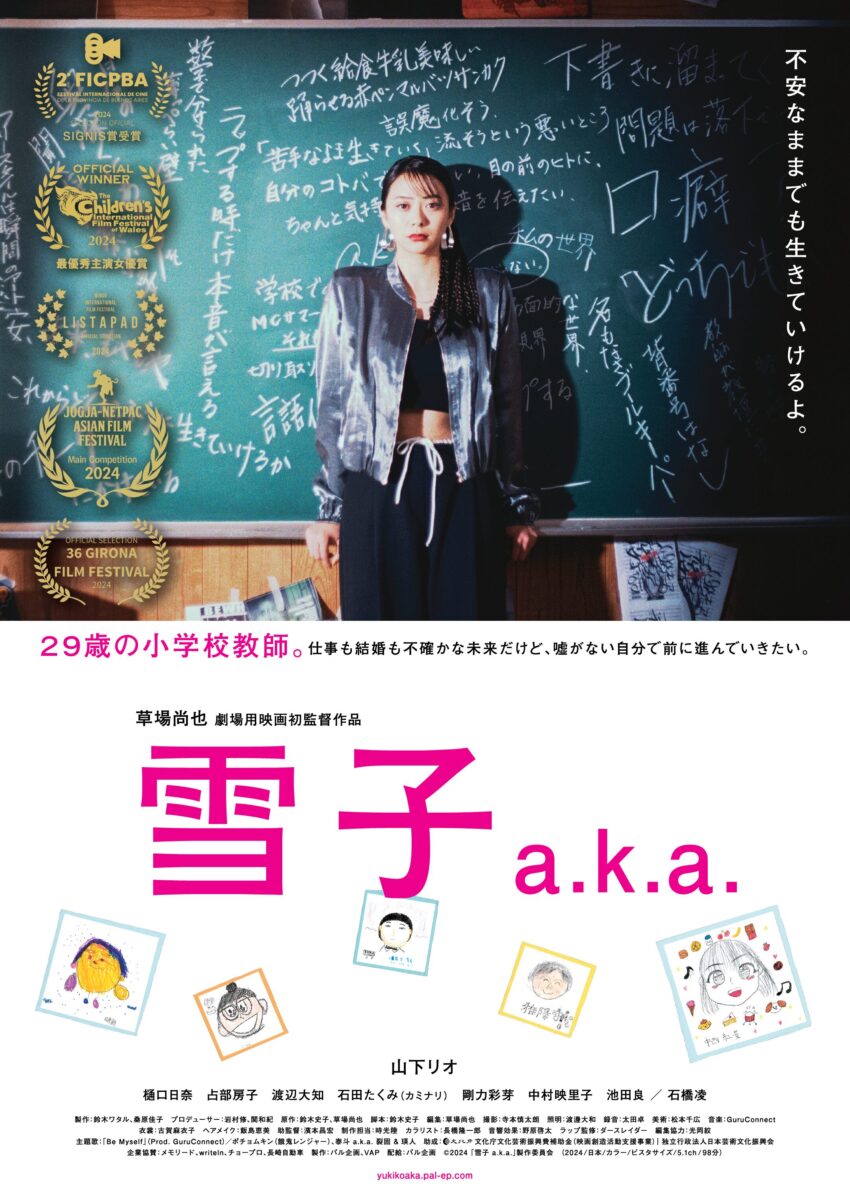
Yukiko a.k.a (雪子 a.k.a., Naoya Kusaba, 2024)

“Leave no one behind,” is the theory underpinning the SDGs that primary school teacher Yukiko (Rio Yamashita) is teaching to her students, but it’s also a practice that she unconsciously puts into practice only largely tends to forget to include herself. Timid and insecure, she makes little mark on the world around her and is afraid to express herself which she fears also interferes with her ability to interact with the children worrying that her reticence to speak up because she’s too worried they’ll say it’s all her fault prevents her from asking them if they’re alright or they need any help or guidance. 

It’s only through the possibly surprising hobby of rap music that she finds an outlet where she can be herself and say everything that’s on her mind, only most of her raps are all about her anxiousness and inability to communicate. She has however found a supportive community in a local park where there are a group of rappers who seem to have her back and encourage her to get more into the hobby by participating in rap battles so she can express herself more. It seems though that part of her anxiety stems from a sense that she’s approaching a crossroads in life and is in many ways dissatisfied. She’s been in a long-term relationship with another teacher, Kodai (Daichi Watanabe), she met when they were both students but as he’s been assigned to another school a long way away, they only meet up at weekends.

All around her, her friends are getting married and it seems Kodai may also be ready to pop what seems to most an inevitable question, but there’s something that seems to be holding her back. Kodai later tells her that he doesn’t like the her that does rap, which suggests in a way that he doesn’t really want the version of her that can express herself or is confident in saying what she does and doesn’t want. He’s much more interested in the timid Yukiko who meekly goes along with what he wants and is too afraid to rock the boat. A fellow teacher, Riho (Hina Higuchi), has an ambition to be married with a child before 30, which is surprising to Yukiko and often criticised for being old fashioned. Yet what the film seems to insist is that neither perspective is wrong, merely different, and largely a matter of what suits each individual. Riho is cool in her own way for living her life the way she chooses even if it conflicts with the prevailing attitude of the contemporary society and it’s this sense of empowerment that Yukiko is really seeking as an older teacher, Ohsako (Fusako Urabe), explains. With her short hair and serious demeanour it might be assumed that the kids wouldn’t like Ohsako, but she’s actually their favourite and perhaps precisely because of her self-assuredness. In contrast to the ultramodern Riho she likes to hand write and draw her teaching materials as a means of transmitting sincerity and integrity to the children while acting as a voice of authority between the teachers. 

Indeed, it’s Ohsako who largely teaches the film’s lessons and Yukiko how to embrace herself so that she can communicate better with the students explaining that her ability to pick up on the same anxieties in them is much more valuable than anything else. Locking eyes with a distressed young girl during a PE lesson, she quickly figures out that she’s experiencing menstrual cramps and is able to take her to the nurse’s office for some positive help and support. Meanwhile, she struggles with two boys in her class one of whom has become a school refuser and hikikomori. She visits Rui at his home every week with handouts but fails to make a breakthrough until she too is brave enough to expose her own fears and doubts. His deskmate Kotaro is now forced to join in with the girls either in front or behind when they’re asked to do pair work because of the painfully empty seat next to him.

But then unbeknownst to Yukiko, times have changed. Rui is not completely isolated but has been communicating with his friends, including Kotaro, through video games which as Kotaro’s father says is just as real to the children as talking in person. He’s also got really into educational apps and might have actually learned more by himself at home, which isn’t great for Yukiko’s self-esteem but at least he’s doing alright even if she might be becoming obsolete. Meanwhile the school still insists on making the kids read out loud to their parents who are then supposed to fill in a comment sheet but Kotaro writes those himself because his mum’s too busy. Nervously challenged by Yukiko, Kotaro’s mother asks what the educational point of the exercise is. She says she has her own way of communicating with her son and doesn’t have time for this meaningless bit of form filling. Yukiko’s insistence that it’s only 10 minutes belies a lack of understanding that Kotaro’s mother, who seems to be a working lone parent, simply doesn’t have another 10 minutes in her day. Still, the point is that Yukiko doesn’t really know the educational point of the exercise but has only been doing it because it’s what you do without giving it any real thought. 

But as Ohsako had said, maybe neither way is wrong, it’s just a matter of personal taste. Through her rap music hobby,  Yukiko begins to accept another side of herself while gaining the courage to be more confident and express herself more freely. She realises that it doesn’t really matter if she wins a rap battle or not because even putting herself out there was a minor victory that convinces her she has the power to do things with her life and live it in a way that best suits her while teaching similar lessons to the children and finally listening to her own advice.


Yukiko a.k.a screens in Chicago 22nd March as part of the 19th edition of Asian Pop-Up Cinema.

Trailer (English subtitles)

Penalty Loop (ペナルティループ, Shinji Araki, 2024)

Time loop cinema has made a resurgence in Japan of late, but Shinji Araki’s Penalty Loop (ペナルティループ) is not quite what you’d assume it to be rather a meditation on the grieving process in a constant process of recycling rage and hurt day after day. When his girlfriend is murdered and her body is found dumped in a local lake, Jun becomes obsessed with the idea of revenge and turns up at the killer’s place of work where he poisons his morning coffee and then stabs him to death in his car before poetically dumping his corpse in the same lake where disposed of Yui’s (Rio Yamashita) body.

The weird thing is, that Jun (Ryuya Wakaba) wakes up the next day to discover it’s still 6th June and he has to do the same thing all over again. Rather than switching up his methods, he simply repeats the process but it turns out the Killer (Yusuke Iseya) is also aware they’re trapped in a loop and starts trying to avoid being killed. Before too long, the men have begun to trauma bond over their shared despair of being trapped in this constant cycle of retribution and become almost friends in an absurdist, existential meditation on the fallacies of justice and revenge. The killer and his indirect victim are locked in this cycle together and, the film seems to suggest, can only escape it through a process of healing and forgiveness rather than Jun’s futile attempts at revenge by killing the killer over and over again.

It is though somewhat perplexing that Jun never asks the Killer why he killed Yui and shows no real curiosity in his motives only asking him if he killed a lot of people. Yui also seems to have been mixed up in a concurrent conspiracy which the film does not go into or was in fact locked into her only cycle of despair and futily as the Killer suggests in volunteering that Yui wanted to die anyway, telling him that she had nothing to live for and was filled with emptiness. Of course, perhaps it’s simply the case that a kind of justice has already taken place in the “real” world and that Jun already knows why Yui was killed but simply wants a more personal kind of revenge to satisfy his hurt and anger, or that the Killer would not really be able to tell him much anyway because we can’t be sure he’s “real” or just a character existing for the purpose of Jun’s revenge no different from a dummy punch bag.

A strange, grinning man (Jin Daeyeon) is often seen observing the two men and later becomes irate on hearing Jun state that he no longer plans to kill the Killer but seems to have befriended him instead. His presence hints at a wider authoritarian presence that feeds off Jun’s negative emotions and forces him to continue vengeance long after he has tired of it. At this point, his killings become less violent. Rather than the poison and a knife, the bloody struggle in the car and the clinical process of bagging the body to be dumped in a lake, Jun uses a gun and the Killer patiently allows himself to be killed so that the cycle can continue. Further revelations suggest that the loop is less cosmic than commercial and Jun is constrained by a contract he signed for something that is supposed to be a kind of therapy the ethics of which would be very debatable, as would the offer of a secondary “rehab” programme on his completion of the process though how he, a man with no apparent income who lives in a room that already resembles a prison where he builds model houses that express the life he might have liked to give Yui, would be able to afford all this.

In any case, it’s true enough that Jun is imprisoned by his grief and powerlessness and his desire for vengeance is an attempt to free himself though in the end he can only do it by abandoning his rage and violence and finding empathy for the killer with whom he is trapped in this hellish cycle of grief and retribution. Araki lends his quest a dystopian air, taking place largely in some kind of hydroponic facility which otherwise exists only for the purposes of Jun’s revenge. Strangely quirky in its absurdist humour and bleak in some of its implications the film otherwise suggests that forgiveness is the only path out of grief for the cycle of vengeance will never really end.


Penalty Loop screened as part of this year’s Nippon Connection

Motherhood (母性, Ryuichi Hiroki, 2022)

Is love ever really unconditional or are we all just chasing a sense of parental approval even after we become parents ourselves? According to a reporter late into Ryuichi Hiroki’s adaptation of the Kanae Minato novel Motherhood (母性, Bosei), there are only two types of women, mothers and daughters, and it is in some ways a confusion of roles that frustrates the relationship between two women who are never fully able to form a maternal connection. 

Asked by a colleague if she felt her parents loved her, the reporter answers that they were the kind who made her wear a frilly blouse with a big collar for the school play and got her new shoes for Sports Day suggesting that their love was in its way performative and they cared more about how other parents would judge them than they did about her feelings seeing as she actively hated filly blouses with big collars. Alternatively, it may have been another kind of misunderstanding in they got her these things because they thought they should make her happy and took her rejection of them as resistance. 

The little girl at the film’s centre, Sayaka whose name is only spoken in the film’s closing scenes, encounters something similar when she asks her grandmother for a Hello Kitty bag having been presented with one featuring a beautifully embroidered bird. Her mother, Rumiko (Erika Toda), finds this highly offensive thinking that Sayaka has rejected her grandmother’s lovingly handmade gift in asking for something shop bought featuring a popular character, but Sayaka treasured her grandmother’s embroidery and just wanted her to sew Hello Kitty instead. 

In her voiceover, Rumiko implies that her annoyance is also born of shame in that Sayaka has forgotten everything she taught her about consideration for the feelings of others, while in her own the pain in Sayaka’s eyes is clear. She feels slighted, almost threatened by her mother’s hushed reaction advising her that it’s better to stick with birds because then people will realise that’s what she likes and go out of their way to give her bird-themed presents. The irony is that, at least in the way Rumiko tells it, her mother Hanae (Mao Daichi) believed they were such a happy family because she accepted their love “straightforwardly” when really it was anything but. Fixated on Hanae, Rumiko lives her entire life to make her mother happy even down to her choice of husband despite warnings from all sides that they are otherwise not particularly well suited. 

The reporter makes a point of commenting on another diner’s poor table manners in a restaurant with the result that he gets up and leaves, feeling uncomfortable in the wake of her rude intrusion. She explains that she was brought up to feel as if she always had to get everything right as if being loved depended on being good much as Rumiko had felt. Little Sayaka is more or less the same, constantly chasing maternal affection though receiving little in return as Rumiko struggles to transition from the role of daughter to mother and continues to fixate on Hanae caring little for anything else. When the family are forced to vacate their cute forest cabin of a home to move in with father Satoshi’s (Masaki Miura) harridan of a mother (Atsuko Takahata), Rumiko tries the same tactic believing that if she can become “good” in her mother-in-law’s eyes then she will eventually accept her little realising that she is simply a difficult woman who will never be like her own mother and only finally embraces her as a daughter as she lovingly mothers her long after she has become bedridden and appears to be suffering from dementia. 

Then again, perhaps the constant nagging, a tendency to run people down and push them away, are also frustrated ways of showing love and ironically what the mother-in-law might have wanted was someone to fight back as Sayaka tried to do much to Rumiko’s chagrin as she accused her of ruining her attempt to curry favour. Sayaka finds a diary belonging to her father, Satoshi, which recounts memories of domestic violence which he rebelled against indirectly through taking part in the student protests little caring about the cause only channeling his rage and disillusionment into something that didn’t really matter to him so would make no difference if it failed. She calls him a weak man who hides behind women, forcing Rumiko to take care of his mother while otherwise unwilling to stand up for himself or take responsibility for his family. 

Perhaps men are only fathers or sons too and this one had little idea what to do with a daughter. Naively proposing on the third date, he said he wanted to build a “beautiful home” presumably to escape the one he grew up in attracted as much the genial atmosphere of Hanae’s upper middle class mansion as to Rumiko herself. Hiroki paints the forest-bound “dream home” in nostalgic shades of pastel, lending it almost an uncanny sense of fairytale bliss that the family can never live up to despite Rumiko’s Stepford-esque attempts to become the perfect housewife by essentially becoming her mother. Offering her version of events mainly through a confession to a priest, it’s clear that Rumiko has not been entirely honest before God, but neither of our narrators are really all that reliable even if relating how they felt something happened at the time leaving us less with one concrete version of the truth than a tragic tale of love frustrated by the codified roles of mother and daughter along with maternal jealously and anxiety. 

Nevertheless, they are united by a maternal legacy and the act of ensuring the line will continue connecting all of them to the future through the chain of motherhood. The reporter’s thinking may have a degree of internalised misogyny as she remarks on the societal prejudice that regards an unmotherly woman as hardly a woman at all while giving no recognition to women who are neither mother nor daughter in her contemplation of the maternal instinct which she otherwise regards as learned rather than innate. Asking for definitions, she comes up with the need to protect one’s child which is perhaps something her mother may have lacked when it counted but did not necessarily mean she had no love for her at all despite her fits of resentment. Shot with a degree of eeriness that dissipates in favour of a darkening realism in the later stages, Hiroki’s heightened drama nevertheless suggests that an equilibrium can be found in the maternal relationship even if it is painfully won.


Motherhood screened as part of this year’s New York Asian Film Festival

Original trailer (English subtitles)

Images: ©2022 “MOTHERHOOD” FILM PARTNERS

Ribbon (Non, 2022)

What is the place of art amid a global crisis? A young student finds herself wrestling with her sense of purpose uncertain if art is more necessary than ever before or a completely worthless waste of time that could be better used dealing with the situation on a more practical level. Written, directed, and edited by actress/singer Non, Ribbon is a response to pandemic anxiety but also a meta drama about an artist reclaiming a sense of confidence in their work along with their right to make it even if not widely understood. 

As the film opens, art student Itsuka (Non) is lugging a series of paintings and art equipment back to her university for the upcoming graduation exhibition, only the exhibition has just been cancelled because the university will be closing its doors the following day due to the COVID-19 pandemic. Itsuka has to cart all her stuff home again, but she’s luckier than some she witnesses who are left with no choice other than to destroy the precious works of art into which they’ve poured four years of their lives because they can’t store them and neither can the university. 

Watching her fellow students in tears as they crush, tear, and bludgeon their projects Itsuka can’t help but wonder what separates her painting from “trash”, seeing these precious pieces dismembered and left out for the binmen. The feeling is compounded when her mother (Misayo Haruki) pays her a visit, clad in a homemade hazmat suit, and throws the painting out justifying herself that as it had stuff stuck on it she thought it was just something she’d made messing around, more like a child’s collage than a serious piece of “art”. Unable to accept her mistake, Itsuka’s mother defensively doubles down leading to a climactic argument and the visits of other family members including her father (Daikichi Sugawara) who arrives with a social distancing pole and her sister (Karin Ono) who now dresses like an assassin each armed with passive aggressive peace offerings but ultimately seeking validations that her mother was right to dismiss her incomprehensible art. 

While her friend Hirai (Rio Yamashita) is later caught sneaking into uni to work on her much more conventional piece, a large canvas painting featuring a young girl in a forest with giraffes and leopards, Itsuka has been unable to find the desire to paint. The painting, a mixed media portrait of a young woman surrounded by ribbons, sits looking down on her taped to the wall but she can’t get away from the idea that perhaps her work really is “trash” and she’s just been wasting her time on something meaningless that other people don’t understand or care about. The feeling is compounded when she’s informed that the job offer she had from a design firm for after graduation has been rescinded due to COVID uncertainty. Only when she accidentally reconnects with a middle-school classmate (Daichi Watanabe) who had praised her work does she begin to rediscover its value not least in allowing her to vent her frustrations not only with the pandemic-era society and its isolating anxieties, but the conservative ideas embodied by her mother’s constant complaints about her “attitude” reminding her she’ll never get married if she carries on as she is.  

“This is what our frustration looks like” she explains incorporating her friend’s fractured painting to turn her formerly chaotic apartment into an installation covered in the ribbons which had previously swarmed around her. Opening with scenes of the deserted university peopled with broken statues, headless mannequins, and crude drawings on walls, Non captures a sense of the lonely despair of the early days of the pandemic allowing these now empty places to seem almost haunted by an eerie sense of absence. There is an unavoidable absurdity in the constant masking, obsession with social distance, and spraying anything and everything with sanitiser but also a care beneath the anxiety in the concern for others’ safety as well as one’s own. “Heavy” is how Itsuka frequently describes her situation not only the physical weight of her work but its spiritual burden along with her despair and anxiety for her uncertain future, but learning to bear it allows her to rediscover a purpose and value in art not despite but because of the times in which she lives. Quirky and heartwarming, Non’s accomplished directorial debut is not only a snapshot of ordinary life in a pandemic, but a meta tale of a young woman reclaiming her right to create and vent her frustrations towards a sometimes restrictive society. 


Ribbon screened as part of this year’s New York Asian Film Festival.

Original trailer (English subtitles)

Images: ©︎”Ribbon” Film Partners

Aristocrats (あのこは貴族, Yukiko Sode, 2021)

“Is that still a thing?” a young boy asks incredulously of his rather severe grandmother as she quite insensitively sets up new marriage meetings for her granddaughter seconds after being told that her fiancé has unilaterally ended their engagement earlier that day. The “aristocracy” might seem like something from a bygone age, yet as those of us living in highly stratified societies can attest it continues to place a near invisible stranglehold over the mechanisms which govern our lives. Even so, the system traps all as Yukiko Sode’s sensitive drama Aristocrats (あのこは貴族, Ano Ko wa Kizoku), adapted from the novel by Mariko Yamauchi, makes plain as two women involved with the same man, as dejected and unhappy as either of them, eventually find common ground in attempting to seize their own agency from within a fiercely patriarchal society. 

At 27, Hanako (Mugi Kadowaki) is beginning to feel as if her life is slipping away from her. As we first meet her, she’s on her way to a posh New Year meal at a fancy Tokyo hotel. The taxi driver envies her, lamenting that he drives people here all the time but has never set foot inside. The reason she’s running late, however, is a mild sense of embarrassment as evidenced by the empty chair at her side intended for the fiancé who won’t be coming. Explaining that he broke off the engagement because the timing was bad, Hanako attempts to put a brave face on the apparent shame she seems to be feeling while her sisters and mother suggest it might be for the best, he was a little too “flamboyant” and in any case they’re ideally looking for someone suitable to take over the family medical practice. While everyone is busy proposing alternative matches, only Hanako’s brother-in-law (Takashi Yamanaka) bothers to ask her what it is she really wants but all she can muster is that she’d be fine with someone “normal”. 

After a few miserable omiai meetings with dreadful men from an awkward doctor with a photo fetish to a sleazy playboy salaryman who thinks women only say they like jazz because at some point a guy liked it, Hanako begins to lose the will to live thinking perhaps that looking for the “right guy” might be aiming too high and she should just take the best offer on the table. When she meets Koichiro (Kengo Kora), however, it’s love at first sight. Showing up like Prince Charming he’s handsome, poised, softly spoken, and even posher than she is. Hanako is the perfect choice to be his wife essentially because of her innate blandness. She’s everything the society wife is supposed to be, quiet, reserved, and unassuming in her total obedience to the tenets of her “upbringing”.  

Meanwhile, Koichiro has also been in a longterm non-relationship with another woman, Miki (Kiko Mizuhara), a bar hostess from a small town who has had to struggle the whole way to make a life for herself. The pair first met at Keio University, but Miki was forced to drop out before graduating when her father lost his job despite having studied her socks off just to get a place. A member of the “in-crowd”, Koichiro’s acceptance was guaranteed because he attended an affiliated school filled with the children of the rich and powerful. Mirroring Hanako’s lunch date with her society ladies, we see Miki and her friend invited by a couple of upperclass classmates to a fancy afternoon tea only to gorp at the menu and its exorbitant price list at which the “in-crowd” do not even glance. When they meet again 10 years later and Miki explains she didn’t exactly choose her line of work, Koichiro laments it’s exactly the same for him, which it of course isn’t, but he is in a similar way trapped. 

“I just want my family to continue” he later explains to Hanako, “it’s just how I was brought up. The same reason you married me”. In a certain way, Koichiro was no more free than Miki, ironically feminised reduced to his capacity to perpetuate the family line while aware that his whole life has been mapped out for him since the day he was born. He went to Keio, married a suitable woman, and is expected to run for political office. Hanako married him because she was expected to marry someone and it was undoubtedly a good match, yet she’s unhappy because the relationship is devoid of intimacy while her in-laws ironically pressure her about the lack of an heir. She suggests getting a job for something to do, but asking her brother-in-law for advice is reminded she’d need to talk to her husband and family first. 

Hanako’s friend, fellow aristocrat and concert violinist Itsuko (Shizuka Ishibashi), meanwhile has remained quite defiantly single explaining to Miki whom she’d met by chance that she believes a woman should be financially independent partly because her mother had wanted to leave her father who had several affairs and numerous illegitimate children but couldn’t because she had no way to support herself, upperclass women largely being brought up to be the wives of important men. As she tells Miki, she hates society’s tendency to pit women against each other and isn’t here to judge her about her relationship with Koichiro but merely to talk. Rather than a bitter love triangle what arises between the women is a sense of solidarity, each finding common ground in being victims of a patriarchal society even if their “upbringings” and social status are currently very different. While Miki perhaps admires from afar but does not particularly resent the “in-crowd”, Hanako begins to see the various ways her “upbringing” has trapped her, attracted by Miki’s sense of confidence and independence remarking that her life seems “lived in”, struck by the warmth of the photos she has on her wall of various trips with friends. 

Her mother had told her to “close her eyes to some things and try to get along” hearing the sad tale of a woman who managed to escape the golden prison of the aristocracy but only at the cost of her child, a cruelty Hanako had been too naive to consider. As Itsuko had told her, Tokyo is a compartmentalised city where you only meet members of your own social class, yet through her accidental contact with Miki she begins to realise another life is possible even if not quite shaking off her privilege as she rejects the tenets of her upbringing to seize her own agency while Koichiro remains trapped within the feudal legacy unable to free himself of the outdated notions of filial responsibility. A tale of cross-class, female solidarity, Aristocrats takes aim at the ironic equality of a system which damages all, even if some remain wilfully complicit, while affording the ability to its protagonists to sidestep the forces which constrain them to claim their own freedom brokered by mutual support and the aspiration towards a freer society. 


Aristocrats streams in Germany until 6th June as part of this year’s Nippon Connection.

International trailer (English subtitles)

True Mothers (朝が来る, Naomi Kawase, 2020)

Perhaps surprisingly and in contrast with many other developed nations child adoption remains relatively rare in Japan with most children who for whatever reason cannot be raised by their birth families cared for by institutions while the adoption of adults is unusually common usually for the purposes of securing an heir for the family name or business. This might be one reason that the “secret” of adoption is touted as a subject for blackmail in Naomi Kawase’s adaptation of the mystery novel by Mizuki Tsujimura True Mothers (Asa ga Kuru), though in this case it will prove to be a fruitless one as the adoptive parents have already made an effort towards transparency having explained to their son that he has another mother while their friends, family, and the boy’s school are all fully aware that he is not their blood relation. 

The Kuriharas, Satoko (Hiromi Nagasaku) and Kiyokazu (Arata Iura), are a settled, wealthy married couple who are shocked to discover that they are unable to conceive a child naturally because Kiyokazu is suffering from infertility. After a few unsuccessful rounds of painful treatment, they decide to give up and resign themselves to growing old together just the two of them, but after accidentally stumbling over a TV spot about an adoption service which focuses on finding loving homes for children rather than finding children for couples who want to adopt they begin to consider taking in a child who is not theirs by blood. As Kiyokazu puts it, it’s not that he’s obsessed with the idea of having a child, but they have the means and the inclination to raise one and could be of help when there are so many children in need of good homes. After enrolling in the programme, they adopt a little boy, Asato (Reo Sato), and somewhat unusually are encouraged to meet the birth mother, Hikari (Aju Makita), who they discover is a 14-year-old girl tearfully entrusting her baby to them along with a letter to give him when he’s old enough to understand. 

The central drama begins six years later as Asato prepares to leave kindergarten for primary school. A crisis occurs when Satoko is called in because a boy, Sora, has accused Asato of pushing him off the jungle gym. Thankfully, Sora is not seriously hurt though according to the school Asato admits he was there at the time but says he doesn’t remember pushing anyone. The teachers don’t seem to regard him as a violent or naughty boy and wonder if he might have accidentally knocked Sora off without realising, while Satoko for her part tries to deal with the matter rationally neither leaping to his defence without the full facts or prepared to apologise for something that might not have been his fault. The other mother, however, somewhat crassly asks for compensation, bringing up the fact that the family live in a nice apartment and can’t be short of a bob or two. Stunned, Satoko does not respond while the other mother instructs her son not to play with Asato anymore. It’s around this time that she starts receiving anonymous calls that eventually turn out to be from a young woman claiming to be Hikari who first petitions to get her son back and then like Sora’s mother asks for monetary compensation. Only on meeting her the young woman seems completely different from the heartbroken teen they met six years’ previously and Satoko can’t bring herself to belief it’s really her, but if it isn’t who is she and what does she want?

Less a tug of love drama between an adoptive and a birth mother as in the recent After the Sunset, True Mothers places its most important clue in the title in that there need not be a monopoly on motherhood. A woman brought out at the adoption agency open day reveals that she’s explained to her son that he has three mothers, herself, his birth mother, and Asami (Miyoko Asada), the woman who runs “Baby Baton”. Asami encourages her prospective parents to explain to the children the circumstances of their birth before they enter primary school, keen both that they avoid the trauma of suddenly discovering the truth and that the birth mother not be “erased” from the child’s life and history. 

Though founded in love and with the best of intentions, Baby Baton also has its regressive sides in reinforcing conservative social norms, open only to heterosexual couples who’ve been married over three years (Japan does not yet have marriage equality or permit same sex couples to adopt) and requiring one parent, though it does not specify which, to give up their career and become a full-time parent. Its residential requirement is also not a million miles away from a home for unwed mothers hidden away on a remote island near Hiroshima which seems to be the way it is used and viewed by Hikari’s parents who force her to give up the baby more out of shame than practicality, telling people that she’s in hospital recovering from pneumonia. Nevertheless it’s at Baby Baton that Hikari finally finds acceptance and a sense of family, feeling rejected by the birth parents who have sent her away rather than embracing or supporting her in the depths of her emotional difficulty. Asami was there for her when no one else was, later explaining that unable to have children herself she founded Baby Baton as means of helping other women who found themselves in difficulty in the hope of “making sure all children are happy”. 

Like Hikari many of the other women at Baby Baton are there because of a corrupted connection with their own maternal figures, often rejected or abandoned many of them having participated in sex work as a means of survival. Reminiscent of her documentary capture of residents of the old persons’ home in The Mourning Forest or the former leper colony in Sweet Bean, Kawase films the scenes at Baby Baton with naturalistic realism as one young woman celebrates her 20th birthday sadly wondering if any one will ever celebrate her birthday again. A testament to female solidarity, the home presents itself as a kind of womb bathed in golden light and protected by a ring of water providing a refuge for often very young women at a time of intense vulnerability until they are eventually rebirthed by the surrogate maternal figure of Asami. 

The film’s Japanese title “Morning Will Come” as echoed in the song which plays frequently throughout hints at an eventual fated reunion while also pointing towards Asato the first character of whose name literally means “morning”, lending an ironic quality to its English counterpart which invites the conclusion that there are somehow false mothers while simultaneously evoking a sense of a great confluence of maternity in the unselfishness of maternal love. Immersed in a deep well of empathy, Kawase’s bittersweet drama is infinitely kind if not without its moments of darkness and pain resolute in its sense of fairness and the insistence there’s love enough to go around if only you’re brave enough to share it.


True Mothers streams in the UK from 16th April exclusively via Curzon Home Cinema.

UK trailer (English subtitles)

Asako I & II (寝ても覚めても, Ryusuke Hamaguchi, 2018)

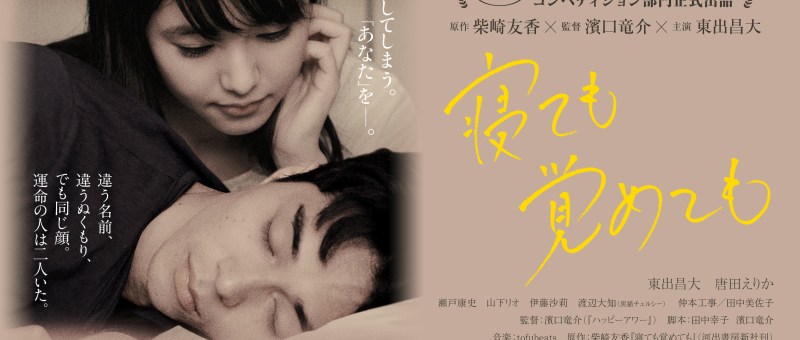
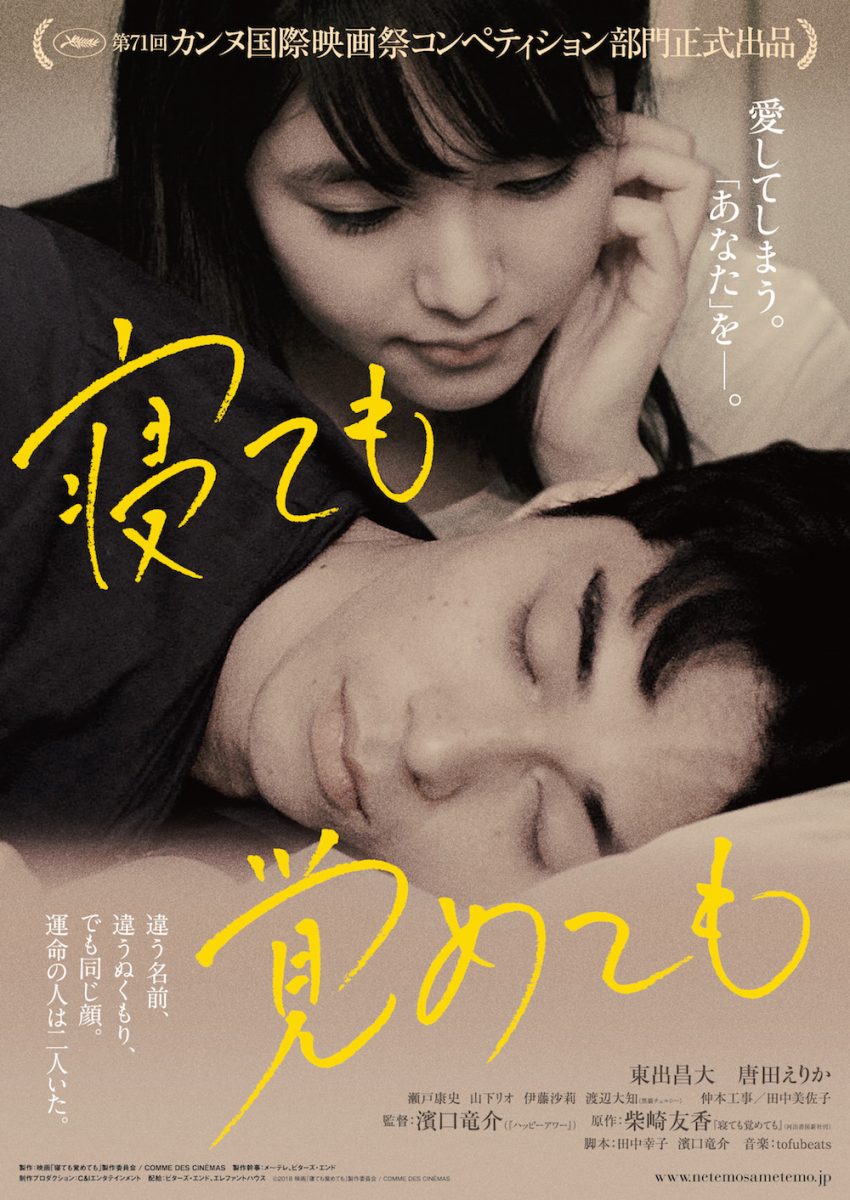
asako I & 2 posterDualities define the perpetually submerged worlds of Ryusuke Hamaguchi’s Happy Hour followup Asako I & II (寝ても覚めても, Netemo Sametemo). Waking and sleeping, fantasy and reality, past and present, presence and absence, love and sadness. Asako (Erika Karata), an ordinary young woman of the contemporary era, finds herself in a similar position to many of the heroines of contemporary Japanese literature in that she has no idea what she really wants out of life and is essentially torn between a series of idealised lives snatched from movies and magazines. Yet she is also haunted by a broken heart, arrested in a state of perpetual adolescence thanks to an early disappointment in love in which remains horribly unresolved.

As a university student in Osaka, Asako attends a photo exhibition dedicated to one of the few books put out by legendary Japanese photographer Shigeo Gocho titled “Self and Others”. Fascinated by an eerie picture of two little girls dressed identically, one slightly taller than the other, Asako’s attention is eventually caught by a striking young man. She leaves the exhibition and follows him until he eventually turns and faces her. Firecrackers some teenagers had been struggling to light suddenly explode around his feet. He strides over to her, asks for her name, and then leans in for a kiss – at least, that’s the way he later tells it to a disbelieving friend who points out that “no one meets like that”. An arty type in dungarees and shaggy hair, the young man’s name is “Baku” (Masahiro Higashide) – he uses the character for wheat (his dad was big into grains) but it’s also a homonym for explosion which a is key indication of the unpredictable excitement he comes to represent for Asako as her uni best friend Haruyo (Sairi Ito) attempts to warn her by insisting that Baku is the heartbreaking type and whatever she has with him is destined to end in tears.

Haruyo’s prediction comes to pass when Baku steps out one day to buy some shoes and never returns. A brokenhearted Asako makes her way to Tokyo and begins working a cafe but two and a bit years later, she is stunned to find “Baku” wearing a suit and working in an office. He doesn’t remember her and says his name’s Ryohei, but Asako can’t shake the association which is both attractive and repellent in equal measure. Ryohei is smitten, he felt the connection too, but Asako doesn’t quite know what to do with this unfortunate coincidence.

Events repeat themselves with only mild distortions – Asako and Ryohei attend another Gocho photo exhibition though this time with Asako’s Tokyo best friend, Maya (Rio Yamashita). Rather than a motorcycle accident, Ryohei and Asako find and comfort each other after the 2011 earthquake and eventually become a couple, move in together, and even get a cat. Asako begins to fall for Ryohei, but can’t be sure her love for him isn’t really love for Baku refracted through a different lens. Baku, a man with a wandering heart, once told her he would always return no matter how long it might take. There’s a part of Asako that’s always waiting, held back, afraid to move and unwilling to acknowledge the death of her younger self as immortalised in the image of herself with Baku.

When Haruyo runs into Asako and Ryohei unexpectedly in Tokyo, she gives us our first indication that Ryohei really does look like Baku and the association isn’t just a projection of Asako’s romantic anxieties. Haruyo’s first words to Asako are that she hasn’t changed – they’re intended as a compliment, but Asako bristles. She feels as if she’s moved forward, matured, is preparing to enter a comfortable middle age with Ryohei at her side but deep down she knows she hasn’t. She’s still the naive student pining for a lost love that never cared enough about her to resolve itself. She worries she’s been playacting and that her relationship with Ryohei isn’t “real” even if she cares about him enough to have her feeling guilty for this mild form of betrayal.

Later, offered another possibility, Asako feels as if her life with Ryohei has been like a dream, or perhaps the only waking moment of her life. When Ryohei introduces a work friend to Maya as an excuse to get close to Asako, they watch a video of her performing a scene from Chekhov’s Three Sisters – a play famously about self delusion in which the fierce belief in an impossible future becomes the only thing which makes life possible. The climactic earthquake hits just as Ryohei is preparing to watch Maya perform in Ibsen’s The Wild Duck – the play which lays bare the playwright’s key tenet, that if you take away a man’s life lie you take away his happiness. Ryohei’s friend Kushihashi (Koji Seto) might rip into Maya’s “narcissistic” acting, denigrating her for attention seeking rather than baring her soul on stage, but Asako admires her determination and absolute certainty in her chosen goal, things she herself lacks.

Talked down by the soothing tones of practiced de-escalator Ryohei, Kushihashi is prompted to confess that his outburst was mostly out of jealously, that having given up his dreams of the stage for a conventional salaryman life he resented seeing someone else embrace theirs. Asako can’t decide which “dream” she wants – a life of fireworks and unpredictability with Baku for all the heartbreak it might bring, or one of gentle happiness with the good and kind Ryohei. A series of crises prompt her into making a clear choice – seemingly her first, though it may be too late. Real love is messy, painful, and ugly, but it’s beautiful too once you learn to see through the miasma of self delusion and romantic fantasy.


Screened as part of the 2018 BFI London Film Festival.

Original trailer (no subtitles)