Luminous Woman (光る女, Shinji Somai, 1987)

“I’ve come to the city and my heart has turned black” sings a monstrously corrupt former opera singer turned bizarre nightclub impresario in hellish Bubble-era Tokyo. A tale of urban “sophistication” versus pastoral innocence, Shinji Somai’s Luminous Woman (光る女, Hikaru Onna) sends a pure-hearted mountain man into the dark heart of the modern day city hoping to rescue the woman he loves who swore she would return to him but instead has been swallowed whole by the neon-lit landscapes of the contemporary capital. 

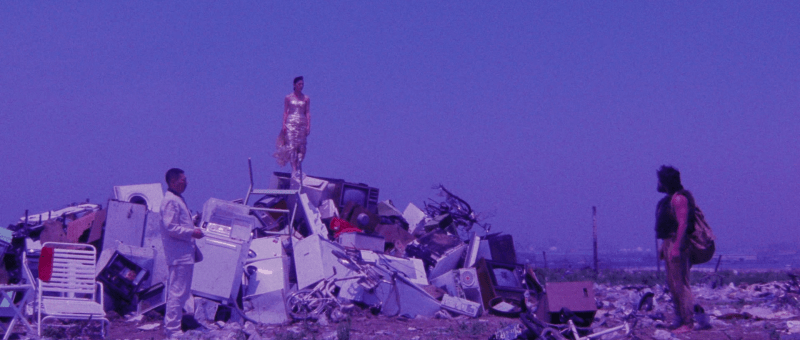
“Tokyo is lonely place” the hero immediately exclaims on witnessing it from the urban sprawl across the water in the company of an opera singer, Yoshino (Monday Michiru), whom he describes as like a doll without any blood coursing though its body. The incongruity of Sensaku’s (Keiji Muto) presence is immediately signalled by his appearance. Dressed in a bearskin jerkin and baggy trousers, walking with bare feet (all the way from Hokkaido!) and his face mostly beard, he looks every part the frontiersman as if he’d somehow stepped out of the 19th century straight into Bubble-era Japan. As he explains, he’s come looking for his woman, Kuriko (Narumi Yasuda), who travelled to Tokyo to study accounting to help the local farmers manage their businesses when she returned to run a farm with Sensaku. 

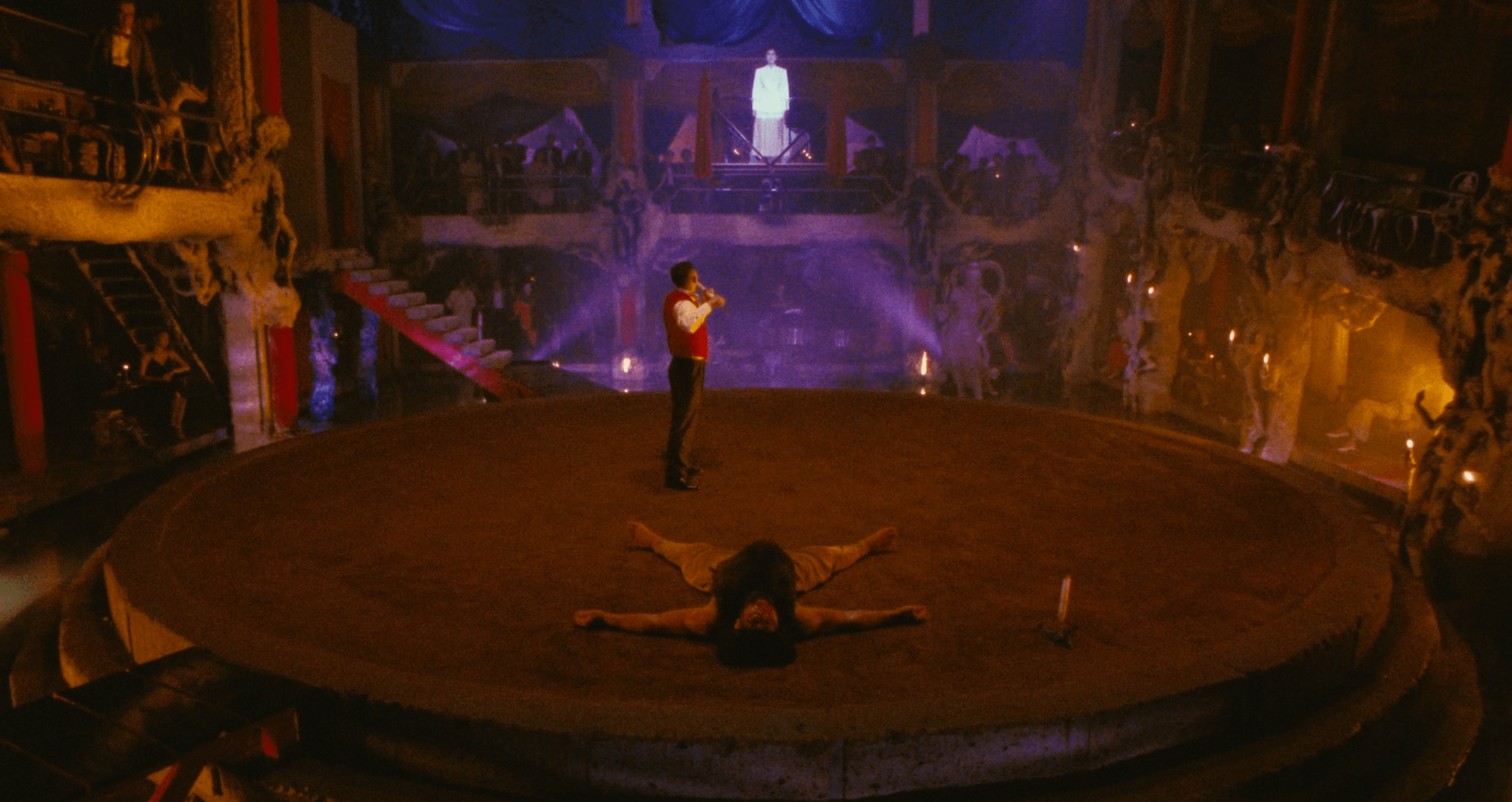
The first note of discord arrives when the man travelling with the opera singer, Shiriuchi (Kei Suma), tells him that he knows a woman by that name who also came from the same town in Hokkaido but she now works as a bar hostess. Shiriuchi only agrees to tell Sensaku the rest of what he knows if he makes an appearance at his club in its gladiatorial floor show. Sensaku is used to the primal struggle, he’s a mountain man after all and physically robust. He isn’t afraid of a fight only warning that there’s a chance he may kill his opponent to which Shiriuchi declares so much the better.

This a Tokyo populated by those who are in a sense already dead. Shiriuchi’s floor shows leverage mortal struggle as a means of existential validation, yet his concept of “sophistication” founded in European classicism is directly contrasted with the idealised pastoralism to which Sensaku eventually returns as he and the other villagers plant new crops surrounded by greenery and an incongruous mix of animals including a mischievous racoon. Yoshino, the “bloodless” opera singer has lost her ability to sing seemingly because of her oppression at the hands of Shiriuchi who describes as her as a “commodity”, “precious as a diamond”, but later treats her as a kind of broken toy complaining that if he cannot “enjoy” her body nor exploit her voice she has no further value to him. 

It soon becomes clear that Kuiriko too has fallen under his spell, working at an equally weird nightclub where the pale-faced hostesses wear kimono and sing children’s folksongs. She came to the city for education, but has become a drug user which leaves her vulnerable to Shiriuchi’s manipulation. Several times he is referred to as “master” and there is something Devil-like about him in the influence he seems to wield in these strange spaces of the prosperous city buried somewhere beneath the neon lights and sprawling office blocks. The pinkish tint of Somai’s colour grading along with his characteristically roving camera add to the sense that we already in hell and if Sensaku does not escape from it soon, he too will be consumed like Akanuma (Hide Demon) before him who came to look for a woman only to discover that she had already found happiness with someone else. 

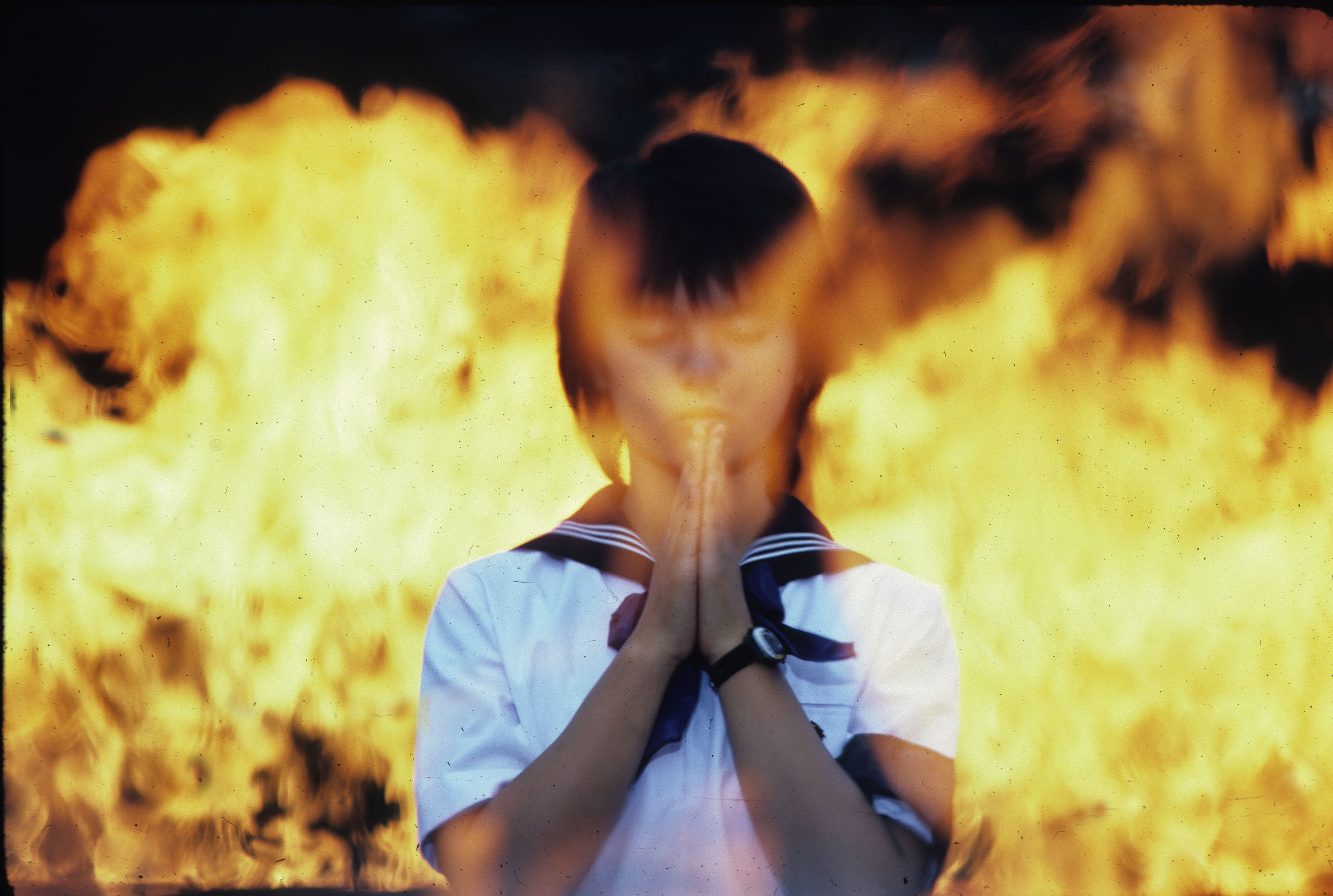
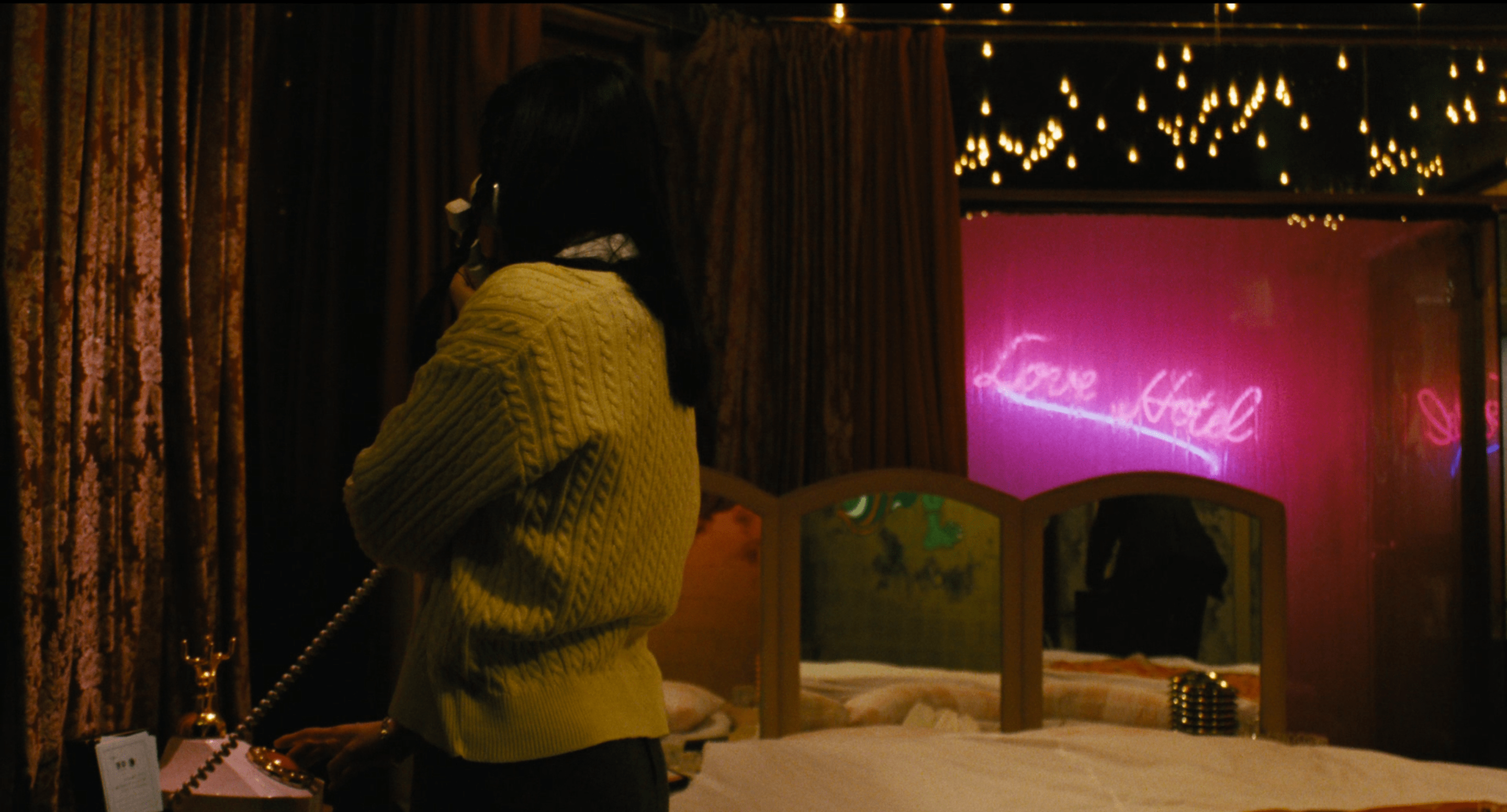
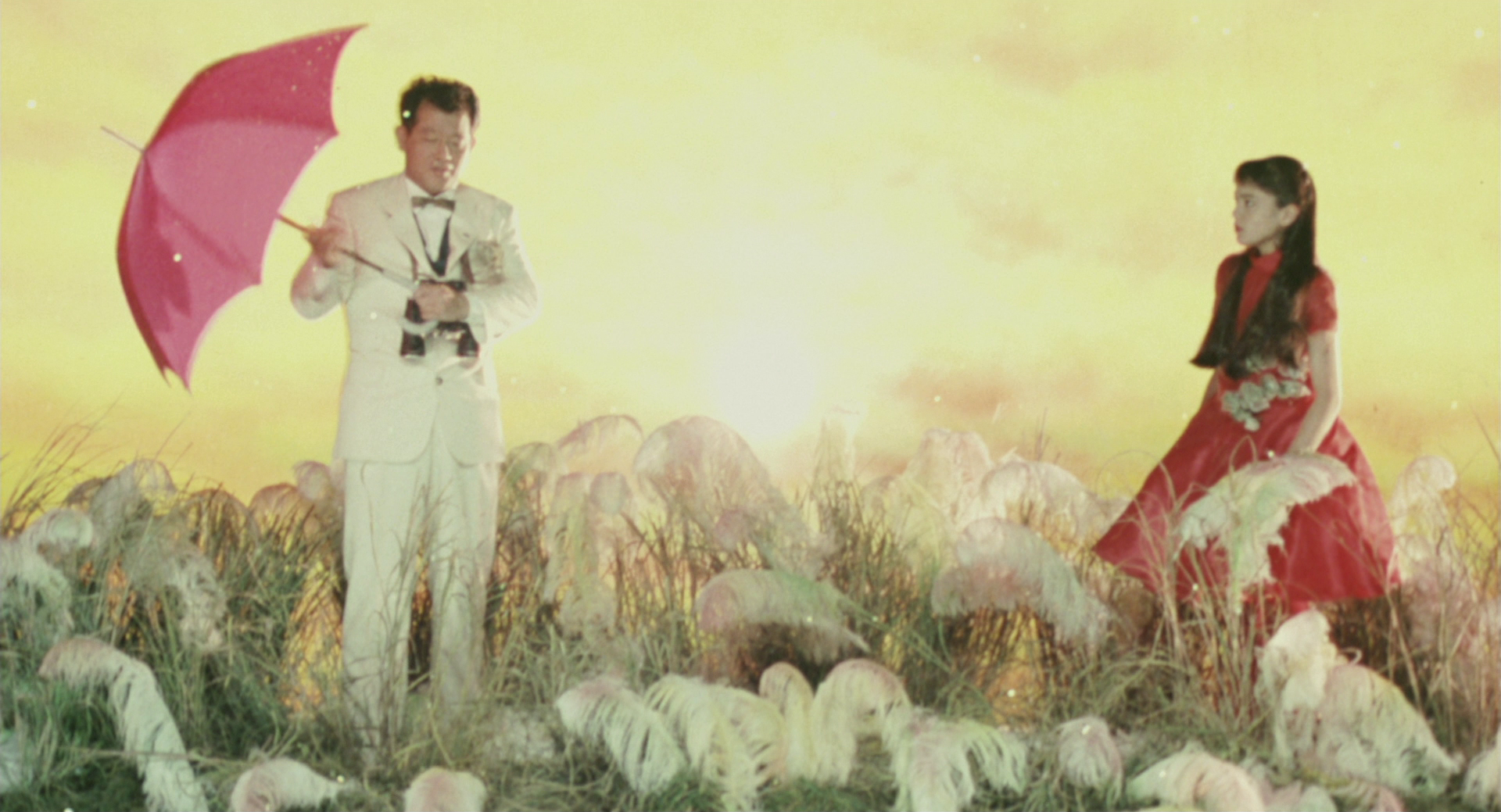
Mountain man Sensaku’s identification with fisherman Akunuma is only further deepened by the sensation that he too is “burning” in the literal flames which lend a hellish glow to the empty swimming pool where he consummates his relationship with Yoshino who subsequently regains the ability to sing. They are both in a sense pure-hearted men out of place in the emotional austerity of a modern capitalist society, a pair of Orpheuses descending into hell in search of lost love but finding only disappointment and ruination. Sensaku is finally able to escape in accepting that he cannot rescue Kuriko in part because she has no desire to be rescued, while Yoshino may still come with him if she too chooses to leave. Somai’s characteristically long takes add an edge of eerie oscillation to his often theatrical composition which culminates in the scene of two women connected via telephone call seemingly sharing the same space even as one is surrounded by a spiderweb of laser-like red string. Dreamlike and often surreal, Somai’s etherial fable casts the Bubble-era society as a hellish underworld of broken dreams and human cruelty but finally takes refuge in a scene of pastoral restoration neatly mirroring the trash-heap paradise of its opening.


Luminous Woman screens at Japan Society New York on May 5 & 13 as part of Rites of Passage: The Films of Shinji Somai

Teaser trailer (no subtitles)
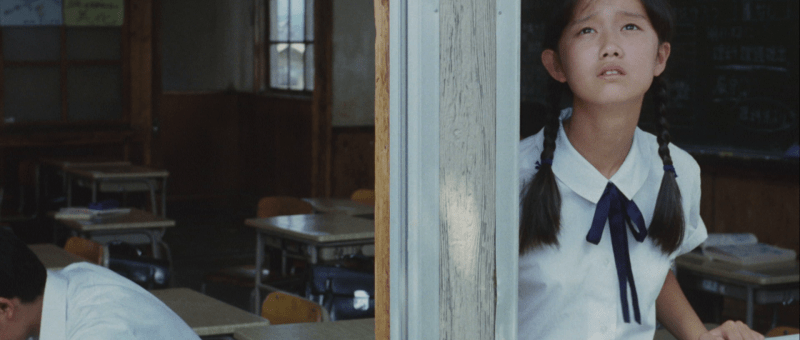
Typhoon Club (台風クラブ, Shinji Somai, 1985)

A collection of frustrated teens find themselves trapped within a literal storm of adolescence in Shinji Somai’s seminal youth drama Typhoon Club (台風クラブ, Taifu Club). “You’ve been acting weird lately” one character says to another, but he’s been “acting weird” too and so has everyone else as they attempt to reconcile themselves with an oncoming world of phoney adulthood, impending mortality, and the advent of desires they either are unable or afraid to understand, or perhaps understand all too well but worry they will not be understood. 

Most of the teens seem to look to the pensive Mikami (Yuichi Mikami) as a mentor figure. It’s Mikami they call when some of the girls end up half drowning male classmate Akira (Toshiyuki Matsunaga) after some “fun” in the pool gets out of hand. Luckily, Akira is not too badly affected either physically or emotionally, but presents something of a mirror to Mikami’s introspection. Slightly dim and etherial, he entertains his friends by seeing how many pencils he can stick up his nose at the same time, but he’s also as he later says the first to see the rain once it eventually arrives. Notably he leaves before it traps several of the others inside the school without adult supervision and otherwise misses out on the climactic events inside. Even so, Rie (Yuki Kudo), who also misses out by virtue of randomly stealing off to Tokyo for the day, later remarks that he too seems like he’s grown though her words may also be a kind of self projection. 

Mikami’s kind of girlfriend, perpetual spoon-bender Rie, finds herself at a literal crossroads after waking up late because her mother evidently did not return home the night before. Eventually she sets off for class running all the way, but then reaches a fork in the road and changes her mind heading to Tokyo instead. Mikami has been accepted into a prestigious high school there, and perhaps a part of her wanted to go too or at least to get closer to him through familiarity with an unfamiliar environment. Unfortunately she soon encounters a firearms enthusiast (Toshinori Omi) who buys her new clothes and takes her back to his flat which she thankfully manages to escape even if she’s stuck in the city because of a landslide caused by the typhoon.  

Mikami, however, continues to worry about her unable to understand why he’s the only one seemingly bothered about her whereabouts believing she’s “gone crazy”. Trapped in the school, the kids try to ring their teacher Umemiya (Tomokazu Miura) for help but he’s already drunk and can’t really be bothered. In any case he has problems of his own in that his girlfriend’s mother suddenly turned up during class to berate him for stringing her daughter along and also having borrowed a large amount of money which obviously ought to have some strings attached, only as it turns out Junko leant the money to another guy she was seeing though it’s not exactly clear whether she and Umemiya actually broke up or not. “In 15 years you’ll be exactly like me” Umemiya bitterly intones into the phone when Mikami directly states that he no longer respects him deepening Mikami’s adolescent sense of nihilistic despair. 

Of all the teens, he does seem to be the most preoccupied with death. “As long as she’s an egg, the hen can’t fly” he and his brother reflect on discussing if it’s possible for an individual to transcend its species and if it’s possible to transcend it though death all of which lends his eventual decision a note of poignant irony even if its absurd grimness seems to be a strange homage to The Inugami Family. As he points out to his somewhat disturbed friend Ken (Shigeru Benibayashi), “I am not like you” and indeed Ken isn’t quite like the other teens. Obsessed with fellow student Michiko (Yuka Ohnishi) but unable to articulate his feelings, Ken pours acid down her back and watches her squirm as it eats into her flesh. Repeating pleasantries to himself as a mantra, he later attempts to rape her after violently kicking in the dividing walls of the school only to be stopped in his tracks on noticing the scar again and being reminded that he is hurting her. 

The storm seems to provoke a kind of madness, the teens embracing an elusive freedom entirely at odds with the rigid educational environment. The other three girls trapped in the school are a lesbian couple who’d been hiding out in the drama department and their third wheel friend who might otherwise have been keen to hide their relationship from prying eyes having previously been caught out by a bemused and seemingly all seeing Akira. But in this temporary space of constraint and liberation, the teens are each free for a moment at least to be who they are with even Ken and Michiko seemingly setting aside what had just happened between them. They co-opt the stage for a dance party and then take it outside, throwing off their clothes to dance (almost) naked in the rain while a fully clothed Rie does something similar on the streets of the capital. In some ways, in that moment at least they begin to transcend themselves crossing a line into adulthood in a symbolic rebirth. In any case, Somai’s characteristically long takes add to the etherial atmosphere as do his occasional forays into the strange such as Rie’s encounter with a pair of ocarina-playing performance artists in an empty arcade. “We want to go home, but we can’t move” Mikami says looking for guidance his teacher is unwilling to give him neatly underlining the adolescent condition as the teens begin realise they’ll have to find their own way out of this particular storm. 


Typhoon Club screens at Japan Society New York on April 28 as part of Rites of Passage: The Films of Shinji Somai

Japan Society New York Announces Rites of Passage: The Films of Shinji Somai

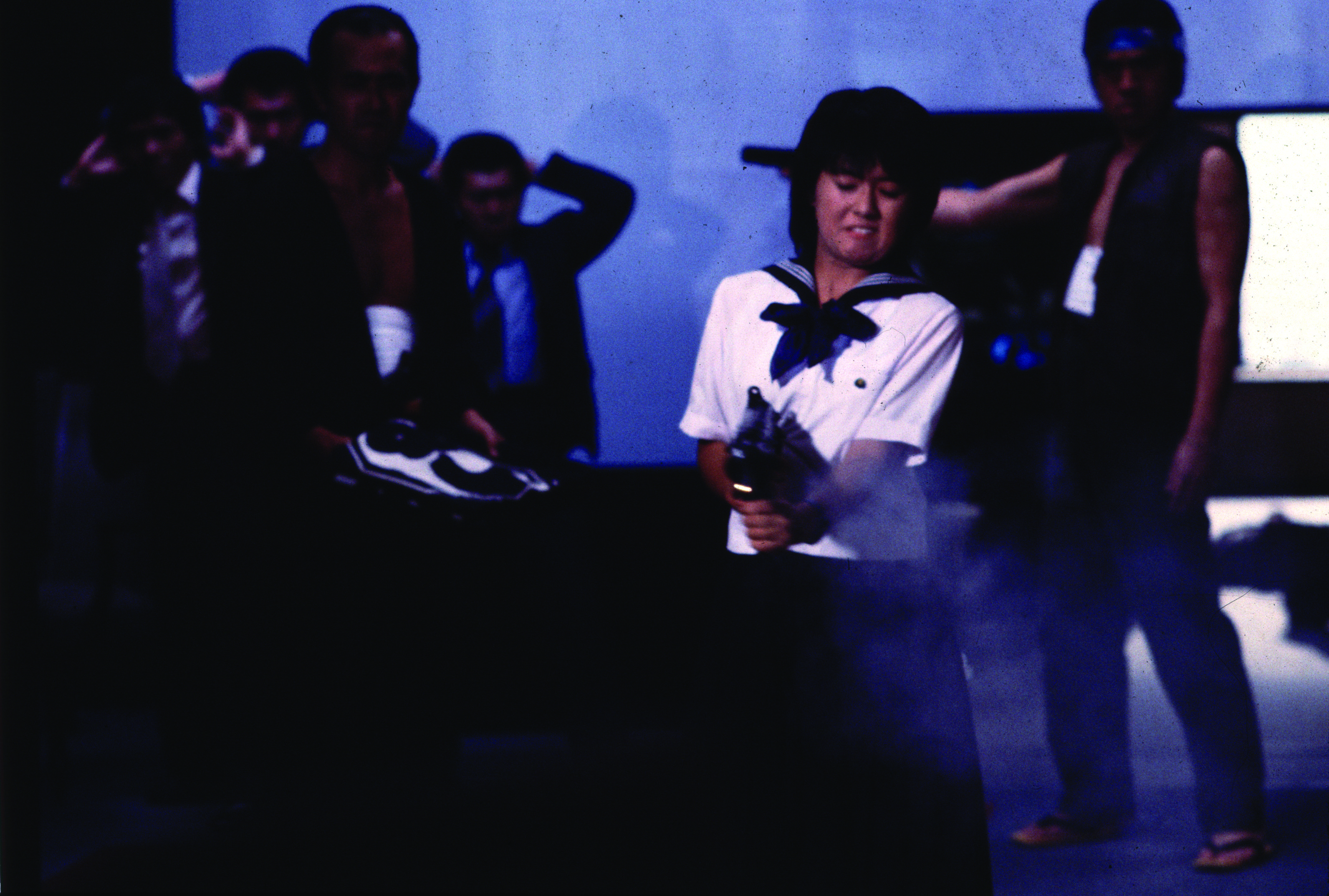
Lolita in Bloom film series Sailor Suit and Machine Gun © 1981 Kadokawa Herald Pictures, Inc.

Japan Society New York will celebrate the work of late director Shinji Somai who remains criminally neglected outside of his home nation with the first North American retrospective running April 28 to May 13. Featuring seven of the director’s features, the series showcases both the teen idol movies with which he may be most closely associated internationally, and gritty adult dramas such as The Catch and Love Hotel.

The Catch

Friday, May 12 at 7:00 PM

Shinji Somai’s 1983 opus of fishermen at home on the waves and at sea on land is a complex examination of masculinity but also of fatherhood in a rapidly declining world filled with arcane ritual and ancient thought. Review.

Love Hotel

Saturday, April 29 at 5:00 PM

Melancholy drama following the turbulent romantic relationship between a failed businessman pursued by yakuza and the former sex worker with whom he shared a traumatic night some years previously. Review.

Luminous Woman

Friday, May 5 at 8:30 PM / Saturday, May 13 at 2:00 PM

Fable-like tale of a mountain man who comes to the city in search of the girlfriend who never came home after leaving to study accounting. Sucked into a bizarre underworld of gladiatorial floorshows and voiceless opera singers, he quickly finds himself lost in the soulless metropolis of Bubble-era Tokyo.

P.P. Rider

Saturday, April 29 at 2:00 PM / Saturday, May 13 at 5:00 PM

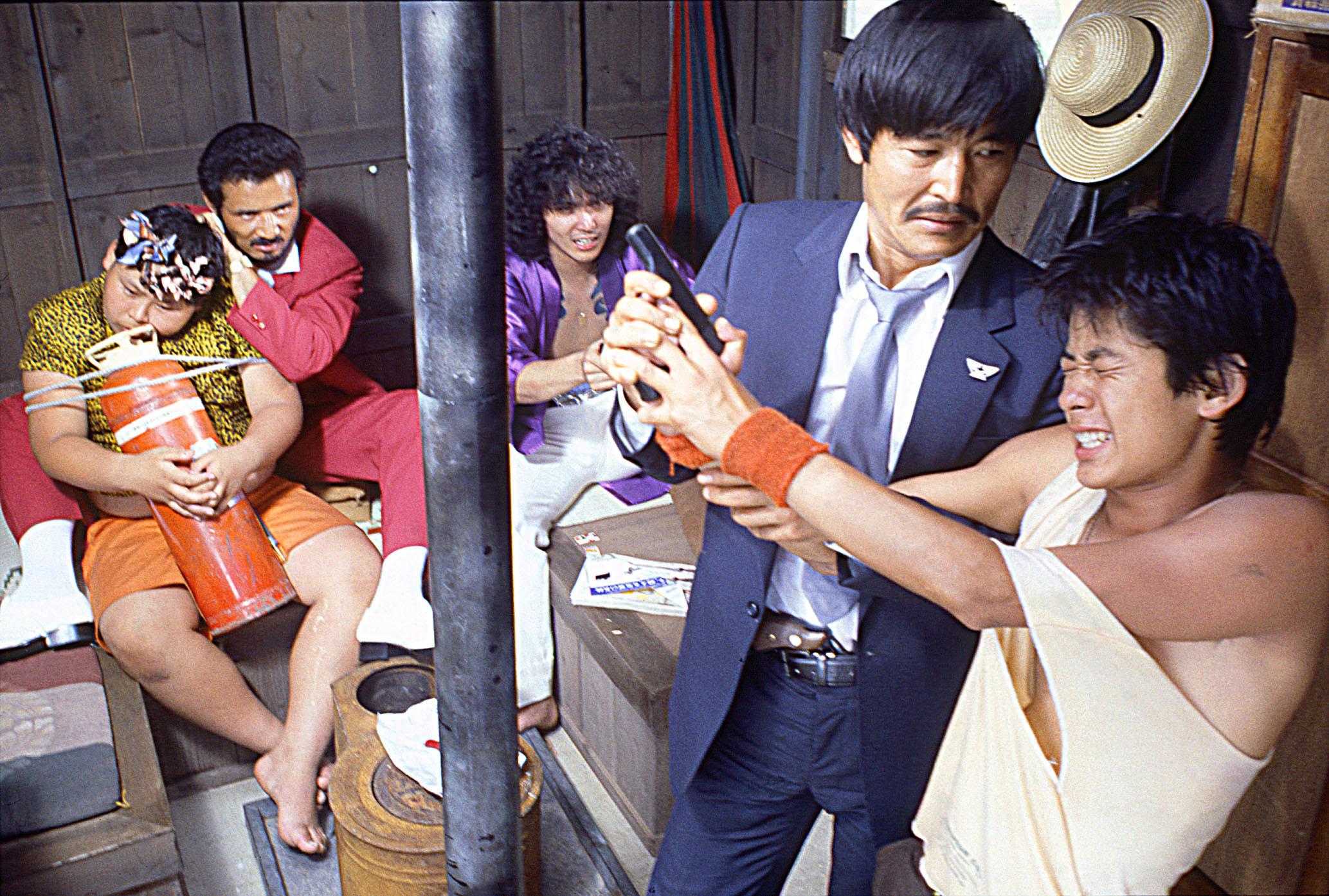
Classic teen movie in which a trio of school friends set off to rescue their school bully after he’s kidnapped by yakuza. Starring a young Masatoshi Nagase in his film debut. Review.

Sailor Suit and Machine Gun

1982 Complete Version on Saturday, April 29 at 7:00 PM; Theatrical Cut on Friday, May 5 at 6:00PM.

Iconic teen drama starring Hiroko Yakushimaru as a high school girl who unexpectedly inherits a yakuza clan when her father dies suddenly and finds herself trying to contend with adolescent angst and underworld intrigue. Review.

Tokyo Heaven

Saturday, May 13 at 7:30 PM

Somai’s Bubble-era exploration of idol exploitation has an almost prescient quality in its otherwise fantasy-driven tale of an aspiring model killed after diving out of a car to escape a lascivious exec but then given a second chance to live a “normal” life. Review.

Typhoon Club

Friday, April 28 at 7:00 PM

Seminal teen drama in which a collection of high school students experience a literal storm of adolescence while trapped in their school thanks to a severe typhoon.

Rites of Passage: The Films of Shinji Somai runs at Japan Society New York April 28 to May 13. Tickets priced at $15 / $12 students & seniors, and $10 Japan Society Members (Typhoon Club + Opening Night Party: $18/$15/$14) are on sale now via the official website while you can also keep up with all the year-round events by following Japan Society Film on FacebookInstagram, and Twitter.