

At the beginning of Masakazu Kaneko’s River Returns (光る川, Hikaru Kawa), a little boy asks his father where water comes from. It’s one of those questions that children ask but adults find difficult to answer. In any case, his father tells him that it comes from the sky, travels down leaves and branches, and then makes its way to the river. But what if all the trees are felled, the boy asks. His father tells him not to worry, they only cut down “useless” trees in order to plant “money-making” ones in their place.
This is the conflict at the centre of the film and to some extent that at the centre of all of Kaneko’s films so far in the changing relationships between man and landscape. The boy, Yucha (Sanetoshi Ariyama), is too young to fully understand what’s going on but has an inkling that might not be good for his beloved mountain which is somehow linked with the fate of his sickly mother, Ayumi (Kinuo Yamada). His father, Haruo (Tomomitsu Adachi), is one of the younger men in the village in favour of a plan to sell off the mountain for industrial construction with the building of a modern roadway and a dam project which he says will make everyone in the village rich. It’s 1958, and the nation is fast recovering from post-war privation. The population is increasing. New homes will need to be built so there’s money in timber. He wants to use some of it to treat Ayumi’s illness, but his mother has her doubts even if her son dismisses them as backward superstition.
Haruo worries that their old-fashioned, rundown home may not survive a severe typhoon nor the flooding that often accompanies them. If you fear floods, then cutting down trees is obviously not a good idea and there is something quite unsettling about the imposition of the dam that would interfere in this ancient and natural process that keeps the rivers flowing. Yet this particular river also has a quasi-mystical quality that Yucha learns of from his grandmother and a kamishibai storyteller who recounts a local folktale about a girl who drowned herself in the pool at the river’s source after falling in love with a nomadic mountain woodcutter. It is said the girl’s despair sometimes brings about terrible floods and that the one who receives a wooden bowl from the river must return it full or a loved one will be taken by the waters.
Yucha had been worried about this before, frightened that his mother would not be able to escape the rising waters because of her illness. What he learns is that time flows differently at the source and in temporal terms, this river also flows backwards. He becomes a kind of conduit and saviour of the mountain in going back to right a wrong, ensuring that man and landscape are joined once again and can live in a more natural harmony. By saving the mountain, he can also save his mother whose condition it is implied is partly caused by a corrupted modernity. Haruo could not save her with money gained by nature’s destruction, only by restoring nature itself and making a commitment to keep the pool as clear and blue as the cormorant’s eye.
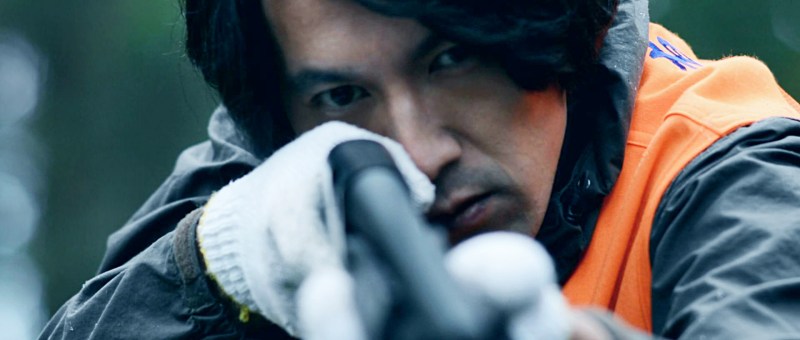
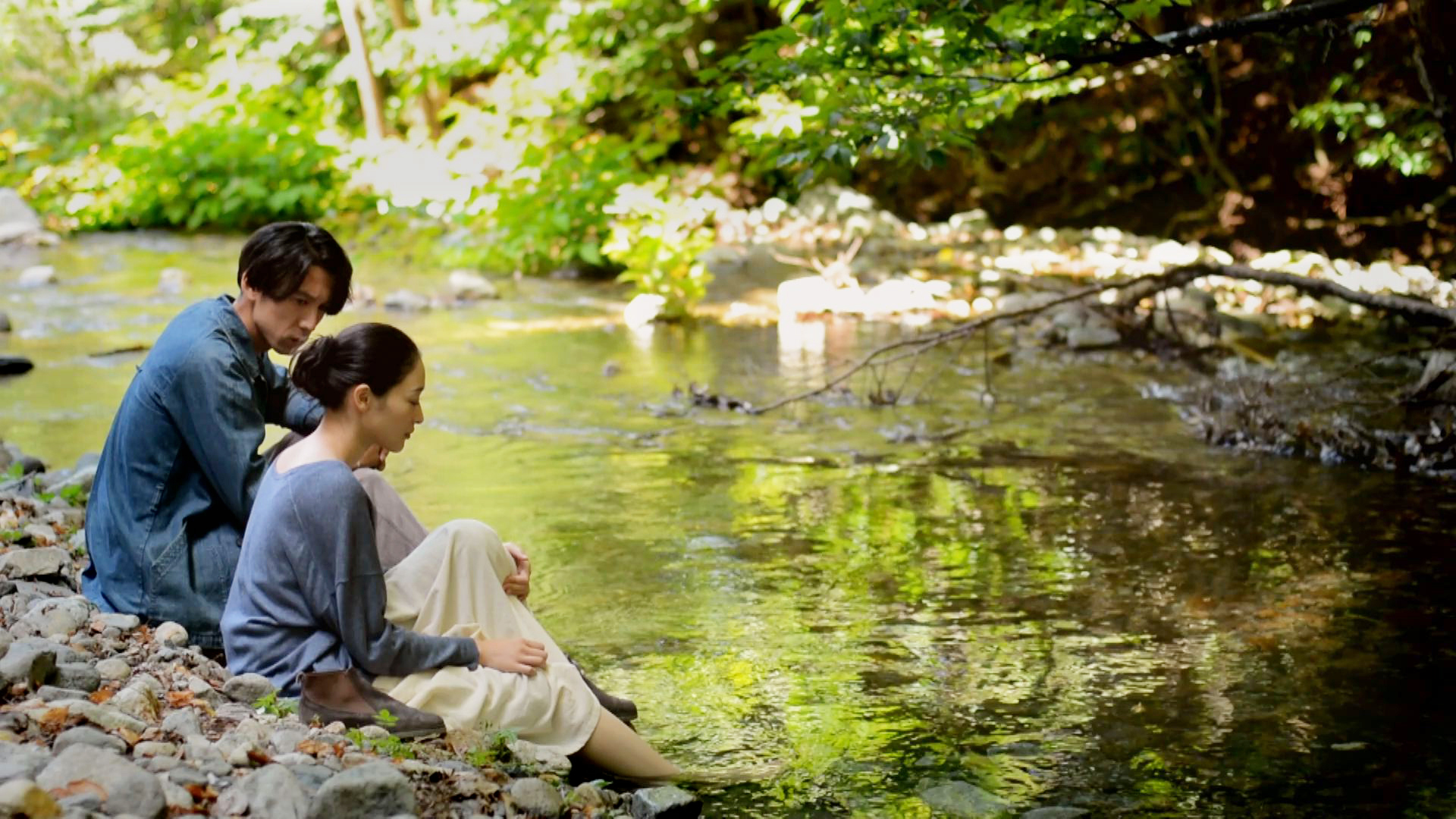
The nomadic woodcutters after all know that too much felling ruins the mountain which would take generations to recover. They kneel and pray after felling their trees and respectfully move on at the full moon. Kaneko structures his tale elliptically, like a river that constantly returns in which all is a harmonious cycle that man threatens to interrupt, arrogantly thinking that it can improve upon nature. The middle part of the film is a lengthy flashback transitioning out of the kamishibai folktale set sometime in the feudal past in which even then there was division between the “civilisation” represented by the village and the natural world of the mountains which would be healed in the union of Oyo and the woodcutter Saku and is opposed both by the mountain nomads and Oyo’s widowed father Tsunekichi (Ken Yasuda). Only the mute boy can in the end resolve this romantic tragedy and ensure the river continues to flow. Elegantly lensed to capture the majestic quality of the mountain landscape, River Returns is a timely reminder of the importance of protecting the natural environment which in return will also protect us.
River Returns screens as part of this year’s Cinema at Sea.
Trailer (English subtitles)
 Windows on Worlds