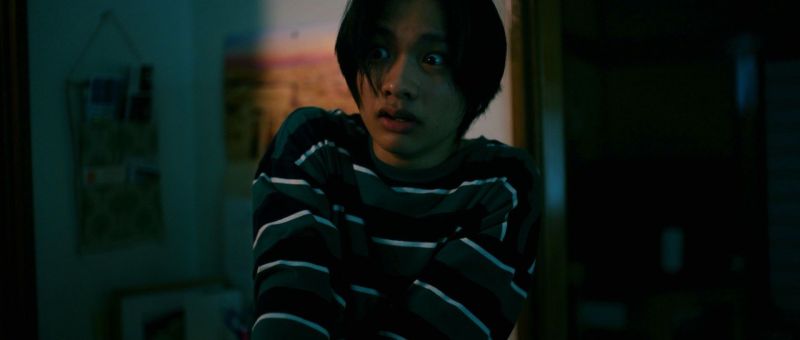
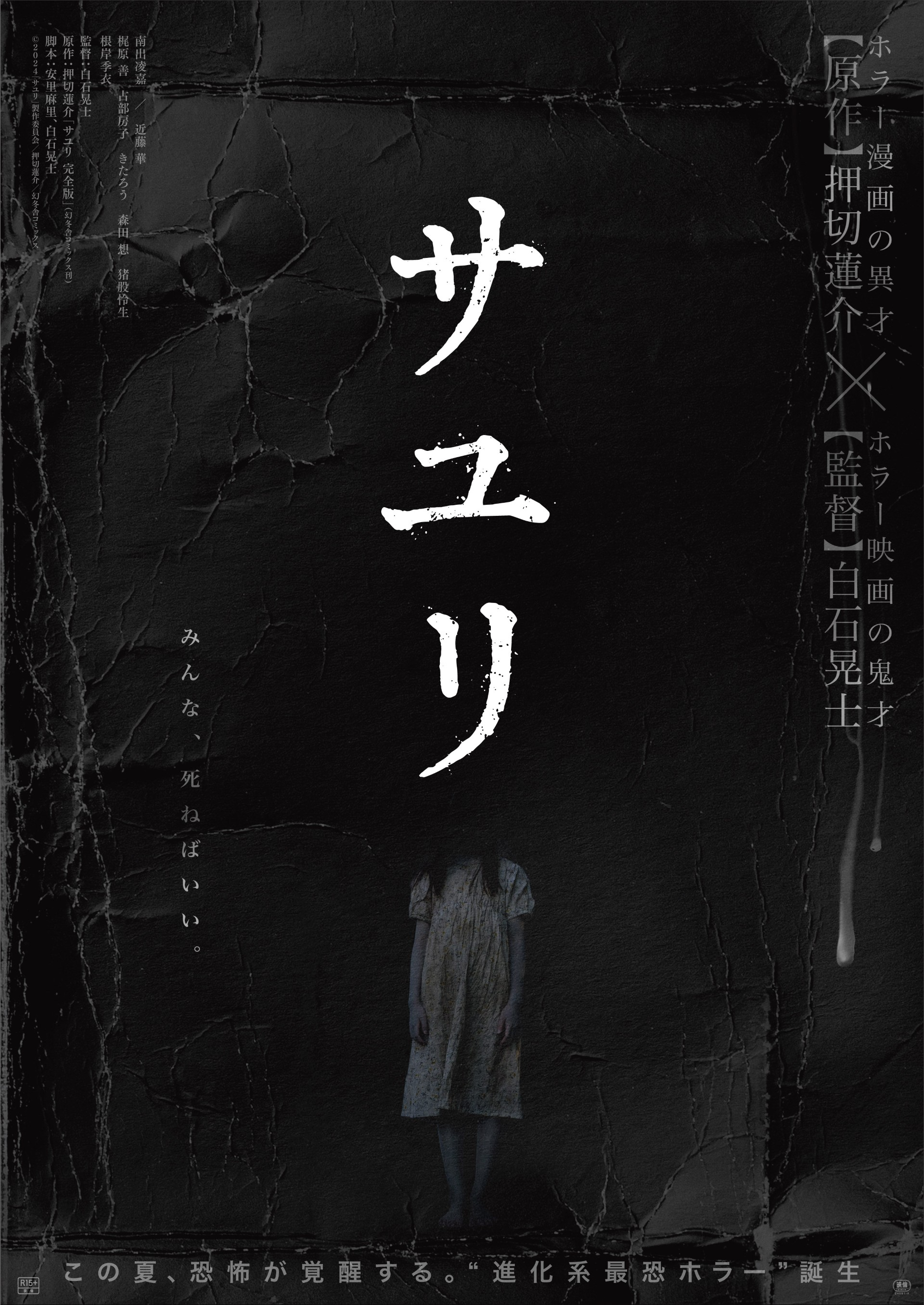
An excited family discover the perils of buying a “used” home in Koji Shiraishi anarchic haunted house horror House of Sayuri (サユリ, Sayuri). Unlike many other nations, Japan does not really have a comparable housing market as, given changing building regulations etc, it’s common to demolish the original structure and build a bespoke home in its place rather than move into one someone else has vacated. That obviously means that opting for an existing property can be a little bit cheaper, which is presumably how the Kakimis have finally managed to move into what they describe as the dream home, escaping a cramped city apartment for a spacious rural mansion with room enough for grandma and grandpa too.
Of course, this particular home is probably cheaper because something untoward once happened there, though the Kamikis probably don’t know that, and everyone who’s lived there since has moved out a short time later. In a way referencing Shiraishi’s previous work, we can’t really tell whether the malevolent spirit wants the family out or is merely trapped in a loop of revenge on the family that badly betrayed them. In any case, it makes its way through the Kamiki family unit starting with daughter Keiko and causing all manner of strange events in the house. Sensibly, older son Norio begins to ask why they don’t just move but the parents are so committed to their dream of homeownership that they can’t bear the thought and remain determined to hang on to it at whatever cost.
In any case, some wise words from grandma advance a more positive way of battling the ghost, that they should fight it with the force of their lives. They laugh in its face and shout vulgar phrases that send it scuttling away in outrage. The best way to fight the darkness, grandma says, is to live well. Like the house itself, it seems grandma has a well hidden secret that makes her the film’s key asset, a hilarious force of nature and eternal wise woman otherwise ignored because her dementia undermines her credibility. Meanwhile, Norio makes an unexpected friend at school who just happens to be a psychic and is keen to warn that a little girl ghost has latched on to him and it would obviously be better if he could just move out on account of all the evil emanations that appear to be coming from his home.
But as grandma says, it’s the grudges of the living they ought to be afraid of. The house of course holds its secrets and its labyrinthine, multilevel structure is perfect for concealing them. Unfortunately the Kamikis have bought into this poisoned legacy and slowly start seeing their familial bonds fracturing while the ghost takes advantage of their vulnerabilities, their negative emotions and insecurities. In a sense it becomes a question of whether they can endure a place of trauma to maintain their dreams of homeownership or are prepared to make the more sensible decision of ceding ground and moving somewhere less toxic while Norio tries to reclaim his place in his family and protect what remains of it.
Truly heading in some unexpected directions particularly in its unpredictable send half, the film takes on an absurdist quality but also returns to classic genre tropes of the legacy of child abuse and the betrayal of a parent who saw and did nothing perhaps because, like the Kamikis, they were prepared to accept this this kind of toxicity to maintain a happy family home and be seen as a model upper-middle class family living in a country mansion. It turns out, the only way to exorcise this much more literal ghost is by directly confronting the traumatic past and attempting to find accommodation with it be that through violence or forgiveness. But as grandma had said, the best weapon is love and life, throwing back at the ghost what it no longer has in a defiant expression of being alive and that joy contains which is also of course as grandpa had said a way of honouring the dead resolving to make the most of one’s remaining time in their memory. In any case, Norio discovers that you do not have to continue living in a haunted house but unlike a ghost are in fact free to leave the scene of trauma and seek new happiness in a less upsetting place.
House of Sayuri screened as part of this year’s Fantasia International Film Festival.
International trailer (English subtitles)
 Windows on Worlds