Honeko Akabane’s Bodyguards (赤羽骨子のボディガード, Junichi Ishikawa, 2024) [Fantasia 2025]

Unbeknownst to her, a high school girl’s entire class is actually made up of bodyguards hired by her distant father, whom she doesn’t know either, to keep her safe because his work makes her an easy target for international criminals. Adapted from the manga by Masamitsu Nigatsu, Junichi Ishikawa’s Honeko Akabane’s Bodyguards (赤羽骨子のボディガード, Akabane Honeko no Bodyguard) is in some ways fairly typical of the genre in its parade of unrealistic hairstyles and over-the-top humour, but also anchors itself in a genuine sense of friendship and youth solidarity as the class come together under a charismatic leader not only to protect Akabane but each other too.

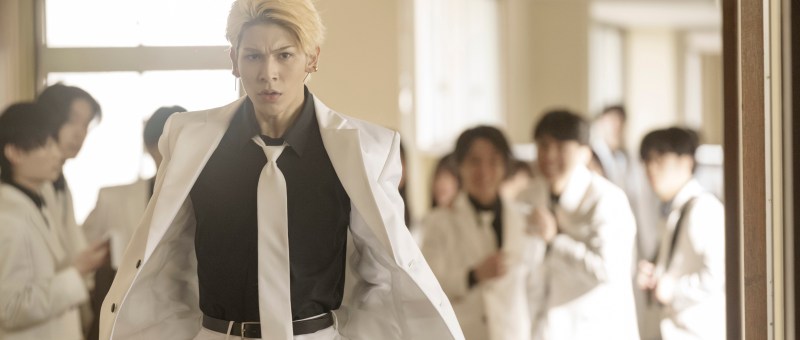
That charismatic leader would be Ibuki, a cocksure delinquent and childhood friend of Akabane’s who’s also been carrying a torch for her all these years. Nevertheless, it comes as quite a surprise when he’s officially hired by Jingu (Kenichi Endo), a man who claims to be the head of Japan’s Security Services. After his wife died, he decided to place Akabane for adoption to keep her safe from the duplicitous world in which he lived. But now there’s a 10 million yen bounty on her head and every criminal enterprise he’s ever been after is desperate to get their hands on her. What Ibuki doesn’t know is that he’s hired the rest of the class too who all have various skills from rhythmic gymnastics to torture. It’s imperative that Akabane never find out that she’s a target, nor that Jingu is her biological father, and continues to live a “normal” carefree life.

She certainly appears to have no skills of her own other than her ability to quote legal infractions in her desire to become a lawyer like her adopted parents. While this may on some level remove her agency in making her dependent on her classmates for protection, it’s also Akabane that takes the initiative in romance by making overtures to the otherwise diffident Ibuki. Other the other hand, she’s painted as the mirror image of her sister, Masachika (Tao Tsuchiya), who has been raised as a boy and taught to be an assassin but craves the kind of love and affection Jingu pours on Akabane. 

This is one reason that she is eventually able to find unexpected common ground as she and Akabane are obviously both firmly on team Ibuki with Akabane thankful that someone else can see Ibuki’s good side even if most people mistake him for being a scary and dangerous person. Like his father, the late policeman, he believes that to protect someone you must protect everything they love which is why he’s desperate to protect the whole of the class too so that Akabane’s world remains consistent. Most of the other students aren’t too invested in their jobs and are only doing this for the paycheque, but eventually end up coming together thanks to Ibuki’s insistence that he won’t leave them behind. Not only does he need their help to protect Akabane, but genuinely respects their friendship and wants to save them too.

Then again, we’re presented with a series of images of paternal and hierarchal failure. Ibuki’s own father was killed in the line of duty and while alive had little time for his son, if like Jingu trying to keep his child out of the dangerous world in which he lives. Jingu gave up one daughter to keep her safe, but has a strained relationship with the second who feels like a failure and is desperate for a chance. Even the head of the class is compromised as he first proves himself willing to sacrifice the lives of his men in achieving their goal of protecting Akabane and then seems to commit several blunders including being unable to unmask a mole. Ibuki becomes a de facto leader, but at the same time what emerges under him is a relationship of equals and solidarity between those in a similar situation. They are no longer working for Jingu or following their leader’s orders but thinking for themselves and actively protecting each other. 

Ishikawa puts together some excellent action sequences that demonstrate what a well-oiled machine the students can be in standing up against criminality while maintaining the zany humour and making Ibuki an oddly pure figure of warmth and integrity as he resolves to protect all of those around him if most especially Akabane to whom he is unable to voice his real feelings. She meanwhile, admittedly a damsel in distress, is at least taking the lead when it comes to their romance even if she continues to needle him about his rough and uncouth behaviour. Honeko Akabane is it seems very well protected from any threats that come her way save perhaps that of her hidden past.                                                                                                                                    


Honeko Akabane’s Bodyguards screened as part of this year’s Fantasia International Film Festival.

Original trailer (no subtitles)

Secret: A Hidden Score (言えない秘密, Hayato Kawai, 2024)

The shojo manga vibes are so strong with Hayato Kawai’s Secret: A Hidden Score (言えない秘密, Ienai Himitsu) that it’s difficult to believe it’s actually a remake of a Taiwanese film from 2007. Anyone remotely familiar with the genre will have figured the mystery fairly early on though Kawai does his best to build on the gothic overtones in what is actually a story about the hero’s recovery of his love for music having had it beaten out of him while studying abroad in the UK. 

To that extent, Minato’s (Taiga Kyomoto) disillusionment with the piano is akin to a loss of the self. He’s come back from London earlier than expected and is quickly humiliated during his friends’ hazing ritual of making him participate in a piano duel with another student which he gives up on half way through. Having experienced a truly terrible teacher who shouted and bullied him into feeling as if he should give up on music if not life Minato is left listless and lonely with no sense of direction.

This might be why he’s drawn to Yukino (Kotone Furukawa), a mysterious presence he first encounters after being struck by the sound of her playing piano in an abandoned music room soon to be torn down. He asks her what the name of the song is, but she only tells him that it’s a secret like many other things about her. Minato is fascinated but also resentful, captivated by the mystery that surrounds Yukino while frustrated by the playful distance she keeps from him. In many ways she represents life, not only romantic love but restoring his love of music and a sense of confidence in it born of his rediscovery of the simple joy of playing as symbolised by the toy piano which his father (Toshinori Omi) is also trying to repair for him.

Yet it’s also clear something’s not quite right. Yukino’s clothes are slightly old-fashioned and she doesn’t own any kind of mobile phone. No one else on campus seems to know her and she often disappears without warning only to reappear just as unexpectedly. A minor love triangle develops between Minato, Yukino, and his childhood friend Hikari (Mayu Yokota) which later provokes a secondary emotional crisis though it’s clear this slippery duet that Minato is playing gradually allows him to open himself back up emotionally so that he can re-embrace his love of music and once again play the piano which is all he’d lived for until the cruel worlds of sadistic teacher caused him to want to give up on life.

Kawai certainly ups the romance with the gothic aesthetics of the disused music room along with the drafty corridors leading to it, though when the secret is eventually revealed it’s something of an anti-climax given its obviousness and the lack of effect it has on Minato who seems to be left with another unfinished symphony of longing and loneliness destined to echo through his music for years to come. There is however a poignancy in Yukino’s declaration that she just wanted to be an ordinary girl and in the shattering of her romantic illusions when she sees that Hikaru is in love with Minato and subject to none of the barriers that cause her to think her romance has no longterm possibilities. 

More than the Taiwanese original, the film leans into the tropes of shojo manga along with the junai classics of the early 2000s in its supernaturally-tinged tale of tragic romance and impossible love. As such, the film has a nostalgic quality though its retro touchstones seem somewhat out of sync in its polaroid cameras and ‘50s-themed disco even if that itself may equally be a kind of reference to Back to the Future, though more than anything else it’s a tale of a miracle created by music bringing two lonely souls together. It may seem as if Minato is drawn towards death or something dark, but is in reality chasing himself and the melody of a life that’s lost to him, perhaps finally catching it and learning to play again only to find that the dance ends much too soon leaving only the barest echo of itself behind.


Secret: A Hidden Score screened as part of this year’s Nippon Connection

Original trailer (English subtitles)

5 Million Dollar Life (五億円のじんせい, Moon Sung-ho, 2019)

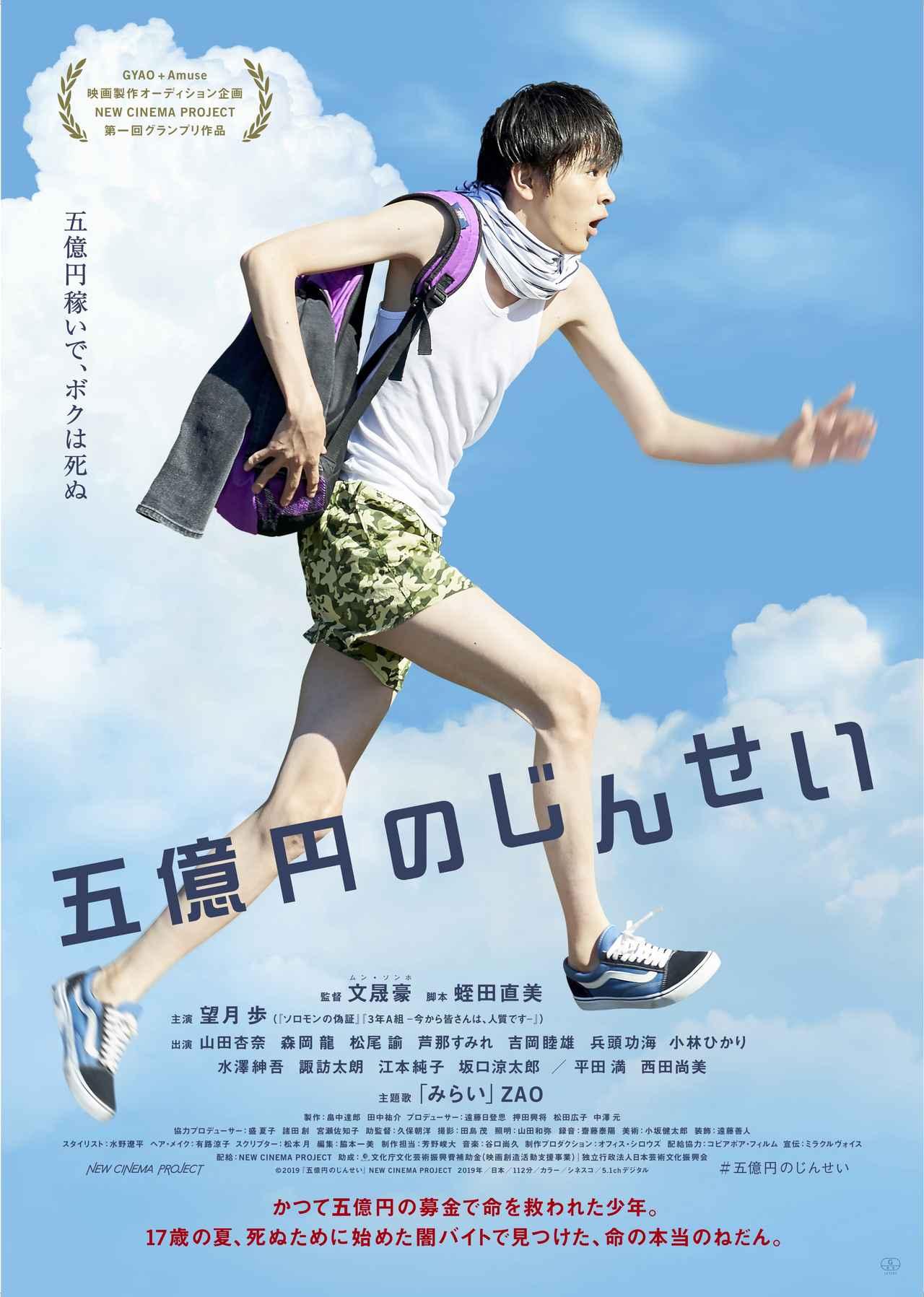
5 Million Dollar Life posterIs it possible to live a life without “debts” of one kind or another or are we all just living on loans? The hero of Moon Sung-ho’s 5 Million Dollar Life (五億円のじんせい, Gooku Yen no Jinsei) wants to find out, not least because he feels himself indebted to those who have helped him in the past and struggles with the pressure of living up to their expectation. An unexpected source provides some helpful advice in pointing out that “value” in one sense at least is not something you’re free to decide for yourself but is defined by others. Then again, not being certain of your own worth makes it impossible to claim your rightful place in society as someone as worthy of love and respect as any other.

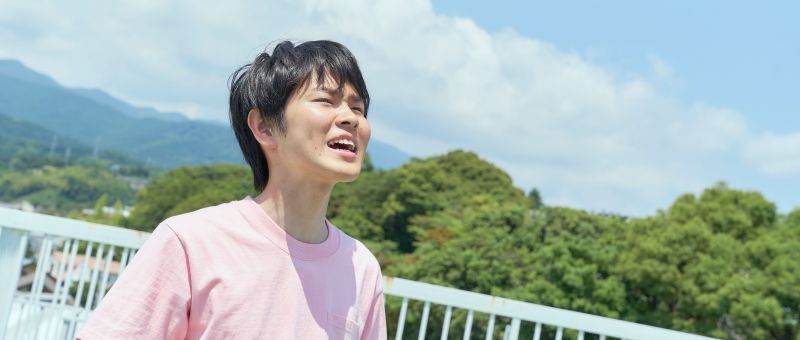
When Mirai (Ayumu Mochizuki) was six, his family found out he had a congenital heart defect and would need to go abroad for a transplant. His community rallied around him and raised five million dollars so he could go to America for treatment. The heartwarming story also made him the star of an ongoing documentary in which he’s interviewed on television every year so those who contributed to saving his life can find out how he’s getting on. Becoming a local celebrity and an accidental TV star is obviously a lot of pressure for any young man, but Mirai feels acutely burdened by the responsibility of “repaying” the kindness that was offered to him. He doesn’t feel his life was worth five million dollars and knows he is unlikely to repay their “investment”. He is after all just “ordinary”. He won’t win a Nobel prize or cure cancer, all he can do is live his life in the normal way but that’s hard when it feels like everyone is secretly looking over his shoulder and waiting for him to make a mistake.

Meanwhile he’s also become a role model to the suicidal Chiharu (Hikari Kobayashi) who doesn’t “see the value in life”  and feels that “death is glorious” because people can hate you while you’re alive, but they’ll love you when you’re gone. Mirai gets where she’s coming from. He longs for an ending too, if only to reject the responsibility he feels towards those who saved his life. Attacked by a troll online, he takes up the challenge to make the five million dollars back and then kill himself to bring an end to the whole affair but quickly discovers that it’s a lot harder to make five million dollars than he thought.

Neatly taking place during the last summer of high school, Mirai’s odyssey sends him on an odd trek across working class Japan as he finds himself alone and without money or means to support himself. At only 17, he can’t even stay in a hotel on his own and so he winds up becoming homeless but is taken in by a nice old man who claims he decided to help him because he bought an umbrella with his last pennies rather than pinching someone else’s. Though he is often exploited and betrayed by those who take advantage of his goodness, that same quality finds an answer in others who, sometimes despite themselves, want to help him because he seems like the sort of person who needs help.

This idea finds encapsulation in the surprisingly astute words of wisdom Mirai receives from a petty gangster he meets after getting involved with sex work. The gangster, who starts off by telling him that he’s making a mistake selling himself short when it’s the customer who decides what his “value” is, later explains that it’s not so much that the world is divided into people who are nice and people who aren’t, but that some people are “worth” being nice to and Mirai, for one reason or another, is one such person who thrives on kindness.

Mirai’s desire to quantify his life by putting a price on it may be mistaken, as proved by the sad case of a family committing suicide because of monetary debt, but what he realises is that people help because they want to and they don’t necessarily expect anything in return other than kindness. If he wants to find a way to repay them, he’ll have to figure it out on his own terms first, but all they really wanted they wanted from him was that he live his life as happily as possible. 5 Million Dollar Life goes to some pretty dark places, but always maintains a healthy cheerfulness as Mirai goes on his strange odyssey looking for the “value” in being alive and discovering that it largely lies shared kindnesses and unselfish connection.


5 Million Dollar Life screens on 11th July as part of the 2019 New York Asian Film Festival.

Original trailer (no subtitles)