The Chef, The Actor, The Scoundrel (厨子戏子痞子, Guan Hu, 2013)

“They were described as insane. But others said they were heroes,” according to the opening narration of Guan Hu’s zany wartime comedy, The Chef, The Actor, The Scoundrel (厨子戏子痞子, Chúzi Xìzi Pǐzi). Of course, the truth is that they seem to be both, a band of anonymous avengers desperately trying to end the cholera outbreak in Beijing in 1942 by stealing a vaccine from the Japanese and distributing it to the local population. 

They do this by kidnapping two Japanese soldiers who were involved with Unit 731 working on bioweapons. In a touch of irony, they may have intended to spread the disease intentionally to use to local Chinese population as test subjects, but the Japanese army in China is now so heavily affected they think it might just cost them the war. In any case, the plan goes awry because Ogasawara (Masanobu Otsuka) turns out not to be carrying the vaccine, but a sample of an even deadlier strain against which the existing version won’t work. Meanwhile, the restaurant where the gang are holed up is also surrounded by bandits who think the soldiers were carrying a different sort of treasure. 

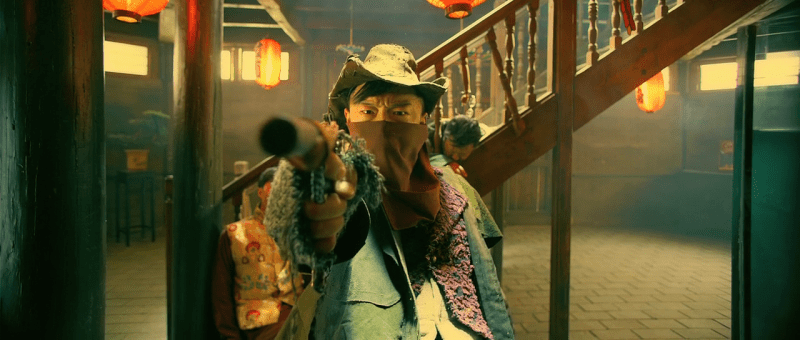
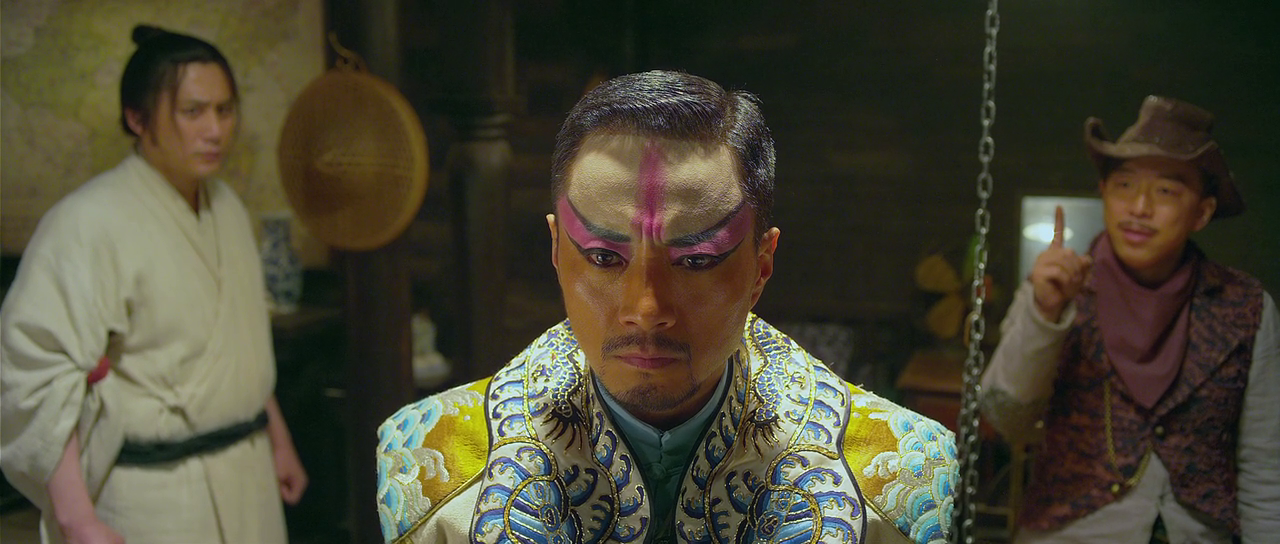
In truth, the gang are scientifically trained special agents with a mission to retrieve the vaccine but having realised that the Japanese can’t be tortured into giving it up, are forced to put on a charade pretending to be a camp sushi chef, his mute wife, a Peking opera performer, and a cowboy. What looks like completely random, bumbling incompetence is actually a finally turned plan designed to get Ogasawara to give up the secret of the vaccine. When Ogasawara’s ogre-like assistant points out they’ve killed far too many people for their captors to let them go, Ogasawara insists they weren’t people, they were test subjects, before explaining that their captors’ biggest weakness is a lack of unity.

This is, of course, ironic, as even if the band are pretending to be at each other’s throats trying to take control of their prey, they are actually working together. Meanwhile, though it may, at times, seem as if Ogasawara is playing them at their own game, it turns out he doesn’t have a game plan either and isn’t really thinking that far ahead. The Japanese just want the code to create the vaccine, and only commit to rescuing Ogasawara when it turns out the recipe he gave them doesn’t work, meaning they need him to come back and work on the project. But the heroes are a little bit ahead of him, realising they might have access to what’s needed to create the vaccine for themselves and spread it throughout the city. 

The final title card dedicates the film to “the movies we loved when we were young,” and Guan certainly does make good use of silent film aesthetics, even in also falling into a more mainstream sensibility and employing may of the same mannerisms as similar blockbuster movies with split screens and fast zooms. The film’s zany humour plays out almost as a kind of reaction to the grim and absurd world all around it in which death lurks all around, along with Japanese Imperial forces and bandits, and nothing is quite as it first seems to be. The Japanese soldiers refer to the Chinese as “Shinajin,” a sort of derogatory term meaning “Chinaman,” while the trio refer to the Japanese as “kimonos” as if to signal their mutual animosity while the dialogue itself is full of silly puns and weird swearing. 

Which is quite something considering the darkness of the premise. Not only are we dealing the atrocities of Unit 731 which is not only responsible for the cholera outbreak, but potential apocalypse for China which is under threat from several angles including the Nationalists and bandits. The sickness they are really trying to cure is their subjugation as they take care to issue the vaccine to ordinary Chinese people without seeking fame or fortune. Nevertheless, the closing titles insist they were based on real people who studied at Yenching University Medical College before the war and then went on to lead quite ordinary lives after this brief moment of heroic insanity as they harness nonsense as a weapon to trick the enemy into betraying themselves before giving up the ghost.


Trailer (Simplified Chinese and English subtitles)
Fat Buddies (胖子行动队, Bao Bei’er, 2018)

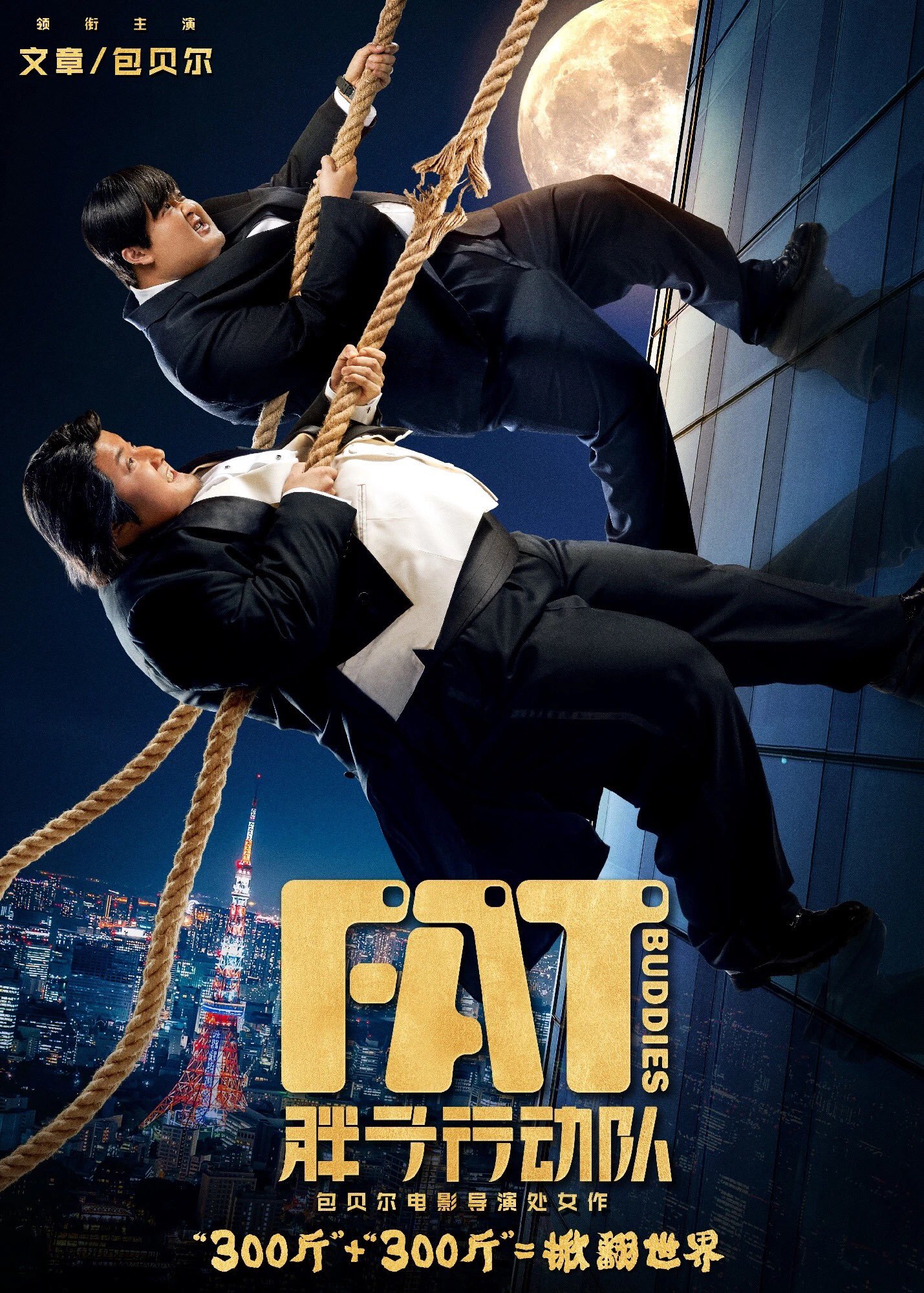
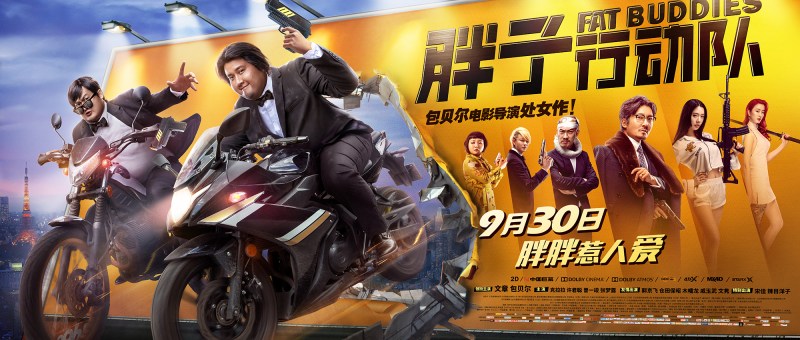
Fat Buddies posterChinese cinema hasn’t exactly had the best record when it comes to dealing with atypical heroes, but then no cinema really has. Gazing at the poster for Fat Buddies (胖子行动队, Pàngzi Xíngdòng Duì) – the debut directorial feature from actor Bao Beier who also stars, one can’t help but assume the next two hours will be one long joke at the protagonists’ expense, but to its credit Fat Buddies is not (entirely) the film it seems to be and, ironically enough, there is more going on beneath the surface than an excuse to have at a “permissible” target.

The hero, played by Bao Beier himself, is a very rotund security guard currently working in a hospital in Tokyo for reasons which will (mostly) be explained later. Though Hao is a cheerful and friendly man with a strong sense of justice, he is ostracised by the (strangely large number of) other guards and has no real friends save his extraordinarily beautiful Japanese wife. Hao’s life changes forever one day when another large Chinese man calling himself “J” arrives at the hospital and causes a ruckus by trying to escape without paying. J convinces Hao that he is an international super spy on a top secret mission and that he needs Hao’s help to get out of the hospital so he can save the world. Believing he is finally being given the chance to become the agent of justice he’s always dreamed of being, Hao is only too eager to oblige.

Strangely enough, the entire film takes place in Tokyo even though the heroes and antagonists are all Chinese. Even so, it never resorts to the comedic caricatures common in recent mainland cinema when depicting the Japanese with even the police characterised as dedicated and efficient if sometimes a little overzealous and misguided, though one does wonder if the setting was chosen solely for the sumo associations of the grand finale. There is however a degree of bite in Hao’s view of himself as a non-Japanese person living in Japan who is married to a Japanese citizen and speaks the language fluently but still remains an outsider both because of his unusual appearance and because of his nationality (with a mild implication from some that perhaps the two things are not entirely unrelated). In an early set piece, Hao and J find themselves trying to infiltrate an upscale party where they have unwittingly stolen the clothes of a pair of famous dancers and eventually end up improvising a strange routine to a bawdy song which is all about being a “foreigner” in Japan who “doesn’t understand Japanese but loves Sora Aoi” and then continues in a similarly lowbrow vein with a mix of Mandarin, international English, and intentionally broken Japanese.

Rather than a two hour fat joke – though there are a fair few of those in a recurrent motif of J getting stuck in things Pooh-style and losing his trousers in the process, the the major message is that the pair are fine as they are and apart from the aforementioned problem, their size is not a barrier to being able to do anything they want including taking on international spy missions. Despite his happy marriage, Hao still suffers from loneliness and low self-esteem due to a lifetime of being looked down and on belittled, unable to make friends because of prevalent social stigma towards those on the heavier side. The solution, however, is not a makeover or a crash diet but a gradual process towards Hao regaining his sense of self worth and realising he has plenty to offer the world despite what anyone else might say. Similarly J, who experienced rapid weight gain after a life threatening injury and also suffers from narcolepsy, proves that he is still able to do his job even if he benefits from having a partner around when he randomly falls asleep at inopportune moments.

Fat Buddies isn’t claiming to be high art and there is certainly enough of the low humour the title implies to keep those enticed by the poster happy enough, but there is also genuine heart in its odd couple buddy comedy as the two similarly under-appreciated big guys bond in their shared desire to reclaim their sense of dignity and refuse to be shamed or belittled just because of their size (even if they are otherwise quite bumbling and inefficient in their mission). Strangely uplifting, Fat Buddies is an extremely silly comedy starring two men in fat suits repeatedly bumping into things but like its heroes refuses to be bound by stereotypical conventions and manages to make heartwarming drama out of its admittedly ridiculous premise. 


Fat Buddies is currently on limited release in UK Cinemas.

International trailer (English subtitles)