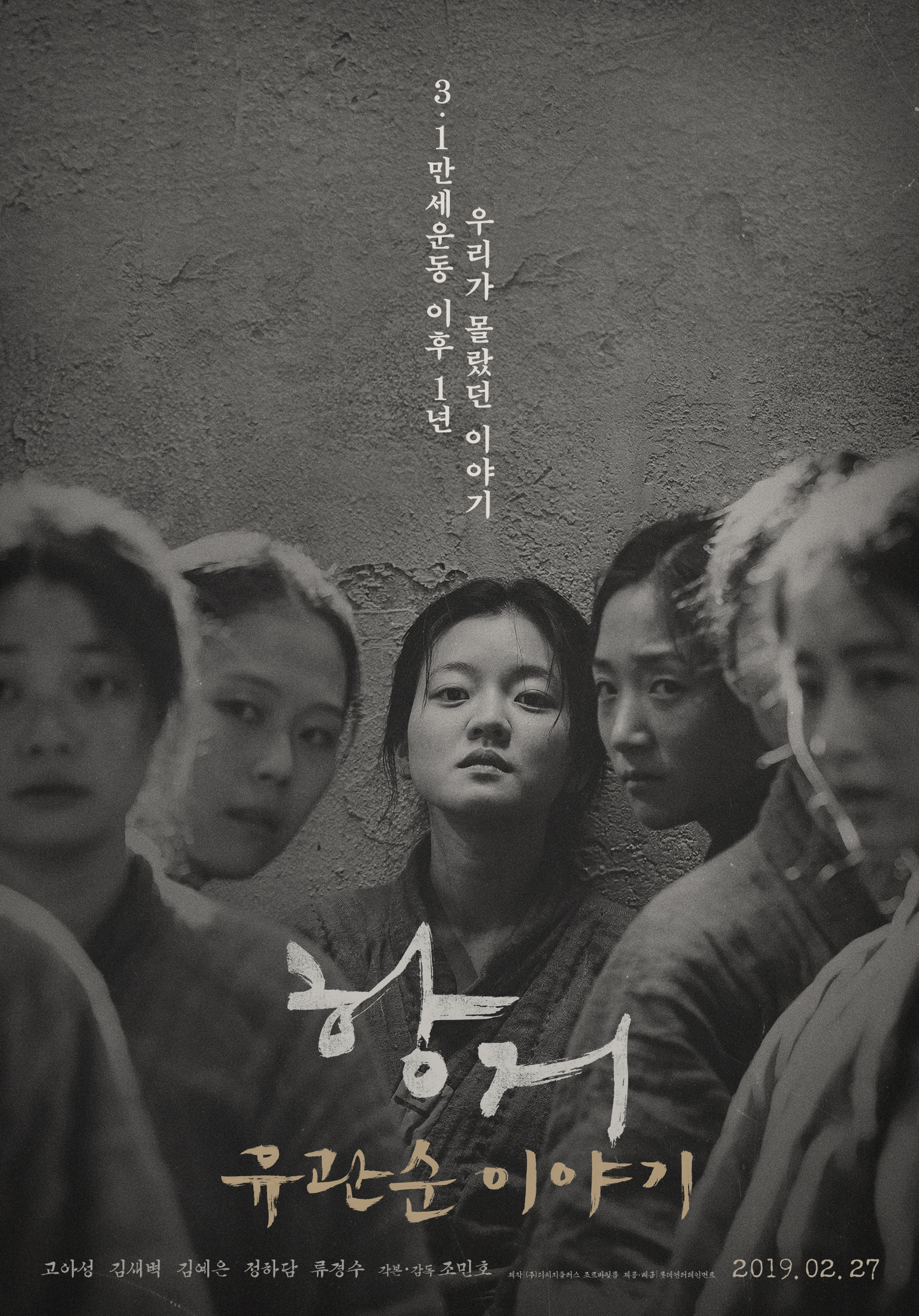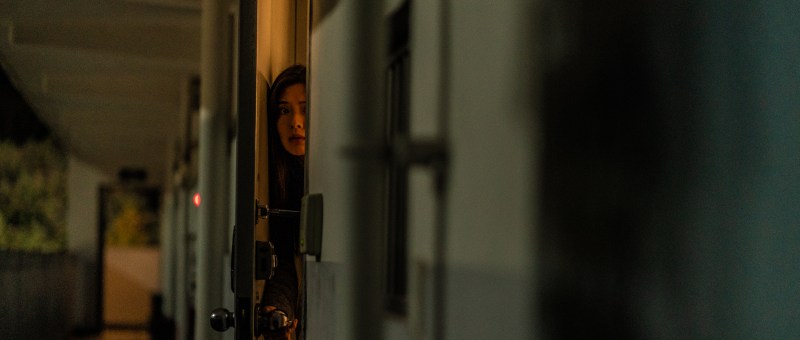
Noise (노이즈, Kim Soo-jin, 2024) [Fantasia 2025]

There are things you have to put up with if you live in an apartment block, and if you live in a city an apartment is often your only option. The question is, how much is it reasonable to expect someone to accept and what are the limits that can reasonably be placed on your own behaviour. What does it really mean to be a “good neighbour”? It’s clear the “noise” at the centre of Kim Soo-jin’s apartment block horror is not simply the sound of other people living, but a swarming cacophony of societal anxiety and persistent judgement.

There’s a large banner hanging off the side of this particular building that says residents don’t want to die inside their collapsing apartment block. Their fear hints the indifference of a society driven by capitalistic desires in which things like building regulations that ensure people’s safety and quality of life have become a thing of the past. The chairwoman of the residents’ association (Baek Joo-hee) is fiercely petitioning for the block to be knocked down and rebuilt properly, but that won’t happen if they don’t think they’ll be able to sell units in the new build because of untoward rumours about the old one. For those reasons, she doesn’t want people causing trouble or dragging up unpleasantness, which is why she’s not minded to help when Ju-young’s (Lee Sun-bin) sister Ju-hee (Han Su-a) goes missing after declaring that she was going to find the source of the “noise” within the apartment block that’s driving her and others out of their minds.

The interesting thing is that Ju-young is originally not particularly bothered by noise as she has a hearing impairment from a childhood accident and can simply remove her hearing aid to avoid it. Ju-hee asks her if she really can’t hear anything, or if it’s more like she chooses not to hear and goes about her life deliberately avoiding the “noise” of the contemporary society. There may be something in her criticism in that Ju-young, who works in a noisy factory, eventually moves out into the workers’ dorms to escape her sister’s increasingly erratic behaviour rather than stay to help her through her anxiety or actively look for somewhere less “noisy” they could live together in peace.

Hearing noise from above, Ju-hee bangs on the ceiling but inadvertently spreads the noise below as if a great flow of frustration and resentment were trickling down from top to bottom so that those nearest to the ground can barely hear themselves think. But there’s also a great stink rising from below given that the basement is home to a decade’s worth of illegally dumped rubbish. Rather than dispose of it, the security guard has simply chained up the doors but complains that for unclear reasons people are still dumping things through the broken window at the back, which no one is making an effort to fix. There’s so much “noise” that no one is really paying attention to the bigger things like missing women and fugitive killers, in part because they’re inconveniences that would prevent them upgrading their block or being able to sell up and move on. Yet paradoxically, the owner-residents blame everything of the renters insisting that they are inconsiderate because they don’t have a stake in the building’s future. 

The block itself becomes a kind of metaphor for a lingering authoritarianism with constant reminders that everyone can hear what everyone else is saying and is making less than silent judgements about the way their fellow residents live their lives. A woman drives herself crazy believing that she’s being a good neighbour by letting her child play outside so the noise won’t disturb anyone, only for them to be hit by a car and killed. The building has a haunted quality, as if everyone here were already dead and living in a kind of limbo. They complain about the noise, but ignore it when their neighbours are desperately asking for help. As Ju-young later advises, the way to continue living is not to listen and live your own life in your own way rather than give in to the petty demands of those around you who try to control your life because they know they can’t control their own. Driven out of their minds by the constant thrumming of social pressure, acts of violence are inevitable but as Ju-young traverses the dingy corridors and ill-lit stairways in search of her missing sister all while venturing deeper inside her own buried trauma, it becomes increasingly difficult to tell where exactly the threat may lie.


Noise screened as part of this year’s Fantasia International Film Festival.

Trailer (English subtitles)
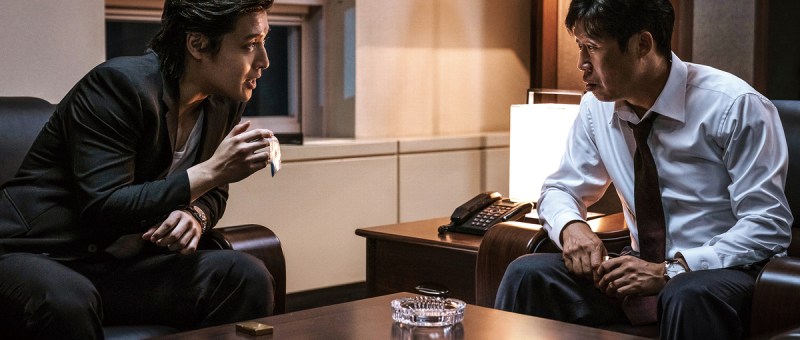
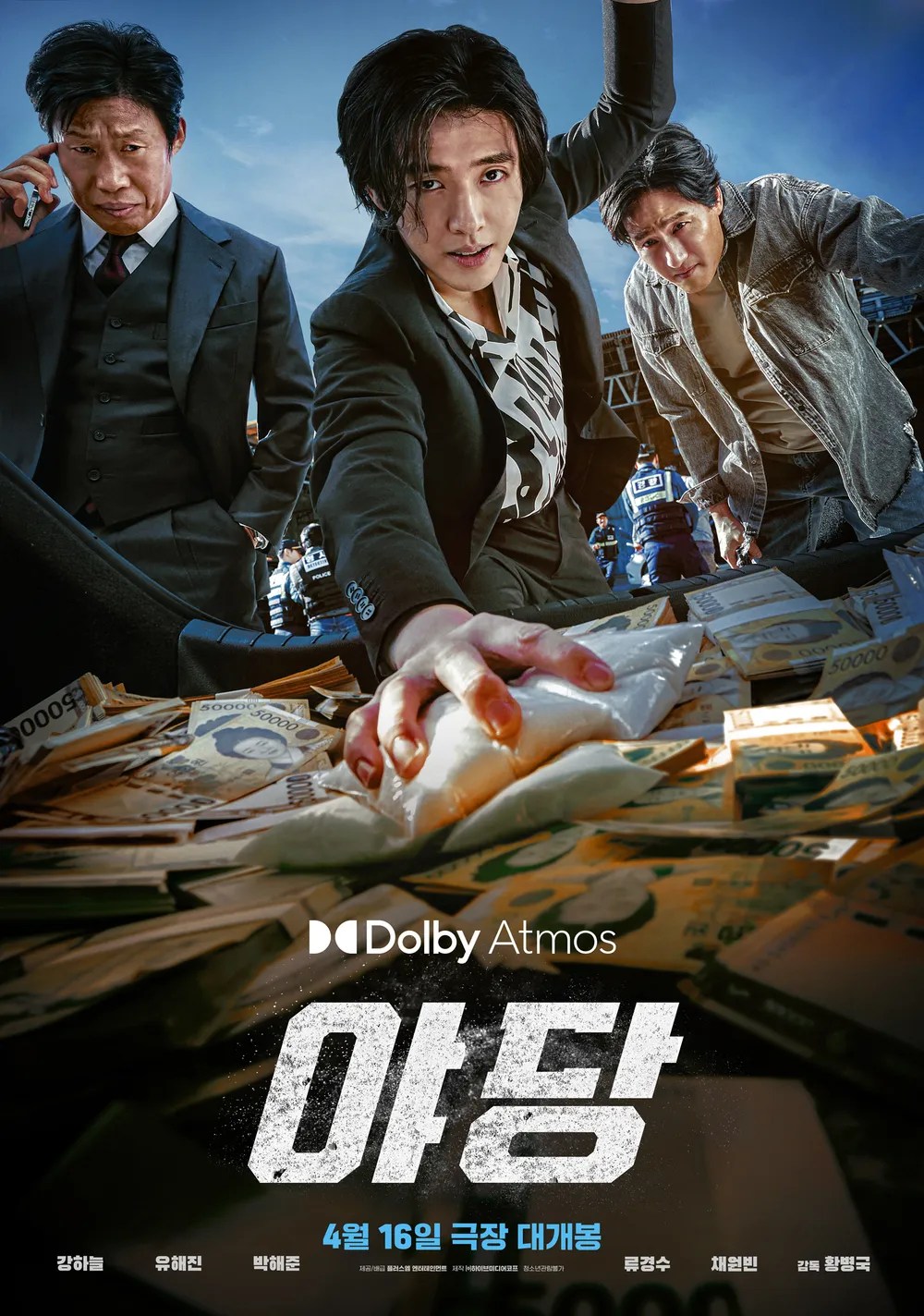
Yadang: The Snitch (야당, Hwang Byeng-gug, 2025)

A Korean prosecutor can make or break a president, according to the ambitious Ku (Yoo Hae-jin) making a final power play to put an arrogant chaebol son in his place. But Ku isn’t trying to make a stand for the rule of law so much as bend it to his own will while securing his position, because in the world of Yadang: The Snitch (야당) justice is largely illusionary while mediated through the complex interplay between the social and political elite, crime, and law enforcement.

The hero, Kang-su (Kang Ha-neul), makes this plain in explaining that the big drug busts that get the police into the papers are largely all orchestrated through the snitchery of yadang like himself, a set up in which low-level drug users are encouraged to become police informants in return for lenient sentences allowing the detectives to take care of the dealers. Perhaps that’s all very well, as detective Sang-jae (Park Hae-joon) says, there’s no point locking up hundreds of users because the supply is endless and it makes no difference to the business. Kang-su’s likening of them cockroaches is a little problematic, even if he has a point that if you want to get rid of the infestation you have to go in for the nest.

But it turns out the nest is in an unexpected place because the nexus of corruption is in the government and political system which has been infiltrated by wealthy businessmen looking to further their own ambitions through politics while their feckless children behave like princelings knowing they can do whatever they want and then ring their fathers to make whatever consequences might occur go away. Though the film doesn’t go too deeply into it, there is something in the fact that both Ku and Kang-su come from poor, single-parent families though the direction of their ambitions might be quite different. Ku has studied hard to become a prosecutor and escape his poverty, but has only 10 years to make it into the top ranks or be forced to resign. He exploits Kang-su’s desire for wealth and agency to help him achieve his ambitions but though he describes him as a brother, is all too ready to throw him under the bus once he’s no longer useful to him. 

For his part, Kang-su relishes his role within this ironic system as someone on the fringes of crime but also facilitating law enforcement without being manipulated by the police in the same way that their informants often are. Sang-jae swears to protect a young actress after picking her up in a bust if she helps him catch the kingpins but in the end he can’t do it, partly because of Ku, but also because at the end of the day his fellow officers have the same opinion of their snitches as Ku does his and aren’t terribly invested in their safety or wellbeing. After getting caught up in Ku’s showboating raid on a hotel where chaebol son Hoon is partying with yakuza drug dealers, Su-jin’s (Chae Won-bin) career is ruined and on her release she has only the drug scene to rely on with the consequence that she becomes an addict and a dealer herself.

But it was Hoon (Ryu Kyung-soo) that made her a user in the first place by spiking a drink and then went on to use his privilege to control her and make sure that she stayed within his orbit. Ambitious men like Ku make their deals and let the chaebol sons get away with their crimes, though his late in the game attempt to remind Hoon that he could ruin his father’s chances of becoming Korea’s next president if he chose to implies his own sense of worthiness that he is actually above this illusionary elite though he may be overestimating his reach. These three branches of branches of power operate in a symbiotic system and need each other to survive. Ku is only really a kind of Yadang himself, mediating between a social and political elite while enjoying only the illusion of power and independence. Hwang ups the action stakes with some high impact set pieces including that in which Kang-su uses the brute force of his Hummer to literally bulldoze a car full of drug dealers while the police chase after them with metal poles, but seems to suggest the real violence stems from the system if ultimately opting for an ironic buddy cop conclusion in which Kang-su uses his considerable skills in a more legitimate fashion.


Trailer (English subtitles)

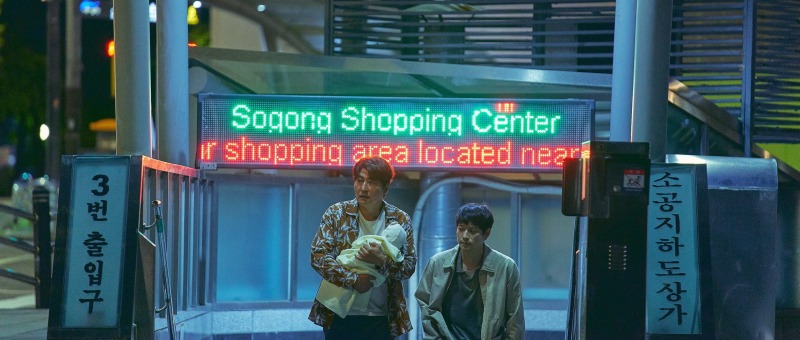
Broker (브로커, Hirokazu Koreeda, 2022)

Perhaps more than any other contemporary director in Japan, Hirokazu Koreeda has persistently interrogated the concept of the modern family asking what exactly the word has come to mean and how it is or should be defined. In Nobody Knows he showed us a case of parental neglect as abandoned siblings attempted to get by on their own in the absence of maternal care, while the separated brothers of I Wish struggle to define the nature of their relationships in the wake of their parents’ divorce. In Like Father, Like Son, Koreeda asks whether it’s blood relation that defines a family tie or whether it is forged more by mutual affection and shared memories, and in festival hit Shoplifters, he showed us a family who were not related by blood but had found in each other a home and a place to belong. 

Billed as a kind of companion piece, Broker (브로커) once again features a found family “brokered” by criminal activity but goes a step further, asking once again what the rights and responsibilities are when it comes parenthood and if the choice to abandon a child can ever be justified. Set in Korea where Christian morality has a greater influence, the film opens with a young woman leaving her infant child in front of a church yet abandoning him on the floor rather than placing him inside the “baby box” in the church’s wall. A policewoman staking out the church in the belief that someone is using the baby box to traffic children gently places the infant inside with what looks like maternal care but then we start to wonder, perhaps she only does so in order to see what happens when someone picks up him from the other side. 

Indeed, the policewoman will later concede that perhaps she herself was the one who most wanted the baby, Woo-Sung, to be sold so that she could catch the traffickers redhanded. We might feel a degree of revulsion towards the idea that a baby could be exchanged for money, but then perhaps we don’t stop to wonder who might buy and for what purpose. Sang-hyun (Song Kang-ho), a dry cleaner with gambling debts, and his partner Dong-soo (Gang Dong-won) who himself grew up in an orphanage, later recount selling a baby to two gay men who would otherwise be unable to adopt in the still conservative country suggesting in part that it’s a repressive society that forces people into this morally questionable underground trade in human children. It’s also societal conservatism that necessitates the existence of something like the baby box in that often very young women who bear children but cannot keep them either out of shame or simple economic impossibility have few other options than to abandon their child in the hope that someone will take it in. 

Detective Lee (Bae Doona) nevertheless brands these women as “irresponsible” and blames the baby box for tacitly encouraging their behaviour. An abandoned child himself, Dong-soo also struggles with his attitude towards the mother, So-young (Lee Ji-eun), who against all the odds does come back to reclaim her son after changing her mind. He and Sang-hyun justify their actions that they’re “saving” Woo-sung from being placed into the care system by finding him a loving home with parents who can give him a comfortable life. After taking to the road, the trio arrive at the orphanage where Dong-soo was raised which is less a home for him than a painful reminder of all he’ll never have and will never achieve as someone without a clear idea of a place to belong.

The man running the orphanage even concedes he’s not doing so well after the losing the subsidies for a few of the kids who have left, though few people adopt kids over six and the law makes it more difficult at eight which is a particular problem for football enthusiast Hae-jin (Im Seung-soo) who ends up climbing into Sang-hyun’s van and demanding they take him in. “Blood is thicker than water” the man sighs, explaining that kids are often sent back when it doesn’t work out or even end up suffering abuse despite the supposedly rigorous processes for vetting potential parents which causes some to simply buy a child on the black market instead. 

Despite the image of Dong-soo and Sang-hyun as heartless child traffickers they nevertheless take good care of Woo-sung and are up to a point careful that they should give him to someone responsible, mindful of those who might want a baby for untoward purposes or are intent on selling him on. A visual motif of tangling threads from the cotton on Sang-hyun’s sewing machine to the rope that pulls the busted back door of the van closed hints at the various ways these five dispossessed people are slowly bound together, becoming an accidental family forged through a process of mutual understanding in which Dong-soo is able to re-evaluate his feelings towards his mother through bonding with So-young and realising that in abandoning her child she may only have been trying to protect him and give him the better life that she never had. 

So-young tells Dong-soo that she sometimes has a dream in which the rain washes away her life until now, but on waking she realises it’s raining and nothing’s changed. He tells her perhaps all she needs is an umbrella that’s big enough for two, a metaphor for the protective quality of family he could perhaps have given her. Even she later concedes that had she met them earlier, none of this would have been necessary while Detective Lee’s more sympathetic partner (Baek Hyun-jin) likewise asks why they couldn’t have intervened earlier and done something to help this struggling young woman whose only problem was her aloneness before it came to this. What emerges is an unexpected compassion and the extension of an umbrella from an unexpected source in the acknowledgement that nothing’s ever quite as simple as it might seem. Koreeda leaves us with an outcome that is possibly as happy as it could be in an imperfect world, which might in itself be a little unrealistic but nevertheless in its own way hopeful in having reclaimed a notion of “family” brokered by selflessness and mutual compassion if not quite love for the orphans of an indifferent society.


Broker opens in UK & Irish cinemas on February 24th. For more information head to http://broker.film/

UK release trailer (English subtitles)

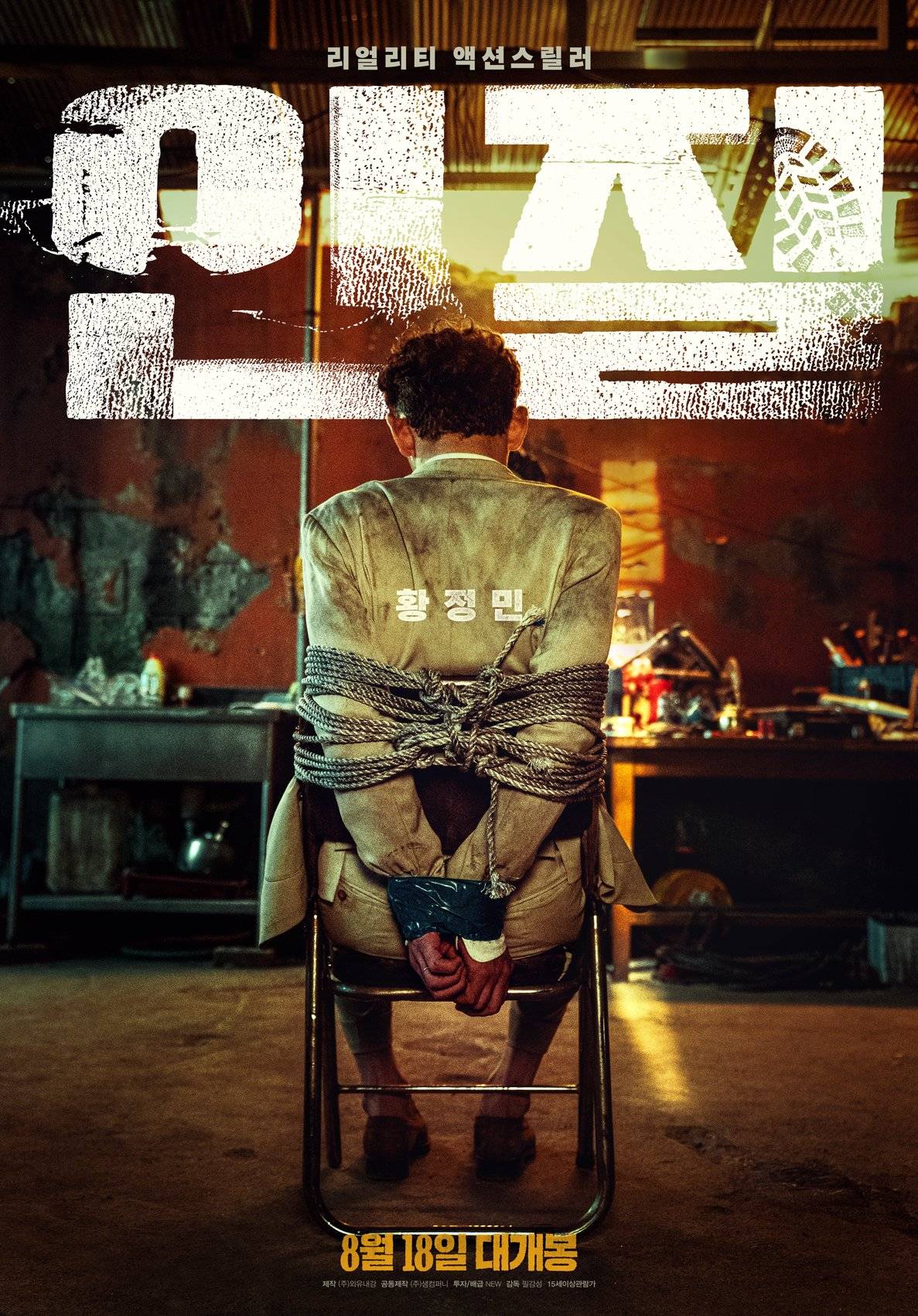
Hostage: Missing Celebrity (인질, Pil Gam-seong, 2021)

“This is real, birdbrain”. If you’re a famous actor, it might take a while to dawn on you that you’re in real trouble rather than the subject of an admittedly dark candid camera skit or variety show stunt. Real life and the movies begin to blur for top Korean actor Hwang Jung-min playing a fictionalised version of himself when he’s kidnapped by a gang of ruthless petty criminals in Pil Gam-seong’s meta take on Chinese thriller Saving Mr Wu, Hostage: Missing Celebrity (인질, Injil). 

Indeed the film opens with a montage of Hwang’s career to date including a degree of self-deprecation in which he describes himself as “just a petty actor” reminding the journalist interviewing him that film is a collaborative medium of which he is only a part. This version of himself that we see is modest and wholesome, going home early after an afterparty while his wife and son are away planning to relax alone. He seems to live a very lowkey life living in a fairly ordinary suburban house without domestic help or other signs of obvious wealth aside perhaps from an expensive car. Hwang is also on fairly friendly terms with the clerk at the local convenience store which he evidently visits frequently just like any other ordinary person rather than sending an underling to fetch him things or walking around with a massive entourage to remind people that he’s a movie star. Even while trying to escape his kidnappers he takes his shoes off before entering an old man’s home to use his landline telephone. 

Yet one can’t escape the fact that he is fantastically rich and perhaps out of touch with “real” life, his kidnappers targeting him mainly on a whim born of chance coincidence but also in resentment for everything he represents. The leader of the gang, Choi Ki-wan (Kim Jae-beom), is a crazed psychopath whose primary motivations are most likely sadistic rather than purely financial even if his targets are those with fancy cars but those of his underlings are perhaps more prosaic. When one of the gang members is captured, it emerges that he had massive debts to a casino loanshark while the most sympathetic of the kidnappers appears to have learning difficulties and later explains that he’s only doing this to pay for medical treatment to remove a prominent facial birthmark and scarring so he could live a more normal life. Because of his naivety he remains strangely loyal to Ki-wan believing that he’s looking after him while refusing any responsibility for his crimes. The gang’s only female member (Lee Ho-jung), by contrast, seems to be a North Korean refugee in a romantic relationship with Ki-wan’s less psychotic but no less cruel partner Dong-hoon (Ryu Kyung-soo) who just wants the money. 

Having literally played through scenarios just like these in his films, Hwang Jung-min the actor has perhaps gained a degree of experience that allows him to process his situation with a surprising degree of rationality quickly realising that as the kidnappers have made no attempt to hide their identities they most likely plan to kill him, and a young woman, So-yeon (Lee Yoo-mi), abducted alongside a wealthy cafe owner they killed when he couldn’t come up with the cash fast enough, after they’ve got the ransom payments. It isn’t that Hwang’s stingy, it’s that he knows there’s no point giving them the money but his only chance for survival lies in making them think he might. Even so, he gets to literally play the hero engaging in a battle of wits with the kidnappers before attempting to make a dashing escape while the on the outside the a dogged policewoman and her partner do their best to track them down despite the unhelpful interventions of their more conservative boss. 

Ki-wan might well have a point in admitting he’s overreached by going for such a high profile target. The police probably wouldn’t be investigating so heavily if the victim weren’t a famous movie star whose face is splashed across the papers. After all, they hadn’t done much for So-yeon whose sister had had to go to social media to raise awareness about her kidnapping fearing the police weren’t doing enough to help. Bearing out the underlying economic anxiety, So-yeon had only got the cafe job a few days previously after 37 failed interviews. Hwang’s response that he failed a hundred auditions before getting a break, people laughing at his acting dreams because he was a guy with curly hair and red skin who spoke with a strong southern accent, is intended to be reassuring in implying that even if it takes time you get there in the end but is also a little insensitive in the circumstances in downplaying So-yeon’s struggles in the contemporary economy having gone from elation in finally finding employment to being locked in a shed by a gang of psychos because of her boss’ personal greed which seems like quite the metaphor for the inequalities of the modern society. In any case, Pil crafts an intense kidnap thriller given an additional layer of absurdity in its meta dimensions but ends on a note of poignancy which suggests that Hwang himself is also and perhaps always will be hostage to his own image. 


Hostage: Missing Celebrity screened as part of this year’s Udine Far East Film Festival.

International trailer (English subtitles)

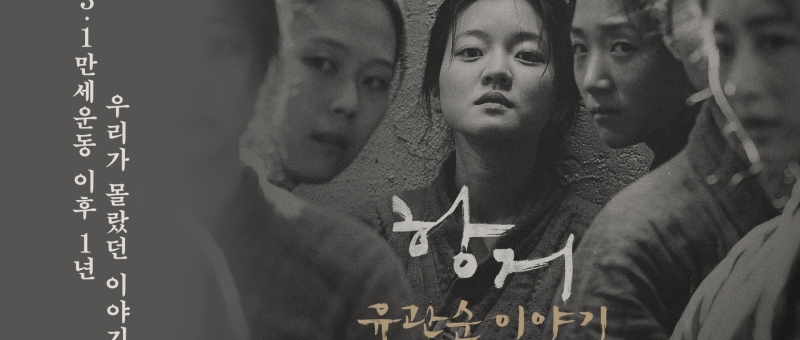
A Resistance (항거:유관순 이야기, Joe Min-ho, 2019)

A Resistance poster 1March 1, 2019 marked the centenary of the Korean Independence Movement which began with a peaceful protest on 1st March, 1919 that was brutally put down by Japanese forces who fired on innocent protestors killing thousands and imprisoning many more. One of the key leaders of the protest was a teenage girl, Yu Gwan-sun, who died in prison a little over a year later aged just 17. Joe Min-ho’s A Resistance (항거:유관순 이야기, Hanggeo: Yu Gwan-sun Iyagi) is the story of her struggle in which she remains defiant in the face of unfair and inhuman treatment at the hands of her Japanese captors.

The film opens with Gwan-sun (Go Ah-sung) being roughly pulled off a cart, unable to see thanks to the straw hat placed over her face. When the mask is removed for her prison registration card photo, we can see that (just as in the real photo which still exists and is on display in the Seodaemun Prison History Museum) her left eye and cheek are swollen from a previous beating. Taken inside, she is led to women’s cell 8 and shocked to see 24 other women already standing inside it when the door opens. There isn’t even enough room to sit down, and so the women have to take turns to rest, walking endlessly in circles to try and prevent their legs cramping up from standing too long in the same place.

On her first meeting with the prison warden who is surprised she has received such a comparatively long sentence (5 years, reduced to 3 on appeal), she is reminded that her best chance for survival is to keep her head down and do as she’s told. Gwan-sun intends to do just that but finds herself constantly infuriated by the injustice of the prison guards and the inhumane conditions in which the political prisoners are kept. Most of the women in the cell with Gwan-sun are there solely for having been at the protests and supposedly shouting “Manse”, they have committed no other crime save refusing to accept the primacy of Japanese authority.

The trouble starts when the women burst into a chorus of Arirang – a patriotic Korean folk song, which proves intolerable to the guards and gets Gwan-sun inducted for her first bout of extreme torture at the hands of her block warden and a Korean recruit working for the Japanese, Nishida (Ryu Kyung-soo). From a poor background, Nishida has thrown his lot in with the Japanese hoping for advancement but is unable to see that to them he will always be just another Korean minion to be discarded when no longer useful. Though he seems conflicted when directly ordered to participate in the torture of Gwan-sun, who is after all a defenceless 16-year-old girl, which involves acts of sexual humiliation and insidious violence, he fails to resist and dutifully obeys the orders of his Japanese commander.

Though her primary goal is Korean Independence, Gwan-sun is also working to end the kind of class oppression which has pushed Nishida into the arms of the Japanese. This much she reminds one of her cellmates (Jeong Ha-dam) who worries it would be inappropriate for them to be friends because she is just an uneducated woman working in a coffeeshop. Another of her cellmates is a “famous” gisaeng who finds herself looked down on by some of the other women because of her participation in sex work. Inspired by a real life character, Kim Hwang-hwa (Kim Sae-byuk) was another key figure in the Independence Movement who began mobilising gisaeng to participate in the protests, motivated by the often cruel treatment they received from Japanese customers. The coffee shop girl laments that if she were a man she’d go to Manchuria or fly around the world. Kim Hwang-hwa reminds her there’s nothing stopping a woman from doing that anyway and eventually ends up in Manchuria herself looking for the Independence Movement in exile in Shanghai. 

Despite emphasising the solidarity of the women in prison, Joe’s retelling of Yu Gwan-sun’s last days perhaps misses an opportunity to explore the important role that women played in the Independence Movement or the various ways it intersected with early feminism and progressive socialist politics. Nevertheless it does its best to pay tribute to a brave woman who suffered terribly in the belief that a better world was possible, refusing to give in even at the very end.


A Resistance screens as part of the 2019 New York Asian Film Festival on June 30.

International trailer (English subtitles)

https://www.youtube.com/watch?v=Cnc5xvdbNWk