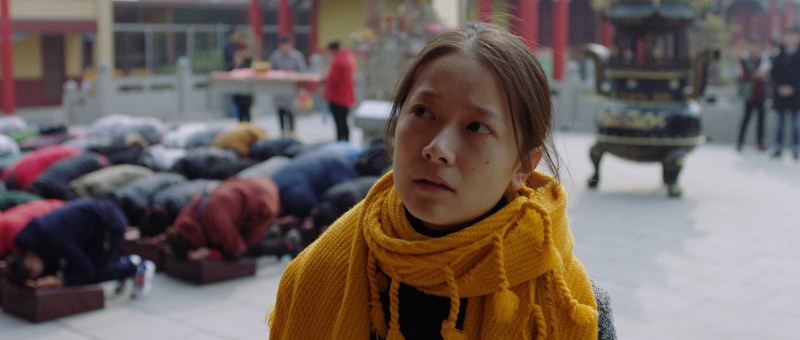
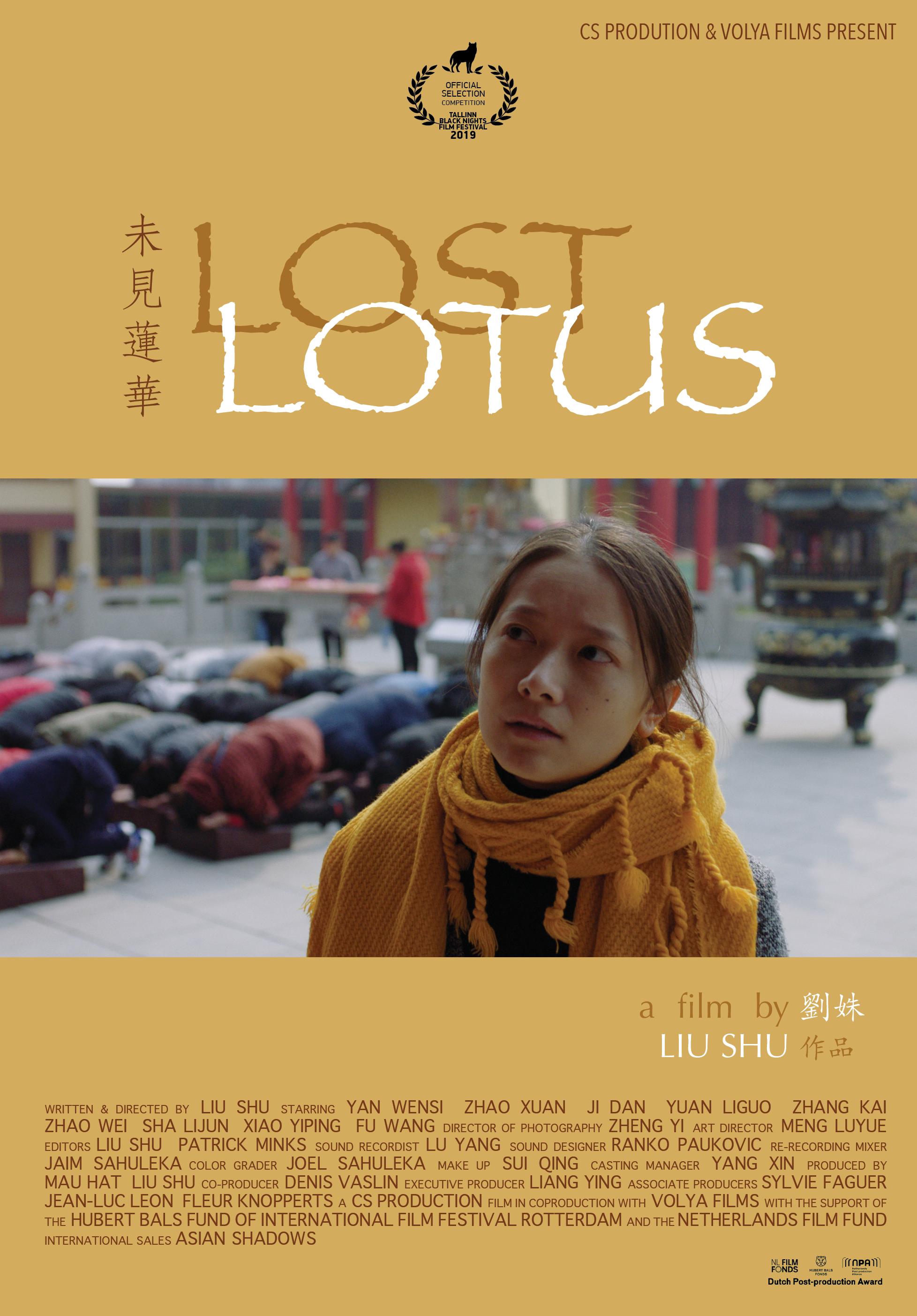
Lost Lotus (未见莲华, Liu Shu, 2019)

A grieving woman finds herself caught between the tenets of Buddhist thought and the contradictions of the modern China in Liu Shu’s emotionally complex drama, Lost Lotus (未见莲华, wèi jiàn lián huá). The paradoxes of Buddhism are, in a sense, a mirror for those of the contemporary society which has become mercilessly consumerist, obsessed with the material in direct rejection of the spiritual, yet even those who outwardly profess Buddhist values of compassion, goodness, and forgiveness are not perhaps free of the consumerist mindset in which everything has a price and for every transgression there is simply a fine to be paid in the next life rather than this. 

An intellectual teacher, Wu Yu (Yan Wensi) describes herself as irritated by her mother’s (Zhao Wei) devotion to Buddhism, viewing it in a sense as slightly backward and superstitious. Nevertheless when her mother is suddenly killed in a late night hit and run, she finds herself agreeing to hold a traditional Buddhist funeral guided by her mother’s friends at the temple despite having been warned by the police that going ahead with the cremation will obviously make it much more difficult to find the killer. While immersing herself in Buddhist thought helps her reconnect with her mother and deal with her grief, she continues to search for the driver determined to get some kind of Earthly justice in addition to the karmic. 

Increasingly worried and frustrated by Yu’s growing religious mania, her husband (Zhao Xuan) concentrates on finding those responsible in the hope of bringing closure so that they can try to move on with their lives as a couple. A kind and compassionate, modern man (he evidently does all the cooking), Yu’s husband does his best to support his wife in the depths of her grief but is himself conflicted particularly when he discovers that the man driving the car is a member of a rich and powerful elite who believes himself to be above the laws of men. 

Yu’s newfound Buddhism begins to change her outlook, though she struggles to orient herself in a world which is so at odds with its twin contradictory philosophies. Running parallel to her own quest for justice, she finds herself drawn into the struggles of one of her pupils who wanted to quit school because he has to look after his father who was badly beaten by thugs working for developers angry that he had refused relocation. Yu is originally quite unsympathetic, she and her husband blaming the boy’s father for valuing money over his life, cynically believing he must have been angling for a bigger compensation pay out though of course it is probably not so simple. While Yu and her husband are a two-income, professional household, the boy’s family are living in poverty having been evicted from their home, the father bedridden because of his injuries and therefore unable to work. Yu’s quest for justice strains her relationship with her husband and may later have economic consequences as his career prospects are used as a tool to convince them to back off, but her need for retribution affects only herself. The boy’s mother, however, feels terribly guilty knowing her obsessive quest to have the thugs held accountable is endangering her son’s future, but knowing also that she cannot simply give up and let them win. 

This is exactly the dilemma that preoccupies Yu as she weighs up how much of her anger is personal and how much societal. The driver, Chen (Xiao Yiping), offers them sizeable compensation which her husband is minded to accept, not for its monetary value but because taking the money means it’s over. But Yu wants “justice”, she resents the idea that there was a price on her mother’s life or that the culprit can simply pay a fine to assuage his guilt. Even justice, it seems, has been commodified. Yet Chen is also a Buddhist, subverting his beliefs to absolve himself in emphasising that all is fated and Yu’s mother’s death is a result of her karma from a previous life. His sin now pay later philosophy grates with Yu, undermining her new found faith in the Buddhist principles of compassion and goodness as the supposed devotee directly refuses to apologise for his role in the death of her mother. 

As her husband asks her, however, what sort of justice is she looking for? Does she want an apology, a jail sentence, to kill him with her own hands? Yu doesn’t know, lost in a fog of grief and spiritual confusion attempting to parse the contradictions of her mother’s faith and a society that has become selfish and consumerist, founded on elitist inequality which allows the rich and powerful to escape the constraints of conventional morality let alone the laws of men. In the end the only justice she can find is a retributive act of violence that perhaps forces Chen to feel something at least of her pain, paving the way for a kind of catharsis though not perhaps healing. An embittered portrait of the modern China, Lost Lotus suggests there can be no justice in an unjust society and only an eternal purgatory for those who cannot abandon their desire to find it. 


Lost Lotus streamed as part of this year’s San Diego Asian Film Festival.
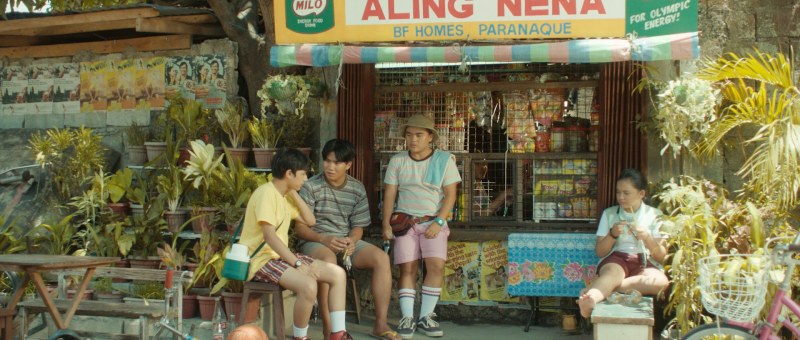
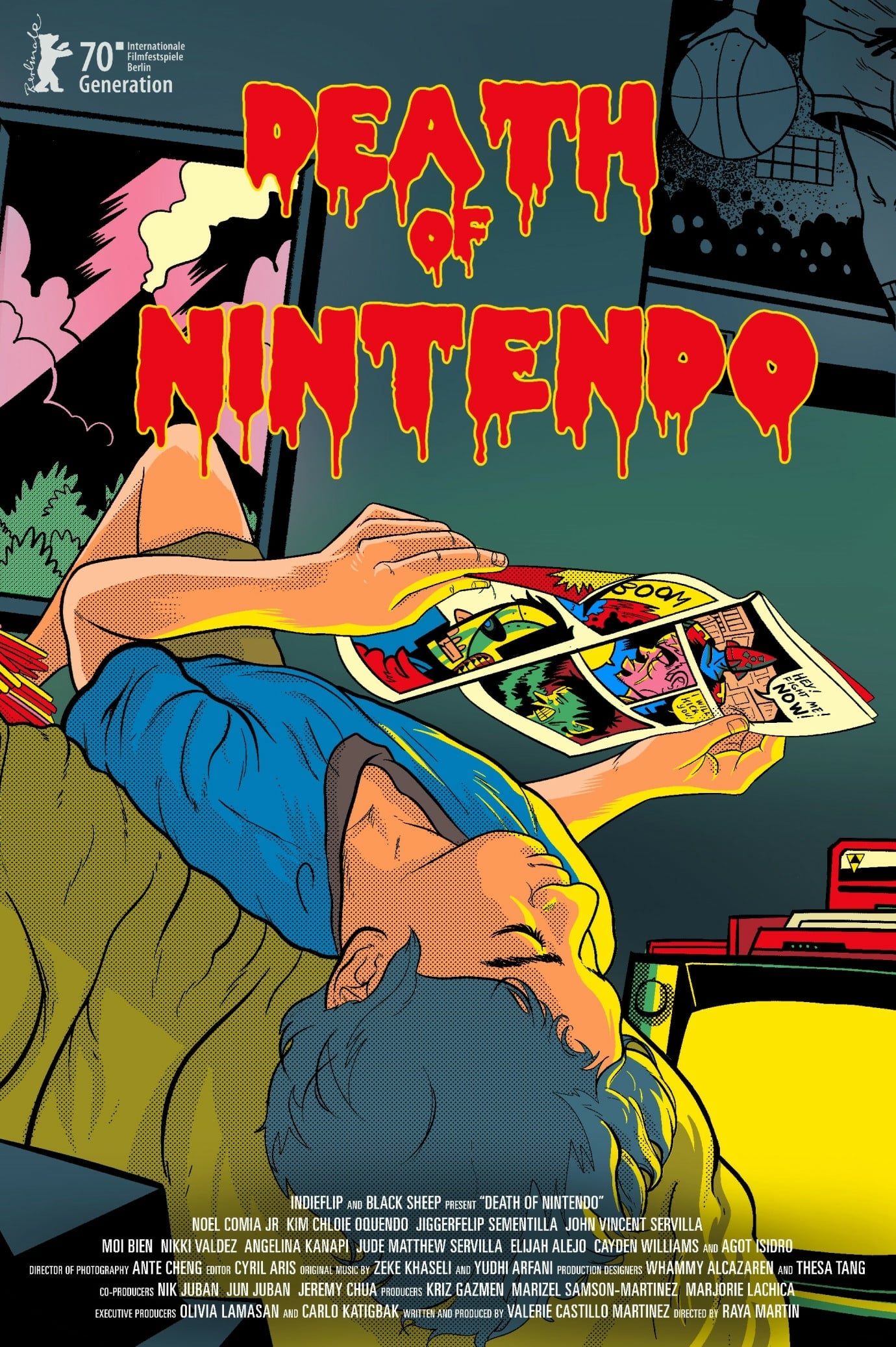
Death of Nintendo (Raya Martin, 2020)

Raya Martin made his name as a pioneer of experimental cinema in the Philippines. While his more recent films have perhaps drawn increasingly closer to the mainstream, it might still come as a surprise that his latest feature is a retro teen movie of the kind that no-one really makes anymore save as an exercise in nostalgia. As the title may imply Death of Nintendo, scripted by Valerie Castillo Martinez, is indeed a nostalgia fest set in the post-Marcos early ‘90s, in a sense the dying days of the golden age of Mario, but it’s also a subtle critique of contemporary Filipino masculinity, a uncoming-of-age drama in which boys never really grow up but continue to occupy a space of perpetual adolescence. 

In a nebulous early ‘90s Manila, 13-year-old Paolo (Noel Comia Jr.) is an introspective rich kid obsessed with playing Nintendo of which his fiercely overprotective, helicopter mother Patricia (Agot Isidro) largely approves because it keeps him home in his room where she can keep an eye on him. She’s less keen, however, on Paolo’s circle of friends which includes both fellow rich kids Gilligan (Jiggerfelip Sementilla) and his sister Mimaw (Kim Chloie Oquendo) whose father has recently run off to America with another woman, and Kachi (John Vincent Servilla) who lives in the slums with his lothario older brother Badong (Jude Matthew Servilla) and sex worker mother Shirley (Angelina Canapi). Meanwhile, the gang’s arch nemesis, the uncouth and distinctly mean Filipino-American returnee Jimbo (Cayden Williams), is intent on making all their lives a misery and Paolo is in the first flushes of adolescent romance mooning over popular kid Shiara (Elijah Alejo). The upshot is that the boys are keen to become men as quickly as possible by undergoing the Tuli ritual circumcision, travelling to the remote village witch doctor who operated on Badong and apparently turned him into the top stud he is today.  

As all of the father figures are absent, Badong is the closest paternal presence that any of them have though in real terms his example may not be much of one to follow. He currently has a steady job working at the local Jollibee, but as Kachi fails to realise is also being courted by the petty gangsters of the slums, while his mother is quick to warn him about his promiscuous ways and possibilities of getting a girl into trouble. Neverthless, what all the guys want is to instantly transform into an idealised vision of masculinity largely gained from movies and pop culture rather than the weedy boys they currently feel themselves to be. Tellingly they see something of this in Jimbo and are intimidated by him because of it, later losing their fear after realising that he has not yet undergone the ritual and is therefore still a boy himself.

Mimaw, meanwhile, who has always been a tomboy is confronted by notions of idealised femininity after she becomes friends with Shiara and her coterie of popular girls. Allowing the other young women to give her makeovers, she wonders if it’s OK that her friendship group is her brother and his friends and why it is she’s more comfortable in jeans and T-shirts than skirts and heels. When Paolo asks her to put in a good word for him with Shiara she’s conflicted, and though it’s suggested that she’s got a crush on the most sensitive of the boys, we can’t help wondering if it’s not Shiara that she may secretly be drawn to. 

In any case, as the boys spend their time on childish competitions of masculinity, it’s Mimaw who’s perhaps beginning to realise that she wants something more out of life. Eventually, the NES is replaced by a SEGA Mega Drive, the boys having completed the ritual and become “men”, wearing jeans and smart shirts with greased hair yet looking almost identical, still boys on the inside. Mimaw prepares to move on, leaving the boys behind as they again suggest video games or basketball only for Kachi to decline because he doesn’t want to muss his hair and Gilligan because he’s got a hot date to prepare for later in the evening. The boys, it seems, have only swapped their games for girls, while Mimaw has truly grown-up, something telling us this was her story all along only no was really her paying much attention. Bathed in the golden glow of an eternal, adolescent summer in which there are earthquakes and eruptions figurative and literal as the boys edge their way towards a longed for manliness, Death of Nintendo is perhaps less conventional than it first seemed while filled with the ache of nostalgia for a more innocent era.


Death of Nintendo streams in California until Oct. 31 as part of this year’s San Diego Asian Film Festival.
Original trailer (English subtitles)

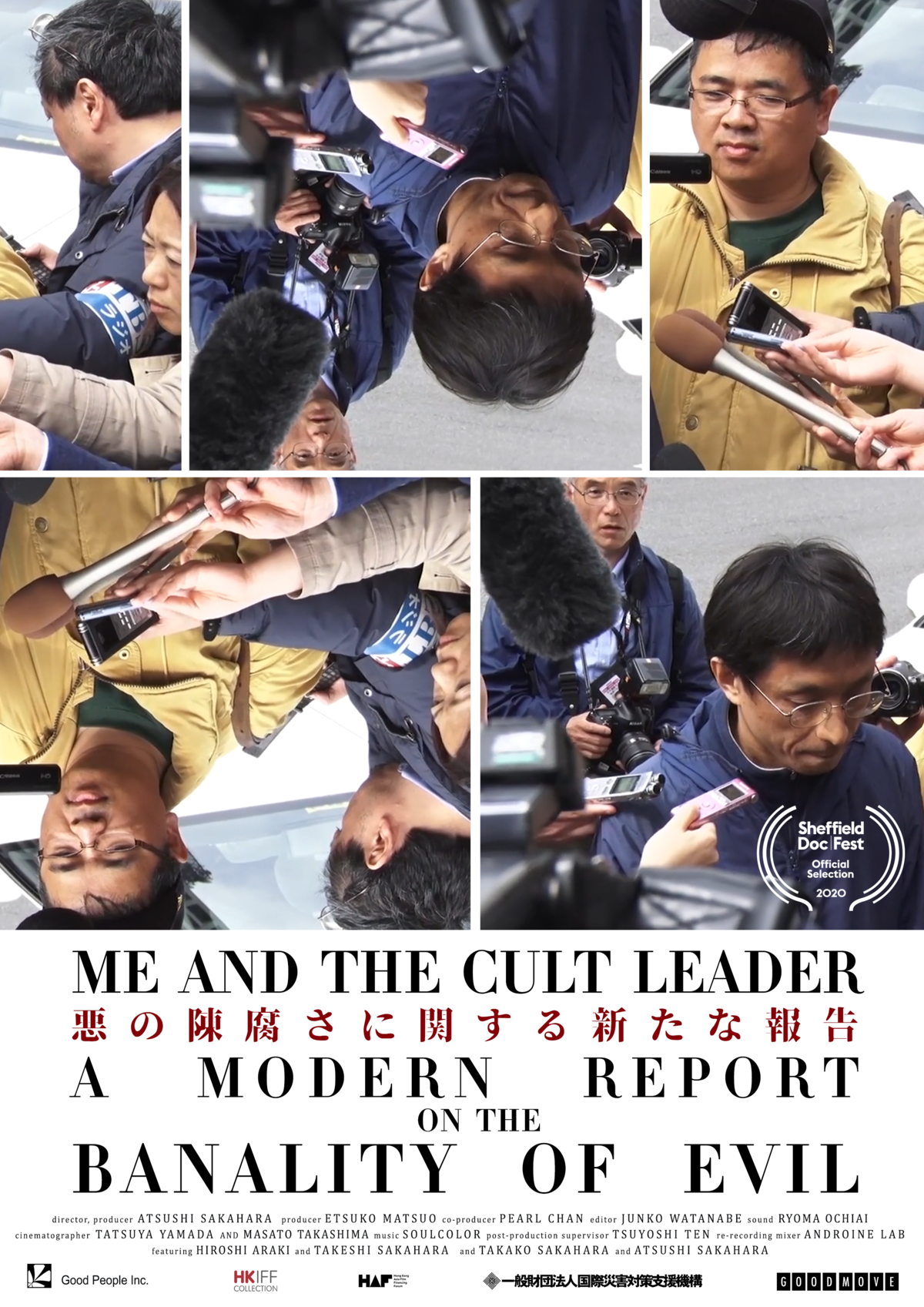
Me and the Cult Leader (AGANAI -悪の陳腐さについての新たな報告, Atsushi Sakahara, 2020)

How can you continue to serve an ideology which you know is responsible for a heinous act that offends your sense of moral righteousness? That’s a question that Atsushi Sakahara, a survivor of the sarin gas attacks on the Tokyo subway, finds himself asking in his documentary Me and the Cult Leader (AGANAI -悪の陳腐さについての新たな報告, Aku no Chinpusa Nitsuite Aratana Hokoku), as he meets with Hiroshi Araki, a current member of Aleph, the successor to Aum, the cult which planned and executed the 1995 act of terrorism which led to the deaths of 13 people and left 6200 injured, many like Sakahara with life changing consequences. 

Yet Sakahara’s purpose is the opposite of polemical, he merely reaches out to Araki in an effort to understand the mindset not only of someone who joined Aum in the early ‘90s and was a member at the time of the attack though not directly involved, but of someone who stayed and continues to believe in the teachings of cult leader Asahara who was executed in 2018 after years on death row along with other members responsible for Japan’s only exposure to domestic terrorism. Throughout it all, however what he seems to want is some kind of apology, or at least an act of contrition, something which proves elusive as the distant, thoughtful Araki largely refuses to engage as if afraid to accept that the ideology to which he has devoted all his adult life may in fact be corrupt and empty. 

Araki’s justifications run mainly to technicalities. He does not exactly deny that members of Aum were responsible for the attack, but explains that their guilt is the most logical explanation given the available evidence which includes their own confessions and so concludes it is likely the truth. The two men travel together on a kind of pilgrimage back to their respective hometowns which happen to be in the same area of the country, while in another coincidence they also attended the same university at the same time. A jovial presence, Sakahara attempts to hurry the near silent Araki along, pushing him to open up which he eventually does but failing to elicit from him anything which might begin to free him from the icy grip of his ideology. 

Sakahara subtitles his film “A modern report on the banality of evil”, and there’s certainly something of that as the film opens in a subway station, Sakahara and Araki merely two ordinary middle-aged men in anoraks waiting for a train. Yet Araki is clearly not an “evil” man. He appears to be thoughtful and sensitive, often breaking down in tears as the journey forces him to remember his life before he renounced the world, the vision of his grandmother waving him off at the station after a summer holiday leading back to that of his mother as he severed connection with her to join with Aum. He doesn’t quite explain what led him to join the cult save being overwhelmed by Asahara’s charisma when he gave a speech at Kyoto university in the early ‘90s, Sakahara having witnessed him arrive the year before but jokingly shouting out for the famously outlandish cult leader to show off his talent for levitation, save that he became disillusioned with consumerism after a pencil case he lusted over as a child lost its lustre when he got it home. The training, he goes on, caused him to lose the capacity for joy or pleasure, leaving him he explains with no other choice than to join the cult because there was no longer anything left for him in the outside world which had become unbearably painful as a result.

Yet knowing what he knows, how can he go on practicing Asahara’s teachings? Sakahara tries not to push him, only once or twice pressing for an answer as to whether or not he sees and understands his suffering and feels remorse, later introducing him to both his parents in an effort to prove that actions have wider consequences, that he is not the only victim but that others suffer because of his suffering. Meeting Sakahara’s equally compassionate mother and father does appear to move something with him, evoking a loose apology even if he immediately walks back on it with some manichean justifications that Sakahara is also responsible for everything that’s happened to him because it is all a result of his choices, good and bad. 

The unavoidable conclusion is perhaps that Araki is simply afraid to confront the implications of everything he’s seeing lest his entire worldview collapse and he realises he’s wasted all of his adult life serving a corrupt and empty ideology. Sakahara acts with total warmth and compassion for his dilemma, even at one point quite literally buying him a coat because he’s only brought his anorak despite it being freezing (Araki also constantly carries a sleeping bag because his asceticism seems to extend to beds and futons), patiently listening to his often sad stories of youth but every revelation is followed by extended silence, Araki shifting back inside himself unwilling risk bursting the bubble. Sakahara, however, remains patient hoping for the day that the cultist will finally see the light. 


 Me and the Cult Leader streams in the US until Oct. 31 as part of this year’s San Diego Asian Film Festival.

Original trailer (English subtitles)

Memories to Choke On, Drinks to Wash Them Down (夜香・鴛鴦・深水埗, Leung Ming Kai & Kate Reilly, 2019)

Neither as maudlin nor as ironic as its witty English title implies, Leung Ming Kai and Kate Reilly’s four-part anthology Memories to Choke On, Drinks to Wash Them Down (夜香・鴛鴦・深水埗) attempts to capture the flavours of a Hong Kong in transition. Imbued with a gentle nostalgia the four stories do not so much eulogise as celebrate the island’s unique culture while perhaps provoking questions about an uncertain future in the face of political instability and widespread protest. 

The first of the four shorts, however, looks back towards the past as an old lady suffering with dementia repeatedly tells the same handful of stories to her patient Indonesian helper, Mia. In an ironic twist, the tale takes the two women on a circular journey as Chi Yin, the old woman, becomes determined to reconnect with her history through visiting a reunion for those who came to Hong Kong from her village on the Mainland while Mia patiently tries to explain that her son has instructed her not to take his mother out. Eventually she relents, humorously videoing the old woman promising not to tell her son so she can show her later, but thinks better of it after realising Chi Yin’s real longing to visit him at his job in the city. Mia is of course separated from her own son while caring for Chi Yin, the commonalities between the two women becoming ever more clear as their stories mix, mingle, and repeat in the confused mind of the older woman herself a migrant to Hong Kong who came to the island in childhood, recounting a life of hardship thankfully long since past. 

The city’s economic development is also at the forefront of the second tale which sees two grown up brothers revisiting their mother’s toy store in a now rundown part of town where, as another store keeper puts it, everyone is old and so there is no more call for toys. That might be one reason why it seems that their mother has decided to sell up, but the loss of their history seems to weigh heavier on one brother than the other. While the older has married and has a child of his own with another on the way, the younger has lost his job and secretly wants to take over the shop himself only is uncertain how this news will read to his mother. While they reminisce and recover long buried treasures of their youth, the differences and dilemmas between the two men are perhaps emblematic of the push and pull of modern Hong Kong torn in two directions uncertain which parts of the past to discard and which to keep. Nevertheless, the two men eventually find common ground and mutual support even as their conflicting desires send them each in opposing directions. 

The two at the centre of Yuenyeung meanwhile were always destined to part, yet their separation has its share of confusion and awkwardness. The titular Yuenyeung is a local drink acknowledged as intangible culture which has, according to the knowledgable protagonist, a slightly dark history in that it was created in part to enable further exploitation of port workers under British colonialism and consists of super strong Ceylon tea and caffeine high coffee mixed with condensed milk. American teaching assistant Ruth is keen to try it as part of her total immersion in Hong Kong culture, but local economics teacher John isn’t much of a fan not just because of its slightly sour history but because he seems to have an internalised snobbery when it comes to being a Hong Konger. Nevertheless, with an obvious ulterior motive that Ruth either is oblivious to or chooses to ignore, he joins her on her voyage through the city’s lower end eateries where the locals choose to eat with the occasional visit to a “romantic” KFC which whatever else you might want to say about it has a lovely view of an idealised Hong Kong street scene. Tellingly, Ruth is already planning to move on to China, while a rebound John who perhaps misunderstood her has his eyes ironically set on an extended trip to the States on a kind of cultural odyssey of his own. 

Breaking entirely with the first three sequences, and in truth a little out of place, the last is the most direct in abandoning the dialogue heavy, two-hander focus for pure documentary following an eccentric young woman running as a candidate for political office in order to provide opposition for an otherwise unopposed incumbent during the fractious 2019 elections. Jennifer describes those who don’t support the protests as “weird”, but also affirms that ideally she wants a steady job in a bank and to live a dull, comfortable life as a “useless” person. When not out flyering she works as a barista/bar tender and later claims that she didn’t even want to be on the council because the local populace is quite annoying. In a strange way she provides the perfect encapsulation of a fractious political moment, a mix of surprisingly conventional thought patterns coupled with a real desire for freedom and lasting social change. Never quite as a maudlin as the title suggests, Memories to Choke On, Drinks to Wash Them Down is perhaps filled with a nostalgia for a Hong Kong that’s not quite gone but also has within it a quiet resilience if only in its insistence on memory as a political act. 


Memories to Choke On, Drinks to Wash Them Down streams in California until Oct. 31 as part of this year’s San Diego Asian Film Festival.
Original trailer (English subtitles)