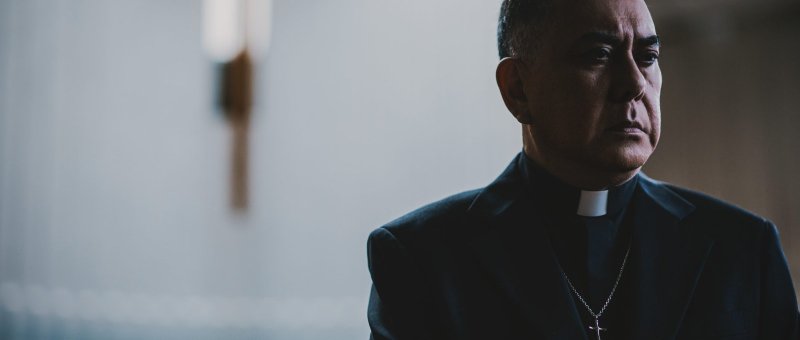
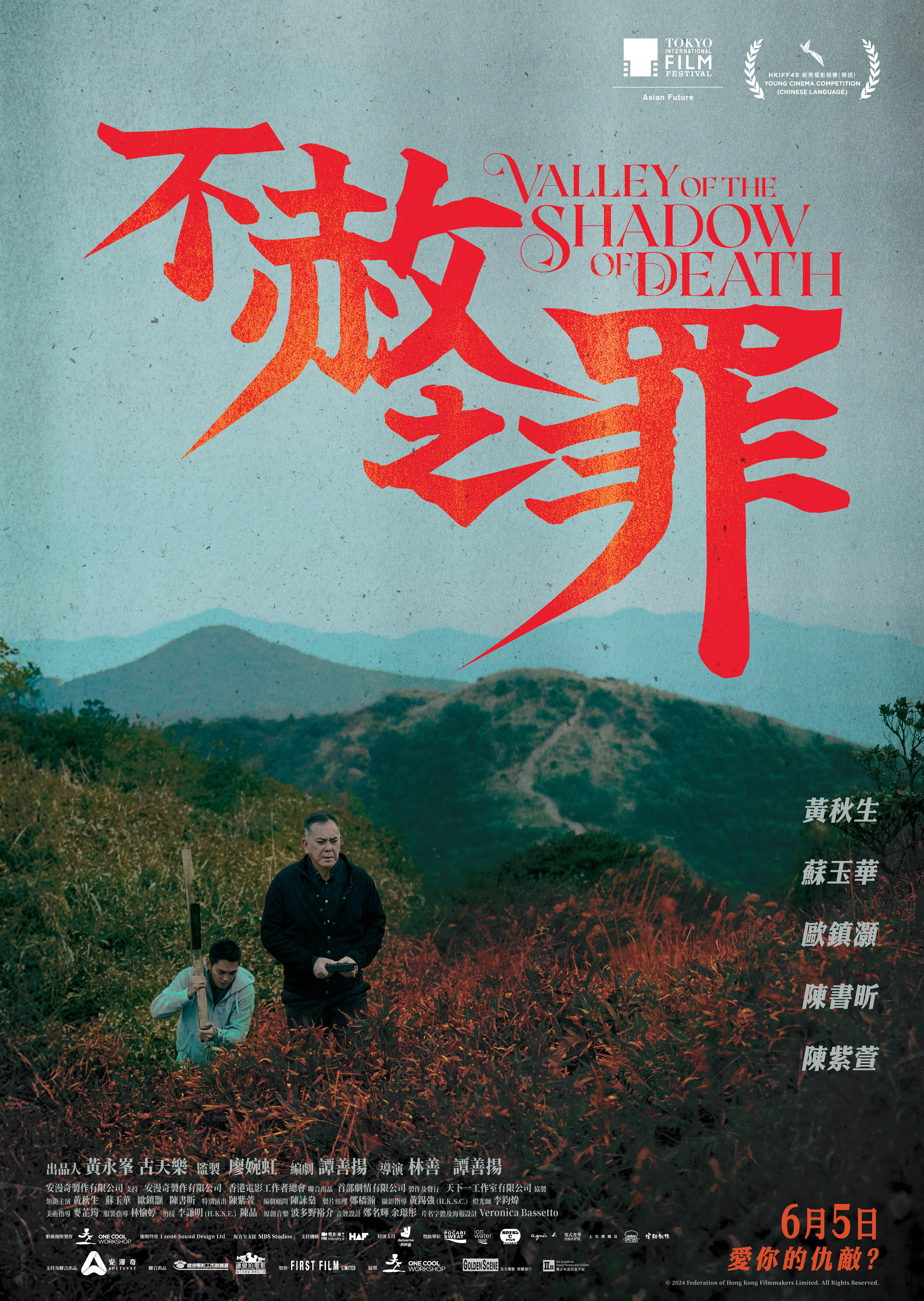
A pastor’s faith is tested when a young man who was involved with the death of his teenage daughter arrives at his church in search of salvation in Lam Sen & Antonio Tam Sin-yeung’s In Valley of the Shadow of Death (不赦之罪). Though his faith tells him that he must forgive and that it is his duty to help this lost young man who has no one else, it is obviously incredibly difficult for him to reconcile his Christian philosophy with the reality of his guilt and anger.
It’s this contradiction that’s at the heart of the film in examining whether Pastor Leung (Anthony Wong Chau-sang) is merely a hypocrite who expounds on “the beauty of suffering,” while wallowing in his grief and fundamentally unable to put what he preaches into practice. But the problem is it’s Leung’s religiously that’s a part of the problem in that its oppressive qualities and implacable rigidity also contributed to his daughter’s death. It’s convenient for him to shift all of the blame onto Lok (George Au) because it means he doesn’t have to think about the impact of his own choices or indeed question his faith in God as his wife (Louisa So Yuk-Wah) has done.
Mrs Leung also seems to blame her husband on some level and the relationship between the pair has become frosty in the extreme. A reporter arrives to interview Leung about his work while Mrs Leung goes out of her way to make as much noise as possible as she leaves for work. She has since lost her faith, unable to understand why God would do this to them, while Leung regards Lok’s arrival, like many things, as a test yet already knowing he has been found wanting. He does his best to force himself to treat Lok with kindness, but in the end, if God really did intend to give him a son in place of a daughter, Leung cannot accept him.
But Lok looks to Leung as a more literal kind of father anyway. He is genuinely moved by Christianity and sees something in it that he equates with salvation, but at the same time perhaps only because he thinks it will confer “forgiveness”. His problem is also that he doesn’t seem to understand what was wrong about what he did despite completing his prison sentence and assumed that everything would be fine once he repaid his debt to society. Only on learning that Ching is dead does he begin to feel guilty and understand the full impact of his actions. On his release he’d tried to contact Ching on a messenger app though it’s not quite clear for what purpose. Even if he really did want to apologise or try to make a mends, it’s a selfish thing to do given that she almost certainly would not want to ever hear from him again and his resurfacing in her life would only cause her further pain.
In any case, the film uncomfortably muddies the waters in implying that Ching herself is also responsible for what happened to her, while Leung never really reckons with the new information he’s learned about his daughter who may not have been as sweet and innocent as he’d assumed her to be. Likewise, the fact that Lok had such a difficult life encourages us to sympathise with him and minimise his crime, but he made a clear choice to what he did and is also responsible for it. As Leung is fond of saying, everyone is a sinner, though he doesn’t always seem to accept the same about himself. Lok too maybe entitled to redemption, and helping him may be a way for Leung to make sense of his daughter’s death while atoning for his part in it, but if it’s a test from God it’s one he’s struggling with and largely beyond the limits of his faith. In truth, some of the ideological questioning seems confused or contradictory, more like a thought experiment than a real situation and Lok a hypothetical rather than a lost young man who’s done something unspeakable but still doesn’t really understand why it was wrong. Obsessed with the concept of “forgiveness”, he childishly thinks that winning it would annul his crime as if it didn’t happen in same the way that baptism washes away sin. Leung, meanwhile, cannot practice what he preaches and uses his religion, the very thing that made him fail his daughter, as a shield to avoid thinking about his own culpability. Only God can forgive, Leung’s fond of saying, but the person he needs forgiveness from the most may be himself.
Valley of the Shadow of Death screened as part of this year’s Focus Hong Kong.
Trailer


 Windows on Worlds